8,194 results
1909ref. 53577Evansville IN: A.L. Swanson Electrical & Manufacturing Co. ca. 1909-1925. Oblong 4to. 62 original silver gelatin photos nearly all backed in linen some w/ embossed photographer’s stamp in lower right corner or photographer’s logo in negative several marked in pencil or ink on versos occasional fraying and dustsoiling to fore-edges of linen. Recent black post-binder original brass split pin posts at gutter margin gilt lettering stamped on front cover VG exemplar. This factory sales photo album for the Swanson Electrical & Manufacturing Co. offers an important visual record of the growth of a Midwestern American manufacturing firm after World War I through the Jazz Age. Founded originally in 1900 by Albert Swanson 1876-1949 in Evansville IN this firm became one of the largest Midwestern companies engaged in electrical engineering construction repair maintenance and retail sales. These photos show how the company built and sold washing machines electric motors radios lighting systems industrial fans installed lighting displays for department stores repaired electric motors rewound generators and installed massive electric generating steam plants for factories. These include photos of the new mill built after 1909 for Swans Down Flour showing the exterior stack for steam the control panels and more; followed by images of the electrical conduits and sea of electric motors for the spinning mill machinery of the Cannelton Cotton Mill in Indiana for the Rumble & Wensel Company; a Heinz plant near Indianapolis IN; and of special interest are the photos of the generating plant installed for the Mead Johnson Co. infant formula plant built in Evansville IN in the wake of World War I. These photos also show the repair shops the massive electrical machines the winding of coils the oil and grease-soaked workers amidst a sea of electrical machine parts work benches metal lathes and more. In addition there are a number of photos of the interior of the new Monitor Furniture Co. Plant on East Virginia St. in Evansville IN finished at the end of 1920. Swanson began repairing and installing electrical equipment in a small downtown shop before the end of the 19th century and by 1915 was refurbishing and selling giant Westinghouse and General Electric motors and generators. In 1919 the Company was incorporated and began quickly expanding finally changing its name to the Swanson-Nunn Co. which continued to install and sell equipment out of their building on 8th street much of the 20th Century. Mason 1886-1944 was a commercial photographer who specialized in architectural and advertising photography in Evansville IN throughout his career. See: Evansville Electrical Concern Re-organzied In: Electrical Review August 2 1919 pp. 209-210. A.L. Swanson Electrical & Manufacturing Co., unknown
1929ref. 025041Pasadena 1929. Original Drawing . No Binding. Near Fine. 13 3/4" x 12 1/4. Original Pencil Engineering Drawing Of Three Views Of A "Latitude Finder At Any Hour Angle With Three Reflections" Dated 1929 Signed Rwp. The Drawing Is 9 5/8" X 11 1/8" With Ample Margins. Porter Is Famous For His Prescient Pre-Construction Drawings Of The Palomar Observatory And Its Telescopes Machinery And Buildings So Well Visualized That They Were Used As Guides During Construction. unknown
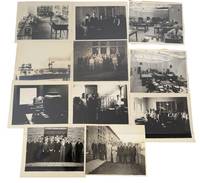
1930ref. 232561930. Stanford University Military Engineering Archive Documenting the First Army Ordnance Reserve Gauging Program ca. 1930. Stanford University photo archive documenting the emergence of interwar military-industrial technical education ordnance gauging instruction and precision engineering research on campus during the early development of Stanford's engineering and applied science programs. Rather than depicting science classrooms in a general sense these photographs specifically document the technical culture surrounding Army ordnance training instrumentation systems machine calibration and laboratory-based engineering instruction that linked universities to the expanding infrastructure of American military preparedness between World War I and World War II. Taken together the archive captures Stanford at the moment when higher education increasingly merged scientific research industrial precision manufacturing and military technical training into a unified research model that later shaped the wartime and Cold War defense university system. Photo archive of 11 large silver gelatin photographs each approximately 8" x 10" Stanford University California dating from 1930 into the 1950s; two later views mounted to decorative yellow board. Several photographs depict laboratory interiors filled with precision instrumentation gauging apparatus optical and mechanical measuring devices machine-tool equipment calibration benches microscopes drafting stations and technical worktables arranged for instruction and inspection work. One especially important close-up photograph shows a large precision gauging or rotational calibration apparatus associated with ordnance measurement and machine tolerance testing. Surrounding the device are machined cylindrical components threaded fittings gauge rings and polished metal parts likely used in dimensional inspection bore alignment concentricity testing or interchangeable manufacturing instruction. Another darkened workshop view depicts what appears to be a heavy precision lathe or gauging bench fitted with a mounted cylindrical test component equipment consistent with ordnance inspection and military engineering instruction during the interwar period. Additional photographs show groups of students and instructors posed around technical apparatus inside instrumentation laboratories while later mounted photographs document more formalized postwar engineering office and drafting environments associated with large-scale technical administration and research organization. Most important is a detailed handwritten verso inscription reading: "Equipment used Feb 1930 Ordnance School at Stanford University. This was first time a course in gauging was given in any Army Ordnance Reserve Unit permanent facilities excepted. Instructor; Lieut Merrill S. Hingo. Photo; Lieut Howard Story Taylor." The inscription firmly identifies the archive as documentation of early Army ordnance reserve technical instruction conducted at Stanford and specifically ties the machinery to military gauging education. In the 1920s-30s "gauging" referred not merely to ordinary measurement but to the specialized science of precision dimensional inspection used in artillery manufacture weapons-part standardization shell tolerances bore measurement interchangeable machining systems and industrial calibration. Such instruction formed a critical component of modern military-industrial production where even minor deviations in machining tolerances could affect artillery accuracy chamber pressure shell seating or mechanical reliability. Several outdoor group portraits further reinforce the military context. One large group stands beneath a doorway marked "Military Science and Tactics" while another includes Colonel Donald C. Cubbison a career U.S. Army officer and West Point graduate who served as professor of military science and tactics at Stanford from 1930 to 1935 before later attaining the rank of major general during World War II. His appearance situates the archive directly within Stanford's interwar military training system and links the photographs to broader national efforts to train technically educated reserve officers in engineering ordnance artillery science and industrial preparedness. The archive also reflects Stanford's broader transformation into a modern research university centered on applied science and engineering. During the interwar years Stanford's scientific departments expanded laboratory instruction instrumentation programs and research-based technical education under faculty including Robert E. Swain John P. Mitchell William H. Sloan and George S. Parks. Parks in particular became associated with analytical chemistry and geochemical laboratory science disciplines heavily dependent upon precision instrumentation and calibrated measurement systems. The engineering and laboratory culture documented here overlaps with contemporary developments in industrial metrology applied physics materials testing optical measurement and machine-tool inspection that increasingly tied university research to industrial production and military logistics. What makes the archive especially significant is the way it documents the transitional infrastructure between traditional university instruction and the emerging defense-oriented research university model. These photographs preserve not simply classrooms but the physical systems of technical education itself: calibration benches inspection machinery gauging apparatus optical instruments drafting rooms and laboratory spaces where students and reserve officers were trained in the precision engineering practices underlying twentieth-century industrial warfare and mass manufacturing. In doing so the archive visually traces the early foundations of the university-based defense engineering culture that would later expand dramatically during World War II and the Cold War throughout California research institutions and the broader military-industrial complex. Photographs are sharp and highly detailed with clear views of equipment and interiors; handwritten identifications remain legible. The two mounted 1950s photographs have several large tears without image loss with lighter handling wear elsewhere. Overall good condition. unknown
1921ref. 188321China: 1921-22. An important stage in the economic development of modern Beijing A historically significant visual record of the construction of the Shuizha bridge in Mentougou near Beijing which was conceived in the early 1920s to facilitate greater extraction of coal from the area's rich coalfield. Spanning the Yongding River the eight-arch structure measured 255.5 metres in length and was made with reinforced concrete. The project was overseen by a French engineer and cost 300000 silver dollars provided by the Beijing municipal government. Arranged roughly chronologically the photographs capture the setting up of the worksite the building of the arches one at a time and the laying out of the roadway. Four impressive panoramas at the end show construction in progress and the completed structure. The bridge opened to traffic in 1923 - tolls funding maintenance - and was periodically reinforced. There are few accessible photographs of the bridge in its early years and no other known record of its construction. Today the structure is still standing and is a protected heritage site usage limited to pedestrians only. Landscape quarto album 235 x 310 mm. With 159 snapshot photographs c. 75 x 105 mm or a little smaller 2 large photographs 165 x 225 mm 4 panoramas c. 85 x 285 mm all silver gelatin and corner-mounted or laid down on card leaves some dated in pencil. Original textured brown card covers tied through holes with green cord. Light mirroring a few photographs faded or toned but a well-preserved collection. unknown
1988ref. SBBI-mon0000044677Enginrg.Ind.Training Bd. 1988. paperback. Good. Our good condition books are generally good for reading but not for gifting or collecting. They could have imperfections such as creasing fanning inscriptions margin notes yellowing staining on edge or cover or pages bumps scuffs etc etc sometimes multiple of these. It's a wide category that encompasses anything that isn't almost-new down to anything that is slightly better than poor. We would NOT recommend gifting Good books - these should be considered reading copies. Our books are dispatched from a Yorkshire former cotton mill. We list via barcode/ISBN so please note that the images are stock images and may not be the exact copy you receive furthermore the details about edition and year might not be accurate as many publishers reuse the same ISBN for multiple editions and as we simply scan a barcode or enter an ISBN we do not check the validity of the edition data when listing. If you're looking for an exact edition please don't order at least not without checking with us first although we don't always have time to check. We aim to dispatch prompty the service used will depend on order value and book size. We can ship to most countries see our shipping policies. Payment is via Abe only. Enginrg.Ind.Training Bd. paperback
1982ref. ZB2633741982-1999. volumes 1-18 lacks vol. 9 partly bound ex library PRICE IS FOR THE LOT. - If you are reading this this item is actually physically in our stock and ready for shipment once ordered. We are not bookjackers. Buyer is responsible for any additional duties taxes or fees required by recipient's country. Photos available upon request. unknown
1955ref. ZB2634141955-1958. Old Series volumes 3-12 partly bound ex library PRICE IS FOR THE LOT. - If you are reading this this item is actually physically in our stock and ready for shipment once ordered. We are not bookjackers. Buyer is responsible for any additional duties taxes or fees required by recipient's country. Photos available upon request. unknown
1997ref. 2080502106907340Not Available 1997. Soft Cover. Fine. The book is in fine condition. Not Available paperback
1975ref. ZB2633751975-2000. volumes 3-28 partly bound ex library PRICE IS FOR THE LOT. - If you are reading this this item is actually physically in our stock and ready for shipment once ordered. We are not bookjackers. Buyer is responsible for any additional duties taxes or fees required by recipient's country. Photos available upon request. unknown
1936ref. 0008066WASHINGTON DC. Very Good. 1936. On offer is the original design study for a major dam project in the United States. The study is comprised of 2 documents. The main document is 10 inches by 8 inches contains 123 pages and is in excellent condition. The second document is a technical specifications document that contains 37 pages. It too is in excellent condition. The Savage River Reservoir is a 360 acre storage reservoir in northwest Maryland. It was completed in 1952 by the U.S. Army Corps of Engineers which also currently maintains it. The reservoir was formed by the Savage Dam which impounds the Savage River. The reservoir is used for flood control and municipal drinking. The Savage River Dam is a rock-fill earthen dam 184 feet high 1050 feet long and drains an area of 105 square miles. The dam was modified in 1980 and is owned by the Upper Potomac River Commission. The Savage River is a major wilderness recreation area and the river has been the site of U.S. Olympic trials for canoeing and international canoeing slalom championships. It is reputed to be one of the best wild trout streams in the mid-Atlantic United States. The reservoir is a major supplier of fresh water to Washington DC. Although completed in 1952 planning had begun in the 1930's. Construction began in 1939 but was suspended in 1942 due to U.S. entry into WWII. Construction resumed in 1946. The Savage River Dam Analysis of Design document is dated 1937. This 123 page document is the end result of several years of study and then the application process for funding. The project was initiated by the Upper Potomac River Commission and undertaken by the U.S. Army Corps of Engineering. It was funded by a grant from the Works Progress Administration WPA. The WPA was Franklin Roosevelt's grand scheme to help deal with the massive unemployment stemming from the Great Depression. It was the largest and most ambitious American New Deal agency employing millions of people to carry out public works projects including the construction of public buildings and roads. The Savage River Dam Analysis of Design contains general descriptions design criteria and illustrations technical specifications drawing maps and charts. There are numerous detailed fold-out engineering drawings bearing the U.S. Engineer Office stamp and signatures of the 3 signing engineers - Tippietts Schmitt and Luplow. Since its construction there has been subsequent work over the decades. Although there may be some copies of the model studies for this major dam project this appears to be the original design document. The second document is a technical memorandum entitled Spillway For Savage River Dam - Hydraulic Model Investigation. It is dated 1954. The purpose of this memorandum was to verify the data regarding flow rates and impacts as a result of additional flood control alterations having been made. The document contains 37 pages of charts diagrams and analysis. A researcher looking at the underlying studies that led to the decision to build this important dam would find this study to be a goldmine of information. Environmentalists could see the state of conservation thinking at the time. The area is under active threat today 2018 from creeping urban spread and natural gas drilling. This document shows the original thinking and work that went into the creation of the reservoir and the Savage River system.; Manuscript; 4to - over 9¾" - 12" tall; KEYWORDS: HISTORY OF 20TH CENTURY; 1930S; GREAT DEPRESSION; NEW DEAL; FRANKLIN DELANO ROOSEVELT; UNITED STATES MARYLAND SAVAGE RIVER; SAVAGE RIVER DAM; SAVAGE RIVER RESERVOIR; SAVAGE RIVER STATE FOREST; WORKS PROGRESS ADMINISTRATION; WPA; UPPER POTOMAC RIVER COMMISSION; US ENGINEERING OFFICE; U.S. ARMY CORPS OF ENGINEERING; SCIENCE AND TECHNOLOGY; DAM CONSTRUCTION FLOOD CONTROL DAM DESIGN; HYDROLOGY; DRAWINGS; MAPS; CHARTS; W. D. LUPLOW; ERNEST F. TIPPETS SCHMITT; AMERICANA HANDWRITTEN MANUSCRIPT DOCUMENT LETTER AUTOGRAPH WRITER HAND WRITTEN DOCUMENTS SIGNED LETTERS MANUSCRIPTS DIARY DIARIES JOURNALS PERSONAL HISTORY SOCIAL HISTORY HISTORICAL HOLOGRAPH WRITERS AUTOGRAPHS PERSONAL MEMOIR MEMORIAL ANTIQUITÉ CONTRAT VÉLIN DOCUMENT MANUSCRIT PAPIER ANTIKE BRIEF PERGAMENT DOKUMENT MANUSKRIPT PAPIER OGGETTO D'ANTIQUARIATO ATTO VELINA DOCUMENTO MANOSCRITTO CARTA ANTIGÜEDAD HECHO VITELA DOCUMENTO MANUSCRITO PAPEL . unknown
1959ref. ZB2634131959-2001. volumes 6-48 partly bound ex library PRICE IS FOR THE LOT. - If you are reading this this item is actually physically in our stock and ready for shipment once ordered. We are not bookjackers. Buyer is responsible for any additional duties taxes or fees required by recipient's country. Photos available upon request. unknown
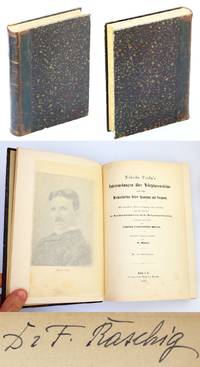
1895ref. 356j2779Deutsches Reich: Halle a.S. Very Good No dust jacket as issued. First German Edition. Hardcover. "This book essentially reproduces all those important publications which Tesla himself made in American electrical engineering journals up to about the middle of 1893 concerning his inventions and investigations. Furthermore since Mr. Tesla himself reviewed those sections of this book that report on his previously unpublished work before printing the present work may be considered an authentic account of his work." - translated from Translator's Preface. "Nikola Tesla 1856-1943 was a Serbian-American inventor and electrical engineer who revolutionized modern power technology. Renowned for creating the alternating current AC system Tesla developed motors transformers and the Tesla coil laying the foundation for modern electric grids radio technology and wireless communication." - Google AI. First German edition. Translated from the 1893 first U.S. edition. x 2 508 p. Index. 313 Black and white diagrams and photos. Prior owner's name Dr. F. Raschig handwritten atop front free endpaper and faintly atop page 508 otherwise tight clean and unmarked with moderate wear to the original dark marbled boards bound in contemporary half-leather. "Dr. Friedrich Fritz August Raschig 1863-1928 was a German chemist and politician who patented a number of important chemical processes and developed improvements to distillation. The chemical company he founded in 1891 operates to this day as Raschig GmbH." - Wikipedia. A well-preserved example of this profoundly important and historic work from an impressive provenance. 23.7 x 16.9 cm; Sm 4to . 1895. Halle a.S. hardcover
1965ref. ZB393883Engineering Economy Committee of the American Society for Engineering Edu 1965. volumes 11; 13-36; 40-43. 1965-1997. partly bound library markings textually clean & tight PRICE IS FOR THE LOT. - If you are reading this this item is actually physically in our stock and ready for shipment once ordered. We are not bookjackers. Buyer is responsible for any additional duties taxes or fees required by recipient's country. Photos available upon request. Engineering Economy Committee of the American Society for Engineering Edu unknown
1985ref. ZB3932341985-1998. Volumes 6 7 9-11 13 15-19; mostly in original paper wrappers price is for the lot. - If you are reading this this item is actually physically in our stock and ready for shipment once ordered. We are not bookjackers. Buyer is responsible for any additional duties taxes or fees required by recipient's country. Photos available upon request. unknown
1928ref. ABC_50475Iran 1928. Oblong album 24.5 x 29.6 cm. Mid-19th-century bright blue faux-leather the front board features a pictorial on-lay within a rectangular frame the illustration depicts a young woman in traditional costume holding a large ceramic vessel. The joints are laced through onto 2 supports. With 19 black and white photographs ca. 23.1 x 17.1 cm on thick dark blue/black paper. 9 ll. Collection of 19 engineering photographs taken in Iran dating from ca. 1928 to 1930 CE. The majority of the images are annotated with the year 1308 AH 1929-1930 CE while only photograph 7 is dated 1307 AH 1928-1929 CE.The album documents large-scale engineering works and urban modernisation in Iran during the early years of the Pahlavi dynasty 1925-1941 under Reza Shah Pahlavi 1878-1944. In this period cities such as Tabriz underwent significant restructuring and infrastructural development as part of broader state-led reforms.The photographs depict surveying activities including measuring instruments mounted on tripods uniformed officials and extensive reconstruction works. Several photographs are identifiable as views of Tabriz including the development of the Gaji Gate Darb-e Gajil in December 1929 Ahrap Ahrab Street and Munjam Street under construction. Other views show street levelling and widening works illustrating the transformation of older urban quarters into broader modern thoroughfares.Further noteworthy subjects include railway works and one photograph taken in Jafarabad shows several men wearing a combination of traditional clothing including papakha-style headgear and Western clothing reflecting the broader cultural transition of the period. The present work therefore stands as an informative visual record of early 20th-century Iranian engineering urban renewal and state modernisation.With some glue staining to the dark blue paper on several pages. A few photographs show minor marginal wear not affecting the images themselves. The final photograph is not mounted on the album paper but on a separate piece of card and is loosely inserted. Otherwise in good condition.l Cf. Tofigh Kouzehkanani & Zelef "Towards extroverted urbanism: Haussmannization and building a new urban identity in Tabriz 1925-1942" ITU AZ 22 3 2025 pp. 559-577 ART ARCHITECTURE & PHOTOGRAPHY MIDDLE EAST & ISLAMIC WORLD SCIENCE & TECHNOLOGY City Plans Topography & Views Iran / Persia Photography Technology hardcover
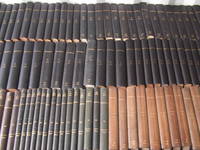
1866ref. 010620London: Office for Advertisments and Publications 1866. A near complete run from 1866 to 1994. 231 volumes. Lacking July-Decenber 1948 & January-June 1949. Books measure 36x26.5 last 31 volumes measure 30x21.5. Illustrated throughout. Most volume bound in modern black cloth with gilt lettering others bound in quarter calf. The calf volumes are faded on spines. Generally all bindings in very good clean firm condition. Internally very occasional library mark stamp. Pages and illustrations in very good clean condition. . Cloth. Very Good. Small Folio. Office for Advertisments and Publications Hardcover
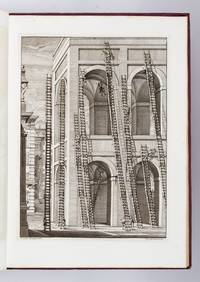
1824ref. ST19673Rome: Crispino Puccinelli 1824. Second Edition with the Addition of Later Machines and Premises. 520 x 370 mm. 20 1/2 x 14 1/2". 4 p.l. XXIX 1 46; 4 48 pp. Two volumes bound in one. Edited and with notes on the life and work of Zabaglia by Filippo Maria Renazzi. SPLENDID CONTEMPORARY RED MOROCCO VERY ATTRACTIVELY GILT covers with frames formed by thick and thin gilt rules filled with alternating fleuron tools above an undulating ribbon roll central panel framed by multiple gilt rules connecting ornate floral corner- and sidepieces flat spine divided into panels by multiple plain and decorative rules these panels with rectangular centerpiece composed of volutes arabesques and floral tools marbled endpapers. Engraved portrait of Zabaglia by Girolamo Rossi after a drawing by Pietro Leone Ghezzi engraved vignettes on both title-pages and 62 FINE ENGRAVED PLATES 10 OF THEM FOLDING after designs by Francesco Rostagni. Berlin Katalog 2755; Brunet V 1515 ; Graesse VII 501; Cicognara 968 all citing the first edition. Trivial signs of use to the binding and contents with insignificant imperfections only: AN EXCEPTIONALLY FINE COPY the attractive binding lustrous and virtually unworn and THE PLATES REMARKABLY CLEAN FRESH AND BRIGHT with especially ample margins. This is a remarkably beautiful copy inside and out of the second enlarged edition of a fundamental work for the history of engineering and the construction of buildings expanding the original 1743 edition for educational use with text in academically appropriate Latin in addition to the original Italian. Niccola or Nicolò Zabaglia 1667-1750 began working as a day laborer on the construction of St. Peter's Basilica in 1686 and was employed full time on the project by 1691. According to Dizionario Biografico degli Italiani "by 1696 he was able to demonstrate his ability as a mechanic moving the large porphyry cup and the bronze statues placed in the Vatican baptistery." Although illiterate he was an ingenious practical engineer. DBI notes that "the preparation of scaffolding and exceptional castles and the transport of extraordinary weights" were his strongest skills. For the Vatican he organized the removal transportation and installation of several obelisks at St. Peter's and other churches figured out a way to move a large marble altar and prepared the scaffolding needed to construct maintain or restore areas of St. Peter's. He was involved in strengthening its famed dome after the earthquakes of 1703 and 1730 inventing the necessary machines to do the work and training the construction crew. This volume's splendid oversized engravings illustrate the machinery and instruments used for the restoration of the dome—elaborate hoisting devices construction tools pulleys scaffolding ornamental tiles etc.—as well as the craftsmen at work. The transportation of the Vatican obelisk by Domenico Fontana in 1590 is represented by a fine selection of plates from Carlo Fontana's work on St. Peter's "Templum Vaticanum" published in 1694 and derived from Domenico's original "Delle transportazione dell'obelisco Vaticano". This undertaking may be compared with the plates depicting Zabaglia's methods for transporting and erecting obelisks. The greatest honor conferred on the unofficial "Engineer of the Vatican" in his lifetime was the first edition of this work published at Rome by Niccolò & Marco Pagliarini in 1743 with a total of 55 plates. The present second edition is enlarged with a biography of Zabaglia written by jurist Filippo Maria Renazzi 1742-1808 and with eight more plates which are among the very best and largest in the book; it is less commonly encountered than the first edition. This may be due to the fact that if put to the intended use in educational settings copies of the 1824 edition would have seen far more wear and tear than the earlier printing. Crispino Puccinelli unknown
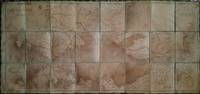
1911ref. 14938Chatham: School of Military Engineering May 1911. 765 by 1075mm. 30 by 42.25 inches. Colour lithographed map 40-section canvas-backed folding map at a scale of one inch to one mile This map of Hong Kong and the New Territories is one of the earliest maps to show the topography of Lantau Island and adjacent islands in detail. Hills are shown with contours and hachure shading with heights given in feet and villages are named. Cheung Chau called "Chung Island" is detailed but Lamma appears to have been only partially surveyed. The "Mouth of the Canton or Pearl River" runs along the left margin. Mountains of interest include Lin tau Lantau Peak at 3064 feet Victoria Peak at 1774 feet Ma On Shan at 2261 feet and Tai Mo Shan at 3130 feet. Part of the new single-track Kowloon Canton Railway which opened in 1910 is depicted between Tsim Sha Tsui and Sham Chun Sum Chun. This map is an early example of the topographical maps of areas of British political and commercial interest compiled by the Geographical Section General Staff of the War Office throughout the twentieth century. School of Military Engineering, unknown
ref. 000150126 × 59 cm. Paper mounted on thick cloth. Text in Ottoman Turkish printed in a European-style typeface. Depicting the northern Ottoman territories extending from the Caspian Sea to the eastern regions of Austria. An early wall map printed under Ottoman authority in Üsküdar Scutari. the Imperial engineering ground forces, Muhendishane