1923ref. 2926073Longmans Green and Co 1923. This is an ex-library book and may have the usual library/used-book markings inside.This book has hardback covers. In good all round condition. No dust jacket. Please note the Image in this listing is a stock photo and may not match the covers of the actual item200grams ISBN: Longmans Green and Co hardcover
2005ref. 5563851Ashgate 2005. This is an ex-library book and may have the usual library/used-book markings inside.This book has soft covers. In good all round condition. Please note the Image in this listing is a stock photo and may not match the covers of the actual item1100grams ISBN:9780754646617 Ashgate paperback
2013ref. 9784748Ashgate 2013. This is an ex-library book and may have the usual library/used-book markings inside.This book has soft covers. In fair condition suitable as a study copy. Please note the Image in this listing is a stock photo and may not match the covers of the actual item1450grams ISBN:9781409457541 Ashgate paperback
2009ref. 9287576Earthscan 2009. This is an ex-library book and may have the usual library/used-book markings inside.This book has hardback covers. Clean from markings. In fair condition suitable as a study copy. No dust jacket. Library sticker on front cover. Please note the Image in this listing is a stock photo and may not match the covers of the actual item800grams ISBN:9781844076420 Earthscan hardcover
1914ref. 020221New York: McGraw-Hill Book Company Inc 1914. Second Edition Third Impression 3rd Printing. Red Cloth. Fine/No Dust Jacket. Frontispiece; Drawings Throughout. Xiii 415 Pp/ Red Cloth Gilt. Third Printing Of Second Edition 1914. Near New No Names Or Marks Gilt Brilliant. McGraw-Hill Book Company Inc hardcover
1994ref. 9143622Prentice Hall 1994. This is an ex-library book and may have the usual library/used-book markings inside.This book has hardback covers. Book contains pen markings. In poor condition suitable as a reading copy. No dust jacket. Please note the Image in this listing is a stock photo and may not match the covers of the actual item1800grams ISBN:9780024155603 Prentice Hall hardcover
1968minor rubbing along the edges and ends of the d / j
2010312 pages. Index. Footnotes. "Stories of those who lived and worked around the building of British Columbia's Peace and Columbia River hydroelectric projects early in the 1960s. More than 120 illustrations, maps, and photos." - from dust jacket. Clean, bright and unmarked with negligible wear. Dust jacket now preserved in glossy new archival-grade Brodart. A beautiful copy. Gift quality. Book
2010ref. 166j2267Canada: Douglas & McIntyre Educational Ltd. Very Good in Very Good dust jacket. 2010. First Edition. Hardcover. 1553654951 . "Stories of those who lived and worked around the building of British Columbia's Peace and Columbia River hydroelectric projects early in the 1960s. More than 120 illustrations maps and photos." - dust jacket. 312 pages. Index. Footnotes. Clean bright and unmarked with very light wear. Dust jacket now preserved in glossy new archival-grade Brodart. A high-quality example.; 4to - over 9¾" - 12" tall; Voices from Two Rivers: Harnessing the Power of the Peace and Columbia Rivers British Columbia Energy Hydro-Electric Power W.A.C. Bennett BC Hydro and Power Authority . Douglas & McIntyre (Educational) Ltd. hardcover
1976Blue cloth quarto; xv, 602 pages : illustrations ; 29 cm Ex-library (private) || Contents: Introduction / D.J.P. Swift and D.J. Stanley -- Introduction to the physical oceanography and fluid dynamics of continental margins / C.N.K. Mooers -- Some simple mechanisms for steady shelf circulation / A. Leetmaa -- Wind-driven currents on the continental margin / C.N.K. Mooers -- Tidal currents / H.O. Mofield -- Wave climate of the continental margin : elements of its mathematical description / O.S. Madsen -- Boundary layer flow under steady unidirectional currents / P.D. Komar -- The transport of cohesionless sediments on continental shelves / P.D. Komar -- Suspended sediment transport and mud deposition on continental shelves / D.E. Drake -- Substrate response to hydraulic process : grain-size frequency distributions and bedforms / D.J.P. Swift and J.C. Ludwick -- Subaqueous sediment transport and deposition by sediment gravity flows / G.V. Middleton and M.A. Hampton -- Intracoastal sedimentation / H.R. Wanless -- Nearshore currents and sediment transport, and the resulting beach / P.D. Komar -- Coastal sedimentation ; Continental shelf sedimentation / D.J.P. Swift -- Shelf-break processes and sedimentation / J.B. Southard and D.J. Stanley -- Sedimentation in canyon, slope and base-of-slope environments / G. Kelling and D.J. Stanley -- Suspended sediment transport at the shelfbreak and over the outer margin / J.W. Pierce -- Chemistry and continental margin sedimentation / P.G. Hatcher and D.A. Segar -- Sedimentation and food resources : animal-sediment relationships / S.B. Saila -- Sedimentation and coastal engineering : beaches and harbors / D.B. Duane -- Sedimentation and ocean engineering : structures / H.D. Palmer -- Sedimentation and ocean engineering : placer mineral resources / D.B. Duane -- Sedimentation and ocean engineering : ocean dumping / C.G. Hard and H.D. Palmer -- Perspectives of shelf sedimentology / K.O. Emery.|| Marine sediments. Sediment transport. Environmental management. || "A Wiley-Interscience publication."/ "Outgrowth of lectures presented at a short course, 'The New concepts of continental margin sedimentation, II', sponsored by the American Geological Institute ... convened at Key Biscayne, Florida, on November 15 to 17, 1974."
1977ref. 8727Standford CA: Asia/Vita Publication. 8.5" x 12"; 58 pages; Soft Cover Paperback. Book Shows Little Wear. Text is clean no markings seen. Photographs and illustrations. . Good with no Dust Jacket. Trade Paperback. 1977. Asia/Vita Publication paperback
1992ref. 46221Ground Water Management. VG/NONE. 1992. Paperback. Large oversize paperback. Fifth international conference on the use of models to analyze and find working solutions to ground water problems. 15 papers presented at Dallas Texas meeting. Previous owner's name on title page. Covers and contents very clean bright. Not library discard. ; . Ground Water Management, paperback
1914ref. 3997927E & FN Spon 1914. This is an ex-library book and may have the usual library/used-book markings inside.This book has hardback covers. In fair condition suitable as a study copy. Please note the Image in this listing is a stock photo and may not match the covers of the actual item850grams ISBN: E & FN Spon hardcover
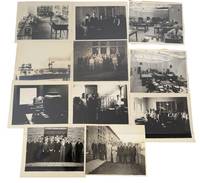
1930ref. 232561930. Stanford University Military Engineering Archive Documenting the First Army Ordnance Reserve Gauging Program ca. 1930. Stanford University photo archive documenting the emergence of interwar military-industrial technical education ordnance gauging instruction and precision engineering research on campus during the early development of Stanford's engineering and applied science programs. Rather than depicting science classrooms in a general sense these photographs specifically document the technical culture surrounding Army ordnance training instrumentation systems machine calibration and laboratory-based engineering instruction that linked universities to the expanding infrastructure of American military preparedness between World War I and World War II. Taken together the archive captures Stanford at the moment when higher education increasingly merged scientific research industrial precision manufacturing and military technical training into a unified research model that later shaped the wartime and Cold War defense university system. Photo archive of 11 large silver gelatin photographs each approximately 8" x 10" Stanford University California dating from 1930 into the 1950s; two later views mounted to decorative yellow board. Several photographs depict laboratory interiors filled with precision instrumentation gauging apparatus optical and mechanical measuring devices machine-tool equipment calibration benches microscopes drafting stations and technical worktables arranged for instruction and inspection work. One especially important close-up photograph shows a large precision gauging or rotational calibration apparatus associated with ordnance measurement and machine tolerance testing. Surrounding the device are machined cylindrical components threaded fittings gauge rings and polished metal parts likely used in dimensional inspection bore alignment concentricity testing or interchangeable manufacturing instruction. Another darkened workshop view depicts what appears to be a heavy precision lathe or gauging bench fitted with a mounted cylindrical test component equipment consistent with ordnance inspection and military engineering instruction during the interwar period. Additional photographs show groups of students and instructors posed around technical apparatus inside instrumentation laboratories while later mounted photographs document more formalized postwar engineering office and drafting environments associated with large-scale technical administration and research organization. Most important is a detailed handwritten verso inscription reading: "Equipment used Feb 1930 Ordnance School at Stanford University. This was first time a course in gauging was given in any Army Ordnance Reserve Unit permanent facilities excepted. Instructor; Lieut Merrill S. Hingo. Photo; Lieut Howard Story Taylor." The inscription firmly identifies the archive as documentation of early Army ordnance reserve technical instruction conducted at Stanford and specifically ties the machinery to military gauging education. In the 1920s-30s "gauging" referred not merely to ordinary measurement but to the specialized science of precision dimensional inspection used in artillery manufacture weapons-part standardization shell tolerances bore measurement interchangeable machining systems and industrial calibration. Such instruction formed a critical component of modern military-industrial production where even minor deviations in machining tolerances could affect artillery accuracy chamber pressure shell seating or mechanical reliability. Several outdoor group portraits further reinforce the military context. One large group stands beneath a doorway marked "Military Science and Tactics" while another includes Colonel Donald C. Cubbison a career U.S. Army officer and West Point graduate who served as professor of military science and tactics at Stanford from 1930 to 1935 before later attaining the rank of major general during World War II. His appearance situates the archive directly within Stanford's interwar military training system and links the photographs to broader national efforts to train technically educated reserve officers in engineering ordnance artillery science and industrial preparedness. The archive also reflects Stanford's broader transformation into a modern research university centered on applied science and engineering. During the interwar years Stanford's scientific departments expanded laboratory instruction instrumentation programs and research-based technical education under faculty including Robert E. Swain John P. Mitchell William H. Sloan and George S. Parks. Parks in particular became associated with analytical chemistry and geochemical laboratory science disciplines heavily dependent upon precision instrumentation and calibrated measurement systems. The engineering and laboratory culture documented here overlaps with contemporary developments in industrial metrology applied physics materials testing optical measurement and machine-tool inspection that increasingly tied university research to industrial production and military logistics. What makes the archive especially significant is the way it documents the transitional infrastructure between traditional university instruction and the emerging defense-oriented research university model. These photographs preserve not simply classrooms but the physical systems of technical education itself: calibration benches inspection machinery gauging apparatus optical instruments drafting rooms and laboratory spaces where students and reserve officers were trained in the precision engineering practices underlying twentieth-century industrial warfare and mass manufacturing. In doing so the archive visually traces the early foundations of the university-based defense engineering culture that would later expand dramatically during World War II and the Cold War throughout California research institutions and the broader military-industrial complex. Photographs are sharp and highly detailed with clear views of equipment and interiors; handwritten identifications remain legible. The two mounted 1950s photographs have several large tears without image loss with lighter handling wear elsewhere. Overall good condition. unknown books
1991ref. 244135PN. New. 1991. Soft Cover. Date is original print. This is a reprint edition . PN paperback
1930ref. 232561930. Stanford University Military Engineering Archive Documenting the First Army Ordnance Reserve Gauging Program ca. 1930. Stanford University photo archive documenting the emergence of interwar military-industrial technical education ordnance gauging instruction and precision engineering research on campus during the early development of Stanford's engineering and applied science programs. Rather than depicting science classrooms in a general sense these photographs specifically document the technical culture surrounding Army ordnance training instrumentation systems machine calibration and laboratory-based engineering instruction that linked universities to the expanding infrastructure of American military preparedness between World War I and World War II. Taken together the archive captures Stanford at the moment when higher education increasingly merged scientific research industrial precision manufacturing and military technical training into a unified research model that later shaped the wartime and Cold War defense university system. Photo archive of 11 large silver gelatin photographs each approximately 8" x 10" Stanford University California dating from 1930 into the 1950s; two later views mounted to decorative yellow board. Several photographs depict laboratory interiors filled with precision instrumentation gauging apparatus optical and mechanical measuring devices machine-tool equipment calibration benches microscopes drafting stations and technical worktables arranged for instruction and inspection work. One especially important close-up photograph shows a large precision gauging or rotational calibration apparatus associated with ordnance measurement and machine tolerance testing. Surrounding the device are machined cylindrical components threaded fittings gauge rings and polished metal parts likely used in dimensional inspection bore alignment concentricity testing or interchangeable manufacturing instruction. Another darkened workshop view depicts what appears to be a heavy precision lathe or gauging bench fitted with a mounted cylindrical test component equipment consistent with ordnance inspection and military engineering instruction during the interwar period. Additional photographs show groups of students and instructors posed around technical apparatus inside instrumentation laboratories while later mounted photographs document more formalized postwar engineering office and drafting environments associated with large-scale technical administration and research organization. Most important is a detailed handwritten verso inscription reading: "Equipment used Feb 1930 Ordnance School at Stanford University. This was first time a course in gauging was given in any Army Ordnance Reserve Unit permanent facilities excepted. Instructor; Lieut Merrill S. Hingo. Photo; Lieut Howard Story Taylor." The inscription firmly identifies the archive as documentation of early Army ordnance reserve technical instruction conducted at Stanford and specifically ties the machinery to military gauging education. In the 1920s-30s "gauging" referred not merely to ordinary measurement but to the specialized science of precision dimensional inspection used in artillery manufacture weapons-part standardization shell tolerances bore measurement interchangeable machining systems and industrial calibration. Such instruction formed a critical component of modern military-industrial production where even minor deviations in machining tolerances could affect artillery accuracy chamber pressure shell seating or mechanical reliability. Several outdoor group portraits further reinforce the military context. One large group stands beneath a doorway marked "Military Science and Tactics" while another includes Colonel Donald C. Cubbison a career U.S. Army officer and West Point graduate who served as professor of military science and tactics at Stanford from 1930 to 1935 before later attaining the rank of major general during World War II. His appearance situates the archive directly within Stanford's interwar military training system and links the photographs to broader national efforts to train technically educated reserve officers in engineering ordnance artillery science and industrial preparedness. The archive also reflects Stanford's broader transformation into a modern research university centered on applied science and engineering. During the interwar years Stanford's scientific departments expanded laboratory instruction instrumentation programs and research-based technical education under faculty including Robert E. Swain John P. Mitchell William H. Sloan and George S. Parks. Parks in particular became associated with analytical chemistry and geochemical laboratory science disciplines heavily dependent upon precision instrumentation and calibrated measurement systems. The engineering and laboratory culture documented here overlaps with contemporary developments in industrial metrology applied physics materials testing optical measurement and machine-tool inspection that increasingly tied university research to industrial production and military logistics. What makes the archive especially significant is the way it documents the transitional infrastructure between traditional university instruction and the emerging defense-oriented research university model. These photographs preserve not simply classrooms but the physical systems of technical education itself: calibration benches inspection machinery gauging apparatus optical instruments drafting rooms and laboratory spaces where students and reserve officers were trained in the precision engineering practices underlying twentieth-century industrial warfare and mass manufacturing. In doing so the archive visually traces the early foundations of the university-based defense engineering culture that would later expand dramatically during World War II and the Cold War throughout California research institutions and the broader military-industrial complex. Photographs are sharp and highly detailed with clear views of equipment and interiors; handwritten identifications remain legible. The two mounted 1950s photographs have several large tears without image loss with lighter handling wear elsewhere. Overall good condition. unknown
ref. 57240Leicester: Standard Engineering. soft cover. VG. Very good condition with slight edge wear./No Jacket. Illustrated with black and white photographs and diagrams. 25 cm. Standard Engineering paperback
2002ref. 9773103Spon Press 2002. This is an ex-library book and may have the usual library/used-book markings inside.This book has hardback covers. In good all round condition. No dust jacket. Please note the Image in this listing is a stock photo and may not match the covers of the actual item650grams ISBN:9780415258364 Spon Press hardcover
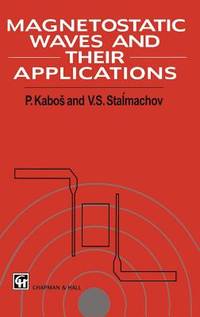
1994ref. 7856562Chapman & Hall 1994. This is an ex-library book and may have the usual library/used-book markings inside.This book has hardback covers. In good all round condition. Please note the Image in this listing is a stock photo and may not match the covers of the actual item700grams ISBN:9780412547102 Chapman & Hall hardcover
1955Paperback in good condition. Covers are tanned and lightly edgeworn. Stamp on front cover. Staples on spine are rusty. A few pages are lightly creased. Contents are clear. AM Used
1955Neat name to title page. No other marks or inscriptions. No creasing to booklet covers. A very clean very tight copy with bright unmarked boards and no bumping to corners. no rusting to staples. 50pp. Physics and maths aspects to engineering bearings.
1900ref. 18393Stuttgart (Um 1900). 31 Seiten. Mit mehreren Holzschnittabbildungen. Originalbroschur (Gebrauchsspuren. Hinteres Umschlagblatt mit größeren Fehlstellen) 22x14 cm
1847ref. 047432London: Eyre & Spottiswoode 1847. Full-Leather. Good/No d/j as Published. 8vo - over 7¾" - 9¾" tall. Type: Book Bound collection of Staffordshire Potteries Water Works Company Acts of Parliament.Front board detached stamped Director's Copy.1847186118631868188819121922.Contents in good condition but binding poor. Eyre & Spottiswoode hardcover
ref. 12471900-nnew. unknown
ref. 12471900like new. unknown