Simmons, Milagros SBiblio.com

18,170 results
1991ref. EG-654Chelsea Michigan: Lewis Publishers 1991. An essential component of all programs relating to waste management is the ability to perform measurements on-site for safe handling and disposal of hazardous wastes. This book focuses on recent developments in field testing methods and quality assurance which are important to both RCRA and CLERLA hazardous waste management programs. The book highlights sampling strategies field measurements and toxicity screening of complex waste matrices. It also describes requirements for quality assurance intended to be used in hazardous wastes remediation management and control. 315 pp. Illustrated. Prior ownership name-stamps to title page and upper outer edge clean pocket remnant on front endpaper. No text marks or highlights. Minimal shelfwear. First Edition. Hard Cover. Very Good. 8vo - over 7¾" - 9¾" tall. Ex-Professional Library. Lewis Publishers hardcover
1989ref. ES-78Chelsea Michigan: Lewis Publishers 1989. Comprehensive text contains detailed technical papers presented by leading scientists and field experts on topics of research and practical applications including health studies; catastrophic releases; hazard control technology; control methods for metals and metalloids; exposures in gallium arsenide processing; hydride replacements in semiconductor fabrication; etc. 322 pp. Illustrated. First Edition. Hard Cover. As New. 8vo - over 7¾" - 9¾" tall. Lewis Publishers Hardcover
2013New New English Original bdg. Dust wrapper. Mint. 4to. (31 x 22 cm). In Turkish. 255, [1] p. Color and b/w ills. Nuri Demirag (born 1886 in Divrigi - died 1957 in Istanbul) was an early Turkish industrialist. He was one of the first millionaires of the Turkish Republic. His first enterprise was the production of cigarette paper. Demirag then invested his capital in the development of the Turkish railway network. Because of this investment, Mustafa Kemal Atatürk gave him the surname Demirag, which translates as "Network of iron". In 1936 he started an aircraft factory employing 500 people at Besiktas, Istanbul (later nationalized by the government and now occupied by the Istanbul Naval Museum). Construction of the Nu D.38 twin engine high wing light transport followed. In 1946 he founded the first opposition party, which was named Milli Kalkinma Partisi (National Development Party), but his party was dissolved in 1958. He was elected deputy of Sivas for the Democratic Party as an independent candidate in 1954. Demirag donated his aircraft to his flying school (Gök Okulu) in Yesilköy, created to interest young Turks in aviation. The land upon which the school was built was later nationalized by the Turkish government and is now the Atatürk International Airport. Demirag died in 1957 from diabetes.
1940ref. TECH0524Berlin o. J. (um 1940). Lex.-8°, 778 S., 3 weiße Bl., mit zahlr. Textabb. u. 1 Farbtaf., OLn., berieben, berieben, Seitenkante d. Vorderdeckels etwas fleckig, Rü. leicht geblichen.
1942ref. 43096Hagen-Vorhalle. (Um 1942). 16 Seiten mit mehreren Abb. u. zwei ill. Beilagen. Zweifarbig ill. Originalbroschur. (Geheftet. Mit geringeren Gebrauchsspuren) 30x21 cm
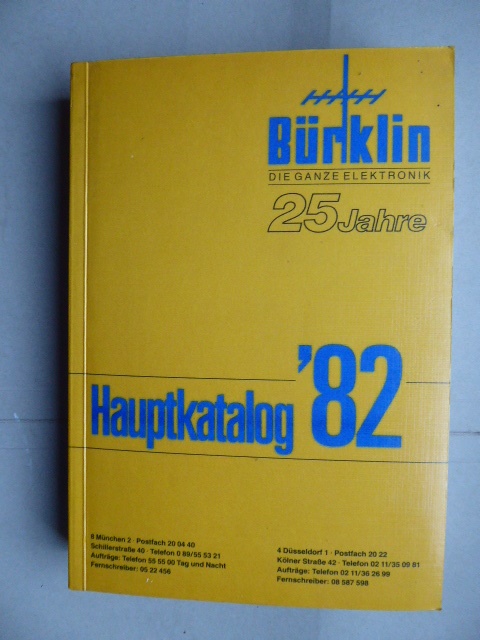
1982ref. 12142München u. Düsseldorf. 1982. 800 Seiten. Mit tausenden von Abbildungen. Originalbroschur. 24x17 cm
1907ref. 1215085Berlin 1907. Gr.-8vo. 7 S. 1907. Gr.-8vo. 7 S., 1 Bl., 489 S. m. überaus zahlr. Abb. u. Tabellen. OLwd (Rücken bei montiertem Originalrücken u. Vorsätze erneuert, vereinzelte Anmerkungen).
1980ref. 471159London: Heinemann 1980. Reprint. Hardcover. Very Good/None. Jan Pienkowski. 12 pages. Hardcover glazed boards with no dust jacket. Very clean unmarked copy with only minor edge wear. Six beautiful pop-up images by Jan Pienkowski throughout. INSCRIBED BY PIENKOWSKI on inside front cover. Library Association award sticker on front cove. Tight copy. Record # 471159 Heinemann hardcover
ref. 0267748337.Ghardcover. Good. Access codes and supplements are not guaranteed with used items. May be an ex-library book. hardcover
ref. 0365354805.Ghardcover. Good. Access codes and supplements are not guaranteed with used items. May be an ex-library book. hardcover
ref. 1527894665.Gpaperback. Good. Access codes and supplements are not guaranteed with used items. May be an ex-library book. paperback
ref. 1024714748.Ghardcover. Good. Access codes and supplements are not guaranteed with used items. May be an ex-library book. hardcover
ref. 0260079677.Ghardcover. Good. Access codes and supplements are not guaranteed with used items. May be an ex-library book. hardcover
ref. 1020541369.Ghardcover. Good. Access codes and supplements are not guaranteed with used items. May be an ex-library book. hardcover
2020ref. 237375New York: Insight Editions / Warner Bros. Entertainment / Wizarding World 2020. First edition first printing. Illustrated glazed boards. A Pop-Up Guide to Diagon Alley and Beyond. Illustrated by Kevin M. Wilson. Unfolds into a four-feet long 3D diorama of Diagon Alley! Insight Editions / Warner Bros. Entertainment / Wizarding World unknown
2001ref. 39628Scholastic. 2001. First Edition. Hardcover. Fine in No DJ As Issued dust jacket. Still in shrinkwrap! Gift quality! Fast shipping with tracking number provided. ; 11.5 X 8.6 X 0.9 inches; 24 pages . 0439294827 . Scholastic hardcover
1989ref. 5583426Granta Editions 1989. This is an ex-library book and may have the usual library/used-book markings inside.This book has hardback covers. In good all round condition. Dust jacket in good condition. Please note the Image in this listing is a stock photo and may not match the covers of the actual item900grams ISBN:0906782406 Granta Editions hardcover
1947Ex - library with minimal stamps and labels, pocket sized paperback, library bookplate on fep, spine bumped top and tail, corners and spine rubbed, page block is a little grubby clear, clean and tight. Ex - Library
2017ref. 2327730Wiley 2017. This is an ex-library book and may have the usual library/used-book markings inside.This book has hardback covers. In good all round condition. No dust jacket. Please note the Image in this listing is a stock photo and may not match the covers of the actual item850grams ISBN:9781119128045 Wiley hardcover
ref. 0309683130.Gpaperback. Good. Access codes and supplements are not guaranteed with used items. May be an ex-library book. paperback
ref. 0309297206.Gpaperback. Good. Access codes and supplements are not guaranteed with used items. May be an ex-library book. paperback
1998ref. Q-0309059917National Academies Press 1998-09-25. Paperback. New. New. In shrink wrap. Looks like an interesting title! National Academies Press paperback
1920ref. BIB316245London: Harmsworth Encyclopedias. No DateCirca 1920. Large octavo size 16x24cm approx. Very Good condition. No dustjackets. Some light rubbing to spine sides. Some minor creasing to some pages. Blue cloth with gilt to spine. Blind stamped front boards. Illustrated with Black & White Photographs and Drawings some fold-out. A nice clean and solid set. Scarce. Robust professional packaging and tracking provided for all parcels. 2272 pages over 3 volumes. Written for amateurs and experimenters by experts in all branches of wireless science wirh over 5000 illustrations. . Very Good. 1st Edition. Hardback. Harmsworth Encyclopedias hardcover
1963ref. 723140PN. New. 1963. Soft Cover. Date is original print. This is a reprint edition. . PN paperback
Folio (340 x 520 mm). (14), 125, (1 blank), 218, (2) pp. With hand-coloured engraved title-page and 30 double-page hand-coloured engraved plates, each celestial charts or model Universes. Also with 4 engraved and 2 woodcut in-text diagrams, illustrated woodcut initials, headpieces, and tailpieces. Contemporary full vellum ruled in floriated gilt, decorated with gilt arabesques, stamped in gilt on spine, all edges gilt. First edition, second issue of the only celestial atlas published in the Golden Age of Dutch cartography, and perhaps the most important 17th century celestial atlas to be produced. - Unlike later celestial atlases, the Cellarius charts demonstrated various ancient and contemporary cosmological ideas, rather than merely the names and positions of the stars. The purpose of the book was to assess contemporary attempts to discover the underlying harmony of the universe. As such, the charts represent the highest levels of 17th century astronomical thought, with lavishly engraved and hand-coloured plates showing the three great theories on the nature of the universe: the Ptolemaic, the Copernican, and the Brahean. This was an era when the debate between these models was at the forefront of cosmological science, on par with the debate between Einsteinian Relativism and Quantum Theory today. - Featured in four plates, the Ptolemaic model was the oldest, formulated by the Alexandrian astronomer and mathematician Ptolemy about 150 CE. Ptolemy's approach placed the Earth at the centre of the cosmos, but unlike other ancient models (for instance, Aristotle's) could explain the odd movement of the planets as observed from Earth: unlike the moon and Sun, most planets occasionally appear to travel in spirals in the night sky rather than tracking sedately East to West. This movement in rooted in the word planet itself, from the Greek "planetes" meaning "wandering one". Ptolemy was able finally to mathematically explain the wandering of the planets, though by way of a complex geometry of epicycles. - By the 16th century, this model was beginning to wear thin. In 1543 Nicholas Copernicus (1473-1543) made detailed observations which led him to publish "De Revolutionibus Orbium Coelestium" ("On the Revolutions of the Celestial Orbs"), which solved the worst geometrical complications of Ptolemy by placing the Sun at the centre of the universe and making orbits by and large circular. However, until Galileo, the Copernician theory lacked an underlying system of physics to explain this new movement. Tycho Brahe (1546-1601) attempted to forge a middle path between the classic Ptolemaic model and the neater mathematics of the Copernican, allowing that most planets would orbit the sun, but that the Sun orbited the Earth, which remained at the centre of the cosmos. As early as the 12th century it was not uncommon to posit that one or two planets might orbit the Sun, which in turn orbited the Earth. However, in the mediaeval period, debate was held off due largely to the lack of technological ability to observe the sky with precision. It was simply impossible to prove whether the Sun or the Earth stood at the centre, and thus similar (though always geocentric) models existed side by side without too much controversy. When Cellarius placed these three models together it was in a world where this had changed: one of these models would emerge to portray what was, to contemporaries, an inimitable truth both scientific and deeply religious. The only question was who would win the day. - In this volume, Cellarius has delved into this debate in striking baroque style, bringing to bear all the power of the Dutch Golden Age of cartography on the heavens rather than the Earth. The four engravings of the Ptolemaic system depict the central Earth encased, as was traditional, in the four elements, including a large ring of fire. Above this are the orbits of the seven planets: the Moon, Mercury, Venus, the Sun, Mars, Jupiter, and Saturn, bordered by the ecliptic, in which the fixed stars spin around the unmoving Earth once a day. Another Ptolemaic plate includes two smaller models as part of the marginal decoration, one of the Ptolemaic hypothesis, "in qua Terra totius Universi centrum", and one of the Brahean hypothesis, "in qua centrum Lunae et Firmamenti est Terra. reliquorum quinq. Planetarum Sol". In this way, Cellarius placed each model in direct dialogue with each other, not only in text but in image. Following the section on Ptolemy, Copernicus bursts onto the scene with a model dominated by a central sun, its rays stretching out to every corner of the universe. Around it are Mercury, Venus, and then Earth itself, around which orbits the Moon; next comes Mars and then Jupiter, now with four moons to itself, and finally Saturn. The four moons of Jupiter had only been discovered fifty years previously, near-simultaneously by Galileo and by Simon Marius; their presence remained innovative in Cellarius's time. The second illustrates in more detail the orbit of the Earth around the Sun and the rotation of Earth which must create night and day in the Copernican system. Finally, Brahe's compromise is introduced, mapped so beautifully that its inelegant fusion of theories appears somehow elegant in its own right. The Earth at the centre is orbited by the Moon, then by the Sun. Around the Sun, however, are Mercury and Venus in tight orbit, and then, more distantly, are Mars, Jupiter - again with its modern four moons - and Saturn. - Thus, in one volume, Cellarius has encapsulated the increasingly accurate celestial cartography, the increasingly uncertain laws of physics, and the endlessly fascinating 17th century multiverse in a moment on the cusp of the most momentous decision in the history of science. Strangely, Cellarius himself remains a somewhat mysterious figure, with little known other than that he was the rector of the Latin school of Hoorn and a gifted mathematician. In fact, it appears that "[t]he most elaborate and famous celestial atlas of the 17th century was issued by an author unknown to the history of astronomy" (Whitfield). This 1661 edition is a variant of the first edition of 1660, identical except for the change of date on the title. - Touch of exterior wear, a few plates with tape reinforcement where they have begun to separate from guards. Stunningly ornate, detailed, and well preserved. Koeman IV, Cel 2. Snyder, Oude Hemelkaarten p. 115f. Whitfield p. 101.