13.288 risultati
2020rif. 1419101Singapore: Springer 2020. Softcover. Octavo xx 54 pages. In Very Good condition. Dark blue/grey cover with white lettering. Some very light shelfwear. Shelved in ND-B. 1419101. FP New Rockville Stock. Springer unknown books
1955rif. 88623Moscow: Foreign Languages Publishing House 1955. First Edition. First printing. 12mo. Pictorial card wrappers with French flaps; 85pp; illus. Trivial rubbing to covers; still a tight unmarked Near Fine copy. A bit of show-off Cold War propaganda touting the achievements of Russian engineering - in this case a completely automated plant producing automotive pistons on the campus of the "Experimental Machine-Tool Research Institute." The achievements of the Soviet machine-tool industry are perhaps a trifle overblown here - but two years later Sputnik would prove that the USSR's scramble for technological and scientific relevance was anything but a pipe-dream. Uncommon; OCLC notes fewer than ten locations worldwide but only one in North America U. Mich. Foreign Languages Publishing House unknown books
1805rif. 86618Boston: E. Lincoln Water Street 1805. First Edition. Octavo 23cm. Sewn wrappers; 622pp final page a blank. Moderate foxing and discoloration to title page; text quite fresh with sewing intact - Very Good. Documentary account of the controversy surrounding the construction of the South Street Toll Bridge aka the Dover Street Bridge connecting Boston to Dorchester in the years 1803-05. The case was an early example in America of publicly-supported private development involving the annexation of much of what is now South Boston and the destruction of substantial existing property on the South Street side. Various petitions for and against the project are presented in the current pamphlet; these are signed in type by some of the principal players in the scheme including William Tudor and Gardner Greene for and multiple citizens under the signature of Edward Tuckerman opposing. The bridge was constructed later in 1805. S&S 8207. RINK 2618. SABIN 6598. E. Lincoln, Water Street unknown books
1960rif. vas5233N.l.: British Overseas Airways Corp. 1965. Reprint of a Report first published in October 1960. Quarto stiff blue wrappers typewritten 17 pp. 7 graphs one 8 x 10 photographs. Very Good. British Overseas Airways Corp., 1965. Reprint of a Report first published in October 1960. unknown books
1950rif. 11129New York: McGraw-Hill 1950. 1st edition. 8vo. 451pp. original cloth good condition. McGraw-Hill unknown books
1985rif. 800059mGrand Blanc Mich.: Russ Hackett Engineering 1985. Folio plastic ring-binder 32 maps 33 pp. of index 15 maps 14 pp. of index. Very Good; cover show minor soiling. Russ Hackett Engineering, 1985. unknown books
2007rif. 1492New York: Harper Collins Publishers 2007. Boards. As new. Matthew ARMSTRONG. POP-UP BOOK MOVEABLE BOOK. Matthew ARMSTRONG full-color art. 4to; 7 pop-up pages; glazed color pictorial boards color pictorial pop-ups; never fully opened; fine as new. Seven complex pop-up scenes each spanning two pages designed by award winning artist and paper engineer Robert Sabuda b. 1965: The Magician's Nephew; The Lion The Witch and the Wardrobe; The Horse and His Boy; Prince Caspian; The Voyage of the Dawn Treader; The Silver Chair; and The Last Battle. Harper Collins Publishers unknown books
1978rif. 637New York: Random House 1978. First Printing. Boards. Fine. Dale Payson. First printing. 8vo; 16pp 2 sheets of punch-out characters and fold-out flap with pop-up castle; glazed paper color pictorial tri-fold board; $4.95 price sticker to front board; color illustrations; fine with unused sheets of punch-outs. In 7 WorldCat libraries. ISBN code: 394-83548-4. Includes the stories of The Golden Goose Jack and the Beanstalk Rumpelstiltskin and Sleeping Beauty with punch-out characters for each story. Random House unknown books
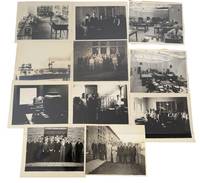
1930rif. 232561930. Stanford University Military Engineering Archive Documenting the First Army Ordnance Reserve Gauging Program ca. 1930. Stanford University photo archive documenting the emergence of interwar military-industrial technical education ordnance gauging instruction and precision engineering research on campus during the early development of Stanford's engineering and applied science programs. Rather than depicting science classrooms in a general sense these photographs specifically document the technical culture surrounding Army ordnance training instrumentation systems machine calibration and laboratory-based engineering instruction that linked universities to the expanding infrastructure of American military preparedness between World War I and World War II. Taken together the archive captures Stanford at the moment when higher education increasingly merged scientific research industrial precision manufacturing and military technical training into a unified research model that later shaped the wartime and Cold War defense university system. Photo archive of 11 large silver gelatin photographs each approximately 8" x 10" Stanford University California dating from 1930 into the 1950s; two later views mounted to decorative yellow board. Several photographs depict laboratory interiors filled with precision instrumentation gauging apparatus optical and mechanical measuring devices machine-tool equipment calibration benches microscopes drafting stations and technical worktables arranged for instruction and inspection work. One especially important close-up photograph shows a large precision gauging or rotational calibration apparatus associated with ordnance measurement and machine tolerance testing. Surrounding the device are machined cylindrical components threaded fittings gauge rings and polished metal parts likely used in dimensional inspection bore alignment concentricity testing or interchangeable manufacturing instruction. Another darkened workshop view depicts what appears to be a heavy precision lathe or gauging bench fitted with a mounted cylindrical test component equipment consistent with ordnance inspection and military engineering instruction during the interwar period. Additional photographs show groups of students and instructors posed around technical apparatus inside instrumentation laboratories while later mounted photographs document more formalized postwar engineering office and drafting environments associated with large-scale technical administration and research organization. Most important is a detailed handwritten verso inscription reading: "Equipment used Feb 1930 Ordnance School at Stanford University. This was first time a course in gauging was given in any Army Ordnance Reserve Unit permanent facilities excepted. Instructor; Lieut Merrill S. Hingo. Photo; Lieut Howard Story Taylor." The inscription firmly identifies the archive as documentation of early Army ordnance reserve technical instruction conducted at Stanford and specifically ties the machinery to military gauging education. In the 1920s-30s "gauging" referred not merely to ordinary measurement but to the specialized science of precision dimensional inspection used in artillery manufacture weapons-part standardization shell tolerances bore measurement interchangeable machining systems and industrial calibration. Such instruction formed a critical component of modern military-industrial production where even minor deviations in machining tolerances could affect artillery accuracy chamber pressure shell seating or mechanical reliability. Several outdoor group portraits further reinforce the military context. One large group stands beneath a doorway marked "Military Science and Tactics" while another includes Colonel Donald C. Cubbison a career U.S. Army officer and West Point graduate who served as professor of military science and tactics at Stanford from 1930 to 1935 before later attaining the rank of major general during World War II. His appearance situates the archive directly within Stanford's interwar military training system and links the photographs to broader national efforts to train technically educated reserve officers in engineering ordnance artillery science and industrial preparedness. The archive also reflects Stanford's broader transformation into a modern research university centered on applied science and engineering. During the interwar years Stanford's scientific departments expanded laboratory instruction instrumentation programs and research-based technical education under faculty including Robert E. Swain John P. Mitchell William H. Sloan and George S. Parks. Parks in particular became associated with analytical chemistry and geochemical laboratory science disciplines heavily dependent upon precision instrumentation and calibrated measurement systems. The engineering and laboratory culture documented here overlaps with contemporary developments in industrial metrology applied physics materials testing optical measurement and machine-tool inspection that increasingly tied university research to industrial production and military logistics. What makes the archive especially significant is the way it documents the transitional infrastructure between traditional university instruction and the emerging defense-oriented research university model. These photographs preserve not simply classrooms but the physical systems of technical education itself: calibration benches inspection machinery gauging apparatus optical instruments drafting rooms and laboratory spaces where students and reserve officers were trained in the precision engineering practices underlying twentieth-century industrial warfare and mass manufacturing. In doing so the archive visually traces the early foundations of the university-based defense engineering culture that would later expand dramatically during World War II and the Cold War throughout California research institutions and the broader military-industrial complex. Photographs are sharp and highly detailed with clear views of equipment and interiors; handwritten identifications remain legible. The two mounted 1950s photographs have several large tears without image loss with lighter handling wear elsewhere. Overall good condition. unknown books
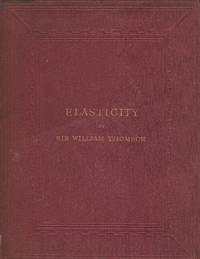
1878rif. 9004Edinburgh: Adam and Charles Black 1878. OFFPRINT. Original publisher's cloth. Very good; hinges strained. 4to 2 1 - 30 pp. There are text illus. A fundamental statement of the basic laws of mechanics of solids and theory of elastic deformation. This was considered to be the best explanation of the subject in the English language. Roberts Cat. p. 182; Todhunter & Pearson II/2 pp. 436-451. Adam and Charles Black hardcover books
1847rif. 58152New York: published by A. S. Barnes & Co. 51 John-Street 1847. 8vo pp. 336; 155 figures in the text; original brown cloth gilt-stamped spine; covers lightly rubbed; spine extremities chipped; otherwise very good. Early ownership signature of "AJ Brown." A popular and durable text. A tenth edition was reached by 1871. Gillespie 1816-68 was the first professor of civil engineering at Union College. To quote the DAB this work "was quickly recognized as useful in its field and held its place until long after his death." Hindle in his Technology in early America p. 59 notes it as "an excellent treatise on road construction." Kress C.7094. published by A. S. Barnes & Co., 51 John-Street unknown books
1931rif. S2418New York etc.:: Simmons-Boardman; London: Simpkin Marshall 1931. 1931. 196 x 125 mm. Small 8vo. xi 69 pp. Frontis. 2 illus. 23 figs. Gilt-stamped red cloth; inner hinge cracked. Very good. Scoop circulation is a method of circulating condensing water in such a manner that the moderate speed of a ship will cause a projection to "scoop" sea water into the condenser without the use of the circulating pump. This was an important method of designing fast naval vessels from 1892 to the 1930s. Simmons-Boardman; London: Simpkin Marshall, (1931). hardcover books
2002rif. S7968Kansas City:: Linda Hall Library 2002. 2002. Sq. 8vo. 12 pp. Photos illus. Pictorial wrappers. FINE. Linda Hall Library, 2002. unknown books
1852rif. 21036London: John Weale 1852. First Edition. Original tan printed wrappers. Very good. 4to 4 pp. 4 large folding plates. A presentation from Weale to Francis Peabody on the front wrapper. Francis is generally considered to be the first experimenter and American engineer of note in the field of hydraulics. After emigrating from England he eventually became the chief engineer to a group of manufacturing firms that utilized the controlled waters of the Merrimac River. They in turn had acquired the rights to a turbine installed and designed in the 1840s by Uriah Boyden. Francis was engaged to improve upon Boyden's turbine design. A large-scale installation of a much improved design of the approach guide vanes and outflow was installed on one of the canals in Lowell the installation is detailed in a book published much later by Francis. So comprehensive were the changes and improvements of the performance that the design became synonymous with Francis' name. The report is the rare first printing of the Francis design by John Weale the formidable architectural and engineering publisher in the UK. During the late 1840s and early '50s Weale undertook the publication of a series of "quarterly reports" as a periodical in an effort to catalog the manifold changes occurring in the engineering profession in all fields. As a publishing venture it failed; never having gained the market share to support a highly technical production requiring numerous complex illustrations. Toward the end the publications appeared only sporadically. The paper offered here is one of the last to issue from the press in the generous large quarto format containing detailed engraved illustrations. See Rouse History of Hydraulics pp. 165-168; DAB VI pp. 578-579; OCLC cites but two locations in the UK. John Weale unknown books
1621rif. 12041Venice: G Guerrigli a Spese dell' Autore 1621. First Edition. Full contemporary vellum. A very good bright copy; backstrip with a later overlay; text block split after the first signature; natural paper flaw to the lower fore corner of plate 3 touching the engraved surface; scattered spotting; recased at an earlier date. Folio 12 1 - 142 pp. There is an engraved title with a portrait of the author 18 large text engravings and 9 engraved plates. Sardi claimed to have completed 38 yrs. of study and military service throughout Europe. He had traveled in France Holland Germany and Spain and was in imperial service in Brussels in 1600. There he was responsible for the design of the hydraulic system for the garden of the Coudenberg palace. He is remembered for the publication of his Corona Imperiale . - a tract on fortification published in 1618. But shortly thereafter he had printed the important treatise on artillery and gun founding offered here. The book is divided in three sections. The first section treats the history of ballistics the second is an account of the geometric principles and design of cannon and the testing of brass castings. The third section is devoted to the design and construction of gun-mounts wheel carriages the use of gun-powder this section was excerpted and reprinted by Stubbes in the UK in 1670 and rules of ballistics; other chapters offer various designs for naval cannon and the use of same in the defense of ports against warships. Later chapters are devoted to the use the use of cannon in the defense of Alpine passes. The treatise benefits from generous and handsomely executed illustrations of the principles and designs set forth. An important book. The book was recased at an earlier date and the vellum covered boards somewhat amateurishly rebacked; but still an appealing copy. Cockle # 688; Millard Ital. Arch. pp. 381 - 384; Riccardi II 423. see Breman for the author and commentary; the same for Schutte. G Guerrigli a Spese dell' Autore hardcover books
1894rif. 9010Mittweida: R Schulze 1894. First Edition. Contemporary three-quarter leather. Good; some rubbing to the binding; one fldg. plate with gutter tape repair and burn into a small part of the image. 4to. There are 150 numbered plates some in partial color. A comprehensive analysis and guide to the theory and construction of all kinds of heavy lifting machines and cranes. This goes from the common screw jack to the heavy lift capacity of shipyard gantry cranes. Some of the cranes depicted are self propelled steam shovels. The plates are detailed sectional schematics. R Schulze hardcover books
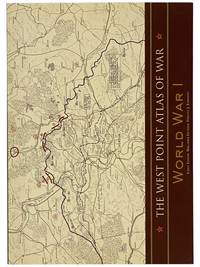
1995rif. 2352670New York: Tess Press / Black Dog & Leventhal 1995. First Thus. Large Softcover. Near Fine. 14x9x0. First thus. Minimal wear to corners. Binding tight and square pages clean bright and unmarked. 1995 Large Softcover. 142 pp. Strategic and historical color battle maps with explanations and tactical contexts. Originally published as part of the second volume of the 1959 two-volume set The West Point Atlas of American Wars. Tess Press / Black Dog & Leventhal paperback books
1982rif. 21461New York: Random House 1982. Hardcover. Fine. 4to. 30 by 19.5 cm. Six pop-ups which also have turn tabs pull tabs and pull up flaps. Arguably Like New. Random House hardcover books
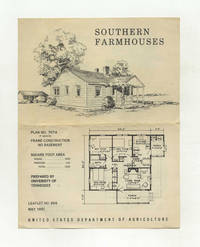
1951rif. 29964Washington: U. S. Department of Agriculture. Near Fine. 1951. Broadsheet. An about Fine folded leaf. Leaflet No. 303 issued May1951; Introduction of four plans No. 7074 7073 7072 and 7060 with Southern farmhouses from ranging from 1188 to 1575 sqft and instructions where to order working drawings for the houses shown; 1 sheet pages . U. S. Department of Agriculture unknown books
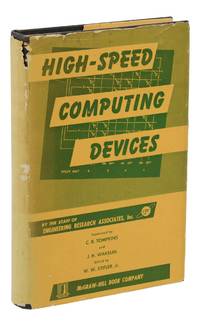
1950rif. 140949395New York: McGraw-Hill Book Company 1950. First edition. Near Fine/Very Good. First edition first printing. xiii. 1 451 pp. Bound in publisher's navy cloth ruled in blind on front board and lettered in gilt on spine. Near Fine with trivial foxing to upper textblock edge light offsetting from jacket to endpapers and owner inscription to front pastedown. In a scarce Very Good unclipped dust jacket with sunned and creased spine panel light foxing and moderate wear. The first edition of the foundational text of the American computer industry. This well-organized compendium of components techniques and concepts was developed by a research team that had its roots in wartime naval cryptanalysis. McGraw-Hill Book Company unknown books
1916rif. 15490New Haven Connecticut : Roger Sherman Studio 1916. First Edition. Photograph. Near Fine. First Edition. An original silver print mounted on board. Image is 10 1/2 inches x 13 1/2 inches. Overall mount size 13 3/4 x 16 3/4 inches. Very nice tonality presents nicely in person. Photograph. A photograph of what is no doubt the 1916 Civil Engineering class at Yale showing students teachers and the" tools of the trade". It was taken in front of Winchester Hall then part of Yale's Sheffield School of Engineering. The building is no longer standing but we have included an reproduced image of the building for the new owner's reference. Much like medical class photographs which are prized for skeletons and other medical oddities collectors prize surveying instrumentation in Civil Engineering class photographs. This one has lots of great surveying instruments including four instruments on tripods surveying sticks an axe and a model of a bridge span. Several equations are chalked on the building pillars. "FUNDAMENTALS" is chalked on the street in front of the subjects. Photographs this large are very scarce on the marketplace this is the largest we have owned in the last 15 years. A fine addition to any surveying civil engineering Yale or Connecticut collection. Roger Sherman Studio unknown books
1946rif. 301694Stone & Webster Engineering Inc 1946. Illustrated. 145 pages. 8vo. stamped blue buckram. Some abrasions to lower spine. Includes detailed map of the top secret town called Oak Ridge. Map in excellent condition measuring 14.75 x 4.75 inches In 1942 the Department of Energy commissioned the building of the top secret town of Oak Ridge in eastern Tennessee developed to separate uranium for the Manhattan Project. This promotional book celebrates the contract from the war department in Oak Ridge and many other weapons manufacturing sites. Photographs of power plants and weapons manufacturing synthetic rubber plants and other factories. Stone & Wester claims to have maintained 'the best-kept secret in the history of the world.' in their involvement in the Manhattan project. Stone & Webster Engineering Inc unknown books
1920rif. 31094Rotterdam / Amsterdam: Van Leer 1920. Fifth edition. Paper wrappers with mounted drawing and stamped titlestassled cord ties. A very good or better copy with a small crease on front wrapper corner small tears to the spine ends. Unpaged. 48 leaves. Illus. with 57 sepia photos. Obl. 4to. 47 leaves nearly all full page photos a few photo-imitation drawings printed on rectos only of ships factories cranes and dredges. Captions in English German French and Spanish. Wilton was a family owned business started in 1854 by Bartel Wilton expanding in the Netherlnds through the first quarter of the 20th century and finally merging under another name in 1929. OCLC shows one copy at the Maine Marine Academy. Van Leer unknown books
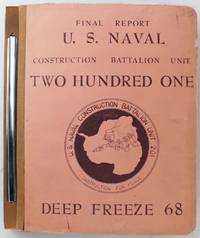
1968rif. 5022Antarctica 1968. Very good. 65pp. report typed on rectos only plus 28 leaves illustrated with eighty-six black-and-white mounted photographs each approximately 5 x 7 inches most accompanied by typed paper caption strips plus three loose photographs. Quarto. Original pressboard wrappers with metal spine fastener with printed title leaf pasted to front board. Minor wear to binding photos in generally nice condition. A typed report accompanied by detailed photographs documenting the 1967-1968 projects carried out by U.S. Naval Construction Battalion Unit 201 in Antarctica dubbed "Deep Freeze '68." The projects involved the upgrading and expansion of facilities at McMurdo Station and Palmer Station including water sewer and energy infrastructure improvements and laboratory and living-quarters construction. The original photographs here provide more than eighty-five detailed and well-captioned views of Antarctic construction architecture and engineering involved in the execution of “Deep Freeze ‘68” with sixty-five pages of typed reports providing a dense written summary in support of the project. Battalion Unit 201 had been newly established in 1967 as a Seabee unit specializing solely in Antarctic construction to continue supporting the series of "Operation Deep Freeze" missions first headed by Admiral Richard E. Byrd in the 1950s to establish a permanent research infrastructure on the then-largely unexplored Antarctic continent. Plagued by material shortages and the savage regional climate Unit 201 was disbanded at the end of “Deep Freeze ‘71” as the brief building season made the continuation of a dedicated Antarctic construction unit unfeasible. unknown books
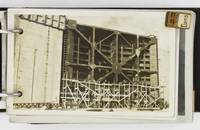
1919rif. 2655Various locations including Wyoming Nebraska and Iowa 1919. Very good plus. Forty-two original black-and-white photographs and real photo postcards most with manuscript annotations bound into a two-ring leather binder. Two additional postcards laid in. Minor occasional dust soiling but overall in excellent shape. An intriguing pocket-sized binder containing a collection of photographs and real photo postcards documenting large-scale construction projects in the American West mostly involving concrete projects such as dams drainage reservoir infrastructure railroads and more between about 1913 to 1920. All of the projects occur on or west of the Mississippi River in locations such as Keokuk Iowa; Ardmore South Dakota; Grand Island Nebraska; and Arminto Wyoming. The projects cover a wide range of subject matter from a simple base for a railroad mail sack crane to entire dam wall construction and seem to feature several involving sprayable concrete commonly known as gunite. This material was rather new in the 1910s but is still widely in use to the present day. The majority of the images are captioned in manuscript identifying the project or location or often both. These include a power-generating dam in Keokuk; reinforcement of a reservoir dam near Lysite Wyoming; widening of a cut for the Chicago Burlington and Quincy Railroad through Arminto; memorializing a concrete crib wall for the same railroad at the Bancroft St. Vincent Omaha; the installation of an eighteen-inch wall casting and sinking the Kelly well in Grand Island; documenting frost action on a brick chimney and water tank and also picturing a "concrete gun" in Worland Wyoming; and others. The images are organized into two sections with small tabs one reading "Dams" and the other "Miscellan." The compiler of the pictures is not identified but he or she was most likely involved in the operational aspects of the construction projects. One of the captions is initialed at the bottom "JRH" which may help scholars identify the compiler with further research. The binder itself was produced in Kansas City which may be an additional clue to the compiler's identity. A small but focused collection featuring major western construction projects from the early-20th century. unknown books