Kamikaze Factory StudioBiblio.com

516 résultats
réf. 6654757Harper Collins Publishers . Papeback. New. pp. 384 Harper Collins Publishers unknown
1931réf. 2091502135410670Not Available 1931. Soft Cover. Fine. Number of books: 4 Not Available paperback
2014réf. 2-8415691599La Fabrica 2014. Paperback. New. pck blg edition. 24 pages. 15.25x11.75x0.25 inches. La Fabrica paperback
1964réf. 2083002116203140Dokdo Island 1964. Soft Cover. Fine. The book is in fine condition. Dokdo Island paperback
réf. 24321803-nnew. unknown
réf. 24321803like new. unknown
réf. 132921420X.Ghardcover. Good. Access codes and supplements are not guaranteed with used items. May be an ex-library book. hardcover
réf. M14128Sté Alfred Herbert , 1919 , in8 toile verte éditeur , 86 - XXX pp. Abondantes illustrations photo. La seconde partie est un descriptif technique des machines . Langue: Français
réf. 082295771X.Gpaperback. Good. Access codes and supplements are not guaranteed with used items. May be an ex-library book. paperback
1995réf. 663181995 Editions Albin Michel, collection "Public Histoire" - 1995 - In-4, cartonnage de l'éditeur sous jaquette illustrée - 223 pages - Nombreuses illustrations et reproductions photographiques en couleurs et en N&B - Avec la plaquette "Les Racines du Futur", 19 pages
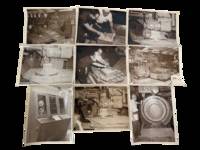
1960réf. 233821960. Industrial factory photograph archive documenting large scale machining systems automated tooling equipment and precision manufacturing processes during the height of postwar American industrial expansion circa 1960s. Several scenes feature Sundstrand branded machinery associated with the Sundstrand Corporation a major Rockford Illinois manufacturer of machine tools aerospace components and industrial automation systems during the Cold War industrial economy. By the 1960s American factories increasingly relied on massive numerically controlled machining equipment capable of producing aircraft parts turbine components and heavy industrial hardware with levels of precision unattainable in earlier manually operated machine shops. These photographs record the physical scale of that transition capturing the integration of computerized or semi automated production systems into factory environments that formed the backbone of aerospace defense transportation and heavy manufacturing industries during the period. Photo archive of 9 Large Silver Gelatin photographs each 8" x 10" circa 1960s. Interior factory scenes show enormous industrial machining centers occupying tiled production floors beneath overhead lighting and exposed structural systems. Multiple photographs depict large circular indexing tables rotary cutting assemblies suspended tooling heads and enclosed control units bearing visible "Sundstrand" identification. Engineers and machinists wearing shop coats and protective glasses appear adjusting tooling mechanisms calibrating machine components and servicing cutting assemblies surrounded by heavy cables hydraulic systems and banks of industrial controls. Several machines are shown actively engaged in metal cutting operations with curled metal shavings accumulating beneath rotating tooling heads and across surrounding platforms. One scene captures technicians removing or fitting a large machined component beneath a circular cutting apparatus while another documents reel based electronic control equipment integrated into the production system reflecting the growing use of automated process control in industrial manufacturing during the decade. The 1960s marked a decisive transformation in American manufacturing as industries shifted from conventional machining toward automated and numerically controlled production methods capable of supporting aerospace engineering military procurement automotive manufacturing and mass industrial output. Companies such as Sundstrand played a central role in supplying the specialized tooling and machine systems that allowed factories to machine increasingly complex metal components at industrial scale. Some curling scattered edge and surface wear as well as foxing to margins; images remain sharp with strong detail. Overall in good condition. The photographs preserve direct visual evidence of the machinery labor practices and production environments that defined late midcentury industrialization before many such facilities were modernized outsourced or dismantled during later waves of deindustrialization. unknown books
1960réf. 233821960. Industrial factory photograph archive documenting large scale machining systems automated tooling equipment and precision manufacturing processes during the height of postwar American industrial expansion circa 1960s. Several scenes feature Sundstrand branded machinery associated with the Sundstrand Corporation a major Rockford Illinois manufacturer of machine tools aerospace components and industrial automation systems during the Cold War industrial economy. By the 1960s American factories increasingly relied on massive numerically controlled machining equipment capable of producing aircraft parts turbine components and heavy industrial hardware with levels of precision unattainable in earlier manually operated machine shops. These photographs record the physical scale of that transition capturing the integration of computerized or semi automated production systems into factory environments that formed the backbone of aerospace defense transportation and heavy manufacturing industries during the period. Photo archive of 9 Large Silver Gelatin photographs each 8" x 10" circa 1960s. Interior factory scenes show enormous industrial machining centers occupying tiled production floors beneath overhead lighting and exposed structural systems. Multiple photographs depict large circular indexing tables rotary cutting assemblies suspended tooling heads and enclosed control units bearing visible "Sundstrand" identification. Engineers and machinists wearing shop coats and protective glasses appear adjusting tooling mechanisms calibrating machine components and servicing cutting assemblies surrounded by heavy cables hydraulic systems and banks of industrial controls. Several machines are shown actively engaged in metal cutting operations with curled metal shavings accumulating beneath rotating tooling heads and across surrounding platforms. One scene captures technicians removing or fitting a large machined component beneath a circular cutting apparatus while another documents reel based electronic control equipment integrated into the production system reflecting the growing use of automated process control in industrial manufacturing during the decade. The 1960s marked a decisive transformation in American manufacturing as industries shifted from conventional machining toward automated and numerically controlled production methods capable of supporting aerospace engineering military procurement automotive manufacturing and mass industrial output. Companies such as Sundstrand played a central role in supplying the specialized tooling and machine systems that allowed factories to machine increasingly complex metal components at industrial scale. Some curling scattered edge and surface wear as well as foxing to margins; images remain sharp with strong detail. Overall in good condition. The photographs preserve direct visual evidence of the machinery labor practices and production environments that defined late midcentury industrialization before many such facilities were modernized outsourced or dismantled during later waves of deindustrialization. unknown
1945Gives list of of members of the Indian Engineering Association followed by answers to questions on existing labour legislation, wages and earnings, employment, housing, and social security measures. Appendices at the back with fold-out sheets giving minimum, maximum and mean hourly basic wage rates in engineering factories in the districts of the Calcutta Industrial area and in engineering factories in the Calcutta and Bombay Areas 1938 and 1944.
réf. BING814CM00008The Clever Factory INC. Paperback. Good. Prompt shipment with tracking. we ship in CLEAN SECURE NEW boxes 4TO Intermediate & Advanced Drawing book 24pgs Last pg is bent The Clever Factory, INC paperback
réf. 1934160424003The Clever Factory. Unknown Binding. Very Good. Nice looking book has minor edge wear. The Clever Factory unknown
réf. 6885aafZürich, Orell Füssli, 1946, gr. in-8°, 78 S., mit 18 fot. Tafeln, Original-Leinenband.
1995112 pages. Features: Risa Buck went off the grid in Ashland; Kurt Nelson combines solar electricity and science education in a space station simulator for students in Wausau, WI; Mark Whitaker powers some of his appliances with solar electricity; Ely Schless's electric power bike; Electric Vehicle Charging and Maintenance; Visit to a lead recycling factory; The evolution of hot water heaters; and more. Moderate wear. Clean and unmarked. A quality copy. Magazine
1939réf. 46634Shanghai: Nishimura Company 1939. Edition not stated. Quarto 26.5cm; black simulated leather stamped in red and gilt in brown paper slipcover; unpaginated photo-illustrated plates w/ rice paper overlays. Wear minor scuffs and soiling to boards; toning and foxing intermittent throughout text especially on overlays; some overlays creased or torn. Slipcover worn and chapped with abrasions and two large one repaired tears across front panel. Photo-illustrated pastedowns and endpapers. Very Good in Good slipcover. All text in Japanese with some obsolete/antiquated kana/kanji oriented right to left. This is a privately-issued commemorative yearbook-type photo album shashin-cho published on behalf of the Imperial Japanese Army medical forces during the Second Sino-Japanese War 1937-1945. Specifically it was produced for those who served under military physician captains/commanding officers Nobuo Isa and Tetsuo Fukaya who were stationed in or near Shanghai at the time. By July 1939 the Imperial Japanese Army was beginning to feel the impact of its own mounting casualties and costs; the Chinese Red Army would launch a major offensive later that November. While the Japanese occupation of Shanghai was notably brutal there is little evidence of violence in this album. However some photographs do depict the aftermath of battle with ruined buildings and soldiers being treated for injuries. Other subjects are mundane in nature: Staff and group portraits hospitals and other facilities physicians at work company events and ceremonies. Also includes photographs of Shanghai and a fold-out map of the Hangzhou Bay area. Apparently not cataloged in OCLC or available commercially as of November 2019. Nishimura Company unknown books
1939réf. 46634Shanghai: Nishimura Company 1939. Edition not stated. Quarto 26.5cm; black simulated leather stamped in red and gilt in brown paper slipcover; unpaginated photo-illustrated plates w/ rice paper overlays. Wear minor scuffs and soiling to boards; toning and foxing intermittent throughout text especially on overlays; some overlays creased or torn. Slipcover worn and chapped with abrasions and two large one repaired tears across front panel. Photo-illustrated pastedowns and endpapers. Very Good in Good slipcover. All text in Japanese with some obsolete/antiquated kana/kanji oriented right to left. This is a privately-issued commemorative yearbook-type photo album shashin-cho published on behalf of the Imperial Japanese Army medical forces during the Second Sino-Japanese War 1937-1945. Specifically it was produced for those who served under military physician captains/commanding officers Nobuo Isa and Tetsuo Fukaya who were stationed in or near Shanghai at the time. By July 1939 the Imperial Japanese Army was beginning to feel the impact of its own mounting casualties and costs; the Chinese Red Army would launch a major offensive later that November. While the Japanese occupation of Shanghai was notably brutal there is little evidence of violence in this album. However some photographs do depict the aftermath of battle with ruined buildings and soldiers being treated for injuries. Other subjects are mundane in nature: Staff and group portraits hospitals and other facilities physicians at work company events and ceremonies. Also includes photographs of Shanghai and a fold-out map of the Hangzhou Bay area. Apparently not cataloged in OCLC or available commercially as of November 2019. Nishimura Company unknown
1980A clean, unmarked book with a tight binding. 514 pages. Black and white photos.
2017réf. ARTTTT91912001023Paris, Séguier, 2017, 15,5 x 22, 968 pages sous couverture souple illustrée. Traduit de l'anglais (Etats-Unis) par Laureen Parslow. Illustrations noir & blanc.
1988réf. 2091502135419339Not Available 1988. Soft Cover. Fine. Number of books: 1 Not Available paperback
1982réf. 2092902138000093Ibaraki Factory Japan Specialty Sales Corporation 1982. Soft Cover. Fine. Volume: 1 Ibaraki Factory, Japan Specialty Sales Corporation paperback
1980réf. ARCH2611MRelié, 264 pages, le livre est comme neuf, la jaquette présente de très légers frottements presques invisibles.
2020réf. bing444jls003The Clever Factory Inc 2020. Hardcover. Very good. Prompt shipment with tracking. we ship in CLEAN SECURE NEW boxes 12mo board book hardcover no dust jacket some scuffing to covers handle cutouts part of book 6 boards clean pages prompt shipping with tracking The Clever Factory, Inc hardcover