Briot, Charles / Vacquant, Et ChAntiquariat.de
4,228 results
1876ref. q6n513Libraire Hachette, Paris, 1876. Notions preliminaires. Notations d'arithmetique. Notions de geometrie. Arpentage. Levé des plans. Nivellement. u.a.m. Mit 5 ausklappbaren Karten: Plan de la Piece dité entre deux bois; Plan de l'ecole normale; Plan de l'ille superieure du Bois de Bologen; Croquis du detail de la Pointe de l'Ille; Plan levé a la Planchette etc. 240 S. Französisch. Mit s/w-Abbildungen. Einband und Rücken etwas berieben, sauber, Schnitt und Seiten etwas angebräunt, die ersten und letzten Seiten leicht stockig, die Karten sind leicht angeschmutzt aber unbeschädigt. Gesamtzustand: gut. kl.8° Halbleder
ref. 17615P., Delloye, 1841, (P., Tetu, 1845, sur la couverture), in 8° broché, 34 pages ; 2 planches dépliantes ; rousseurs ; couverture fanée, petits manques au dos.
2010Mm 240x280 Catalogo della mostra di Milano, Palazzo Reale, 21 ottobre 2010 - 30 gennaio 2011. Volume nella sua brossura originale, 335 pagine profusamente illustrate a colori. Libro in condizioni di nuovo, spedizione in 24 ore dalla conferma dell'ordine.
2015Mm 240x280 Catalogo della mostra di Roma, Scuderie del Quuirinale, 25 luglio - 20 settembre 2015. Volume nella sua brossura originale, 341 pagine profusamente illustrate a colori. Libro in condizioni di nuovo, spedizione in 24 ore dalla conferma dell'ordine.
2012Curatori: O. Pompeo Faracovi.
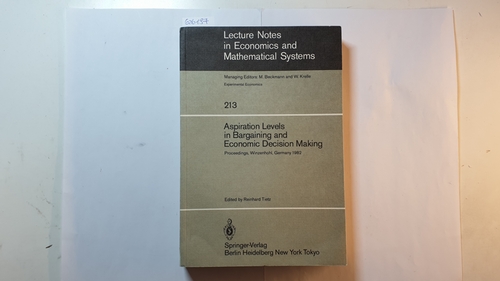
1983ref. 626197Berlin ; Heidelberg ; New York ; Tokyo: Springer. 1983. VIII, 406 S. : graph. Darst. 24 cm. Zustand: Gut mind. leicht gebräunt (Innen); Signatur vom Verfasser; Einband (Außen) hat leichte Gebrauchsspuren; Buchrücken ist an einer Stelle min. aufgeplatzt; Broschiert
19458°, pp. 15, brossura editoriale, titolo al piatto, Note e comunicazioni n. 31 del Regio Osservatorio astronomico Vincenzo Cerulli di Collurania, Teramo. Molto buono
1911ref. 33330Leipzig und Berlin: Teubner 1911. VI, 104 S.; 136 S. OLeinenbände. 23x15 cm.
1911ref. 25261Leipzig und Berlin: Teubner 1911. 100 S. OLeinen 23x15 cm.
1908ref. 11118Leipzig und Berlin, Teubner Verlag, 1908.
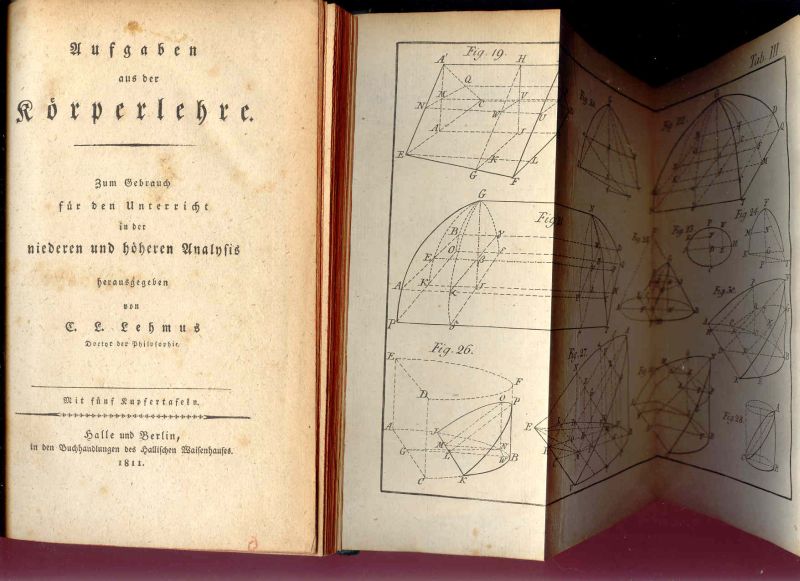
1811ref. 3017Halle und Berlin, Waisenhaus, 1811. 8vo. Mit 5 gef. Kupfertaf. 1 Bl., IV, 124 S., 1 Bl. Moderne schlichte Hlwd. im Stil d. Zt. Rotschnitt.
1888ref. 40024Teubner, Leipzig 1888. 127 S., 8°, Original-Leinen, Bibliotheks-Exemplar (ordnungsgemäß entwidmet) mit kleinem Papier-Rückenschild, Stempel auf Vorsatz und Titel, gutes Exemplar,
1974ref. 29148Mannheim : B.I.-Wissenschaftsverlag / Bibliographisches Institut, 1974. 229 S. (21 cm) Broschierte Ausgabe
1863ref. 5108Wien, Gerold, 1863. VIII, 462 S., 1 Bl. mit zahlr. Textabb. 8°. Lwd. der Zeit mit Rückentitel (kl. Gebrssprn., etw. fleckig).
1979ref. 62622Braunschweig: Vieweg 1979. 7. Aufl. 313 S.: 92 graph. Darst.; 24 cm Pappe 0
1996ref. ART5748MBroché, 175 pages, paru en 1996 pour les Éditions Anthèse, livre en très bon état général, légèrement corné.
1897ref. 113614Bayreuth: Lorenz Ellwanger. 1897. 12 Seiten. 22cm. Zustand: Gut gering gebräunt, gering fleckig (Innen); Einband (Außen) hat geringe Gebrauchsspuren, innen ist ein broschiertes Heftchen; Leinen (Blauer Leinen)
1864ref. 106693Leipzig, Friedrich Branmdstätter, 1864. 177 S. 8° Oktav, Halbleder
1916ref. 17819ABBerlin, Schultze, 1916. 8°. VI, 520 Seiten, 2 Blätter Buchanzeigen. Leinenband mit montiertem Umschlag auf Deckeln und Rücken. (Gering fleckig). - Wohlerhalten. 18. Auflage.
1975ref. 85837Zürich, Verlag Harri Deutsch, 1975. 696 S. Gr.-8° Groß-Oktav, Leinen
1959ref. 97439Eßlingen/Stuttgart, Op Art Galerie (op)art galerie, [ 1959]. Mappe mit 4 s/w Original-Siebdrucken und 4 zweifarb. Original-Siebdrucken (je 24 x 20 cm) sowie 2 wickelgefalzte Kataloge und 2 Falzbogen. Lose Innenmappe in kreuzweise übergelegter Feinkartonmappe 24,5 x 20 cm, (diese etwas lichtspurig u. mit zwei weißen Kratzspuren).
1772ref. 50904BBHalle im Magdeburgischen, Rengersche Buchhandlung, 1772. Klein-8°. 18 cm. Frontispiz, Titelblatt in Rot und Schwarz, [8] Blatt, 740 Seiten. [12] Blatt Register. [44] gefaltete Blatt. Halblederband der Zeit mit blindgeprägtem Rückentitel.
2017Max Planck Autobiografia scientifica. , Castelvecchi 2017, Copertina con segni d'uso ai margini Buono (Good) . Copertina flessibile 59 9788832820232
1952Very Good French Original autograph manuscript document signed 'Peyami Safa'. Oblong: 15x23 cm. In French. 1 p. It's resume of a paper written for the "XVeme Congress International de Sociologie, Istanbul, 11-17 Septembre 1952" related to 'Ibn-Khaldoun' and 'Auguste Comte'. Safa was a Turkish journalist, columnist and novelist. He was born in 1899 to writer and poet Ismail Safa (1867-1901) in Istanbul, Ottoman Empire. While he was only two years old, his father died in exile in Sivas. During his youth years until the age of seventeen, he lived in psychic and physical depression due a bone sickness he suffered from at the age of eight or nine. He rejected his doctors' advice to amputate his arm. Safa described his experiences in hospitals in his novel Dokuzuncu Hariciye Kogusu, which was filmed in 1967. In 1911, Peyami Safa had to give up his education at Vefa High School, and began working in a printing house and later in the Ministry of Post. He taught himself French, and in 1918 together with his elder brother began publishing a newspaper. In later years, he published three literary periodicals. He also wrote in various newspapers sometimes as a columnist, and sometimes as a novelist. Most of his novels were created before 1940. In these novels, he stressed on the west-east conflict in the Turkish society during the early years of the Turkish Republic. His novel Dokuzuncu Hariciye Kogusu gained much interest. In 1931, he wrote his only historical novel about Attila the Hun. Besides these novels, he wrote many serial stories and novels in newspapers, among them in Cumhuriyet and Milliyet, under the pseudonym "Server Bedii". Some of these are about a gentleman thief named Cingöz Recai.
1952Very Good English Original types document with autograph scripts. 4to. (30 x 21 cm). In English. 1 p. A typed document for the registration to the Congress of Sociology at Istanbul in 1952. Dated 31. IX. 1952. His autograph notes are his name and surname, his address, date, title of communication (his proceeding's title) and signature. His proceeding entitled 'Osmanlica'nin inkisafinda içtimâî faktörler' [i.e. Social factors in the development of Ottoman Turkish]. German Turkologist; educated in Switzerland; member of the Kommunistische Partei Deutschlands (KPD); traveled widely in Turkey together with the Austrian Turkologist and fellow party member Andreas Tietze; settled in Turkey in 1939; after the Second World War director of the German cultural institute, later Goethe Institute (1961-68), in Istanbul and lastly of the Goethe Institute in Amsterdam. Anhegger was born in Vienna in 1911, the son of a German trader. After World War I (much of which he spent in Switzerland), Anhegger moved with his parents to Rotterdam. In 1923 the family moved to Zürich. In Zürich, Anhegger started to read Law, History and Literature at the university, before moving to Vienna in 1932. There he continued his studies, this time reading Economic History, Slavonic studies and Islamic studies. He also started to learn Turkish. It was during his studies in Vienna that he befriended Andreas Tietze. They not only shared scholarly interests, but also a passion for left-wing politics. Anhegger made his first trip to Turkey in 1935. In 1939 he received his Ph.D. degree at the University of Zürich and in 1940 he moved (and as it turned out emigrated) to Istanbul. He had several motives for doing so: quite apart from his scholarly interest in Turkey, his background in the Communist movement and the fact that he shared his life with a Jewish woman, made him feel unsafe so close to Germany. In Istanbul he worked at the German Archeological Institute until he was dismissed in 1942 for refusing to join up when called to serve in the German army. After his dismissal he worked as a teacher of German language and literature in a number of places, notably Istanbul University. As a German with intimate knowledge of Turkey, who was untainted by any Nazi connections, Anhegger from the early fifties onwards became the lynchpin of German cultural activities in Istanbul, culminating in his directorship of the Goethe Institute after 1961. In 1958 Anhegger married the Turkish architect Muallâ Eyüboglu, the sister of the painter Bedri Rahmi. His connections with modern Turkish painters led him to found the first private art gallery in Istanbul in 1957. Robert and Muallâ Anhegger now live partly in Istanbul, partly in Amsterdam.