John BarnardBiblio.com

2.333 Ergebnisse
2004Best.-Nr. 072345Wayne State Univ Pr 2004. hardcover. New. 6x2x9. Brand new copy still in shrink wrap. White red and tan illustrated cover. Full refund if not satisfied. Wayne State Univ Pr hardcover
2010Best.-Nr. 038994Chantilly VA: The Teaching Company 2010. DVD. Like New. How can a nation create the conditions for economic growth and prosperity And what once these conditions are achieved can it do to sustain this progress Discover the answers which may surprise you in these 24 lectures that guide you through a stimulating and above all accessible examination of what economists know and don't know about the elusive search for economic prosperity. Here you'll learn how countries as widely different as the United States and Vietnam have grown their economies; how countries like China and India were able to recover from economic reverses; and most important why the critical test of any economic policy is its ability to productively alter human behavior for everyone's ultimate benefit. By looking at economic growth as the result of incentivizing such productive behavior - "making productivity more profitable than all the alternatives" - Professor Rodriguez clears up an often-shrouded economic landscape. The result is a lecture series that brings the economic strategies chosen by nations down to street level by adding a newfound clarity to key issues: Why economies succeed or fail; how economic bubbles are created why they burst and how nations recover from them; the challenges posed by globalization; and more. By the end of the last lecture you'll understand as never before both the benefits granted and the costs extracted by the "instant economy" that technology and globalization have brought us. You'll grasp what China's expected economic dominance may soon mean. And you'll have a new appreciation of the juggling act policymakers perform as they try to heed history's latest lesson in achieving national growth and maximum human happiness.DVD and Course Guidebook. Like new. Full refund if not satisfied. The Teaching Company unknown
1988Best.-Nr. 072317New York: Weidenfeld & Nicolson 1988. Paperback. Near Fine. 9x6x1. Paperback. Uncorrected page proofs. Bibliography. Book contains oral history from workers at the Michigan Truck Plant. Clean pages with not apparent markings or creasing. 266 pp. Page fore edge has some light markings from wear. Foxing on top edge. Periwinkle paper cover with black text. Light discoloration along spine edges. Overall condition is near fine. Full refund if not satisfied. Weidenfeld & Nicolson paperback
Best.-Nr. Man28Paul Chapman Publications 2000 . hbk 179pp ISBN: 0761966064 excellent as new Paul Chapman Publications, 2000, unknown
2000Best.-Nr. 91331Washington DC: United States General Accounting Office 2000. Presumed First Edition First Printing. Wraps. Very good. 30 2 pages. Footnotes. Figures. Tabular Data. Appendices. This is a "Report to Congressional Requesters". The Navy Theater Wide system is being developed to defend military and civilian assets including U.S. and allied military forces in the field against attacks by medium- and long-range ballistic missiles while they are still outside the atmosphere. The Navy is developing the system in two segments. The first segment or Block I is intended to provide an initial capability by 2010 involving the deployment of 80 interceptor missiles aboard 4 ships. For fiscal years 1997 through 1999 the Congress increased funding for the program by 150 percent--about $663 million--over the $444 million requested in the President's budgets for those years. The purpose of the increase was to enable the Navy to reduce technical risks and develop system technologies earlier than planned. The Congress expressed concern that despite the funding increases the program was viewed in 1998 by a high ranking Department of Defense official and an independent panel of experts as "high risk" because of technical challenges such as improving the system's capability to track and destroy enemy ballistic missiles. As a result Congress asked GAO to determine 1 how the additional funding provided by the Congress for the program in fiscal years 1997 through 1999 was used and 2 whether significant risks to the program remain. Within the next month we also plan to issue reports on the status of two other missile defense systems under development--the Patriot Advanced Capability-3 and National Missile Defense. GAO noted that: 1 the Navy used the $663 million in increased funding as intended to reduce technical risks and develop system technologies earlier than originally planned; 2 about 41 percent was used for system design and analysis efforts such as reducing the technical risks associated with improving the system's ability to differentiate intended targets from other objects; 3 about 20 percent of the funding was used for procuring hardware items such as rocket motors and test interceptor missiles; 4 according to program officials the additional funding also allowed the program to shift from a demonstration effort to an acquisition program in which a weapon system will be fully developed and produced; 5 although the Navy used this additional funding to reduce technical risk and develop the system sooner significant technical and schedule risks still exist; 6 technological advancement is required to differentiate the target from other objects; 7 such discrimination requires that the system's computer network can process an enormous amount of data in real time; 8 this network has not been built and its software must be integrated with the computer code that is already installed on each ship's computer system; 9 current activities include writing software examining several computer architectures for the network and building the capability to test the network; 10 technological advancement is also required in developing the capability of the interceptor missile to seek and destroy the target; 11 GAO is concerned that the program office has proposed a schedule calling for initial operational testing of the missile in 2010 even though 50 percent of the required 80 missiles would be produced and delivered by 2008 and 100 percent by 2010; 12 operational testing is designed to provide an independent evaluation of whether a system meets required performance levels prior to beginning production; 13 GAO has found that cost overruns and the deployment of substandard systems occur when the Department of Defense proceeds into production before systems are tested under operational conditions; 14 the Navy has scheduled up to 7 flight tests between July 2000 and September 2001; 15 according to testing officials test programs typically separate flight tests by about 6 months; 16 a longer interval between tests gives officials better opportunities to evaluate test results understand problems and incorporate solutions into the next test; and 17 the approved level of funding does not match the Navy program office's estimate of how much it needs to implement the program on schedule. United States General Accounting Office paperback
1996Best.-Nr. 91266Washington DC: United States General Accounting Office 1996. Presumed First Edition First Printing. Wraps. Very good. 33 3 pages. The National Aeronautics and Space Administration NASA is facing the difficult task of fulfilling its mission with significantly fewer dollars. NASA's present strategy for absorbing its most recent funding reductions through fiscal year 2000 focuses on cutting infrastructure. If NASA fails to find and implement sufficient infrastructure cost-reduction opportunities meeting its budget targets through fiscal year 2000 will require program adjustments-stretching out reducing the scope or terminating efforts and/or postponing new initiatives. GAO reviewed the status of NASA's efforts to achieve reductions and efficiencies in its infrastructure principally facilities and the challenges it faces. In the early 1990s NASA was planning an infrastructure to support a projected annual budget of more than $20 billion and a civil service workforce of about 25000 by the turn of the century. However NASA has been directed by the Administration to reduce its future years' budget levels. In FY 1994 budget request NASA's total funding for fiscal years 1994 through 2000 was reduced by 18 percent or $22 billion. In the FY 1995 budget request total funding was reduced again by an additional 13 percent. To absorb these reductions NASA focused on adjusting programs. The Space Station program was restructured and given an annual budget ceiling of $2.1 billion. The scope of the Earth Observing System program was reduced. Funding was terminated for the Space Exploration Initiative the National Launch System and the National Aerospace Plane. The Comet Rendezvous and Asteroid Flyby project was canceled. NASA's current facility closure and consolidation plans will not fully achieve the agency's goal of decreasing the current replacement value of its facilities by about 25 percent about $4 billion in 1994 dollars by the end of fiscal year 2000. More importantly these plans will not result in substantial cost reductions by that date. Also although NASA is about half way to its goal of lowering the number of its full-time equivalent employees to 17500 by fiscal year 2000 it faces major uncertainties in achieving additional workforce reductions. NASA has also had problems in evaluating some cost-reduction opportunities; environmental cleanup costs could affect future facility disposition efforts; and its efforts to share facilities with DOD have progressed slowly. NASA faces barriers to accomplishing additional consolidations and closures that to date it has not been able to overcome on its own. Closing facilities relocating activities and consolidating operations in fewer locations with fewer employees have been slowed by parochial concerns about the effects of such actions on missions personnel and local communities. These concerns have been exacerbated by perceptions of the lack of fairness and impartiality in the decision-making process. In the face of these concerns NASA must still reduce its infrastructure further. Ultimately if further progress in identifying and implementing infrastructure reductions is limited a process that uses an external independent group similar to the Defense Base Closure and Realignment Commission may be needed. To help determine the need for an independent group to facilitate closures and consolidations of NASA facilities Congress may wish to consider requiring NASA to submit a plan outlining how it intends to met its reduction goals. United States General Accounting Office paperback
2000Best.-Nr. 91333Washington DC: United States General Accounting Office 2000. Presumed First Edition First Printing. Wraps. Very good. 20 4 pages. Footnote. Figure. Table. This is a "Report to the Chairman Committee on Commerce Science and Transportation U.S. Senate". The National Aeronautics and Space Administration's NASA space shuttle program is at a critical juncture as three key factors converge: its workforce has declined significantly since 1995 its flight rate will have to double over that of recent years to support assembly of the International Space Station and costly safety upgrades are being planned to enhance the space shuttle's safe operation until at least 2012. Several internal NASA studies have shown that the shuttle program's workforce has been affected negatively by the downsizing much of which occurred after 1995. Since 1995 the shuttle workforce has decreased by more than one-third to about 1800 full-time equivalent employees. The shuttle program has identified many key areas that are not sufficiently staffed by qualified workers and the remaining workforce shows signs of overwork and fatigue. For example indicators on forfeited leave absences from training courses and stress-related employee assistance visits are all on the rise. Moreover the program's demographic shape has changed. For example throughout the Office of Space Flight which includes the shuttle program there are more than twice as many workers over 60 years old than under 30 years old. This jeopardizes the program's ability to hand off leadership roles to the next generation and achieve a higher flight rate to support assembly of the International Space Station. In addition according to NASA it poses significant shuttle program flight safety risks. NASA has recognized the need to revitalize its workforce. For example in December 1999 it terminated shuttle program downsizing plans and initiated efforts to begin hiring new staff. In addition NASA and the Office of Management and Budget have begun an overall workforce review to examine personnel needs barriers to achieving proper staffing levels and skill mixes and potential reforms to help address the agency's long-term requirements. NASA human resource officials told us that they are now using a draft checklist we recently published as a guide in ongoing workforce planning and in discussions with the Office of Management and Budget. The checklist includes a five-part framework: strategic planning organizational alignment leadership talent and performance culture. The guide should help NASA to more clearly establish a linkage between human capital programs and the agency's mission goals and strategies. In addition the Government Performance and Results Act requires a performance plan that describes how an agency's goals and objectives are to be achieved. These plans are to include a description of the 1 operational processes skills and technology and 2 human capital information and other resources required to meet goals and objectives. In reviewing NASA's fiscal year 2000 annual performance plan we found that the plan does not adequately describe how the agency's strategies and human capital resources will help it achieve performance goals. NASA's fiscal year 2001 plan however addresses at least some human capital issues in that it includes an objective to improve workforce health monitoring. In addition in June 2000 the President directed the heads of all executive branch federal agencies to integrate human resource management into planning budgeting and mission evaluation processes. The directive requires each agency to include specific human resource management goals and objectives in its strategic and annual performance plans beginning October 1 2000. The President's June 2000 directive provides further emphasis on the need to integrate human capital requirements with the strategic planning process continued management emphasis will be critical to the success of NASA's human capital planning. In addition NASA will need to take steps to ensure it has the right people to manage the shuttle program Because the President has now directed NASA and all other executive branch agencies to include human capital goals and objectives in their strategic and annual performance plans GAO is not making recommendations in this report. We will monitor NASA's progress in establishing and achieving its human capital goals as part of our annual performance plan assessments. United States General Accounting Office paperback
1995Best.-Nr. 47859Washington DC: GAO 1995. very good. 29 cm 153 wraps. This report responds to the Defense Base Closure and Realignment Act of 1990 P.L. 101-510 as amended which requires the GAO to provide to the Congress and the Commission by no later than April 15 1995 a report on the recommendations and selection process. This is a critically important analysis of a major defense consolidation and cost-cutting activity in the post-Cold War era near the end of the 20th century. GAO paperback
1845Best.-Nr. 080154Philadelphia: Leary and Getz 1845. First Edition. Hardcover. Very Good. 6" x 4. Illustrated with prints. The title continues ".in the Choice and Management of Horses Neat Cattle Sheep and Swine. Indexed. Brown cloth boards which have been blind stamped with a pattern and the Leary & Getz logo. This copy has been professionally rebacked. Full refund if not satisfied. Leary and Getz hardcover
Best.-Nr. 1265051569-10-1McGraw Hill. 13. New. The item is brand new never used or read. It's in perfect condition and may include supplements and/or access codes or come shrink-wrapped. McGraw Hill unknown
2019Best.-Nr. 2-1090717873Independently published 2019. Paperback. New. 589 pages. 11.00x8.50x1.33 inches. Independently published paperback
Best.-Nr. 0471355224.Gpaperback. Good. Access codes and supplements are not guaranteed with used items. May be an ex-library book. paperback
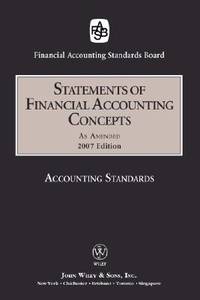
2007Best.-Nr. G0470185449I4N00Wiley 2007. Paperback. Very Good. May have limited writing in cover pages. Pages are unmarked. ~ ThriftBooks: Read More Spend Less.Dust jacket quality is not guaranteed. Wiley paperback
Best.-Nr. 0256081409.Gpaperback. Good. Access codes and supplements are not guaranteed with used items. May be an ex-library book. paperback
Best.-Nr. 1330249798.Gpaperback. Good. Access codes and supplements are not guaranteed with used items. May be an ex-library book. paperback
Best.-Nr. MLBDPUBLICATIONS-97814129Sage. New. Sage unknown
Best.-Nr. MLBDPUBLICATIONS-97814129Sage. New. Sage unknown
2002Best.-Nr. G1578860679I4N00R & L Education 2002. Paperback. Very Good. May have limited writing in cover pages. Pages are unmarked. ~ ThriftBooks: Read More Spend Less.Dust jacket quality is not guaranteed. R & L Education paperback
Best.-Nr. 0484783335.Ghardcover. Good. Access codes and supplements are not guaranteed with used items. May be an ex-library book. hardcover
Best.-Nr. Z1-H-007-00888Accounting Standards Board. Used - Good. Ships from UK in 48 hours or less usually same day. Your purchase helps support Sri Lankan Children's Charity 'The Rainbow Centre'. Ex-library so some stamps and wear but in good overall condition. 100% money back guarantee. We are a world class secondhand bookstore based in Hertfordshire United Kingdom and specialize in high quality textbooks across an enormous variety of subjects. We aim to provide a vast range of textbooks rare and collectible books at a great price. Our donations to The Rainbow Centre have helped provide an education and a safe haven to hundreds of children who live in appalling conditions. We provide a 100% money back guarantee and are dedicated to providing our customers with the highest standards of service in the bookselling industry. Accounting Standards Board unknown
Best.-Nr. 0656529091.Ghardcover. Good. Access codes and supplements are not guaranteed with used items. May be an ex-library book. hardcover
1957Best.-Nr. 5803Celina OH: Reynolds & Reynolds Co. 1959 1962 1957 . Loose_leaf. Very Good. Quarto looseleaf binder with tabbed sections appears complete but offered "as is" only. This is the 1959 Manual supplemented by updated pages dated from 1962 there are two title-pages but including some pages from as early as 1955 . Laid in is a 6-page stapled brochure "The Changes in the General Motors Dealers' Standard Accounting System Effective january 1 1959". Forms and so mjch more. Reynolds & Reynolds Co. unknown
1988Best.-Nr. 35690Washington DC:: U.S. General Accounting Office 1988. Paperback. NEAR FINE. 8.5"x11" pale blue paperback staplebound 42 pages. Small sticker and "received" stamp on cover otherwise like new. We provide professional service and individual attention to your order daily shipments and sturdy packaging. FREE TRACKING ON ALL SHIPMENTS WITHIN USA. U.S. General Accounting Office, paperback
1998Best.-Nr. 49870Washington DC: GAO 1998. First Edition. First Printing. good. 28 cm 192 wraps illus. footnotes GAO paperback
1896Best.-Nr. BUAC00016New York & Peoria: S. S. Packard Publisher 1896 WYSIWYG pricing--no added shipping charge for standard shipping within USA. Full very dark green nearly black pebble-grained cloth ornate gilt titles & blind decorative borders on front board only 138 1 pp. Cloth spotted corners bumped rubbed. Course in pre-income-tax bookkeeping with sample ledgers in beautiful copperplate handwriting. Shipping weight 2 lbs. . VG-/No dj. 26 X 19½ cm. S. S. Packard, Publisher Hardcover