4,071 results
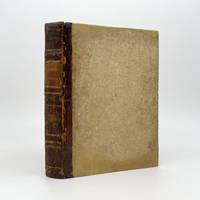
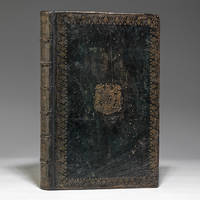
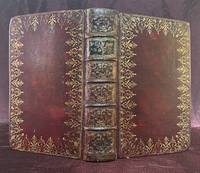
1718ref. 2514The Hague: C. Fritsch 1718. Very good. 8vo. xliv 728 2 pp. text lightly foxed. Collation: a-b⸠cⶠA-2Y⸠2Zⶠ-2Z6 a blank as per the Emory Pitts copy. Bound in 18th-century red morocco boards elaborately gilt à la dentelle spine elaborately gilt with raised bands morocco label a.e.g. spine and extremities somewhat rubbed. Bookplate of the Washington Cathedral Library inside upper cover. Title-page trimmed at top removing the name of an early owner and backed with later paper. Preserved in a protective cloth case. AN ENIGMATIC BINDING AT ONE TIME ATTRIBUTED TO ROBERT AITKEN OF PHILADELPHIA THE MOST FAMOUS OF ALL EARLY AMERICAN BOOKBINDERS. CERTAINLY IT SHARES THE EXTREMELY DISTINCTIVE SPINE TOOL WITH THE NYPL-LENOX COPY OF AITKEN'S 1782 BIBLE WHICH WE EXAMINED PERSONALLY AND YET THE DENTELLE TOOLS ARE SIMILAR TO THOSE EMPLOYED BY RICHARD MONTAGU FOR THOMAS HOLLIS. This is the first complete German edition of the Book of Common Prayer including the Lections and Ordinals. It was probably translated into German by J.J. Caesar chaplain to King Frederick I of Prussia who had attempted to united the Lutheran and Reformed churches of Germany into a single episcopal church in communion with the Church of England. Published in 1718 our binding belongs certainly to the latter half of the 18th-century; it is therefore this book's second binding. The spine label reads "Prayer Book" and not "Gebet-Buch" and thus it was bound either in America or England and not in Germany or The Netherlands. Based on tool identification our binding may have been made in the same workshop as that which bound the Lenox-NYPL 1782 Aitken Bible. In 1902 the NYPL binding was attributed Aitken's own shop William Loring Andrews Bibliopegy in the United States p. 59 with a poor reproduction on plate XIV. Whereas the Lenox copy is by comparison relatively plain it shares with ours the unmistakable deformed bird / floral ornament in the spine compartments. The repeated tools on the covers have so far resisted identification despite extensive searching over a period of several years through innumerable reference works on early American and British bookbinding printed and online. Concerning the former there is a very serious lack of published scholarship and so we set our sights on the largest collection of unpublished notes on American bookbinding in the world namely Willman Spawn's gargantuan hopelessly disorganized archive of rubbings and files at the American Philosophical Society. We proceeded through Box 28 and yet more than 100 boxes remain to be explored. Whatever his nationality our binder was inspired by the work of Richard Montagu specifically his work for Thomas Hollis ca. 1758-1761 see Howard Nixon's Five Hundred Years of English Bookbinding nos. 68 and 69 although the tools are NOT identical to ours. According to a typed note from the American Cathedral Library where the present volume resided for at least 60 years until it was purchased by William Reese it was bound possibly for presentation to William White 1748-1836 the first Bishop of Philadelphia. On this card the identity of the binder is confidently assigned to Robert Aitken himself. Whether or not the binding originated from Aitken's shop or if indeed it is even American there can be no doubt that it was in Philadelphia at a very early date and its provenance is unbroken since that time see below. Certainly William White would have had need for a German language Book of Common Prayer to administer to his already significant German-speaking congregation. White knew well his Philadelphia neighbor Robert Aitken and as one of the Chaplains of the Congress of the United States he examined Aitken's Bible when it was in 1782. White was also the first President of the first Bible Society in the United States founded in Philadelphia in 1808. That Aitken printed and published the 1782 Bible does not automatically imply that he was the binder of the Lenox-NYPL copy or any others but the names of several of his former employees are known including James Muir who remained in Philadelphia and William Andrews who relocated to Boston. Another copy of the 1782 Aitken Bible remains unstudied namely that in the John Carter Brown Library which features a similarly decorated spine. Our binding was no doubt an expensive commission; that the tooling on it has remained so fresh is perhaps due to a paper or fabric covering that seems to have once surrounded it: inside the boards are traces of adhesive near the gutter margins at the top and bottom precisely where a covering would have been attached. Of this first edition of the German Language Book of Common Prayer there are copies at Huntington Lancaster Theological Seminary Colgate Rochester Crozer Divinity United Lutheran Seminary Philadelphia and Emory. ¶ PROVENANCE: William White Bishop of Philadelphia -- old presentation inscription excised from title-page no doubt written in English in the 18th century with one remaining word clearly visible: "To" -- Suffrage Episcopal Bishop of Pennsylvania Samuel Bowman 1800-1861 -- by descent to his daughter Ellen Ledlie Bowman married Thomas Hubbard Vail Episcopal Bishop of Kansas -- by descent to their daughter Kellen Sitrgreaves Vail Motter 1870-1952 -- donated to the National Cathedral Library of Washington DC -- purchased by William Reese who sold it to us on behalf of a private collector -- bought back by us in 2023. For an account of Robert Aitken's bindery see Willman and Carol Spawn's "The Aitken Shop: Identification of an Eighteenth Century Bindery and its Tools" in: PBSA LVII 1963 pp. 422-437 although the title is misleading as the images are unnecessarily few in number ditto Willman Spawn's "Extra-Gilt Bindings of Robert Aitken 1787-88" in: Proceedings of the AAS pp. 415-417. The dentelle tools on the covers of our binding appear to be reproduced here for the first time. C. Fritsch unknown books
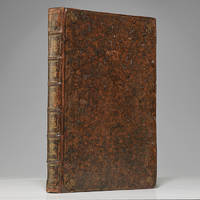
1553ref. 371814London: Thomas Gaultier imprimeur du Roy en la langue francoise i.e. printed by N. Hill 1553. First edition of the translation of the Book of Common Prayer into French. Calendar printed in red and black. Ornamental initials throughout. Collation: a-e4 f2 A-ZZ4 -ZZ1-4 lacks the four leaves of final gathering ZZ. 1 vols. 4to. Eighteenth century brown calf spine with gilt monogram BDM. Some worming at bottom margins. First edition of the translation of the Book of Common Prayer into French. Calendar printed in red and black. Ornamental initials throughout. Collation: a-e4 f2 A-ZZ4 -ZZ1-4 lacks the four leaves of final gathering ZZ. 1 vols. 4to. A translation by François Philippe of the 1552 Book of Common Prayer for use in Calais and the Channel Islands. OCLC records only Cambridge and John Carter Brown; Griffiths cites copies at Lambeth and Harvard. ESTC adds Boston Public Huntington U. Liverpool Liverpool Hope Bodleian Keble. Though lacking the final gathering this book is uncommon in institutions and RARE in the trade. ESTC: S108734; Griffiths French 36:1. Provenance: Coll. Aqu. Soc. Iesu Cat. Insc. 1659 at head of title; ink stamp on title page of Bibliotheque de Marseille foot of a2 stamped: Vente 1845; armorial bookplate of A.rthur Brölemann Thomas Gaultier, imprimeur du Roy en la langue francoise [i.e., printed by N. Hill] unknown
1553ref. 371814London: Thomas Gaultier imprimeur du Roy en la langue francoise i.e. printed by N. Hill 1553. First edition of the translation of the Book of Common Prayer into French. Calendar printed in red and black. Ornamental initials throughout. Collation: a-e4 f2 A-ZZ4 -ZZ1-4 lacks the four leaves of final gathering ZZ. 1 vols. 4to. Eighteenth century brown calf spine with gilt monogram BDM. Some worming at bottom margins. First edition of the translation of the Book of Common Prayer into French. Calendar printed in red and black. Ornamental initials throughout. Collation: a-e4 f2 A-ZZ4 -ZZ1-4 lacks the four leaves of final gathering ZZ. 1 vols. 4to. A translation by François Philippe of the 1552 Book of Common Prayer for use in Calais and the Channel Islands. OCLC records only Cambridge and John Carter Brown; Griffiths cites copies at Lambeth and Harvard. ESTC adds Boston Public Huntington U. Liverpool Liverpool Hope Bodleian Keble. Though lacking the final gathering this book is uncommon in institutions and RARE in the trade. ESTC: S108734; Griffiths French 36:1. Provenance: Coll. Aqu. Soc. Iesu Cat. Insc. 1659 at head of title; ink stamp on title page of Bibliotheque de Marseille foot of a2 stamped: Vente 1845; armorial bookplate of A.rthur Brölemann Thomas Gaultier, imprimeur du Roy en la langue francoise [i.e., printed by N. Hill] unknown books
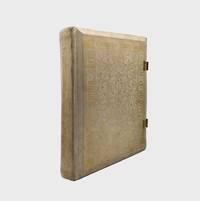
1893ref. 51275Printed for the Committee 1893-01-01. Hardcover. Very Good. Folio title-page in red & black. Bound in full vellum over beveled boards with working brass clasps at the fore-edge; elaborate gilt rose designs and title on the spine and front cover designed by B. G. Goodhue; gold-printed rose & thistle design endpapers top-edge gilt silk bookmarker ribbon bound in; deckle-edged paper. With a copy of the 1893 4pp. pamphlet: "On the Decorations of the Limited Edition of the Standard Prayer Book of 1892" by D. B. Updike printed at the De Vinne Press laid in along with original postcard receipt that was supposed to be returned to J. Pierpoint Morgan and never was. This copy with the foliated margins. Tight and very well preserved oversized and overweight. Please email for photos. Printed for the Committee hardcover
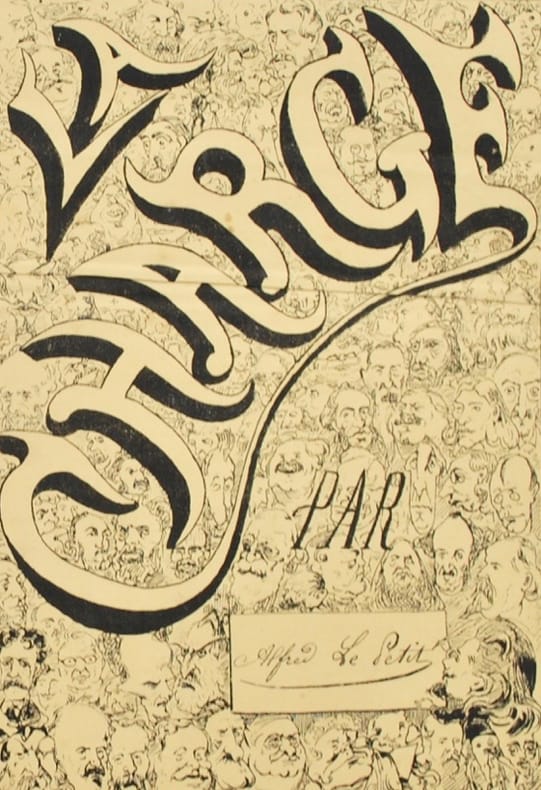
1870ref. 42347Paris, Typ. de Rouge frères et comp., 1870. 2 séries de 13 et 24 livraisons montées en 1 vol. in-folio, demi-percaline verte, dos lisse, couverture illustrée conservée portant Album de la Charge (reliure de l'époque).
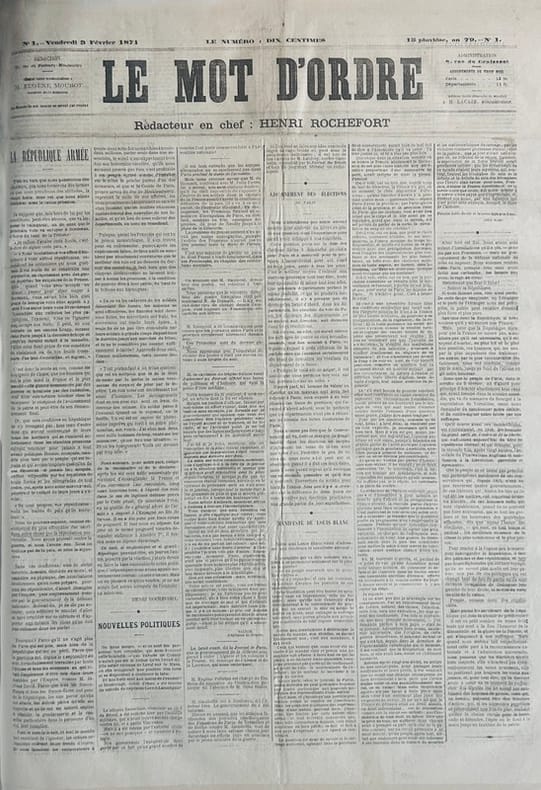
1871ref. 8263Paris, Imp. Schiller, 1871. 86 livraisons reliées en 1 vol. grand in-folio, demi-veau blond.
1893ref. 254927New York: Printed for the Convention 1893. First edition according to the Standard of 1892. 28 566 2 pp. Title printed in red and black with floriated borders by Bertram Grosvenor Goodhue title in black letter. 1 vols. Folio. Original heavily gilt decorated vellum over boards with brass fore-clasps t.e.g. others untrimmed ribbon marker. Binding a bit dust soiled with bruises to foretips and small chip from lower corner of front pastedown front inner hinge cracked but webbing sound some occasional dust and finger smudging to the margins of the early leaves bookplate and small label on front pastedown some bleed-through on the title from the array of original ink signatures on the verso otherwise about very good. First edition according to the Standard of 1892. 28 566 2 pp. Title printed in red and black with floriated borders by Bertram Grosvenor Goodhue title in black letter. 1 vols. Folio. Copy #12 of the limited issue of the revised Book of Common Prayer overseen by D.B. Updike and signed in ink on the verso of the title of many of the principals associated with the revision approved at the 1892 General Convention including financier J.P. Morgan who helped fund the edition's publication. The limited edition was prepared in two forms one being this form intended for distribution to each diocese and jurisdiction within the Church with original signatures on the verso of the title and with a variant title all in black letter without border. The standard limited edition of 500 copies on handmade paper has the signatures of the principals in printed facsimile and a foliated border around the title resembling those around the main text and the central "Laudate Dominum" device and the two lines: "Together with the Psalter or Psalms of David." Updike comments at length on this project in his introduction to NOTES ON THE MERRYMOUNT PRESS and about his role in the attempted rescue of an ill-conceived attempt to produce a decorated edition from the plates of the 1892 printing: "The best things about the book were the cover and charming end-papers which Goodhue designed for it. Sad to relate the edition had an immediate and resounding success! We were congratulated and we blushed. Our shame was taken for modesty and we were congratulated more! While the book is indeed a strange one it is by no means so strange as the designs originally made for it" see pp. 9-10. Nonetheless the experience was an important prelude to the production in 1928 of Updike's own edition widely regarded as his finest work. Laid into this copy is a photocopy of the 4pp. leaflet ON THE DECORATIONS OF THE LIMITED EDITION OF THE STANDARD PRAYER BOOK OF MDCCCXCII. Griffths 1893; Updike Notes on the Merrymouth Press & Its Work p. 9; John Clyde Osborn Catalogue of Work of The De Vinne Press Exhibited at the Grolier Club p. 15 Printed for the Convention unknown
1893ref. 254927New York: Printed for the Convention 1893. First edition according to the Standard of 1892. 28 566 2 pp. Title printed in red and black with floriated borders by Bertram Grosvenor Goodhue title in black letter. 1 vols. Folio. Original heavily gilt decorated vellum over boards with brass fore-clasps t.e.g. others untrimmed ribbon marker. Binding a bit dust soiled with bruises to foretips and small chip from lower corner of front pastedown front inner hinge cracked but webbing sound some occasional dust and finger smudging to the margins of the early leaves bookplate and small label on front pastedown some bleed-through on the title from the array of original ink signatures on the verso otherwise about very good. First edition according to the Standard of 1892. 28 566 2 pp. Title printed in red and black with floriated borders by Bertram Grosvenor Goodhue title in black letter. 1 vols. Folio. Copy #12 of the limited issue of the revised Book of Common Prayer overseen by D.B. Updike and signed in ink on the verso of the title of many of the principals associated with the revision approved at the 1892 General Convention including financier J.P. Morgan who helped fund the edition's publication. The limited edition was prepared in two forms one being this form intended for distribution to each diocese and jurisdiction within the Church with original signatures on the verso of the title and with a variant title all in black letter without border. The standard limited edition of 500 copies on handmade paper has the signatures of the principals in printed facsimile and a foliated border around the title resembling those around the main text and the central "Laudate Dominum" device and the two lines: "Together with the Psalter or Psalms of David." Updike comments at length on this project in his introduction to NOTES ON THE MERRYMOUNT PRESS and about his role in the attempted rescue of an ill-conceived attempt to produce a decorated edition from the plates of the 1892 printing: "The best things about the book were the cover and charming end-papers which Goodhue designed for it. Sad to relate the edition had an immediate and resounding success! We were congratulated and we blushed. Our shame was taken for modesty and we were congratulated more! While the book is indeed a strange one it is by no means so strange as the designs originally made for it" see pp. 9-10. Nonetheless the experience was an important prelude to the production in 1928 of Updike's own edition widely regarded as his finest work. Laid into this copy is a photocopy of the 4pp. leaflet ON THE DECORATIONS OF THE LIMITED EDITION OF THE STANDARD PRAYER BOOK OF MDCCCXCII. Griffths 1893; Updike Notes on the Merrymouth Press & Its Work p. 9; John Clyde Osborn Catalogue of Work of The De Vinne Press Exhibited at the Grolier Club p. 15 Printed for the Convention unknown books
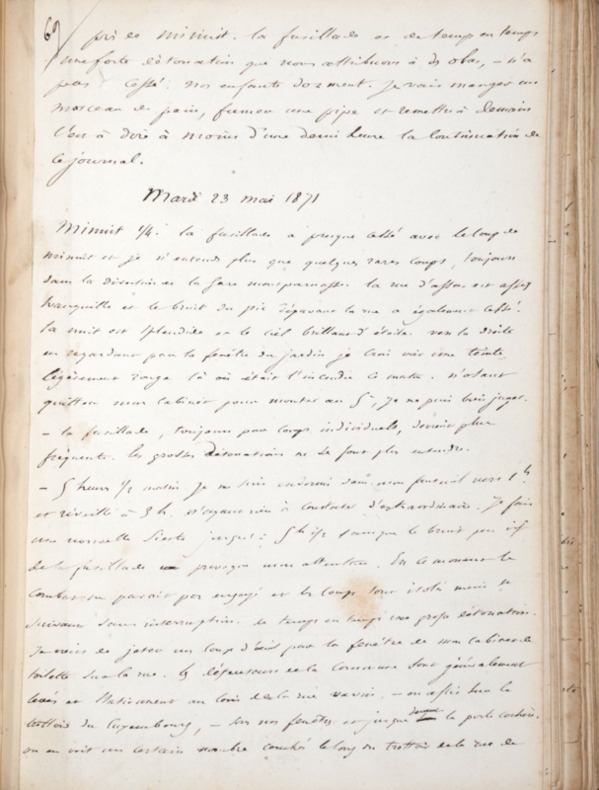
1871ref. 41289Paris, , 1871. In-8 manuscrit en belle page (15 x 21 cm) de (2)-131 ff. montés sur onglet à 30 lignes par page, demi-chagrin vert, dos à nerfs, titre doré (reliure de l’époque).
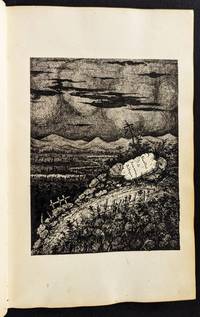
ref. 11588vo. 186x 119 mm. 7 ¼ x 4 ½ inches. 1-14 1 15-19 21-24 1 25-29 1 30-36 1 37-90; folios 74 and 83-90 blank except for page numbers and 4 lines on fol. 85 verso; plus 18 blank leaves at the end followed by 1 leaves containing 3 index pages and 1 final blank leaf. Manuscript section tiles in outline capitals on separate leaves included in foliation. Complete the gap between folios 19 and 21 is a foliation error. Ruled borders throughout. Text in brown ink in a flowing cursive hand varying lines numerous insertions and deletions. The manuscript on wove paper is illustrated with 20 pen-and-ink drawings of which 7 full-page on rectos with verso blank the first five not included in the foliation and 13 half-page or smaller plus 2 small ornaments. Bound in black straight-grain morocco covers gilt paneled central panel with arabesque tooling at corners smooth spine with gilt title cartouche lettered “Bluettes” from which extend triple gilt fillets terminating in ornaments at head and tail gilt edges with moiré satin endleaves; binding a bit rubbed with corners bumped. A manuscript of poems and short prose pieces all in a romantic vein illustrated with quite accomplished pen-and-ink drawings presumably by the author whose name and the date of the manuscript are supplied on the verso of the front free endpaper: “Le Baron Achille de Cholet / Officier á l’Etat-Major / 1836”. In the first poem Aux Dames the poet calls himself a “novice Ecolier” implying youthfulness and the date of 1836 on the front fly leaf is probably at the time of writing although some of the many corrections and deletions may have been added later. The titles of the other poems or groups of poems are : Le Rin Le Déserteur L’Isolement L’Impiété Un Croix sur la Montagne La Mère du Prisonnier L’Avenir / á Melle Francine d’Hurbal Rheyms Séparation L’Enfant perdu L’Adieu au Plaisir La Campagne / á Mr le Vicomte Alfred de R. . . Le Cloches du Soir La Neige Les Pauvres and Le Jour des Rois . . . These stolid sentimental poems and prose impressions reflect the prevailing Romanticism of the period as do the far more skillfully executed pen-and-ink drawings that illustrate them. Somber or dreamlike with dark cross-hatching contrasting with lighter areas the drawings show a dark tunnel under a rocky mountainside a soldier in a garret or prison a cloaked barefoot man an emblematic trophy with musical instruments and weaponry a raven perched on ruined tombstones and columns a domestic scene of father and daughter a women on her knees the façade of Reims Cathedral surrounded by swirling clouds architectural details of cathedrals several surrounded by decaying facades and vignettes of crumbling chateaux pastoral churches and snow-covered gatehouses all of which reflect the vogue for l’ancienne France and the “pittoresque” as notably popularized by Nodier and Taylor in their Voyage pittoresque et romantiques dans l’Ancienne France 23 volumes 1820-1878. Achille de Cholet was descended from an ancient Anjou noble family according to his obituary in 1888 in the Bulletin héraldique de France vol. 7 235-6. He became an officer in the Légion d’honneur and was well known for his important topographic researches in the south of France. A few of the pieces in the manuscript are dedicated to aristocrats mainly female. It seems likely that the Baron shared his family’s Royalist views: his father had died in exile and his brother whose first name is not given in the obituary was an “ardent champion of the Royalists press” and author of a book title Madame en Vendée relating the attempted coup in 1832 of the duchesse de Berry mother of the Prentender the Comte de Chambord which was pursued and effectively banned by the tribunals indeed the work appears not be recorded in OCLC or other online OPACs. Thanks to Nina Musinsky for this description. . unknown
ref. 11588vo. 186x 119 mm. 7 ¼ x 4 ½ inches. 1-14 1 15-19 21-24 1 25-29 1 30-36 1 37-90; folios 74 and 83-90 blank except for page numbers and 4 lines on fol. 85 verso; plus 18 blank leaves at the end followed by 1 leaves containing 3 index pages and 1 final blank leaf. Manuscript section tiles in outline capitals on separate leaves included in foliation. Complete the gap between folios 19 and 21 is a foliation error. Ruled borders throughout. Text in brown ink in a flowing cursive hand varying lines numerous insertions and deletions. The manuscript on wove paper is illustrated with 20 pen-and-ink drawings of which 7 full-page on rectos with verso blank the first five not included in the foliation and 13 half-page or smaller plus 2 small ornaments. Bound in black straight-grain morocco covers gilt paneled central panel with arabesque tooling at corners smooth spine with gilt title cartouche lettered “Bluettes” from which extend triple gilt fillets terminating in ornaments at head and tail gilt edges with moiré satin endleaves; binding a bit rubbed with corners bumped. A manuscript of poems and short prose pieces all in a romantic vein illustrated with quite accomplished pen-and-ink drawings presumably by the author whose name and the date of the manuscript are supplied on the verso of the front free endpaper: “Le Baron Achille de Cholet / Officier á l’Etat-Major / 1836”. In the first poem Aux Dames the poet calls himself a “novice Ecolier” implying youthfulness and the date of 1836 on the front fly leaf is probably at the time of writing although some of the many corrections and deletions may have been added later. The titles of the other poems or groups of poems are : Le Rin Le Déserteur L’Isolement L’Impiété Un Croix sur la Montagne La Mère du Prisonnier L’Avenir / á Melle Francine d’Hurbal Rheyms Séparation L’Enfant perdu L’Adieu au Plaisir La Campagne / á Mr le Vicomte Alfred de R. . . Le Cloches du Soir La Neige Les Pauvres and Le Jour des Rois . . . These stolid sentimental poems and prose impressions reflect the prevailing Romanticism of the period as do the far more skillfully executed pen-and-ink drawings that illustrate them. Somber or dreamlike with dark cross-hatching contrasting with lighter areas the drawings show a dark tunnel under a rocky mountainside a soldier in a garret or prison a cloaked barefoot man an emblematic trophy with musical instruments and weaponry a raven perched on ruined tombstones and columns a domestic scene of father and daughter a women on her knees the façade of Reims Cathedral surrounded by swirling clouds architectural details of cathedrals several surrounded by decaying facades and vignettes of crumbling chateaux pastoral churches and snow-covered gatehouses all of which reflect the vogue for l’ancienne France and the “pittoresque” as notably popularized by Nodier and Taylor in their Voyage pittoresque et romantiques dans l’Ancienne France 23 volumes 1820-1878. Achille de Cholet was descended from an ancient Anjou noble family according to his obituary in 1888 in the Bulletin héraldique de France vol. 7 235-6. He became an officer in the Légion d’honneur and was well known for his important topographic researches in the south of France. A few of the pieces in the manuscript are dedicated to aristocrats mainly female. It seems likely that the Baron shared his family’s Royalist views: his father had died in exile and his brother whose first name is not given in the obituary was an “ardent champion of the Royalists press” and author of a book title Madame en Vendée relating the attempted coup in 1832 of the duchesse de Berry mother of the Prentender the Comte de Chambord which was pursued and effectively banned by the tribunals indeed the work appears not be recorded in OCLC or other online OPACs. Thanks to Nina Musinsky for this description. . unknown books
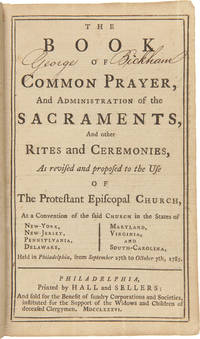
1786ref. 34053Philadelphia: Printed by Hall and Sellers 1786. The Suppressed Original Episcopal Book of Common Prayer The American Protestant Episcopal Church was founded after the American Revolution as an adaptation of the Church of England in the new United States. The church was founded at a convention in Philadelphia in 1785 at which it was agreed to create a separate prayer book. The present title is the result and it caused great controversy upon its publication. Among the ill-considered revisions were "changes and omissions of such drastic nature as among other things the deletion of the Nicene and Athanasian Creeds. The Proposed Book proved unwelcome to clergy and laity even its suggestion of a prayer for the Fourth of July being taken exception to. Its use was brief and not general" Page. "This edition contains the alterations which were intended to adapt the Book of Common Prayer of the Church of England to the changed political conditions of this country; and is the result of a convention held in Philadelphia in 1785 presided over by the Reverend William White. The proposed Prayer Book met with much criticism and opposition in the church owing to its radical changes and was never adopted" - Evans. Rare. 12mo. Contemporary calf original endpapers. Binding crackled chipped at spine ends boards detached. A few leaves trimmed close four leaves with edge wear resulting in minor loss to a few letters. Leaf Gg3 a bit rumpled with a closed horizontal tear. Withal a good copy in unsophisticated condition with the contemporary ownership signature of "George Bickham" on the front free endpaper titlepage and contents page. In a gilt morocco solander case spine richly gilt. EVANS 19940. PAGE THE BOOK OF COMMON PRAYER 51. GRIFFITHS 1786 9. BRITTON & LOWENS AMERICAN SACRED MUSIC IMPRINTS 409. ESTC W29995. hardcover
1786ref. 34053Philadelphia: Printed by Hall and Sellers 1786. The Suppressed Original Episcopal Book of Common Prayer The American Protestant Episcopal Church was founded after the American Revolution as an adaptation of the Church of England in the new United States. The church was founded at a convention in Philadelphia in 1785 at which it was agreed to create a separate prayer book. The present title is the result and it caused great controversy upon its publication. Among the ill-considered revisions were "changes and omissions of such drastic nature as among other things the deletion of the Nicene and Athanasian Creeds. The Proposed Book proved unwelcome to clergy and laity even its suggestion of a prayer for the Fourth of July being taken exception to. Its use was brief and not general" Page. "This edition contains the alterations which were intended to adapt the Book of Common Prayer of the Church of England to the changed political conditions of this country; and is the result of a convention held in Philadelphia in 1785 presided over by the Reverend William White. The proposed Prayer Book met with much criticism and opposition in the church owing to its radical changes and was never adopted" - Evans. Rare. 12mo. Contemporary calf original endpapers. Binding crackled chipped at spine ends boards detached. A few leaves trimmed close four leaves with edge wear resulting in minor loss to a few letters. Leaf Gg3 a bit rumpled with a closed horizontal tear. Withal a good copy in unsophisticated condition with the contemporary ownership signature of "George Bickham" on the front free endpaper titlepage and contents page. In a gilt morocco solander case spine richly gilt. EVANS 19940. PAGE THE BOOK OF COMMON PRAYER 51. GRIFFITHS 1786 9. BRITTON & LOWENS AMERICAN SACRED MUSIC IMPRINTS 409. ESTC W29995. hardcover books
1754ref. 1216301754. BOOK OF COMMON PRAYER. The Book of Common PrayerÉ Cambridge: Printed by Joseph Bentham printer to the University by whom they are soldÉ and by Benj. DodÉ in London 1760. Tall folio 10-1/2 by 16-1/2 inches full contemporary dark green morocco rebacked with elaborately gilt-decorated spine laid down with crowned monogram of George II in compartments covers with elaborately gilt-tooled borders and gilt centerpiece featuring the arms of King George II raised bands later marbled endpapers evidence of silk ties. $7500.Splendid folio Cambridge edition of the Book of Common Prayer in a beautiful armorial George II binding with broad gilt-tooled borders elaborate royal cypher in spine panels and splendid gilt centerpiece on each cover featuring the arms of King George II and text hand-ruled in red throughout.Born of Thomas Cranmer's desire for liturgical texts upon which all of Europe's Protestant English-speaking churches could agree the Book of Common Prayer first issued in 1549 with its magisterial liturgical language is ""as a source of spiritual inspirationÉ for most Englishmen second only to the Bible"" PMM 75. This finely printed Cambridge editionÑset in large type with wide margins and hand-ruled in red throughoutÑboasts an impressive royal binding bearing the gilt monogram and crown device of King George II in the spine compartments and his gilt embossed armorial design on both boards within an ornate floral border. Griffiths 1754:1. Owner ink signature.Some faint foxing a very few leaves with light edge-wear. Expert restoration to lovely royal binding. hardcover
1754ref. 1216301754. BOOK OF COMMON PRAYER. The Book of Common PrayerÉ Cambridge: Printed by Joseph Bentham printer to the University by whom they are soldÉ and by Benj. DodÉ in London 1760. Tall folio 10-1/2 by 16-1/2 inches full contemporary dark green morocco rebacked with elaborately gilt-decorated spine laid down with crowned monogram of George II in compartments covers with elaborately gilt-tooled borders and gilt centerpiece featuring the arms of King George II raised bands later marbled endpapers evidence of silk ties. $7500.Splendid folio Cambridge edition of the Book of Common Prayer in a beautiful armorial George II binding with broad gilt-tooled borders elaborate royal cypher in spine panels and splendid gilt centerpiece on each cover featuring the arms of King George II and text hand-ruled in red throughout.Born of Thomas Cranmer's desire for liturgical texts upon which all of Europe's Protestant English-speaking churches could agree the Book of Common Prayer first issued in 1549 with its magisterial liturgical language is ""as a source of spiritual inspirationÉ for most Englishmen second only to the Bible"" PMM 75. This finely printed Cambridge editionÑset in large type with wide margins and hand-ruled in red throughoutÑboasts an impressive royal binding bearing the gilt monogram and crown device of King George II in the spine compartments and his gilt embossed armorial design on both boards within an ornate floral border. Griffiths 1754:1. Owner ink signature.Some faint foxing a very few leaves with light edge-wear. Expert restoration to lovely royal binding. hardcover books
1723ref. 1197771723. BOOK OF COMMON PRAYER. The Book of Common Prayer and Administration of the Sacraments. London: John BaskettÉ and the Assigns of Thomas Newcomb and Henry Hills 1723. Tall folio 10-1/2 by 16 inches contemporary full mottled calf expertly rebacked with original spine neatly laid down corners and spine panels with gilt device of the crown of King George I raised bands renewed endpapers all edges gilt. $8250.Beautiful early 18th-century tall folio edition of the venerable Book of Common PrayerÑ the treasury of ritual prayer and Scripture that has indelibly shaped the piety and literature of the English-speaking worldÑwith fine engraved frontispiece handsome in nicely restored contemporary calf featuring the gilt device of King George I in the corners and spine panels.Born of Thomas Cranmer's desire for liturgical texts upon which all of Europe's Protestant English-speaking churches could agree the beautiful and dignified language of the Book of Common Prayer first issued in 1549 has considerably influenced not only ecclesiastical practice but also literature in English. ""The language of the Prayer Book is now part of the whole languageÉ and as a source of spiritual inspiration it is for most Englishmen second only to the Bible"" PMM 75. This 1723 London edition is handsomely bound in full mottled calf with King George I's gilt monogram cipher in each corner of the boards as well as in each spine panel. Ornamented with fine engraved frontispiece dated 1710 decorative headpieces and woodcut initials. Griffiths 1723:1. A few ink corrections and marginal annotations.A few short wormtraces; text clean. Evidence of cloth ties corners expertly restored. A very handsome volume. hardcover books
1879ref. 10407Londres, Imp. Delatre, Howland st. 23, 1879. 1 vol. in-folio de 1 titre, 19 planches et 1 table gravés, maroquin rouge, dos lisse orné, large roulette dorée d'encadrement sur les plats, titre frappé au centre (reliure anglaise de l'époque).
1715ref. 1067831715. London: printed by John Baskett and by the assigns of Thomas Newcomb and Henry Hills 1715. Folio 380 23 3 pp. unpaginated text ends on Aaa4 as per ESTC. Engraved frontispiece by Loggan after Caspars. Title-page printed in red and black ruled in red throughout. Contemporary red morocco covers tooled in gilt with a wide scrolled border central gilt block of the arms of the Duke of Chandos backstrip richly gilt gilt edges a lovely binding of the period in the style of Mearne skillfully restored at head and foot and along joints. Armorial bookplate of John van Hatten. § Lovely prayer book bound for James Brydges 1st Duke of Chandos 1674-1744. It once rested on an embroidered cushion in the Duke and Duchess's private pew in his magnificent chapel at Cannons described by the architect Gibbs as "the finest in England." The centerpiece of the elaborately-tooled binding is the Duke's gilt arms supported by two otters beneath a ducal coronet. Four other bindings with the block are recorded by the British Armorial Bindings database. Full description and provenance available on request. ESTC T81463. unknown
1715ref. 1067831715. London: printed by John Baskett and by the assigns of Thomas Newcomb and Henry Hills 1715. Folio 380 23 3 pp. unpaginated text ends on Aaa4 as per ESTC. Engraved frontispiece by Loggan after Caspars. Title-page printed in red and black ruled in red throughout. Contemporary red morocco covers tooled in gilt with a wide scrolled border central gilt block of the arms of the Duke of Chandos backstrip richly gilt gilt edges a lovely binding of the period in the style of Mearne skillfully restored at head and foot and along joints. Armorial bookplate of John van Hatten. § Lovely prayer book bound for James Brydges 1st Duke of Chandos 1674-1744. It once rested on an embroidered cushion in the Duke and Duchess's private pew in his magnificent chapel at Cannons described by the architect Gibbs as "the finest in England." The centerpiece of the elaborately-tooled binding is the Duke's gilt arms supported by two otters beneath a ducal coronet. Four other bindings with the block are recorded by the British Armorial Bindings database. Full description and provenance available on request. ESTC T81463. unknown books
PARIS, Lib. Législative - A. WITTERSHEIM & CIE/Lib. Germer-Baillière -1872 - couverture bleue imprimée - Grand in-4 - Texte sur 3 colonnes - 590 pages - exemplaire non coupé, très frais
PARIS, P.U.F. - Fondée en 1878 par Gabriel Monod, publiée avec le concours du CNRS et de la 6e section de l'Ecole des Hautes Etudes.- Revue historique N° 603, juillet-septembre 1997 - In-8, 15,5 x 24 cm - Broché - 219 Pages - Très frais, comme neuf - Envoi rapide et soigné La Revue historique, est une revue d’histoire française créée en 1876 par le protestant Gabriel Monod et le catholique Gustave Fagniez. Cette nouvelle revue s'inscrit en réaction contre La Revue des Questions historiques créée dix ans plus tôt et qui traduisait la pensée d'une droite ultramontaine et légitimiste. La Revue historique ne se réclame d'aucune religion, d'aucun parti, d'aucune doctrine Éditée à Paris par les Presses universitaires de France