(Book of Common Prayer)Biblio.com
972 risultati
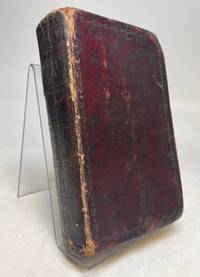
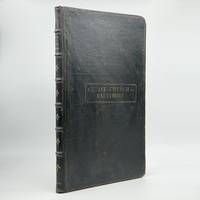
1641rif. 371384London: Robert Barker printer to the Kings most excellent Majestie and by the Assignes of John Bill 1641. Title within woodcut border. Text in two columns. 104pp. 8vo. Nineteenth-century full dark red morocco stamped in gilt. Gilt edges. Marbled endpapers with GTS bookplates on first pastedown. Pages cropped. Autograph initials on title page with additional ownership inscription on A3. Title within woodcut border. Text in two columns. 104pp. 8vo. This compact Book of Common Prayer was published during a period of particularly fractious religious tumult just prior to the start of the First English Civil War which was fueled in part by what was seen as King Charles I's pro-Catholic sympathies exemplified by his implementation of a more ceremonial sacramental version of High Anglicanism. Some of these contentious changes - as well the disquiet fomented by them - are alluded to in the Preface and "Of Ceremonies Why Some Be abolished and some retained" all of which follow "An Act for the Uniformitie of Common Prayer" on A2-A3. "Cum privilegio" printed at the foot of the title page. A gift to the General Theological Seminary from the then-Dean of Trinity Cathedral George McCormick. ESTC R37432; Griffiths Common Prayer 1641:5; Wing B3612A Robert Barker, printer to the Kings most excellent Majestie, and by the Assignes of John Bill unknown
1794rif. 231248New York: Hugh Gaine 1794. hardcover. good. according to the use of the Protestant Episcopal Church in the United States of America: Together with the Psalter or Psalms of David. 364 171 5 pp. Thick 18mo contemporary calf spine and edges of corners worn corners bumped endpapers and title page lightly soiled some pages with very light foxing. New-York: By direction of the General Convention printed by Hugh Gaine 1794. In 1789 the Episcopal Church of the United States approved the use of text starting in 1790. It remained in use for the next 102 years. Evans 27577. Ford The Journals of Hugh Gaine Vol. I p. 170. Hugh Gaine unknown
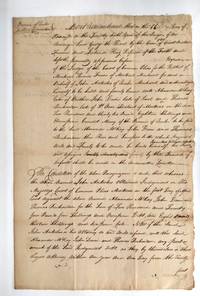
1786rif. 151130Montreal 1786-8. Very good. 7 handwritten documents and one printed document with written insertions. Folds staining chips. 1 Printed broadside dated April 1 and April 21 1786 and July 3 1786 with particulars of case written on recto and written text about judgment on verso. Signed by Edward Southouse as judge Edward William Gray as sheriff and T. Walker. Seal on top left corner. Folds. Stains at edges. 2-4 3 Documents attached two written in French. One French document signed by Languinet and the other dated August 27 1788 signed by Corbin. The latter notes receipt of 13 Louis 17 chelins 10 sols from M. Cairns. Document in English signed by Southouse and J. Beeke clerk April 25 1786. Verso dated January 8 1788. Some splitting. Small piece missing at side with no loss of text. 5 Reasons for Jannet McKay's opposition filed 1787. 8 p. Financial statement of the McKay estate signed by A. Davidson July 9 1787. 6-7 2 p. petition to have debtor appear in court. Signed by Walker for the plaintiff and John Fraser as judge March 20 1786. Affixed to this document is a note in French about the place of residene of Alexander McKay and John Davey signed by Jn Rival March 22 1786. 8 2 p. judgment by Southouse May 16 1786. Judgement in favour of Antrobus for sum of £224 5s 9p plus £8 13s 2p and 5s for the writ. See article from the Quebec Gazette May 18 1786. Antrobus is probably the merchant and office holder of this name in Trois Rivieres. Baptised July 6 1756 in Cockermouth Cumberland married on March 29 1787 in Trois Rivieres to Catherine Cuthbert died May 8 1820 and is buried in Trois Rivieres. He first appears in Quebec Cty in the 1780s as a grocer engaged in a sizable retail trade and engaged in provisioning fisheries and the West Indies. He and other merchants sent flour bread oats and biscuit to Newfoundland and imported fish seal oil and seal skins. One of the best-known merchants in the colony he was prosperous enough to buy land. unknown
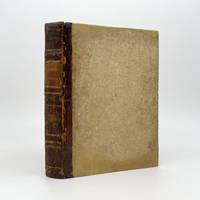
rif. 1051London: Printed by Henry Hills and John Field 1660. Hardcover. Good. London: Printed by Henry Hills and John Field 1660. Octavo. Unpaginated. 744pp. A8-Z8 Aa8-ZZ8 Aaa4. Added engraved title-page lacking. Titles within typographic border & with typographic ornament. Ruled in red. Eighteenth-century green morocco repaired. Darlow & Moule 526; Herbert 669; ESTC B2256. Bound with: The whole book of Psalmes: collected into English meeter by Thomas Sternhold John Hopkins and others. London: printed for the Companie of Stationers 1661. Octavo. iv 78pp. ESTC R204219; STC 2nd ed. B2437aA and The book of common-prayer and administration of the sacraments and other rites and ceremonies of the Church . London: printed by John Bill and Christopher Barker printers to the Kings most excellent Majesty 1662. Octavo. Unpaginated. 128pp. A8-H8. ESTC R35356; STC 2nd ed. B3623. 0 London: Printed by Henry Hills and John Field, 1660. hardcover
rif. 2166London: printed for the Companie of Stationers 1661. Hardcover. Good. Octavo. iv 78pp. Eighteenth-century green morocco repaired. ESTC R204219; STC 2nd ed. B2437aA. Bound with: The Holy Bible Containing The Old Testament And The New: Newly translated out of the Original Tongues And with the former translations diligently Compared and Revised by His Majesties special Command. Appointed to be read in Churches. London: Printed by Henry Hills and John Field 1660. Octavo. Unpaginated. 744pp. A8-Z8 Aa8--ZZ8 Aaa4. Added engraved title-page lacking. Titles within typographic border & with typographic ornament. Ruled in red. Darlow & Moule 526; Herbert 669; ESTC B2256 and The book of common-prayer and administration of the sacraments and other rites and ceremonies of the Church . London: printed by John Bill and Christopher Barker printers to the Kings most excellent Majesty 1662. Octavo. Unpaginated. 128pp. A8-H8. ESTC R35356; STC 2nd ed. B3623. 0 London: printed for the Companie of Stationers, 1661. hardcover
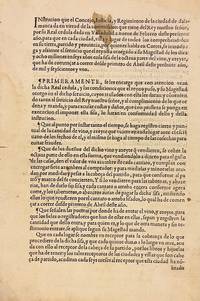
1601rif. 3683Salamanca: S.n. 1601. First edition. Signed at foot by a municipal officer Diez de la Puente. One-page contemporary manuscript on p. 3 relating to the administration of the tax. Unbound as issued. Pinholes at gutter some edge chipping and small dents brown stain affecting the upper portion throughout. Otherwise a good well-preserved copy. First edition. Signed at foot by a municipal officer Diez de la Puente. One-page contemporary manuscript on p. 3 relating to the administration of the tax. Unbound as issued. 4 last 2 blank p. Unrecorded 1601 ordinance from Salamanca enforcing the Armada-era servicio de millones Spain’s foundational fiscal levy. Printed ordinance issued by the municipal council of Salamanca implementing the royal tax known as the servicio de los dieciocho millones. In accordance with the royal cédula of 9 February 1601 the Concejo Justicia y Regimiento instructs subordinate towns and villages to collect an eighth part of all wine and olive oil sold to be remitted through a chain of local receivers. The text regulates how wine and oil must be measured recorded and taxed forbids additional repartimientos and orders prompt transfer of funds to the city’s main treasury. Dated at Salamanca 10 March 1601 and naming four municipal commissioners appointed for its execution it represents the earliest stage of local enforcement of Philip III’s fiscal scheme transforming the national levy into a functioning municipal excise. A contemporary handwritten endorsement below the text signed by Diez de la Puente attests its execution. Accompanying the printed ordinance is a contemporary manuscript headed on p. 3 “Dudas que se ofrecen en la administración de las sisas” listing practical questions concerning the execution of the tax—registration and measurement of goods roles of administrators and receivers form of payment penalties and conditions of tax farming arrendamiento. The servicio de los dieciocho millones formed part of the broader system of millones taxes created by the Cortes of Castile to meet the Crown’s desperate financial needs after the prolonged wars of Philip II. The servicio de millones had first been introduced by royal request and approved by the Cortes on 4 April 1590 conceived to raise eight million ducats over six years to finance the royal expenditure associated with the Armada campaign against England and other military commitments. Rather than remaining temporary it evolved into a regular levy on six staple items—wine oil vinegar meat soap and tallow candles—collected through local sisas and eventually forming the backbone of Castile’s fiscal structure. By 1600–1601 under Philip III the scheme was renewed and expanded to eighteen million ducats its collection entrusted to municipal governments such as Salamanca’s Concejo Justicia y Regimiento. As described in Bartolomé Yun Casalilla’s Sobre la transición al capitalismo en Castilla this marked a transition from feudal income to a centralized fiscal system financed through municipal taxation embedding local economies within the machinery of the Habsburg war state. The present ordinance captures this process of consolidation—when the monarchy sought tighter control over municipal revenues demanded proper accounting and remittance of surpluses and aimed to prevent arbitrary over-taxation—reflecting both the fiscal strain and administrative centralization characteristic of early-seventeenth-century Spain. Reference: Yun Casalilla B. 1987. Sobre la transición al capitalismo en Castilla: Economía y sociedad en Tierra de Campos 1500–1830. Valladolid: Junta de Castilla y León Consejería de Educación y Cultura. . [S.n.] unknown
1714rif. 37200London: Printed by John Baskett. Printer to the Kings most Excellent Majesty and by the assigns of Thomas Newcomb and Henry Hills Deceased 1714. Engraved title page. Printed in black and red ruled in red. 1 vols. Folio. Bound in full red morocco richly gilt spine six panels raised bands gilt dentelles marbled endpapers a.e.g. Engraved title page. Printed in black and red ruled in red. 1 vols. Folio. Printed by John Baskett. Printer to the Kings most Excellent Majesty, and by the assigns of Thomas Newcomb and Henry Hills, Dece unknown
1831rif. 744141831. BOOK OF COMMON PRAYER. The Book of Common Prayer. Oxford: Printed at the University Press by S. Collingwood 1831. Folio 12 by 20 inches contemporary full tan morocco rebacked with original spine laid down elaborately gilt-decorated spine and boards black morocco spine label marbled endpapers all edges gilt. $3200.Impressive 1831 Oxford folio edition of the magisterial Book of Common Prayer elegantly bound by Hayday in contemporary full morocco-gilt.Born of Thomas CranmerÕs desire for liturgical texts upon which all of EuropeÕs Protestant English-speaking churches could agree the beautiful and dignified language of the Book of Common Prayer first issued in 1549 has considerably influenced not only ecclesiastical practice but has served Òas a source of spiritual inspirationÉ for most Englishmen second only to the BibleÓ PMM 75. Beautifully bound by Hayday in contemporary full morocco with elaborately gilt-tooled spine and boards featuring central lozenges built up largely of circles and floral ornaments within decorative frames built up from floral scrolls. Griffiths 1831:8. Presentation inscription.Light rubbing and soiling to binding. A very nearly fine copy handsomely bound. hardcover
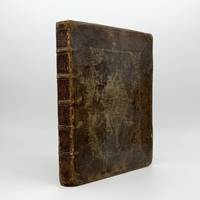
1636rif. 371746London: Printed by Robert Barker Printer to the Kings most Excellent Majestie: And by the Assignes of John Bill 1636. Title within ornamental border. 1 vols. 4to. Bound in contemporary gold-tooled leather rubbed missing ties. Later marbled endpapers with Myers & Co. sticker rubbed at margins; interior front spine cracked. Ownership signature "John Walker" in pencil on title page with several additional holograph ink notations. Paper flaw on D6 with loss to a few words. Title within ornamental border. 1 vols. 4to. Printed in Roman type double columns. Includes the Whole Book of Psalms printed at the "Universitie of Cambridge" 1634 with a 1635 Apocrypha extracted from a Bible printed by Tho: Buck & Roger Daniel printers to the University of Cambridge. Additionally the fifth line of the heading on B1r has: "reade" while another edition STC 2nd 16404.3 has "read." Provenance: Gift of the Rev. Christina K. Wible. Griffiths 1636 5; Pollard 2nd ed. 16404.4; ESTC S2781 Printed by Robert Barker, Printer to the Kings most Excellent Majestie: And by the Assignes of John Bill unknown
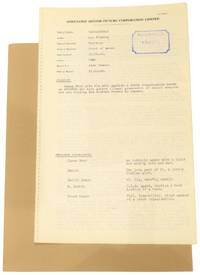
rif. 74488N.p. London: Elstree Studios 1961. Literary and cinematic critique Elstree Studios' unfavourable report of Ian Fleming's The Spy Who Loved Me written four months before publication from page proofs submitted by publisher Jonathan Cape. Pp.3 typed report on ABPC letterhead rectos only reader's delivery stamp to first page dated 13 December 1961. Together with A SECOND REPORT dated 2nd January pp/1 clipped to a copy of the original. This additional report ultimately in much the same vein was likely commissioned as the placement and imminent filming of Dr. No would have been known in film circles. Perforations down left edge from office binding. Very well preserved. The tenth James Bond title The Spy Who Loved Me was published on 16 April 1962. The reader's report notes that Cape submitted page proofs of the novel to the studio on 11 December 1961 and that Common submitted his report to the studio two days later. His verdict was not complimentary: 'The main story of the night at the motel obviously won't stand up by itself so a second subject is brought in by way of flashback's to the heroine's previous life. But the contrivance is forced. It gives the reader a bit more to go on that is all. The total effect is still that of a story broken-backed and not full adequate. No recommendation.' The man who wrote the Elstree reader's report was Jack Common 1903-1969. A regular moonlighter at Elstree's Reading Department Common was a working class socialist novelist and essayist from Newcastle who became friends with George Orwell when both were writing for The Adelphi magazine early in their careers. Common rose to edit The Adelphi in 1935-6 but could never make an adequate living from his published writing despite critical acclaim and in the last years of his life wrote Elstree innumerable reader's reports before his death from lung cancer in 1969. N.p. [London: Elstree Studios], 1961 unknown
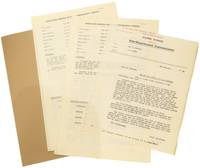
rif. 74293N.p. London: Elstree Studios 1960. Literary and cinematic critique Elstree Studios' unfavourable report of Ian Fleming's Thunderball written three months before publication from page proofs submitted by publisher Jonathan Cape. Pp.4 typed report on ABPC letterhead rectos only reader's delivery stamp to first page dated 13 December 1960. Perforations down left edge from office binding. Very well preserved. The ninth James Bond title Thunderball was published on 27 March 1961. Jack Common's reader's report notes that Cape submitted page proofs to the studio on 11 December 1960 and that Common submitted his report to the studio two days later. His conclusions were damning and as it turned out wildly inaccurate: 'Pretty much the same mixture as before plus a few modern 'props' in the way of nuclear bombs and atomic submarines. . Suspense sags for long stretches . All through the main story this excessive use of modern gadgetry proves no substitute for character and invention: it registers as padding. These defects would be certain to show up more disastrously on the screen. I feel this story would not produce a successful film. No recommendation.' The man who wrote the Elstree reader's report for Thunderball was Jack Common 1903-1969. A regular moonlighter at Elstree's Reading Department Common was a working class socialist novelist and essayist from Newcastle who became friends with George Orwell when both were writing for The Adelphi magazine early in their careers. Common rose to edit The Adelphi in 1935-6 but could never make an adequate living from his published writing despite critical acclaim and in the last years of his life wrote Elstree innumerable reader's reports before his death from lung cancer in 1969. Originally meant as the first James Bond film that notion was quietly shelved as the Thunderball controversy ensued; it was the centre of legal disputes that began in 1961 and ran until 2006. In late 1964 after much negotiation Broccoli & Saltzman agreed with Fleming's one-time story collaborator Kevin McClory to adapt the novel for film with due reverence to McClory and screenwriter Jack Whittingham. Against a budget of $9M the film took $141.2M at the box office. N.p. [London: Elstree Studios], 1960 unknown
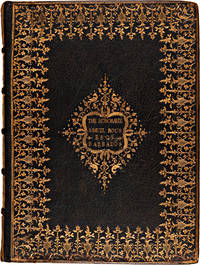
1769rif. 36078Oxford: Printed by T. Wright and W. Gill Printers to the University 1769. In a Presentation Binding for the Governor of Barbados A magnificently bound and extravagantly extra-illustrated copy of The Book of Common Prayer prepared for presentation to or perhaps commissioned by Samuel Rous President of His Majesty's Council and Commander-in-Chief i.e. governor of Barbados from 1766 to 1768. He also served again in 1772 the year indicated on the rear cover. The Rous family Quakers residing in Barbados were leading planters on the island since the late 1630s. The fifty-nine plates bound in this volume to complement the text were originally executed for The Liturgy of the Church of England; Illustrated with Fifty Nine Historical and Explanatory Sculptures Engraved by Mess. Ravenett Grignion Scotin Canott Walker and W. Ryland printed in London in 1755 by Edward Ryland. According to the titlepage included here as one of the extra-illustrated plates this work was published according to an act of Parliament on May 1 1755. However no copies of this 1755 title are recorded in OCLC or ESTC. In addition to The Book of Common Prayer and the engravings from The Liturgy of the Church of England this copy also contains a 1768 edition of A New Version of the Psalms of David first printed in 1698. Considering the recipient and the combined contents of the volume these two texts and the extensive suite of engravings are bound in an appropriately sumptuous binding. Prepared for Samuel Rous who served as governor of Barbados the binding is a marvelous example of later 18th-century British bookbinding with extensive gilt decoration on the covers and spine as described above. A fine copy of an elaborately decorated and illustrated volume with a remarkable colonial-era provenance. Tall quarto. Contemporary black morocco almost imperceptibly rebacked with original backstrip laid down elaborately gilt spine gilt with raised bands gilt inner dentelles a.e.g. contemporary marbled pastedowns and free endpapers. On the front cover the center of the diamond-shape design is lettered "The Honorable Samuel Rous Esq. Barbados" surrounded by a stylized fern border. On the rear cover the center of the diamond-shape design is lettered "One Thousand Seven Hundred & Seventy Two" also surrounded by a stylized fern border. Two corners rubbed and two corners almost imperceptibly repaired otherwise in fine condition. A few minor dampstains on a few leaves at front and rear and occasional minor foxing absolutely not affecting text or images. bound with: Brady N. and N. Tate: A NEW VERSION OF THE PSALMS OF DAVID FITTED TO THE TUNES USED IN CHURCHES. London: H. Woodfall 1768. 26 leaves printed in triple columns. A fine copy. GRIFFITHS BOOK OF COMMON PRAYER 1769.5. hardcover
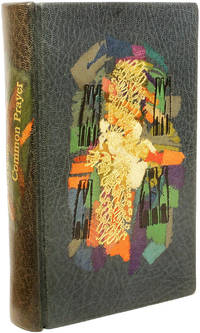
1960rif. 002141London: Society for Promoting Christian Knowledge n.d. c.1960 1960. BOUND BY PHILIP SMITH. 1 vol. 5-7/8" x 3-7/8" bound in full blue morocco multi-color morocco onlays to spine and front cover title gilt to spine gilt decoration of people in gilt and blind around gilt stars and suns blue paper pastedowns pastedowns and endpapers with gilt stars all edges gilt housed in an open ended multi colored felt lined slipcase Philip Smith's binders stamp to upper edge of front pastedown dated 1963 inner and outer hinges fine head and foot of spine fine spine slightly darkened internally clean and bright no previous ownership markings inscriptions or bookplate A VERY GOOD COPY. Born in 1928 Philip began his career in bookbinding and book art in 1949 graduating from the Royal College of Art in London with First Class Honours in 1954. He was an internationally renowned designer bookbinder and book artist. He designed and created intricate and fascinating bindings for well over 50 years and was awarded gold and silver medals in several international competitions. In 2000 he was awarded an MBE for services to Art. Philip was a great innovator having invented and pioneered several ground-breaking and influential techniques and structural developments. His work is represented in many private collections and can be seen in several public collections overseas and in the UK including the V&A National Art Library and the British Library. London: Society for Promoting Christian Knowledge, n.d. (c.1960) unknown
1795rif. 371094New York: Hugh Gaine 1795. Printed in two columns. 208pp. A-d2 A-3B2. Folio. Contemporary black morocco gilt rebacked marbled endpapers gilt edges. Staining to title and first few leaves losses at lower outer corners of A1-C2 partly supplied in early manuscript Provenance: Christ Church Baltimore in gilt on upper cover. Printed in two columns. 208pp. A-d2 A-3B2. Folio. Very rare first folio edition of the 1789 United States Book of Common Prayer the second standard American prayer book beautifully printed by Gaine and designed for lecturn use. Most extant examples with the leaves containing the morning and evening daily prayers defective from overuse A1-C2 as here. Evans 29362; Griffiths Book of Common Prayer 1795:11; ESTC W29998 Hugh Gaine unknown
1742rif. 734531742. BOOK OF COMMON PRAYER. The Book of Common Prayer And Administration of the SacramentsÉ London: Thomas Baskett and Robert Baskett 1742. Folio measuring 10 by 16 inches contemporary full paneled black morocco gilt elaborately gilt decorated spine raised bands marbled endpapers all edges gilt. $4800.Impressive 1742 edition of the magisterial Book of Common Prayer with engraved frontispiece view of St. PaulÕs Cathedral elegantly bound in contemporary full paneled morocco-gilt.Born of Thomas CranmerÕs desire for liturgical texts upon which all of EuropeÕs Protestant English-speaking churches could agree the beautiful and dignified language of the Book of Common Prayer first issued in 1549 has considerably influenced not only ecclesiastical practice but has served Òas a source of spiritual inspirationÉ for most Englishmen second only to the BibleÓ PMM 75. With engraved frontispiece depicting St. PaulÕs Cathedral ornamental woodcut head- and tailpieces and historiated woodcut initials. Bound with a 1744 edition of Sternhold and HopkinsÕ metrical psalter. Griffiths 1742:1. Occasional light foxing; minor triangular loss to lower edge of first leaf a blank. A few abrasions to distinguished contemporary morocco gilt bright. A beautiful volume. hardcover
1553rif. 371814London: Thomas Gaultier imprimeur du Roy en la langue francoise i.e. printed by N. Hill 1553. First edition of the translation of the Book of Common Prayer into French. Calendar printed in red and black. Ornamental initials throughout. Collation: a-e4 f2 A-ZZ4 -ZZ1-4 lacks the four leaves of final gathering ZZ. 1 vols. 4to. Eighteenth century brown calf spine with gilt monogram BDM. Some worming at bottom margins. First edition of the translation of the Book of Common Prayer into French. Calendar printed in red and black. Ornamental initials throughout. Collation: a-e4 f2 A-ZZ4 -ZZ1-4 lacks the four leaves of final gathering ZZ. 1 vols. 4to. A translation by François Philippe of the 1552 Book of Common Prayer for use in Calais and the Channel Islands. OCLC records only Cambridge and John Carter Brown; Griffiths cites copies at Lambeth and Harvard. ESTC adds Boston Public Huntington U. Liverpool Liverpool Hope Bodleian Keble. Though lacking the final gathering this book is uncommon in institutions and RARE in the trade. ESTC: S108734; Griffiths French 36:1. Provenance: Coll. Aqu. Soc. Iesu Cat. Insc. 1659 at head of title; ink stamp on title page of Bibliotheque de Marseille foot of a2 stamped: Vente 1845; armorial bookplate of A.rthur Brölemann Thomas Gaultier, imprimeur du Roy en la langue francoise [i.e., printed by N. Hill] unknown
1893rif. 51275Printed for the Committee 1893-01-01. Hardcover. Very Good. Folio title-page in red & black. Bound in full vellum over beveled boards with working brass clasps at the fore-edge; elaborate gilt rose designs and title on the spine and front cover designed by B. G. Goodhue; gold-printed rose & thistle design endpapers top-edge gilt silk bookmarker ribbon bound in; deckle-edged paper. With a copy of the 1893 4pp. pamphlet: "On the Decorations of the Limited Edition of the Standard Prayer Book of 1892" by D. B. Updike printed at the De Vinne Press laid in along with original postcard receipt that was supposed to be returned to J. Pierpoint Morgan and never was. This copy with the foliated margins. Tight and very well preserved oversized and overweight. Please email for photos. Printed for the Committee hardcover
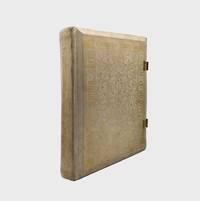
1893rif. 254927New York: Printed for the Convention 1893. First edition according to the Standard of 1892. 28 566 2 pp. Title printed in red and black with floriated borders by Bertram Grosvenor Goodhue title in black letter. 1 vols. Folio. Original heavily gilt decorated vellum over boards with brass fore-clasps t.e.g. others untrimmed ribbon marker. Binding a bit dust soiled with bruises to foretips and small chip from lower corner of front pastedown front inner hinge cracked but webbing sound some occasional dust and finger smudging to the margins of the early leaves bookplate and small label on front pastedown some bleed-through on the title from the array of original ink signatures on the verso otherwise about very good. First edition according to the Standard of 1892. 28 566 2 pp. Title printed in red and black with floriated borders by Bertram Grosvenor Goodhue title in black letter. 1 vols. Folio. Copy #12 of the limited issue of the revised Book of Common Prayer overseen by D.B. Updike and signed in ink on the verso of the title of many of the principals associated with the revision approved at the 1892 General Convention including financier J.P. Morgan who helped fund the edition's publication. The limited edition was prepared in two forms one being this form intended for distribution to each diocese and jurisdiction within the Church with original signatures on the verso of the title and with a variant title all in black letter without border. The standard limited edition of 500 copies on handmade paper has the signatures of the principals in printed facsimile and a foliated border around the title resembling those around the main text and the central "Laudate Dominum" device and the two lines: "Together with the Psalter or Psalms of David." Updike comments at length on this project in his introduction to NOTES ON THE MERRYMOUNT PRESS and about his role in the attempted rescue of an ill-conceived attempt to produce a decorated edition from the plates of the 1892 printing: "The best things about the book were the cover and charming end-papers which Goodhue designed for it. Sad to relate the edition had an immediate and resounding success! We were congratulated and we blushed. Our shame was taken for modesty and we were congratulated more! While the book is indeed a strange one it is by no means so strange as the designs originally made for it" see pp. 9-10. Nonetheless the experience was an important prelude to the production in 1928 of Updike's own edition widely regarded as his finest work. Laid into this copy is a photocopy of the 4pp. leaflet ON THE DECORATIONS OF THE LIMITED EDITION OF THE STANDARD PRAYER BOOK OF MDCCCXCII. Griffths 1893; Updike Notes on the Merrymouth Press & Its Work p. 9; John Clyde Osborn Catalogue of Work of The De Vinne Press Exhibited at the Grolier Club p. 15 Printed for the Convention unknown
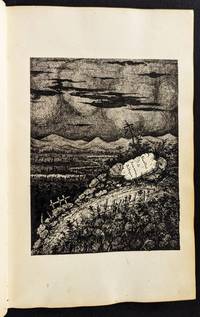
rif. 11588vo. 186x 119 mm. 7 ¼ x 4 ½ inches. 1-14 1 15-19 21-24 1 25-29 1 30-36 1 37-90; folios 74 and 83-90 blank except for page numbers and 4 lines on fol. 85 verso; plus 18 blank leaves at the end followed by 1 leaves containing 3 index pages and 1 final blank leaf. Manuscript section tiles in outline capitals on separate leaves included in foliation. Complete the gap between folios 19 and 21 is a foliation error. Ruled borders throughout. Text in brown ink in a flowing cursive hand varying lines numerous insertions and deletions. The manuscript on wove paper is illustrated with 20 pen-and-ink drawings of which 7 full-page on rectos with verso blank the first five not included in the foliation and 13 half-page or smaller plus 2 small ornaments. Bound in black straight-grain morocco covers gilt paneled central panel with arabesque tooling at corners smooth spine with gilt title cartouche lettered “Bluettes” from which extend triple gilt fillets terminating in ornaments at head and tail gilt edges with moiré satin endleaves; binding a bit rubbed with corners bumped. A manuscript of poems and short prose pieces all in a romantic vein illustrated with quite accomplished pen-and-ink drawings presumably by the author whose name and the date of the manuscript are supplied on the verso of the front free endpaper: “Le Baron Achille de Cholet / Officier á l’Etat-Major / 1836”. In the first poem Aux Dames the poet calls himself a “novice Ecolier” implying youthfulness and the date of 1836 on the front fly leaf is probably at the time of writing although some of the many corrections and deletions may have been added later. The titles of the other poems or groups of poems are : Le Rin Le Déserteur L’Isolement L’Impiété Un Croix sur la Montagne La Mère du Prisonnier L’Avenir / á Melle Francine d’Hurbal Rheyms Séparation L’Enfant perdu L’Adieu au Plaisir La Campagne / á Mr le Vicomte Alfred de R. . . Le Cloches du Soir La Neige Les Pauvres and Le Jour des Rois . . . These stolid sentimental poems and prose impressions reflect the prevailing Romanticism of the period as do the far more skillfully executed pen-and-ink drawings that illustrate them. Somber or dreamlike with dark cross-hatching contrasting with lighter areas the drawings show a dark tunnel under a rocky mountainside a soldier in a garret or prison a cloaked barefoot man an emblematic trophy with musical instruments and weaponry a raven perched on ruined tombstones and columns a domestic scene of father and daughter a women on her knees the façade of Reims Cathedral surrounded by swirling clouds architectural details of cathedrals several surrounded by decaying facades and vignettes of crumbling chateaux pastoral churches and snow-covered gatehouses all of which reflect the vogue for l’ancienne France and the “pittoresque” as notably popularized by Nodier and Taylor in their Voyage pittoresque et romantiques dans l’Ancienne France 23 volumes 1820-1878. Achille de Cholet was descended from an ancient Anjou noble family according to his obituary in 1888 in the Bulletin héraldique de France vol. 7 235-6. He became an officer in the Légion d’honneur and was well known for his important topographic researches in the south of France. A few of the pieces in the manuscript are dedicated to aristocrats mainly female. It seems likely that the Baron shared his family’s Royalist views: his father had died in exile and his brother whose first name is not given in the obituary was an “ardent champion of the Royalists press” and author of a book title Madame en Vendée relating the attempted coup in 1832 of the duchesse de Berry mother of the Prentender the Comte de Chambord which was pursued and effectively banned by the tribunals indeed the work appears not be recorded in OCLC or other online OPACs. Thanks to Nina Musinsky for this description. . unknown
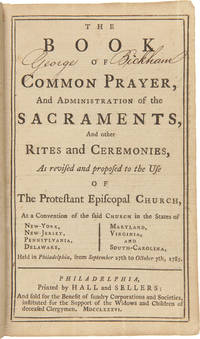
1786rif. 34053Philadelphia: Printed by Hall and Sellers 1786. The Suppressed Original Episcopal Book of Common Prayer The American Protestant Episcopal Church was founded after the American Revolution as an adaptation of the Church of England in the new United States. The church was founded at a convention in Philadelphia in 1785 at which it was agreed to create a separate prayer book. The present title is the result and it caused great controversy upon its publication. Among the ill-considered revisions were "changes and omissions of such drastic nature as among other things the deletion of the Nicene and Athanasian Creeds. The Proposed Book proved unwelcome to clergy and laity even its suggestion of a prayer for the Fourth of July being taken exception to. Its use was brief and not general" Page. "This edition contains the alterations which were intended to adapt the Book of Common Prayer of the Church of England to the changed political conditions of this country; and is the result of a convention held in Philadelphia in 1785 presided over by the Reverend William White. The proposed Prayer Book met with much criticism and opposition in the church owing to its radical changes and was never adopted" - Evans. Rare. 12mo. Contemporary calf original endpapers. Binding crackled chipped at spine ends boards detached. A few leaves trimmed close four leaves with edge wear resulting in minor loss to a few letters. Leaf Gg3 a bit rumpled with a closed horizontal tear. Withal a good copy in unsophisticated condition with the contemporary ownership signature of "George Bickham" on the front free endpaper titlepage and contents page. In a gilt morocco solander case spine richly gilt. EVANS 19940. PAGE THE BOOK OF COMMON PRAYER 51. GRIFFITHS 1786 9. BRITTON & LOWENS AMERICAN SACRED MUSIC IMPRINTS 409. ESTC W29995. hardcover
1754rif. 1216301754. BOOK OF COMMON PRAYER. The Book of Common PrayerÉ Cambridge: Printed by Joseph Bentham printer to the University by whom they are soldÉ and by Benj. DodÉ in London 1760. Tall folio 10-1/2 by 16-1/2 inches full contemporary dark green morocco rebacked with elaborately gilt-decorated spine laid down with crowned monogram of George II in compartments covers with elaborately gilt-tooled borders and gilt centerpiece featuring the arms of King George II raised bands later marbled endpapers evidence of silk ties. $7500.Splendid folio Cambridge edition of the Book of Common Prayer in a beautiful armorial George II binding with broad gilt-tooled borders elaborate royal cypher in spine panels and splendid gilt centerpiece on each cover featuring the arms of King George II and text hand-ruled in red throughout.Born of Thomas Cranmer's desire for liturgical texts upon which all of Europe's Protestant English-speaking churches could agree the Book of Common Prayer first issued in 1549 with its magisterial liturgical language is ""as a source of spiritual inspirationÉ for most Englishmen second only to the Bible"" PMM 75. This finely printed Cambridge editionÑset in large type with wide margins and hand-ruled in red throughoutÑboasts an impressive royal binding bearing the gilt monogram and crown device of King George II in the spine compartments and his gilt embossed armorial design on both boards within an ornate floral border. Griffiths 1754:1. Owner ink signature.Some faint foxing a very few leaves with light edge-wear. Expert restoration to lovely royal binding. hardcover
1715rif. 1067831715. London: printed by John Baskett and by the assigns of Thomas Newcomb and Henry Hills 1715. Folio 380 23 3 pp. unpaginated text ends on Aaa4 as per ESTC. Engraved frontispiece by Loggan after Caspars. Title-page printed in red and black ruled in red throughout. Contemporary red morocco covers tooled in gilt with a wide scrolled border central gilt block of the arms of the Duke of Chandos backstrip richly gilt gilt edges a lovely binding of the period in the style of Mearne skillfully restored at head and foot and along joints. Armorial bookplate of John van Hatten. § Lovely prayer book bound for James Brydges 1st Duke of Chandos 1674-1744. It once rested on an embroidered cushion in the Duke and Duchess's private pew in his magnificent chapel at Cannons described by the architect Gibbs as "the finest in England." The centerpiece of the elaborately-tooled binding is the Duke's gilt arms supported by two otters beneath a ducal coronet. Four other bindings with the block are recorded by the British Armorial Bindings database. Full description and provenance available on request. ESTC T81463. unknown