4213 risultati
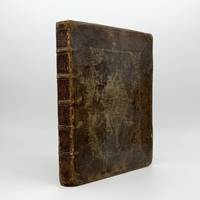
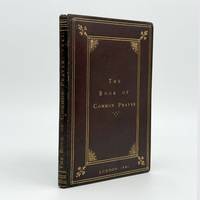
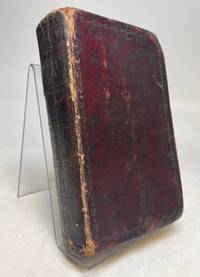
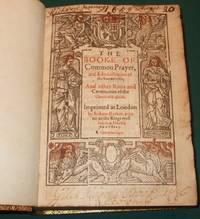
1762rif. WRCLIT67594Cambridge: Printed by Joseph Bentham Printer to the University . 1762. Not paginated. ¶2A-2Z4A-C4. Folio signed in 4s. 40 x 25cm. Contemporary mottled calf six raised bands gilt monogram device of King George III in each spine compartment and in the extreme corners of the boards within a triple-ruled border four ribbon ties at fore-edge one nearly detached but otherwise intact a.e.g. Joints cracking but cords sound early amateurish repairs to spine ends and fore- corners edgeworn faint tidemark at extreme lower fore-corners of 3Z4 to end occasional marginal smudges but otherwise very good. An uncommon variant of Bentham's folio printing of 1762 with the separately signed Articles at the end concluding with C4. ESTC locates but one copy of this variant Queen's College Oxford as opposed to a dozen with the final leaf being 3A2. This copy has an interesting provenance: it is inscribed in the upper margin of the title: "GH Governor of Minorca 1766." After an active and successful military career George Howard 1718-1796 sat in the House of Commons for Lostwithiel from 1761 until 1766 when he was appointed Governor of Minorca -- the British had reclaimed the island in 1763 as a consequence of the Treaty of Paris. After holding the post for two years he returned to political and military pursuits and continued to flourish. His second marriage in May 1776 was to Elizabeth of the Beckford family. Given the Royal ornamentation of the binding and the nature of the inscription it seems probable that this represents a Royal gift to Howard if not on the occasion certainly in the year of Howard's appointment to the Governorship. On the front pastedown appears the bookplate two lions and "Virtus Mille Scuta" associated with the Howards of Effingham. In 1762 Bentham published editions of the Prayer Book in quarto octavo 12mo and folio the latter evidently in two issues -- the form recorded by Griffiths as 1762:2 and this form which is unrecorded by Griffiths. ESTC N67552. Printed by Joseph Bentham Printer to the University .. hardcover books
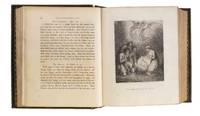
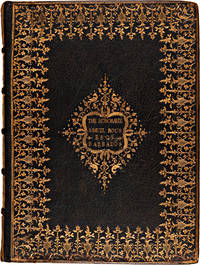
1769rif. 36078Oxford: Printed by T. Wright and W. Gill Printers to the University 1769. In a Presentation Binding for the Governor of Barbados A magnificently bound and extravagantly extra-illustrated copy of The Book of Common Prayer prepared for presentation to or perhaps commissioned by Samuel Rous President of His Majesty's Council and Commander-in-Chief i.e. governor of Barbados from 1766 to 1768. He also served again in 1772 the year indicated on the rear cover. The Rous family Quakers residing in Barbados were leading planters on the island since the late 1630s. The fifty-nine plates bound in this volume to complement the text were originally executed for The Liturgy of the Church of England; Illustrated with Fifty Nine Historical and Explanatory Sculptures Engraved by Mess. Ravenett Grignion Scotin Canott Walker and W. Ryland printed in London in 1755 by Edward Ryland. According to the titlepage included here as one of the extra-illustrated plates this work was published according to an act of Parliament on May 1 1755. However no copies of this 1755 title are recorded in OCLC or ESTC. In addition to The Book of Common Prayer and the engravings from The Liturgy of the Church of England this copy also contains a 1768 edition of A New Version of the Psalms of David first printed in 1698. Considering the recipient and the combined contents of the volume these two texts and the extensive suite of engravings are bound in an appropriately sumptuous binding. Prepared for Samuel Rous who served as governor of Barbados the binding is a marvelous example of later 18th-century British bookbinding with extensive gilt decoration on the covers and spine as described above. A fine copy of an elaborately decorated and illustrated volume with a remarkable colonial-era provenance. Tall quarto. Contemporary black morocco almost imperceptibly rebacked with original backstrip laid down elaborately gilt spine gilt with raised bands gilt inner dentelles a.e.g. contemporary marbled pastedowns and free endpapers. On the front cover the center of the diamond-shape design is lettered "The Honorable Samuel Rous Esq. Barbados" surrounded by a stylized fern border. On the rear cover the center of the diamond-shape design is lettered "One Thousand Seven Hundred & Seventy Two" also surrounded by a stylized fern border. Two corners rubbed and two corners almost imperceptibly repaired otherwise in fine condition. A few minor dampstains on a few leaves at front and rear and occasional minor foxing absolutely not affecting text or images. bound with: Brady N. and N. Tate: A NEW VERSION OF THE PSALMS OF DAVID FITTED TO THE TUNES USED IN CHURCHES. London: H. Woodfall 1768. 26 leaves printed in triple columns. A fine copy. GRIFFITHS BOOK OF COMMON PRAYER 1769.5. hardcover
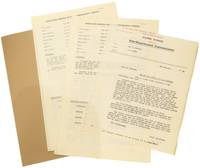
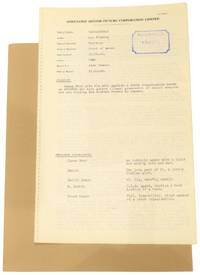
rif. 74488N.p. London: Elstree Studios 1961. Literary and cinematic critique Elstree Studios' unfavourable report of Ian Fleming's The Spy Who Loved Me written four months before publication from page proofs submitted by publisher Jonathan Cape. Pp.3 typed report on ABPC letterhead rectos only reader's delivery stamp to first page dated 13 December 1961. Together with A SECOND REPORT dated 2nd January pp/1 clipped to a copy of the original. This additional report ultimately in much the same vein was likely commissioned as the placement and imminent filming of Dr. No would have been known in film circles. Perforations down left edge from office binding. Very well preserved. The tenth James Bond title The Spy Who Loved Me was published on 16 April 1962. The reader's report notes that Cape submitted page proofs of the novel to the studio on 11 December 1961 and that Common submitted his report to the studio two days later. His verdict was not complimentary: 'The main story of the night at the motel obviously won't stand up by itself so a second subject is brought in by way of flashback's to the heroine's previous life. But the contrivance is forced. It gives the reader a bit more to go on that is all. The total effect is still that of a story broken-backed and not full adequate. No recommendation.' The man who wrote the Elstree reader's report was Jack Common 1903-1969. A regular moonlighter at Elstree's Reading Department Common was a working class socialist novelist and essayist from Newcastle who became friends with George Orwell when both were writing for The Adelphi magazine early in their careers. Common rose to edit The Adelphi in 1935-6 but could never make an adequate living from his published writing despite critical acclaim and in the last years of his life wrote Elstree innumerable reader's reports before his death from lung cancer in 1969. N.p. [London: Elstree Studios], 1961 unknown
rif. 74293N.p. London: Elstree Studios 1960. Literary and cinematic critique Elstree Studios' unfavourable report of Ian Fleming's Thunderball written three months before publication from page proofs submitted by publisher Jonathan Cape. Pp.4 typed report on ABPC letterhead rectos only reader's delivery stamp to first page dated 13 December 1960. Perforations down left edge from office binding. Very well preserved. The ninth James Bond title Thunderball was published on 27 March 1961. Jack Common's reader's report notes that Cape submitted page proofs to the studio on 11 December 1960 and that Common submitted his report to the studio two days later. His conclusions were damning and as it turned out wildly inaccurate: 'Pretty much the same mixture as before plus a few modern 'props' in the way of nuclear bombs and atomic submarines. . Suspense sags for long stretches . All through the main story this excessive use of modern gadgetry proves no substitute for character and invention: it registers as padding. These defects would be certain to show up more disastrously on the screen. I feel this story would not produce a successful film. No recommendation.' The man who wrote the Elstree reader's report for Thunderball was Jack Common 1903-1969. A regular moonlighter at Elstree's Reading Department Common was a working class socialist novelist and essayist from Newcastle who became friends with George Orwell when both were writing for The Adelphi magazine early in their careers. Common rose to edit The Adelphi in 1935-6 but could never make an adequate living from his published writing despite critical acclaim and in the last years of his life wrote Elstree innumerable reader's reports before his death from lung cancer in 1969. Originally meant as the first James Bond film that notion was quietly shelved as the Thunderball controversy ensued; it was the centre of legal disputes that began in 1961 and ran until 2006. In late 1964 after much negotiation Broccoli & Saltzman agreed with Fleming's one-time story collaborator Kevin McClory to adapt the novel for film with due reverence to McClory and screenwriter Jack Whittingham. Against a budget of $9M the film took $141.2M at the box office. N.p. [London: Elstree Studios], 1960 unknown
1636rif. 371746London: Printed by Robert Barker Printer to the Kings most Excellent Majestie: And by the Assignes of John Bill 1636. Title within ornamental border. 1 vols. 4to. Bound in contemporary gold-tooled leather rubbed missing ties. Later marbled endpapers with Myers & Co. sticker rubbed at margins; interior front spine cracked. Ownership signature "John Walker" in pencil on title page with several additional holograph ink notations. Paper flaw on D6 with loss to a few words. Title within ornamental border. 1 vols. 4to. Printed in Roman type double columns. Includes the Whole Book of Psalms printed at the "Universitie of Cambridge" 1634 with a 1635 Apocrypha extracted from a Bible printed by Tho: Buck & Roger Daniel printers to the University of Cambridge. Additionally the fifth line of the heading on B1r has: "reade" while another edition STC 2nd 16404.3 has "read." Provenance: Gift of the Rev. Christina K. Wible. Griffiths 1636 5; Pollard 2nd ed. 16404.4; ESTC S2781 Printed by Robert Barker, Printer to the Kings most Excellent Majestie: And by the Assignes of John Bill unknown
1831rif. 744141831. BOOK OF COMMON PRAYER. The Book of Common Prayer. Oxford: Printed at the University Press by S. Collingwood 1831. Folio 12 by 20 inches contemporary full tan morocco rebacked with original spine laid down elaborately gilt-decorated spine and boards black morocco spine label marbled endpapers all edges gilt. $3200.Impressive 1831 Oxford folio edition of the magisterial Book of Common Prayer elegantly bound by Hayday in contemporary full morocco-gilt.Born of Thomas Cranmers desire for liturgical texts upon which all of Europes Protestant English-speaking churches could agree the beautiful and dignified language of the Book of Common Prayer first issued in 1549 has considerably influenced not only ecclesiastical practice but has served as a source of spiritual inspiration for most Englishmen second only to the Bible PMM 75. Beautifully bound by Hayday in contemporary full morocco with elaborately gilt-tooled spine and boards featuring central lozenges built up largely of circles and floral ornaments within decorative frames built up from floral scrolls. Griffiths 1831:8. Presentation inscription.Light rubbing and soiling to binding. A very nearly fine copy handsomely bound. hardcover
1714rif. 37200London: Printed by John Baskett. Printer to the Kings most Excellent Majesty and by the assigns of Thomas Newcomb and Henry Hills Deceased 1714. Engraved title page. Printed in black and red ruled in red. 1 vols. Folio. Bound in full red morocco richly gilt spine six panels raised bands gilt dentelles marbled endpapers a.e.g. Engraved title page. Printed in black and red ruled in red. 1 vols. Folio. Printed by John Baskett. Printer to the Kings most Excellent Majesty, and by the assigns of Thomas Newcomb and Henry Hills, Dece unknown
1714rif. 37200London: Printed by John Baskett. Printer to the Kings most Excellent Majesty and by the assigns of Thomas Newcomb and Henry Hills Deceased 1714. Engraved title page. Printed in black and red ruled in red. 1 vols. Folio. Bound in full red morocco richly gilt spine six panels raised bands gilt dentelles marbled endpapers a.e.g. Engraved title page. Printed in black and red ruled in red. 1 vols. Folio. Printed by John Baskett. Printer to the Kings most Excellent Majesty, and by the assigns of Thomas Newcomb and Henry Hills, Dece unknown books
rif. 015752Paris E[ditions].S[ocilales].I[nternationales]. 0 In-12 carré Brochés
1715rif. WRCLIT66537London: Printed by John Baskett .and by the Assigns of Thomas Newcomb and Henry Hills . 1715. 20380233pp. terminating at 3A4. Folio 465 x 285 mm. Contemporary black gilt paneled armorial goatskin heavily gilt extra a.e.g. marbled endsheets. Engraved frontispiece. Text in double columns printed in black and red the whole ruled in red. Spine and upper spine quadrant of upper board restored with black calf edges of text block smoke-darkened with occasional shallow isolated penetration into margins early repair on verso of frontispiece tidemark in upper forecorner/quadrant of last three text leaves and endleaves small mend on verso of title at top margin occasional handsoiling and smudging a few minor marginal nicks or short tears; in spite of these detractions in the main a bright crisp copy. One of two large folio printings of The Book of Common Prayer published by Baskett in 1715 this being the form that terminates at 3A4. This copy was associated with the family and descendants of Henry Clinton seventh earl of Lincoln 1684 - 1728 and his wife Lucy daughter of the first Baron Pelham. Inserted in the front are two conjugate sheets of paper one blank and laid in are two folio sheets of vellum a bit stained along the top edges. The latter are occupied on three sides with a manuscript family record written at various times and in various hands including births deaths marriages etc from 1744 through the death in 1794 of Henry Fienes Pelham Clinton Duke of Newcastle. The first of the inserted paper leaves is of perhaps greater interest as it bears a fifteen line manuscript account by White Kennett Bishop of Peterborough signed and with his seal of his baptism at the Parish of St. James in Westminster on 12 February 1718/19 of the Clinton's first son George for whom "His Excellent Majestie King George was Graciously Pleased to do this Honour . to stand Godfather in his own Royal Person and to give him His own Royal Name of George." Apart from his clerical responsibilities Kennett 1660 - 1728 was an active antiquary with particular interest in events in North America. He assembled a large and important library and based on that collection compiled the first attempt at a catalogue of books on North America: BIBLIOTHECAE AMERICANAE PRIMORDIA. AN ATTEMPT TOWARDS LAYING THE FOUNDATION OF AN AMERICAN LIBRARY. London 1713. His close friendship with Charles Trimnell bishop of Norwich and one of George I's favorites secured him the bishopric of Peterborough in 1718. GRIFFITHS 1715.1. ESTC T81463. Printed by John Baskett ...and by the Assigns of Thomas Newcomb, and Henry Hills ... hardcover books
1616rif. WRCLIT66045A Londres: Par Iehan Bill imprimatur du Roy 1616. 544pp. A-E4 2A-2R4; A-Z3 plus blank. Quarto. Contemporary armorial calf. Titles within woodcut borders decorated initials contemporary typographic wastesheets utilized in binding. Light smear to 2H1v occasional marginal tidemarks a couple signatures starting covers splayed and a bit discolored lower joint split early ink ownership inscription on front binder's blank more annotations on verso of rear binder's blank marginal flaw in fore-edge of 2E4; still if one elected to discard the remaining not insignificant vestigial virtues of the original binding a copy that could be rendered fairly agreeable if placed in modern dress. First edition of the first French translation of the 1603 King James I Prayer Book translated by Pierre de Laune past of the French Reformed congregation in Norwich. The translation was "originally commissioned by James I to promote a royal marriage between Henry Prince of Wales d. 1612 with the French princess Christine; some years later the project was revived in connection with the marriage of Charles Prince of Wales & Princess Henrietta Maria of France ." - Griffiths. The section of the Psalms has its own woodcut decorated title-leaf 2R4. Although common enough institutionally -- ESTC locates eleven copies in North America spread over 8 locations - the last perfect copy noted in ABPC is the Evelyn copy 1977 with only one other appearance following that a copy lacking a blank and one text leaf GRIFFITHS 36.2 STC 16431. ESTC S108736. Par Iehan Bill, imprimatur du Roy unknown books
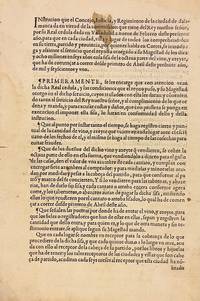
1601rif. 3683Salamanca: S.n. 1601. First edition. Signed at foot by a municipal officer Diez de la Puente. One-page contemporary manuscript on p. 3 relating to the administration of the tax. Unbound as issued. Pinholes at gutter some edge chipping and small dents brown stain affecting the upper portion throughout. Otherwise a good well-preserved copy. First edition. Signed at foot by a municipal officer Diez de la Puente. One-page contemporary manuscript on p. 3 relating to the administration of the tax. Unbound as issued. 4 last 2 blank p. Unrecorded 1601 ordinance from Salamanca enforcing the Armada-era servicio de millones Spain’s foundational fiscal levy. Printed ordinance issued by the municipal council of Salamanca implementing the royal tax known as the servicio de los dieciocho millones. In accordance with the royal cédula of 9 February 1601 the Concejo Justicia y Regimiento instructs subordinate towns and villages to collect an eighth part of all wine and olive oil sold to be remitted through a chain of local receivers. The text regulates how wine and oil must be measured recorded and taxed forbids additional repartimientos and orders prompt transfer of funds to the city’s main treasury. Dated at Salamanca 10 March 1601 and naming four municipal commissioners appointed for its execution it represents the earliest stage of local enforcement of Philip III’s fiscal scheme transforming the national levy into a functioning municipal excise. A contemporary handwritten endorsement below the text signed by Diez de la Puente attests its execution. Accompanying the printed ordinance is a contemporary manuscript headed on p. 3 “Dudas que se ofrecen en la administración de las sisas” listing practical questions concerning the execution of the tax—registration and measurement of goods roles of administrators and receivers form of payment penalties and conditions of tax farming arrendamiento. The servicio de los dieciocho millones formed part of the broader system of millones taxes created by the Cortes of Castile to meet the Crown’s desperate financial needs after the prolonged wars of Philip II. The servicio de millones had first been introduced by royal request and approved by the Cortes on 4 April 1590 conceived to raise eight million ducats over six years to finance the royal expenditure associated with the Armada campaign against England and other military commitments. Rather than remaining temporary it evolved into a regular levy on six staple items—wine oil vinegar meat soap and tallow candles—collected through local sisas and eventually forming the backbone of Castile’s fiscal structure. By 1600–1601 under Philip III the scheme was renewed and expanded to eighteen million ducats its collection entrusted to municipal governments such as Salamanca’s Concejo Justicia y Regimiento. As described in Bartolomé Yun Casalilla’s Sobre la transición al capitalismo en Castilla this marked a transition from feudal income to a centralized fiscal system financed through municipal taxation embedding local economies within the machinery of the Habsburg war state. The present ordinance captures this process of consolidation—when the monarchy sought tighter control over municipal revenues demanded proper accounting and remittance of surpluses and aimed to prevent arbitrary over-taxation—reflecting both the fiscal strain and administrative centralization characteristic of early-seventeenth-century Spain. Reference: Yun Casalilla B. 1987. Sobre la transición al capitalismo en Castilla: Economía y sociedad en Tierra de Campos 1500–1830. Valladolid: Junta de Castilla y León Consejería de Educación y Cultura. . [S.n.] unknown
rif. 1051London: Printed by Henry Hills and John Field 1660. Hardcover. Good. London: Printed by Henry Hills and John Field 1660. Octavo. Unpaginated. 744pp. A8-Z8 Aa8-ZZ8 Aaa4. Added engraved title-page lacking. Titles within typographic border & with typographic ornament. Ruled in red. Eighteenth-century green morocco repaired. Darlow & Moule 526; Herbert 669; ESTC B2256. Bound with: The whole book of Psalmes: collected into English meeter by Thomas Sternhold John Hopkins and others. London: printed for the Companie of Stationers 1661. Octavo. iv 78pp. ESTC R204219; STC 2nd ed. B2437aA and The book of common-prayer and administration of the sacraments and other rites and ceremonies of the Church . London: printed by John Bill and Christopher Barker printers to the Kings most excellent Majesty 1662. Octavo. Unpaginated. 128pp. A8-H8. ESTC R35356; STC 2nd ed. B3623. London: Printed by Henry Hills and John Field, 1660. hardcover
rif. 2166London: printed for the Companie of Stationers 1661. Hardcover. Good. Octavo. iv 78pp. Eighteenth-century green morocco repaired. ESTC R204219; STC 2nd ed. B2437aA. Bound with: The Holy Bible Containing The Old Testament And The New: Newly translated out of the Original Tongues And with the former translations diligently Compared and Revised by His Majesties special Command. Appointed to be read in Churches. London: Printed by Henry Hills and John Field 1660. Octavo. Unpaginated. 744pp. A8-Z8 Aa8--ZZ8 Aaa4. Added engraved title-page lacking. Titles within typographic border & with typographic ornament. Ruled in red. Darlow & Moule 526; Herbert 669; ESTC B2256 and The book of common-prayer and administration of the sacraments and other rites and ceremonies of the Church . London: printed by John Bill and Christopher Barker printers to the Kings most excellent Majesty 1662. Octavo. Unpaginated. 128pp. A8-H8. ESTC R35356; STC 2nd ed. B3623. London: printed for the Companie of Stationers, 1661. hardcover
1641rif. 371384London: Robert Barker printer to the Kings most excellent Majestie and by the Assignes of John Bill 1641. Title within woodcut border. Text in two columns. 104pp. 8vo. Nineteenth-century full dark red morocco stamped in gilt. Gilt edges. Marbled endpapers with GTS bookplates on first pastedown. Pages cropped. Autograph initials on title page with additional ownership inscription on A3. Title within woodcut border. Text in two columns. 104pp. 8vo. This compact Book of Common Prayer was published during a period of particularly fractious religious tumult just prior to the start of the First English Civil War which was fueled in part by what was seen as King Charles I's pro-Catholic sympathies exemplified by his implementation of a more ceremonial sacramental version of High Anglicanism. Some of these contentious changes - as well the disquiet fomented by them - are alluded to in the Preface and "Of Ceremonies Why Some Be abolished and some retained" all of which follow "An Act for the Uniformitie of Common Prayer" on A2-A3. "Cum privilegio" printed at the foot of the title page. A gift to the General Theological Seminary from the then-Dean of Trinity Cathedral George McCormick. ESTC R37432; Griffiths Common Prayer 1641:5; Wing B3612A Robert Barker, printer to the Kings most excellent Majestie, and by the Assignes of John Bill unknown
1794rif. 231248New York: Hugh Gaine 1794. hardcover. good. according to the use of the Protestant Episcopal Church in the United States of America: Together with the Psalter or Psalms of David. 364 171 5 pp. Thick 18mo contemporary calf spine and edges of corners worn corners bumped endpapers and title page lightly soiled some pages with very light foxing. New-York: By direction of the General Convention printed by Hugh Gaine 1794. In 1789 the Episcopal Church of the United States approved the use of text starting in 1790. It remained in use for the next 102 years. Evans 27577. Ford The Journals of Hugh Gaine Vol. I p. 170. Hugh Gaine unknown
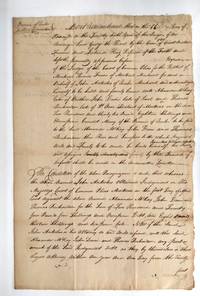
1786rif. 151130Montreal 1786-8. Very good. 7 handwritten documents and one printed document with written insertions. Folds staining chips. 1 Printed broadside dated April 1 and April 21 1786 and July 3 1786 with particulars of case written on recto and written text about judgment on verso. Signed by Edward Southouse as judge Edward William Gray as sheriff and T. Walker. Seal on top left corner. Folds. Stains at edges. 2-4 3 Documents attached two written in French. One French document signed by Languinet and the other dated August 27 1788 signed by Corbin. The latter notes receipt of 13 Louis 17 chelins 10 sols from M. Cairns. Document in English signed by Southouse and J. Beeke clerk April 25 1786. Verso dated January 8 1788. Some splitting. Small piece missing at side with no loss of text. 5 Reasons for Jannet McKay's opposition filed 1787. 8 p. Financial statement of the McKay estate signed by A. Davidson July 9 1787. 6-7 2 p. petition to have debtor appear in court. Signed by Walker for the plaintiff and John Fraser as judge March 20 1786. Affixed to this document is a note in French about the place of residene of Alexander McKay and John Davey signed by Jn Rival March 22 1786. 8 2 p. judgment by Southouse May 16 1786. Judgement in favour of Antrobus for sum of £224 5s 9p plus £8 13s 2p and 5s for the writ. See article from the Quebec Gazette May 18 1786. Antrobus is probably the merchant and office holder of this name in Trois Rivieres. Baptised July 6 1756 in Cockermouth Cumberland married on March 29 1787 in Trois Rivieres to Catherine Cuthbert died May 8 1820 and is buried in Trois Rivieres. He first appears in Quebec Cty in the 1780s as a grocer engaged in a sizable retail trade and engaged in provisioning fisheries and the West Indies. He and other merchants sent flour bread oats and biscuit to Newfoundland and imported fish seal oil and seal skins. One of the best-known merchants in the colony he was prosperous enough to buy land. unknown
1794rif. C3188A splendid copy of the Good and Harding Book of Common Prayer in a striking masonic binding by John Lovejoy. The London bookbinder John Lovejoy fl. c. 1781–1812 is known by his distinctive Masonic bindings employing an array of Masonic tools often arranged in striking compositions. He was himself a Mason from around 1791 until 1812. His practices as an employer however earned him a certain notoriety among binders and the nickname 'the Tyrant': as a journeyman in 1781 he advocated a reduction in the working day from fourteen to thirteen hours but when a master binder he bitterly opposed such a change and was among the employers who prosecuted the leaders of the 1786 strike. Although it is accepted that Lovejoy was not as previously thought the only binder using Masonic motifs close comparison of the tools with other examples of his work suggests this binding to be his. Good and Harding's 1794 Common Prayer appeared in two settings one octavo and the other a splendid large quarto as here. The fine series of stipple-engravings shows both biblical and liturgical scenes including several by Federico Bartolozzi and Luigi Schiavonetti after Thomas Stothard and Silvester Harding. The plates are variously dated between 1791 the date of the dedication and 1794 suggesting the work was several years in progress and perhaps issued in parts; copies are rarely seen with all fifteen engravings. ESTC T88819; for Lovejoy see Ramsden London Bookbinders 1780-1840 pl. XIX; and Howe & Childe The Society of London Bookbinders 1780-1950. Large 4to 278 x 226 mm pp. xxviii 634 2 63 1 blank 176 with engraved dedication dated 23 July 1791 and 15 stipple-engraved plates by various artists; with part-titles stipple-engraved head-piece vignette to p. 1; a few signatures heavily spotted otherwise a very good copy; in contemporary green straight-grained morocco by Lovejoy borders gilt with masonic tools between swags of 3 foliate tools outer borders roll-tooled in gilt spine gilt in compartments lettered directly in one others with central Sun tool winged Asclepian staff as corner-pieces arranged with stars points fleurons and heads board edges turn-ins and morocco hinges roll-tooled in gilt edges gilt endbands sewn in red white and green on 2 cores ribbon place-markers marbled endpapers; a few minor scuffs and marks very short split to upper joint lower corners lightly bumped neatly retouched at extremities nonetheless very well-preserved; early ink ownership inscriptions 'Elizabeth Tynell' to front free endpaper verso and 'John Smith' to front flyleaf. Millar Ritchie for J. Good and E. Harding
1605rif. 097215London: Robert Baker 1605. Book measures 7 1/2 x 5 1/2 inches. Titles. The Book of Common Prayer. The Psalter. Both printed by Robert Baker. Printed in the year 1605. First title page printed in red & black second in black. Signatures A1Hh8 in 8s slightly erratic signatures but follow on correct. Bound with The whole booke of Psalmes: collected into English meeter by tho. Sternh. Ioh. Hopkins and others: conferred with the hebrue with apt notes to sing them withall.for the Companie of Stacioners. London. 1606. Signatures A1M8 in 8s. Second edition. Both works printed in black letter. Bound in later full tree calf note on endpaper states 1882 raised bands gilt lines and centre stamp gilt lines on boards leather title label inner dentelles marble endpapers. Calf lightly rubbed on joints and edges. Binding in good clean firm condition. Internally Loss of about 1inch on top margin of a5 including some text loss of part of margin and some text on x5 . Early previous owners name date 16591776 on top and bottom margin of title page. Pages in very good clean condition. A very nice copy in a very attractive binding. . Full-Leather. Very Good. 8vo. Robert Baker Hardcover
1794rif. 231248New York: Hugh Gaine 1794. hardcover. good. according to the use of the Protestant Episcopal Church in the United States of America: Together with the Psalter or Psalms of David. 364 171 5 pp. Thick 18mo contemporary calf spine and edges of corners worn corners bumped endpapers and title page lightly soiled some pages with very light foxing. New-York: By direction of the General Convention printed by Hugh Gaine 1794. In 1789 the Episcopal Church of the United States approved the use of text starting in 1790. It remained in use for the next 102 years. Evans 27577. Ford The Journals of Hugh Gaine Vol. I p. 170. Hugh Gaine unknown books
rif. 02226Oxford: Printed at the Clarendon Press by J. Cooke and S. Collingwood 1820. With A Fore-Edge Scene of Oxford FORE-EDGE PAINTING. CHURCH OF ENGLAND. The Book of Common Prayer And Administration of the Sacraments. And Other Rites and Ceremonies of the Church According to the Use of the United Church of England and Ireland; Together with the Psalter or Psalms of David Pointed as They are to be Sung or Said in Churches; and the Form and Manner of Making Ordaining and Consecrating of Bishops Priests and Deacons. Oxford: Printed at the Clarendon Press by J. Cooke and S. Collingwood 1820. Bound with BRADY Nicholas and Nahum Tate. A New Version of the Psalms of David Fitted to Tunes Used in Churches. Oxford: Printed at the Clarendon Press by Samuel Collinwood 1822. Octavo 8 1/4 x 5 1/8 in; 210 x 130 mm. Unpaginated A-Rr8 Ss4; A-F8. Calendar and tables. Contemporary full crimson straight-grain morocco with triple fillet border in blind and panel with large gilt corner-pieces of volutes curls and roundels enclosing a central masonic sunburst emblem in gilt with dove and Tetragrammaton to both covers. Heavily gilt tooled compartments and spine head and tail. Gilt rolls to edge corners. Gilt fillets to turn-ins. All edges gilt. With the crimson morocco bookplate of Christ's Church - Middlesex dated 1825. Housed in an early twentieth century red cloth slipcase. With a splendid early twentieth century fore-edge painting by an unknown hand depicting Folly Bridge and Bacon's Tower at Oxford. Folly Bridge is a stone bridge over the River Thames carrying the Abingdon Road south from the center of Oxford England. It was erected 1825-27 to designs of a little-known architect Ebenezer Perry died 1850 who practiced in London. The bridge is in two parts separated by an island. The origin of the name is uncertain although it has been suggested that it originated about 1650 after a tenant of Bacon's study. Oxford: Printed at the Clarendon Press by J. Cooke and S. Collingwood, 1820 unknown books
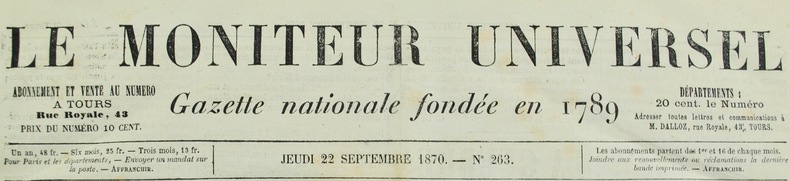
1870rif. 2923Tours ; Bordeaux, Imprimerie Mame ; Imprimerie Crugy, 1870-1871. 170 livraisons (n°262 du 21 septembre 1870 jusqu'au n° 340 du 12 décembre 1870 puis à Bordeaux du n°341 du 13 décembre 1870 au n°74 du 15 mars 1871) reliées en 1 vol. in-folio, demi-basane rouge, dos lisse orné (reliure de l'époque).
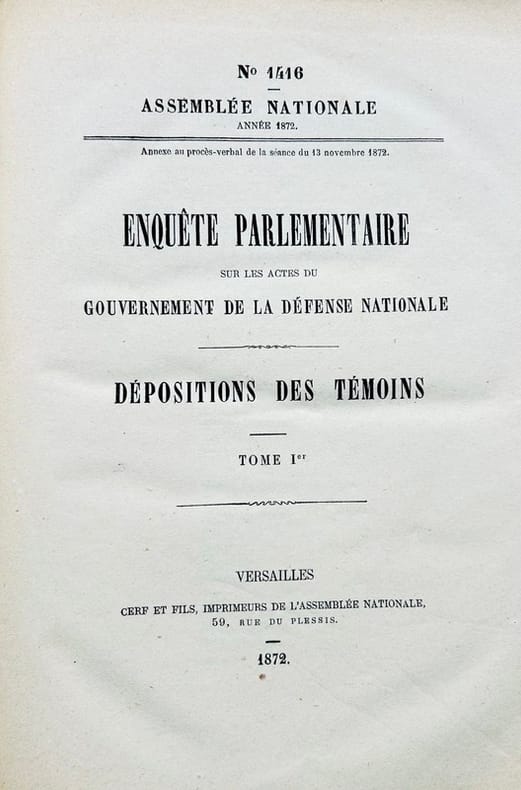
1872rif. 4217Versailles, Cerf et Fils, 1872. 16 vol. in-4, demi-toile verte, pièces et de titre et de tomaison en chagrin brun (reliure ancienne).
1665rif. 40968Cambridge: James Field 1665. 12mo 14.5 cm 5.75". 18 ff. 126 pp. 1 blank f. also bound in Bible. Psalms. Greek. 1664. title-page in Greek romanized asPsalterion tou David. Kata tous Hevdomekonta. Cambridge: James Field 1664. 12mo. 1 f 171 1 blank pp. lacks blank leaf k6. The mid-17th century was a low point in the history of English typography but in this pair of Anglican religious texts James Field printer to the University of Cambridge produced => a very good example of the printer's art of Greek printing especially in the use of a small point size. The guiding force behind their production was James Duport 160679 dean of Peterborough and master of Magdelene College Cambridge a noted scholar of Latin and Greek and supporter of the university press. The preface to the Book of Common Prayer is signed with his initials and it is established that he was the editor of the Psalms; the texts were almost certainly issued together but are also at times found individually in contemporary binding. Field's minute typography here is dense and presented chiefly in double-column format in both works; and instead of woodcut head- or tailpieces and xylographic initials he deploys printer's ornaments to enliven the text at the top of some sections and occasionally elsewhere. => The layout is overall lovely and thoughtful and the printing is extremely clear and precise. Binding: Contemporary morocco with covers framed in a single blind fillet; spine with gilt-stamped leather title-label and gilt-stamped compartment decorations. Marbled endpapers all edges gilt. => All pages ruled in red in the best style of the era. Provenance: Isaac Watts 16741748 the godfather of English hymnody is also fondly remembered for his Psalms of David: Imitated in the Language of the New Testament a work that was reprinted over a thousand times. His ownership signature is on the blank leaf opposite the BCP title-page here. Later the volume was owned by Charles Mayo 17671858 a scholar of Old English who dated his ownership as "St. John's College Oxford 1787." Most recently in the library of American collector of Greek printing Albert A. Howard small booklabel "AHA" at rear. BCP: Benton Book of Common Prayer 2nd ed. p. 25 no. 122; ESTC R24205; Wing 2nd ed. B3632; Griffiths Bibliography of the Book of Common Prayer 453. Psalms: STC R204252; Wing 2nd ed. 1994 B2720A. Bound as above extremities a little rubbed with small chip at head of spine and edges of label chipped; joints strengthened some time ago and volume varnished. Inscriptions and small booklabel as above; pages gently age-toned otherwise clean. => A solid and attractive copy of an attractive production with wonderful provenance. James Field hardcover books
1905rif. 28393NANTES PORT-SAY [ACTUELLEMENT Marsa Ben M'Hidi - Commune en Algérie ] 1905-1930 1- une LETTRE à "en-tête" imprimé en noir : "Algérie et Maroc Oriental - PORT-SAY DIRECTION" avec en dessous une gravure d'Ancre Marine, Port-Say, le 21 Avril 1907, format : 26,6 x 20,8 cm, lettre autographe manuscrite à l'encre noire de 2 pages, signée de Louis Jean-Baptiste SAY (EXPLORATEUR NANTAIS) adressée à Mr DURAND GASSELIN, Notaire Nantais, 2, Rue Voltaire, lettre concernant des sujets notariaux privés puis il donne des nouvelle fraiches de PORT-SAY depuis la prise de OUDJDA, l'importance militaire que prend PORT-SAY et les travaux routiers en cours... + 2- une LETTRE à "en-tête" imprimé en noir : "Algérie et Maroc Oriental - PORT-SAY DIRECTION" avec en dessous une gravure d'Ancre Marine, Port-Say, le 15 MAI 1907, format : 26,6 x 20,8 cm, lettre autographe manuscrite à l'encre noire d'une page, signée de Louis Jean-Baptiste SAY (EXPLORATEUR NANTAIS) adressée à Mr DURAND GASSELIN, Notaire Nantais, 2, Rue Voltaire, lettre concernant des sujets notariaux privés puis il donne des nouvelle fraiches de PORT-SAY, la route est arrivée, les Ponts et Chaussées sont campés à PORT-SAY... + 3- une LETTRE à "en-tête" imprimé en noir : MEMORANDUM - "Algérie et Maroc Oriental - PORT-SAY DIRECTION" avec en dessous une gravure d'Ancre Marine, Port-Say, le 13 Avril 1909, format : 21,2 x 13,6 cm, lettre autographe manuscrite à l'encre noire d'1 page, signée de Louis Jean-Baptiste SAY (EXPLORATEUR NANTAIS) adressée à Mr DURAND GASSELIN, Notaire Nantais, 2, Rue Voltaire, "enchanté d'être agréable au Docteur BUREAU (Gustave Édouard Bureau est né le 31 janvier 1868 à Nantes et mort le 22 février 1951. Il est le fils d'Émile . Il est docteur en médecine, professeur à l'École de médecine de Nantes, interne des Hôpitaux de Paris et médecin des Hôpitaux.), je me fais un vrai plaisir de lui louer les Jardins de la Rue Dobrée - prix de la location (20) 20 francs par Mois. Veuillez dire au Docteur que les 2 jardins (des N° 3 et 5) seront à sa disposition, Ces deux jardins communiquent et forment un grand jardin où peuvent courrir les enfants. Veuillez dire au Docteur qu'il pourra y envoyer tous les enfants qu'il voudra, tout ses petits malades pour qu'ils passent la journée au soleil..." + 4- Lettre du Docteur Gustave Édouard BUREAU , à "en-tête" imprimé en noir comportant l'adresse de son Cabinet : 5, rue voltaire à Nantes, lettre autographe Manuscrite à l'encre brune adressée à Maitre Durand-Gasselin Notaire à Nantes afin de le remercier de la demarche que celui-ci a entrepris auprès de Louis SAY pour lui louer les 2 jardins du 3 et 5 rue Dobrée pour que les enfants malades puisse y jouer. signature manuscrite : G. Bureau, 5- Lettre de 8 pages (écrite d'un seul côté), format : 21 x16 cm, écrite de PORT-SAY, le 20 Mai 1930, adressée à Maitre Durand-Gasselin à Nantes expliquant les difficultés politiques rencontrées par Louis SAY rendant la création de PORT-SAY comme un rêve innachevé, lettre autographe manuscrite à l'encre noire et signée de son fils adoptif, Daniel Bourmancé-Say + joint avec l'enveloppe originale marron clair avec l'adresse notée et le cachet de la poste de PORT-SAY ORAN du 22/5 1930 à 15h 20 (+ joint article illustré d'une carte de la région de PORT-SAY, illustrant un article sur "LA QUESTION DES PORTS DU MAROC SUR LA MEDITERRANEE" paru dans l'écho d'Oran du 9 mai 1930), 6- Lettre d'une page (écrite d'un seul côté), format : 21 x16 cm, écrite de PORT-SAY, le 25 Mai 1930, adressée à Maitre Durand-Gasselin à Nantes rappelant qu'il avait oublié d'envoyer la carte géographique de PORT-SAY dont il parlait dans sa lettre du 20 Mai 1930, voir carte jointe , lettre autographe manuscrite à l'encre noire et signée de son fils adoptif, Daniel Bourmancé-Say, 7- LETTRE à "en-tête", pré-imprimé et illustré en noir de "L'HÔTEL DU PALAIS D'ORSAY" PARIS, du 19 octobre 1908, lettre autographe Manuscrite signée à l'encre brune sur papier blanc, format : 20,8 x 13,2 cm, adressée à Maitre Durand-Gasselin Notaire à Nantes, afin de récuperer des fonds pour PORT-SAY, signé : LOUIS SAY, 8 - CARTE DE VISITE, pré-imprimée en noir : "LOUIS SAY - LIEUTENANT DE VAISSEAU DE RESERVE PORT-SAY par Marnia (Algérie)" et manuscrite de la main de Louis SAY à l'encre brune : "Tous mes Remerciements et mes bien cordiales salutations", format : 4,4 x 7,3 cm, 9- réponse manuscrite autographe à l'encre noire sur papier pelure , format : 20,8 x 13 cm, du Notaire Durand-Gasselin de Nantes aux lettres de Mai 1930 envoyée par Mr Daniel Bourmancé-Say de PORT-SAY ORAN, 10 - 9 PHOTOGRAPHIES ORIGINALES D'EPOQUE, format : 12 x 17 cm + une format : carte photo : 13,6 x 8,7 cm prises en 1907 par Louis SAY montrant differentes vues de PORT-SAY : 1- PORT-SAY - la Jetée - Les piles de cereales partant pour la france, 2- photo d'une carte géographique de la region de PORT-SAY, 3- Paysage de montagne de la region de PORT-SAY, 4- PORT-SAY - le "TRITON" en rade, débarquement de l'orge au Port, 5- PORT-SAY - le boulevard du_ front de mer , 6- Vue générale de la plage de Kiss à PORT-SAY, 7- PORT-SAY, les plages de la Moscarda, 8- PORT-SAY et sa montagne de marbre et le promontoire de Zéhiro, 9- Photo de la Casbah des marins Bocoyas à PORT-SAY,