Penna Superintendent of Common SchoolsBiblio.com

4 928 résultats
réf. 0260086614.Ghardcover. Good. Access codes and supplements are not guaranteed with used items. May be an ex-library book. hardcover
réf. 0331721155.Gpaperback. Good. Access codes and supplements are not guaranteed with used items. May be an ex-library book. paperback
réf. 1425564631.Gpaperback. Good. Access codes and supplements are not guaranteed with used items. May be an ex-library book. paperback
réf. 0260963518.Gpaperback. Good. Access codes and supplements are not guaranteed with used items. May be an ex-library book. paperback
réf. 1019632259.Ghardcover. Good. Access codes and supplements are not guaranteed with used items. May be an ex-library book. hardcover
réf. 0353988529.Ghardcover. Good. Access codes and supplements are not guaranteed with used items. May be an ex-library book. hardcover
réf. 0331018454.Gpaperback. Good. Access codes and supplements are not guaranteed with used items. May be an ex-library book. paperback
réf. 0331275880.Gpaperback. Good. Access codes and supplements are not guaranteed with used items. May be an ex-library book. paperback
réf. 0265106095.Gpaperback. Good. Access codes and supplements are not guaranteed with used items. May be an ex-library book. paperback
1950réf. 49955Oxford: Printed at the University Press London: Humphrey Milford Oxford University Press c.1950. 12mo. xxxvi 697 1 pp. Fine contemporary blue full crushed morocco by A.R. Mowbray & Co. spine with raised bands gilt lettered to one panel and initialled "M.P." to the upper board corresponding gift inscription to the front flyleaf marbled endpapers all edges gilt. Two mild blemishes to the upper board a delightful copy. Oxford: Printed at the University Press, London: Humphrey Milford, Oxford University Press unknown
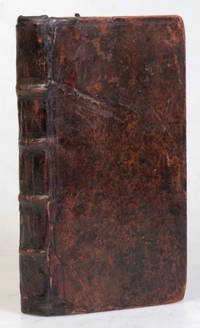
1675réf. 48029Oxford: At the Theater 1675. Two works bound in one 8vo viii 96; 96 pp. Common Prayer lacking its frontispiece but extra illustrated with nine 18th century engravings several mounted or with repair to the lower margin 18th century manuscript to a rear blank recording three births. Contemporary calf worn rebacked with repairs to the corners also. Wing B3644 & B2518. Griffiths p.119 - "the first Oxford printing of the Book of Common Prayer & the first English BCP printed using the Fell type. Oxford: At the Theater unknown
1845réf. 44049Glasgow: Blackie and Son 1845. 16mo xxxii 546 2 pp. Engraved second title and 18 plates contemporary inscription to the title page. Contemporary gilt decorated black diced calf a.e.g. some mild rubbing. Glasgow: Blackie and Son unknown
1824réf. 45035Edinburgh: Printed by Sir D. Hunter Blair and J. Bruce 1824. 8vo 544 96 pp. 20th century family tree to the front endpapers recent owner's ink stamp to the fly leaf. Contemporary gilt decorated maroon straight grain morocco spine slightly sunned some mild rubbing to edges. Edinburgh: Printed by Sir D. Hunter Blair and J. Bruce unknown
1763réf. 409281 & 3 Cambridge: Printed by Joseph Bentham Printer to the University.;2 London: Printed for J. Beechcroft.; 1763; 1764; 1765. 8vo. 420; 64; 128 pp. Contemporary black full morocco spine with raised bands diagonal gilt rules and twin flower motifs to each compartment gilt tooling to the boards marbled endpapers all edges gilt early ownership inscriptions to the front another early inscription to the rear along with a early 20th century manuscript register of another family line. Frontispiece to the second work. Upper joint starting but still holding firm wear to the spine ends and corners. Griffiths p.185. [1 & 3] Cambridge: Printed by Joseph Bentham, Printer to the University...;[2] London: Printed for J. Beechcroft...; unknown
1664réf. 34135Kantabrigia Cambridge: Ioannou Phieldou John Field 1665 1664. Two works in one volume 12mo xxxvi 126 2 ii 115 3 117-171 1 pp. Marginal loss to O6 in the second work without loss of text contemporary signature to the title page of the first work. Contemporary calf a little worn recent restoration to the spine ends and joints with a new fly leaf inserted. Griffiths 45-3. Wing B3632 & B2720A. The first work has the phrase "kai ton allon" set in both upper- and lowercase type. Kantabrigia [Cambridge]: Ioannou Phieldou [John Field] unknown
1886réf. 32380N.p. 1886. 4to. ii 203 1 pp. Publisher's black cloth gilt lettered to the upper board. Very good. A comprehensive annual record of the corporation's personnel listing their names offices starting salary length of service and their salary at the time of printing amongst other data. [N.p.] unknown
1879réf. 32378N.p. 1879. 4to. ii 177 1 pp. Publisher's brown cloth gilt lettered to the upper board contemporary ownership inscription of "Frederick Wadswell C.C. Bishopsgate Without" to the front free endpaper. Spine faded a little wear to the covers else very good. A comprehensive annual record of the corporation's personnel listing their names offices starting salary length of service and their salary at the time of printing amongst other data. [N.p.] unknown
réf. 0484432451.Ghardcover. Good. Access codes and supplements are not guaranteed with used items. May be an ex-library book. hardcover
réf. A9781345342833Hardback. New. hardcover
1831réf. 287215Richmond: Printed by John Warrock 1831. First Edition. Half Leather. Good binding. The ordinances of the city of Richmond Virginia published in 1831. No earlier publication on Richmond city ordinances found in Haynes. Binding is soiled with scuffing to the spine. Foxing and toning throughout. Half calf over marbled paper boards with a red morocco label on the spine. 180 pp. including the index. Haynes 15584. Good binding. Printed by John Warrock unknown
2005réf. 2-0309100518Natl Academy Pr 2005. Paperback. New. 1st edition. 502 pages. 9.25x6.25x1.00 inches. Natl Academy Pr paperback
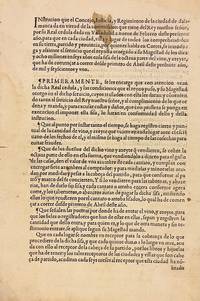
1601réf. 3683Salamanca: S.n. 1601. First edition. Signed at foot by a municipal officer Diez de la Puente. One-page contemporary manuscript on p. 3 relating to the administration of the tax. Unbound as issued. Pinholes at gutter some edge chipping and small dents brown stain affecting the upper portion throughout. Otherwise a good well-preserved copy. First edition. Signed at foot by a municipal officer Diez de la Puente. One-page contemporary manuscript on p. 3 relating to the administration of the tax. Unbound as issued. 4 last 2 blank p. Unrecorded 1601 ordinance from Salamanca enforcing the Armada-era servicio de millones Spain’s foundational fiscal levy. Printed ordinance issued by the municipal council of Salamanca implementing the royal tax known as the servicio de los dieciocho millones. In accordance with the royal cédula of 9 February 1601 the Concejo Justicia y Regimiento instructs subordinate towns and villages to collect an eighth part of all wine and olive oil sold to be remitted through a chain of local receivers. The text regulates how wine and oil must be measured recorded and taxed forbids additional repartimientos and orders prompt transfer of funds to the city’s main treasury. Dated at Salamanca 10 March 1601 and naming four municipal commissioners appointed for its execution it represents the earliest stage of local enforcement of Philip III’s fiscal scheme transforming the national levy into a functioning municipal excise. A contemporary handwritten endorsement below the text signed by Diez de la Puente attests its execution. Accompanying the printed ordinance is a contemporary manuscript headed on p. 3 “Dudas que se ofrecen en la administración de las sisas” listing practical questions concerning the execution of the tax—registration and measurement of goods roles of administrators and receivers form of payment penalties and conditions of tax farming arrendamiento. The servicio de los dieciocho millones formed part of the broader system of millones taxes created by the Cortes of Castile to meet the Crown’s desperate financial needs after the prolonged wars of Philip II. The servicio de millones had first been introduced by royal request and approved by the Cortes on 4 April 1590 conceived to raise eight million ducats over six years to finance the royal expenditure associated with the Armada campaign against England and other military commitments. Rather than remaining temporary it evolved into a regular levy on six staple items—wine oil vinegar meat soap and tallow candles—collected through local sisas and eventually forming the backbone of Castile’s fiscal structure. By 1600–1601 under Philip III the scheme was renewed and expanded to eighteen million ducats its collection entrusted to municipal governments such as Salamanca’s Concejo Justicia y Regimiento. As described in Bartolomé Yun Casalilla’s Sobre la transición al capitalismo en Castilla this marked a transition from feudal income to a centralized fiscal system financed through municipal taxation embedding local economies within the machinery of the Habsburg war state. The present ordinance captures this process of consolidation—when the monarchy sought tighter control over municipal revenues demanded proper accounting and remittance of surpluses and aimed to prevent arbitrary over-taxation—reflecting both the fiscal strain and administrative centralization characteristic of early-seventeenth-century Spain. Reference: Yun Casalilla B. 1987. Sobre la transición al capitalismo en Castilla: Economía y sociedad en Tierra de Campos 1500–1830. Valladolid: Junta de Castilla y León Consejería de Educación y Cultura. . [S.n.] unknown
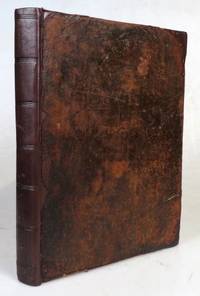
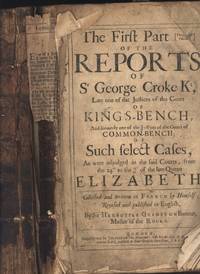
1661réf. 009117Printed by and for John Field and Tho. Newcomb also for W. Lee D. Pakeman and Gabriel Bedell . London 1661 1661. 1st Edition 1st Printing. Hardcover. Fair. 10 920 64 pages : portrait missing ; 30 cm OCLC 13205839 ; full leather with five bands. rebound ; this is the first of the three volumes of the first impression;interestingly a copy of the later third impression was owned by Thomas Jefferson in Monticello & is now in the Jefferson Exhibit collection of the Library of Congress ; Croke was brought into Parliament for Bere Alston by his relative Charles Blount 8th Lord Mountjoy. He served on the committees concerning tillage 13 Dec. 1597 lewd & wandering persons 20 Dec. costs in civil lawsuits 27 Jan. 1598 & on two conferences with the Lords 16 Jan. on defence and 3 Feb. on wine casks. He was probably the 'Mr. George Cooke' who was appointed to the committee on tellers and receivers on 12 Dec. Croke began reporting law cases in 1581& is mentioned as an advocate in his own reports in 1588. He established a lucrative practice & built up estates in Oxfordshire & Buckinghamshire. He was associated with the Hampden family was named as overseer in the will of William Hampden & must have known John Hampden for whom he later gave judgment in the ship-money case. Croke's marriage 'fell out unexpected to his friends that conceived a purpose in him never to have married' she being some 20 years of age & he 'an ancient bachelor'. Croke's law reports published after his death in a translation from the law French by Harbottle Grimston his son-in-law soon occupied a considerable place in the authoritative literature of the common law. The 12 active years which he spent on the King's bench coincided with some of the great constitutional cases of the century. He is best remembered in connexion with ship-money. In 1637 Charles submitted the question to the judges all of whom-save for Croke and Sir Richard Hutton-agreed that the King could demand such financial aid from his subjects in time of danger. The two dissidents signed this general statement in the belief that they were bound to yield to the majority opinion. However when the problem came before him judicially in the Hampden case he made an outright statement declaring that there was no precedent for such a prosecution and that only Parliament might set a charge upon a subject. 'The King has ship money by hook but not by Croke' said the wits. In 1641 Croke retired retaining the title salary & allowances of a judge. He died at Waterstock 16 Feb. 1642 leaving two wills the first being concerned with the disposal of land to his wife and son Thomas. In the second made 1640 and proved 3 May 1642 he asked to be buried without 'heraldry' hearse or any 'unnecessary ceremonies'. The widow was appointed sole executrix.--historyofparliamentonline ; Sir Harbottle Grimston 1603-1685 English politician second son of Sir Harbottle Grimston Bart. d. 1648 was born at Bradfield Hall near Manningtree on the 27th of January 1603. Educated at Emmanuel College Cambridge he became a barrister of Lincoln's Inn then recorder of Harwich & recorder of Colchester. As member for Colchester Grimston sat in the Short Parliament of 1640 & he represented the same borough during the Long Parliament speedily becoming a leading member of the popular party. He attacked Archbishop Laud with great vigour; was a member of the important committees of the parliament including the one appointed in consequence of the attempted seizure of the five members; & became deputy-lieutenant of Essex after the passing of the militia ordinance in January 1642. He disliked taking up arms against the king but remained nominally an adherent of the parliamentary party during the Civil War. In the words of Clarendon he "continued rather than concurred with them." .He translated the law reports of his father-in-law the judge Sir George Croke 1560-1642 which were written in Norman-French & five editions of this work have appeared.-1911 Britannica ; thick volume; marginalia; FAIR Printed by and for John Field and Tho. Newcomb, also for W. Lee, D. Pakeman, and Gabriel Bedell ..., London, 1661 hardcover
réf. 1528551087.Gpaperback. Good. Access codes and supplements are not guaranteed with used items. May be an ex-library book. paperback
réf. 1527781380.Gpaperback. Good. Access codes and supplements are not guaranteed with used items. May be an ex-library book. paperback