18 213 résultats
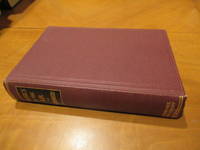
1928réf. 032977Leipzig: Verlag S. Hirzel 1928. 1st Edition 1st Printing. Hardcover. Very Good/No Jacket. Viii 221 Pp. Red Cloth Gilt. Ownership Signature Of Physicist H. A. Kramers Of Leiden Dated Jan 1929 And With Several Pages Of Finely Written Formulae And Notes One Page Dated "11/4/27 Ii". Small Probably Original Bookseller's Label Berlin. Bookplate Of Kramer's Assistant At The Univ. Of Leiden Physicist Jan Korringa. Verlag S. Hirzel hardcover
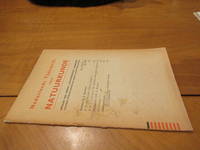
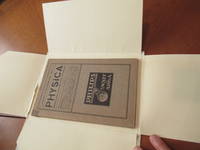
1921réf. 032978Eindhoven: Physica / Nederlaandsch Tijdscrift Voor Natuurkunde 1921. 1st Edition 1st Printing. Soft cover. Very Good. An Issue Devoted To Articles About The Zeeman Effect And The Resulting Applications In Many Fields. George Ellery Hale's Article Is In English. Inscribed "Ueberreicht Von Paschen U Beck" At Top Of Front Cover. "In 1921 Two Experimental Physicists In Tübingen Friedrich Paschen 1865-1947 And Ernst Back 1881-1959 Observed That With Strongly Increasing Magnetic Field Strength The Complicated Multiplets Of The Anomalous Zeeman Effect Change Into The Simpler Patterns Typical Of The Normal Zeeman Effect See Fig. 1. Initially This Observation Remained Inexplicable. With The Discovery Of Spin In Late 1925 However And The Realization That The Anomalous Zeeman Effect Is Characteristic Of Systems With Spin S >0 Whereas The Normal Zeeman Effect Governs Atoms With A Total S = 0 The Paschen-Back Effect Could Be Understood As A Decoupling Of S And Orbital Angular Momentum L Since The Influence Of The Total Spin Becomes Neglectable For Diminishing Spin-Orbit Coupling." See Hentschel Compendium Of Quantum Physics Springer Pp 468-70. Light Wear No Fading Or Staining 1" Clear Tape Reinforcement At Top Of Spine. In A Specially Made Card Chemise No Marks Handwritten Cover Label "Zeeman Festschrift 1921" On Front Cover. Physica / Nederlaandsch Tijdscrift Voor Natuurkunde paperback
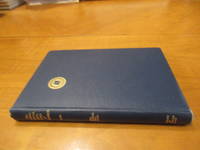
1918réf. 033026Berkeley: University Of California Press 1918. 1st Edition 1st Printing. Hardcover. Near Fine/No Jacket. Ix 233 Pp. Blue Cloth Gilt. First Printing With 1918 Date On Title P;Age And At Foot Of Copyright Page. Near Fine Gilt Brilliant Cloth Unfaded And Immaculate Trace Of Rubbing Just At Corners Hinges Tight No Names Or Marks. University Of California Press hardcover
1940réf. 033047New York: Mcgraw-Hill Book Company 1940. 3rd Edition 1st Printing. Hardcover. Near Fine/No Jacket. Xiv 676 Pp; Large Multi-Fold Chart At Rear.Red Cloth Third Edition. Very Near Fine Bright Clean Tiny Rubs At Corners 1" Browning On Two Facing Pages From Old Scrap Of Newsprint Used As A Bookmark Former Owner's Name On Front Paste-Down Otherwise As New. A Classic Later Reprinted By Dover. Mcgraw-Hill Book Company hardcover
1952réf. 033068Nederlands Tijdschrift Voor Natuurkunde 1952. First Separate Edition . Soft cover. Very Good. Frontispiece. Pp 161-184 Ad At Rear. Journal Card Covers Printed In Black And Orange-Red. Offprint From The Journal. Memorial Presented At The Kamerlingh Onneslaboratory In May 1952 With Bibliography And List Of His Doctoral Students. Scarce- Worldcat Shows Only One Institutional Holding In The U.S. At Stanford. From The Library Of His Student Korringa Although Not Marked As Such. Nederlands Tijdschrift Voor Natuurkunde paperback
1937réf. 033140New York: Mcgraw-Hill Book Company 1937. 1st Edition 1st Printing. Hardcover. Near Fine/Very Good. Xiii 611 Pp. Olive Cloth Gilt. First Edition Stated. Near Fine Book With Touch Of Rubbing At Corners Ownership Name On Front Endpaper. Dj Lightly Used A Few Short Tears 1/2" Squarish Chip At Upper Left Corner Of Rear Panel Small To Minute Losses At Corners. Edwin Crawford Kemble 1889-1984 Was An American Physicist Who Made Contributions To The Theory Of Quantum Mechanics And Molecular Structure And Spectroscopy. He Received His Ph.D. In Physics From Harvard In 1917.After Kemble Received His Doctorate With World War I In Progress He Spent A Short Time Doing Work Which Contributed To The War Effort Developing Aircraft Engines At Curtiss Aeroplane And Motor Company. As The War Ended He Was Laid Off. While He Did Want To Return To Harvard A Position Could Not Immediately Be Found So He Spent A Half Semester Teaching At Williams College In Williamstown Massachusetts. Bridgman Had A Plan To Build Up Theory At Harvard Which Consisted Of Restructuring From The Emphasis In Electromagnetism Radiotelegraphy Optics And Wave Propagation To Radiation Theory Quantum Theory Photo-Electricity Specific Heats X-Ray Crystal Structure And Special Topics In Physics Theory. Kemble Accepted The Challenge And Returned To Harvard In 1919 As An Assistant Professor In The Physics Department. Kemble Remained There The Rest Of His Career As Instructor 1919-1924 Assistant Professor 1924-1927 Associate Professor 1927-1930 And Professor 1930-1957.6 He Was Made Chairman Of The Department In 1940. His First Graduate Student Was John Van Vleck. Many Other Doctoral Students And Postdoctoral Students/Researchers Followed In The Next Fifteen Years Including Robert S. Mulliken John C. Slater J. Robert Oppenheimer Clarence Zener James H. Bartlett Eugene Feenberg And J. L. Dunham. Kemble Was At The Center Of Research And Development Of The Theory Of Molecular Structure. Kemble Went To Study And Do Research With Both Sommerfeld In Munich And Born In Göttingen On A Guggenheim Fellowship In 1927-1928. Upon His Return To The United States He Wrote With Edward L. Hill Two Lengthy Reviews Of Quantum Mechanics In The First Issues Of Reviews Of Modern Physics. During World War Ii Kemble Supervised The Teaching Of Basic Physics To Military Officers Consulted With For The Navy On Acoustic Detection Of Submarines And Near The End Of The War Consulted For The Army On Operation Alsos. The Objective Of Alsos Was To Investigate The German Nuclear Energy Efforts Seize German Nuclear Resources Materials And Personnel To Further American Research And To Prevent Their Capture By The Soviets And To Discern How Far The Germans Had Gone Towards Creating An Atomic Bomb. Samuel Goudsmit A Quantum Physicist From The University Of Michigan Was The Scientific Leader Of Alsos And Lt. Col. Boris Pash A Former Manhattan Project Security Officer Was Its Military Leader. At The End Of Ww Ii Kemble Had The Opportunity To Continue His War-Time Interest In Teaching Physics To Non-Physicists. In Reacting To The Role Science Played In The War James B. Conant President Of Harvard And Former High-Level Administrator In The Manhattan Project Proposed Teaching Science To All Harvard Undergraduates By Teaching Them The History Of Science And Highlighting The Importance Of Science To Social Change. Kemble Joined I. Bernard Cohen Gerald Holton Thomas S. Kuhn Philippe Le Corbeiller And Leonard K. Nash In This Project. In 1957 Kemble Retired From Harvard Where He Had Spent All But Three Years Since He Entered Graduate School. For The Next Three Years He Was The Director Of Harvard's Academic Year Institute Where High-School Teachers Studied With University Professors. He Had Served As Chairman Of The Physics Section Of The National Academy Of Sciences 1945-1948 And As A Member Of The Executive Committee Of The National Research Councils' Division Of Physical Sciences. Mcgraw-Hill Book Company hardcover
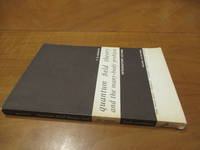
1962réf. 033283New York / London: Gordon & Breach 1962. 1st Edition 1st Printing. Soft cover. Very Good. 150 Pp. Softcover. No Publication Date But Foreword Refers To Author's Preparations In 1962. Light Wear Along Top And Bottom Edges No Tears Or Chips Or Marks Or Stains. Gordon & Breach paperback
1958réf. 033302Amsterdam / New York: North Holland Publishing / Interscience 1958. 1st Edition . Hardcover. Near Fine/Very Good. Xii 470 Pp. Red Cloth Gilt. Near Fine Slight Use No Marks. Dj With Wear 1/8" Losses At Corners. North Holland Publishing / Interscience hardcover
1963réf. 033303Amsterdam / New York: North Holland Publishing / Interscience 1963. 1st Edition . Hardcover. Fine/Very Good DJ. Xi 358 Pp. Red Cloth Gilt. Book Is Fine No Wear No Marks. Dj With Wear 1/8" Losses At Corners. North Holland Publishing / Interscience hardcover
1982réf. 033344New York / London: Plenum Press 1982. 1st Edition 1st Printing. Hardcover. Near Fine/Very Good DJ. X 351 Pp. Blue Cloth Gilt. Book With Touch Of Rubbing At Corners Small Former Owner's Name On Front Endpaper. Dj With Wear Mostly At Corners And At Ends Of Spine A Few Minute Losses At Corners. No Mention Of Springer As Publisher This Appears To Be The Actual First Edition. Plenum Press hardcover
1965réf. 033385New York: The American Physical Society 1965. 1st Edition . Soft cover. Near Fine. Entire Issue In Original Blue-Green Wrappers. Near Fine. In 1965 "Pauling Spent Much Of His Time Away From Santa Barbara Developing A New Model Of The Atom Which He Called The Close-Packed-Spheron Model Of Atomic Nuclei. This Theory Of Nuclear Structure Was Published In Four Different Articles "Structural Significance Of The Principal Quantum Number Of Nucleonic Orbital Wave Functions" Phys. Rev. Lett. September 1965; "Structural Basis Of Neutron And Proton Magic Numbers In Atomic Nuclei" Nature October 1965; "The Close-Packed-Spheron Model Of Atomic Nuclei And Its Relation To The Shell Model" Proc. Natl. Acad. Sci. October 1965; And "The Close-Packed-Spheron Theory And Nuclear Fission" Science October 1965 Each Of Which Addressed Different Implications Of The Theory. Pauling'S Work Dealt With "Magic Numbers" And Nuclear Subshells. Previously It Was Known That Magic Numbers Describe The Quantity Of Protons And Neutrons That Make An Atom Particularly Stable. Pauling'S Theory However Suggests That The "Magic" Qualities Associated With These Numbers Of Nuclear Components Corresponds To The Filling Of Nuclear "Spherons" Or Nuclear Sub-Units Where Protons And Neutrons Are Arranged. These Spherons Or Sub-Units Were Also Referred To As Shells In Previous Theories. The Close-Packed Theory Therefore Suggests That Nuclear Components Form Clusters Rather Than Arranging As Independent Particles. The Close-Packed-Spheron Model Was Based On The Earlier Nuclear Shell Theory. Pauling Took The Nuclear Shell Theory A Step Further By Attempting To Explain Why Specific Numbers Of Protons And Neutrons Cause Greater Nuclear Stability. The Close-Packed-Spheron Model States That The Lower Magic Numbers Represent Atoms In Which The First Or Second Nuclear Shells Are Filled And That Higher Magic Numbers Correspond To A Special "Mantle" Shell; That Is A Hybridized Shell That Can Form If Greater Amounts Of Nuclear Components Arrange Into Spheres. In Developing His Model Pauling Was Trying To Explain The Arrangement Of Nuclear Components By Simplifying Previous Theories And Applying The Principles Of Electron Orbitals To Protons And Neutrons In The Atomic Nucleus. Pauling'S Past Work Had Helped To Establish The Principles Of Electron Orbital Hybridization And He Hoped That This New Work Would Yield Similar Fruit For The Atomic Nucleus. If Such Were The Case It Would Then Be Possible To Explain The Stability Of Atoms With Magic Numbers And The Geometric Arrangement Of Protons And Neutrons. Pauling'S Close-Packed Theory Was Interesting And Relatively Simple; However It Failed To Spark Interest Among Many Other Scientists. For The Next Several Years Pauling Continued To Advocate For The Theory And In June 1974 He Applied For A National Science Foundation Grant To Support Further Theoretical Research On The Structure Of Atomic Nuclei. The Application Was Denied And Pauling Turned His Attentions Elsewhere." See The Pauling Blog. The American Physical Society paperback
1965réf. 033394New York: The American Physical Society 1965. 1st Edition . Soft cover. Near Fine. Entire Issue In Original Blue-Green Wrappers. Near Fine. Glashow Received The Nobel Prize In 1979. The American Physical Society paperback
1965réf. 033395New York: The American Physical Society 1965. 1st Edition . Soft cover. Near Fine. Entire Issue In Original Blue-Green Wrappers. Near Fine. Bloembergen And Lederman Are Co-Authors Of Two Separate Articles; Both Were Nobel Laureates. The American Physical Society paperback
1965réf. 033402New York: The American Physical Society 1965. 1st Edition . Soft cover. Near Fine. Entire Issue In Original Blue-Green Wrappers. Near Fine. Glashow And Weinberg Both Won The Nobel Prize In 1979. The American Physical Society paperback
1965réf. 033406New York: The American Physical Society 1965. 1st Edition . Soft cover. Near Fine. Entire Issue In Original Blue-Green Wrappers. Near Fine. Dyson Co-Authors One Article Here. The American Physical Society paperback
1965réf. 033398New York: The American Physical Society 1965. 1st Edition . Soft cover. Near Fine. Entire Issue In Original Blue-Green Wrappers. Near Fine. Lederman Won The Nobel Prize In 1988 Ting Won In 1976; They Co-Authored Three Articles Here. . The American Physical Society paperback
1965réf. 033414New York: The American Physical Society 1965. 1st Edition . Soft cover. Near Fine. Entire Issue In Original Blue-Green Wrappers. Near Fine. Chandrasekhar Was Awarded A Nobel Prize In 1983. The American Physical Society paperback
1965réf. 033418New York: The American Physical Society 1965. 1st Edition . Soft cover. Near Fine. Entire Issue In Original Blue-Green Wrappers. Near Fine. Bardeen Was Nobel Laureate In 1956 And Again In 1972. The American Physical Society paperback
1965réf. 033421New York: The American Physical Society 1965. 1st Edition . Soft cover. Near Fine. Entire Issue In Original Blue-Green Wrappers. Near Fine. The American Physical Society paperback
1965réf. 033415New York: The American Physical Society 1965. 1st Edition . Soft cover. Near Fine. Entire Issue In Original Blue-Green Wrappers. Near Fine. Anderson Was Nobel Laureate In 1977 The American Physical Society paperback
1944réf. 033431New York: Dover Publications 1944. First American Edition First Issue 1st Printing. Hardcover. Very Good/Good. Xxii 522 Pp. First English Language Translation With Dozens Of Corrections By Bateman Not Present In Earlier Editions. Blue Cloth Spine Gilt. First Issue On Thinner War Time Paper Book Is 1 1/8" Thick With Front Flap Identifying This Is The "First American Edition With Corrections"; A Later Printing Is Exactly The Same Except Being 1 5/16" Thick And Has A Dj With Front Flap Identifying It As The "Complete And Unabridged Reprint Of Original Edition" And Has Different Text On All Panels Of The Dj. Book Is Near Fine Clean And Bright No Names Or Marks; Dj Price Clipped Leaving The $ Sign 1/4" Chipping Across Top Of Spine Darkening To Spine And Edges Minute Losses At Corners 1/8" Long 1/4" Wide Chip At Bottom Of Spine. Dover Publications hardcover
1968réf. 033454Amsterdam / New York: North Holland Publishing / American Elsevier Publishing 1968. 1st Edition 1st Printing. Hardcover. Fine/Near Fine. Vii 338 Pp. Red Cloth Gilt. Fine In Near Fine Dj With "American Elsevier Publishing" Label On Front Cover And Title Page. North Holland Publishing / American Elsevier Publishing hardcover
1960réf. 033590Princeton: D. Van Nostrand 1960. 1st Edition 1st Printing. Hardcover. Very Good /Very Good. Xvi523 Pp. Cloth. Slight Rubbing Tips Lightly Bumped Single Marginalia "Proof Expand" On First Page Next To Text Which States That Only Lighter Nuclei Are Susceptible To Fusion. Dj Complete Very Good Wear Not Price Clipped Very Shallow Chipping Along Top Edge Of Front Panel. D. Van Nostrand hardcover
1918réf. 031430Paris: Imprimerie Nationale / Headquarters American Expeditionnary Forces France 1918. 1st Edition . Soft cover. Very Good. 225 Pp. Salmon Covers Light Wear And Dust. Pages Printed In Four Colors- Buff Orange Yelow And Green For The Four Sections. Pencil Ownership Signature On Front Cover. Imprimerie Nationale / Headquarters, American Expeditionnary Forces France paperback
1967réf. 031564New York: Alfred A. Knopf 1967. 1st Edition 1st Printing. Hardcover. Fine/Near Fine. Xxi468 Xv Pp. Blue Cloth Gilt. First Printing. With The Two Page Errata Sheet Actually The Full Note On The Compton Effect Which Should Have Been On P. 430. Fine No Wear Or Marks Or Stains Or Fading. Dj Lightly Used Three Short Closed Tears Not Price-Clipped Slight Rubbing At Corners. Alfred A. Knopf hardcover