"EULER, LEONHARD. - DEVELOPING THE TURBINE THEORY.Livre Rare Book
[Chrysler Turbine Engine]Biblio.com
Archive of Experimental Engine Development
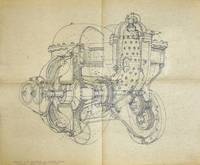
1955réf. COL-2711955. Comb-bound test drive log original sketches and drawings approximately 100 newspaper clippings etc. Following the conclusion of World War II during which Chrysler's engineers worked to create a turboprop engine for the United States military the U.S. auto manufacturer turned its attention to the development of a gas turbine engine for cars. Such an engine would have significant advantages over a traditional piston-centric design with half the parts a significant reduction in wear a better power-to-weight ratio less vibration and less noise. The downsides were significant: fuel consumption and cost. A Detroit Free Press clipping from November 15 1959 included in this archive begins "If you don't mind the cost you could have a gas-turbine automobile right now. The price: $150000. And that's just for the engine. The car would be thrown in." Nevertheless George Huebner and his team of engineers at Chrysler which included longtime employee and team member William Chapman worked for decades to make the car a reality. The highlight of this archive is the Chrysler Research Turbine Cross Country Log an itinerary given out to the engineers who participated in the March 1956 transcontinental test drive from New York City to Los Angeles. The log includes instructions schedules assignments and a series of maps detailing the rout the engineers were to follow which covered 3020 miles across twelve states including a long drive across northern Texas New Mexico and Arizona. Among the dozens of press clippings and documents is a large body of Chapmans' sketches from college all various designs and ideas for futuristic automobile chassis boats motorcycles and airplanes. There is also a particular striking carbon transfer copy of an elaborate cutaway illustration of a turbine engine by engineer R. F. Pauley. The Chrysler turbine engine was officially brought to its end as part of the terms of a 1979 bailout loan from the U.S. government. The project was deemed "too risky" for a car company of Chrysler's size. Various sizes. unknown
Daniel / Oliver Gallery · États-Unis1 600,00 $US≈ 1 426,66 €