Internet, Great (Author)Biblio.com
M39 The Largest Known Prime Number
2020réf. x-1649190123Notion Press 2020. Paperback. New. 458 pages. 5.00x1.02x8.00 inches. Notion Press paperback

Revaluation Books · Royaume-Uni39,01 £GB≈ 46,59 €
718 résultats
2003réf. 2082702114607273In puresu 2003. Soft Cover. Fine. Number of books: 1 In puresu paperback
réf. 9786556277455-11-73284FisicalBook. New. FisicalBook unknown
2020réf. x-1649190123Notion Press 2020. Paperback. New. 458 pages. 5.00x1.02x8.00 inches. Notion Press paperback
réf. 073560858X.Gpaperback. Good. Access codes and supplements are not guaranteed with used items. May be an ex-library book. paperback
2017réf. 2-152114186XIndependently published 2017. Paperback. New. 46 pages. 9.00x6.00x0.12 inches. Independently published paperback
réf. ria9780197782262_inpHardback. New. New Book; Fast Shipping from UK; Not signed; Not First Edition; N/A hardcover
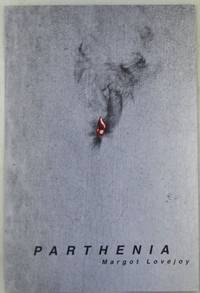
1995réf. 022632Queens NY: Queens Museum of Art Publisher 1995. Unbound. Near Fine. Single sheet folded into 4 pages. Thick card stock. 9 by 6 inches. An invitation to an important exhibition of an installation by Margot Lovejoy spanning from August to September of 1995. Parthenia was an art installation and early website created by Margot Lovejoy that served as a virtual monument to victims of domestic abuse. The project began in 1994 with Lovejoy working in conjunction with Indian diaspora groups such as the Sakhi. It featured Indian dancers. The website was preserved by the Walker Art Center due to its significance in content and as web based art. Margot Lovejoy was an artist primarily working in digital media as well as an art historian focusing on the intersection of technology and art and its culmination in digital forms. Public Linen was a more traditional almost analog work documenting the art in the everyday. NEAR FINE condition. Perhaps a hint of edgewear. Queens Museum of Art, Publisher unknown
réf. ria9780197509685_inpHardback. New. New Book; Fast Shipping from UK; Not signed; Not First Edition; Rethinking Cyber Warfare provides a fresh understanding of the role that digital disruption plays in contemporary international security and proposes a new approach to more effectively restrain and manage cyberattacks. hardcover
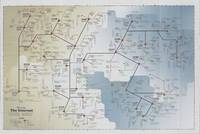
1994réf. List38118New York City: Ziff-Davis 1994. Double-sided poster measuring 36 ½ x 24 ½ inches. Folded as issued with some wrinkling throughout and some very small tears at folds; very good plus. A 1994 "road map" of the Internet designed by technical artist and graphic designer Timothy Edward Downs for PC Computing. Inspired by subway maps and packaged for PC Computing readers like a AAA road map Downs' map organizes the interesting and useful sites on the early Internet by type of content with URLs and quippy summaries. It includes links to everything from a Star Trek drinking game to the U.S.-Japan Technology Management Center. We find seven copies of the 1994 map on OCLC. A scarce piece of early Internet ephemera of interest to Internet historians and users alike. Ziff-Davis unknown
1960réf. 89850Moscow: Foreign Languages Publishing House 1960. Presumed First Edition First printing. Hardcover. Good/Good in a clear plastic sleeve--with some wear tears and soiling. A few text pages--English portion is at pages 7 and 8. Illustrations one fold-outs some in color--reported as 149 Numbered Plates. Publication date derived from Internet research. This work is published in Russian English French German and Spanish. Major inscription on the fep--The inscription is in Russian and translates as "To Colonel Griffith in memory of meeting with Soviet Veterans of War in Moscow June 1 1963 Moscow." The signatures are believed to be. Vasilevsky Marshal first head of the Committee. Sukhoi or Serov; Sergey Smirnov WWII writer and Aleksey Maresyev Executive of Soviet Committee of Veterans WWII--he was a fighter Act and and his legs amputated. Between the end of mass demobilization in 1948 and the foundation of the Soviet Committee of War Veterans in 1956 former soldiers were integrated neither as a generation nor as a status group with formal privileges and their own organization as would be the case in later years. What held them together was instead a shared sense of entitlement based on wartime sacrifice. During the first postwar decade therefore Soviet veterans are best understood as an “entitlement group.” Only in the 1960s and 1970s was this entitlement group transformed into a status group that became one of the major pillars of the late Soviet order. This album contains examples of all the basic forms of photographic art works by Soviet photographers of various generations from the veterans who started taking pictures as long ago as the end of the last century to young photography only just setting out on their artistic careers. Aleksandr Mikhaylovich Vasilevsky 30 September O.S. 10 September 1895 – 5 December 1977 was a Soviet general who served as a top commander during World War II and achieved the rank of Marshal of the Soviet Union. During World War II he served as the chief of the General Staff and deputy Minister of Defense and later served as Minister of Defense from 1949 to 1953. Aleksey Petrovich Maresyev 20 May 1916 – 18 May 2001 was a Soviet and Russian military pilot who became a Soviet fighter ace during World War II despite becoming a double amputee. On 5 April 1942 his Yakovlev Yak-1 was shot down near Staraya Russa. Despite being badly injured he managed to return to the Soviet-controlled territory. His injuries deteriorated so badly that both of his legs had to be amputated above the knee. Desperate to return to his fighter pilot service he subjected himself to nearly a year of exercise to master the control of his prosthetic devices and succeeded at that returning to flying in June 1943. During a dog fight in August 1943 he shot down three German Focke-Wulf Fw 190 fighters. In total he completed over 80 combat sorties and shot down an estimated 7 German aircraft. He was awarded the title Hero of the Soviet Union on 24 August 1943. In 1944 he joined the Communist Party and in 1946 he retired from the military. In 1952 Maresyev graduated from the Higher Party School. In 1956 he obtained a Ph.D. in history and started working in the Soviet War Veterans Committee. Sergey Sergeyevich Smirnov 1915–1976 was a Soviet writer a historian a radio- and TV-presenter a public figure a Lenin Prize winner 1965. Member of the RCP since 1946. Smirnov entered the Maxim Gorky Literature Institute. In 1941 he went to the front. After the war he worked as an editor in Voenizdat. Sergey was the deputy editor-in-chief of Novy Mir November 1953 – October 1954 the editor-in-chief of Literaturnaya Gazeta in 1959—1960. The Secretary of the Union of Soviet Writers 1975—1976. Smirnov was famous for his books about heroes of the Great Patriotic War. He did a lot to immortalize heroic deeds of unknown soldiers and to find soldiers missing in action. Signature is possibly of General Ivan Aleksandrovich Serov August 13 1905 – July 1 1990 was a prominent leader of Soviet security and intelligence agencies head of the KGB between March 1954 and December 1958 as well as head of the GRU between 1958 and 1963. He was Deputy Commissar of the NKVD under Lavrentiy Beria and was to play a major role in the political intrigues after Joseph Stalin's death. Serov helped establish a variety of secret police forces in Central and Eastern Europe after the rise of the Iron Curtain and played an important role in crushing the Hungarian Revolution of 1956. Serov headed both the political intelligence agency KGB and the military intelligence agency GRU making him unique in Soviet/Russian history. Foreign Languages Publishing House hardcover
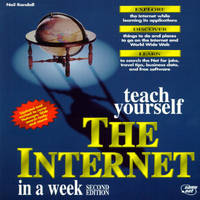
1995réf. USD_9780672307355Sams 1995. 2nd. Paperback. Used - Like New/Used - Like New. _ Sams paperback
2020réf. x-1649191251Notion Press 2020. Paperback. New. 450 pages. 10.98x8.46x1.14 inches. Notion Press paperback
réf. 0692755039.Gpaperback. Good. Access codes and supplements are not guaranteed with used items. May be an ex-library book. paperback
réf. 12201557like new. unknown
réf. 143276778X.Gpaperback. Good. Access codes and supplements are not guaranteed with used items. May be an ex-library book. paperback
réf. 1024012638.Gpaperback. Good. Access codes and supplements are not guaranteed with used items. May be an ex-library book. paperback
réf. 1024007502.Ghardcover. Good. Access codes and supplements are not guaranteed with used items. May be an ex-library book. hardcover
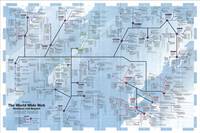
réf. List2993New York: Ziff-Davis 1995. 24 ¾ x 37 inch two-sided poster. Some slight creasing; near fine. A 1995 “road map” of the Web designed by technical artist and graphic designer Timothy Edward Downs for PC Computing. In 1995 the World Wide Web had only been available to the public for a handful of years – but it was growing massively with over ten times as many websites in 1995 as in 1994. This guide to the Web inspired by subway maps and packaged for PC Computing readers like a AAA road map organizes the interesting and useful sites on the early Internet by type of content with URLs and opinionated summaries. It includes links to everything from the US EPA website to the live info page for the disastrous Woodstock 94 music festival described on the map as “Worth seeing.” We find five copies of Downs’ map on OCLC. A scarce piece of interest to Internet historians – and users. Ziff-Davis unknown