100 660 résultats
1948réf. 129737Washington: Department of State 1948. hardcover. very good. Illustrated in b/w. 2 volumes. Tall thick 8vos red cloth. Washington D.C.: Department of State 1948. A very good pair. Department of State unknown books
1930réf. 56104Lynn MA: Lydia Pinkham Medicine Co 1930. Booklet. Large 12mo. pp. 32. Paper wraps stapled at spine. Illustrated. Cover little yellowed one leaf dog-eared o/w VG. Money-saving household hints and lots of testimonials to the efficacy of Pinkham nostrums. Lydia Pinkham Medicine Co unknown books
1851réf. 5799New York: Published annually by A.L. Scovill & Co 1851. Stab-sewn booklet 19 x 12 cm. 36 pages. Illustrated wrapper signed Forbes del. N. Orr. Other illustrations engraved by F.A. E. and N. Orr. The OCLC record cites a printer's statement on page 4 of the wrapper "Printed by E.N. Grossman & Son. 59 Ann-Street New-York." We find no such statement anywhere on this copy. Evident FIRST EDITION of the first issue of this series of household medical almanacs. We've been unable to locate an earlier Scovill almanac. Consists of receipts testimonials and advertisements for patent and proprietary medicines sold by A.L. Scovill & Co. Publisher's notice page 1 states "This 'Family receipt book' is to be published annually. Its object is to explain in a familiar manner what every mother may do for her children or her family in cases of emergency or in ordinary complaints where it would be inconvenient or impossible to obtain the services of a doctor . The volume for 1853 will contain matters of interest to the farmer the gardener the kitchen the toilet etc." Includes "An Indian's Testimony Kah-ge-gah-ga-bowh or George Copway the Indian Chief. gives the interesting particulars of the case of Miss R___ of this city who was cured of a severe and protracted disease of teh lungs by a few bottles of Dr. Rogers invaluable syrup of Liverwort Tar and Canchalagua."page 8. Bit of predation to the bottom left corner of wrapper and first few leaves. Some dog-ears; damp-staining and light stains to a few pages. In publisher's printed wrappers a bit soiled and edgeworn. Good. OCLC locates six copies. Published annually by A.L. Scovill & Co unknown books
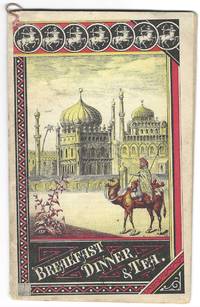
1880réf. 8067New York: The Centaur Co 1880. Stapled booklet 16 x 10 cm. 32 pages. Illustrated. FIRST EDITION. A small promotional cookbook in the form of an almanac from the makers of Centaur Liniments with recipes testimonials and descriptions of the applications of this miraculous cure from lands far and wide. As is typical of these books the recipes are very brief and uncredited. Short closed tear to fold of wrappers decorated in black red and yellow depicting a Near Eastern landscape with buildings and camel. Tiny pink cord to hang the booklet in the kitchen. Near fine. The Centaur Co unknown books
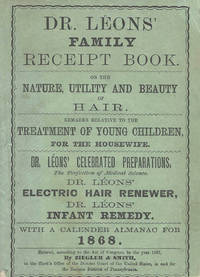
1867réf. 7814Philadelphia: Ziegler & Smith Sole Proprietors 1867. Booklet stapled in wrappers 16.5 x 12 cm. 32 pages. Illustrated. FIRST & ONLY EDITION. While an almanac there is no evidence of other issues. A promotional almanac and recipe book for the patent medicines produced by Dr. Leon specifically his Infant Remedy and Electric Hair Renewer. The promotion of the remedies is interwoven with culinary and household recipes Soft Gingerbread Winter Herbs An Easy Method of producing Mushrooms Apple Fritters Lady Cake. Light edgewear otherwise near fine in publisher's printed pale blue wrappers. Scarce. OCLC locates just one copy and no copies of issues with other dates. Ziegler & Smith, Sole Proprietors unknown books
1869réf. 885781869. MEDICINE SUGITA Gempaku. RANGAKU KOTO HAJIME. Tokyo Tenshinro Meiji 2 1869. 22.5 x 15.1 cm. 2 vols. srting-bound Japanese-style fukuro-toji. Original covers and printed paper title labels. This memoir by the scientist behind the ground-breaking KAITAI SHINSHO was originally completed in Gempaku's old age in 1815. It was transmitted via manuscript until the fall of the ancien regime when Fukuzawa Yukichi and Gempaku's grandson arranged to have it published in a woodblock edition. The book was written in a very clear and simple style and reveals the great lengths of ingenuity the KAITAI SHINSHO author/translators went to to uncover the secrets and understand the esoteric Dutch vocabulary of Kulmas' anatomy that they translated therein. The RANGAKU KOTOHAJIME is often cited as perhaps the earliest Japanese text to explain techniques of cryptoanalysis from a practical and logically rigorous point of view. It is also a compelling story of scientific investigation in isolated traditional Japan. Finally despite its relatively late publication date the RANGAKU KOTOHAJIME is vanishingly rare. Our copy is in very good condition enclosed in a custom-fitted clasped chitsu case. unknown books
réf. 108981 p.l. 38 folding leaves. 8vo 280 x 174 mm. orig. wrappers with cover wrappers old stitching. Thần Xá: An Thái French colonial period. An extremely rare woodcut book printed by nuns in a rural monastery in northern Vietnam. “An eponymous MahÄyÄna sutra that recounts the qualities vows and pure land of the buddha Bhaiṣajyaguru — the Master of Healing also known as the Medicine Buddha or the TathÄgata of Lapis-Lazuli Light. The scripture was most likely written in northern India during the early centuries of the Common Era. In this sutra Bhaiṣajyaguru vowed that his name if merely uttered would cure diseases free prisoners secure food and clothing for the impoverished and produce other similar benefits. He also vowed that his body would be as resplendent as lapis lazuli itself so that it might illuminate the world” Donald Lopez & Robert Buswell The Princeton Dictionary of Buddhism “Bhaiṣajyagurusūtra”. The Scripture of the Medicine Buddha T. 450 translated from Sanskrit into Chinese by Xuanzang 602–664 in the year 650 C.E. has been a popular text in East Asian and Tibetan Buddhist traditions. In our copy the sutra itself is bookended by a liturgical opening including the “Incense Praise” praises for the Buddha and a “sutra-opening gÄthÄ” and a final homage to the Medicine Buddha. According to the colophon bound at the beginning of the volume the scripture was printed for a specific occasion by three bhikkhuni or ordained Buddhist nuns affiliated with the An Thái temple 安泰寺 in the Thần Xá village ç¥žèˆæ‘ of the An Lại commune 安賴社 in the Thanh Khê canton 清溪 Äại An district 大安縣 Nam Äịnh province å—å®šçœ of northern Vietnam. Only the names of two of them are fully legible: they are Quảng Thuận 廣順 and Quảng Thành 廣æˆ. They printed and disseminated this Scripture of the Medicine Buddha with a sincere mind when the statues of three of their masters were completed and placed into stupas. In their colophon they traced the lineage of themselves and their masters to the bhikkhuni An Dương Tháp 安陽塔 dharma name Nguồn Hạnh æºå¹¸ and pseudonym Minh Lâm 明ç³. Despite the country’s long history of Buddhist and Confucian learning woodblock-printed books published within Vietnam itself are far fewer in number than their Chinese or Japanese counterparts. This scarcity is owed to the high cost of domestic production: according to the estimate of Kathlene Baldanza as late as the 19th century “the labor cost of printing in Vietnam was five to ten times higher than in China. Even ink and brushes were more expensive to produce in Vietnam.” Extensive international trade between northern Vietnam and southern China — where plentiful books were printed at very low costs — meant that “it was generally cheaper to purchase books from China than to buy them locally” “Publishing Book Culture and Reading Practices in Vietnam” Journal of Vietnamese Studies 13.3 2018 pp. 10–11. Beyond the limited cases of official and temple-based publishing Vietnamese publishers were pushed toward niche genres such as Sino-Vietnamese dictionaries ritual manuals or morality books. Regardless of genre woodblock-printed books from Vietnam are very difficult to find today outside a few major collections such as the Institute of Sino-Nôm Studies in Hanoi and l’École française d’Extrême-Orient in Paris. We will not focus on the humid climate of the country or the massive destruction of the nation’s cultural heritage during its long war of independence in the post World War II period. The catalogue of materials kept at the Institute of Sino-Nôm Studies mentions two copies VHv.1071 AC.116 of the Scripture of the Medicine Buddha printed in 1911 and it is unclear if those were printed with the same woodblocks as ours. We know for certain however that no material at the Institute of Sino-Nôm Studies gives the An Thái temple as the place of publication despite the large numbers of temples and monasteries listed. This copy being an example of Vietnamese women’s printing in a rural monastery is extremely rare. Fine copy. First leaf a little frayed and the outer wrappers are quite frayed. â§ Li Guimin æŽè²´æ°‘ “Zaizhi yu bianyi: Yuenan hanchuan fojiao dianji de zhuanhua å†è£½èˆ‡è®Šç•°â€”â€”è¶Šå—æ¼¢å‚³ä½›æ•™å…¸ç±çš„轉化” Foguang xuebao 佛光學報 7 No. 1 2021: pp. 111–37. Yuenan Hannan wenxian ziliaoku è¶Šå—æ¼¢å–ƒæ–‡ç»è³‡æ–™åº« Academia Sinica. unknown books
1890réf. 10187New York; Lockport N.Y.: Published by F.W. Kinsman & Co. apothecaries: Union Printing & Publishing Co 1890. Octavo stapled in wrappers 18.3 x 11 cm. 32 pages. Printed throughout in black and red. Calendars for 1890 and 1891 printed on rear panel of wrapper. Advertisements. Other titles: Kinsman's New York Cook Book. The third and final almanac promoting Adamson's Botanic Balsam and other nostrum's and remedies produced by F.W. Kinsman Apothecaries of New York. Previous issues of the almanac used New York in the title as here but the apothecary was located across the Hudson in Jersey City. Testimonials sprinkled throughout the selection of recipes. Age-toning throughout otherwise fine in typographically decorated wrappers. Scarce. OCLC locates three copies of this issue. Published by F.W. Kinsman & Co., apothecaries: Union Printing & Publishing Co unknown books
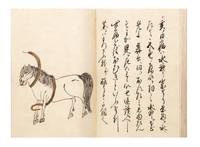
réf. 7052Seven vols. 8vo 218 x 160 mm. orig. wrappers each with an individual title label on upper cover new stitching. Japan: all late Edo. A fascinating collection of texts on equine medicine all bound in a similar fashion: Vol. 1: Manuscript label on upper cover entitled “Basho hijutsu den” “Horse Book Secret Methods Passed On”. Nine brush & ink illus. in the text. 31 folding leaves. This text is concerned with exercising horses in each season and includes “32 Rules of Exercise.” At the end we find a date of 1825 the name of the person who provided this information Seizaimon Sekiguchi and the name of the copier Hanemon Hasegawa. Vol. 2: Manuscript label on upper cover entitled “Basho yakuho den” “Horse Book Medicine Passed On”. 12 most unusual brush ink & wash drawings. 23 folding leaves. Each illustration depicts an unwell horse and 12 symbols of ill health demons snake ogre monkey female deity Buddhist practitioner archer bird etc. relating to the horse’s disease with recipes for medicines. These illustrations are all finely colored. The rest of the text is devoted to how to maintain a horse’s health in each of the four seasons. At the end there is the date 1596 and the information was given by Ichiraku Obata who lives in Kyoto. Vol. 3: Manuscript label on upper cover entitled “Basho hiden shu” “Collection of Horse Medicine Secrets Passed On”. Seven brush & ink illus. in various colors. 15 folding leaves. This manuscript is concerned with methods of keeping a horse healthy while travelling. Herbal medicine recipes are given. At the end we find the following names: Ogasawara Taizen Taifu Ofusa Yawata Takeyori Ason and Kunai Taifu. Vols. 4 & 5: Manuscript label on each upper cover entitled “Basho ryoji den” “Horse Book Diagnoses & Treatments Passed On”. 18; 13 folding leaves. Vol. 4 ends with the date 1858 and the statement that “Sokyu passed on this information to Ittai Sekiguchi.” Vol. 5 ends with the same date and a note that “Aikyu who lives in Ecchu in today’s Toyama Prefecture gave this information to Sekiguchi.” Vol. 6: Manuscript label on each upper cover entitled “Basho juniyaku” “Horse Book. 12 Medicines. A Part”. Ten folding leaves. The text describes symptoms of various illnesses and provides 12 herbal medicine recipes. We believe the next part is contained in Vol. 7. Vol. 7: The label is no longer present but the beginning of the text states that there are 12 ingredients for medicines described. 17 folding leaves. The text is concerned with diseases common in each of the four seasons and the theory of the five organs and six intestines. In fine condition. Vol. 4 and 5 each have some marginal worming. unknown books
1910réf. List1622New York 1910. First Edition. Album containing ten 6 x 8 inch photographs. Photographs near fine with one showing some foxing some normal wear to album very good or better. A collection of ten images of the Bushwick Hospital which was located at 41 Howard Ave. in Brooklyn taken shortly after the building’s construction in 1912. The photographs show the grounds the nurse and doctor staff a picture of surgery being performed a section of beds in a recovery ward a group of newborn babies and the ambulances. The hospital was located in the Bedford-Stuyvesant / Ocean Hill neighborhood and the building now houses the Ella McQueen Reception Center for Boys and Girls. unknown books
1992réf. 567886New York: Orion Books 1992. Softcover. Near Fine. Uncorrected proof. Gold wrappers. Slight waviness else near fine. Orion Books unknown books
1862réf. 9112Springfield Mass.: Samuel Bowles & Company Printers 1862. Booklet in cord-sewn wrappers 17.5 x 11.5 cm. 1-26 pages. Illustrated. Title and publication data from wrapper. At head of wrapper title "Price 10 Cents". Publication date from wrapper; prefatory note page 1 signed "H. Hutchins. Springfield Mass. May 1860"; copyright date of 1858 from head of page 1. Evident Second Edition; the original was published in Boston in 1858 and printed by Bazin & Chandler. Promotional literature for proprietary remedies manufactured by H. Hutchins including Hutchins' Headache Pills and Hutchins' Hair Dye. Light foxing throughout and some leaves dog eared. In publisher's black-titled pale salmon wrappers with decorative border. Small ownership stamp of Rhode Island's Pettaquamscutt Historical Society. Rear wrapper panel has a small portrait of H. Hutchins giving a pack of pills to a man who is clearly suffering from a headache. Near very good. Scarce. OCLC records one copy dated 1862 Wellcome Library; an additional two copies indicated as 1858 and others later; not in Lowenstein. Samuel Bowles & Company, Printers unknown books
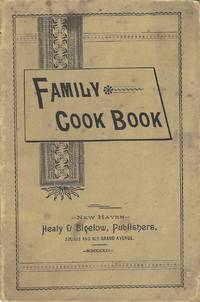
1891réf. 8573New Haven: Healy & Bigelow Publishers 1891. Booklet stapled in wrappers 17 x 11.5 cm. 48 pages. Illustrated throughout. FIRST EDITION. A promotional cookbook for the patent medicines of the Healy & Bigelow's Kickapoo Indian Medicine Company. Cooking advice and over one hundred recipes for beverages; breads biscuits etc.; cakes; candies; cheap breakfast; farmer's dinner; fish; food for the sick; pies and puddings; poultry; roasts; soups; vegetables; warm-over dishes; and miscellaneous dishes. Verso of each page has testimonials and information about medicinal products of the Kickapoo Indian Medicine Company. In yellow wrappers with discoloration to wrappers and some slight staining throughout otherwise very good. Healy & Bigelow Publishers unknown books
1883réf. 7512Buffalo N.Y.: Published by D. Ransom Son & Co.; Press of Baker Jones & Co 1883. Booklet sewn on cords in wrappers 16.5 x 10 cm. 32 pages. Illustrated. Advertisements. A single year from the annual almanac promoting the “Celebrated Family Medicines” of Ransom Son & Co. series 1874 – c. 1923. The booklet consists of a series of alternating pages of recipes culinary household medicinal dyeing etc. with facing pages each advertising an individual patent medicine Trask's Magnetic Ransom’s Honey Syrup Ransom’s Hive Syrup Universal Magnetic Balm Prof. Anderson's Dermador. Printed orange paper wrappers decorated and with text. Hole with string tie to upper left corner. Very light rippling to wrappers otherwise fine. Published by D. Ransom, Son & Co.; Press of Baker, Jones & Co unknown books
1919réf. 17870Seattle: Seattle Maternity Hospital Inc. C.S. Colhouer Managing Director 1919 First edition. Rare. OCLC records only 4 copies in libraries. Publisher's black flexible faux leather binding. Title stamped on front cover. . Quarto. With a reproduced photograph on the second leaf. Front hinge cracked. Minor tears to a few leaves throughout. Inscribed "Mrs. E.A. Fuller Anton WA" dated 1914. Very good- copy. Royal A. Mclure 1867-1928 was a doctor who established a successful private practice in Seattle. In 1915 he married his nurse Helen Catherine 1892-1967. She and her two children are featured in the reproduced photograph on the second leaf labeled "Perfect Health." Seattle Maternity Hospital, Inc., C.S. Colhouer, Managing Director, hardcover books
1809réf. 286942Perugia: Nella Stamperia Costantini Santucci e Compagni 1809. Pamphlet. 17p. self-wraps letterpress struck on handmade paper 7x5 inch softbound sewn with original thread intact slight external dust and signs of handling on paper that itself has internal flaws uneven mixing of pulp flecks an old vertical crease long ago flattened out is further hidden by the lumpy wonderful paper. Item seems not to have been bound with a cover but a modern one has been provided cut to size and simply folded with no attachments attempted. A good copy. Nella Stamperia Costantini, Santucci, e Compagni unknown books
1988réf. 226721Washington DC: National Academy Press 1988. Paperback. xiii 84p. softbound in 9x6 inch wraps. Covers are a bit rubbed with a little edgewear and a minuscule tear in foredge margin. Clean and sound a good copy. National Academy Press paperback books
1988réf. 19600Washington: National Academy Press 1988. Paperback. x 239p. notes figures indexappendixes very good first edition trade paperback in pictorial wraps. National Academy Press paperback books
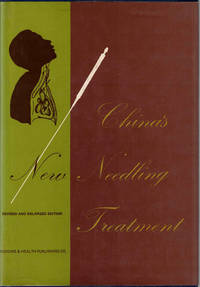
1985réf. 57273Hong Kong: Medicine & Health Publishing Co 1985. Hardcover. Very good. Hardcover. 80pp. Foxing to the text block edges and the pastedowns else very good in a scuffed dust jacket. Medicine & Health Publishing Co hardcover books
1998réf. 55702NY:: Abbeville Press. Fine in Near Fine dust jacket. 1998. Hardcover. 0789201607 . Third printing. Fine in a near fine one short closed edge tear dust jacket. . Abbeville Press, hardcover books
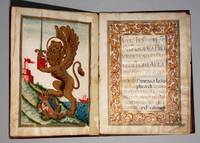
1717réf. 56704to manuscript on vellum 23.5 x 17.1 cm 7 ff. 4 ff. vellum blanks including a full-page frontispiece illumination of Venetian Lion of St. Mark each text page with foliate borders in gold ink headings and initials in gold ink. Bound in contemporary Venetian morocco elaborately gold tooled gold block-printed foliate pastedowns. Edge wear and minor rubbing to spine and boards manuscript loose in binding oxidizing to edges of pastedowns. Marginal flaws to frontispiece illumination just touching border in places a few small wormholes elsewhere minor handsoiling. Finely illuminated early 18th-century Venetian manuscript issued by the city's Magistrato alla Sanità Health Department as a license to certify the physician Antonio Damugliano d. 1747 to practice medicine in the Venetian Republic using his propriety formula for topical salves balsami to treat "wounds and ulcers" f. 3v-3r. The manuscript ornately written out and decorated in gold and colored ink opens with a full-page image of the winged Lion of San Marco in the Venetian landscape which serves as an official seal of the document's authenticity and is inscribed by five Provveditori of the Magistrato and one notary who witnessed the certification. This pharmaceutical license represents a rare material survival of how Venice's Magistrato alla Sanità regulated the practice of medicine in its territories even down to the level of controlling how individual practitioners could work with specific drugs. Damugliano presumably was required to keep the document on his person while plying his trade and to present it to the relevant authorities or even to his patients should his practice be called into question. The text of the document is written out twice – first in Italian and then in Latin – to suit the linguistic preferences of both the common Venetian citizen and the professional medical class. Damugliano also known as Antimo Damulianos is noted in the document dated April 1717 as being a native of the Ionian island of Zante or Zakynthos at the time a Venetian colony and having recently returned from Moscow "where with good success and for a long time he practiced medicine with full official permission of many noteworthy people" f. 2v. Damugliano is said to have studied medicine in Europe likely in Italy specializing in contagious diseases and eventually practicing in Asia Minor Persia India China Egypt Constantinople and Trieste and to have been ordered by Emperor Charles VI 1685-1740 to treat the sick of a plague outbreak in Corinth see L. Zoes passim. Damugliano's name is also associated with a 1725 treatise entitled 'Medicina' which circulated in manuscript form in Venice and dealt with the use of salves pills and stones to treat hydrophobia see L. Zoes; we have been unable to locate a copy of this treatise. Damugliano is also recorded as having worked in Vienna where an April 1746 news magazine comments that the "very famous" Damugliano having traveled through numerous kingdoms has arrived to demonstrate the curative powers of "the wondrous Chinese stone called Bezoar" which is effective against fevers snake bites fatigue colic etc. Nachtrag p. 64. The bezoar stone an indigestible mass formed in the digestive tract of ruminants was lauded from the middle ages as a universal antidote to poison. R. Palmer "Pharmacy in the Republic of Venice in the Sixteenth Century" in A. Wear et al. eds. The Medical Renaissance of the Sixteenth Century pp. 100-17; Epeteris: Hetaireia Byzantinon Spoudon vol. 43-44 1977 p. 417; H. Schmuck Grieschischer Biographischer Index vol. 1 p. 247; L. Zoes Lexikon historikon kai laographikon Zakynthou vol. 1; S. Carbone Provveditori e sopraprovveditori alla Santità della Repubblica di Venezia; P. Selmi "Il Magistrato all Sanità" in Difesa della Sanità a Venezia Secoli XIII-XIX pp. 28-50; Nachtrag zu denen wöchentlich-kurtzgefaßter historischer Nachrichten Der neuern Europäischen Begebenheiten auf das Jahr 1746 p. 64. books
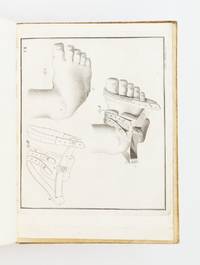
1803réf. ST18718Pavia: Appresso Giuseppe Comini 1803. FIRST EDITION. 309 x 225 mm. 12 1/8 x 8 7/8". 42 pp. without the blank called for by Norman. Contemporary paper boards patterned to look like tree calf smooth spine. WITH FIVE ENGRAVED PLATES THREE OF THEM FOLDING BY FAUSTINO ANDERLONI. Norman 1900; Garrison-Morton 4308. See also: Heirs of Hippocrates p. 292; DSB XII pp. 136-39. ◆Two-inch dampstain to upper right corner of front cover also slightly affecting margins of first 10 leaves extremities a little worn but still a nearly fine copy--clean fresh and bright internally with excellent impressions of the plates in a sturdy contemporary binding. In excellent unsophisticated condition this is a rare copy of the first edition of what Garrison-Morton tells us is the "first accurate description of the pathological anatomy of congenital club-foot." In addition to correctly describing the anatomy of this common birth defect surgeon Antonio Scarpa also devised a brace for treating the malformation--detailed engravings of which are shown on the accompanying plates. A student of Morgagni Scarpa 1852-1932 quickly rose to prominence becoming a professor at the age of 20 and authoring several important works in the fields of otology cardiology ophthalmology and neuroanatomy among others. As DSB relates "his fame was so great that in 1805 he was personally complimented by Napoleon." According to Heirs of Hippocrates Scarpa was "a brilliant artist as well as a brilliant anatomist" who included his own anatomical drawings engraved by Faustino Anderloni in many of his published texts including the present work. The images here go beyond simply depictive to evoke an emotional response from the viewer who is invited to identify with the distress of the afflicted. Our first edition is a rare book: we could trace just two copies sold on RBH. Appresso Giuseppe Comini unknown books
1742réf. ST16000London: Printed for the author 1742. FIRST EDITION. 205 x 130 mm. 8 x 5". xxiv 285 1 pp. 3 leaves index. Contemporary sprinkled calf covers with double gilt-ruled borders raised bands flanked by gilt rules neatly rebacked preserving original backstrip one corner restored. Front flyleaf with ink inscription of Wm. Barber dated 1790. Weinberger "Introduction to the History of Dentistry" p. 330; Garrison-Morton 3672; Wellcome II 320; ESTC T63467. ◆Joints lightly rubbed corners a little bumped and worn but the binding solid and perfectly satisfactory; a handful of creased corners and a couple of trivial blemishes but the contents in very fine condition the paper clean and bright and obviously read very little. This is a fresh appealing copy of the first modern book on teething and the second book on dentistry in English. Weinberger says that "as far as English dental literature is concerned it began with Joseph Hurlock in 1742. Hurlock was a strong advocate of lancing the gums of infants to permit teeth to erupt more readily and thus prevent convulsions. His treatise was a plea for parents and nurses to allow him to carry out this procedure." The book documents symptoms of dentition difficulties and reports on cases in which our author lanced the gums of children whose health problems he attributed to teething trouble--not always with happy outcomes. The book does contain advice that was more beneficial. Weinberger notes "Hurlock apparently was a keen observer of dental conditions then found in children noticing that the havoc wrought by caries in the deciduous teeth was undoubtedly due to diet and recommended that such youngsters be sent to the country where fresh air and better food could be obtained." Little is known of the author who has no other works recorded in libraries or bibliographies. It has been suggested that he was related to the Joseph Hurlock 1715-93 who was a director of the East India Company. We are fortunate that Mr. Hurlock did not stint when it came to the quality of paper on which his treatise was printed; the text here has come down to us crisp and bright as a result. Printed for the author unknown books
1826réf. ST14206London: Burgess and Hill 1826. FIRST EDITION. 215 x 135 mm. 8 1/2 x 5 3/8". x 2 282 pp. 1 blank leaf lacking half title. Recent retrospective dark brown quarter calf over marbled boards raised bands gilt titling. Title page with ink library stamp of University College Hospital Medical School Library. The Founders of Child Neurology 1990 pp. 148-52. ◆Title a little foxed with a half-inch brown strip from older binding along gutter edge last two leaves with minor foxing otherwise a fine copy clean fresh and surprisingly bright in an unworn sympathetic binding. This is the first edition of the first monograph in English on the subject of convulsions in children by a man considered to be one of the founders of child neurology. One of 300 original Fellows of the Royal College of Surgeons and a renowned London practitioner specializing in midwifery and the diseases of women and children John North 1790-1873 was a forthright plain-spoken man whose obituary even noted that "he was occasionally too brusque to be pleasant." This candor was an asset in his writings. As "The Founders of Child Neurology" notes "Whereas most 18th- and early 19th-century medical authors were opaque verbose and interminable theorists North wrote simply and clearly avoided speculation admitted ignorance and actually dealt with practical matters such as distinguishing between types of convulsions and the extent of treatment required. Also perhaps in keeping with his character he did not hesitate to criticize other authors with whom he disagreed." One of his main targets was John Clarke who had declared that "every case of convulsion" resulted in "inevitable organic damage" to the brain. Consequently Clarke called for drastic treatment of every seizure whether caused by teething or serious illness often doing more harm than good with his purgatives clysters and bleeding. North saw convulsions as a disturbance in the brain but not as evidence of organic disease citing as evidence the lack of brain lesions found in autopsies of children who had died of convulsions. He distinguished epilepsy from other causes of seizures and was perhaps the first to note the association between rickets and convulsions. "Founders" concludes "his greatest gift to his contemporaries may have been his reiterated contention that most babies with convulsions need not be assaulted with calomel leeches and the lancet.". Burgess and Hill unknown books
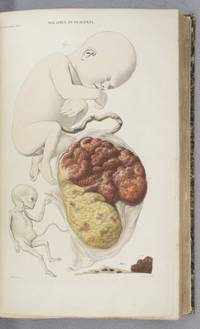
1829réf. CJW1310Paris: J. B. Baillière 1829-42. FIRST EDITION IN BOOK FORM bound from the original parts. 486 x 337 mm. 19 1/8 x 13 1/4". Two volumes. Contemporary marbled boards backed with recent calf raised bands flanked by gilt fillets black morocco labels. WITH 231 LITHOGRAPHED PLATES two folding OF WHICH 167 ARE IN COLOR many heightened with gum arabic later tissue guards. Garrison & Morton 2286; "Heirs of Hippocrates" 863; Norman 538. ◆Corners and edges somewhat rubbed with some loss of paper as expected with large picture books text with variable foxing persistent but usually light never severe and principally confined to margins a handful of black & white plates with moderate spotting additional small defects internally otherwise quite a commendable copy of a book always found foxed browned and worse our volumes solidly restored now the spines unworn and the text and remarkable plates with no fatal condition problems. Garrison & Morton declares that "the fine illustrations of gross anatomy seen here make this one of the greatest works of its kind." The inaugural professor of pathological anatomy in Paris anatomist and pathologist Jean Cruveilhier 1791-1874 provided in the present work the first description of multiple sclerosis and an early identification of Cruveilhier's palsy. Hypertrophic pyloric stenosis and ulceration of the stomach due to hyperacidity were also detailed for the first time here. In "Doctrine of the Nerves" John A. Spillane called Cruveilhier "the prince of physician-pathologists" and this work a "treasure chest of neurology." "Heirs of Hippocrates" notes that "this atlas contains some of the finest illustrations of gross pathology ever made." The plates were done by anatomical illustrator Antoine Chazal 1793-1854 a French painter engraver art teacher at Muséum National d'Histoire Naturelle and great-uncle of Paul Gauguin. This work was originally issued in 40 parts at nine francs each over a period of 13 years. The parts were ultimately bound together into two volumes as here in a print run that based upon the subscriber's list was likely just more than 400 copies. While no stranger to auction rooms the book--a practical reference book heavily used by professionals--is all too often found with missing plates and/or parts and in condition that leaves much to be desired. J. B. Baillière unknown books