100 660 résultats
1833réf. 557691833. Contemporary morocco. Very good. Two parts octavo 24.2 by 14.3 cm. 280 unnumbered leaves. Manuscript on polished cream paper. Persian text recto and verso in black and red ink; triple-ruled inner text borders 15.4 by 7.9 cm in red and blue single-ruled outer border 21.7 by 11.3 cm in blue. The second part of the manuscript opens with an illuminated full-page double suite composition Arab. unwan in polychrome and gilt; marginal illumination appears on two other leaves in this section. Contemporary paneled tan morocco lightly rubbed at extremities elaborately tooled in blind. Some marginal annotations in black ink at several early leaves. Intermittent mild smudges mostly marginal; bottom corner of first leaf excised resulting in loss of several words. Very good. Compendium of medical tracts used by prominent physicians of the Muslim world written in superb Persian calligraphy by 'Ali Muhammad in A.H. 1249 = 1833. Much of the work deals with herbal remedies used by famous Persian physicians including Avicenna 980-1037. A treatise on anatomy is included along with commentaries penned between the two sets of borders which discuss various matters including diagnosis from urine; hygienic practices drawn from the treatises of famous physicians; prescriptions and recipes derived from the book Tuhfat al-mu'minin a work on materia medica by Muhammad Muʼmin Husayni d.1698 dedicated to the Safavid ShÄh SulaymÄn. Husayni was considered the greatest herbalist of the Mazandaran region of Persia. Four pages in the second part present various alphabets in black ink; comments and correspondences with the Arabic/Persian alphabet are noted in red ink. Provenance: Stamps of "Mohd. Halim Salimi Library Kandahar-Afghanistan" in blue ink at opening and closing leaves. In the late 1950s Mohammed Halim Salimi of Kandahar worked in an administrative capacity for the International Cooperation Administration a United States government agency and precursor of the U.S. Agency for International Development USAID. A smaller elliptical owner's stamp in red with text beneath at blank recto of the opening leaf. unknown books
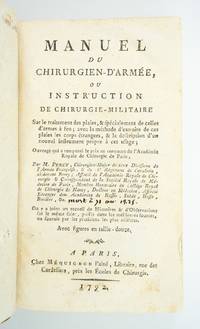
1786réf. ST21018Paris: A. J. Dugour et Durand; Nicolas-Toussaint Méquignon; Poilly 1798; 1792; 1786. FIRST EDITIONS of Tazewell and Percy. 168 x 100 mm. 6 1/2 x 4". 2 p.l. iv 210 pp.; xvi 272 pp.; 46 2 pp. Three separately published works bound as one. Contemporary patterned vellum boards backed with mottled sheep flat spine gilt in compartments with alternating urn and fleuron tools red morocco label lettered in gilt all edges sprinkled with expert repairs to joints and ends of spine. In a custom-made box. Manuel du Chirurgien-d'Armée with a folding plate illustrating tools developed by the author for removing a bullet from a wound. Front pastedown with "Questions faites par le Juri Medical" dated "3 Septembre 1808" laying out five sets of questions from that examination; title page of Manuel with date of Percy's death added in ink. Vade-Mecum Medicum: Blake 446; Cowen America's Pre-Pharmacopoeial Literature 1961 pp. 21-22; Thomas Jefferson letter to William Tazewell 23 January 1803 Founders Online https://founders.archives.gov/documents/Jefferson/01-39-02-0331. Manuel du Chirurgien-d'Armée: Blake 343; Garrison-Morton 2158.1. Boards with a mild tendency to splay corners and boards a bit worn but the restored binding solid and not unappealing. Trivial imperfections internally but the book excellent throughout extremely clean and bright. Bound with two other 18th century works of medicine this is a landmark American medical work by a Virginian that was commended by Jefferson while in his first term as President of the United States. According to Cowen the "Vade-Mecum Medicum" is "the first general as distinguished from hospital 'pharmacopoeia' compiled by an American." Virginia physician William Tazewell ca. 1770 - 1840 studied medicine in Edinburgh and he notes in his preface here that the classification of diseases that comprises the first part of this work is based on the 1769 nosology by the Scottish physician William Cullen. The materia medica and formulary that follow draw on Tazewell's own notes from his studies at the University of Edinburgh as well as the London pharmacopoeia and Joseph Townsend's "The Physicians' Vade Mecum" 1794. When his "Vade-Mecum" was published Tazewell was in Paris serving as secretary to American diplomat Elbridge Gerry a post he held from 1797 to 1800. Upon returning to the United States Tazewell set up practice in Williamsburg Virginia and sent copies of the present work to George Washington and Thomas Jefferson. The latter acknowledged the value of the gift especially in terms of its concision in a letter to our author dated 23 January 1803. He said in part that the book "has really brought the whole science of diseases & remedies within the shortest compass possible and not meddling with the details of the science himself it presents exactly such a general view of every part of it as he i.e. one often wishes to take." Tazewell's work is bound here between an influential guide to treating gunshot wounds by the chief surgeon of Napoléon's Grande Armée and an 18th century French edition of the "Regimen Sanitatis Salernitanum" a Medieval poem setting forth rules for health advised by the great medical school at Salerno. Baron Pierre-François Percy 1754-1825 pioneered a number of important innovations in battlefield medicine including the "surgical quiver" a kit containing tourniquets and 11 instruments that a medic could wear over his shoulder. Garrison-Morton notes that "He was responsible with Larrey for the invention of special ambulances and squads of litter-bearers including a 'super-ambulance' capable of carrying 8 surgeons 8 attendants and dressings for 1200." The present work focuses on treatment of gunshot wounds and presents the tool Percy invented to remove bullets the "Tribulcon" depicted in the folding plate here. Percy's tombstone in Père Lachaise cemetery declares him "the father of military surgeons." Originally written in Latin in the 12th or 13th century the final work here sets forth hygienic and dietary practices for good health in a format that would be easy for the layperson to understand and remember. Its origins are attributed to the medical school of Salerno the first and most influential early modern medical school. The text remained popular for centuries. Our volume may have been the property of L. M. Petit a surgeon from Chateaudun who is referenced in the "Questions du Juri Medical" attached to the front pastedown. A. J. Dugour et Durand; Nicolas-Toussaint Méquignon; Poilly unknown books
2007réf. 1413914Seattle: Buffalo Bill Historical Center in association with University of Washington Press 2007. Softcover. Quarto 319 pages. In Very Good condition. Spine is blue with black print. Cover is black illustrated white and yellow print. Illustrated: color. Oversized books. Additional postage necessary for expedited/international orders. Economy International shipping unavailable due to size/weight restrictions. For international/expedited customers please inquire for rates. NOTE: Shelved in Locked Annex in quarto column. 1413914. FP New Rockville Stock. Buffalo Bill Historical Center in association with University of Washington Press unknown books
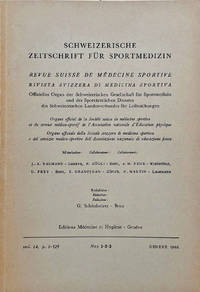
1966réf. EEG1354Geneva:: Editions Medecine et Hygiene 1966. 1966. 23 cm. 329 5 pp. Beige wrappers; added typed-label on spine. Very good. The Swiss journal of Sports Medicine. Contents 35 articles include: F. Kreuzer "Transfer of Oxygen in Moderate Hypoxia at Rest and at Severe Exercise" P.-O Astrand "Circulatory and Respiratory Response to Acute and Prolonged Hypoxia During Heavy Exercise." – W. Hollmann and H. Venrath Das Verhalten des Kardio-Pulmonalen Systems und der Skelettmuskelkraft bei Belastungen unter Verschiedeng Radigem Sauerstoffgehalt der Luft. M. Terzioglu N. Gokham & A. Kayserilioglu "Respiratory and Cardiovascular Responses to Moderate Exercise at Mid-Altitude." R. Flandrois and J.-R. Lacour l'aptitude physique chez le jeune universitaire francais. Comparaison de differents tests avec la consommation maxi male d'oxygene. – P. Haab The immediate effects of oxygen breathing on the cardio0vascular system. – M. Scherrer Altersabhangigkeit des alveolo-arteriellen P O2 - Gradienten Wahrend Schwerarbeit in Akuter Leichter Hypoxie Entsprechend 2750 mil m u M. – B. Balke J-A. Faulker & J.-T. Daniels Maximum performance capacity at sea-level and at moderate altitude before and after training at altitude. Etc. Editions Medecine et Hygiene, 1966. unknown books
1927réf. BL3064New York:: The New York Academy of Medicine 1927. 1927. 8vo. 68 ff. Illus. index; minor marks. Gilt-stamped black cloth; extremities rubbed. Burndy and Truesdale Hospital bookplates blind embossed stamp on title and elsewhere. Very good. 95 listed items. A celebrated bibliophile and student of history bibliographer reviewer Leonard L. Mackall M.D. served as president of the Georgia Historical Society in 1937. He studied at both Johns Hopkins and Harvard Law and in Europe he continued his education at the Universities of Berlin and Jena. He was a member of the Grolier Club. He also helped edit the Bibliotheca Osleriana. The New York Academy of Medicine, 1927. hardcover books
1991réf. 189123New York: Ballantine 1991. Softcover. Fine. First edition. Fine in wrappers a paperback. Ballantine unknown books
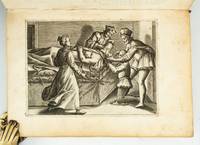
1584réf. ST20779Rome: Bartolomeo Bonfadino & Tito Diani 1584. FIRST EDITION. 215 x 150 mm. 8 1/2 x 6". 6 p.l. 106 pp 1 leaf errata. 17th century sprinkled vellum raised bands leather spine panels with gilt lion ornaments red morocco label. Engraved title page woodcut initials and headpieces and 11 engraved plates of bloodletting. Title page with ink owner inscription of "Joann De Ville Chirurgo Lugdunesse 1629"; a couple of neat marginal annotations in Italian apparently by the same hand; four ink numbers on lower cover. Wellcome I 3959; EDIT16 CNCE 46661; Mortimer Italian II 267 second edition; USTC 839623. Boards a bit splayed gilt on spine a little rubbed moderate wear and soiling to the vellum text slightly browned at edges and with occasional minor foxing half a dozen leaves slightly browned but still an excellent unrestored copy quite fresh internally the engravings sharp and the binding completely solid. This is a 17th century surgeon's copy of a strikingly illustrated and centrally important 16th century treatise on bloodletting. Piacenza physician Pietro Paolo Magni's detailed discussion of the use of leeches and cupping-glasses long served as the standard work on the topic. Its 11 well-executed engravings are visually compelling as well as providing a rich source of information on the details of 16th century medical practice. There is some debate about their creator: Wellcome and Hirsch attribute them to Adamo Ghisi also Scultori ca. 1530-85 who executed the illustrated title page of this edition; Graesse and Mortimer on the other hand assign them to Cherubino Alberti 1553–1615 who was responsible for the engraved title in the second edition. Either way they are as evocative to modern-day viewers as they must have once been useful to surgeons and physicians of the 16th century. The dramatically lit scenes feature focused doctors armed with lancets and bowls to catch the blood attending to patients who grimace wilt or look away in stoic resignation. Our former owner Jean de Ville identifies himself as a Lyonnaise surgeon on the title page in an inscription dated 1629. His occasional notes on the text and illustrations indicate he was consulting this book as a reference for his own practice he writes above one illustration for example that "this operation should be performed on the left arm". This seems to be a rare work in institutional collections USTC finding only one copy in North America. Bartolomeo Bonfadino & Tito Diani unknown books
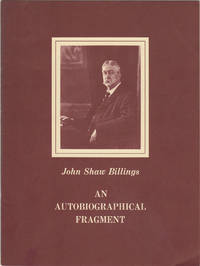
1965réf. 46391Bethesda: National Library of Medicine 1965. First edition. Stapled paper wrappers. A near fine copy. 20 pp. Illus. with b/w reproductions. 8vo. National Library of Medicine unknown books
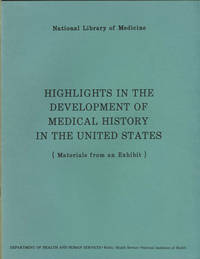
1981réf. 46244Bethesda: National Library of Medicine 1981. First edition. Stapled paper wrappers. Near fine. Unpaged 8 pp. Illus. with b/w photos. Sm. 4to. An exhibit at the National Library of Medicine February 2nd - May 22nd 1981. National Library of Medicine unknown books
1893réf. 45766México: Oficina Tip. de la Secretaría de Fomento 1893. First edition. Quarter calf over marbled boards five raised bands gilt titles & embellishments marbled endpapers. Spine chipped at head and separated from front board boards rubbed bookseller ticket to front paste down contents browned minor soiling one tear affecting small portion of text. vii 472 pp. 21 plates; 96 pp. Illus. with b/w plates. 4to. "El Estudio. Semanario de Ciencias Medicas. Organo del Instituto Medico Nacional. Tomo IV" containing a total of 11 issues running from Abril 1891 through Diciembre 1893: Num 1: Abril de 1891; Num. 2: Mayo de 1891; Num. 3: Julio de 1891; Num. 4: Agosto de 1891; Num. 5: Setiembre de 1891; Num. 6: Octubre de 1891; Num. 7: Febrero de 1892; Num. 8: Setiembre de 1892; Num. 9: Febrero de 1893; Num. 10: Marzo de 1893; Num. 11: Diciembre 1893. This volume contains 19 out of sequence plates and two additional folding plates unnumbered. Bound with "Monografías Mexicanas de Materia Médica: Coleccion de Tésis Inaugurales y de Concurso de la Escuela Nacional de Medicina de México Acopiadas y Reproducidas por 'El Estudio' Tomo II." Two of the plates from "El Studio" numbered IV & V appear out of sequence. Palau 84643 Ker p.35. Oficina Tip. de la Secretaría de Fomento hardcover books
1985réf. 45634Bethesda: National Library of Medicine 1985. First edition. Stapled paper wrappers. Toned edges else fine. 6 pp. Illus. with b/w reproductions. Sm. 4to. National Library of Medicine unknown books
1965réf. 44087Bethesda: National Library of Medicine 1965. First edition. Stapled paper wrappers. About near fine faint finger soiling on wrapper small corner crease. Unpaged 10 pp. Illus. with b/w reproductions. Sm. 4to. National Library of Medicine unknown books
1984réf. 37805Bethesda: National Institutes of Health 1984. First edition. Stapled paper wrappers. Thin sunning along spine else a near fine copy. v 30 pp. Sm. 4to. "This sketch is a reconstruction . of the captions and other textual material prepared for the exhibit entitled "The History of Medical History in the United States" which was displayed at the National Library of Medicine between April 12 and October 1 1982." National Institutes of Health unknown books
1996réf. 36788Montreal: McGill Univ. 1996. First edition. Paper wrappers with spiral binding. A fine copy. 53 pp. Illus. with b/w reproductions. 4to. McGill Univ. unknown books
1972réf. 36774Bethesda: National Library of Medicine 1972. First edition. Stapled paper wrappers. A near fine copy. 16 pp. Sm. 4to. Includes a brochure titled Louis Pasteur 1822-1895. National Library of Medicine unknown books
1926réf. 36751New York: New York Academy of Medicine 1926. First edition. Paper wrappers. A very good copy. Unpaged 65 pp. Illus. with b/w plates. 8vo. 95 items described. New York Academy of Medicine unknown books
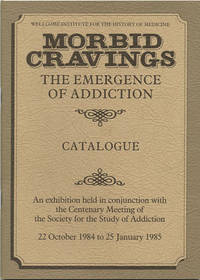
1984réf. 36739London: Wellcome Institute for the History of Medicine 1984. First edition. Stapled paper wrappers. A fine copy. As new. 32 pp. 8vo. An exhibition held in conjunction with the Centenary Meeting of the Society for the Study of Addiction 22 October 1984 to 25 January 1985. Wellcome Institute for the History of Medicine unknown books
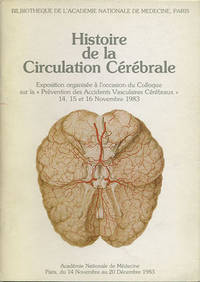
1983réf. 36757Paris: Académie Nationale de Médecine 1983. First edition. Stapled paper wrappers. A very good copy. 32 pp. 8vo. Académie Nationale de Médecine unknown books
1985réf. 36741London: Wellcome Institute for the History of Medicine 1985. First edition. Stapled paper wrappers. A near fine copy. 18 pp. Illus. with b/w reproductions. 8vo. Pre-1800 works. Wellcome Institute for the History of Medicine unknown books
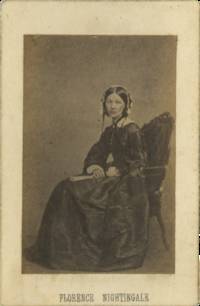
1870réf. List36105N.p. 1870. Carte After the original photograph by William Edward Kilburn 1818–1891 taken circa 1854 with later CDV issue probably circa 1870s. Albumen print mounted on card; sitter identified in print beneath image. Standard carte-de-visite format approximately 2½ x 4 inches. Excellent contrast with light surface wear. Seated three-quarter portrait of Nightingale in dark silk dress with white collar hands folded over a paper posed beside an upholstered Victorian chair. The image derives from a sitting arranged in London with William Edward Kilburn one of Britain’s early professional photographers and a former daguerreotypist who gained fame by exhibiting at the Great Exhibition of 1851. By the early 1850s Kilburn had established a reputation for photographing members of the aristocracy and prominent public figures. The Nightingale sitting happened shortly before her departure for the Crimea in October 1854 at a moment when her name was just entering the public press. The portrait predates her full transformation into the national icon later known as the “Lady with the Lamp.” Unlike later more romanticized images Kilburn’s photograph presents a composed unsentimental likeness more consistent with standard portraiture practices than her later photographs. Following Nightingale’s wartime service at Scutari 1854–1856 and the subsequent surge of public acclaim Kilburn’s image became the primary photographic source from which engravings lithographs and later carte-de-visite reproductions were made.1 1 Denis Pellerin “Florence Nightingale: The Mystery Behind Her Iconic Photographs” The Classic November 15 2020 https://theclassicphotomag.com/florence-nightingale-the-mysteries-behind-her-iconic-photographs/ accessed February 27 2026. unknown books
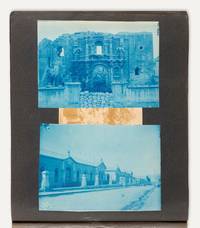
1918réf. List2982Peru and Panama 1918. Approximately 364 photos; album and unmounted photos silver prints cyanotypes and printing-out-paper prints. Photos measure 3 x 4 to 8 x 10 inches with about half measuring 3 x 5 ½ inches. Some with photographer’s hand-stamp or credit in pencil; others with manuscript notations verso or recto; some captions to album pages. Offered in partnership with Daniel / Oliver. Rich and extensive photographic archive of Walton T. Burres of Stockton California showing his time in Peru c. 1904 as an amateur explorer and doctor for the Inca Mining and Rubber Company and his later work in Panama c. 1918 with the Rockefeller Foundation’s International Health Division.The collection consists of a large number of loose photos acquired by the gallery in 2021 and a recently discovered photo album showing some of the same subjects and containing a few duplicate images some printed in different sizes or formats as well as hundreds of previously unseen prints. Together this material makes up the largest extant archive of Burres’s photographic work. Though his work was published at the time both in Peruvian and American publications much of it was lost when he dropped it in a river that he was attempting to ford. Burres was educated at California’s Cooper Medical College the first school of medicine on the West Coast and was a prominent member of the Stockton community before sojourning to Peru around 1900 to help the Inca Mining and Rubber Company address the deadly diseases endemic to the region such as malaria and yellow fever. To encourage economic infrastructure in remote areas the Peruvian government began granting land concessions to any company that would build roads bridges or river ports. As a result the Inca Mining Company an American outfit based in Tirapata purchased the rights to mine gold along the upper Inambari River in 1896 and soon became the richest gold producer in Peru. A large portion of Burres’s Peruvian images document his 1903–1904 excursion from Arequipa 150 miles into “rubber country.” The journeys were well-recounted in U.S. papers and a number of the anecdotes described in print are seen in the present images. There are many dynamic views of Burres and his party trekking through the dense jungle and summiting the high mountains as well as shots of flora fauna and native Peruvians. Burres’s travel companions for this trip included the famed adventurer Harriet Chalmers Adams later dubbed “America’s greatest woman explorer” by the New York Times. Adams and her husband Frank both fellow Stocktonians joined up with Burres during their own multi-year expedition through South America. There are a number of portraits of a woman who bears a striking resemblance to Adams though it is possibly another person. Other Peruvian material includes numerous views of Cusco Arequipa and the surrounding environs including a beautiful interior of a chapel a Martin Chambi-esque detail shot of a stone wall and portraits of local townspeople some identified as Quechua people. There are a number of lush large-format cyanotypes rich printing-out-paper views and many handsome small-format panoramas. These were printed on Inca Mining Company surplus stationary which speaks to the makeshift nature of photo-development under the circumstances. One particularly striking image shows the top of Misti volcano barely visible above the clouds. This image was reproduced in Burres's account of his travels published in 1909 in Outing magazine. The photographs from Burres’s time in Panama document his more serious work as a virologist and health administrator in the area. One interesting photo shows a pair of recently-shot iguanas with a caption noting that “blood of these reptiles was found infected with Haemogregarina.” Another image is that of a new style of privy built from concrete and wire-mesh designed to better keep out rain water. There are also keenly-shot views of main streets and local culture in Los Santos Chiriquí and elsewhere including a number of humanistic group portraits taken at a girl’s school. unknown books
1909réf. 20205Paris: Masson et Cie 1909. First Separate Edition. Hard Cover. Near Fine. First Separate Edition. 8vo. pp. 1-44; later half-morocco and marbled paper boards; gilt stamping to spine; minor fading to top edge; marbled endpapers; original pale green printed wrappers bound in; perforated library stamps to wrapper and pp. 43-44; few pencil annotations; very good overall. Offprint from this French medical journal in which Levy-Bing discusses methods for intramuscular injections of preparations from mercury for the treatment of syphilis. Illustrations in the text. Hard Cover. Masson et Cie unknown books
1992réf. 309216New York: Orion 1992. hardcover. fine/near fine. With a handful of b/w photos. 138 pages. 8vo cloth-backed boards d.w. New York: Orion 1992. A fine copy in a near fine dust wrapper. Orion unknown books
1979réf. 171741Bethesda: National Library of Medicine 1979. hardcover. near fine. Compiled by John B. Blake. 501pp. 4to grey cloth. Bethesda: National Library of Medicine 1979. First Edition. Near Fine. National Library of Medicine unknown books
réf. 129359hardcover. Real Academia Nacional de Medicina. 16 vols. 8vo flexible white cloth; slightly soiled. Madrid: Julio Cosano 1921-1949. A scholarly set on internal medicine biography epidemics pediatrics and other topics. unknown books