3,685 results
ref. SONG0760311625Used: Good unknown
ref. BN91509William Forsythe: Improvisation Technologies. A Tool for the Analytical Dance Eye Windows XP Windows Vista Windows 7 William Forsythe: Improvisation Technologies. A Tool for the Analytical Dance Eye Windows XP Windows Vista Windows 7 William Forsythe: Improvisation Technologies. A Tool for the Analytical Dance Eye Windows XP Windows Vista Windows 7 unknown
1909Features: The People of the Caves; My Journey in Bhutan - I; An Arctic Man-Hunt; The Sydney "Flying-Machine"; An Odd Voyage; The Rescue Dogs of St. Bernard; How we Bluffed the Bushrangers; Life in a Japanese Prison; Short Stories - An Adventure in the "Towers of Silence", Hassan's Bride, Prospecting for Yaqui Gold; The Sportsmen of the Near East; Ning Wo the Wonderful; The Golden Beetle; The Riddle of the Zambesi; A Hero's Life Story; "The Hermit of Rotheneuf"; Marooned on a Sandbank; The "Tank Scrap"; Short Stories - A Luncheon Party in Rhodesia, The Ordeal of Mrs. Benns; The Deputation That Failed; An Island of Mystery; The Ghost of No. 1 Jetty; My Journey in Bhutan - II; The One-Eyed Parrot; The "Pearl of the Mediterranean"; A North Atlantic Tragedy; An Englishman's Pilgrimage to Mecca and Medina; A Lost Hamlet; How I Climbed Mount Popocatepetl; The Masked Bandit of Tucson; Under the Star and the Crescent - I; Pegging out the Empire; Short Stories - The Jail-break at Kungyangon, The Missing Bracelet, The Story of a Glass Eye; Earnst's Luck;; Through the Rocky Mountains on a Raft - I; The Gipsy Polka; Abalone-Fishing; The Old Mexican Mine; A Mystery of the Bush; An Artist's Adventure; The Exploits of the Duke of the Abruzzi - I; The Rival Rain-Makers; Pegging Out the Empire - II; The Clue of the Marked Bamboo; Earthquakes from a Japanese Point of View; The Robbery at Goldsmiths; The Experiences of a Deputy-Postmaster; Some Adventures with Sea-Lions; Under the Star and Crescent - II; Through the Rocky Mountains on a Raft - II; Lost in an Underground Maze; An Englishman's Pilgrimage to Mecca and Medina - II; On the Hill Crest Patrol; Stories of "Stripes" - the Tiger and the Tow-Boat, The Phantom Tiger; The Exploits of the Duke of the Abruzzi - II; The Dynamite Smuggler; A House Built in a Day; Bulstrode and the Bear; With Pen and Camera in Nigeria - I; The Castaways of Guadalupe Island; An Englishman's Pilgrimage to Mecca and Medina - III; Sport in India; Phaulkon's Treasure; The Balinese and Their Ways; Trooper Lovelace, T.T.P. - I; My Most Exciting Ballooning Experiences; Through the Rocky Mountains on a Raft - III; The Gum-Hunter; A Himalayan Arcadia; The Jealously of Pepe; A Texan "Snake-Farm"; One New Year's Day; Twelve Hundred Miles in a Paper Boat; Fishing on the Molopo; Locating a Leak; Two Men in a Cave; A Wanderer in Asia Minor - I; Wilson's "Scoop"; With Pen and Camera in Nigeria - II; A Race for a Gold-Mine; In the Far North-West - I; Trooper Lovelace, T.T.P. - II; How I Lassoed a Moose. Average wear. Binding intact. A sound copy. Book
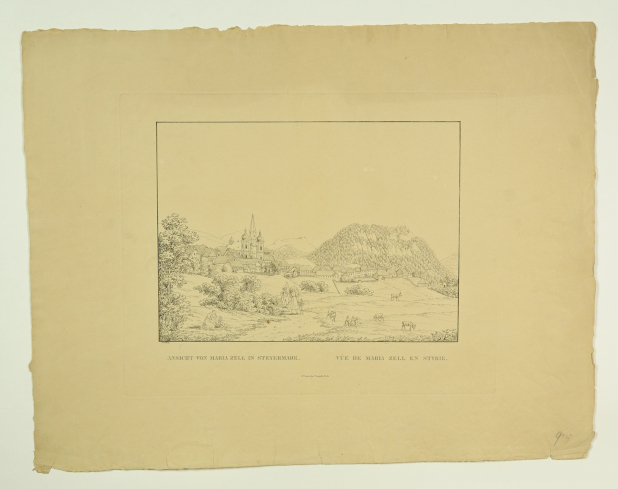
1810ref. 56020Wien, Tranquillo Mollo, o. J. (um 1810). Umrißradierung von L. Mohn (Blattgröße ca. 44 x 56,5 cm, Ansicht 22 x 30,2 cm).
1762ref. 46405503A Paris chez Basset rue St. Jacques, [vers 1762] ; 30 x 42 cm. sur une feuille de 32 x 47 cm., Belle eau-forte aquarellé montrant l’incendie de la Foire Saint-Germain. Des chiffres gravés sur l’épreuve renvoient à des légendes imprimées sous l’image : Porte Guisarde, Porte de la rue du Four, Porte du Concièrge, lieu où on sert les pompes, charettes qui voiturent l’eau... On trouve généralement cette estampe à l’adresse de Chéreau fils. Cachet dans une marge.
1730ref. 24057(vers 1730). Format (22 x 47 cm) sous vitre et cadré doré Xxe avec petits manques (37 x 63 cm).
1880ref. 24128(vers 1880) Format 20 x 36 cm sous vitre et cadre doré moderne.
1850ref. 23692(vers 1850). Format 320 x 450 mm, avec marges 440 x 590 mm. (Papier uniformément jauni).
1830ref. 24037(vers 1830) Format (18 x 29 cm) sous vitre et cadre doré XXe (38 x 47 cm). Rousseurs.
ref. 51651Coffret en bois blond naturel doublé de soie.Compartiments.Verres concaves,convexes,prismatiques,cylindriques.Verres.Montures.Echelle graduée.Centimètre en ivoire.Datant du de la fin du XIXème siècle,jusqu'aux 1ères années 1900. Les dimensions sont en épaisseur: 6cm.Haut: 29. Larg: 47 cm.Dessus avec plaque de cuivre.Fermoirs.Parfait état. Luer en son gendre,Wulfing étaient facteurs d'instruments médicaux à Paris.
ref. DADAX1860648312New unknown
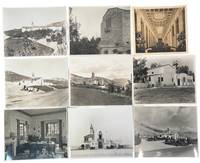
1923ref. 239071923. Southern California community mausoleum photo archive c. 1923 to 1935 documenting when burial was recast as a modern architectural commercial and consumer enterprise. Centered on Cecil E. Bryan Clarence L. Jay Sunnyside Mausoleum in Long Beach and Mountain View Mausoleum in Altadena the photographs show how architecture landscaping publicity and office administration turned the communal mausoleum into a purchasable alternative to the traditional cemetery. Bryan entered the community mausoleum business in 1912 and became one of its principal national advocates ultimately designing more than eighty mausoleums while promoting aboveground entombment as sanitary permanent economical and modern. This archive documents the transition of American burial conventions showing the architecture real estate administration and salesmanship behind the development of California community mausoleums. Photo archive of 31 silver gelatin photographs mostly 7.5 x 9.5 inches though some measure approximately 7.5 x 8.5 inches Southern California c. 1923 to 1935. The photographs show Bryan at his desk; administrative offices lined with card files; architectural perspectives and site plans; a scale model labeled "Sunnyside Memorial Park"; landscaped courts arcades galleries entrances reception rooms and richly furnished interiors. One rendering identifies "Cecil E. Bryan executive vice president" and "Clarence L. Jay architect." Versos carry stamps for Hiller Studio W. Albert Martin Padilla Company Photography and the Mountain View Mausoleum Association as well as "file copy" notations crop marks print numbers and reproduction instructions. The rapid development of community mausoleums was in part due to advent of reinforced concrete construction and an aggressive new business model for death. Builders across the country solicited crypt buyers before construction sometimes tying installment payments directly to completion of the foundation walls roof and finished building; a 1920 Detroit project had sold $160900 in crypt contracts by the end of the following year. In Long Beach Pacific Builders Company operating as the Sunnyside Mausoleum Association commissioned Bryan in 1922 for a $300000 Spanish style complex planned for 1000 crypts and 1000 niches while Architectural Digest later presented Sunnyside in 1929 with Jay as architect Bryan as engineer and Padilla photography. Long Beach Historic Cemeteries The enterprise belonged squarely to 1920s Southern California where speculative development planned landscapes Spanish revival architecture professional advertising and rapid metropolitan growth were reshaping ordinary life; here the same machinery was applied to death packaging permanence beauty sanitation and status as something a family could purchase. Light surface wear handling marks occasional curling and contemporary working annotations. Overall in very good condition. unknown books
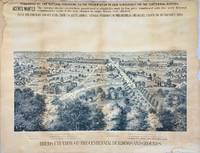
1876ref. 57711Philadelphia PA: National Publishing Co. 1876. One oblong atlas folio hand-coloured lithograph sized 26 x 20.5 in. still retaining fairly wide borders printing above & below centered image w/ hand-coloured border some minor toning & aging from original backing minor tidemark to upper left corner edgewear slight tears very minor predation scuffing to blank right margin still a nice strong image retaining some of the original colouring. First edition variant issue of this scarce birds-eye view of the buildings and sites at the first World’s Fair in the United States celebrating the Centennial. This depicts the trees grass shrubs pedestrians horse-drawn carriages and walking paths with labels below for the Horticultural Hall Main Exhibition Building Memorial Hall Agricultural Hall Ladies Pavilion Machinery Hall and others. These beautiful birds-eye views were presented to subscribers of the “Centennial History” by sales agents who were also sent extra circulars and liberal commissions as indicated in the margins. These were apparently issued in different sizes and formats with the Huntington hand-coloured copy containing all the text including the imprint at the lower fore-edge and both the Huntington and American Antiquarian Society copies have smaller margins. Bourquin 1808-1897 was a Swiss-American pioneering Philadelphia lithographer who specialized in county maps and atlases but also was known for his innovative lithography and by 1876 maintained between 6 and 20 skilled lithographers to produce portraits and prints. National Publishing Co., unknown
1780ref. 27937London: Robert Wilkinson 1780. First printing. Print. Very good condition. A vue optique view from a very high vantage point over Venice with period hand color featuring "eggshell" blue in the sky. Image 11 x 16" on paper 13 3/4 x 19". One small fox spot and the blue sky oxidized in one corner. Robert Wilkinson unknown
1923ref. 239071923. Southern California community mausoleum photo archive c. 1923 to 1935 documenting when burial was recast as a modern architectural commercial and consumer enterprise. Centered on Cecil E. Bryan Clarence L. Jay Sunnyside Mausoleum in Long Beach and Mountain View Mausoleum in Altadena the photographs show how architecture landscaping publicity and office administration turned the communal mausoleum into a purchasable alternative to the traditional cemetery. Bryan entered the community mausoleum business in 1912 and became one of its principal national advocates ultimately designing more than eighty mausoleums while promoting aboveground entombment as sanitary permanent economical and modern. This archive documents the transition of American burial conventions showing the architecture real estate administration and salesmanship behind the development of California community mausoleums. Photo archive of 31 silver gelatin photographs mostly 7.5 x 9.5 inches though some measure approximately 7.5 x 8.5 inches Southern California c. 1923 to 1935. The photographs show Bryan at his desk; administrative offices lined with card files; architectural perspectives and site plans; a scale model labeled "Sunnyside Memorial Park"; landscaped courts arcades galleries entrances reception rooms and richly furnished interiors. One rendering identifies "Cecil E. Bryan executive vice president" and "Clarence L. Jay architect." Versos carry stamps for Hiller Studio W. Albert Martin Padilla Company Photography and the Mountain View Mausoleum Association as well as "file copy" notations crop marks print numbers and reproduction instructions. The rapid development of community mausoleums was in part due to advent of reinforced concrete construction and an aggressive new business model for death. Builders across the country solicited crypt buyers before construction sometimes tying installment payments directly to completion of the foundation walls roof and finished building; a 1920 Detroit project had sold $160900 in crypt contracts by the end of the following year. In Long Beach Pacific Builders Company operating as the Sunnyside Mausoleum Association commissioned Bryan in 1922 for a $300000 Spanish style complex planned for 1000 crypts and 1000 niches while Architectural Digest later presented Sunnyside in 1929 with Jay as architect Bryan as engineer and Padilla photography. Long Beach Historic Cemeteries The enterprise belonged squarely to 1920s Southern California where speculative development planned landscapes Spanish revival architecture professional advertising and rapid metropolitan growth were reshaping ordinary life; here the same machinery was applied to death packaging permanence beauty sanitation and status as something a family could purchase. Light surface wear handling marks occasional curling and contemporary working annotations. Overall in very good condition. unknown
1900ref. 20809Genève, Ch. Eggimann, [vers 1900]. Grand in-4 de [4]-172 pages, premier plat de couverture conservé, cartonnage vert d'éditeur illustré, dos de percaline muet.
19998vo., First Edition, with 65 coloured plates on 24, 22 monochrome plates on 8, several maps (a number full-page) in the text, and endpaper maps; grey cloth, gilt back, a fine copy in unclipped dustwrapper. SIGNED BY THE AUTHOR ON TITLE.
ref. DADAX0781780004New unknown
ref. 015-03-00561VISTA HIGHER LEARNING. paperback. Very Good. 11x8x0. Pages Unused! Book Leaves in 1 Business Day or Less! Leaves Same Day if Received by 2 pm EST! Cover has shelf wear. Contents Unused. Very Good. VISTA HIGHER LEARNING paperback
1920ref. 169341920. California Bay View Hospital photograph album circa 1920s documenting hospital-based nursing labor clinical environments and domestic social networks within an early twentieth-century medical setting. The album provides visual evidence of women's professional roles in institutional healthcare during a period of expanding nursing formalization while also capturing physician authority patient care practices and the integration of therapeutic design principles such as open-air treatment. The material supports research into gendered medical labor hospital culture and evolving standards of care in the interwar United States particularly through its combined focus on clinical social and environmental aspects of institutional medicine. Photograph album containing 63 original silver gelatin prints many with handwritten captions identifying individuals as "mother" "Ed" or "our gang" alongside named medical personnel including "Drs. Sowers and Orr and Miss Duffy" "Dr. Burns" and "Mrs. Rehak." A building identified in one image as "Bay View Hospital" provides the only direct institutional reference. Sixteen photographs depict women in nurses' uniforms often posed in groups outdoors or on hospital terraces where rows of empty patient beds are visible behind them indicating the use of open-air treatment spaces. Additional images show physicians in clinical contexts including a group of five men dressed in surgical attire with caps and masks lowered around their necks suggesting an operating team between procedures. One image labeled "Dr. Burns Walter" depicts a young child bathing in a shallow tub under the supervision of an adult male likely documenting pediatric care practices. The album also includes informal photographs of family members children and pets in rural or outdoor settings indicating overlap between professional and personal social worlds. The Album has 63 photographs mounted across 100 pages with approximately 70 pages left blank; images measuring approximately 2.75 x 3.5 inches; original black cloth boards; album measuring 7.25 x 11.5 inches. Early twentieth-century hospital design emphasized fresh air as a therapeutic necessity particularly in the treatment of tuberculosis and other chronic illnesses and the repeated presence of outdoor patient beds and staff gatherings reflects these prevailing medical theories in practice. The juxtaposition of clinical and domestic imagery situates nursing staff within both institutional hierarchies and broader social networks offering insight into the lived experience of women working in healthcare during this period. First four pages detached minor wear to boards photographs generally well-preserved with occasional light fading; overall good to very good condition. A cohesive and well-captioned visual record of early twentieth-century hospital life with particular relevance to the history of nursing and medical practice. unknown books
1814ref. 17400Paris, Chez A. Eymery, chez Tardieu [et divers autres], 1814-1815. Deux ouvrages en un volume in-8 de 112-87 pages, demi-basane camel à coins, dos lisses, pièce de titre en maroquin miel, supra-libros en queue: Paul Grand.
1870ref. 9858Genève, Braun & Cie, [1870]. In-folio, 13 planches sous chemise cartonnée illustrée d'éditeur avec dos de toile rouge muet, lacets. Rousseurs, quelques petits accrocs en bord de certaines planches.
ref. 1023.1aafs.d., 1838, feuille 47.5x40 cm, Lithographie orignale, 1 feuille passepartout 50x70 cm.
1920ref. 169341920. California Bay View Hospital photograph album circa 1920s documenting hospital-based nursing labor clinical environments and domestic social networks within an early twentieth-century medical setting. The album provides visual evidence of women's professional roles in institutional healthcare during a period of expanding nursing formalization while also capturing physician authority patient care practices and the integration of therapeutic design principles such as open-air treatment. The material supports research into gendered medical labor hospital culture and evolving standards of care in the interwar United States particularly through its combined focus on clinical social and environmental aspects of institutional medicine. Photograph album containing 63 original silver gelatin prints many with handwritten captions identifying individuals as "mother" "Ed" or "our gang" alongside named medical personnel including "Drs. Sowers and Orr and Miss Duffy" "Dr. Burns" and "Mrs. Rehak." A building identified in one image as "Bay View Hospital" provides the only direct institutional reference. Sixteen photographs depict women in nurses' uniforms often posed in groups outdoors or on hospital terraces where rows of empty patient beds are visible behind them indicating the use of open-air treatment spaces. Additional images show physicians in clinical contexts including a group of five men dressed in surgical attire with caps and masks lowered around their necks suggesting an operating team between procedures. One image labeled "Dr. Burns Walter" depicts a young child bathing in a shallow tub under the supervision of an adult male likely documenting pediatric care practices. The album also includes informal photographs of family members children and pets in rural or outdoor settings indicating overlap between professional and personal social worlds. The Album has 63 photographs mounted across 100 pages with approximately 70 pages left blank; images measuring approximately 2.75 x 3.5 inches; original black cloth boards; album measuring 7.25 x 11.5 inches. Early twentieth-century hospital design emphasized fresh air as a therapeutic necessity particularly in the treatment of tuberculosis and other chronic illnesses and the repeated presence of outdoor patient beds and staff gatherings reflects these prevailing medical theories in practice. The juxtaposition of clinical and domestic imagery situates nursing staff within both institutional hierarchies and broader social networks offering insight into the lived experience of women working in healthcare during this period. First four pages detached minor wear to boards photographs generally well-preserved with occasional light fading; overall good to very good condition. A cohesive and well-captioned visual record of early twentieth-century hospital life with particular relevance to the history of nursing and medical practice. unknown
ref. DADAX4770018487New unknown