ref. 028284919X.Gpaperback. Good. Access codes and supplements are not guaranteed with used items. May be an ex-library book. paperback
1960pp. xvii, 286. 8vo. Paperback. First published 1922. Coldwar/Economics 7
1836ref. PHO-906Londres, Georges Virtue, 1836. Deux volumes in-4 (270x200mm), VI +2ff (table), 192 pp., 58 pl.; 2 ff., 136 pp., 50 pl., 1 carte dépliante, demi-veau époque , dos lisse orné , coiffes frottés , peu de rousseurs .Première édition française illustré de 108 planches originales de villes , montagnes , paysages , etc de Suisse.
2008New English Paperback. Pbo. Roy. 8vo. (24 x 17 cm). In Turkish. 135 p., color and b/w ills. Osmanli misafirperverligi ve Avrupa'daki yankilari. Ottoman / Turkish hospitality from European views.
ref. A9781343925670Hardback. New. hardcover
ref. mon0000179105Bay View Library Board. saddle_stitch. Good. in x in x in. staple bound softcover. average age wear. cover has small stain mark clean text. good binding Bay View Library Board unknown
1920ref. 169341920. California Bay View Hospital photograph album circa 1920s documenting hospital-based nursing labor clinical environments and domestic social networks within an early twentieth-century medical setting. The album provides visual evidence of women's professional roles in institutional healthcare during a period of expanding nursing formalization while also capturing physician authority patient care practices and the integration of therapeutic design principles such as open-air treatment. The material supports research into gendered medical labor hospital culture and evolving standards of care in the interwar United States particularly through its combined focus on clinical social and environmental aspects of institutional medicine. Photograph album containing 63 original silver gelatin prints many with handwritten captions identifying individuals as "mother" "Ed" or "our gang" alongside named medical personnel including "Drs. Sowers and Orr and Miss Duffy" "Dr. Burns" and "Mrs. Rehak." A building identified in one image as "Bay View Hospital" provides the only direct institutional reference. Sixteen photographs depict women in nurses' uniforms often posed in groups outdoors or on hospital terraces where rows of empty patient beds are visible behind them indicating the use of open-air treatment spaces. Additional images show physicians in clinical contexts including a group of five men dressed in surgical attire with caps and masks lowered around their necks suggesting an operating team between procedures. One image labeled "Dr. Burns Walter" depicts a young child bathing in a shallow tub under the supervision of an adult male likely documenting pediatric care practices. The album also includes informal photographs of family members children and pets in rural or outdoor settings indicating overlap between professional and personal social worlds. The Album has 63 photographs mounted across 100 pages with approximately 70 pages left blank; images measuring approximately 2.75 x 3.5 inches; original black cloth boards; album measuring 7.25 x 11.5 inches. Early twentieth-century hospital design emphasized fresh air as a therapeutic necessity particularly in the treatment of tuberculosis and other chronic illnesses and the repeated presence of outdoor patient beds and staff gatherings reflects these prevailing medical theories in practice. The juxtaposition of clinical and domestic imagery situates nursing staff within both institutional hierarchies and broader social networks offering insight into the lived experience of women working in healthcare during this period. First four pages detached minor wear to boards photographs generally well-preserved with occasional light fading; overall good to very good condition. A cohesive and well-captioned visual record of early twentieth-century hospital life with particular relevance to the history of nursing and medical practice. unknown books
1920ref. 169341920. California Bay View Hospital photograph album circa 1920s documenting hospital-based nursing labor clinical environments and domestic social networks within an early twentieth-century medical setting. The album provides visual evidence of women's professional roles in institutional healthcare during a period of expanding nursing formalization while also capturing physician authority patient care practices and the integration of therapeutic design principles such as open-air treatment. The material supports research into gendered medical labor hospital culture and evolving standards of care in the interwar United States particularly through its combined focus on clinical social and environmental aspects of institutional medicine. Photograph album containing 63 original silver gelatin prints many with handwritten captions identifying individuals as "mother" "Ed" or "our gang" alongside named medical personnel including "Drs. Sowers and Orr and Miss Duffy" "Dr. Burns" and "Mrs. Rehak." A building identified in one image as "Bay View Hospital" provides the only direct institutional reference. Sixteen photographs depict women in nurses' uniforms often posed in groups outdoors or on hospital terraces where rows of empty patient beds are visible behind them indicating the use of open-air treatment spaces. Additional images show physicians in clinical contexts including a group of five men dressed in surgical attire with caps and masks lowered around their necks suggesting an operating team between procedures. One image labeled "Dr. Burns Walter" depicts a young child bathing in a shallow tub under the supervision of an adult male likely documenting pediatric care practices. The album also includes informal photographs of family members children and pets in rural or outdoor settings indicating overlap between professional and personal social worlds. The Album has 63 photographs mounted across 100 pages with approximately 70 pages left blank; images measuring approximately 2.75 x 3.5 inches; original black cloth boards; album measuring 7.25 x 11.5 inches. Early twentieth-century hospital design emphasized fresh air as a therapeutic necessity particularly in the treatment of tuberculosis and other chronic illnesses and the repeated presence of outdoor patient beds and staff gatherings reflects these prevailing medical theories in practice. The juxtaposition of clinical and domestic imagery situates nursing staff within both institutional hierarchies and broader social networks offering insight into the lived experience of women working in healthcare during this period. First four pages detached minor wear to boards photographs generally well-preserved with occasional light fading; overall good to very good condition. A cohesive and well-captioned visual record of early twentieth-century hospital life with particular relevance to the history of nursing and medical practice. unknown
2007Milano, 21° secolo, 2007, 8vo brossura con copertina illustrata a colori, pp. 218 con fig. n.t.
1989Mm 150x210 Brossura editoriale, 145 pagine con una tavola più volte ripiegata in chiusura. Esemplare in ottime condizioni, pari al nuovo. SPEDIZIONE IN 24 ORE DALLA CONFERMA DELL'ORDINE.
2012ril. lusso La rivista "Better eyesight" contiene tutte le scoperte del Dott. Bates e dà semplici istruzioni per l'auto-trattamento con l'aiuto delle quali tante persone sono state capaci di guarire se stesse. Dice il Dott. Bates: "Sulla pagina due di questa rivista vengono stampate ogni mese delle specifiche direttive per migliorare la vista in modi varii. Fin troppi abbonati leggono la rivista una volta e poi la smarriscono. Ci pare che almeno la pagina due debba essere conservata come riferimento". Questo volume contiene la serie completa delle 132 'pagina due' in edizione integrale: "Assicuratevi di rivedere frequentemente la pagina due; non soltanto per il vostro speciale beneficio ma anche per il beneficio degli individui che desiderate aiutare!". Nella seconda parte del volume, pubblichiamo tutte le "domande e risposte" tratte dalla omonima rubrica nella quale il dott. Bates rispondeva direttamente alle problematiche individuali dei singoli suoi pazienti specificando ancora meglio alcune caratteristiche dei suoi metodi di cura della vista imperfetta attraverso riposo e rilassamento.
2020brossura Questo volume è la versione integrale in italiano del libro che il Dott. Bates editò a sue spese nell'ottobre del 1920 per comunicare al più grande pubblico le sue scoperte rivoluzionarie sul riposo mentale per la cura della vista imperfetta senza l'uso di occhiali, lenti, farmaci o operazioni. Nel settembre del 2002, per la prima volta in assoluto, il presente Editore pubblicò la traduzione letterale "fac-simile" reversibile che oggi, 99 anni dopo quella batesiana, giunge alla sua nona edizione 2019, completamente riscritta secondo le nuove regole del prestigioso marchio « mille per mille lingua italiana ».
1989br. Questo libro, che gode da anni di un'enorme fama, è l'unico testo scritto da Bates stesso per esporre il suo celebre sistema di esercizi. Il metodo sviluppato da Bates è semplice: agendo sui muscoli dell'occhio, che sono i veri responsabili degli scompensi visivi, si può far loro riacquistare scioltezza e agilità, innanzitutto con il rilassamento e poi con facili esercizi che possono essere eseguiti da chiunque. Sperimentato su persone di ogni età e con ogni tipo di problema (miopia, ipermetropia, astigmatismo, presbiopia, strabismo, cateratta, e altri ancora), questo metodo ha dato sempre risultati eccellenti in tempi brevi. Chiunque soffra di problemi agli occhi ne trarrà un grandissimo giovamento e potrà riottenere una vista migliore senza dover più ricorrere agli occhiali.
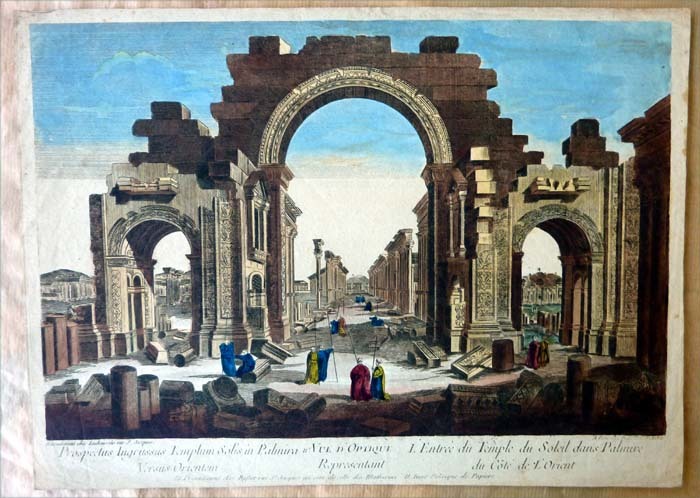
1750Une vue d'optique de dimensions 38,5x28 cm; coloriée à la main. Grandes marges. Quelques rousseurs. Mais bel état pour ce monumenten péril. Voir photo.
1750Une vue d'optique de dimensions 49x32 cm; représentant le siège de Bergopzoom en 1747 (et non 1622); coloris à la main. Mouillure en pied sans gravité; bel état. Voir la photo.
ref. 13576paris Basset; rue Saint Jacques vers 1750 1 Une vue d'optique de dimensions 38,5x28 cm; coloriée à la main. Grandes marges.
ref. 13578paris basset rue Saint Jacques vers 1750 1 Une vue d'optique de dimensions 49x32 cm; représentant le siège de Bergopzoom en 1747 (et non 1622); coloris à la main.
1740ref. boz_001764Vue d'optique, Gravure rehaussée, Vue du Palais du Luxembourg prise du jardin à Paris Vue d'optique du Palais du Luxembourg prise du jardin à Paris, avec titre écrit à l'envers et légende. « Vue du Palais du Luxembourg prise du jardin » Gravure rehaussée à l'aquarelle à la main d'époque. Marges conservées. Chez Basset, à Paris. Dimensions de la feuille : 49,3 x 34,8 cm Dimensions à la cuve : 44 x 31,5 cm État : Voir photos et description pour plus de détails. Apparues vers 1740, ces estampes étaient spécifiquement conçues pour être visionnées à travers un appareil appelé "zograscope" ou une lanterne magique. La perspective : Le dessin accentue volontairement les lignes de fuite pour créer une illusion de profondeur saisissante. L'inversion : Le titre en haut de la gravure est souvent imprimé à l'envers (en miroir) pour apparaître correctement une fois reflété dans le miroir de l'appareil d'optique. L'usage : Véritable ancêtre de la 3D, elles permettaient aux curieux de l'époque de "voyager" immobile à travers l'Europe et le monde.
1780ref. 27695Paris BASSET 1780 une vue d'optique en couleurs, GRAVÉE A L'EAU-FORTE ET AQUARELLÉE SUR PAPIER DE FORMAT: 34,5 x 51 cm., 1780 Paris chez BASSET Editeur,
1770ref. 27703PARIS BASSET 1770 une vue d'optique en couleurs, GRAVÉE A L'EAU-FORTE ET AQUARELLÉE SUR PAPIER DE FORMAT: 30 x 46,5 cm., 1770 PARIS Basset Editeur,
1770ref. 27705PARIS BASSET 1770 une vue d'optique en couleurs, GRAVÉE A L'EAU-FORTE ET AQUARELLÉE SUR PAPIER DE FORMAT: 30 x 46,5 cm., 1770 PARIS basset Editeur,
1750ref. 27712PARIS BASSET 1750 une vue d'optique en couleurs, GRAVÉE A L'EAU-FORTE ET AQUARELLÉE SUR PAPIER DE FORMAT: 33 x 47,5 cm., 1750 Paris BASSET Editeur,
1805ref. 27723PARIS BASSET 1805 une vue d'optique en couleurs, GRAVÉE A L'EAU-FORTE ET AQUARELLE SUR PAPIER DE FORMAT: 43,5 x 27 cm., 1805 PARIS BASSET Editeur,
1830ref. 27724PARIS BASSET 1830 une vue d'optique en couleurs, GRAVÉE A L'EAU-FORTE ET AQUARELLE SUR PAPIER DE FORMAT: 43,5 x 27 cm., 1830 PARIS BASSET Editeur,