Sunnyside and Mountain View MausoleumsBiblio.com
3 697 résultats
1923réf. 239071923. Southern California community mausoleum photo archive c. 1923 to 1935 documenting when burial was recast as a modern architectural commercial and consumer enterprise. Centered on Cecil E. Bryan Clarence L. Jay Sunnyside Mausoleum in Long Beach and Mountain View Mausoleum in Altadena the photographs show how architecture landscaping publicity and office administration turned the communal mausoleum into a purchasable alternative to the traditional cemetery. Bryan entered the community mausoleum business in 1912 and became one of its principal national advocates ultimately designing more than eighty mausoleums while promoting aboveground entombment as sanitary permanent economical and modern. This archive documents the transition of American burial conventions showing the architecture real estate administration and salesmanship behind the development of California community mausoleums. Photo archive of 31 silver gelatin photographs mostly 7.5 x 9.5 inches though some measure approximately 7.5 x 8.5 inches Southern California c. 1923 to 1935. The photographs show Bryan at his desk; administrative offices lined with card files; architectural perspectives and site plans; a scale model labeled "Sunnyside Memorial Park"; landscaped courts arcades galleries entrances reception rooms and richly furnished interiors. One rendering identifies "Cecil E. Bryan executive vice president" and "Clarence L. Jay architect." Versos carry stamps for Hiller Studio W. Albert Martin Padilla Company Photography and the Mountain View Mausoleum Association as well as "file copy" notations crop marks print numbers and reproduction instructions. The rapid development of community mausoleums was in part due to advent of reinforced concrete construction and an aggressive new business model for death. Builders across the country solicited crypt buyers before construction sometimes tying installment payments directly to completion of the foundation walls roof and finished building; a 1920 Detroit project had sold $160900 in crypt contracts by the end of the following year. In Long Beach Pacific Builders Company operating as the Sunnyside Mausoleum Association commissioned Bryan in 1922 for a $300000 Spanish style complex planned for 1000 crypts and 1000 niches while Architectural Digest later presented Sunnyside in 1929 with Jay as architect Bryan as engineer and Padilla photography. Long Beach Historic Cemeteries The enterprise belonged squarely to 1920s Southern California where speculative development planned landscapes Spanish revival architecture professional advertising and rapid metropolitan growth were reshaping ordinary life; here the same machinery was applied to death packaging permanence beauty sanitation and status as something a family could purchase. Light surface wear handling marks occasional curling and contemporary working annotations. Overall in very good condition. unknown
1923réf. 239071923. Southern California community mausoleum photo archive c. 1923 to 1935 documenting when burial was recast as a modern architectural commercial and consumer enterprise. Centered on Cecil E. Bryan Clarence L. Jay Sunnyside Mausoleum in Long Beach and Mountain View Mausoleum in Altadena the photographs show how architecture landscaping publicity and office administration turned the communal mausoleum into a purchasable alternative to the traditional cemetery. Bryan entered the community mausoleum business in 1912 and became one of its principal national advocates ultimately designing more than eighty mausoleums while promoting aboveground entombment as sanitary permanent economical and modern. This archive documents the transition of American burial conventions showing the architecture real estate administration and salesmanship behind the development of California community mausoleums. Photo archive of 31 silver gelatin photographs mostly 7.5 x 9.5 inches though some measure approximately 7.5 x 8.5 inches Southern California c. 1923 to 1935. The photographs show Bryan at his desk; administrative offices lined with card files; architectural perspectives and site plans; a scale model labeled "Sunnyside Memorial Park"; landscaped courts arcades galleries entrances reception rooms and richly furnished interiors. One rendering identifies "Cecil E. Bryan executive vice president" and "Clarence L. Jay architect." Versos carry stamps for Hiller Studio W. Albert Martin Padilla Company Photography and the Mountain View Mausoleum Association as well as "file copy" notations crop marks print numbers and reproduction instructions. The rapid development of community mausoleums was in part due to advent of reinforced concrete construction and an aggressive new business model for death. Builders across the country solicited crypt buyers before construction sometimes tying installment payments directly to completion of the foundation walls roof and finished building; a 1920 Detroit project had sold $160900 in crypt contracts by the end of the following year. In Long Beach Pacific Builders Company operating as the Sunnyside Mausoleum Association commissioned Bryan in 1922 for a $300000 Spanish style complex planned for 1000 crypts and 1000 niches while Architectural Digest later presented Sunnyside in 1929 with Jay as architect Bryan as engineer and Padilla photography. Long Beach Historic Cemeteries The enterprise belonged squarely to 1920s Southern California where speculative development planned landscapes Spanish revival architecture professional advertising and rapid metropolitan growth were reshaping ordinary life; here the same machinery was applied to death packaging permanence beauty sanitation and status as something a family could purchase. Light surface wear handling marks occasional curling and contemporary working annotations. Overall in very good condition. unknown books
1900réf. 20809Genève, Ch. Eggimann, [vers 1900]. Grand in-4 de [4]-172 pages, premier plat de couverture conservé, cartonnage vert d'éditeur illustré, dos de percaline muet.
19998vo., First Edition, with 65 coloured plates on 24, 22 monochrome plates on 8, several maps (a number full-page) in the text, and endpaper maps; grey cloth, gilt back, a fine copy in unclipped dustwrapper. SIGNED BY THE AUTHOR ON TITLE.
réf. DADAX0781780004New unknown
réf. 015-03-00561VISTA HIGHER LEARNING. paperback. Very Good. 11x8x0. Pages Unused! Book Leaves in 1 Business Day or Less! Leaves Same Day if Received by 2 pm EST! Cover has shelf wear. Contents Unused. Very Good. VISTA HIGHER LEARNING paperback
1920réf. 169341920. California Bay View Hospital photograph album circa 1920s documenting hospital-based nursing labor clinical environments and domestic social networks within an early twentieth-century medical setting. The album provides visual evidence of women's professional roles in institutional healthcare during a period of expanding nursing formalization while also capturing physician authority patient care practices and the integration of therapeutic design principles such as open-air treatment. The material supports research into gendered medical labor hospital culture and evolving standards of care in the interwar United States particularly through its combined focus on clinical social and environmental aspects of institutional medicine. Photograph album containing 63 original silver gelatin prints many with handwritten captions identifying individuals as "mother" "Ed" or "our gang" alongside named medical personnel including "Drs. Sowers and Orr and Miss Duffy" "Dr. Burns" and "Mrs. Rehak." A building identified in one image as "Bay View Hospital" provides the only direct institutional reference. Sixteen photographs depict women in nurses' uniforms often posed in groups outdoors or on hospital terraces where rows of empty patient beds are visible behind them indicating the use of open-air treatment spaces. Additional images show physicians in clinical contexts including a group of five men dressed in surgical attire with caps and masks lowered around their necks suggesting an operating team between procedures. One image labeled "Dr. Burns Walter" depicts a young child bathing in a shallow tub under the supervision of an adult male likely documenting pediatric care practices. The album also includes informal photographs of family members children and pets in rural or outdoor settings indicating overlap between professional and personal social worlds. The Album has 63 photographs mounted across 100 pages with approximately 70 pages left blank; images measuring approximately 2.75 x 3.5 inches; original black cloth boards; album measuring 7.25 x 11.5 inches. Early twentieth-century hospital design emphasized fresh air as a therapeutic necessity particularly in the treatment of tuberculosis and other chronic illnesses and the repeated presence of outdoor patient beds and staff gatherings reflects these prevailing medical theories in practice. The juxtaposition of clinical and domestic imagery situates nursing staff within both institutional hierarchies and broader social networks offering insight into the lived experience of women working in healthcare during this period. First four pages detached minor wear to boards photographs generally well-preserved with occasional light fading; overall good to very good condition. A cohesive and well-captioned visual record of early twentieth-century hospital life with particular relevance to the history of nursing and medical practice. unknown
1920réf. 169341920. California Bay View Hospital photograph album circa 1920s documenting hospital-based nursing labor clinical environments and domestic social networks within an early twentieth-century medical setting. The album provides visual evidence of women's professional roles in institutional healthcare during a period of expanding nursing formalization while also capturing physician authority patient care practices and the integration of therapeutic design principles such as open-air treatment. The material supports research into gendered medical labor hospital culture and evolving standards of care in the interwar United States particularly through its combined focus on clinical social and environmental aspects of institutional medicine. Photograph album containing 63 original silver gelatin prints many with handwritten captions identifying individuals as "mother" "Ed" or "our gang" alongside named medical personnel including "Drs. Sowers and Orr and Miss Duffy" "Dr. Burns" and "Mrs. Rehak." A building identified in one image as "Bay View Hospital" provides the only direct institutional reference. Sixteen photographs depict women in nurses' uniforms often posed in groups outdoors or on hospital terraces where rows of empty patient beds are visible behind them indicating the use of open-air treatment spaces. Additional images show physicians in clinical contexts including a group of five men dressed in surgical attire with caps and masks lowered around their necks suggesting an operating team between procedures. One image labeled "Dr. Burns Walter" depicts a young child bathing in a shallow tub under the supervision of an adult male likely documenting pediatric care practices. The album also includes informal photographs of family members children and pets in rural or outdoor settings indicating overlap between professional and personal social worlds. The Album has 63 photographs mounted across 100 pages with approximately 70 pages left blank; images measuring approximately 2.75 x 3.5 inches; original black cloth boards; album measuring 7.25 x 11.5 inches. Early twentieth-century hospital design emphasized fresh air as a therapeutic necessity particularly in the treatment of tuberculosis and other chronic illnesses and the repeated presence of outdoor patient beds and staff gatherings reflects these prevailing medical theories in practice. The juxtaposition of clinical and domestic imagery situates nursing staff within both institutional hierarchies and broader social networks offering insight into the lived experience of women working in healthcare during this period. First four pages detached minor wear to boards photographs generally well-preserved with occasional light fading; overall good to very good condition. A cohesive and well-captioned visual record of early twentieth-century hospital life with particular relevance to the history of nursing and medical practice. unknown books
1814réf. 17400Paris, Chez A. Eymery, chez Tardieu [et divers autres], 1814-1815. Deux ouvrages en un volume in-8 de 112-87 pages, demi-basane camel à coins, dos lisses, pièce de titre en maroquin miel, supra-libros en queue: Paul Grand.
1870réf. 9858Genève, Braun & Cie, [1870]. In-folio, 13 planches sous chemise cartonnée illustrée d'éditeur avec dos de toile rouge muet, lacets. Rousseurs, quelques petits accrocs en bord de certaines planches.
réf. 1023.1aafs.d., 1838, feuille 47.5x40 cm, Lithographie orignale, 1 feuille passepartout 50x70 cm.
réf. DADAX4770018487New unknown
1892réf. RF 604View Albums of Chicago. Columbus Ohio. Published by Ward Brothers. 1892/1893. 3 vols; oblong 8vo with photogravure plates 88 views; original decorated dark green gilt block title on the upper cover. A FINE SERIES OF 3 ALBUMS CONTAINING CHICAGO VIEWS. Reproduced from original photographs from J.W. Taylor's American Photographic Series Chicago Illinois. Title page. Some of the views relate to the World's Columbian Exposition of 1893 including a bird's-eye view. RF 604. Published by Ward Brothers. hardcover
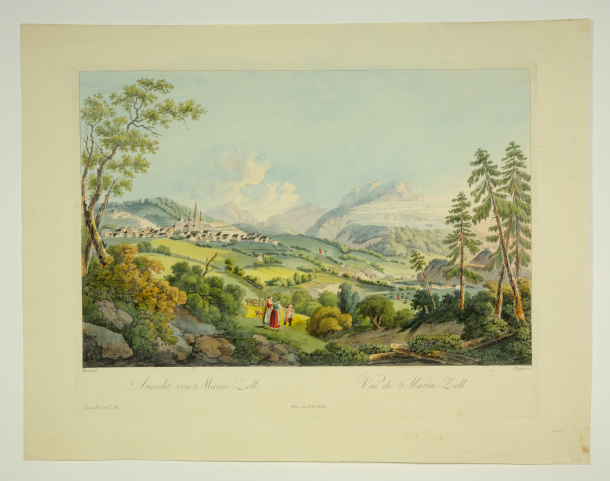
1810réf. 56005Wien, F. X. Stöckl, o. J. (um 1810; event. späterer Abzug). Kolor. Umrißradierung von Johann Ziegler nach Friedrich Ferdinand Runk (Blattgröße ca. 39,5 x 51 cm, Ansicht 26,7 x 40,5 cm).
1925réf. 24818nantes 1925 un pastel Original en couleurs (technique pastels en couleurs et fusain), format : 32 x 24 cm, signé en bas à droite au crayon de bois : "René Levrel", pret à etre encadré avec une marie-louise crème bizeautée de format : 46 x 37,5 cm, non daté mais 1925 environ,
1770réf. 3428Amsterdam 1770. Engraved view 21.5 x 36 cm with caption below the image. Nice bird's-eye view of Paramaribo and Fort Zelandia Surinam with several ships in the harbour. The view was published in Hartsinck's important Beschryving van Guiana of the Wilde Kust van Zuid-America Amsterdam 1770. With a manuscript note on Paramaribo on the back copied from De Aardbol. Magazijn van hedendaagsche land- en volkendekunde IX 1854 pp. 656-658.Some soiling and waterstaining. A good copy.l JCB Archive of Early American Images 34362; Klooster The Dutch in the Americas pl. 6.5; V. d. Krogt Advertenties 1292. unknown
1994réf. 245711994 Série de six "Contes Aromatiques", suivi de un "Conte du Temps Présent" et de "Le Conte de Noël", Vue sur la Ville, 1994-1996-1997, 8 volumes in-8 oblong (13 x 18 cm), reliés par deux agrafes, couvertures sur papier mat illustrées d'une vignette.
réf. 107604A Paris, Chez l'Auteur, tour l' l'Horloge du Palais, N°1, vis-vis du Marché aux Fleurs, 1815, 1 volume de 210x125 mm environ, cartonnage beige, titres dorés sur dos lisse. Contient 15 planches, certaines dépliantes. Mouillures dans la marge supérieure, quelques rousseurs, cartonnage frotté avec manque sur le haut du dos, mors externes en partie fendus mais structure solide, sinon bon état.
1848réf. 23705(1848) Format 285 x 435 mm, avec marges 550 x 400 mm.
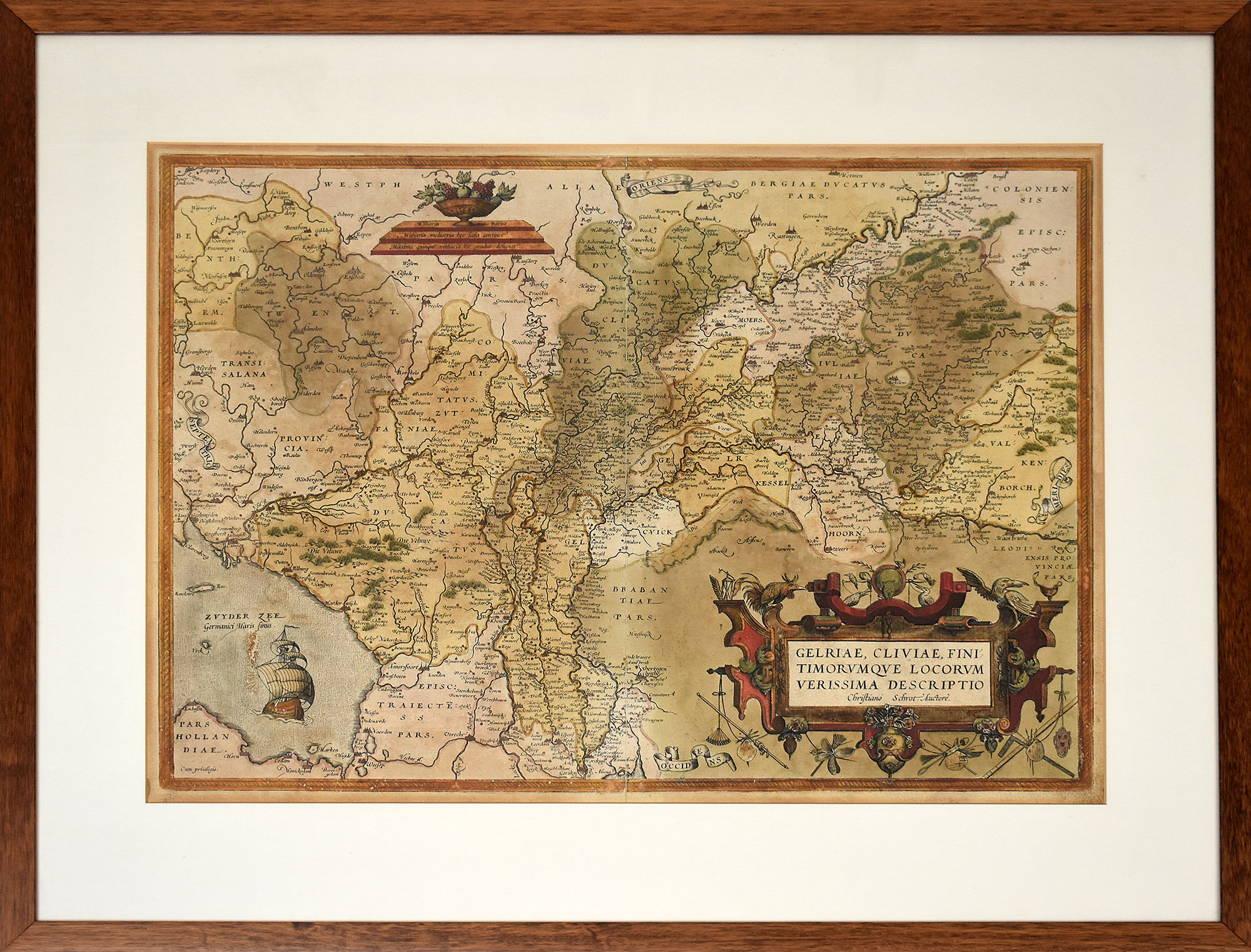
réf. 61861BBo.J. [3 Warenabbildungen] (Christian Sgrothen, auch Scrooten, s?Grootens, ?s Grootens, Grooten, Schrot, geboren um 1525 in Sonsbeck, gestorben am
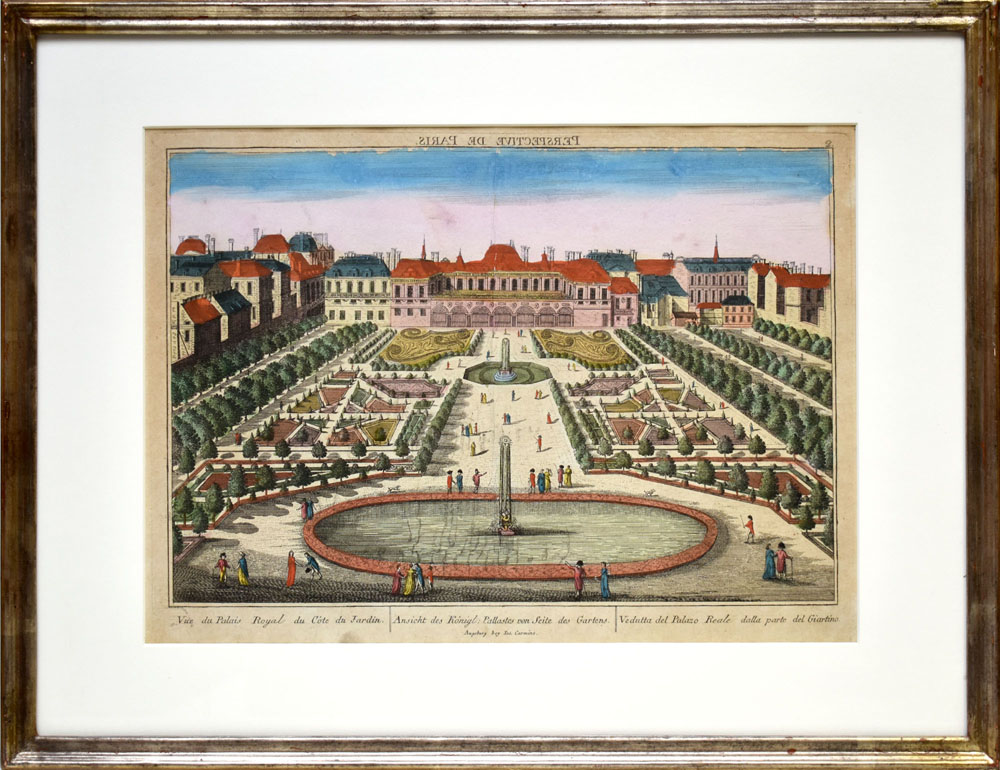
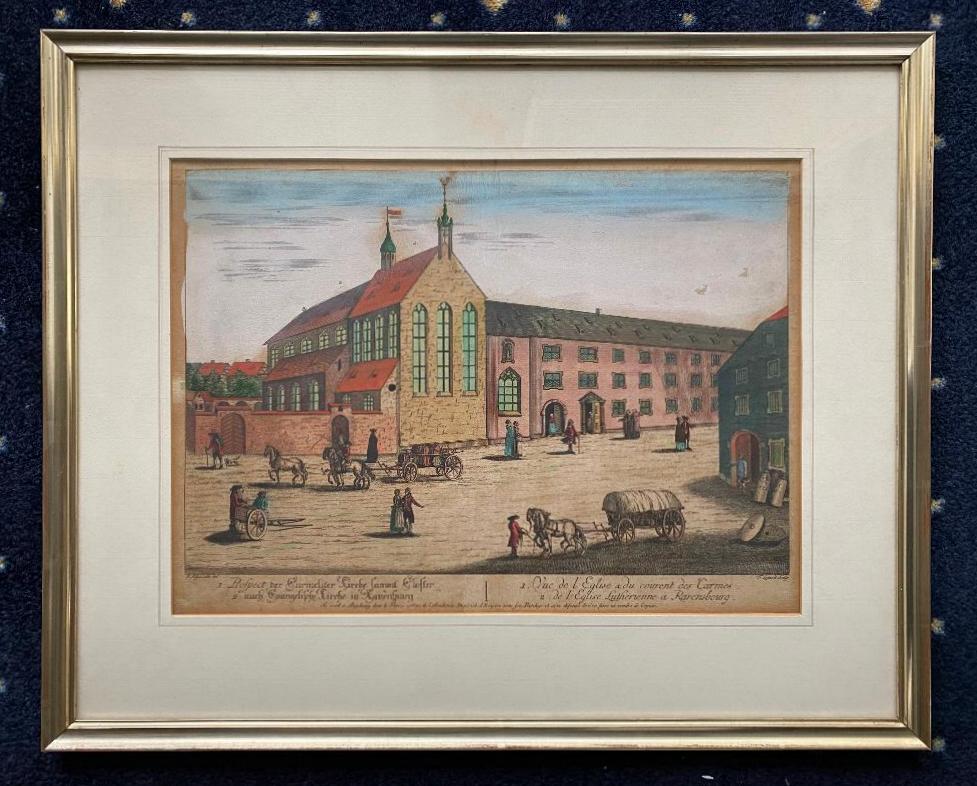
1780réf. 1000388AGAugsburg, Akademie Imperiale d'Empire, (1780). Kupferstich altkoloriert von F. Leizelt nach J. A. Gmeinder, Ansicht 27 x 40 cm, in Goldleiste unter Glas gerahmt 47 x 58 cm, [Schefold, Württemberg; 6262 mit Abb. 231].- Blatt ausserhalb der Darstellung gebräunt, oberer spiegelverkehrter Titel unter Passepartout, schönes dekoratives Blatt,
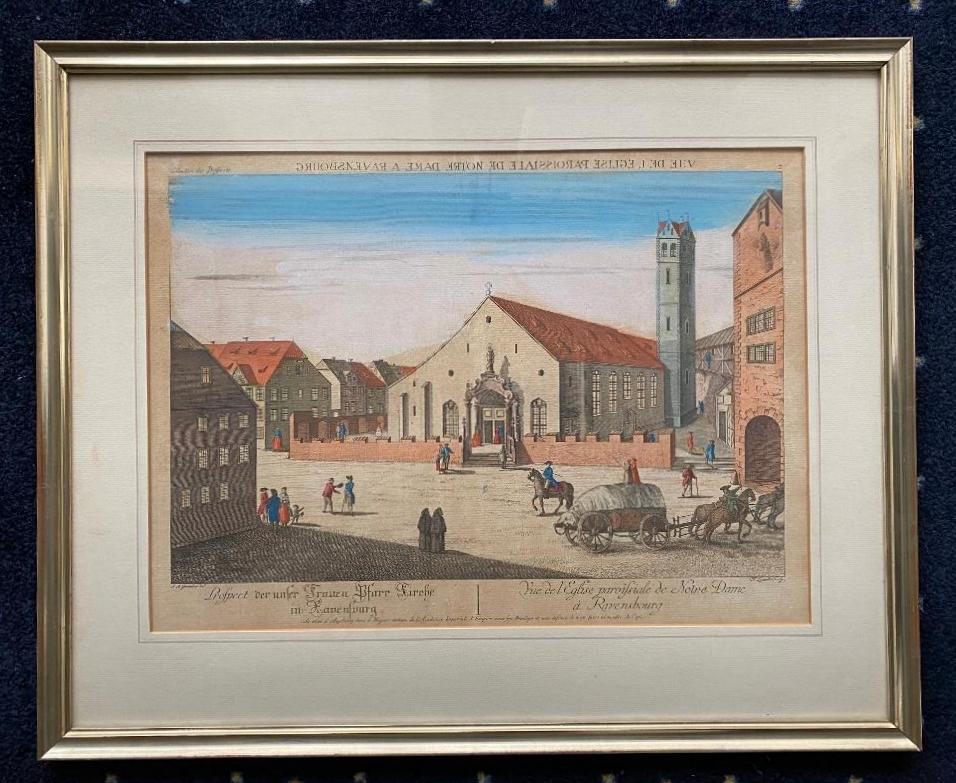
1780réf. 1000390AGAugsburg, Akademie Imperiale d'Empire, (1780). Kupferstich altkoloriert von Balthasar Frederic Leizelt nach J. A. Gmeinder, Ansicht 28 x 41 cm, in Goldleiste unter Glas gerahmt 47 x 58 cm, [Schefold, Württemberg; 6261].- Blatt etwas gebräunt, schönes dekoratives Blatt, Rahmen an der oberen Kante mit kleiner Bestossung,
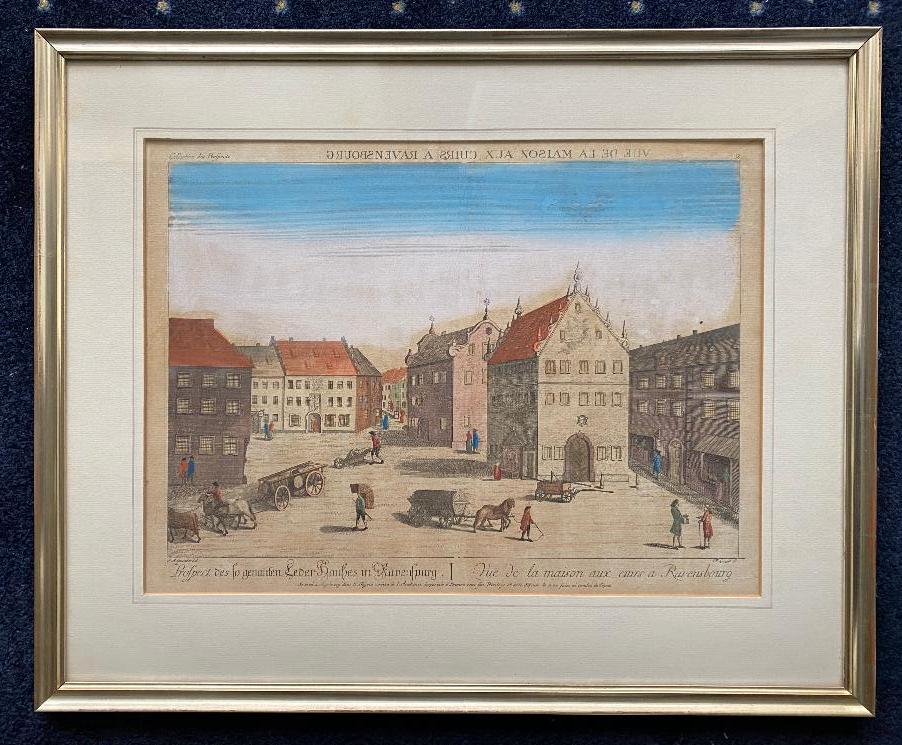
1780réf. 1000389AGAugsburg, Akademie Imperiale d'Empire, (1780). Kupferstich altkoloriert von Balthasar Frederic Leizelt nach J. A. Gmeinder, Ansicht 28 x 40 cm, in Goldleiste unter Glas gerahmt 47 x 58 cm, [Schefold, Württemberg; 6265 mit Abb. 229].- Blatt etwas gebräunt, schönes dekoratives Blatt,
1836réf. 21567London, Henry G. Bohn, 1836 ; in-4°, demi-veau grenat, dos lisse, titre doré dans un encadrement décoratif, plats de percaline verte avec pièce de titre grenat titre en lettres majuscules droites dans un encadrement décoratif (reliure de l'éditeur avec le prix "four guineas") ; titre-frontispice lithographié, [14] pp. ; 96 planches lithographiées représentant 20 dessins divisés en Plan, Elévation de face, élévation d'un côté, vue perspective, etc., séparés par 20 feuillets de texte.