ZINGG Adrian.Livre Rare Book

3 136 résultats
réf. 8590Eau-forte originale en couleurs, du XVIIIème siècle. Format 252x212mm à la cuvette,et 330x290mm avec marges. Th. VIVARES graveur.Une déchirure,réparée,en marge inférieure. Peintre né à Saint-Gall 1734 Mort à Leipzig 1816. Ecole Suisse
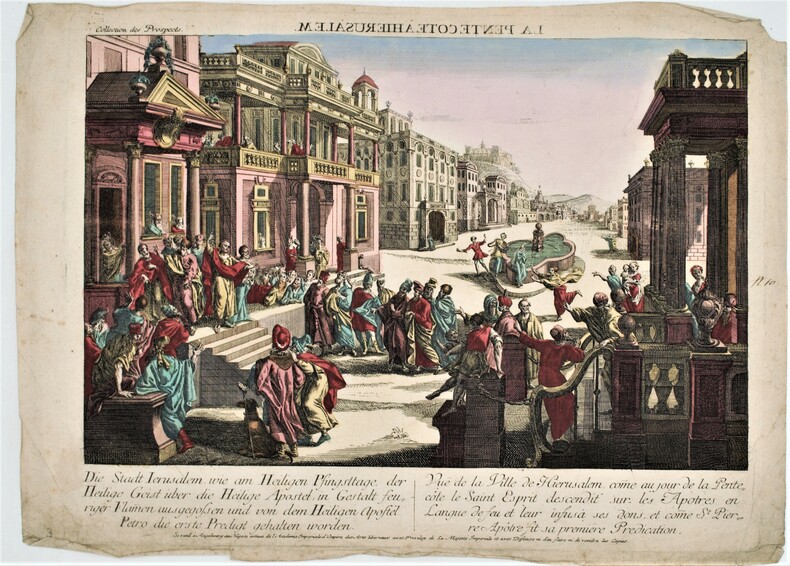
réf. PHO-1302Augsbourg , Académie Impériale des Arts Libéreaux au Négoce commun de l'Académie Impériale d'Empire des Arts Libereaux ,dimension feuille 485x360 et impression 440x315 , verso blanc ,titre en miroir dans la marge supérieure : La Pentecôte a Hierusalem , manque de papier sans atteinte en haut.
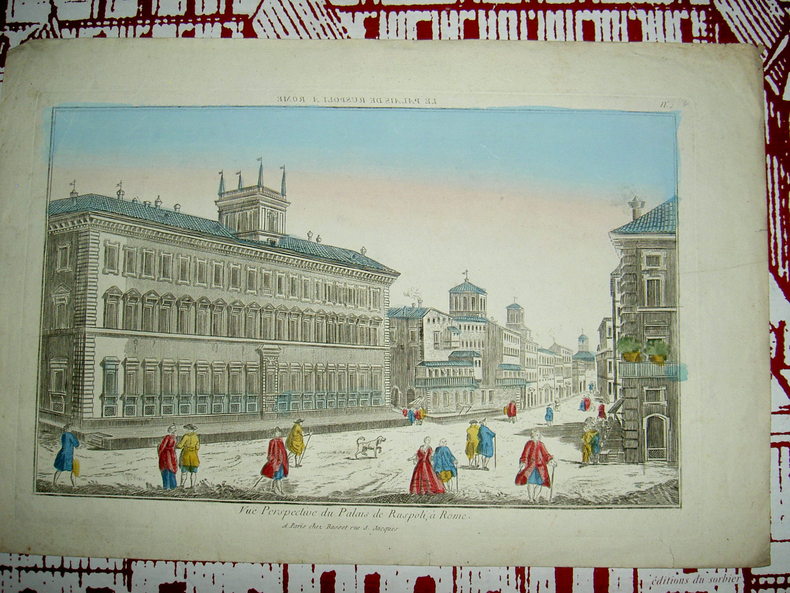
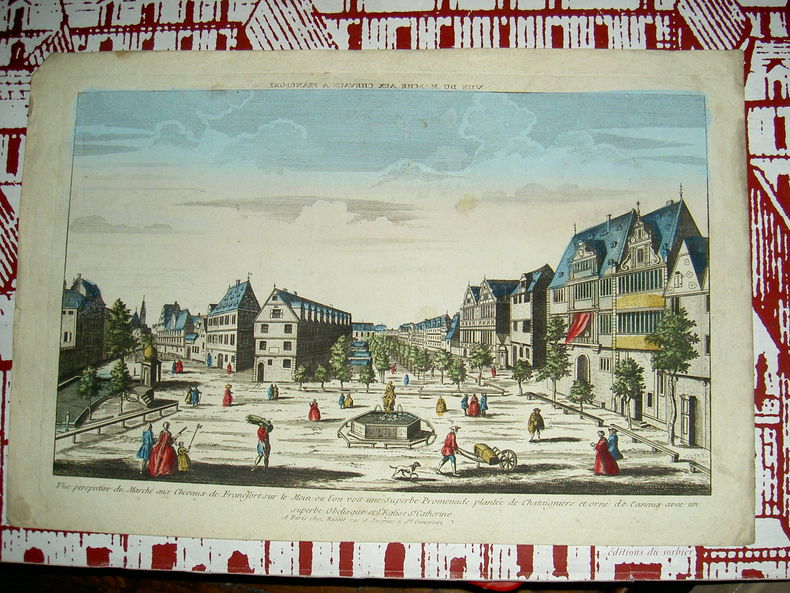
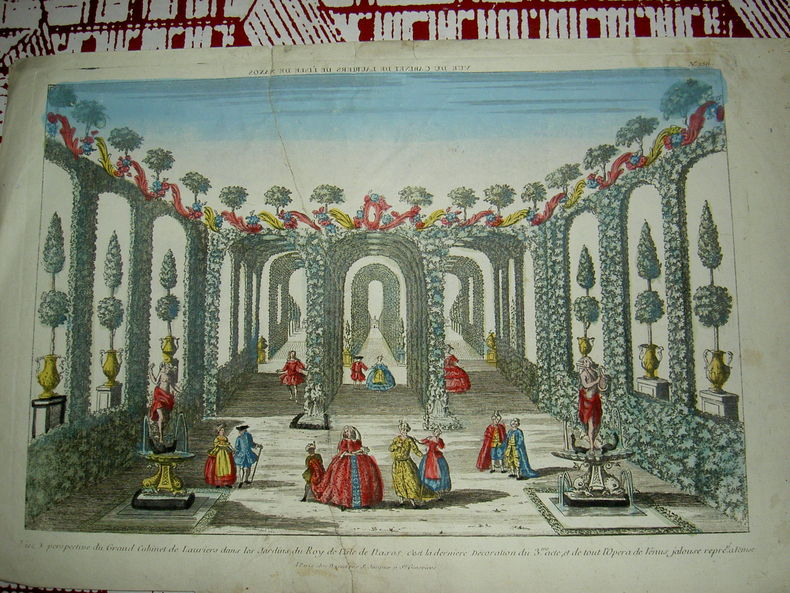
réf. 52919Paris: Daumont. c.1760. Overall sheet size 35.5 x 48cm. Plate mark 33 x 43.5cm. Original hand-coloured engraving. Light stain to right edge and slight brown mark to bottom left corner though not affecting the image. Vues d'optiques or perspective view prints were a fashionable entertainment in the elite drawing rooms of the eighteenth century and also a popular street entertainment at fairs and markets. Publishing houses in London Paris Augsburg and Bassano competed in their production. In total about 5000 vues d'optiques were produced. Paris: Daumont. [c.1760] unknown
1770réf. 15059Paris: Chez Daumont rue St. Martin 1770. Engraving with beautiful early colour. Printed on watermarked laid paper. In excellent condition with the exception of being trimmed within the platemark on the lower margin. Small tear on upper margin. Small puncture mark on left margin. Image size: 10 1/8 x 16 1/8 inches. This is a beautiful perspective view of the courtyard of the Royal Stock Exchange in London published by a Parisian printseller at the close of the eighteenth century. During the eighteenth century "vues d'optique" or "perspective views" became extremely popular in England and Europe. Like other optical prints they capitalized on a connoisseur market eager for the latest novelty. English publishers such as John Bowles and Robert Sayer had great success with these optical views which quickly developed into a collecting craze that swept through print shops on both sides of the Channel. "Vues d'optiques" were specifically designed to create the illusion of perspective when viewed with a zograscope or perspective glass. These viewing devices used a series of reflecting mirrors to enhance the illusion of depth in the print creating a veritable "view" for the onlooker. Typically these prints depicted city or landscape views and were horizontal in format. They had roughly the same dimensions and were sold with heavy opaque colouring so as to show the tints when viewed through the lens. In their heyday optical prints were a technical revolution; they could be seen in almost every fashionable drawing room and were enjoyed by the poorer classes in print shops or at traveling fairs. For a small fee the citizens of Europe and England could travel the world without leaving their village. The "vue d'optique" was the first medium to bring the visible appearance of the wider world to a large European public. Ironically the artists and engravers who created these prints rarely had first hand knowledge of the scenes depicted hence the views were often not as accurate as they were advertised to be. As a result of their constant handling optical prints such as these are rare especially in good condition. They are not only beautiful images but a fascinating glimpse into the history of printmaking. Clayton The English Print 1688-1802 140-141. Chez Daumont rue St. Martin unknown
1770réf. 15059Paris: Chez Daumont rue St. Martin 1770. Engraving with beautiful early colour. Printed on watermarked laid paper. In excellent condition with the exception of being trimmed within the platemark on the lower margin. Small tear on upper margin. Small puncture mark on left margin. Image size: 10 1/8 x 16 1/8 inches. This is a beautiful perspective view of the courtyard of the Royal Stock Exchange in London published by a Parisian printseller at the close of the eighteenth century. During the eighteenth century "vues d'optique" or "perspective views" became extremely popular in England and Europe. Like other optical prints they capitalized on a connoisseur market eager for the latest novelty. English publishers such as John Bowles and Robert Sayer had great success with these optical views which quickly developed into a collecting craze that swept through print shops on both sides of the Channel. "Vues d'optiques" were specifically designed to create the illusion of perspective when viewed with a zograscope or perspective glass. These viewing devices used a series of reflecting mirrors to enhance the illusion of depth in the print creating a veritable "view" for the onlooker. Typically these prints depicted city or landscape views and were horizontal in format. They had roughly the same dimensions and were sold with heavy opaque colouring so as to show the tints when viewed through the lens. In their heyday optical prints were a technical revolution; they could be seen in almost every fashionable drawing room and were enjoyed by the poorer classes in print shops or at traveling fairs. For a small fee the citizens of Europe and England could travel the world without leaving their village. The "vue d'optique" was the first medium to bring the visible appearance of the wider world to a large European public. Ironically the artists and engravers who created these prints rarely had first hand knowledge of the scenes depicted hence the views were often not as accurate as they were advertised to be. As a result of their constant handling optical prints such as these are rare especially in good condition. They are not only beautiful images but a fascinating glimpse into the history of printmaking. Clayton The English Print 1688-1802 140-141. Chez Daumont rue St. Martin unknown books
réf. 138584aafVevey, G. Blanchoud Êdit, s.d. (ca. 1860), in-8° oblong, (17x24 cm.), titre illustré imprimé en bistre et noir + 45 magnifiques planches lithographiées rehaussées à la gouache, dont 5 panoramas sur double page, exemplaire sans rousseurs, cartonnage d'éditeur rouge, dos en toile, titre doré au centre du premier plat.
réf. 12549Vues de Cannes, suite de photographies dates de 1904. 1) Cannes vue prise de l’observatoire 300x235mm. 2) le mont Chevalier (pell 21a) 3) le poret (pell 19a) 4) Le port île Ste Marguerite (pell 18a) 4) Grasse( tirage 45’’ papier pell 20a) 5) le port( pell 15a 6) le port (pell 17a) 7) vue des fenêtres de l’hôtel (pell 16a) 8) vue du mont Chevalier (pell 26a) photos de format 115x85mm. Contrecollées sur carte.
réf. est145t8Dimension extérieur 76 x 56,3 cm, cuvette 66,8 x 49,5 cm. Très belle eau-forte réalisée par Albert Decaris, peintre, graveur et décorateur français du 20 ème siècle. Il est notamment réputé pour avoir gravé de nombreux timbres poste. Gravure en très bon état général, il exerce un vrai travail sur le noir et ses nuances.
réf. 8887P., Chez Chéreau (fin XVIIIème). (Galerie de ver).
réf. 8604Eau-forte en couleurs, du XVIIIème siècle, coupée à la cuvette. 475x345mm. Petites déchirures réparées, en marge inférieure. Daumont éditeur, Paris
réf. 10625gravé d’après le tableau original de WAGBER à Augsbourg chez frères Klauber 237x187mm à la cuvette. 260x202mm avec marges. Petite mouillure triangulaire angle supérieur gauche. Epreuve légèrement poussiéreuse.
1840réf. 23691(vers 1840). Format 185 x 280 mm, avec marges 270 x 430 mm.
réf. 8888P., BAsset (fin XVIIIème). (Petits trous de ver).
réf. ORD-14677A Paris. Chez Basset. Sans date. XVIII°. Vers 1770. Dimensions de la feuille 456 x 323 mm de la gravure, cuvette comprise: 424 x 298mm. Belle vue aux coloris vifs de l'époque typiques des vues d'optique, présentée sous cache brun bordé de blanc. Excellent état.
réf. 7975Sans lieu ni date (fin XVIIIème). Trace de colle au dos avec amincissement du papier à deux endroits.
réf. vue_opt_028.jpegVue d'Optique du dix-huitième siècle
réf. 8851P., Maillet, (fin du XVIIIème). (Gravure «Vaisseau du Premier Range portant pavillon de Vice Amiral» contrecollée au dos).
réf. 8626Eau-forte du XVIIIème siècle,en couleurs.390x247mm à la cuvette et 460x300mm avec la marge.A Paris chez CHEREAU
réf. vue_opt_077.jpegVue d'Optique du dix-huitième siècle
réf. ORD-14678A Paris. Chez Basset. Sans date. XVIII°. Vers 1780. Dimensions de la feuille 474 x 326 mm, de la gravure, cuvette comprise: 430 x 292mm. Belle vue aux coloris vifs de l'époque typiques des vues d'optique, présentée sous cache brun bordé de blanc. Minuscule trou dans le ciel sinon excellent état.
réf. 8660Eau-forte du XVIIIème siècle, en couleurs. 410x255mm à la cuvette, coupée en marge inférieure, contrecollée sur papier vergé crème
réf. vue_opt_086.jpegVue d'Optique du dix-huitième siècle
réf. 7983P., Huquie Fils, sans date (fin XVIIIème). Gravure en noir et deux motifs fleuris couleurs collés au dos.
réf. vue_opt_092.jpegVue d'Optique du dix-huitième siècle
réf. vue_opt_07.jpegVue d'Optique du dix-huitième siècle