Vue d'Optique du dix-huitième siècleLivre Rare Book
2 937 résultats
réf. vue_opt_026.jpegVue d'Optique du dix-huitième siècle
réf. 9514aafSe vend chez J.C. Meyer à Fribourg, s.d., vers 1837, lithographie originale, Passepartout
réf. 9522aafLith. Weibel-Comtesse à Neuchâtel. XIXe siècle, 40 x 29 cm l'image, 62.5 x 55 cm (cadre), lithographie colorieé à la main d'époque, encadrement baguette mérisier méplat, passepartout.
réf. 133999aafLith. Weibel-Comtesse à Neuchâtel. XIXe siècle (vers 1830) 29x40.5 cm (Image), lithographie par Cappeler publié par Weibel-Comtesse, 1 feuille / 1 Blattgr. 41 x 54 cm.
réf. 8659Eau-forte du XVIIIème siècle A Paris chez jacques Chereau. 290x420mm à la cuvette et 335x435mm avec la marge
1780réf. 10559Paris: Chez. Daumont rue St. Martin. Presentement chés Lachaussée rue S. Jacques 1780. Engraving with original colour. Printed on wove paper. This is a later copy of the earlier print of St. James' published by Daumont. In good condition with the exception of some scattered brown marks. Trimmed within the platemark. Image size: 9 1/4 x 14 1/2 inches. Vue d'Optique of St. James' Park in London During the eighteenth century "vues d'optique" or "perspective views" became extremely popular in England and Europe. Like other optical prints they capitalized on a connoisseur market eager for the latest novelty. English publishers such as John Bowles and Robert Sayer had great success with these optical views which quickly developed into a collecting craze that swept through print shops on both sides of the Channel. "Vues d'optiques" were specifically designed to create the illusion of perspective when viewed with a zograscope or perspective glass. These viewing devices used a series of reflecting mirrors to enhance the illusion of depth in the print creating a veritable "view" for the onlooker. Typically these prints depicted city or landscape views and were horizontal in format. They had roughly the same dimensions and were sold with heavy opaque colouring so as to show the tints when viewed through the lens. In their heyday optical prints were a technical revolution; they could be seen in almost every fashionable drawing room and were enjoyed by the poorer classes in print shops or at traveling fairs. For a small fee the citizens of Europe and England could travel the world without leaving their village. The "vue d'optique" was the first medium to bring the visible appearance of the wider world to a large European public. Ironically the artists and engravers who created these prints rarely had first hand knowledge of the scenes depicted hence the views were often not as accurate as they were advertised to be. As a result of their constant handling optical prints such as these are rare especially in good condition. They are not only beautiful images but a fascinating glimpse into the history of printmaking. Clayton The English Print 1688-1802 140-141. Chez. Daumont rue St. Martin. Presentement chés Lachaussée rue S. Jacques unknown books
1780réf. 10559Paris: Chez. Daumont rue St. Martin. Presentement chés Lachaussée rue S. Jacques 1780. Engraving with original colour. Printed on wove paper. This is a later copy of the earlier print of St. James' published by Daumont. In good condition with the exception of some scattered brown marks. Trimmed within the platemark. Image size: 9 1/4 x 14 1/2 inches. Vue d'Optique of St. James' Park in London During the eighteenth century "vues d'optique" or "perspective views" became extremely popular in England and Europe. Like other optical prints they capitalized on a connoisseur market eager for the latest novelty. English publishers such as John Bowles and Robert Sayer had great success with these optical views which quickly developed into a collecting craze that swept through print shops on both sides of the Channel. "Vues d'optiques" were specifically designed to create the illusion of perspective when viewed with a zograscope or perspective glass. These viewing devices used a series of reflecting mirrors to enhance the illusion of depth in the print creating a veritable "view" for the onlooker. Typically these prints depicted city or landscape views and were horizontal in format. They had roughly the same dimensions and were sold with heavy opaque colouring so as to show the tints when viewed through the lens. In their heyday optical prints were a technical revolution; they could be seen in almost every fashionable drawing room and were enjoyed by the poorer classes in print shops or at traveling fairs. For a small fee the citizens of Europe and England could travel the world without leaving their village. The "vue d'optique" was the first medium to bring the visible appearance of the wider world to a large European public. Ironically the artists and engravers who created these prints rarely had first hand knowledge of the scenes depicted hence the views were often not as accurate as they were advertised to be. As a result of their constant handling optical prints such as these are rare especially in good condition. They are not only beautiful images but a fascinating glimpse into the history of printmaking. Clayton The English Print 1688-1802 140-141. Chez. Daumont rue St. Martin. Presentement chés Lachaussée rue S. Jacques unknown
réf. 8846P., chez Daumont, (fin du XVIIIème).
réf. 8847P., chez Daumont, (fin du XVIIIème).
réf. vue_opt_074.jpegVue d'Optique du dix-huitième siècle
réf. vue_opt_034.jpegVue d'Optique du dix-huitième siècle
réf. vue_opt_091.jpegVue d'Optique du dix-huitième siècle
réf. 316.1aaf24.5x36 cm gravure sur cuivre (tirée de Zurlauben planche 24). feuille 32x49 cm
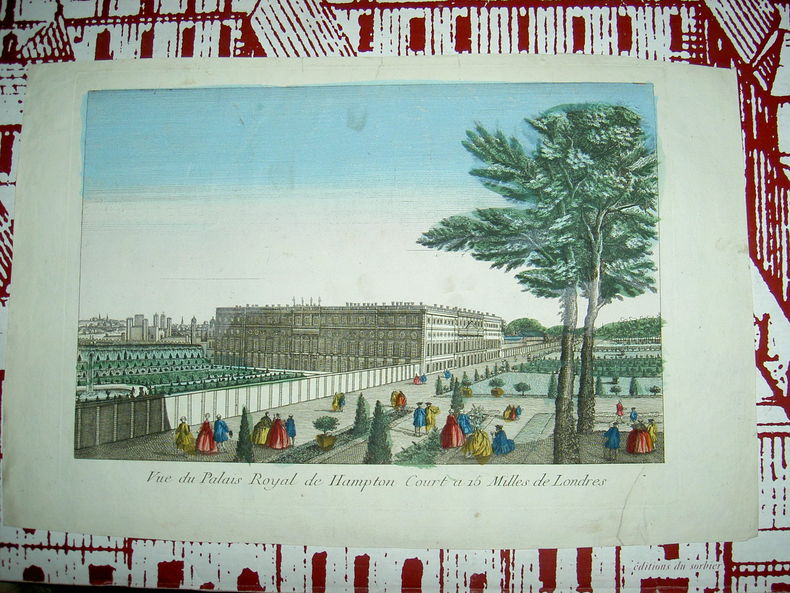
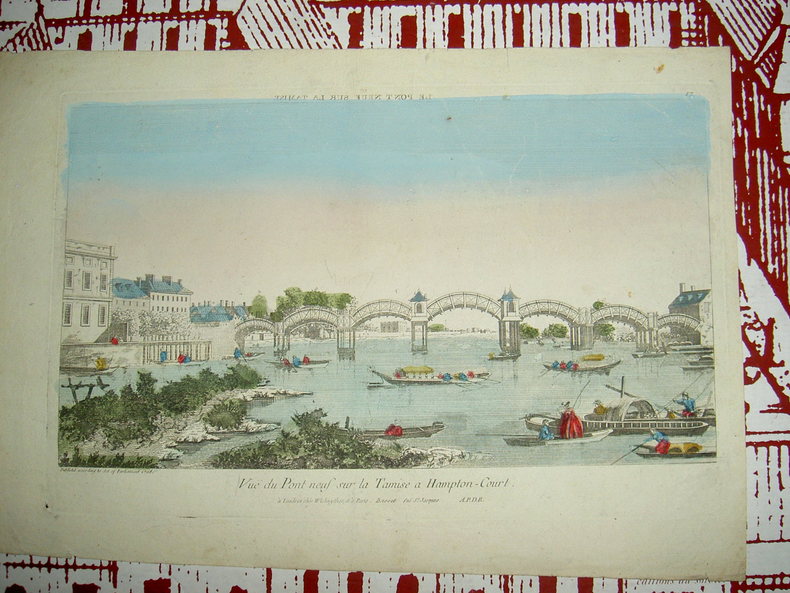
réf. 8642Eau-forte en couleurs,du XVIIIème siècle.395x270mm à la cuvette, et 458x315mm avec la marge. A Londres chez Wichnyther et à Paris Chez Jacques Chereau
réf. 332.1aafca 1770, 22x35 cm, gravure sur cuivre, (planche tirée de Zurlauben n° 78), feuille 32x49.5 cm.
1830réf. 5233Belle épreuve sur chine collé. Belle vue de ce célèbre site suisse. D’après un tableau de Guyot, imprimerie lithographique de Villain. Beau cachet à sec de collection, non identifié. En feuille Très bon Vers 1830 25 x 26,5 (36 x 53)
réf. 233182A Paris , chez Basset le jeune rue S. Jaques au coin de la R. des Mathurins à Ste. Genevieve, XVIIIe siècle, 28 x 43 cm (feuille), Frottée. Petit manque à la feuille dans le coin inférieur gauche n'atteignant pas la composition.
réf. 111647aafca. 1850, 25 x 16.7. cm Belle aquatinte finement coloriée à la main. Encadrement à la feuille dorée.
réf. 8867P., Beauvais, (fin du XVIIIème). (Deux petits trous de ver).
réf. ORD-14679A Paris. Chez Basset. Sans date. XVIII°. Vers 1780. Dimensions de la feuille 500 x 332mm de la gravure cuvette comprise: 400 x 260mm. Belle vue aux coloris vifs de l'époque typiques des vues d'optique, présentée sous cache brun bordé de blanc. Excellent état. (2).
réf. 1588.1aaf1548, 13.8x17.2 cm. Gravure sur bois / Holzschnitt aus Stumpf-chrronique, légèrement coloriée par endroit, 1 Blatt / feuille (32.6x31.2 cm.)
réf. 1590.1aafImage 6.5x10 cm/passepartout 21x26 cm. Aquatinte: sans les marges, 1 feuille.
réf. vue_opt_088.jpegVue d'Optique du dix-huitième siècle
réf. vue_opt_09.jpegVue d'Optique du dix-huitième siècle
réf. 5511Intéressante vue de Rome. Vue d’optique publiée à Londres en 1766. Cadre en bois naturel. XVIIIè siècle.