427 resultados
1832ref. 2902New York: Jonathan Leavitt printed by G. P. Scott and Co 1832. Good. 8vo in 4's. 4 9-40 pp. Bound in sympathetic wrappers evidence of stab-stitching. Foxing and browning throughout as is true in all copies. An interesting sermon preached in the midst of the 1832 cholera epidemic in New York complete with the characteristic "fire and brimestone" judgments on the sins of the people. Cholera reached the Western Hemisphere during the second pandemic 1829-1851. Many contemporary journalistic sources associated the disease with "large numbers of Irish and other emigrants" a "class of persons particularly exposed and carrying the disease wherever they go." This particular sermon preached upon Isaiah 26:9 "When thy judgments are in the earth the inhabitants of the world will learn righteousness" lays the blame not on recent emigrants but rather on a wicked and atheistic generation who no longer fear God and has forgotten Him. "Most were thought to have willfully weakened their bodies through unwholesome ways of life and were now being punished for their sins. According to religious leaders the three prominent abominations of the time were sabbath-breaking intemperance and debauchery and cholera was viewed as here as a disease of "'mental and corporeal debility.'" The preacher Gardiner Spring 1785-1873 was an American minister of the Brick Presbyterian Church from his ordination in 1809 until his death as well as prolific religiou author. He is perhaps most famous for his Gardiner Spring Resolutions which effectively precipitated the creation of the Presbyterian Church of the Confederate States of America and the schism of the Presbyterian Church along regional lines which lasted from the American Civil War until 1983. Checklist American Imprints 14822. Sabin 89779. REFERENCES: New York Commercial Advertiser. 1832 Jun. 18. Referenced in: "AIDS: The Burden of History" Elizabeth Fee and Daniel M. Fox eds. Jonathan Leavitt, printed by G. P. Scott and Co unknown books
1832ref. 46999Hartford: H. and F. J. Huntington 1832. First edition. Folding map. 368 pp. 1 vols. 12mo. Red cloth leather spine label. Spine faded front board loose foxed throughout. First edition. Folding map. 368 pp. 1 vols. 12mo. Amariah Brigham 1798-1849 was the first superintendent of the New York State Lunatic Asylum at Utica. While there he founded the American Journal of Insanity in July 1844. The present title served as a compendium of the existing knowledge of epidemic cholera. DAB III: 42-3. Reynolds 670; not in Sallander Bibliotheca Walleriana H. and F. J. Huntington unknown books
1832ref. 38696Boston: Leonard C. Bowles 1832. First edition. Stitched paper wrappers. Very good few tears along the edges and spine ends scattered foxing. 13 pp. 8vo. Cover title: Mr. Greenwood's fast discourse. American awaited the 1832 Cholera outbreak as reports from Europe arrived. Unlike many others Greenwood did not see the epidemic as a cleansing purge by God to punish the wicked. "Let us then confess our faults one to another and let us pray one for another. Let us confess our faults to God and pray for ourselves. If our prayers are fervent and righteous; if they awaken us to the evil and danger of sin; if they make us humble and unassuming; if they inspire us with a cheerful courage united with a rational prudence we may be confident that they will avail much. They have availed much. They have prepared us in the best possible manner against the hovering pestilence; they have saved us from sin which is more dreadful than pestilence. God has heard them; and he will answer them if not by temporal immunity yet by the answer of eternal salvation." Francis William Pitt Greenwood 1797-1843 was a Unitarian minister of King's Chapel in Boston. His written works were published in the Christian Examiner as well as the Boston Journal of Natural History The Token and Atlantic Souvenir. His sermons were published in 1844 in two volumes by former Boston Mayor Samuel A. Eliot. Sabin 28686. American Imprints 12733. Leonard C. Bowles unknown books
1849ref. 283685Utica 1849. unbound. very good. Fine content A.L.S. 4to. 2 pages Utica New York July 6 1849 in part: ". Dear Father . we think of you these Cholera times and particularly as we hear that it has visited Rome and sometimes wish you could all be here again as the city is comparatively healthy but we must all endeavor to keep cool. with caution" ".We have all been well except Brother Bob who has been complaining a little for a few days though not of anything bearing the nature of the epidemic - we have induced him to remain quiet and I believe he has mostly if not entirely recovered." Boldly written with extremely light mailing folds. unknown books
ref. 2-846981379XANAYA EDUCACIÓN. Paperback. New. 336 pages. Spanish language. 11.18x8.74x0.63 inches. ANAYA EDUCACIÓN paperback
ref. 2-8469813536Anaya Educación. Paperback. New. 336 pages. Spanish language. 11.42x8.86x0.59 inches. Anaya Educación paperback
1848ref. ZB450528Sevilla: Imprenta del Diario de Sevilla 1848. small 12mo iv. 160 p. old leather now worn and scuffed textually quite good. - If you are reading this this item is actually physically in our stock and ready for shipment once ordered. We are not bookjackers. Buyer is responsible for any additional duties taxes or fees required by recipient's country. Sevilla: Imprenta del Diario de Sevilla hardcover
ref. 48106Amsterdam Van der Post Novembre 1848. 61 pages. 1 feuillet. 20x19 Cm. Dérelié. Taches. L'auteur préconise l'utilisation du Chlore pour combattre le choléra. Références au Chloroforme que Morton venait de découvrir et à son utilisation en Angleterre contre cette maladie. Document très bien conservé. Amsterdam, Van der Post, Novembre 1848. unknown
ref. BN314805Editions du Cygne. Softcover. La nudité: Pratiques et significations La nudité: Pratiques et significations Christophe Colera Editions du Cygne paperback
1831ref. 2684BB1831. Königsberg J.H. Bon's Buchhandlung 1831. 8°. 60 S. 48 S. Zusätze. Halblederband aus der Zeit. Beigebunden: Schnurrer Friedrich: Die Cholera morbus ihre Verbreitung ihre Zufälle die versuchten Heilmethoden . Stuttgart und Tübingen Gotta'schen Buchhandlung 1831. X 2 79 S. Mit 1 gef. Karte. Beigebunden: Hegetschweiler Joh.: Ueber den Charakter die Cur und die Verhütung der ostindischen Brechruhr Cholera mit besonderer Berücksichtigung der Verhältnisse der Schweiz. Zürich Orell Füssli 1831. 52 S. Beigebunden: Köchlin J. R.: Ueber die Cholera oder den Brechdurchfall und die dagegen gerichteten Schutz- und Hülfsmittel. Zürich Schulthess 1831. 74 S. Beigebunden: Bastler Anton Dominik: Die Cholera in Wien. Wien Strauss 1832. 1 Bl. 134 S. - Sammlung div. Beiträge über die Cholera in einem Buch gebunden. - Mit Bibliotheksnummern. Der Einband berieben. unknown
ref. 9788467824056New. unknown
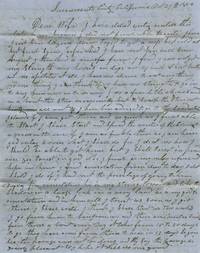
1850ref. BK0017Sacramento City California 1850. Autograph letter signed "Sam'l Locke" to his wife in Belfast Maine. 6 pp. Stampless folded letter with clear circular "SACRAMENTO CITY / CAL." postmark and "40" rate handstamp; manuscript notation recording receipt in Maine on December 19 1850. Light soiling; very good. A bleak California Gold Rush letter written during the 1850 Sacramento cholera epidemic by Samuel Locke a Maine emigrant suffering from prolonged fever and unable to regain his strength. Surrounded by sickness failed mining ventures violent crime and men too poor or ill to return home Locke plans to seek recovery in the Sandwich Islands while relying upon his religious faith for consolation. Locke had been ill since August and was now so weak that ordinary work exhausted him: "My limbs or legs are very weak short breath and no appetite at all. I have no desire to eat anything not one thing I can think of. I have no strength to go into any business or to do any. I do a few little chores round or about the store occasionally but to sweep the store it beats me all out . O how I long to get out of this place. Can't get any strength don't know as I can anywhere but I long to try." Friends advised him to spend the winter in the Sandwich Islands. He expected to travel first to San Francisco and then make the fifteen- to twenty-day passage to Hawaii though he feared that continued illness might leave him unable either to support himself there or return to Maine. He states that he will "trust in providence yes trust in God who I feel is my only refuge". Locke gives a grim account of California's climate and the spread of cholera through Sacramento claiming that the climate in California prevented the sick from recovering their strength as the "air is very light & bad middle of the day very hot and nights very cool." The previous week's report had stated forty dead but "nothing near all the cases were reported" with Locke himself knowing of several unreported cases personally. A local blacksmith died overnight after his companions borrowed Locke's syringe and "We can hardly see a healthy looking individual in the streets." The letter also records the uncertain fortunes of men from Locke's home region scattered through the mines. William Beckett and his partners had spent the summer constructing a mining dam had struck gold on the first day and then immediately "the dam was washed away so they lost all their summer's labor." Other acquaintances had moved to Kelsey's Bar the southern mines or Oregon or were preparing to return east by way of Panama. Some remained convinced that California would reward perseverance while others had "seen enough" after accomplishing nothing. Locke regarded success as largely accidental: "Thousands are here and in the mines who want to get home and cannot-not able to do seamen's duty and no money to pay but they have got to stay in the mines and do the best they can. Some it is true have been lucky. It is all luck. If they happen to hit a good place they do well." News that cholera had entered the mining districts increased his alarm. Locke feared especially for men living in tents as the rainy season approached with poor food and little protection from exposure. Sacramento itself was marked by nightly violence: "There are murders or robberies about every night. One man killed in front of our house a few nights ago. We heard him holler and heard the blows. Next morning he died. His head was dreadfully mangled." Locke closes with an emotional message to his wife and children. His health finances and prospects all appeared uncertain and he repeatedly asked his family and church to pray for him: "Tell the dear Children to be good and if they never see me again when I am gone they will have the satisfaction . of knowing they acted as thy Father requested . Pray for me ask the Church to pray for me indeed I know I have your prayers and you have mine often." A particularly bleak account of the human cost of the California Gold Rush documenting epidemic disease physical collapse failed mining schemes violent crime religious faith and the predicament of emigrants unable to escape California after their health and resources were exhausted. . unknown
2016ref. 2-8469825755ANAYA EDUCACIÓN 2016. Paperback. New. Spanish language. 11.34x8.90x0.63 inches. ANAYA EDUCACIÓN paperback
ref. 2-846981270XAnaya Educación. Paperback. New. 288 pages. Spanish language. 11.42x8.90x0.71 inches. Anaya Educación paperback
1998ref. 122784Anaya 1998. tapa blanda. 2ª Mano/2ª Mano. Anaya. 1998. Nuestro Mundo. Con diskete de 3 1/2. Sin firmas ni anotaciones. Incluye las soluciones de los apartados Hazlo tu. Las de actividades propuestas en los desarrollos. de los temas y de los ejercicios y problemas Tapa blanda 480 p. ; 27x21 cm Anaya unknown
2011ref. 141018Anaya 2011. tapa blanda. 2ª Mano/2ª Mano. Anaya. 2011. Matematicas Euskera. alguna marca de ant prop incluye CD Rom 400 p. 28x21 cm. 1 CD-ROM tapa blanda Anaya unknown
1889ref. 8195AB1889. Washington Government Printing Office 1889. 13 chromolithogr. Taf. 3 Lichtdruck-Taf. 197 S. Lwd. d. Zt. Erste Ausgabe dieser Monographie. - 'The greater part of the detailed study of the disease the planning of experiments and the bacteriological investigations have been carried out by Dr. Theobald Smith while the conducting of the experiments the care of the experimental animals and the general management of the experiment station have been under the direction of Dr. F. L. Kilborne' Letter of Transmittal. - Die sorgfältig lithographierten Tafeln mit Abbildungen von Organen nach Cholerabefall. - Innenspiegel mit eingeklebter Komplimentkarte von D. E. Salomon Unterzeichner des Vorworts zusammen mit Norman J. Colman. Vorsätze mit zeitgenössischen Eintragungen in Tinte und Bleistift. unknown
ref. 2-8469821210ANAYA EDUCACIÓN. Paperback. New. 296 pages. Spanish language. 11.42x8.82x0.59 inches. ANAYA EDUCACIÓN paperback
2017ref. 2-8448941861Editorial Barcanova 2017. Paperback. New. Spanish language. 11.42x9.06x0.79 inches. Editorial Barcanova paperback
ref. 2343176620.Gpaperback. Good. Access codes and supplements are not guaranteed with used items. May be an ex-library book. paperback
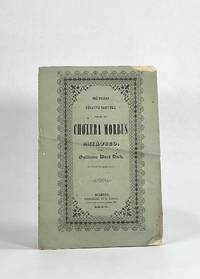
1850ref. 10296Mexico: R. Rafael 1850. Original Wrappers. near Very Good binding. Octavo. 16 pp. Stitched in original wrappers. Horizontal crease through the center of the pamphlet from accidental folding; light edgewear including folded leaf corners; rear wrapper soiled; wormholes through the entire pamphlet that touch the occasional letter not impacting comprehension. Uncommon pamphlet in which the author a self-professed retired physician identifies how to diagnose cholera which had reemerged as a serious problem during and after the Mexican-American War. We've not been able to find other references to work by Duck. Fairly uncommon. While this is not an ideal copy given the condition it is fairly good. Sutro p. 858. R. Rafael unknown
ref. 2140205383.Gpaperback. Good. Access codes and supplements are not guaranteed with used items. May be an ex-library book. paperback
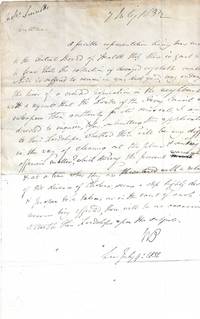
ref. 26909Lambeth 7 July 1832. Four pages folio bifolium tipped onto card minor damage not affecting text crude repair with sellotape on 'spine' aged fair condition. A. The 'Petition' two pages folio in a tidy handwriting commencing: "We the undersigned regret to have occasion to trouble your Lordship but under the present alarming apprehension of that dreadful disease of Cholera we intreat your Lordships assistance in the removal of a monstrous nuisance in our immediate neighbourhood. The dust yard of Messrs Sinott situate in Belvedere Road Lambeth is the receptacle for the refuse of the vegetables from Covent Garden market where it is as well as much other very offensive matter suffered to remain till far advanced in decomposition long thought the source of cholera the effluvia from which especially during the present warm weather is almost unbearable and we fear unless abated will materially endanger the lives of many in our populous neighbourhood ." They ask for his Lordship's interference to deal with a longstanding problem. Signed by Thomas Langton Samuel Cross John Barnard John Chas Stahlschmidt and ten others. B. Final page of the bifolium copy of letter presumably sent to Sinnottsalso dated 7 July 1832 tipped on to card with loss of a letter or two initialled discussing the source of effluvia affecting the lives of people a "crowded population" and its connection to cholera. See Image. Notes: a. "Lord Melbourne William Lamb 2nd Viscount Melbourne was heavily involved in the government's response to the first major cholera epidemic in Britain during his time as Home Secretary in the early 1830s" AI; b. "The 1832 Cholera Outbreak in LambethConditions: Lambeth situated along the Thames was a hub of industry and a magnet for poor migrant workers living in cramped filthy conditions with no proper sewerage systems.Water Supply: Residents including those in Lambeth drank directly from the heavily contaminated Thames accelerating the spread of the disease.Impact: By February 1832 cases were reported in London with Lambeth and Southwark among the early affected areas. By the end of 1832 the epidemic had killed over 32000 people across Britain."Miasma" Theory: At the time officials like Edwin Chadwick and the Central Board of Health believed cholera was caused by "miasma"—poisonous air arising from decomposing matter." AI Lambeth, 7 July 1832 unknown
1849ref. 283685Utica 1849. unbound. very good. Fine content A.L.S. 4to. 2 pages Utica New York July 6 1849 in part: ". Dear Father . we think of you these Cholera times and particularly as we hear that it has visited Rome and sometimes wish you could all be here again as the city is comparatively healthy but we must all endeavor to keep cool. with caution" ".We have all been well except Brother Bob who has been complaining a little for a few days though not of anything bearing the nature of the epidemic - we have induced him to remain quiet and I believe he has mostly if not entirely recovered." Boldly written with extremely light mailing folds. unknown
ref. 9276Circa 1849. 4to 36 pp and a manuscript title-page. All texts clear and complete. Disbound from a commonplace book and apparently complete. Fair on aged brittle gilt-edged paper with a few closed tears in particular to the last couple of leaves. The book is presumably in Mrs Macdonald's hand and the only indication to her identity is the final note see below signed 'F. M. M.' which shows her to have been an educated member of the middle classes. Divided into three parts. The first part is 'Useful Remarks for the Mistress of a House' 25 pp paginated from 1 to 23. The first page carrying remarks on Tea Loaf Sugar Moist Sugar Eggs and Spices with the last two annotated 'Experientia docet!' The first entry reads: 'Tea should be kept in a dry place and any store should be in Tin Canisters wrapt in flannel. Two spoonful is the quantity given to work-women for breakfast or Tea.' Extensive sections on Pickles and Preserves. Also Raspberry Vinegar Candles Soap 'Lay in also an annual stock' and Coals the latter annotated 'Since the above was written Coals are sold by the Ton'. Long sections on 'Poultry yard' 'Pidgeons' 'Rabbits' 'If the Doe is weak during her accouchement give her beer caudle or warm fresh grains' 'Ornamental Supper dishes' 'Flummery' including 'Green Melon in Flummery' The second part comprising 6 pp of French recipes: 'Soupe a la Bonne-Femme' 'Roux Blanc white Thickening' 'Roux brun brown thickening' 'Sauce Tournee' Sauce a l'Allemande German sauce' 'Sauce au Maitre d'Hotel' 'Sauce du Maitre d'Hotel au maigre' 'To boil Artichokes the French way' 'French melted butter only good with Artichokes in my opinion'. The third part 6 pp containing miscellaneous recipes beginning with a long 'Anti-Cholera diet' and ending with 'Lord Ponsonby's Cure for Cholera. 1849.' 'It is asserted by Lord Ponsonby's Agent that the patient is immediately cured before a Medical Man arrives.' This is dated 'June 24: 1849' and is followed by a note signed 'F. M. M.' reading 'The above receipt was given to me by a Man of the name of Poole a Poulterer at Alston near Cheltenham who saw it tried in his House by his Brother in Law who was seized with all the symptoms of Cholera and had the Medicine made up to be ready at a moment and was quite well and able to return to his home some miles distant perfectly recovered the next Morning.' [Circa 1849.] unknown