Antiquariat.de
425 resultados
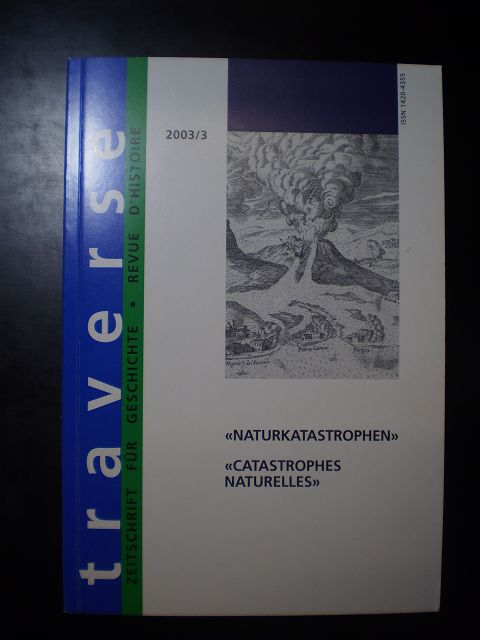
2003ref. 62789Zürich, Chronos Verlag, 2003, Auflage: 1. kartoniert; flexibler, weisser, grün/blau/schwarzweiss illustrierter Einband / Anz. Seiten: 216 / 15,5 x 22,5 cm / Zustand: schönes Exemplar
8 cartoncini 35x25 cm con 16 inserzioni pubblicitarie bolognesi applicate riguardanti commercio, salute, immobiliari, prestigiatori, abbigliamento, aste,
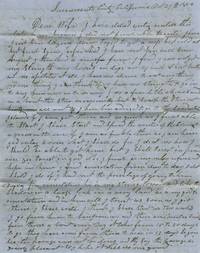
1850ref. BK0017Sacramento City California 1850. Autograph letter signed "Sam'l Locke" to his wife in Belfast Maine. 6 pp. Stampless folded letter with clear circular "SACRAMENTO CITY / CAL." postmark and "40" rate handstamp; manuscript notation recording receipt in Maine on December 19 1850. Light soiling; very good. A bleak California Gold Rush letter written during the 1850 Sacramento cholera epidemic by Samuel Locke a Maine emigrant suffering from prolonged fever and unable to regain his strength. Surrounded by sickness failed mining ventures violent crime and men too poor or ill to return home Locke plans to seek recovery in the Sandwich Islands while relying upon his religious faith for consolation. Locke had been ill since August and was now so weak that ordinary work exhausted him: "My limbs or legs are very weak short breath and no appetite at all. I have no desire to eat anything not one thing I can think of. I have no strength to go into any business or to do any. I do a few little chores round or about the store occasionally but to sweep the store it beats me all out . O how I long to get out of this place. Can't get any strength don't know as I can anywhere but I long to try." Friends advised him to spend the winter in the Sandwich Islands. He expected to travel first to San Francisco and then make the fifteen- to twenty-day passage to Hawaii though he feared that continued illness might leave him unable either to support himself there or return to Maine. He states that he will "trust in providence yes trust in God who I feel is my only refuge". Locke gives a grim account of California's climate and the spread of cholera through Sacramento claiming that the climate in California prevented the sick from recovering their strength as the "air is very light & bad middle of the day very hot and nights very cool." The previous week's report had stated forty dead but "nothing near all the cases were reported" with Locke himself knowing of several unreported cases personally. A local blacksmith died overnight after his companions borrowed Locke's syringe and "We can hardly see a healthy looking individual in the streets." The letter also records the uncertain fortunes of men from Locke's home region scattered through the mines. William Beckett and his partners had spent the summer constructing a mining dam had struck gold on the first day and then immediately "the dam was washed away so they lost all their summer's labor." Other acquaintances had moved to Kelsey's Bar the southern mines or Oregon or were preparing to return east by way of Panama. Some remained convinced that California would reward perseverance while others had "seen enough" after accomplishing nothing. Locke regarded success as largely accidental: "Thousands are here and in the mines who want to get home and cannot-not able to do seamen's duty and no money to pay but they have got to stay in the mines and do the best they can. Some it is true have been lucky. It is all luck. If they happen to hit a good place they do well." News that cholera had entered the mining districts increased his alarm. Locke feared especially for men living in tents as the rainy season approached with poor food and little protection from exposure. Sacramento itself was marked by nightly violence: "There are murders or robberies about every night. One man killed in front of our house a few nights ago. We heard him holler and heard the blows. Next morning he died. His head was dreadfully mangled." Locke closes with an emotional message to his wife and children. His health finances and prospects all appeared uncertain and he repeatedly asked his family and church to pray for him: "Tell the dear Children to be good and if they never see me again when I am gone they will have the satisfaction . of knowing they acted as thy Father requested . Pray for me ask the Church to pray for me indeed I know I have your prayers and you have mine often." A particularly bleak account of the human cost of the California Gold Rush documenting epidemic disease physical collapse failed mining schemes violent crime religious faith and the predicament of emigrants unable to escape California after their health and resources were exhausted. . unknown
30x22 cm, firmati a penna dal Sindaco del 22 ottobre e del 8 dicembre 1873 con situazione sanitaria delle persone in cura
2002ref. 9420Goldmann, München, 2000, 2002. 268 S. + 288 S., TB, guter Zustand, beides als Mängelexemplar gekennzeichnet
1996ref. 1524326640490HASP-393, Grupo Anaya, Madrid 1996
35x25 cm, 30 cartoncini colorati con pubblicità di negozi o studi professionali bolognesi ritagliate da giornali varii e applicati. Argomenti delle inserzioni sono: salute, commercio, spettacolo, cioccolato Majani, moda, colèra, acque minerali, alberghi, magnetismo, ballo, giochi, vino, cavalli, sonnambulismo, pasticceria, ecc
Very Good Turkish, Ottoman (1500-1928) Original registry book in its original grey art nouveau cloth. All edges marbled. 'The English manufactory of book and register' written on end-papers. 'Zugologion' written in Greek letters on front cover. Slightly faded. A fine copy. Demy 8vo. (22 x 15 cm). In Ottoman script. 52 p. is written of which apprx. 200 p., but it's finished and complete; one folding hand-drawn color map, and 3 tables. [MANUSCRIPT] [Ottoman Prokopi sanitary report] Konya Sihhiye Müfettisligi'nin 16 Tesrinievvel 1327 tarihli mezkûr müfettislige takdim olunan rapordur ki 327 senesi Ürgüp'te zuhur eden koleraya dairdir.; Vilâyetin topografya-yi sihhiye ve harita-yi sihhiyesi. The report on the cholera occurring in Ürgüp in 1910, which was presented to the Inspectorate of Konya Sihhiye on October 16, 1910. Besides cholera, it contains information about diseases such as measles. 1329 (Hegira) written at the end of first 10-paged report. The second part contains title: Mecelle-i Memâlik-i Osmaniye'ye ait minvallere cevabât yazilarak Üsküp Kaymakamligi'na takdim olunan 'Müslüman Sihhiye' raporu [= Muslim health report submitted to the Ürgüp (Prokopi) District Governor]. This and following next chapters include general health and sanity registers on epidemics like 'frengi' (syphilis, pox), all kinds of 'humma' (pyrexia) and several others (almost more 15 titles) and give information about how often diseases are encountered in the region of Prokopi and Cappadocia. One folded map which is hand-drawn includes color markers as 'Ürgüp Bölgesi saglik haritasi' [= Prokopi region sanity and epidemic map]. Also it shows demographic and historical info about region. There are 3 statistical tables contain demographic, historical, religious info such 'Muslim' and 'Non-Muslim'. Maps and tables are perfectly drawn. Another chapter is 'Usul-i sihhiye', has all epidemics and their historical and demographic contexts, their cures etc. Book was written in a very nice hand-writing. Used black, blue, and red inks. Report was not published before such as that. Roumi: 1327 = Gregorian: 1910. The Ottoman land represented a bridge between Asia and Europe, which was destroyed by epidemic diseases that emerged in different periods. In the 19th century, the main source of epidemic was the cholera morbus that emerged in India in the lower Bengal delta between the Ganges and Brahmaputra rivers. At the beginning of the 19th century, the disease became a global threat. Cholera epidemic appeared for the first time in the Ottoman territory in 1822, and continued to emerge into intermediate outbreaks. Due to its geographical location, the cholera epidemic was easily spread to the Ottoman territory and caused great losses in the 19th century, when it became a global threat. At the beginning of the 20th century, still cholera was a serious problem. Prokopi is a settlement in Central Asia Minor, built on a plateau at an altitude of 1,200 m above sea level. It lies near the confluence of four tributary rivers of the Alys River (Kizilirmak), which flows to the north of Ürgüp, within about 10 km from the settlement. It has been claimed that the word Ürgüp is the Turkish version of the Greek name Prokopi. The latter is supposed to refer to St. Prokopios, although there is no evidence suggesting the existence of a namesake church. Levidis supported that the ancient name of the settlement was Osiana, which the traveller Texier (Charles) adopted as well. Ürgüp was inhabited by Muslims, Turkish-speaking Greek-Orthodox and some Armenians. Several conflicting opinions have been stated about the population. Farasopoulos talks about 15,000 Muslims and 5,000 Christians. According to an inventory carried out by the state in 1919, Ürgüp was inhabited by 12,500 Muslims, 6,000 Christian-Orthodox and 15-20 Armenian families.
Volume della fine dell'800 in stato discreto, coperta in cartoncino, con bella cornice con fregi su piatti, fioritura sparsa, abrasioni, bruniture, strappetto, tagli bruniti, pagine in buono stato, piccolo strappo sul margine concavo delle prime pagine. Numero Pagine 182 USATO
1832ref. 2902New York: Jonathan Leavitt printed by G. P. Scott and Co 1832. Good. 8vo in 4's. 4 9-40 pp. Bound in sympathetic wrappers evidence of stab-stitching. Foxing and browning throughout as is true in all copies. An interesting sermon preached in the midst of the 1832 cholera epidemic in New York complete with the characteristic "fire and brimestone" judgments on the sins of the people. Cholera reached the Western Hemisphere during the second pandemic 1829-1851. Many contemporary journalistic sources associated the disease with "large numbers of Irish and other emigrants" a "class of persons particularly exposed and carrying the disease wherever they go." This particular sermon preached upon Isaiah 26:9 "When thy judgments are in the earth the inhabitants of the world will learn righteousness" lays the blame not on recent emigrants but rather on a wicked and atheistic generation who no longer fear God and has forgotten Him. "Most were thought to have willfully weakened their bodies through unwholesome ways of life and were now being punished for their sins. According to religious leaders the three prominent abominations of the time were sabbath-breaking intemperance and debauchery and cholera was viewed as here as a disease of "'mental and corporeal debility.'" The preacher Gardiner Spring 1785-1873 was an American minister of the Brick Presbyterian Church from his ordination in 1809 until his death as well as prolific religiou author. He is perhaps most famous for his Gardiner Spring Resolutions which effectively precipitated the creation of the Presbyterian Church of the Confederate States of America and the schism of the Presbyterian Church along regional lines which lasted from the American Civil War until 1983. Checklist American Imprints 14822. Sabin 89779. REFERENCES: New York Commercial Advertiser. 1832 Jun. 18. Referenced in: "AIDS: The Burden of History" Elizabeth Fee and Daniel M. Fox eds. Jonathan Leavitt, printed by G. P. Scott and Co unknown books
1832ref. 7225ANew York, Collins, 1832. Gr.8°. VII, 148 S. HLn.bd. der Zeit. Einband und innen teils fleckig. Einband berieben. 1. amerikanische Ausgabe.
1832ref. 46999Hartford: H. and F. J. Huntington 1832. First edition. Folding map. 368 pp. 1 vols. 12mo. Red cloth leather spine label. Spine faded front board loose foxed throughout. First edition. Folding map. 368 pp. 1 vols. 12mo. Amariah Brigham 1798-1849 was the first superintendent of the New York State Lunatic Asylum at Utica. While there he founded the American Journal of Insanity in July 1844. The present title served as a compendium of the existing knowledge of epidemic cholera. DAB III: 42-3. Reynolds 670; not in Sallander Bibliotheca Walleriana H. and F. J. Huntington unknown books
In 8 cm. 21x13,5. Pp. 32.Interessante pubblicazione medica del 1832 edito dalla Academie Royale de medecine, il rapporto e istruzione pratica sul colera durante l'epidemia del 1832. In buone condizioni e completo. Copertina morbida posticcia in buone condizioni generali con lievi usure ai margini e dorso. Legatura in buone condizioni. All'interno le pagine si presentano in buone condizioni con rare fioriture. Interesting medical pamphlet of 1832 edited by Academie Royale de medecine, the report and instruction about cholera during epidemic of 1832. In good conditions and complete. Soft false cover in good general conditions slightly worn in the edges and spine. Binding in good conditions. Inside pages are in good conditions with occasional foxings.
Firenze, [s.n.t.], 10 settembre 1835, in-8, privo di brossura, pp. 8.
In 8, pp. 8 con tavv. sinottiche n.t. Br. ed. Esposizione degli effetti del colera asiatico con indicazioni del metodo curativo.
In 8, pp. 38 + (2b). P. post. orig. P. ant. rifatto. Considerazioni dell'A. sull'epidemia di colera che sconvolse Napoli in due successive ondate fra 1836 e 1837, vista come punizione divina per i peccati degli uomini e preghiera da recitarsi per ogni Cristiano minacciato dalla malattia.
1831ref. 1304786Berlin, Vereins-Buchh. 1831. 1 Bl., 7 S., 1 Bl. weiß, 64 S., 2 Bl. Verlagsanzeigen. Bedruckte Orig.-Broschur (angestaubt, unaufgeschnitten).
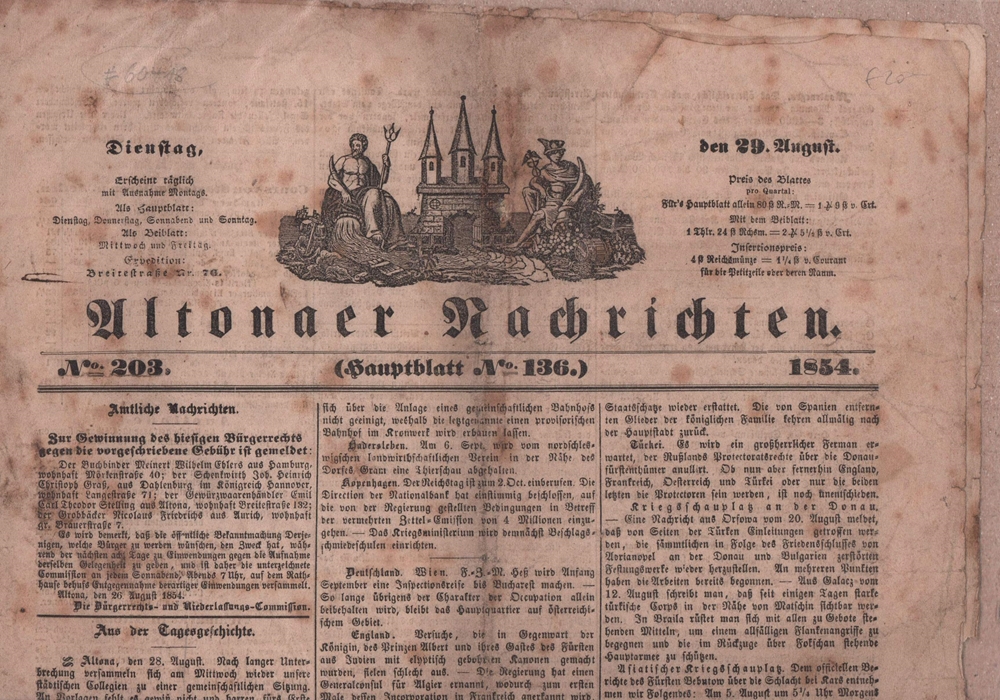
1854ref. 60418(Altona, H. W. Köbner & Lehmkuhl, 1854). 2 Bll. Folio (ca. 40 x 28 cm).
Mm 170x240 "Rivista della Società italiana di Antropologia medica" - Brossura originale, 463 pagine. Volume in condizioni di nuovo; spedizione in 24 ore dalla conferma dell'ordine.
Mm 170x240 "Rivista della Società italiana di Antropologia medica" - Brossura originale, 457 pagine. Volume in condizioni di nuovo; spedizione in 24 ore dalla conferma dell'ordine.
First edition, [2], iv, 57, [1]pp., with half-title, disbound.
In 8° (19,8x13,8 cm); 78, (2) pp. Senza brossura ma non slegato ed ancora in barbe. Prima rara edizione, quattro soli esemplari censiti in ICCU, di questa raccolte di lettere dedicate alla celebre epidemia di colera che colpì Roma nel 1837. Il raccoglitore delle lettere si presenta probabilmente sotto falso nome. L’opera si sviluppa con una serie di lettere scambiate fra due amici, uno nella città di Roma e l’altro residente nella sua villa di campagna, che ripercorrono la genesi dell’infezione ed il suo propagarsi dai primi casi fino all’esplosione della malattia in tutta la sua virulenza. L’opera in ogni caso ricostruisce avvenimenti realmente accaduti e parla di personaggi storicamente esistenti e fornisce uno spaccato reale della tremenda epidemia che colpì Roma nel 1837. Prima edizione assai rara e stampata su carta di ottima qualità.
22 cm, brossura originale, p. 59. Volume con forellini di aghi da parte a parte fatti all'epoca per disinfezione
Milano, presso la Società per la pubblicazione degli Annali Universali delle Scienze e dell'Industria (nella Galleria De Cristoforis), 1857, in-8, copertina fittizia, pp. 680 in numerazione continua. Con 57 figure incise in 8 tavv. f.t. Oltre a quella del Melchiori, il volume contiene altre 6 Memorie originali (idroterapia, oftalmologia, anatomia, neurologia, epidemiologia) e numerose analisi di opere, dissertazioni, atti di Accademie, ecc. (molte delle quali di oculistica e oftalmologia).
Milano, presso la Società per la pubblicazione degli Annali Universali delle Scienze e dell'Industria (nella Galleria De Cristoforis), 1857, in-8, copertina fittizia, pp. 676. Oltre a quella del Linoli il volume contiene altre 12 memorie originali e numerose analisi di opere, dissertazioni, atti di Accademie, ecc.