Nagel, DieterAntiquariat.de

9 270 résultats
2002réf. 9331AMünchen, Edition Reuss, [2002]. Gr. 8°. 128 S. mit Abb. von Farbfotografien. Illustrierter Orig.-Pappband mit Front- und RTitel, fotografisch illustr. Vorsätzen und mit farb. illustr. Orig.-Umschlag.
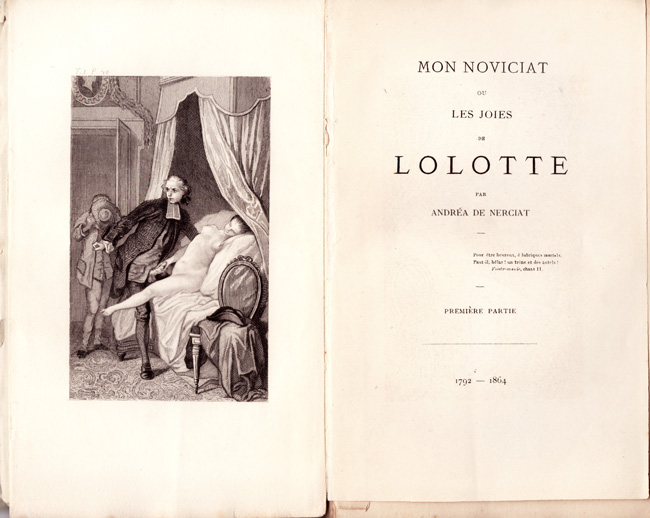
1864réf. 4292BOhne Ort und Verlag [Bruxelles, Jean-Pierre Blanche, um 1870], 1792 - 1864. 2 Bände / 2 vol. Kl.-8° (17 x 11 cm). 2 gestochene erot. Frontispize, 2 Bll., 259 S. und 2 Bll., 264 S. 2 Bll. Orig.-Interimsbroschur mit Front- und Rückentitel. [4 Warenabbildungen]
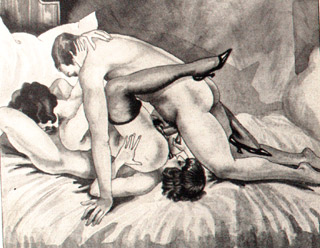
1930réf. 3905APrivatdruck, Amsterdam, 1930. 8°. 122 S. und 7 erotische Abbildungen auf Tafeln. Schmuckloses Leinen d. Zt.
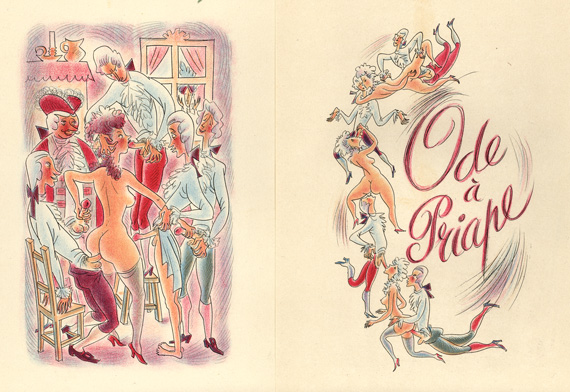
1940réf. 9096AOhne weitere Angaben, [um 1940]. Gr.8°. 56 nn. S. und 24 Tafeln mit kolorierten Lithographien. Ungebundene Lagen in einem Umschlag. Pappdecke im Schuber.
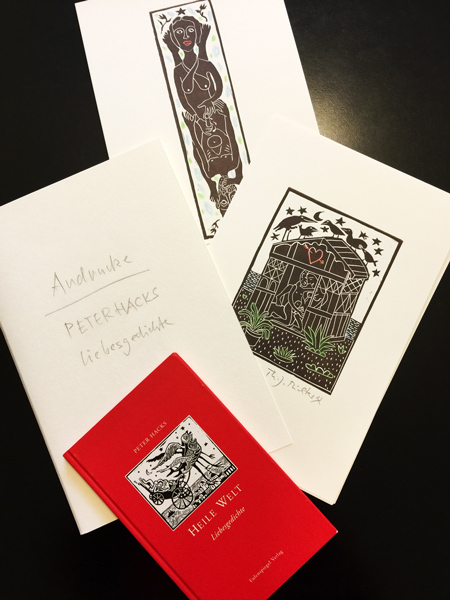
2006réf. 4165B(Berlin-Friedrichshagen), 2006. 11 Velintafeln mit kolorierten Orig.-Linolschnitten: Größe: Linolschnitte ca. 15 x 12 cm etw. variierend; Tafeln: 30 x 20 cm: Schlichter cremeweißer kart. Faltumschlag, wohl vom Künstler handschriftl. in Bleistift betitelt: "Andrucke - PETER HACKS Liebesgedichte".
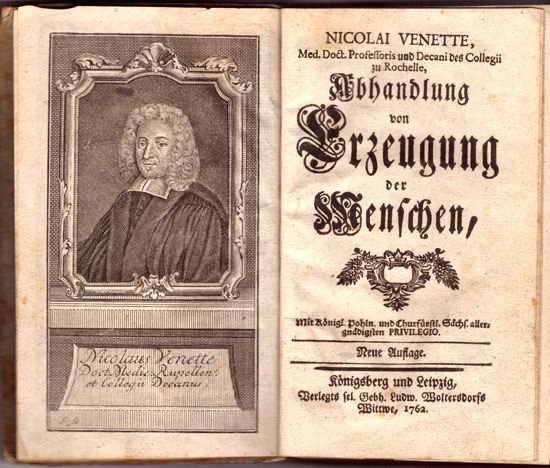
1762réf. 3931BKönigsberg und Leipzig, sel. Gebh. Ludw. Woltersdorfs Wittwe, 1762. Neue Auflage. 8° (17 x 10,6 cm). 17 nn. S. (Titel, Vorrede, Verzeichniß d. Capitel), 548 S. mit gestochenem Frontispizporträt und zwei Kopfvignetten sowie 8 Kupfertafeln mit insgesamt mit 16 Figuren (= alles). Pappband d. Zt.
2005réf. 10026Victoria's Secret 2005. Hardcover. Very Good. Russell James Ellen von Unwerth and Raphael Mazzucco. A three volume set; folios black cloth in matching slipcase with pink tie no djs as issued; DVD included in rear of Sardinia; overall vg Sardinia lightly cocked; white mark on spine of St. Tropez; finger smudges on rear pages and rfep stains to rear pastedown of Tulum in vg slipcase heavily shelfworn; finger smudging to panels; cloth on edges fraying; bottom edge worn and soiled; pink tie wrinkled. Please be aware that shipping this heavy set internationally will require additional postage. Victoria's Secret hardcover
1968réf. 2500AHamburg, Merlin, 1968. Gr. 8°. Blattgröße 24 x 15,5; Radierungen ca. 16 x 10,5 cm. Titelblatt und 7 Tafeln mit Orig.-Radierungen, davon 6 dreifarbig. Original Kalbsleder-Mappe mit goldgepr. Fronttitel.
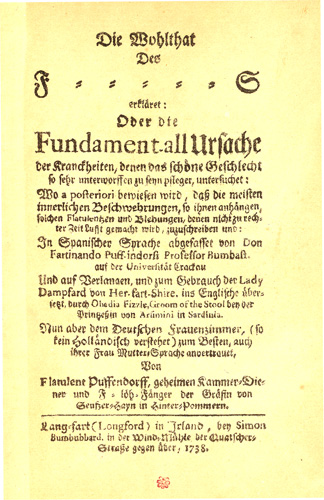
1890réf. 8423ALangfart in Irland, bey Simon Bumbubbard. in der Wind-Mühle der Quatscher-Straße gegen über, 1738. HIER: Neudruck Köln, Franz Teubner, 1890. Kl.8°. 8 vollbedruckte unbezifferte Blätter. Priv. Pappband d.Zt. mit Bibliotheksnr. am Rücken.
1849réf. 3849BStuttgart, Scheible, 1849. 2 Bände. 16°. 686 und 620 Seiten. Halbleinen d. Zt. mit goldgepr. RTitel. 1
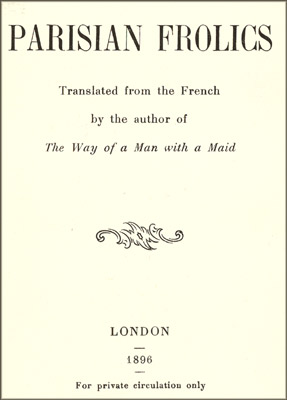
1896réf. 6467ALondon, For private circulation only, 1896. Kl.8°. 140 S. Orig.-Broschur mit Blümchenmuster und Fronttitel.
2011réf. 8609ABerlin, 2009-2011. 4°. Jeweils 114 S. Illustrierte Broschur.
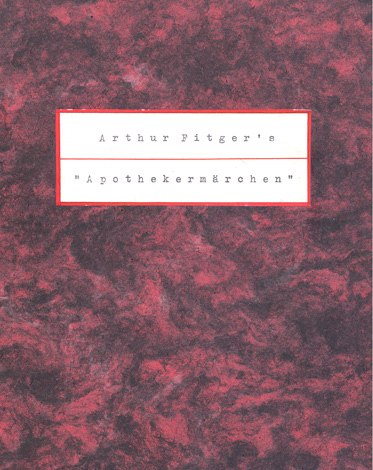
1890réf. 10061AUm 1890 [?]. Gr.8°. 18 einseitig beschriebene Seiten in Schreibmaschinen-Schrift. In einem gezeichneten rotfarbenen Rahmen. Pappband in Fadenheftung mit Titelschildchen auf Deckel.
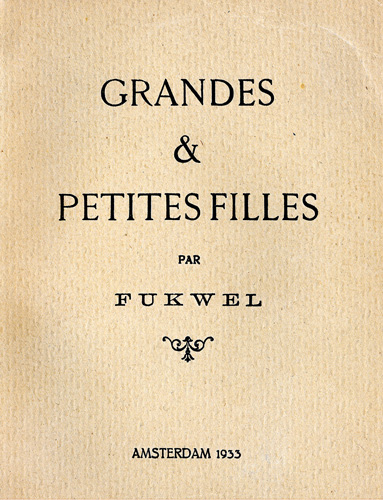
1955réf. 9670AAmsterdam, o. V., 1933 [vermutl. Losfeld, um 1955]. 8°. 128 S. und eine ganzseitige erot. Illustration. Orig.-Broschur mit Deckeltitel "Grandes & Petites Filles par Fukwel".
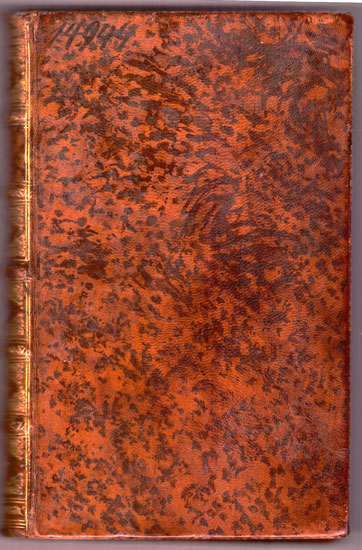
1891réf. 9914AParis [d.i. Amsterdam], Aux dépens de la Compagnie, [d.i. Brancart], 1891. 2 Bände /2 vols. in einem. 8°. 122 S., 124 S. Leder d. Zt. auf 5 falschen Bünden, Rücken mit feiner dekorativer Goldprägung und Stehkantenvergoldung.
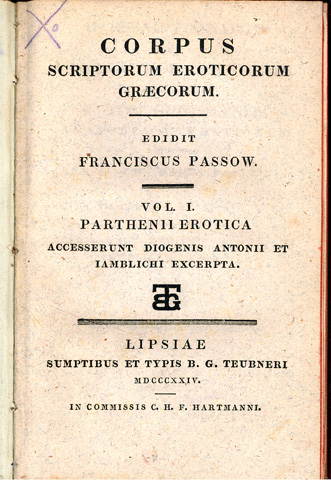
1824réf. 10305ALipsiae, Sumptibus et Typis B. G. Teubneri, 1824. Kl.8°: 16,5 x 10,5 cm. IV, 84 S., 2 Bll. Verlagsanz. Pappband d. Zt.
1847réf. 8509AStuttgart, Verlag des Herausgebers / Leipzig: Expedition des Klosters, 1847. Kl.8°. 2 Bll., 2 gestochene Frontispize, 3 Bll., 279 S., 4Bll. Verlagswerbung, 1 Bl. Inhalt. HLeinen d. Zt mit RTitel. (= Der Schatzgräber in den literarischen und bildlichen Seltenheiten, Sonderbarkeiten ec. hauptsächlich des deutschen Mittelalters. Zweiter Theil. Hrsg. von J. Scheible).
1865réf. 4326BWittenberg, Herrosé Verlag, 1863. - 2. Band: Berlin, Vogel & Comp., 1865. 1. Band: Zweite, verm. u. vollst. umgearb. Aufl. - 2. Band in erster Auflage. 2 Bände (in einem gebunden). 8°. X, 1 Bl., 148 S. und 2 Bll., 167 S., 2 Bll. Verlags-Anz. Etwas späteres HLeinen mit goldgepr. RTitel. Die betitelten Orig.-Broschuren zum 1. und 2. Band mit eingebunden. [4 Warenabbildungen] 1
1950réf. 5345AOhne weitere Angaben. 1950. 8°. 125 S. und 16 erotische Illustrationen auf Tafeln. Als ungebundene Lagen eingelegt in einen Umschlag, im Schuber. [8 Warenabbildungen]
1887réf. 48946(Paris, Gauthier-Villars), 1887. 4to. No wrappers. In: ""Comptes Rendus Hebdomadaires des Séances de L'Academie des Sciences"", Tome 105, No 7. Pp. (325--) 563. (Entire issue offered). Maupas' paper: pp. 356-359.
1887réf. 48946Paris Gauthier-Villars 1887. 4to. No wrappers. In: "Comptes Rendus Hebdomadaires des Séances de L'Academie des Sciences" Tome 105 No 7. Pp. 325-- 563. Entire issue offered. Maupas' paper: pp. 356-359. First appearance of this classic paper in whic Maupas determined that fertilization in protozoa is essential to the indefinite continuation of a cell strain. His discovery proved an importent stimulus to subsequent investigation not only upon protozoa but also in the area of parthenogenesis."He found in Paramecium that after generations of division the stock becomes infeebled. Ultimately the individuals die unless they meet partners for conjugation. When two such enfeebled individuals meet their bodies are approximated and they interchange nuclear elements. Next division takes place. The stock has regained its vigour. No differentiation of sexes is evident in the conjugatory process though such differentiation can be traced in other prorozoa."Singer "The Story of Living Tings" p. 531 ff.Thomas Hall "A Source Book in Animal Biology" pp. 458-60. unknown
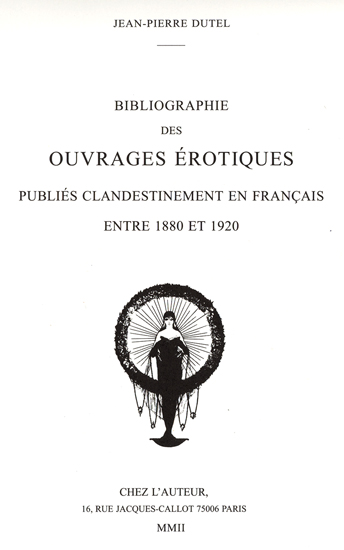
2002réf. 7429AParis, J-P. Dutel, 2002. 24x17 cm. 688 pp. Rel.toile, jaquette bicolore.
2002réf. 1691BParis, J.-P. Dutel, 2002. Gr.8°. 688 S. Orig.-Leinen mit Orig.-Umschlag.
1934réf. List3641New York: Leo Feist Inc 1934. Folio sheet music color pictorial cover. 5 pp 9 ⅛ x 12 inches. Near Fine. Sheet music for the title song from the Fleischer Studios animated short Poor Cinderella a 1934 Paramount production starring Betty Boop. Directed by Dave Fleischer and produced by Max Fleischer the film was issued as part of the studio’s Color Classics series and is notable as the only Betty Boop cartoon originally produced in color during the Fleischer studio’s classic run. The cover illustration shows Betty in her ragged Cinderella costume before a mirror the fairy godmother’s wand transforming her reflection into a princess an image that captures both the Depression-era fairy-tale theme and the character’s Jazz Age style. Although the cartoon itself contains no explicitly Black performers the cultural origins of Betty Boop’s voice and persona emerged from Harlem nightclub entertainment and became the subject of a widely publicized 1934 lawsuit involving singer Helen Kane and the African American child performer Esther Jones whose vocal style was introduced as evidence during the trial. Kane sued Fleischer Studios and Paramount claiming that Betty Boop’s distinctive “boop-oop-a-doop” singing style had been taken from her stage act. During the proceedings however theatrical manager Lou Bolton testified that the same vocal mannerism had been performed several years earlier by Jones in Harlem cabarets undermining Kane’s claim of originality. The court ultimately ruled against Kane.1 Created in 1930 Betty Boop quickly evolved from an anthropomorphic cartoon figure into a humanized Jazz Age flapper and one of the earliest animated sex symbols. Early Fleischer cartoons frequently placed the character in adult urban settings: nightclubs stage performances and surreal jazz environments. The character’s exaggerated blend of innocence and sexuality wide-eyed baby face combined with flapper dress and nightclub mannerisms made Betty one of the most recognizable figures in early American animation. With the strict enforcement of the Motion Picture Production Code in 1934 Betty Boop’s image was softened: skirts were lengthened risqué humor diminished and the once flirtatious character gradually recast into a more domesticated and wholesome figure. Issued by the prolific Tin Pan Alley publisher Leo Feist Inc. the sheet is a representative and surprisingly scarce item from this period. 1 Erin Blakemore “The People v. Betty Boop” The History Channel https://www.history.com/articles/the-people-v-betty-boop accessed March 11 2026. Leo Feist Inc unknown
1934réf. List3641New York: Leo Feist Inc 1934. Folio sheet music color pictorial cover. 5 pp 9 ⅛ x 12 inches. Near Fine. Sheet music for the title song from the Fleischer Studios animated short Poor Cinderella a 1934 Paramount production starring Betty Boop. Directed by Dave Fleischer and produced by Max Fleischer the film was issued as part of the studio’s Color Classics series and is notable as the only Betty Boop cartoon originally produced in color during the Fleischer studio’s classic run. The cover illustration shows Betty in her ragged Cinderella costume before a mirror the fairy godmother’s wand transforming her reflection into a princess an image that captures both the Depression-era fairy-tale theme and the character’s Jazz Age style. Although the cartoon itself contains no explicitly Black performers the cultural origins of Betty Boop’s voice and persona emerged from Harlem nightclub entertainment and became the subject of a widely publicized 1934 lawsuit involving singer Helen Kane and the African American child performer Esther Jones whose vocal style was introduced as evidence during the trial. Kane sued Fleischer Studios and Paramount claiming that Betty Boop’s distinctive “boop-oop-a-doop” singing style had been taken from her stage act. During the proceedings however theatrical manager Lou Bolton testified that the same vocal mannerism had been performed several years earlier by Jones in Harlem cabarets undermining Kane’s claim of originality. The court ultimately ruled against Kane.1 Created in 1930 Betty Boop quickly evolved from an anthropomorphic cartoon figure into a humanized Jazz Age flapper and one of the earliest animated sex symbols. Early Fleischer cartoons frequently placed the character in adult urban settings: nightclubs stage performances and surreal jazz environments. The character’s exaggerated blend of innocence and sexuality wide-eyed baby face combined with flapper dress and nightclub mannerisms made Betty one of the most recognizable figures in early American animation. With the strict enforcement of the Motion Picture Production Code in 1934 Betty Boop’s image was softened: skirts were lengthened risqué humor diminished and the once flirtatious character gradually recast into a more domesticated and wholesome figure. Issued by the prolific Tin Pan Alley publisher Leo Feist Inc. the sheet is a representative and surprisingly scarce item from this period. 1 Erin Blakemore “The People v. Betty Boop” The History Channel https://www.history.com/articles/the-people-v-betty-boop accessed March 11 2026. Leo Feist Inc unknown books