1 998 résultats
1917réf. 118396Berlin: Paul Cassirer 1917. Hardcover. Good- Spine missing but binding intact; Boards worn at extremities; Pages clean but for slight discoloration around edges due to age and a few pencil markings throughout. Grey paper-covered boards; plethora of duotone plates. Text in German; 2nd installment from the auction of Richard von Kaufmann's collection; Includes lots 67 - 164. This portion of the sale is comprised of Dutch French and Italian paintings. Many prices are written in as well as some buyers' names. Paul Cassirer hardcover books
2004réf. 112510London: Film and Video Umbrella 2004. Softcover. VG. BW pictorial wraps; Unpaginated approx. 56 pp.; Profusely illustrated with color photos. Accompanied a 2004 exhibition at the Milton Keynes Gallery; Printed in an edition of 1000. Film and Video Umbrella paperback books

1984réf. 106910London: Bell & Hyman Limited 1984. 4th Revised. Hardbound. VG/VG. Red cloth w/ black ill. dj; 187 pp text with bw plates. Bell & Hyman Limited hardcover books
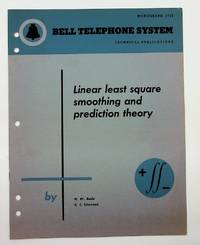
1950réf. 29629New York N.Y.: Bell Telephone Laboratories Incorporated 1950. Later printing. Wraps. Near Fine. Later printing. 9 3-blank pages. 10 7/8 x 8 3/8 inches 275 x 213 mm Publisher's printed grey blue and black wrappers. Stapled with five holes punched at the spine as issued. Wraps. The Proceedings of the Institute of Radio Engineers Vol 38 pp. 417-425 April 1950 first published this paper for which an offprint is known. Offered here in the Bell Telephone Systems Monograph series #1732:June 1950 a later printing. The wrapper title is different than the paper's title unusual given Bell Labs’ usual practice. "Summary - the central results of the Wiener-Kolmogoroff smoothing and prediction theory for stationary time series are developed by a new method. The approach is motivated by physical considerations based on electric circuit theory and does not involve integral equations or the autocorrelation function. The cases treated are the "infinite lag" smoothing problem the case of pure prediction without noise and the general smoothing prediction problem. Finally the basic assumptions of the theory are discussed in order to clarify the question of when the theory will be appropriate and to avoid possible misapplication." PROVENANCE: The personal files of Claude E. Shannon unmarked. There were multiple examples of this item in Shannon's files. REFERENCES: Sloane and Wyner "Claude Elwood Shannon Collected Papers" #51 COLLECTORS NOTE: The Bell Telephone System Monograph series offered a way to obtain individual articles by Bell scientists regardless of where their work was first published. Many Monographs significantly postdate the original article publication. Because of this they rarely constitute the coveted and traditional article offprint. If the journal of record issued no offprint the Monograph might be the first separate publication - the closest the collector can come to a traditional offprint. We have done our best to place each Monograph properly in the article’s publishing history and welcome any corrections or additional information especially regarding issues unknown to us. Bell Telephone Laboratories, Incorporated unknown books
1950réf. 29114New York NY: Institute of Radio Engineeres Inc. 1950. First Separate Edition. Wraps. Near Fine. First Separate Edition. 417-425 3-blank pages. 11 x 8 1/2 inches. Publisher's stapled glossy white printed covers. Wraps. The Proceedings of the Institute of Radio Engineers Vol 38 pp. 417-425 April 1950 first published this paper offered here in the offprint form. The paper was later reprinted in the Bell Telephone Systems Monograph series #1732: June 1950. "Summary - the central results of the Wiener-Kolmogoroff smoothing and prediction theory for stationary time series are developed by a new method. The approach is motivated by physical considerations based on electric circuit theory and does not involve integral equations or the autocorrelation function. The cases treated are the "infinite lag" smoothing problem the case of pure prediction without noise and the general smoothing prediction problem. Finally the basic assumptions of the theory are discussed in order to clarify the question of when the theory will be appropriate and to avoid possible misapplication." PROVENANCE: The personal files of Claude E. Shannon unmarked. There were multiple examples of this item in Shannon's files. REFERENCES: Sloane and Wyner "Claude Elwood Shannon Collected Papers" #51. [Institute of Radio Engineeres, Inc.] unknown books
1940réf. 27511New York: American Telephone and Telegraph Company 1940. Later printing. Wraps. Near Fine. Later printing. 34 pages. Plain white printed wraps with three holes punched near the spine as issued. 8vo. Previous owner's name C. P. Troemel on front wrapper. A later printing with white wrappers rather than the light blue wrappers. Wraps. Previous owner C. P. Troemel was a writer for Popular Electronics in the 1960s. The first separate appearance here in a later printing of this seminal paper in Monograph B-1239 of the Bell Telephone System Technical Publication series. First published in the Bell System Technical Journal July 1940 based on a presentation given at an IEEE Symposium on Network Theory in January 1940. This paper Bode's "best known and most succinct contribution to feedback theory" pre-dates Bode's better known work "Network Analysis and Feedback Amplifier Design" by 5 years and is the first publication on Bode plots. It is a seminal work in the field of control theory. "Henry Wade Bode was widely known as one of the most articulate thoughtful exponents of the philosophy and practice of systems engineering - the science and art of integrating technical components into a coherent system that is optimally adapted to its social function.Bode in 1929 transferred to Bell Labs' mathematical research group.and specialized in network theory and its application to long-distance communications. His extensive research in this field led eventually to the publication in 1945 of his classic book 'Network Analysis and Feedback Amplifier Design'.During his carrer at Bell he was granted 25 patents for innovations in the areas of transmission networks transformer systems electrical wave amplification broadband amplifiers and artillery computing.Bode received many honors during his career. In 1969 he was awarded the prestigious Edison Medal of the Institute of Electrical and Electronic Engineers IEEE 'for fundamental contributions to the arts of communication computation and control and for guidance and creative counsel in systems engineering.With the death of Hendrik Bode the country and university community lost of of the great engineering philosophers of his time." Memorial Tributes National Academy of Engineernig Vol. 3 While not known to the average citizen Bode is well known to engineering students for the Bode plot which allows engineers to characterize a feedback amplifier and it's useful range of operation. Practically speaking it helps engineers keep systems from operating at the extremes like the shrill noise we've all heard when someone using a microphone gets too close the speaker broadcasting their words. Like many things it was born from his need to solve a specific problem and finding that after a search of the literature nothing practical existed. "As a consequence of developing mathematical methods for designing feedback amplifiers to specified tolerances it became possible to design reliable vacuum-tube circuitry suitable for precision applications in early computers ." Engineering and Science in the Bell System p 353 LITERATURE: Basar Tamer "Control Theory: Twenty-Five Seminal Papers 1932-1981 Mindell's Between Human and Machine: Feedback Control and Computing Before Cybernetics." Lindsay R. Bruce "Benchmark Papers on Energy Vol. 6: The Control of Energy" Dowden Htchnson & Ross Inc Stroudburg PA:1977 pp 268-295. American Telephone and Telegraph Company unknown books
1940réf. 23648New York: American Telephone and Telegraph Company 1940. First Edition. Disbound. Good. First Edition. 421-454 pages. Disbound with stab-stitching marks down the left margin and glue residue at the spine. Very tightly trimmed at the gutter resulting in some minor impact on text from stitching. An extract from a bound volume of the Bell System Technical Journal July 1940. Disbound. This paper Bode's "best known and most succinct contribution to feedback theory" pre-dates Bode's best known book "Network Analysis and Feedback Amplifier Design" by 5 years and is the first publication on Bode plots. It is a seminal work in the field of control theory. "Henry Wade Bode was widely known as one of the most articulate thoughtful exponents of the philosophy and practice of systems engineering - the science and art of integrating technical components into a coherent system that is optimally adapted to its social function.Bode in 1929 transferred to Bell Labs' mathematical research group.and specialized in network theory and its application to long-distance communications. His extensive research in this field led eventually to the publication in 1945 of his classic book 'Network Analysis and Feedback Amplifier Design'.During his carrer at Bell he was granted 25 patents for innovations in the areas of transmission networks transformer systems electrical wave amplification broadband amplifiers and artillery computing.Bode received many honors during his career. In 1969 he was awarded the prestigious Edison Medal of the Institute of Electrical and Electronic Engineers IEEE 'for fundamental contributions to the arts of communication computation and control and for guidance and creative counsel in systems engineering.With the death of Hendrik Bode the country and university community lost of of the great engineering philosophers of his time." Memorial Tributes National Academy of Engineernig Vol. 3 While not known to the average citizen Bode is well known to engineering students for the Bode plot which allows engineers to characterize a feedback amplifier and it's useful range of operation. Practically speaking it helps engineers keep systems from operating at the extremes like the shrill noise we've all heard when someone using a microphone gets too close the speaker broadcasting their words. Like many things it was born from his need to solve a specific problem and finding that after a search of the literature nothing practical existed. "As a consequence of developing mathematical methods for designing feedback amplifiers to specified tolerances it became possible to design reliable vacuum-tube circuitry suitable for precision applications in early computers ." Engineering and Science in the Bell System p 353 LITERATURE: Basar Tamer "Control Theory: Twenty-Five Seminal Papers 1932-1981 Mindell's Between Human and Machine: Feedback Control and Computing Before Cybernetics." Lindsay R. Bruce "Benchmark Papers on Energy Vol. 6: The Control of Energy" Dowden Htchnson & Ross Inc Stroudburg PA:1977 pp 268-295. American Telephone and Telegraph Company unknown books
1792réf. 314449Berlin: Himberg 1792. hardcover. very good. 15 folding copper plates and a general map of the sky. Frontispiece portrait of Johann Bode. XXIV 611 pages with some engraved vignettes and tables. Short thick 8vo full contemporary mottled calf red edges ornately gilt spine with red spine label leather crackled some general browning to pages inner hinges reinforced small bookplate on inside front cover. Berlin: Himberg 1792. Sixth revised edition. Very good. Guide to the knowledge of the starry sky. Himberg unknown books
1928réf. 310036London: Methuen 1928. hardcover. very good. Frontispiece 104 plates. 258 pages. Tall thick 8vo green cloth. London: Methuen and Co. 1908. 2nd edition revised and corrected. Spine evenly sunned and foxing to page edges still about very good. Methuen unknown books
1972réf. 263370Carbondale: Southern Illinois University Press 1972. First. hardcover. very good-/very good. Illus. 4to blue cloth d.w. sunned on spine portion cloth corners lightly bumped. Carbondale: Southern Illinois University Press 1972. Southern Illinois University Press unknown books
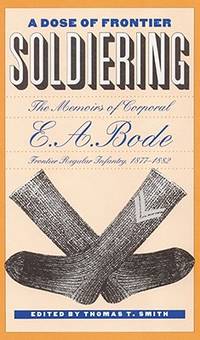
1994réf. 247705Lincoln: University of Nebraska Press 1994. hardcover. very good/very good-. Ed. by Thomas T. Smith. Illus. 8vo brown cloth d.w. lightly soiled and chipped. Lincoln: University of Nebraska Press 1994. University of Nebraska Press unknown books
1972réf. 223946Carbondale: Southern Illinois University Press 1972. First. hardcover. very good/good. Illus. 4to blue cloth d.w. soiled and dampstained. Carbondale: Southern Illinois University Press 1972. Southern Illinois University Press unknown books
réf. 170195hardcover. 635pp. 8vo cloth-backed bds. d.w. New York: The Dial Press 1977. Very good with a large closed tear on front cover. unknown books
1921réf. 111042Berlin 1921. hardcover. very good-. Many black-and-white illustrations. 231pp. 4to cloth-backed boards leather label; spine ends worn. Berlin 1921. A very good- copy. Propylaen-Verlag unknown books
1928réf. 136307Berlin: Cassirer 1928. hardcover. very good. 83 fine photogravure plates thick folio rebound in cloth original paper label on front cover; label rubbed and soiled some pencilling in margins interior is fine. Berlin: Paul Cassirer/Hugo Helbing 1928. Very good . Cassirer unknown books
1974réf. 158284Carbondale: Southern Illinois 1974. hardcover. near fine. Small 8vo cloth d.w. Carbondale: Southern Illinois UP 1974. Near fine. Southern Illinois unknown books
1925réf. 45029München: Oskar Beck 1925. Third edition 8th to 14th Thousand. Hardcover. vg. Quarto. v i 2 55 3pp. 2 xvi plates. Original illustrated paper-covered boards with black lettering on front cover and spine. Cover illustration by Peter Trumm. Fascinating work with three hundred and sixty exercises; a methodology of gymnastic expression profusely illustrated with twenty b/w photographic plates each with two to three images. Dedicated to the German youth. Text in German Gothic script. Light wear along edges of binding light bumps. Front cover with small remnant of removed sticker possibly price tag and rubbed. Front gutter reinforced with japan tissue. Free endpapers with light foxing. Block slightly toned not affecting images. Binding and interior in overall very good condition. Oskar Beck hardcover books
1977réf. 531638New York: St. Martin's Press 1977. Softcover. Near Fine. Uncorrected proof of the first edition in English. Translated by Paul Auster and Lydia Davis. Black wrappers printed in silver. Modest edgewear a light glue mark where a publisher's label was affixed and is now laid in overall near fine. St. Martin's Press unknown books
1969réf. 303014Carbondale Illinois: Southern Illinois University Press 1969. Hardcover. Near Fine/Very Good. First edition. Near fine in a very good dustwrapper with a faded spine. Southern Illinois University Press hardcover books
1977réf. 110326New York: The Dial Press 1977. Hardcover. Fine/Near Fine. First edition. Fine less some offsetting on the rear end papers in near fine lightly rubbed dustwrapper. The Dial Press hardcover books
1824réf. SKU1015939Dieterichianis: Gottingen 1824. LEATHER_BOUND. Good. 0x0x0. Signed. 1824 edition with Latin text. Has several inscriptions on the front end page- one inscription is from the author in Latin 3/4 bound in leather with decorated paper covered boards- boards have moderate rubbing to the edges clean has a good binding likely rebound in early 20th century no marks or notations. 185 pages. Feel free to ask questions. Gottingen hardcover books
réf. 49621Frankfurt: Bücherschiff n.d. paper wrappers. 12mo. paper wrappers. 352 pages. Contemporary essays on books--"keys to life gates to the world." Spine creased. Bücherschiff unknown books
1942réf. 102441Columbus OH: Epsilon Pi Tau 1942. stiff paper wrappers. 8vo. stiff paper wrappers. iv 9 2 pages. A speech for the members of Epsilon Pi Tau. Minor wear. Epsilon Pi Tau unknown books
1801réf. 19781Berlin: Selbstverlag Chez l’auteur 1801. FIRST AND ONLY EDITION. Printed in German and French with the text in 2 columns. Unbound sheets folded in signatures uncut; in absolutely beautiful condition a phenomenal newly discovered gem. First and only edition of the text volume to Bode’s Uranography published the same year. This text volume was printed separate and apart from the star atlas which set a new benchmark in the field proving itself as a true successor to the great atlases of Bayer Hevelius and Flamsteed. Bode’s atlas is noted for a number of stars lying outside of the constellations and he proposed the concept of boundaries to these constellations that would with later adjustments become “fundamental to astronomy” Whitfield. Bode 1747-1826 was director of the Berlin observatory and editor of the Astronomisches Jahrbuch. He played an important role in the development of astronomy in Germany becoming Royal Astronomer and a member of the Berlin Academy. He gave the name Uranus to Herschel’s newly discovered planet. DSB II p. 220; Warner p. 39; Whitfield p. 104. Selbstverlag, Chez l’auteur, unknown books
1910réf. 1365804Berlin: Julius Bard 1910. Limited edition. Hardcover. Folio; Limited edition 6/100; G; Hardcover; Spine red with gold print raised bands; Slipcase in grey cloth tears at all corners fading smudging/shelfwear; Boards in red leather scuffing to raised bands hinges corners light cracking to leather on spine else clean and strong; Text block has gilt top edge deckle edges clean and tight; Text in German; “Mit 66 Tafeln in Heliogravüre und 13 Textbildern in Lichtdruck”— title page; Inscribed in ink by A. de Ridder on title page; 44 pages followed by 66 unnumbered leaves of b&w plates. Shelf: Art Collections Oversized books. Additional postage necessary for expedited/international orders. Economy International shipping unavailable due to size/weight restrictions. For international/expedited customers please inquire for rates. NOTE: Shelved in the Back Area Oversized Folios. 1365804. FP New Rockville Stock. Julius Bard hardcover books