3 554 résultats
réf. DADAX0959941312New unknown
1894réf. 017244Paris 1894 Librairie agricole de la maison rustique Soft cover
1936Pages 265-304. Features: Cover photo of fire damage at the English Hollywood, Elstree film studios; Photo of the archduke Otto leaving a Paris hotel; Photo of M. Flandon with prince Starhemberg; Photo of smiling Canadian Olympians offering Nazi salute as they march past Hitler during opening ceremonies of the fourth Winter Olympics in Garmisch-Partenkirchen, Bavaria; Four additional photos of the Garmisch winter Olympics; Photos with the Italians in North and South - battles on both fronts, with photo of Gen. Graziani on horse; Capt. Bligh's own account of the mutiny on the "Bounty" - a chapter from his narrative describing the whole voyage, with illustrations; Dancer Anna Pavlova's "Dying Swan" immortalized in rare sequence of 15 images; Two-page illustration of Parisien opera fashions; A new Mycenaen beehive tomb - discoveries at Berbati, near Mycenae, some of the finest painted vases to be found in Greece, in a tomb dating from about 1400 BC - photo illustrated article; Photo of state funeral of general Kondylis in Athens; Two-page centrefold illustration of Hopi Indians dancing with live and venomous snakes in their mouth and hands; Two pages of photos of naval vessels "Renown", "Greyhound", "Repulse", and "Gotland"; Photos of personalities in the news include Mrs. Henry Sidgwick, Sir C. E. Corkran, Sir Charles Ballance, Herr Gustloff (German Nazi leader in Switzerland), Dr. Wilhelm Solf, I. H. D. Rolleston, Lieut. T. Rose (record-breaking aviator), vice admiral E. R. G. Evans with Cmdr. Rudberg, Walter Runciman, commander A. D. Cochrane, members of the new Egyptian government, including Ali Pasha, and British Nurses for Abyssinia; Four amazing photos illustrate construction of the Olympic Bob-run - bricklaying with ice from a lake; One page photo portrait of the highest waterfall in the world, Gersoppa Falls, in southern India; One page illustrated ad for the Austin Sherborne car; One page illustrated ad for Kenistas cigarettes features dame Sybil Thorndike; Handsome halfpage Rolls-Royce ad; Halfpage illustrated ad for Hooper & Co.; Halfpage photo ad for Morris Motors Limited features their Big Sixes; Photo of the British Continental Airways liner "St. George"leaving Croydon as it initiates air service between London and Sweden; Colour-illustrated back cover ad for Black-and-White Scotch whisky features The Scots Guards. Centrefold holding by one staple. Unmarked with moderate wear. A quality vintage copy. Magazine
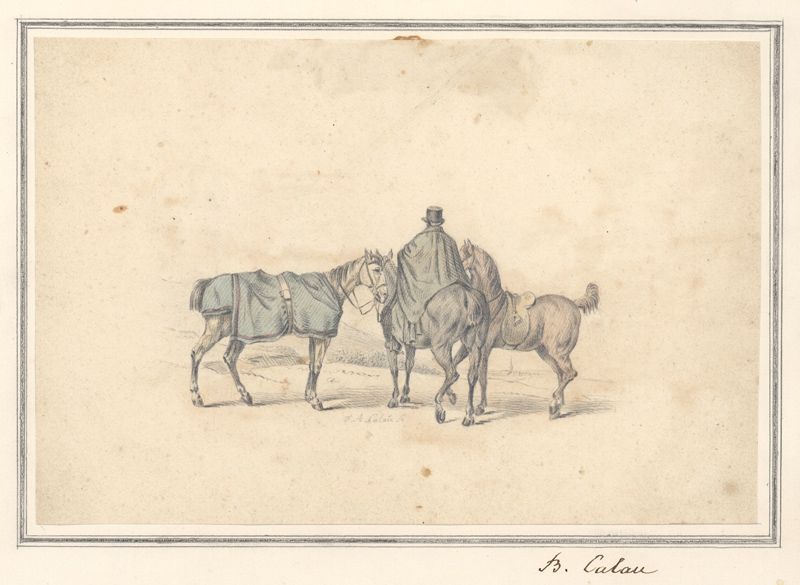
réf. 204-Eo.J. Aquarell, über Bleistift, auf chamoisfarbenem Velin, Mitte unter der Darstellung und verso signiert ?F.A. Calau fe?. 14,9:22,1 cm.
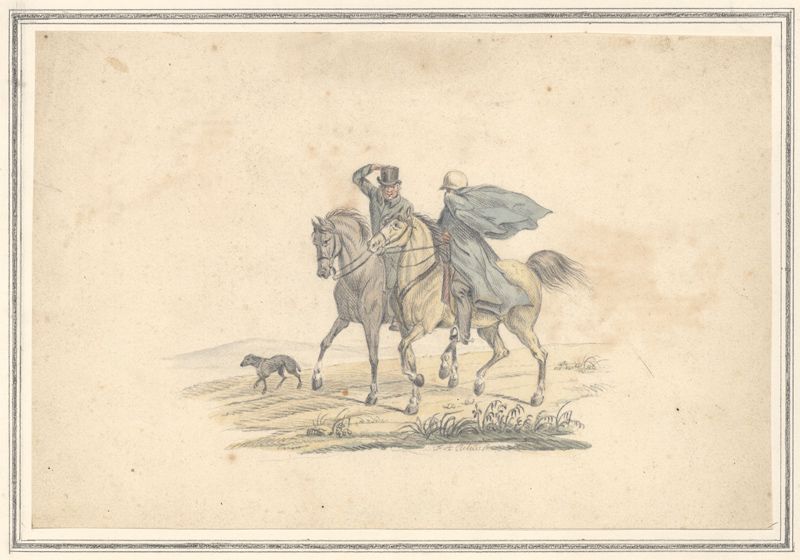
réf. 203-Eo.J. Aquarell, über Bleistift, auf chamoisfarbenem Velin, Mitte rechts unter der Darstellung und verso signiert ?F.A. Calau f.?. 15,1:22,3 cm.
réf. 10118Lyon, Bouvet, 1951, 1 en cahiers sous coffret en pleine percaline, titre en lettres dorées, charnière du couvercle fendue. in-4 oblong, f.t., frontispice (photo contrecollée), justification du tirage, titre, 4 feuillets de préface et note de l'éditeur, 26 cahiers (120 pages), soit 1 cahier descriptif par cheval (titre, photo contrecollée et 2 à 4 pages de texte descriptif ), au total 26 photos contrecollées, exemplaire numéroté, un des 950 sur pur fil des papeteries Johannot, légères rousseurs sur quelques feuillets ;
réf. 98638À Paris, Chez Guillyn, 1754, 1 volume in-8 de 200x130 mm environ, xiv-(1 f. d'approbation)-439 pages-11 planches dépliantes, 1 feuillet blanc, veau blond marbré, dos à nerfs orné aux petits fers, tranches rouges, gardes marbrées (rel. de l'époque). Quelques feuillets et bordures de certaines planches brunis, coins émoussés et coupes, petite galerie de ver sur le premier plat,
1930réf. rx1021Editions Berger-Levrault Broché 1930 RARE. In-4 (16,8 x 25,3 cm), broché, 212 pages, illustrations en noir in et hors texte ; pliures au dos, petites déchirures aux mors, bord latéral des plats usés, par ailleurs intérieur bien conservé, assez bon état général. Livraison a domicile (La Poste) ou en Mondial Relay sur simple demande.
1884réf. 25249Paris Imprimerie Veuve Éthiou Pérou 1884 1 in-4 oblong Préface de Jules Paton. Paris, Imprimerie Veuve Éthiou Pérou, 1884, in-4 oblong, percaline verte de l'éditeur, filets dorés en encadrement et titre doré sur le plat supérieur.
réf. 17226Paris, Librairie de Firmin Didot, frères, 1854. In-8, 578 pp., 7 pl., chagrin vert d'A. Despierres, rel. de l'empereur, double filet à froid et filet doré en encadrement sur les plats, dédicace dorée au premier plat, dos à nerfs orné de caissons à froid et de filets dorés, doublure et garde de soie moirée blanche, tranches dorées (petits manques et frottements, soie tachée, rousseurs).
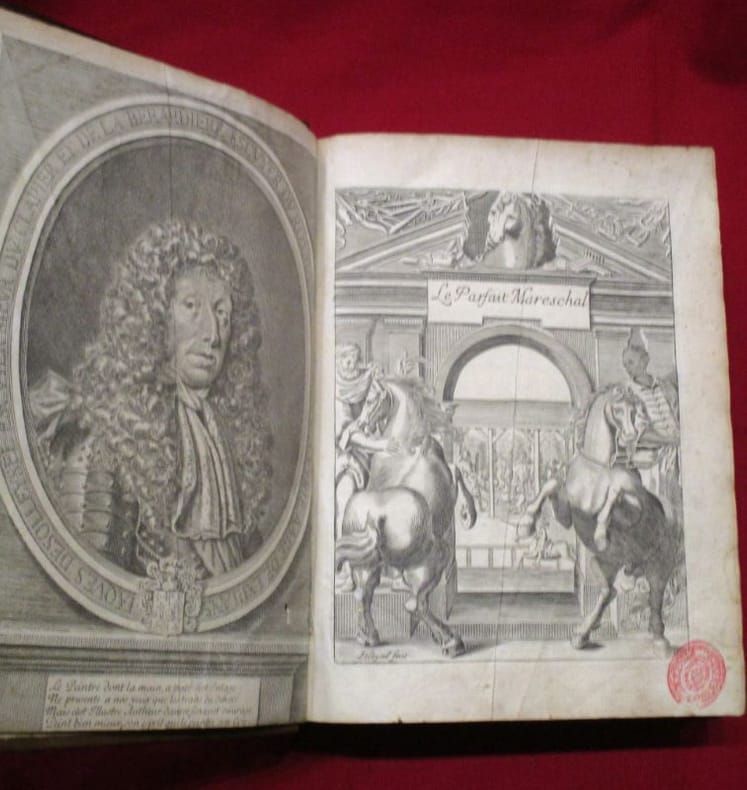
réf. 118823A Paris, Chez Jean Mariette, 1713, 2 parties reliées en 1 volume in-4 de 185x245 mm environ, portrait frontispice, titre-frontispice gravé, (3) ff. (titre, avis au lecteur), paginé 513 (au lieu de 512 pages), (5) ff. (table) - page de titre de la seconde partie, 376 pages, 6ff. (table des matières générales). Complet du portrait, du titre frontispice gravé, des deux planches (dont une dépliante) et des nombreuses figures in-texte. Plein cuir brun moucheté d'époque, dos à nerfs portant titres dorés sur pièce de titre en maroquin havane, orné de caissons à motifs dorés, roulette dorée sur les coupes, tranches mouchetées rouges, gardes blanches. Coiffe de tête arasée, quelques taches sombres et épidermures sur le cuir, garde volante en partie découpée, ex libris au tampon rouge (François Viallet) sur deux feuillets, quelques rousseurs et discrètes traces de mouillures sinon bon état général.
réf. DADAX0091879388New unknown
2000réf. 203966New York: Simon & Schuster 2000. First edition and first printing. Hardcover. 192 pages. Copy 780 from a limited edition of 1500 copies. Published in conjunction a traveling exhibition. Edited by Christopher Cardozo. Features a foreword by N. Scott Momaday along with essays by Cardozo and Joseph D. Horse Capture and an afterword by Anne Makepeace. Includes numerous images by Curtis. A fine copy in cloth binding with sepia toned image inset into the front board in a fine matching cloth slipcase. No dust jacket as issued. Signed by Cardozo on the limitation page. A very attractive book. Please note that this is a heavy and oversized book and will require extra shipping. Simon & Schuster unknown
2000réf. 203966New York: Simon & Schuster 2000. First edition and first printing. Hardcover. 192 pages. Copy 780 from a limited edition of 1500 copies. Published in conjunction a traveling exhibition. Edited by Christopher Cardozo. Features a foreword by N. Scott Momaday along with essays by Cardozo and Joseph D. Horse Capture and an afterword by Anne Makepeace. Includes numerous images by Curtis. A fine copy in cloth binding with sepia toned image inset into the front board in a fine matching cloth slipcase. No dust jacket as issued. Signed by Cardozo on the limitation page. A very attractive book. Please note that this is a heavy and oversized book and will require extra shipping. Simon & Schuster unknown books
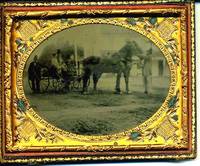
1850réf. 99561850. Horse and carriage ambrotype circa 1850-1859 documents mid-19th century American civilian transportation and rural social life during the decade immediately preceding and encompassing the early Civil War period. The image holds research value for the study of early photographic practice particularly outdoor ambrotype production as well as material culture relating to horse-drawn mobility family presentation and dress in pre-industrial and wartime America. Ambrotypes were typically produced in controlled studio environments due to technical limitations; the presence of an outdoor composition situates this image within a less common subset of early American photography. Quarter plate ambrotype photograph showing a family seated within a horse-drawn carriage accompanied by two large horses with an adult man standing at the front holding the animals. The man wears a broad-brimmed hat consistent with mid-19th century rural or frontier attire. The group is positioned outdoors likely on unpaved ground with no visible studio backdrop emphasizing natural light exposure. The composition centers the carriage and team with human figures arranged to present both transport and family unit simultaneously. The photograph is housed in its original leather presentation case with red velvet interior lining and a decorative copper mat framing the image. The ambrotype process a glass-based photographic technique introduced in the early 1850s produces a unique non-reproducible positive image distinguishing it from later paper-based photographic formats such as cartes de visite. Ambrotypes emerged during a transitional period in photographic history bridging earlier daguerreotype practices and the rise of reproducible paper photography. By the late 1850s and into the Civil War era photographic documentation expanded alongside technological shifts yet outdoor images remained comparatively uncommon due to exposure constraints and equipment limitations. This image contributes to the visual record of civilian life during a period often dominated by military imagery offering insight into transportation clothing and social presentation outside formal studio settings. Light wear to case exterior minor rubbing at edges; interior velvet intact with moderate compression; glass plate and mat remain well-preserved with clear image visibility. Overall very good condition. unknown
1850réf. 99561850. Horse and carriage ambrotype circa 1850-1859 documents mid-19th century American civilian transportation and rural social life during the decade immediately preceding and encompassing the early Civil War period. The image holds research value for the study of early photographic practice particularly outdoor ambrotype production as well as material culture relating to horse-drawn mobility family presentation and dress in pre-industrial and wartime America. Ambrotypes were typically produced in controlled studio environments due to technical limitations; the presence of an outdoor composition situates this image within a less common subset of early American photography. Quarter plate ambrotype photograph showing a family seated within a horse-drawn carriage accompanied by two large horses with an adult man standing at the front holding the animals. The man wears a broad-brimmed hat consistent with mid-19th century rural or frontier attire. The group is positioned outdoors likely on unpaved ground with no visible studio backdrop emphasizing natural light exposure. The composition centers the carriage and team with human figures arranged to present both transport and family unit simultaneously. The photograph is housed in its original leather presentation case with red velvet interior lining and a decorative copper mat framing the image. The ambrotype process a glass-based photographic technique introduced in the early 1850s produces a unique non-reproducible positive image distinguishing it from later paper-based photographic formats such as cartes de visite. Ambrotypes emerged during a transitional period in photographic history bridging earlier daguerreotype practices and the rise of reproducible paper photography. By the late 1850s and into the Civil War era photographic documentation expanded alongside technological shifts yet outdoor images remained comparatively uncommon due to exposure constraints and equipment limitations. This image contributes to the visual record of civilian life during a period often dominated by military imagery offering insight into transportation clothing and social presentation outside formal studio settings. Light wear to case exterior minor rubbing at edges; interior velvet intact with moderate compression; glass plate and mat remain well-preserved with clear image visibility. Overall very good condition. unknown books
1979réf. 283479Glenbow-Alberta Institute and Blood Tribal Council 1979. Hardcover. Very Good. 8vo in red cloth titles in gilt. Corners and spine ends of the binding lighty pushed but not rubbed. The dustjacket has the lightest touch of rubbing at the corners and the base of the spine one very small chip at the top of the spine light shallow crease at the top of the rear panel a light crease and a very small chip at the bottom of the front panel very light rubbing at the foredge and scattered around the front panel modestly affecting the title. Glenbow-Alberta Institute and Blood Tribal Council hardcover
19498vo., later impression, handsomely bound in red full morocco, sides with gilt frame border, back with raised bands, second and fourth compartments ruled and lettered in gilt, all other compartments tooled in gilt, hand-made endpapers, a most attractive copy ideal as a gift or for presentation. SIGNED BY THE AUTHOR ON TITLE. Arguably the most ingenious POW escape of WWII, it became a legend among servicemen long before its publication here in 1949. Two officers made home runs via a tunnel dug in the open air beneath a wooden vaulting horse. The scene was Stalag Luft III (site of the 'Great Escape' later in the war) and the story one of the true classics of WWII. Endlessly reprinted, it has now achieved the status of popular folklore. It was filmed by Jack Lee in 1950 starring Leo Genn, David Tomlinson and Bryan Forbes. Published in the same year as the first edition. Astonishingly, not recorded by Enser.
1969Book is in excellent condition in heavy weave tan HB covers, gilt over red at spine. Binding is solid and square, covers have sharp corners with a very light bump to lower front, exterior shows no blemishes, text/interior is clean and free of marking of any kind. Dust jacket shows the slightest signs of shelf wear only, no tears, price clipped, now wrapped in clear protective cover. 322 pages on high quality heavy white paper, reprinted form 1903. Rare by this publisher. Full page Author illustration opposite title page, Illustrated by one hundred and forty engravings, in which are represented most of the popular diversions; selected from ancient paintings. "This book is a key source for information on leisure time activities in 'Olde England,' including sports, hunting, games, dancing, gymnastics, music, festivals including Christmas and May Day and customs such as Mumming, The Boy Bishop, and The Lord of Misrule, Horse Racing, Slinging of Stones, Hand Ball, Archery, Dancing, Tumbling, Balancing, Jugglers, Juggling, Bowling, Tennis, Bat and ball, Jousts, Tricks Taught to Horeses, Animals Imitated, Quintain, Tilting, Kayles, Cards, Chess,. It answers questions such as "How do you score a joust?," "When did feral wolves become extinct in Britain?," and "How much do you pay the piper?" And what is Shakespeare talking about when he mentions Shove-Groat or Nine Men's Morris? (The modern equivalents are shuffleboard and tic-tac-toe). Included are numerous quotes from original documents and dozens of plates based on period illustrations. Strutt also documents the constant conflict between popular culture and the religious and secular powers."
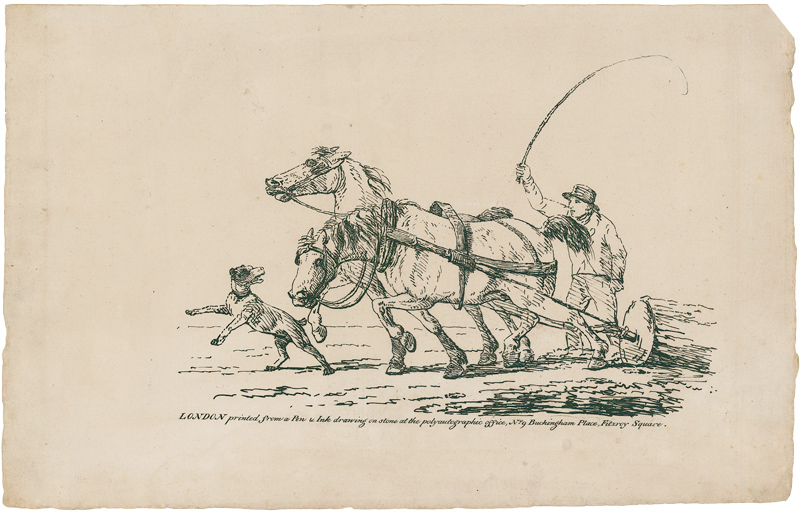
1807réf. 064-L1807. Federlithographie 1807. 28,5:44,6 cm. Literatur: Man, Anfänge der Künstlerlithographie in England, Anonym 10; Desjardijn Kat. 3 und Abb. S. 55.- Mit der Adresse Vollweiler Imprint III.
Eighth edition, 8vo (205 x 120 mm), xvi, 197, [1]pp., frontispiece silhouette portrait of Astley and 9 engraved plates, in an elegant twentieth century half green morocco binding by Sangorski and Sutcliffe, spine lightly faded, spine lettered in gilt direct, t.e.g. Philip Astley (1742-1814), equestrian performer and circus proprietor. As well as being considered the creator of the modern circus (Astley's Amphitheatre), Astley also had a very successful career in the Army. At the age of 17 he enrolled in the 15th Light Dragons, a cavalry regiment newly formed by Colonel Granville Elliott. A gifted equestrian, he was put in charge of breaking new horses for his regiment. In 1761, Astley and his regiment embarked for the Continent to fight alongside King Frederick II of Prussia in the Seven Years' War, he returned to England in 1766 with the rank of Sergeant Major and obtained his discharge on June 21st of that year. When the war between the United Kingdom and revolutionary France broke out in 1793, Astley, who was then 51, re-enlisted in the 15th Light Dragons, "acting as a horse-master, celebrity morale-booster and war correspondent in one."
2024réf. __1071923609Cq Pr 2024. Hardcover. New. 800 pages. 10.25x7.50x1.75 inches. Cq Pr hardcover
1978réf. 2091502133524411Rippushobo 1978. Soft Cover. Fine. Number of books: 1 Rippushobo paperback
réf. Z1-T-040-00203Rarebooksclub.com. Used - Like New. Used - Like New. Book is new and unread but may have minor shelf wear. Ships from UK in 48 hours or less usually same day. Your purchase helps support Sri Lankan Children's Charity 'The Rainbow Centre'. 100% money back guarantee. We are a world class secondhand bookstore based in Hertfordshire United Kingdom and specialize in high quality textbooks across an enormous variety of subjects. We aim to provide a vast range of textbooks rare and collectible books at a great price. Our donations to The Rainbow Centre have helped provide an education and a safe haven to hundreds of children who live in appalling conditions. We provide a 100% money back guarantee and are dedicated to providing our customers with the highest standards of service in the bookselling industry. Rarebooksclub.com unknown
réf. 41200Moutier, A l'Enseigne du Moustier, 1947. Pt. in-4°, 62p. Reliure pleine toile d'éditeur, sous jaquette illustrée.