Harrison, JosephBiblio.com
9 988 résultats
1856réf. 035042London: Simpkin and Marshall 1856. Book. Illus. by C.W. Harrison. Very Good. Hardcover. First Edition. 8vo 13 X 21cm. Two volumes handsomely bound by Sotheran Sackville Street London years 1855 and 1856. pp332 Volume 1855 with 12 highly attractive hand-coloured plates all with tissue guards very clean slight toning to just a few pages no inscriptions or annotation. pp 372 and bound to the back the pp33 Gardener's and Naturalist's Almanack 1856. Half leather bindings by Sotheran gilt decoration and lettering to spine title label to each volume some loss of colour to the spines but with lustre and strong no cracking. A very good pair with fine bright plates and some in text diagrams. Simpkin and Marshall Hardcover
1969Book is in excellent condition in heavy weave tan HB covers, gilt over red at spine. Binding is solid and square, covers have sharp corners with a very light bump to lower front, exterior shows no blemishes, text/interior is clean and free of marking of any kind. Dust jacket shows the slightest signs of shelf wear only, no tears, price clipped, now wrapped in clear protective cover. 322 pages on high quality heavy white paper, reprinted form 1903. Rare by this publisher. Full page Author illustration opposite title page, Illustrated by one hundred and forty engravings, in which are represented most of the popular diversions; selected from ancient paintings. "This book is a key source for information on leisure time activities in 'Olde England,' including sports, hunting, games, dancing, gymnastics, music, festivals including Christmas and May Day and customs such as Mumming, The Boy Bishop, and The Lord of Misrule, Horse Racing, Slinging of Stones, Hand Ball, Archery, Dancing, Tumbling, Balancing, Jugglers, Juggling, Bowling, Tennis, Bat and ball, Jousts, Tricks Taught to Horeses, Animals Imitated, Quintain, Tilting, Kayles, Cards, Chess,. It answers questions such as "How do you score a joust?," "When did feral wolves become extinct in Britain?," and "How much do you pay the piper?" And what is Shakespeare talking about when he mentions Shove-Groat or Nine Men's Morris? (The modern equivalents are shuffleboard and tic-tac-toe). Included are numerous quotes from original documents and dozens of plates based on period illustrations. Strutt also documents the constant conflict between popular culture and the religious and secular powers."
1970Slight waviness to cloth on exterior of spine, sharp corners, two impacts to front cover. Text/interior is clean and free of marking of any kind, appears new in every respect. Dust jacket has lots of edge and corner wear, small tears, is price clipped. Very large, encyclopedic reference, 771 pages plus 36 full page, full color plates, some photos, lots of b&w drawings, many figures depicting specific features of fish, lots of keys to specific genera or species of families with drawings. Each fish is I.D.'d with Distinctions, Coloration, Remarks, and Distribution. Contents include Introduction: a brief history of the study of Bahaman fishes, Scope of the book, How to use the book, The names of fishes, Measureing and counting a fish. Then Outline drawings of representative examples of the families of Bahaman fishes, followed by pp. 1 -- 731 Fishes of the Bahamas. Glossary, references, & Index at back.
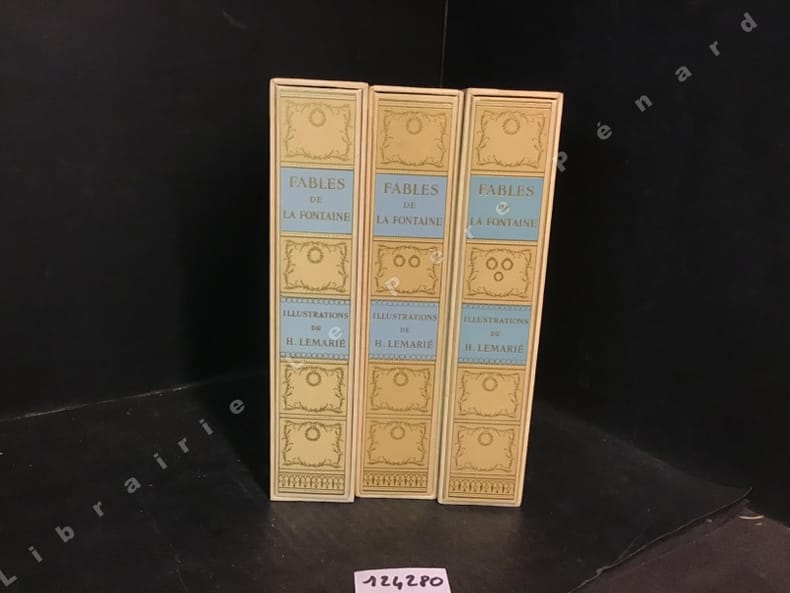
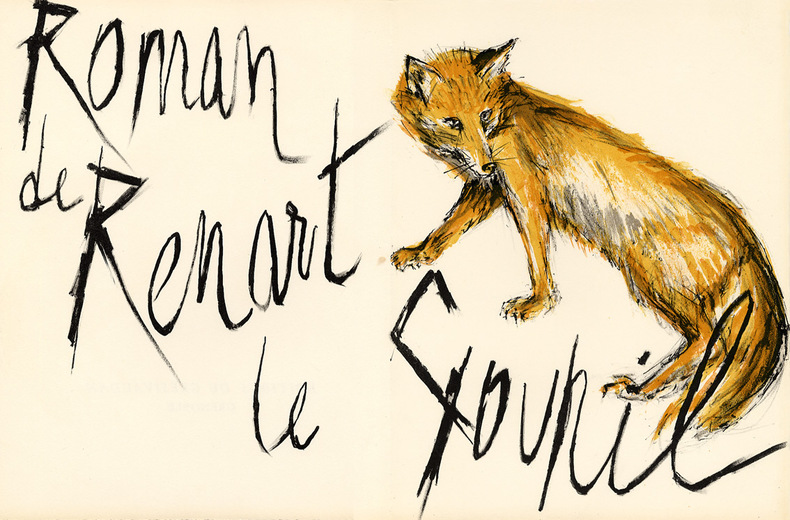
1962réf. 1242801962 Editions d'Art Les Heures Claires, Paris - 1962/1966 ( Quarante quatre mois de travail ont été nécessaires à la réalisation de cet oiuvrage)) - 3 volumes in-8 en feuillets sous chemise et étui cartonné illustrés de l'éditeur. 194 + 165 + 209 pages - Illustrations en couleur dans le texte gravées par Jean Tarico (travail ayant requis deux mille deux cents bois nécessaires à la reproduction des aquarelles)- Exemplaire bien complet du fac-similé de la lettre d'Henri Lemarié
1809réf. 4805London:: George Shaw and E. Nodder 1809. First edition. Fine condition with original bright hand-coloring. . A Fine and rare original hand-colored copperplate engraving by Frederick Polydore Nodder and/or his son Richard Polydore Nodder from The Naturalist's Miscellany. Octavo 6 x 9.5 inches 15.24 x 24.13 cm. Includes the original text in both English and Latin by George Shaw MD FRS. The Naturalist's Miscellany distinguished by the refined hand-colored copperplate engravings and astute naturalists' observations was aptly named as a diverse naturalists' compendium of the birds mammals reptiles insects fish and crustacean identified by seventeenth and eighteenth century naturalists spanning the globe particularly around the South Seas. Many of nature's most fascinating and unusual creatures were discovered during this period several of which were introduced through The Naturalist's Miscellany. Doctor George Shaw 1751-1813 Fellow of the Royal Society cofounder of the Linnaean Society as well as Zoologist of the British Museum contributed the text. Publication of the Naturalist's Miscellany ceased with his death in 1813. Upon the death of the artist FP Nodder 1770-1800 his wife Elizabeth and their son Richard Polydore Nodder 1793-1820 contributed artistically and editorially to the publication. Indeed a family affair both Frederick Polydore Nodder and his son Richard produced every one of the plates. A gifted and distinguished naturalist Frederick P. Nodder was the preferred Botanical Painter to Her Majesty Queen Charlotte. His early skills as botanical and animal draughtsman and engraver were honed from his association with Sir Joseph Banks who employed Nodder to complete and engrave the drawings from the sketchbooks of the late Sydney Parkinson. Parkinson accompanied Banks as botanical draughtsman aboard Captain James Cook's The Endeavor in 1771. Parkinson died on the return of this South Seas Voyage. These engravings along with the natural history collections of the British Museum were the basis for the mastery of the Naturalist's Miscellany. Frederick's son Richard P. Nodder a gifted animal painter in his own right was distinguished as botanic painter to King George III. At the time of its creation The Naturalist's Miscellany was highly coveted as a definitive natural history offering and as was the custom the work was issued in installments between 1790 and 1813. Each volume was dedicated by permission and dutifully inscribed to the most devoted patrons and contributors of the natural historical pursuits of eighteenth and early nineteenth century Britain: Queen Charlotte Sir Joseph Banks Thomas Pennant Esq. The Universities of Oxford and Cambridge The Trustees of the British Museum to name a few. Andrews1986 Blunt 151Coats 25 Sitwell FBB 142 Wood 482. Copyright: Lowry-James Rare Prints & Books 1/09. Archivally matted in jasmine green rag mat sized to 12 x 16 inches. George Shaw and E. Nodder, unknown
1809réf. 4457London:: George Shaw and E. Nodder 1809. First edition. Fine condition with original bright hand-coloring. . A Fine and rare original hand-colored copperplate engraving by Frederick Polydore Nodder and/or his son Richard Polydore Nodder from The Naturalist's Miscellany. Octavo 6 x 9.5 inches 15.24 x 24.13 cm. Includes the original text in both English and Latin by George Shaw MD FRS. The Naturalist's Miscellany distinguished by the refined hand-colored copperplate engravings and astute naturalists' observations was aptly named as a diverse naturalists' compendium of the birds mammals reptiles insects fish and crustacean identified by seventeenth and eighteenth century naturalists spanning the globe particularly around the South Seas. Many of nature's most fascinating and unusual creatures were discovered during this period several of which were introduced through The Naturalist's Miscellany. Doctor George Shaw 1751-1813 Fellow of the Royal Society cofounder of the Linnaean Society as well as Zoologist of the British Museum contributed the text. Publication of the Naturalist's Miscellany ceased with his death in 1813. Upon the death of the artist FP Nodder 1770-1800 his wife Elizabeth and their son Richard Polydore Nodder 1793-1820 contributed artistically and editorially to the publication. Indeed a family affair both Frederick Polydore Nodder and his son Richard produced every one of the plates. A gifted and distinguished naturalist Frederick P. Nodder was the preferred Botanical Painter to Her Majesty Queen Charlotte. His early skills as botanical and animal draughtsman and engraver were honed from his association with Sir Joseph Banks who employed Nodder to complete and engrave the drawings from the sketchbooks of the late Sydney Parkinson. Parkinson accompanied Banks as botanical draughtsman aboard Captain James Cook's The Endeavor in 1771. Parkinson died on the return of this South Seas Voyage. These engravings along with the natural history collections of the British Museum were the basis for the mastery of the Naturalist's Miscellany. Frederick's son Richard P. Nodder a gifted animal painter in his own right was distinguished as botanic painter to King George III. At the time of its creation The Naturalist's Miscellany was highly coveted as a definitive natural history offering and as was the custom the work was issued in installments between 1790 and 1813. Each volume was dedicated by permission and dutifully inscribed to the most devoted patrons and contributors of the natural historical pursuits of eighteenth and early nineteenth century Britain: Queen Charlotte Sir Joseph Banks Thomas Pennant Esq. The Universities of Oxford and Cambridge The Trustees of the British Museum to name a few. Andrews1986 Blunt 151Coats 25 Sitwell FBB 142 Wood 482. Copyright: Lowry-James Rare Prints & Books 1/09. Archivally framed in green mat w/ silver neoclassical frame conservation glass sized to 13 x 17 inches. George Shaw and E. Nodder, unknown
1969réf. 2207Grenoble, Editions du Grésivaudan, 1969 ; in-folio, en feuillets sous chemise-étui de l'éditeur tissu marron, titre rouge au dos de la chemise, étui muet ; 196 pp., (3) ff. ; 20 lithographies originales en couleurs hors-texte protégées par des serpentes ; couverture blanche à rabats imprimée en noir.
1966réf. 0051411966. Hardcover. Good. Publisher: The Williams & Wilkins Company 1966 Good HB 216 pp hardcover
1800réf. 16234Ouvrage contenant une connoissance exacte du Cheval, et la manière de distinguer et de guérir ses Maladies.Ensemble, un Traité de la Ferrure qui lui est convenable. Par M. Lafosse, Maréchal-Expert.Avec des Figures en Taille-douce.A Avignon, Chez Chambeau et Comp. - 1800 - xij et 396 pages. 10 planches dépliantes marquées 9 (deux planches 6 : 6a et 6b).Reliure pleine basane de l'époque. Dos à nerfs orné et doré. Tranches rouges. Reliure frottée avec des manques de cuir. Bel exemplaire dans sa première reliure dont le papier est resté parfaitement frais. Pas de rousseur. Bon état intérieur. Format in-8°(22x13).Philippe-Étienne La Fosse (1738-1820), est un hippographe et vétérinaire français. Auteur de nombreux ouvrages sur l'anatomie et la pathologie du cheval, il acquit une renommée internationale. Le Guide du Maréchal est un de ses meilleurs ouvrages.
1895réf. 18840Par Touchstone. Précédé d'une étude sur la formation de la race pure en France, le choix et le rôle des poulinières, avec trois planches.1. Vermeille, suitée de Vermout 1861. Frontispice en couleurs d'après une aquarelle de M. Henri Delamarre.2. Poetess. Par Royal Oak et Ada d'après un portrait fait en 1841 la veille du prix du Jockey-Club.3. Slapdash. Par Annandale et Messalina, importée en 1864 par M. Ed. Fould.Édition originale tirée à 660 exemplaires tous numérotés à la presse, celui-ci porte le numéro 47.Paris, Adolphe Legoupy, Editeur - 1895 - 374 pages.Reliure demi-chagrin marron de l'époque. Dos à nerfs avec titre et auteur. Date en pied du dos. Coiffes, nerfs et bords légèrement frottés. Quelques rousseurs. Bon état. Format in-4°(28x20).
1927réf. MASTER324852ILOS ANGELES CA.: Published by Author. VG IN BROWN EMBOSSED BUCKRAM. MARBLED EPS. Pages: 334 PLATES. . 1927. HARDCOVER. 2" INK STAIN AT FORE-EDGE & ALONG EDGE OF REAR BOARD. LIGHT SOILING TO BOARDS. PREV. OWNER INSCRIPTION INSIDE. ALL TEXT & ILLUSTRATIONS CLEAN BINDING TIGHT. . Published by Author. hardcover
1900réf. 29770ABSechste Auflage, Reutlingen, Entzlin & Laiblin, (1900). 902, VIII, IV, III S. Mit 16 farb. Tafeln und 4 dreifache farb. Falttafeln. Orig.-Leinenband.
1842réf. 6997London:: Longman Brown Green & Longman 1842. First edition. Near Fine condition in original color. Supplementary Pl. III. Black-faced Heath Breed. Ram 3 years old bred by Mr. Thomas Robertson Broomlea. County of Peebles. A scarce original hand-painted lithograph; drawn & printed on stone by Fairland from a drawing by Mr. Nicholson R.S.A. Member of the Royal Scottish Academy after a painting by Mr. Sheils R.S.A Folio 16.75 x 12 inches. Professor David Low 1786-1859 was a Professor of Agriculture at the University of Edinburgh who created this series to document the pure bred domestic animals of the British Isles in an effort to educate both the landed gentry and common breeders on the importance of selective breeding of animals in their natural environment. Unlike the traditional nineteenth century animal paintings- which often accentuated the useable portions of the beast to glorify the breeder- Professor Low 's animal portraits of the prized breeds were accurately rendered in their actual and appropriate environment as an attestment to fine animal husbandry. In addition the animals are set in lovely nineteenth century British pastoral or mountain settings thus making the appeal of the work twofold: as a fine work of animal portraiture as well as a fine classic landscape. Wood 442 H. Buchanan Nature into Art. Matted in Rag Board Longman, Brown, Green & Longman, unknown
1608réf. 173234CD Baby 2016-08-08. audioCD. New. 5x5x0. CD Baby unknown
1861réf. 86513New York: Derby & Jackson. Very Good. 1861. First Edition. Leather. Heavy 2 Volume Set; GORGEOUS DECORATIVE BOARDS WITH NEW LOVELY LEATHER SPINE STRIPS WITH RAISED BANDS AND GILT LETTERING! . Derby & Jackson hardcover
1782réf. 96369Hambourg chez J.G. Virchaux & Compagnie 1782 2 vol. relié 3 vol. in-8, reliés plein veau havane marbré, dos à nerfs ornés de fleurons et motifs dorés, pièces de titre et de tomaison, tranches marbrées (reliure de l'époque), XXXII + 364, (4) + 539 + (1) et (4) + 464 pp. Nouvelle édition corrigée et considérablement augmentée de ces miscellanées de biologie animale et de botanique du naturaliste et philosophe genevois (1720-1793). Exemplaire truffé de 2 cartes dépliantes (pôles et chaîne des montagnes de Langres) et de 6 planches hors-texte qui proviennent d'un autre ouvrage non identifié. Dos un peu frottés avec de petites épidermures et manques de cuir sur les plats, coins émoussés. Intérieur frais.
1782réf. 96369Hambourg chez J.G. Virchaux & Compagnie 1782 2 vol. relié 3 vol. in-8, reliés plein veau havane marbré, dos à nerfs ornés de fleurons et motifs dorés, pièces de titre et de tomaison, tranches marbrées (reliure de l'époque), XXXII + 364, (4) + 539 + (1) et (4) + 464 pp. Nouvelle édition corrigée et considérablement augmentée de ces miscellanées de biologie animale et de botanique du naturaliste et philosophe genevois (1720-1793). Exemplaire truffé de 2 cartes dépliantes (pôles et chaîne des montagnes de Langres) et de 6 planches hors-texte qui proviennent d'un autre ouvrage non identifié. Dos un peu frottés avec de petites épidermures et manques de cuir sur les plats, coins émoussés. Intérieur frais.
réf. 5666notamment dans le territoire de NATAL,dans celui des Cafres Amazoulous et Makatisses et jusqu’au tropique du Capricorne exécuté durant les années 1838 1839 1840 1841 1842 et 1844. Avec une introduction par M.ALBERT-MONTEMONT.Deux tomes en un volume in 8 demi-chagrin rouge époque,titre,fer,filet, roulette dorés,filets à froid.Tome 1:faux-titre,portrait de l’auteur lithographié par GRENIER,sous serpente;titre,XVI, 580 pages,5 lithographies hors-texte,y compris le frontispice.Une carte dépliante pour l’intelligence du voyage(une tache brun-clair)Tome 2:faux-titre,titre,622 pages,3 lithographies hors-texte,une carte de chasse, dépliante,indiquant les lieux qu’habitent les diverses espèces d’animaux paris A.René & Cie 1847,quelques rousseurs éparses;Sinon très bon état.Un des premiers grands voyages cynégétiques sur le continent africain.Il explora pendant 6 année l’Afrique Australe partant de Cape Town,il visita d’abord la plaine désertique du Grand Karou puis prenant Port Natal comme base de départ,il se rendit en Cafrerie,remonta vers le nord en longeant la chaîne du Drakensberg,qu’il traversa. Il visita ensuite le Natal, le Zoulouland,franchit le Waal et parcourut les territoires de la baie de Delagoa appartenant aux portugais.Il effectua de nombreuses parties de chasse dans le but de reunir des spécimens rares,destinés aux musées d’histoire naturelle. Thiébaud 259 Gay 3215
réf. 871746Librairie De Paris Paris 1900 In-8 ( 230 X 150 mm ) de XXXI et 238 pages, demi-toile chagrinée verte, dos lisse janséniste, couverture illustrée conservée. Ouvrage illustré de 100 dessins par MM. BOGAÉRT et JOUARD, d'aprés des photographies, et orné d'un portrait de l'auteur. Bel exemplaire, trés pur, de cet ouvrage fort rare
1929réf. 23326Lausanne Gonin & Cie 1929 1 in-4 Gravure en couleurs sur Velin pur chiffon d'Arches signée en bas à droite, Lausanne, Gonin & Cie, 1929-1931, in-4, 14.5 x 14.5 cm. (format à vue), 20.7 x 21.7 cm.
1846réf. 53274ABBerlin, 1846. Ca. 43,5 x 27,5 cm. 100 Seiten, 6 Kupferstichtafeln. Pappband der Zeit mit Rückenschild. [4 Warenabbildungen]
1737réf. CZC-13927Les entretiens physiques d'Ariste et d'Eudoxe ou physique nouvelle en dialogues est un célèbre livre de vulgarisation scientifique écrit par le père jésuite Noël Regnault. Publié pour la première fois en 1729, cet ouvrage utilise la forme du dialogue entre deux personnages, Ariste et Eudoxe, pour rendre accessibles les grandes découvertes de la physique et des sciences naturelles de l'époqueInitialement publié en 3 volumes en 1729, l'ouvrage a rencontré un immense succès, menant à de multiples rééditions et à des traductions en anglais et en italien. Au fil des années, Regnault l'a complété. Tome 1 & Tome 2 : La physique générale et la mécanique. Ces volumes posent les bases de la « physique nouvelle ». Ils traitent de la nature de la matière, du mouvement, du vide, de la pesanteur, des aimants, de la nature des fluides et des lois de l'optique (la lumière, la réflexion et la réfraction). Tome 3 : L'astronomie et les phénomènes terrestresCe volume explore le système solaire, le mouvement des planètes, les théories cosmologiques, mais aussi la météorologie (la formation des pluies, des éclairs, du tonnerre) et les secrets de la Terre (les séismes, les marées, la composition des minéraux).Tome 4 : Le vivant et la médecineAjouté dès la seconde édition, ce tome se concentre sur les sciences naturelles et l'anatomie. Regnault y vulgarise le fonctionnement du corps humain, la circulation du sang, la génération, les sens (la vue, l'ouïe) ainsi que la structure des plantes et des animaux. Édition complète en quatre tomes, vols in12, reliés pleines basane époque, bon état, 17x10cm, petits accrocs, bel état intérieur, 385, 376, 421 et 417pp. Richement illustré de 100 gravures en taille douce. Paris, Jacques Clousier, 1737
1737réf. CZC-13927Les entretiens physiques d'Ariste et d'Eudoxe ou physique nouvelle en dialogues est un célèbre livre de vulgarisation scientifique écrit par le père jésuite Noël Regnault. Publié pour la première fois en 1729, cet ouvrage utilise la forme du dialogue entre deux personnages, Ariste et Eudoxe, pour rendre accessibles les grandes découvertes de la physique et des sciences naturelles de l'époqueInitialement publié en 3 volumes en 1729, l'ouvrage a rencontré un immense succès, menant à de multiples rééditions et à des traductions en anglais et en italien. Au fil des années, Regnault l'a complété. Tome 1 & Tome 2 : La physique générale et la mécanique. Ces volumes posent les bases de la « physique nouvelle ». Ils traitent de la nature de la matière, du mouvement, du vide, de la pesanteur, des aimants, de la nature des fluides et des lois de l'optique (la lumière, la réflexion et la réfraction). Tome 3 : L'astronomie et les phénomènes terrestresCe volume explore le système solaire, le mouvement des planètes, les théories cosmologiques, mais aussi la météorologie (la formation des pluies, des éclairs, du tonnerre) et les secrets de la Terre (les séismes, les marées, la composition des minéraux).Tome 4 : Le vivant et la médecineAjouté dès la seconde édition, ce tome se concentre sur les sciences naturelles et l'anatomie. Regnault y vulgarise le fonctionnement du corps humain, la circulation du sang, la génération, les sens (la vue, l'ouïe) ainsi que la structure des plantes et des animaux. Édition complète en quatre tomes, vols in12, reliés pleines basane époque, bon état, 17x10cm, petits accrocs, bel état intérieur, 385, 376, 421 et 417pp. Richement illustré de 100 gravures en taille douce. Paris, Jacques Clousier, 1737
réf. 038405United Kingdom Painting. Illus. by Dennis F. Harle. Near Fine. Framed. Signed by THE ARTIST. Original. 500mm x 400mm. Three original watercolour and pencil studies of fungi uniformly mounted and framed one signed. Harle was renowned for signing his work in various ways and often not at all. The images; Hebeloma Radicosum Lycogala Epidendron Withington Glos. 1989 is 260mm x 165mm Portrait; Geastrum Triplex Betteshanger Kent 1968 275mm x 185mm signedPortrait and finally Agaricus Aligustus St. Radigunds Woods1982 285mm x 210mm paper a little cockled Portrait. All three are framed in solid oak and to the same dimension of 500mm x 400mm. The mounts are acid free with three ruled lines fine no marking. The illustration colours remain vibrant no toning or spotting. All three were exhibited at The Wildlife Art Gallery Lavenham and again in 2003 at Nature in Art Twigworth at the celebrating the 40th year since the inaugural exhibition of the SWLA. Dennis F. Harle 1920-2001 Harle had a strong interest in wildlife subjects born and lived in Sandwich Kent. He studied at Ramsgate and Canterbury Schools of Art. As an ornithologist he was a founder member of Sandwich Bay Bird Observatory Trust SBBOT and was responsible for establishing a nature reserve at Gazen Salts. He contributed hundreds of b/w vignettes of birds to various British regional bird reports; his illustration of a Kentish Plover graced the front cover of the Kent Bird Report in the 1950's and 1960's but his principal contribution in this field was the Sandwich Bay Bird Observatory Report which from 1960s through to 2000 featured hundreds of his highly accomplished drawings of birds He is best known as a founder-member of The Society of Wildlife Artists SWLA along-side Talbot Kelly Eric Ennion Robert Gillmor Peter Scott and many more. The SWLA inaugural Exhibition held 13th - 27th August 1964 at the Galleries of the Federation of British Artists Pall Mall featured Harles works. In fact the first listed work in the catalogue is Harle's "Whitefronts Crossing the Dunes" and goes on to feature a further three paintings. Then these three were exhibited at Nature in Art in 2003 celebrating the 40th year since the inaugural exhibition of the SWLA. He contributed a coloured frontispiece and line drawings for The Birds of Kent: a review of their status and distribution. . unknown
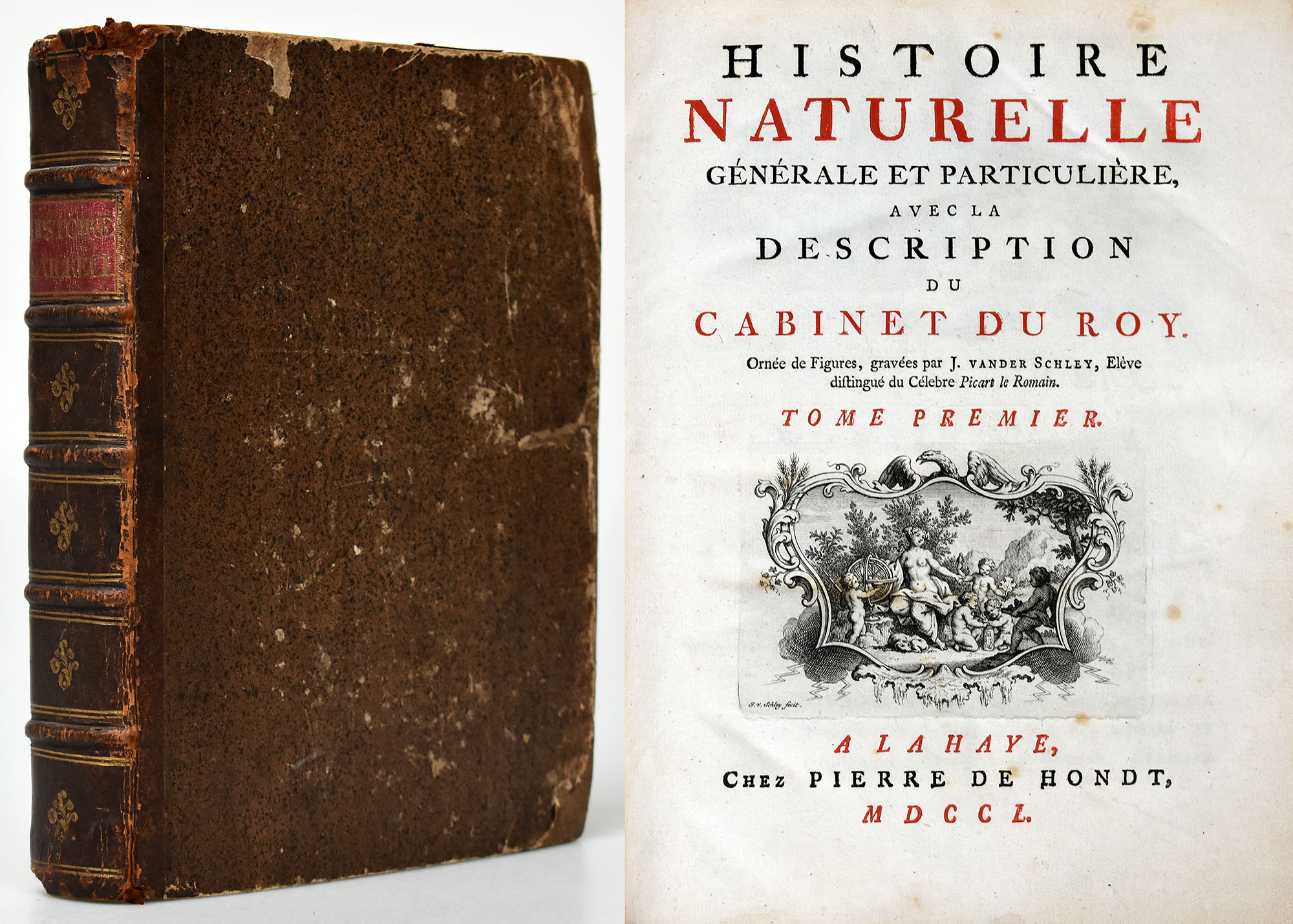
1750réf. 3714FBDen Haag, Verlag Pierre de Hondt, 1750. 4°. 26,5 x 22 cm. [6] Blatt, 222 Seiten, [1] Blatt, 228 Seiten, [2] Blatt, 203 Seiten, [2] Blatt. Halblederband der Zeit auf 5 Bünden mit floraler Rückenvergoldung, goldgeprägten Rückenfileten, goldgeprägtem Titel auf rotem Lederrückenschildchen und rotem Sprengschnitt. [8 Warenabbildungen]