Dellheim, CharlesMareMagnum

266 résultats
1982A clean, unmarked book with a tight binding. Full brown cloth boards. Edge wear to dust jacket. 7 1/2"w x 9 3/4"h. 214 pages.
197772 pages. Features: The De Pinedo Inheritance - Fortune or Fraud? - a reply; Canadian Painters in Philately - Part 2 of 2; "Corrected" airmail special delivery stamp - first day of use; Unique from the Yukon - publicity cover for the Yukon Exposition of 1912; Postmarked Ottawa; and more. Unmarked. Average wear. Sound copy. Book
1897réf. 48085London Harrison and Sons 1897. No wrappers. Extracted from "Proceedings of the Royal Society" Vol. 61. Pp. 401-413. First printing of Galton's "Law of ancestral Heredity"Galton's ancestral law states that the two parent contribute between them on average one-half of the total heritage of the offspring the four grandparents one-quarter and so on. He interpreted this law both as a representation of the separate contributions of each ancestor to the heritage of the offspring and as a multiple regression formula for predicting the value of a trait from ancestral values.Garrison & Morton: 239. unknown
19608vo., First Edition; cloth, a near fine copy in unclipped dustwrapper.
1897réf. 48085London, Harrison and Sons, 1897. No wrappers. Extracted from ""Proceedings of the Royal Society"", Vol. 61. Pp. 401-413.
1950réf. 6326New York, Sloan and Pearce, sans date (circa 1950) ; in-12, cartonnage de l’éditeur en pleine percaline noire, auteur et titre dorés, jaquette orange imprimée noir et blanc ; XII pp. , 211 pp. , (1) p. , (2) ff. , 10 illustrations in-texte.
1899réf. QZI-36(English description below) Kegan Paul, Trench, Trubner & Co., Londres, 1899. Première édition anglaise. Fort in-8 de 15,5 x 22,5 cm, (xxi) 624 pp. et plusieurs dizaines de pp. de portraits hors texte. Nombreuses cartes et photographies en noir et blanc. Reliure contemporaine en papier épais plein tissu bleu, dos lisse avec nom d'auteur et titre du livre en doré, charnières à la Bradel. Livre de référence de l'anthropologie anglo-saxonne de l'époque, "The Races of Europe" a popularisé la notion d'indice céphalique et de trois sous-groupes ethniques européens (nordique, alpin et méditerranéen), tout en rassemblant une somme considérable de données sur la taille, les taux de fertilité et bien d'autres éléments. Professeur d'université au MIT puis à Harvard, William Z. Ripley (1867-1941) fut ingénieur de formation et professeur d'économie. Son intérêt pour l'anthropologie et les types humains le conduisit à systématiser sa vision d'une humanité européenne constituée de trois grands groupes. Éclectique dans ses centres d'intérêt et ses sources, doté d'un sens puissant de la synthèse, il s'éloigna de l'anthropologie après la publication de "Races of Europe" pour se concentrer sur les problèmes liés aux chemins de fer sous l'administration Roosevelt et aurait prévu la crise de 1929 : "Une prospérité illusoire et trompeuse peut certes être indûment prolongée par des moyens artificiels, mais, en fin de compte, la vérité finit inévitablement par l'emporter." (New York Times, 17 août 1941, notice nécrologique de Ripley). *************** Kegan Paul, Trench, Trubner & Co., London, 1899. First English edition. Large octavo (15.5 x 22.5 cm), (xxi) 624 pp. plus several dozen pages of plates featuring portraits. Numerous black-and-white maps and photographs. Contemporary binding in heavy blue cloth; smooth spine with author's name and book title in gilt; Bradel-style hinges. A seminal work in Anglo-American anthropology of the era, *The Races of Europe* popularized the concept of the cephalic index and the classification of Europeans into three ethnic subgroups (Nordic, Alpine, and Mediterranean), while compiling a vast amount of data on stature, fertility rates, and many other factors. A university professor at MIT and later Harvard, William Z. Ripley (1867–1941) was trained as an engineer and worked as a professor of economics. His interest in anthropology and human types led him to systematize his view of the European population as consisting of three major groups. Eclectic in his interests and sources, and gifted with a powerful capacity for synthesis, he moved away from anthropology after the publication of *The Races of Europe* to focus on railroad issues during the Roosevelt administration; he is said to have predicted the 1929 crash: "An illusory and deceptive prosperity may indeed be unduly prolonged by artificial means, but, in the end, the truth inevitably prevails." (*New York Times*, August 17, 1941, Ripley's obituary).
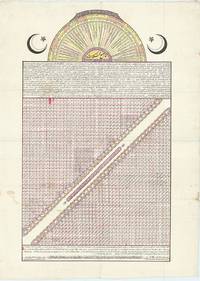
réf. 66246Izmir 15th day of Jumada al-Akhir AH 1300 April 23 1883. Original broadside 80 x 50 cm in Ottoman Turkish and Arabic printed on laid paper with double-headed eagle watermark embellished with two crescent moon and star symbols neatly rubricated and coloured by a contemporary hand in a palette of pastel shades of pink yellow pale orange and purple. Old folds margins with some light wrinkling and a few nicks some minor losses to intersections of folds with some paper restorations a few instances of light browning generally a very good well-preserved example. This broadside presents the far id — the system of inheritance prescribed by the Qur an and elaborated over centuries of Islamic jurisprudence — in the form of a structured diagram dedicated to Sultan Abdülhamid II the thirty-fourth ruler of the Ottoman Empire and the last to exercise effective autocratic power over its domains. It was composed on the fifteenth day of Jumada al-Akhir in the year 1300 AH April 23 1883 by Kulevi Müftizade and Süleyman Hilmi the latter holding the rank of Devriyye a position in the Ottoman religious-scholarly hierarchy authorising him to teach and adjudicate at a defined level of the medrese system something approximating a licensed judge. The broadside presents the far id inheritance system in a structured diagrammatic form setting out the prescribed shares of all categories of heirs after burial expenses and debts have been settled. The extensive introductory text opens with a formal dedication to Abdülhamid II and continues with a concise historical survey of Islamic inheritance jurisprudence. The principal diagram sets out the prescribed shares of all categories of heirs: daughters widows mothers and collateral relatives. Shares are calculated after the deceased's burial expenses and outstanding debts have been settled. The system turns on a fundamental distinction between quota-heirs dhaw al-far id those entitled to fixed fractional portions of the estate one-half one-third one-sixth and so on and residuary heirs asaba who receive whatever remains after the fixed shares have been distributed. Four male quota-heirs are identified husband father paternal grandfather and maternal brother and eight females: wife daughter granddaughter mother grandmother full sister paternal sister and maternal sister. Depending on the configuration of surviving relatives certain heirs may shift between the quota and residuary categories. The chart concludes with the extended family group dhaw al-arh m who inherit only in the absence of both quota-heirs and residuaries. The far id system is among the most precisely codified elements of classical Islamic jurisprudence and its Qur anic basis has given it a sanctity and stability that have resisted modification over fourteen centuries. One of its notable features frequently observed by both Muslim jurists and later Western commentators is its explicit guarantee of inheritance rights to women at a time when most legal systems afforded them none. Daughters receive half the share of sons; widows and mothers receive defined fractions; sisters are specifically enumerated as quota-heirs. The Ayd n vilayet centered on zmir Smyrna was one of the most prosperous and cosmopolitan provinces of the Ottoman Empire — a major commercial hub with a mixed population of Muslims Greeks Armenians and Jews and a well-developed provincial administrative apparatus including its own press. That this Arabic-language inheritance law text was produced there in 1883 reflects the continuing operation of the Sharia court system in provincial Ottoman life where religious judges required authoritative reference materials for the administration of inheritance cases. Süleyman Hilmi's Devriyye rank placed him within the Ottoman ilmiye hierarchy — the class of religious scholars and jurists — and his co-authorship of a formally licensed and copyright-protected legal broadside suggests both professional standing and commercial ambition. The copyright notice is itself noteworthy: Ottoman intellectual property protection of this kind enforced through the author's personal seal was not unusual by the 1880s yet it remains a detail that surprises modern readers. The dedication to Abdülhamid II who had come to power in 1876 and was actively cultivating pan-Islamic sentiment as a tool of political legitimacy is consistent with the tone of religious-legal publication throughout his reign. The entire Ottoman legal system that this broadside served — Sharia courts far id inheritance rules the ilmiye hierarchy — would be abolished in the reforms of 1924–26. Composed April 23 1883 15 Jumada al-Akhir 1300 AH by Kulevi Müftizade and Süleyman Hilmi. Printed at the provincial press of the Ayd n vilayet presumably at Izmir through the agency of Ziya Efendi under Board of Education license 674 dated 1301. This is the first time we have encountered this place of publication. A bookseller's stamp appears at the foot. Copies not bearing the author's personal seal were declared counterfeit at the time of publication. Generally speaking large ephemeral broadsides like this tend to survive in low numbers. More specifically examples of this broadside were likely discarded when the jurisprudential tradition it represents was abolished between 1924 and 1926 when the new Turkish Republic adopted a modern civil code in its place. [Izmir], 15th day of Jumada al-Akhir, AH 1300 (April 23, 1883). unknown
1936réf. 15002Paris, Hermann, "Actualités scientifiques et industrielles" n°371, 1936 ; in-8, broché ; 38, (4) pp., couverture grise marbrée à décor rouge.
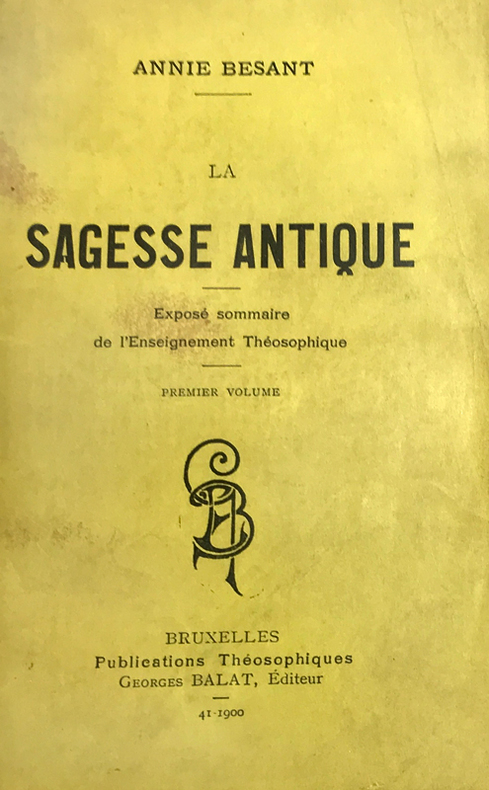
1900réf. 3897Bruxelles, Balat, 1900 ; deux tomes in-12, brochés ; 252pp. ; 230pp.
1949pp. xviii, 564. Inked ownership. 8vo. Original full cloth binding, worn. Third printing. Coldwar/Economics 8
1894Paris Au Bureau de la Revue des Deux Mondes 1894, In-8 broché, 200 pages. Bon état. LA FRANCE ET L'EUROPE APRES 1815 par E. OLLIVIER -- LES COMEDIENS FRANCAIS PENDANT LA REVOLUTION ET L'EMPIRE par Victor du BLED -- L'HEREDITE MORBIDE par Ch. FERE -- Etc...
réf. 68968Vol. V. - N° 4 - Octobre-Décembre 1935 - in-8 broché - revue illustrée - Publiée tous les trois mois par les Oblats de Marie Immaculée de l'Université d'Ottawa - 208 pages
réf. 69047Vol. V. - N° 3 - Juill.-Sept. 1935 - in-8 broché - revue illustrée - Publiée tous les trois mois par les Oblats de Marie Immaculée de l'Université d'Ottawa - 172 pages
1894réf. 99923798revue des deux mondes Paris Au Bureau de la Revue des Deux Mondes 1894, In-8 broché, 200 pages. Bon état.
réf. 46966Paris Félix Alcan 1903 in 8 (24x15,5) 1 fascicule broché, 43 pages, avec 2 planches lithographiées en couleurs hors texte. Thèse présentée et soutenue le Jeudi 29 octobre 1903 à la Faculté de Médecine de Paris. Gabriel Delamare. Bel exemplaire
réf. 67698aafGenève, Schuchardt, 1920, 1921, in-4to, 11 p., sans brochure.
réf. 24719aafBruxelles, Institut royal des sciences naturelles de Belgique, 1971, gr. in-4°, 148 p., avec 5 p. de littérature, non rogné, cachets, brochure originale.
1935réf. 6323Paris, Payot, 1935 ; in-8, broché ; 331 pp. , (1) p. , (4) pp. dont 2 de catalogue de l’éditeur.
1977réf. 5001Paris, Copernic (Collection "Factuelles", dirigée par Alain de Benoist, N°1), 1977 ; in-8, broché ; 376 pp., couverture illustrée en couleurs.
1966réf. 13209Presses Universitaires de France 1966 125 pages in12. 1966. broché. 125 pages. Cet ouvrage de la collection 'Que sais-je ?' présente une synthèse des connaissances sur les groupes sanguins. Il retrace leur découverte explique leur nature biochimique et sérologique et aborde leur mécanisme d'hérédité ainsi que les techniques usuelles d'immuno-hématologie
réf. 110548aafGenève, Imprimerie W. Kündig & Fils, 1905, in-8vo, 84 p., brochure originale.
1931réf. 128844Couverture souple. Broché. 136 pages.
1929réf. 15255Paris, Ernest Leroux, 1929 ; in-8, broché ; (4), 71, (5) pp., couverture gris-vert.
1782réf. 7101s.l.: s.n. 1782. 4to pp. viii 27 1 176; 52. Extracted from a volume with portion of leather spine and label remaining. Some soiling to front and rear final page torn at gutter. Ownership inscription to title page of Sir Wm Forbes Bart. A rare document of a dispute of inheritance pursued by the daughter of Helenus Halkerston of Rathillet against the geologist Captain later Lieutenant-Colonel Ninian Imrie of Denmuir d. 1820. Miss Halkerston argues that the releveant deeds executed before her father’s death were invalid by reason of his insanity and apparently James Boswell was approached for an opinion though he declined. Halkerston had published a short work ‘Considerations on man in his natural as well as moral state’ in 1764 ‘solving all the phænomena of the animal world of our moral and physical intelligence &c. hitherto so much the subjects of dispute’ - a subsequent edition of which was appended to 400 pages of land ownership dispute under the new title of ‘An appeal to reason’ 1778 perhaps evidence for Halkerston’s mental state. Indeed the printer of the latter edition contributes much testimony here. The ESTC record is based on a single copy held in Aberdeen which lacks the title-page and the next leaf as well as the final leaf - and therefore is catalogued under a different title. ESTC T230518. [s.n.] hardcover