285 results
1936ref. 15002Paris, Hermann, "Actualités scientifiques et industrielles" n°371, 1936 ; in-8, broché ; 38, (4) pp., couverture grise marbrée à décor rouge.
ref. 152801734X.Gpaperback. Good. Access codes and supplements are not guaranteed with used items. May be an ex-library book. paperback
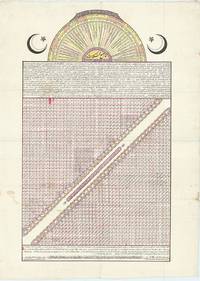
ref. 66246Izmir 15th day of Jumada al-Akhir AH 1300 April 23 1883. Original broadside 80 x 50 cm in Ottoman Turkish and Arabic printed on laid paper with double-headed eagle watermark embellished with two crescent moon and star symbols neatly rubricated and coloured by a contemporary hand in a palette of pastel shades of pink yellow pale orange and purple. Old folds margins with some light wrinkling and a few nicks some minor losses to intersections of folds with some paper restorations a few instances of light browning generally a very good well-preserved example. This broadside presents the far id — the system of inheritance prescribed by the Qur an and elaborated over centuries of Islamic jurisprudence — in the form of a structured diagram dedicated to Sultan Abdülhamid II the thirty-fourth ruler of the Ottoman Empire and the last to exercise effective autocratic power over its domains. It was composed on the fifteenth day of Jumada al-Akhir in the year 1300 AH April 23 1883 by Kulevi Müftizade and Süleyman Hilmi the latter holding the rank of Devriyye a position in the Ottoman religious-scholarly hierarchy authorising him to teach and adjudicate at a defined level of the medrese system something approximating a licensed judge. The broadside presents the far id inheritance system in a structured diagrammatic form setting out the prescribed shares of all categories of heirs after burial expenses and debts have been settled. The extensive introductory text opens with a formal dedication to Abdülhamid II and continues with a concise historical survey of Islamic inheritance jurisprudence. The principal diagram sets out the prescribed shares of all categories of heirs: daughters widows mothers and collateral relatives. Shares are calculated after the deceased's burial expenses and outstanding debts have been settled. The system turns on a fundamental distinction between quota-heirs dhaw al-far id those entitled to fixed fractional portions of the estate one-half one-third one-sixth and so on and residuary heirs asaba who receive whatever remains after the fixed shares have been distributed. Four male quota-heirs are identified husband father paternal grandfather and maternal brother and eight females: wife daughter granddaughter mother grandmother full sister paternal sister and maternal sister. Depending on the configuration of surviving relatives certain heirs may shift between the quota and residuary categories. The chart concludes with the extended family group dhaw al-arh m who inherit only in the absence of both quota-heirs and residuaries. The far id system is among the most precisely codified elements of classical Islamic jurisprudence and its Qur anic basis has given it a sanctity and stability that have resisted modification over fourteen centuries. One of its notable features frequently observed by both Muslim jurists and later Western commentators is its explicit guarantee of inheritance rights to women at a time when most legal systems afforded them none. Daughters receive half the share of sons; widows and mothers receive defined fractions; sisters are specifically enumerated as quota-heirs. The Ayd n vilayet centered on zmir Smyrna was one of the most prosperous and cosmopolitan provinces of the Ottoman Empire — a major commercial hub with a mixed population of Muslims Greeks Armenians and Jews and a well-developed provincial administrative apparatus including its own press. That this Arabic-language inheritance law text was produced there in 1883 reflects the continuing operation of the Sharia court system in provincial Ottoman life where religious judges required authoritative reference materials for the administration of inheritance cases. Süleyman Hilmi's Devriyye rank placed him within the Ottoman ilmiye hierarchy — the class of religious scholars and jurists — and his co-authorship of a formally licensed and copyright-protected legal broadside suggests both professional standing and commercial ambition. The copyright notice is itself noteworthy: Ottoman intellectual property protection of this kind enforced through the author's personal seal was not unusual by the 1880s yet it remains a detail that surprises modern readers. The dedication to Abdülhamid II who had come to power in 1876 and was actively cultivating pan-Islamic sentiment as a tool of political legitimacy is consistent with the tone of religious-legal publication throughout his reign. The entire Ottoman legal system that this broadside served — Sharia courts far id inheritance rules the ilmiye hierarchy — would be abolished in the reforms of 1924–26. Composed April 23 1883 15 Jumada al-Akhir 1300 AH by Kulevi Müftizade and Süleyman Hilmi. Printed at the provincial press of the Ayd n vilayet presumably at Izmir through the agency of Ziya Efendi under Board of Education license 674 dated 1301. This is the first time we have encountered this place of publication. A bookseller's stamp appears at the foot. Copies not bearing the author's personal seal were declared counterfeit at the time of publication. Generally speaking large ephemeral broadsides like this tend to survive in low numbers. More specifically examples of this broadside were likely discarded when the jurisprudential tradition it represents was abolished between 1924 and 1926 when the new Turkish Republic adopted a modern civil code in its place. [Izmir], 15th day of Jumada al-Akhir, AH 1300 (April 23, 1883). unknown
1897ref. 48085London, Harrison and Sons, 1897. No wrappers. Extracted from ""Proceedings of the Royal Society"", Vol. 61. Pp. 401-413.
1950ref. 6326New York, Sloan and Pearce, sans date (circa 1950) ; in-12, cartonnage de l’éditeur en pleine percaline noire, auteur et titre dorés, jaquette orange imprimée noir et blanc ; XII pp. , 211 pp. , (1) p. , (2) ff. , 10 illustrations in-texte.
1899ref. QZI-36(English description below) Kegan Paul, Trench, Trubner & Co., Londres, 1899. Première édition anglaise. Fort in-8 de 15,5 x 22,5 cm, (xxi) 624 pp. et plusieurs dizaines de pp. de portraits hors texte. Nombreuses cartes et photographies en noir et blanc. Reliure contemporaine en papier épais plein tissu bleu, dos lisse avec nom d'auteur et titre du livre en doré, charnières à la Bradel. Livre de référence de l'anthropologie anglo-saxonne de l'époque, "The Races of Europe" a popularisé la notion d'indice céphalique et de trois sous-groupes ethniques européens (nordique, alpin et méditerranéen), tout en rassemblant une somme considérable de données sur la taille, les taux de fertilité et bien d'autres éléments. Professeur d'université au MIT puis à Harvard, William Z. Ripley (1867-1941) fut ingénieur de formation et professeur d'économie. Son intérêt pour l'anthropologie et les types humains le conduisit à systématiser sa vision d'une humanité européenne constituée de trois grands groupes. Éclectique dans ses centres d'intérêt et ses sources, doté d'un sens puissant de la synthèse, il s'éloigna de l'anthropologie après la publication de "Races of Europe" pour se concentrer sur les problèmes liés aux chemins de fer sous l'administration Roosevelt et aurait prévu la crise de 1929 : "Une prospérité illusoire et trompeuse peut certes être indûment prolongée par des moyens artificiels, mais, en fin de compte, la vérité finit inévitablement par l'emporter." (New York Times, 17 août 1941, notice nécrologique de Ripley). *************** Kegan Paul, Trench, Trubner & Co., London, 1899. First English edition. Large octavo (15.5 x 22.5 cm), (xxi) 624 pp. plus several dozen pages of plates featuring portraits. Numerous black-and-white maps and photographs. Contemporary binding in heavy blue cloth; smooth spine with author's name and book title in gilt; Bradel-style hinges. A seminal work in Anglo-American anthropology of the era, *The Races of Europe* popularized the concept of the cephalic index and the classification of Europeans into three ethnic subgroups (Nordic, Alpine, and Mediterranean), while compiling a vast amount of data on stature, fertility rates, and many other factors. A university professor at MIT and later Harvard, William Z. Ripley (1867–1941) was trained as an engineer and worked as a professor of economics. His interest in anthropology and human types led him to systematize his view of the European population as consisting of three major groups. Eclectic in his interests and sources, and gifted with a powerful capacity for synthesis, he moved away from anthropology after the publication of *The Races of Europe* to focus on railroad issues during the Roosevelt administration; he is said to have predicted the 1929 crash: "An illusory and deceptive prosperity may indeed be unduly prolonged by artificial means, but, in the end, the truth inevitably prevails." (*New York Times*, August 17, 1941, Ripley's obituary).
19608vo., First Edition; cloth, a near fine copy in unclipped dustwrapper.
1897ref. 48085London Harrison and Sons 1897. No wrappers. Extracted from "Proceedings of the Royal Society" Vol. 61. Pp. 401-413. First printing of Galton's "Law of ancestral Heredity"Galton's ancestral law states that the two parent contribute between them on average one-half of the total heritage of the offspring the four grandparents one-quarter and so on. He interpreted this law both as a representation of the separate contributions of each ancestor to the heritage of the offspring and as a multiple regression formula for predicting the value of a trait from ancestral values.Garrison & Morton: 239. unknown
197772 pages. Features: The De Pinedo Inheritance - Fortune or Fraud? - a reply; Canadian Painters in Philately - Part 2 of 2; "Corrected" airmail special delivery stamp - first day of use; Unique from the Yukon - publicity cover for the Yukon Exposition of 1912; Postmarked Ottawa; and more. Unmarked. Average wear. Sound copy. Book
1982A clean, unmarked book with a tight binding. Full brown cloth boards. Edge wear to dust jacket. 7 1/2"w x 9 3/4"h. 214 pages.
1913Brown cloth boards with blind stamped dragonfly design and gilt lettering on cover. Gilt top page ends. Edge wear and spots on cover. Tears on front hinge. 5"w x7 5/8"h. 478 pages. Age-toned paper. Contents: The Harmas, The Anthrax, Another Prober (Perforator), Larval Dimorphism, Heredity, My Schooling, The Pond, The Caddis-Worm, The Greenbottles, The Grey Flesh-Flies, The Bumble-Bee Fly, Mathematical Memories: Newton's Binomial Theorem, Mathematical Memories: My Little Table, The Bluebottle: The Laying, The Bluebottle: The Grub, A Parasite of the Maggot, Recollections of Childhood, Insects and Mushrooms, A Memorable Lesson, Industrial Chemistry.
First Edition, half-title, [4], 5-15, [1] pp., small chip to outer-upper corner of half-title and title (not effecting text), modern wrappers.
G (no dj, yellow cloth with black titles, mark from library tape top of spine and lightly soiled round edges, ex school library copy with stamps and plate, front hinge cracked but contents clean and tight) 16mo 132pp. First edition. Methuen's Monographs on Biological Subjects series.
1923303p. Hardcover Good condition, spine lightly faded, front flyleaf clipped Notes: The work is based on an essay entitled: The new decalogue of science, which appeared in the Century magazine of March, 1922; the correspondence between the author and G. Bernard Shaw in reference to this essay is here reprinted from the August, 1922, issue.
197272 pages. Features: Cover photo of George Meany; The Five Warring Tribes of South Africa - photo-illustrated article by James Michener discusses the Afrikaners, English, Asiatics, 'Coloureds' (of mixed heredity) and the black Bantu; Photo-illustrated article on Prince Sihanouk, head of a Cambodian government-in-exile in China; George Meany's Way isn't President Nixon's; In the Matter of H. Bruce Franklin - the very model of a modern militant radical and - until this month - a tenured professor of English at genteel Stanford University; One-page ad for Gold Key Lake Estates; Ad for the Garrard Zero 100 turntable features inset photo of Emile Berliner; Charming centerfold illustrated ad for Health-tex clothing; Fashion photos featuring ruffles and Taffeta; Geometric Mansion - photos of a Richard Meier designed modern mansion; Lovely color fashion photos; and more. Somewhat above-average external wear. A worthy vintage copy. Book
199636 pages. Many black and white illustrations. "An objective and unbiased look at an important historical component of the European anthropological scene." - from page 1. Average wear. Some curling to corners. Unmarked. Book
1914Pages 207-312 plus 6 pages of ads. Maps. Black and white photos. Contents include: An Expedition to the Coral Reefs of Torres Straits; The Cellular basis of Heredity and Development (II); The Decreasing Population of France; The Rise of a New Profession - The Age of Administration; The Place of Illustration in Book-making; Determining Educational Values; A League of Peace; Nice one-page illustrated ads for Thomas Dunham Company sidecars for motorcycles, and Reading Standard (RS) Motorcyles. Front cover missing. Somewhat above-average wear. Binding intact. Some pages unopened. A sound working copy. Magazine
1933100 pages. Contributors include: Edwin Lefevre, Everett Freeman, Joseph Hergesheimer, George Bradshaw. Articles: Wasted Wallops (Interesting article about the 1929 and 1933 stock market crashes), My Ming Collection, Costuming the Movies, Boss Kettering, What's a Second Worth?, The Widow's Inheritance. Advertisements by: Maxwell House Coffee, Campbell's Soup, Chevrolet, Chrysler, Packard 1934, Hupmobile, Libby's Tomato Juice, Plymouth Six, Oldsmobile, Atwater Kent Radio. Somewhat above-average wear. Still a solid copy. Book
ref. BN374333ReMaK-Verlag. The Swiss civil code - Volume I and II Part I: Law of Persons Part II: Family Law Part III: Law of inheritance Part IV: Law of property final title appendices Hardcover The Swiss civil code - Volume I and II Part I: Law of Persons Part II: Family Law Part III: Law of inheritance Part IV: Law of property final title appendices Hardcover The Swiss civil code - Volume I and II Part I: Law of Persons Part II: Family Law Part III: Law of inheritance Part IV: Law of property final title appendices Hardcover ReMaK-Verlag hardcover
1902pp. ix, [1], 237, [1], [2] ads. Patten [1852-1922] was a long-serving professor and Chair of the Wharton Business School. "That many people regard life as a burden cannot be doubted, but this state of mind is due to a misuse of goods, not to a lack of them. The gap is not between effort and goods, but between goods and enduring satisfactions." - Introduction. Binding sound. Unmarked. Moderate wear to publisher's textured navy cloth. Bright gilt lettering to backstrip. Two tiny old tape repairs to page edges. Small vintage bookstore tag inside back board. A well-preserved copy of this fascinating study. Fundaburk 8407, Batson p.152, Masui p.1500. Book
1923Pages 178-264 plus 16 pages of great vintage ads, many illustrated. Features: The Mystery of Ayers Valley - Miss Dorothy Belle Ayers receives an unexpected inheritance which leads to deadly peril; The Smuggled Diamonds - a perplexing mystery in Brazil; Down the Araguaya in a Dug-out Canoe - the experiences of a missionary-explorer during a trip down a little-known river in Brazil, visiting strange Indian tribes - with excellent photos; The Motor Thieves - a remarkable case of stolen vehicle recovery in southern California - with photos; A Woman in Albania - part 4 - Mrs. Lane's adventures among the remote northern mountains; Three Asses in the Pyrenees - part 7 of the continuing adventures of a husband and wife with their donkey; Our Trip to the Bird Islands - John Hogg's perilous journey - with many wonderful photos; Mrs. Robinson Crusoe - Idelle Meng's 11 months on a deserted group of uninhabited atolls - with photo; Among New Guinea Cannibals - interesting experiences of H.C. Pratt - with photos; The Wonders of Cuba - article with nice vintage photos; Up in the Air - a ballooning story; The Ghost of Fort Severn - the story of an apparition that haunted a Hudson's Bay Company (H.B.C.) post in the Canadian north. Above-average wear. Covers loose but present. Faint pencil writing atop front cover. A worthy vintage copy. Book
1989"Focuses on Jung's conception of archetypes - the stories and symbols that are shared by different cultures and that make up the collective unconscious. Rare footage traces Jung's travels to Africa, Britain, and New Mexico." - from cover. Voice of C.G. Jung by Max von Sydow. Above-average wear. Usual library markings. Book
1675In 8° (21x16 cm); 16 pp. A fogli slegati. Bella e rarissima placchetta stampata a Fermo da Andrea dal Monte nel 1675. Leggerissimo alone d'umidità nel margine inferiore delle prime e ultime due carte (quasi inivisibile). Margini leggermente corti nel margine superiore dove vengono sfiorati i numeri ma nel complesso buona copia. Bellissimo stemma della città di Fermo inciso a tutta pagina alla carta 3. Lettera al senato di Fermo firmata da Benedetto Moro. Iniziale ornata a pagina 3. RARISSIMA PLACCHETTA di interesse marchigiano. Nessun esemplare in ICCU.
1974224p. Numerous text photographs. 8vo. Original full pictorial glossy binding. Nice copy. PETS/1
ref. 27338aafParis, (Paul Renouard pour) J.-B. Baillière, et Londres, H. Baillière, 1847, in-8° et in-4°, XXXVI + 479 p. + 1 tableau repl., légères rousseurs / 2 ff. + 30 p. (explication) + 20 planches chromolithographiques (gravées par Oudet d'après les dessins de l'auteur; planche 20 dépl.), papier et planches très frais, 1 exlibris héraldique (blason surmonté du monogramme -M.M.- avec devise - mel linet dulce madore -, (vol. de texte:) reliure en demi-cuir, dos à nerfs orné de filets dorés et Initales "C.M.", pièce de titre, lég. fente dans la charnière du plat supérieur, petits accrocs aux coiffes, et (l'atlas:) reliure en demi-toile originale traces d'usage et tachée.>