David BourdonBiblio.com

906 résultats
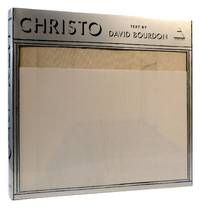
1970réf. 5620New York: Harry N. Abrams 1970. 1st. Cloth. Collectible; Very Good/Fine. INSCRIBED BY CHRISTO on the front free endpaper. A very sharp copy to boot of the 1970 1st edition. Tight and VG in a bright clean Near Fine dustjacket. Oblong quarto hundreds of crisp black-and-white and color photographs thruout. One of the great early monographs on Chrsito. ALSO INCLUDES A VG EXAMPLE OF PUBLISHER'S UNCOMMON ORIGINAL SHIPPING CARTON. Harry N. Abrams unknown
1972réf. 177162New York: Harry N. Abrams 1972. First Edition; First Printing. Hardcover. Near Fine in a Near Fine dust jacket.; 15 X 1 X 11 inches; 321 pages. Harry N. Abrams hardcover
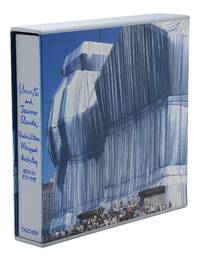
réf. 140949112Cologne: Taschen 1996. First Edition. Fine. Deluxe first edition "Special Edition" with fabric swatch mounted to back pastedown. 696 pp. profusely illustrated with color photographs. Oblong quarto bound in publisher's silver cloth lettered in blue on spine. Fine. Housed in the original slipcase printed paper and silver cloth with spot of soiling to upper edge. The story of Christo and Jeanne-Claude's 24-year quest to wrap Germany's historic parliament building in woven silvery cloth held with blue rope. The two artists were known for their monumental fabric installations of which this was the most iconic. The installation subverted the imposing dignity of the famous building a Neo-Renaissance behemoth left in ruins by the Battle for Berlin in 1945. The building was stripped and restored by the West German government during the 1960s then further repaired and crowned with a new glass dome in time for the new millennium. Before the new construction began Christo and Jeanne-Claude finally gained permission to wrap the building after decades of lobbying. The effort was seen as a symbol of reunification drawing millions of Germans to physically interact with what would once more be the seat of their government for the first time since 1933. Taschen unknown
8vo, presentation inscription on front free endpaper "Presented to His Excellency Sir W. Gomm, by his most obedient humble servant L. Bouton, Sect. to the Royal Society of Arts and Sciences.", 2 folding lithograph plates at end of Mr. Carie's pump, 99, [1], xxiv, 100-187, xxv-lxx1, [1] pp., contemporary red morocco, gilt, hinges slightly rubbed, the upper cover with presentation inscription in gilt, with the armorial bookplate of Sir James Gomer Berry, a nice copy. Field Marshall Sir William M. Gomm was Governor of Mauritius, 1842-49. The text which is part in French and part in English includes a letter from the Hon. Mr. G. C. Cuninghame on the Dodo being on the islands of Mauritius, Bourbon, and Rodrigues, about 200 years previously (pp.91-93), and a fascinating discussion on how people and boats could have reached Madagascar from the Malays, with further interesting comments on the Malayan language (pp.136-148). Other interesting topics include the cultivation of canes at Bourbon Island, a new mode of preserving and cutting canes, the diseases of canes, preservation of the roots of the manioc, and electricity applied to the growth of plants.
2000réf. 71083RMN. New. 2000. Paperback. FREE UPGRADE to Courier/Priority Shipping Upon Request - IN STOCK AND IMMEDIATELY AVAILABLE FOR SHIPMENT - Flawless copy brand new pristine never opened RMN paperback
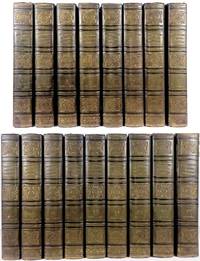
1822réf. 1897Paris: Rey et Gravier Baudouin Freres 1822-1831. First edition. BEAUTIFULLY BOUND 17-VOLUME ENCYCLOPEDIA OF NATURAL HISTORY WITH BRILLIANT COLOR PLATES: COPY OF THIS EDITION INCLUDED IN DARWIN'S LIBRARY ON HIS VOYAGE OF THE BEAGLE. 17 hardcover volumes 12.5x21.5 cm full green calf binding gilt rulings with dentelles spines with raised bands gilt titles and decorative compartments marbled endpapers small engraved book label bottom of each front paste-down of "Prof. W. Vrolik." vol.1 2 xvi 604 pp double-sided folding table; Vol. 2 4 621 pp; Vol. 3 4 592 pp; Vol. 4 4 628 pp 2 folding tables 1 double-sided; Vol. 5 4 653 pp 1 errata; Vol. 6 4 593 pp 1 errata; Vol. 7 4 626 pp 1 errata; Vol. 8 4 viii 609 pp 1 errata; Vol. 9 4 596 pp; Vol. 10 4 642 pp 1 errata 2 folding tables; Vol. 11 4 615 pp 1 errata; Vol. 12 4 634 pp 1 errata; Vol. 13 4 648 pp; Vol. 14 4 710 pp; Vol. 15 4 754 pp including half-page table p 103 1 folding table; Vol. 16 4 iv 748 pp includes errata; Vol. 17 4 vii color frontispiece 141 pp intercalated with 159 plates and 1 folding map. Overall very good condition with only occasional scratches to leather covers; corners and spine ends are worn scattered light foxing to several volumes; handstamps of Royal College of Surgery in Ireland to title pages no other library marks. Hinges cracked on Vol. 17 Atlas volume but joints and boards are secure plates unmarked clean and 150 of them are brilliantly colored. As noted for the Hathi Trust copy there are 160 plates including the map. JEAN-BAPTISTE GENEVIÈVE MARCELLIN BORY DE SAINT-VINCENT 1778-1846 was a French naturalist officer and politician. Biologist and geographer he was particularly interested in volcanology systematics and botany. A student of geologist and mineralogist Déodat Gratet de Dolomieu at the Paris School of Mines Bory came into contact with many established naturalists. In 1799 Bory learned about the upcoming departure of a scientific expedition to Australia and obtained the position of chief botanist. After several stops in Madeira the Canary Islands and Cape Verde and then rounding the Cape of Good Hope towards the middle of the trip Bory suddenly left the ship of Captain Baudin with whom he was in conflict and explored several islands of the African seas including Mauritius Réunion and Saint Helena. In 1804 he published his Voyage dans les Quatre Principales Iles des Mers d'Afrique. An officer in the army from 1805 to 1814 Bory followed the greater part of Napoleon's campaigns within the Grande Armée. Having been promoted to major Bory was mainly involved in military reconnaissance thanks to his skills in graphic work. After the first abdication of Napoleon in April 1814 and his exile to the island of Elba Bory moved to Paris. He then saw the abdication of Napoleon I and the return of King Louis XVIII and he was condemned to exile in Liège. He finally managed to reach Holland disguised as a brandy merchant and with a false passport. On 1 January 1820 Bory was finally allowed to return to France. It was during this productive period in 1822 that Bory along with most of the scientists of his time including Arago Brongniart Drapiez Geoffroy de Saint-Hilaire von Humboldt de Jussieu de Lacépède and Latreille began the writing of one of his greatest works the Dictionnaire classique d'histoire naturelle offered here. In 1832 Bory published the report of his exploration in Greece for which he was elected a member of the French Academy of Sciences. Bory wrote on several branches of natural history including the study of reptiles fish microscopic animals and plants all represented in the magnificent plates of the Dictionnaire Classique. Bory was a proponent of the theory of the transmutation of species alongside among others Jean-Baptiste de Lamarck. According to historian Adrian Desmond Bory was a leading anti-Cuvierian materialist who blended the best of Lamarck's philosophy with Geoffroy's higher anatomy. His Dictionnaire classique d'histoire naturelle already contained information about Lamarck and the species debate. FROM THE DICTIONARY OF SCIENTIFIC BIOGRAPHY: "Bory de Saint-Vincent is remembered as the leader of successful botanical collecting expeditions and for his contributions to the theory principles and knowledge of island faunas; the zoogeography of the seas; and the classification of man. As a disciple of Bufton and Lamarck he accepted the idea of change in the natural world. He suggested that in earlier times the oceans had covered the globe and that fish were therefore the most ancient inhabitants. The continents emerged in their turn and finally and recently the volcanic islands. He accepted spontaneous generation but believed that after initial creations species changed under the influence of the environment. Developing the ideas of Butron he argued that on continents species were relatively old and fixed in type but on recent volcanic islands such as Reunion they were still in a state of flux polymorphic. After many generations the stability of the environment would lead to a stable monomorphic species. Bory de Saint-Vincent was the first to notice that oceanic islands were without amphibia and speculated on the reasons for flightless birds occurring independently on different islands. While accepting that the Mascarene Islands had emerged from the ocean he considered the Atlantic islands to be the remains of a continent the lost Atlantis. He referred to the formation of coral reefs and many years later he attempted one of the first biogeographical classifications of the oceans." Documented on Darwin Online Darwin included the newly published Dictionnaire Classique d'Histoire Naturelle in his library aboard the Beagle. During the nearly 5-year voyage 1831-1836 young Darwin in his 20s would have had ample time to process the ideas of transmutation of species and island biogeography contained in these volumes. The numerous French titles in his library reveal that he was able to read the language. PROVENANCE: WILLEM VROLIK 1801 – 1863 was a Dutch anatomist and pathologist pioneer in the field of vertebrate teratology. He studied medicine at the University of Utrecht and furthered his studies in Paris where he received his degree in 1823. In 1829 he became a professor of anatomy and physiology at the University of Groningen and in 1831 a professor of anatomy physiology and natural sciences at the University of Amsterdam where he remained for the rest of his career. Vrolik made contributions in the fields of comparative anatomy and comparative zoology and also did important research of skeletal disorders such as osteogenesis imperfecta. Along with specimens collected by his father he had amassed an impressive anatomical collection during his career. The "Museum Vrolikianum" consists of various human and zoological body parts fetuses and plaster casts that exhibit different aspects of embryology pathology and anatomyas well as congenital malformations. He was also the author of highly regarded treatises on the chimpanzee 1841 Hyperoodon 1847 and Manatus americanus 1852. Vrolik became a correspondent of the Royal Institute in 1829 and a member in 1832. When the Royal Institute became the Royal Netherlands Academy of Arts and Sciences in 1851 Vrolik became a member. Rey et Gravier, Baudouin Freres hardcover