79.675 risultati
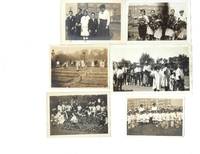
1919rif. 165861919. Photograph album women's college student life 1919 to 1922 documents the lived experience of a young woman pursuing higher education in the years immediately following World War I when increasing numbers of women entered academic institutions and participated in structured campus life. The album centers on dormitory living peer networks and extracurricular activities providing direct evidence of how female students documented identity independence and social belonging within early twentieth-century educational environments. The material supports research into women's education student culture and the social history of American colleges in the interwar period. Album consists of 85 vernacular black and white silver gelatin photographs mounted across 23 pages with three additional loose prints primarily taken in Washington State between 1919 and 1922. Photographs range in size from approximately 2.5" x 1.5" to 5.5" x 3.5" housed in a volume measuring approximately 7" x 10.5" in original black cloth boards. Inscribed on the front pastedown: "From Papa Merrie Christmas 1921." Images depict dormitory interiors classmates and organized activities including social dances and boating excursions. Captions identify specific rooms and relationships including "Taken in my room '77' 1922" "Lookout Mt taken from my window '77'" "My old roommate of 1919 Room 44" and "Miss Fiddler Roommate 'Room 28' Summer School 1920." Additional annotations record impressions of peers including "A Good Kid" and humorous commentary such as "W.L. asleep after the dance Ha! Ha!" and "Do you think I look natural" A Harvard pennant displayed within one dormitory scene suggests aspirational or collegiate affiliation. The album also includes a photograph of a Home Economics class family scenes and several images referencing recent wartime experience including soldiers in uniform dated 1919. Created during a transitional period in American higher education the album illustrates how women students navigated expanding academic opportunities alongside established social expectations including domestic training and structured leisure. The inclusion of humor nicknames and detailed room identifications reflects the importance of spatial and social memory within collegiate life while references to wartime imagery situate the album within a generation shaped by recent global conflict. Such albums provide granular insight into daily routines interpersonal dynamics and the formation of female student identity in the early twentieth century. Minor wear to boards; photographs well-preserved with clear detail; overall in very good condition. unknown books
rif. 16337Carpenter Mary. Signed carte de visite portrait circa mid-1860s records the English educational and social reformer during the period in which her work on ragged schools reformatories prison conditions and female education had made her a prominent public advocate for institutional reform. Carpenter devoted much of her career to expanding educational opportunities for poor children and young offenders and argued that reformatory institutions should foster discipline education and personal improvement rather than rely solely on punishment. She was also active in anti-slavery work and later carried her educational and penal reform interests to India where she promoted female education reformatory schooling and prison reform. Albumen carte de visite photograph by T. R. Williams of London circa mid-1860s. A slip of paper bearing Carpenter's name in ink has been pasted across the lower margin of the mount. The portrait dates from a period when Carpenter was widely engaged in public speaking and reform work in Britain and abroad and the signed identification connects the image directly to the sitter rather than relying solely on later attribution. Carpenter's portrait belongs to the visual record of nineteenth-century women reformers whose public authority was built through lectures publications institutional work and transnational advocacy. Her campaigns linked educational access juvenile reform prison conditions women's education and anti-slavery activism across Britain and India. Condition not stated in the supplied description. unknown books
1856rif. 167261856. Cleveland Female Seminary Catalog 1856-1857 Cleveland OH. Founded by Rev. Eli N. Sawtell. Sawtell the seminary opened on 3 May 1854 an earlier enterprise by the same name had been established in April 1837. Located in a new $50000 building the school commanded a hefty $300 annual tuition. The seminary had 2 major departments Preparatory which admitted girls under 12 years of age and Academic for those over 12. Emphasis was placed on teaching both languages and science so students could over 12. Emphasis was placed on teaching both languages and science so that students could acquire a wholesome mental discipline. In 1865 a Telegraph Dept was established to provide instruction in the principles of telegraphy for students in natural philosophy and chemistry It was reincorporated in 1871 as the Cleveland Seminary for Girls at which time it acquired the rights and privileges of a college including the authority to grant degrees but closed in 1883. Not in OCLC Worldcat. Women's Academy and Seminary Archive recording the first important movement of women into higher education in the United States seminary was synonymous with "academy" and did not have the religious connotation of today-This is an important point but seems awkwardly placed. Maybe either use the phrase "into secular higher education" in first sentence or in next sentence say "In the 1800's the Female Academy and Seminary Movement transformed American educational norms allowing women the opportunity to receive secular non-religious college-level education Women's colleges proliferated in the mid- to late- 19th century to fill the void created by their exclusion from most institutions of higher education. The prevailing notion that women were too delicate for a rigorous academic education was openly challenged when Elizabeth Cady Stanton spoke at the Seneca Falls Convention of 1848 "Man's intellectual superiority cannot be a question until woman has had a fair trial.When we shall have had our colleges our professions our trades for a century a comparison then may be justly instituted." Young women were quick to step up to the challenge; as quickly as female colleges opened they filled up. This document dates less than a decade after Seneca Falls. At the time that this description is being written no copies are recorded in American institutions. OCLC search results are at best an estimate and can vary over time. Very rare. unknown books
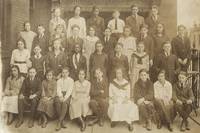
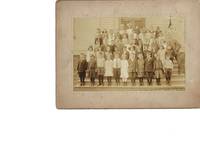
rif. 15401Moorhead School class photograph circa 1895-1905 records several African American students among approximately thirty predominantly white students outside an urban brick school building. The students appear to be of secondary-school age and pose together on the entrance steps beneath the school's name carved into the doorway. Dating approximately half a century before Brown v. Board of Education the image preserves visual evidence of Black and white students within the same Moorhead School group. The school's location is not identified in the supplied information preventing determination of the local laws admissions policies or other circumstances governing their attendance. Original silver gelatin photograph circa 1895-1905 approximately 3 x 5 inches. Approximately thirty students stand in several rows on the steps of the brick schoolhouse. Several African American students are visible among the group. Clothing worn by the young men and women supports the supplied turn-of-the-century dating. Architectural details include the substantial brick façade and entrance with "Moorhead School" carved above the doorway providing an internal identification of the institution even though its city or state remains unknown. The photograph predates the Supreme Court's 1954 Brown v. Board of Education decision by approximately fifty years. Educational segregation and access for Black students differed according to state and locality during this period so the photograph does not by itself establish that Moorhead School maintained a formal policy of racial integration. It does document several African American students participating in this predominantly white school group and preserves the school's name within the image offering a potential basis for further identification of the institution and its educational history. Very good condition. unknown books
1877rif. 160891877. Forster William Edward. Autograph letter signed to Miss Vernon October 22 1877 concerns girls' participation in an educational competition and specifically asks whether daughters of working men would be represented. The letter was written seven years after Forster introduced the Elementary Education Bill of 1870 the first legislation devoted specifically to educational provision across England and Wales; the resulting Act established elected school boards empowered to provide schools where existing provision was inadequate. Forster's questions to Miss Vernon extend beyond the mechanics of the competition to its social composition culminating in the pointed inquiry "Are there any daughters of working men" Forster William Edward. October 22 1877. Autograph letter signed to Miss Vernon. Two pages 8vo. Wharfeside Burley-in-Wharfedale Leeds. Forster thanks Miss Vernon for her note and requests material concerning an examination: "Any printed documents you may have bearing on the Examination would be really useful to me." He then writes "I am delighted to find I shall give a prize to my friend Mr Smith's daughter" before asking about the range of entrants: "I suppose all classes will be represented at the competition. Are there any daughters of working men" The questions document Forster's interest in both female participation and the class composition of an educational competition while his request for printed documents indicates that he intended to examine its organization or results more closely. Forster's inquiry belongs to the decade in which access to elementary schooling was being substantially reorganized in England and Wales. The 1870 Act authorized locally elected boards to establish and manage schools where additional provision was required although universal compulsory attendance was not established by that Act; further legislation in 1876 strengthened parental obligations concerning children's education and nationwide compulsory attendance followed in 1880. Written during this transition Forster's question about "daughters of working men" records his attention to whether an educational competition crossed both gender and class boundaries rather than merely attracting girls from socially advantaged families. No condition defects are specified in the supplied description. A signed letter connecting the principal architect of the 1870 Education Act with the practical question of girls' and working-class participation in education seven years after its passage. unknown books
1873rif. 167491873. Women's Education Movement. Moravian Seminary Catalog 1873-1874. The Moravian Seminary traces its roots to the earliest institution of female education in the United States the Bethlehem Female Seminary founded in 1742 by Countess Benigna Zinzendorf. Originally providing only primary school the Bethlehem responded to demand for higher education for women in 1785 when it reorganized as a secondary educational institution that became known as the Moravian Female Seminary. In 1913 the Seminary officially became a College and in 1954 merged with a male institution to become the coeducational Moravian College. At the time that this description is being written only one copy is recorded in American institutions. OCLC search results are at best an estimate and can vary over time. Women's Academy and Seminary Archive recording the first important movement of women into higher education in the United States seminary was synonymous with "academy" and did not have the religious connotation of today. In the 1800's the Female Academy and Seminary Movement transformed American educational norms allowing women the opportunity to receive secular non-religious college-level education. Women's colleges proliferated in the mid- to late- 19th century to fill the void created by their exclusion from most institutions of higher education. The prevailing notion that women were too delicate for a rigorous academic education was openly challenged when Elizabeth Cady Stanton spoke at the Seneca Falls Convention of 1848 "Man's intellectual superiority cannot be a question until woman has had a fair trial.When we shall have had our colleges our professions our trades for a century a comparison then may be justly instituted." Young women were quick to step up to the challenge; as quickly as female colleges opened they filled up. unknown books
1927rif. 166041927. Leslie Reva C. My Memories of School Days album and photograph scrapbook 1923-1927 documents female student life social networks and extracurricular culture at Lincoln High School in Los Angeles during the 1920s. The material captures daily experiences of a young woman engaged in school activities including dances athletics and clubs while also preserving peer relationships through inscriptions photographs and ephemera. The album provides direct evidence of how young women recorded and interpreted their social and educational environments in an urban West Coast setting during the interwar period. Leslie Reva C. My Memories of School Days Album. New York: C. R. Gibson & Company 1924. Photograph and scrapbook album containing 73 gelatin silver print photographs in sizes ranging from approximately 1 x 1 inch to 5 x 7 inches accompanied by 14 handwritten inscriptions from friends 3 extended manuscript entries by Leslie 2 newspaper clippings referencing her as a student 11 ticket stubs from Los Angeles-area school events and performances dated 1923-1924 and decorative elements including hand-colored Kewpie cutouts. The photographs depict Leslie and classmates in a variety of settings including large class portraits with individuals identified Leslie marked as "me" beach outings theatrical productions athletic activities such as girls playing hockey in uniform and informal groupings labeled with captions such as "Three of a kind" and "one of the three musketeers." Manuscript entries describe participation in dances parties and school organizations including reference to her role as Secretary and designation as "Captain" of the Girls Reserves. Inscriptions from peers emphasize close friendships and shared social life with messages recalling "parties dances and everywhere we went" while one later inscription reflects a post-graduation relationship revised to read "To the Dearest Wife." The album documents a period in which American high schools expanded social and extracurricular programming particularly for young women integrating athletics clubs and organized events into student life. The inclusion of ticket stubs photographs and written reflections illustrates how these activities structured social identity and peer relationships. The setting in Los Angeles further situates the material within a rapidly growing urban environment in the 1920s where public schooling played a central role in shaping youth culture. Green cloth boards with moderate handling wear; contents complete with minor edge wear to pages and photographs; overall very good condition. A detailed and cohesive record of female high school experience and social life in early twentieth-century California. unknown books
1890rif. 150331890. Archive of over 25 printed items documenting women's classical education at Bradford Academy 1876-1894 constitutes a substantial body of primary material illustrating the expansion of rigorous secondary education for women in post-Civil War New England. Bradford Academy founded in 1801 in Vermont and operating in the nineteenth century as a coeducational institution admitted women to a course of study that paralleled male classical training at a moment when female education was more commonly circumscribed by domestic or ornamental instruction. Produced between 1876 and 1894 these materials collectively document curriculum design examination systems tuition structures governance and public academic ceremony offering granular evidence of women's sustained participation in Latin mathematics science English composition and moral philosophy. The archive directly supports research in women's educational history coeducation nineteenth century intellectual culture and the institutionalization of merit based academic standards for female students. Over 25 printed items produced by Bradford Academy Bradford Vermont 1876-1894. The archive includes multiple annual catalogues issued between 1876 and 1892 under titles such as Catalogue of Bradford Academy and Catalogue of Bradford Academy and Union School detailing required and elective coursework faculty rosters tuition rates and governance structures. Examination broadsides for the Winter Term 1891-1892 and Fall Term 1892-1893 enumerate subjects examined and committees overseeing assessment providing rare documentation of formalized evaluation practices applied to both male and female students. Closing exercise programs from 1885-1886 and graduation programs from 1890 through 1894 record commencement speakers student participants and ceremonial frameworks that publicly affirmed women's scholarly achievement. Supplementary materials include five lecture and event handbills dated 1888-1892 five printed tuition bills reflecting the financial administration of the academy and one printed certificate accompanied by Rules of Scholarship outlining expectations of conduct and merit. Together these documents form a cohesive institutional record rather than isolated survivals. Emerging during a period of national debate over women's intellectual capacity and the propriety of classical training for female students these materials demonstrate the normalization of coeducational academic rigor in rural New England decades before widespread public high school standardization. The archive captures not only prescribed coursework but also the bureaucratic and ceremonial mechanisms through which women's scholarly labor was evaluated certified and publicly honored. Such documentation provides evidentiary grounding for studies of gender parity in secondary education the diffusion of classical curricula beyond elite male academies and the local implementation of broader nineteenth century reform movements in education. Light handling wear and minor edge wear consistent with age; printed text remains clear and legible throughout. Overall very good condition. A concentrated institutional record offering sustained multi year documentation of women's classical education in a coeducational academy during a formative period in American educational history. unknown books
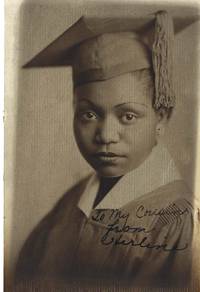
1920rif. 154031920. Portrait of an African American woman graduate circa 1920s documenting Black women's participation in higher education during a period when racial segregation and discriminatory admissions policies sharply restricted educational opportunities in much of the United States. Her academic dress and personal inscription place the photograph within the history of African American education women's educational attainment and the circulation of graduation portraits among families in the early twentieth century. Vintage silver gelatin photograph approximately 4 x 6 inches. The unidentified woman is shown in formal cap and gown in a posed graduation portrait. Inscribed in ink "to my cousin from Herlin" preserving a familial association and identifying the sender only as Herlin; no further identification is supplied. During the 1920s Black students pursued collegiate and professional education through historically Black colleges and universities as well as the smaller number of predominantly white institutions that admitted African Americans. For women graduates portraits such as this recorded an educational achievement attained within the constraints of segregated schooling and restricted professional opportunities. The inscription additionally documents the photograph's movement within a family network rather than its survival solely as an unidentified studio portrait. Very good condition. unknown books
1918rif. 166281918. Unidentified compiler. Photograph album of young woman student 1911-1918 documents school life recreation and community activity in Washington State and the Pacific Northwest during the 1910s. The album centers on a female student's progression from school-age years through graduation capturing educational environments organized physical activities and civic participation. The material records the presence of young women in structured school settings alongside informal leisure and public events providing visual evidence of student life and gendered social experience in the years surrounding the First World War. Photograph album. Washington State and British Columbia 1911-1918. Oblong format 7 x 10.5 inches containing 209 gelatin silver print photographs mounted across 40 pages supplemented by 12 postcards depicting locations in Washington State and Victoria British Columbia. The images include a graduation portrait of a young woman in cap and gown holding a pennant reading "Haddon H.S. 1911" along with later images referencing "1918" suggesting continued documentation across her school years. Photographs depict female students engaged in organized activities including tennis bicycling and calisthenics with groups of girls in uniform marching in formation across open fields. Additional sequences show camping excursions with tents and forest settings indicating school-sponsored outdoor programs. The album also includes scenes of younger children in school environments at play and participating in staged productions some in historical or theatrical costume including colonial-era dress and one child in a Japanese kimono. Community scenes include parades with extensive displays of American flags and images of shipbuilders at work situating the album within a broader civic and labor context. Scattered captions in manuscript such as "cutie" and "happy" provide limited but personal commentary. The album spans a period of expanding public education and increasing visibility of organized physical training and extracurricular programming for girls reflecting broader educational reforms of the early twentieth century. The inclusion of civic events and industrial labor scenes connects student life to wider community structures during the wartime era. The Pacific Northwest setting including references to regional institutions such as the University of Washington situates the material within a developing regional identity shaped by education industry and cross-border movement. Black cloth boards with light handling wear; photographs generally well-preserved with occasional minor wear; album complete and fully populated; overall very good condition. A substantial visual record of female student experience and community life in the early twentieth-century Pacific Northwest. unknown books
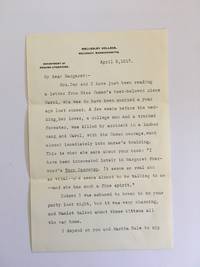
1917rif. 162931917. Bates Katharine Lee autograph letter signed April 9 1917 documents the private intellectual and emotional position of Katharine Lee Bates as a poet educator and social activist working within early twentieth-century academic culture. Writing from Wellesley College Bates addresses the circulation of her poetry in print while firmly rejecting public recitation stating that it would be "against all my instincts and principles to stand upon a platform and read them anywhere least of all in college." The letter provides direct evidence of her relationship to authorship performance and institutional expectations and records her reliance on trusted colleagues to prevent such appearances offering insight into the boundaries she maintained between literary production and public display. Bates Katharine Lee. Autograph letter signed. Wellesley Massachusetts April 9 1917. Two pages typed on Wellesley College letterhead signed in ink. The letter discusses her reluctance to read her poetry publicly despite its printed circulation and includes the request that correspondents intervene to prevent a proposed college reading. She writes: ".I depend on you and Martha Hale to nip in the bud any attempt.to give a college reading of my verses.You know you wouldn't do it yourself and it would be entirely against nature for me to do it even if the verses were better than they are" concluding with the plea "don't let my trench be bombed." Composed in 1917 the year the United States entered World War I the letter's language reflects both personal and cultural pressures with Bates invoking wartime imagery to describe the defense of her professional boundaries. As a longtime faculty member at Wellesley College and an established literary figure her refusal to engage in public readings contrasts with the increasing visibility expected of writers within academic and public spheres. The document contributes to research in women's literary history higher education and the negotiation of authorship and public identity particularly among women writers balancing institutional roles and creative work. Two horizontal folds with strong clear text and signature. Overall near fine condition. unknown books
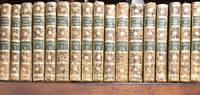
1785rif. 154841785. Bibliothèque Universelle des Dames Histoire 1785-1788 multivolume educational work produced in late Enlightenment France as part of a publishing program intended to provide women readers with structured access to historical and general knowledge. The series formed part of a broader eighteenth century movement encouraging the intellectual education of women among elite and literate circles presenting scholarly subjects in formats designed for domestic study. Issued in the years immediately preceding the French Revolution the work reflects the expanding Enlightenment belief that education should extend beyond traditional male scholarly institutions and that women should participate in intellectual life through reading and study. Bibliothèque Universelle des Dames Histoire. Paris: rue d'Anjou published with royal approval 1785-1788. First edition. Thirty volumes. The series was issued to subscribers over a three year period and intended to provide accessible instruction in historical subjects for an audience of educated women. The set forms part of the larger Bibliothèque Universelle des Dames publishing project which presented a range of scholarly subjects adapted for female readership during the late eighteenth century. Text printed in French and organized across the thirty volumes as a comprehensive historical survey. The Bibliothèque Universelle des Dames series emerged during a period when Enlightenment intellectual culture increasingly debated the scope of women's education and participation in literary life. Publishers and educators produced works designed to make subjects such as history literature and science accessible to female readers who were often excluded from formal academic institutions. Appearing only a few years before the French Revolution the series reflects the educational aspirations and social structures of late eighteenth century France where elite women frequently participated in salon culture and intellectual exchange through reading and discussion. Thirty volume set bound in full tawny brown leather with gilt decorated spines black morocco spine labels with gilt titles gilt ruled boards marbled endpapers and gilt edges. Minor wear and occasional small flaws to some bindings boards secure and interiors generally clean and unmarked. Overall very good condition. A complete eighteenth century educational series illustrating the development of women's intellectual readership in Enlightenment France. unknown books
1947rif. 167171947. Pankhurst E. Sylvia. Education in Ethiopia 1947 examines Ethiopian education during the postwar reconstruction of a school system disrupted by the Italian occupation of 1936-1941. Better known for her leadership in the British suffrage movement Pankhurst became an outspoken opponent of Fascist Italy's invasion of Ethiopia and subsequently devoted decades to Ethiopian political and social affairs through New Times and Ethiopia News. Published with a foreword by Ato Emmanuel Abraham Director-General of the Ethiopian Ministry of Education the pamphlet addresses the development of Ethiopian schooling through contemporary information and extensive photographic documentation of students classrooms and educational institutions. Pankhurst E. Sylvia. Education in Ethiopia. London: New Times and Ethiopia News Norman Hooper & Co. 1947. First edition. 36 pages with 27 photographs and a map. Original printed publisher's wrappers stapled as issued. 8vo. Foreword by Ato Emmanuel Abraham Director-General of the Ethiopian Ministry of Education. The illustrations show Ethiopian children in classrooms and other educational settings supplying a visual record of the schools discussed in Pankhurst's text. The map places the educational survey geographically while Abraham's contribution connects the publication directly with the Ethiopian government ministry responsible for education. The pamphlet appeared six years after Emperor Haile Selassie returned to Ethiopia following the end of Italian occupation and during the rebuilding and expansion of the country's educational institutions. Pankhurst's sustained involvement with Ethiopia distinguishes the work from a general British account of African education: she had founded New Times and Ethiopia News in 1936 in opposition to the Italian invasion and continued publishing on Ethiopian affairs after the war. The combination of Pankhurst's text Abraham's foreword 27 contemporary photographs and the map records Ethiopian education during this period of post-occupation reconstruction. Paper lightly browned due to stock; otherwise a very good copy. unknown books
1891rif. 160801891. Spanish royal teaching license Madrid 1891 authorizes a twenty-one-year-old woman to teach at the primary-school level during the regency of Queen María Cristina of Austria for her minor son King Alfonso XIII. Issued within the educational framework established by Spain's nineteenth-century public-instruction laws the document records the formal credentialing of a woman for professional employment as a teacher. The Ley Moyano of 1857 established a national framework for public instruction and made elementary schooling compulsory for children from six to nine years of age; the professionalization of women teachers developed within this expanding system. Madrid 1891. Royal license authorizing a twenty-one-year-old woman to teach primary school. Vellum document with ornate printed border royal heraldic device and 10-peseta revenue-stamp imprint. The license is issued by order of His Majesty the King and the "Governing Queen of the Kingdom" language corresponding to the regency of María Cristina of Austria who governed during Alfonso XIII's minority from 1885 to 1902. The document records the administrative process by which a woman's qualifications were formally recognized for primary-school teaching and preserves the fiscal and governmental apparatus surrounding that authorization through its revenue stamp official language and royal insignia. The license dates from the Restoration monarchy when the educational structure created under the 1857 Ley Moyano continued to govern Spanish schooling. That law remained a central framework for Spanish education for decades while the female teaching profession had begun to acquire formal training and professional definition during the middle decades of the nineteenth century. The recipient's age sex professional qualification and authorization to teach make the document direct evidence of women's entry into credentialed educational employment in late nineteenth-century Spain. Condition not stated. A government-issued record of a twenty-one-year-old woman's qualification for the teaching profession under the Spanish monarchy in 1891. unknown books
1904rif. 163381904. Two pamphlets concerning the educational and reformatory work associated with Mary Carpenter document the institutional methods developed for juvenile reform in nineteenth-century Britain and their continuation after Carpenter's death. Carpenter established a ragged school at Lewin's Mead Bristol in 1846 and opened the Red Lodge Reformatory for Girls with the support of Lady Byron in 1854 advocating education and rehabilitation in place of purely punitive treatment for juvenile offenders. The earlier pamphlet records a lecture on moral teaching delivered by Carpenter's associate E. A. Manning while the second commemorates the fiftieth anniversary of Red Lodge with its program officers Carpenter's portrait and a photograph showing girls receiving instruction in sewing. Two pamphlets 1875 and 1904 relating to educational reform and Red Lodge Reformatory for Girls in Bristol. The 1875 pamphlet comprises 16 pages and prints E. A. Manning's lecture before the Social Science Congress on moral teaching in schools. The 1904 Red Lodge publication commemorates fifty years of the girls' reformatory and includes a portrait of Carpenter a program of anniversary events lists of trustees and officers and a photograph of girls learning to sew. The photograph records the industrial training incorporated into the institution's educational program where needlework formed part of the preparation of girls for employment after leaving the reformatory. 1 Manning E. A. Moral Teaching in Our Schools. 1875. 16 pages. Lecture delivered before the Social Science Congress by an associate of Mary Carpenter. Manning addresses moral instruction within schools during the period in which Carpenter and other reformers were pressing for educational methods intended to alter the treatment of poor neglected and juvenile offending children. The pamphlet records the intellectual arguments accompanying the development of reform schools as educational institutions rather than places organized solely around punishment. 2 Red Lodge Reformatory for Girls Bristol. Bristol December 9 1904. Fiftieth-anniversary pamphlet commemorating the institution Carpenter and Lady Byron established in 1854. Includes a portrait of Mary Carpenter a program of events lists of trustees and officers and a photograph showing girls learning to sew at Red Lodge. Produced nearly three decades after Carpenter's death the pamphlet documents the personnel commemorative culture and vocational instruction of an institution that continued the educational and penal reforms she had advocated. Very Good Condition. The two publications span nearly thirty years of discussion and practice surrounding moral education and girls' reformatory schooling connecting Carpenter's nineteenth-century reform program with the institutional life of Red Lodge at its fiftieth anniversary. unknown books
1910rif. 153951910. Multiracial elementary school class photograph circa 1910-1915 records a young African American boy among a predominantly white group of first- or second-grade-age students decades before Brown v. Board of Education. He stands in the back row with his classmates and a male teacher outside a clapboard school building. Because neither the school nor its location is identified the photograph does not establish the institution's admissions policy or a broader program of racial integration; it does preserve direct visual evidence of a Black child attending or participating in this otherwise predominantly white elementary class during the early twentieth century. Albumen photograph on original heavy tan photographic board circa 1910-1915 approximately 8 x 5 inches. Approximately thirty students pose with one male teacher outside the clapboard schoolhouse. Many of the boys wear knickerbocker trousers extending below the knee with long stockings characteristic children's clothing of the period. The African American boy is visible in the back row among his classmates. The sharp image permits close examination of the students' clothing their arrangement by rows and the exterior construction of the school building. The photograph predates the Supreme Court's 1954 Brown v. Board of Education decision by approximately four decades during a period when access to integrated schooling varied considerably according to state and local law. Without a location the legal and institutional circumstances of this particular classroom cannot be determined making the photograph most useful as evidence of the specific multiracial class it records rather than of a wider educational policy. Small approximately 1/2-inch stain to the emulsion in the upper portion of the image above the teacher not affecting the teacher or students; otherwise very good condition. unknown books
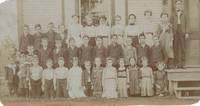
1890rif. 153991890. Rural multi grade school class photograph circa 1890 records a young African American boy among approximately thirty predominantly white students outside a clapboard schoolhouse. The children span a notably broad range of ages from very young pupils to students approaching adulthood with several of the oldest appearing close in age to the teacher. The African American boy appears at the far left of the second row. Made more than six decades before Brown v. Board of Education the photograph provides specific visual evidence of a Black child within this predominantly white nineteenth-century school group although the unidentified school and location prevent determination of the legal or institutional circumstances governing his attendance. Original albumen photograph circa 1890 approximately 8 x 3½ inches mounted on its original tan backing. Approximately thirty students of varying ages pose with their teacher outside a clapboard school building. The pronounced differences in age among the pupils are consistent with the multi-grade organization common to rural schools where children at different educational levels could be taught within the same school. The original mount has been trimmed to the dimensions of the photograph and has rounded corners. The photograph predates the Supreme Court's 1954 Brown v. Board of Education decision by more than sixty years. Because nineteenth-century educational laws and practices concerning Black students varied substantially by state and locality the image should not be used to infer a broader policy of racial integration without identification of the school or community. It nevertheless preserves direct evidence of an African American boy included among approximately thirty predominantly white pupils in a rural multi-grade school class circa 1890. Very good condition. unknown books
1804rif. 167591804. This January 1804 session laws volume preserves the enacted statutes of the Massachusetts General Court including the original incorporation of Bradford Academy an institution that became one of the earliest centers of advanced education in the Commonwealth and a foundational site in the history of women's education in New England. Printed under legislative authority the volume opens with the formal constitutional language "BE it enacted by the Senate and House of Representatives in General Court assembled" situating the text within the statutory framework established by the 1780 Massachusetts Constitution. Among its enactments is the charter establishing Bradford Academy later recognized as the third oldest post-secondary institution in Massachusetts after Harvard University and Williams College. Initially admitting both male and female students at a time when advanced instruction for women remained severely restricted Bradford evolved by 1836 into the first all-female academy in Massachusetts marking a significant development in the institutionalization of women's academic training in the early republic. Acts and Laws. January 12 1804 Session. Boston 1804. Pamphlet volume identified as Vol. 14 of 17 for the legislative session. The title page bears the Commonwealth device and the heading "IN THE YEAR OF OUR LORD 1804" followed by Chapter I "An act in addition to an act entitled 'An act to incorporate John Codman and others into a company by the name of The Suffolk Insurance Company.'" The volume includes commercial financial and educational incorporation statutes enacted during the session. Pamphlet format. Beyond its educational significance the volume documents the expanding legal infrastructure of early American corporate and civic development. Incorporation acts for insurance companies academies and other enterprises reflect Massachusetts' position as a commercial and maritime center in the Federalist era when legislative charters served as the primary mechanism for authorizing financial institutions educational foundations and public improvements. The Bradford Academy act is particularly notable for embedding coeducational authorization within state law at a formative moment in the republic's institutional growth. Early session law pamphlets preserve statutory language prior to later codification and revision offering direct evidence of legislative intent and institutional formation. Edge wear; scattered foxing; small tears along fore-edge; text complete and legible; overall good plus condition. A significant early republic legal printing linking state incorporation practice to the emergence of formalized educational access for women in Massachusetts. unknown books
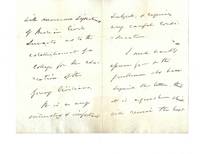
1864rif. 160811864. Wood Charles later 1st Viscount Halifax. Autograph Letter Signed to H. Reckitts 1864 addresses the continuing development of British educational administration in India during Wood's tenure as Secretary of State for India. Wood had earlier set out an extensive program for education in the 1854 document subsequently known as Wood's Despatch recommending provincial education departments universities modeled on British institutions support for public and private schools and the use of Indian languages in provincial curricula. Written a decade later this letter concerns a proposal for a college intended to educate young members of the Indian Civil Service and records Wood's direct consideration of another institution connected with the administration of British India. Wood Charles. Autograph Letter Signed to H. Reckitts. Balmoral September 5 1864. 4 pages. Wood reports that Algernon West had forwarded "the printed letter with numerous signatures of Indian Civil Servants as to the establishment of a College for the education of the young Civilians." He describes the proposal as "a very interesting and important subject" requiring "very careful attention" and assures Reckitts that it "will receive the best attention which the members of the Indian Council and I myself can give to it." The letter documents the route by which a proposal supported by serving Indian Civil Servants reached the Secretary of State and his council showing consultation between colonial administrators and the metropolitan office responsible for Indian government. Wood's 1854 Despatch had recommended the creation of education departments in the provinces and the establishment of universities in major Indian cities; universities at Calcutta Bombay and Madras opened in 1857 with later institutions established in Punjab in 1882 and Allahabad in 1887. This 1864 letter places Wood within the continuing administrative work of developing educational institutions after those initial reforms specifically in relation to the training of British civil servants charged with governing India. Condition was not provided in the supplied description. unknown books
1946rif. 162531946. Original photograph captioned "Prof Smith and his German Class" 1946 records eighteen African American students studying German at Wiley College during the first summer after the end of World War II. Founded in Marshall Texas in 1873 by the Freedmen's Aid Society of the Methodist Episcopal Church to provide Black students access to higher education Wiley developed under segregation as a liberal arts institution serving African American students in Texas and beyond. The photograph documents that academic work through a specific course instructor and student group rather than a ceremonial or athletic event while the names written on the verso preserve the identities of fifteen members of the class. Original silver gelatin photograph 5 x 6¾ inches. Eighteen students stand with Professor Smith on an outdoor flight of steps. The printed caption at the lower center reads "Prof Smith and his German Class." Inscriptions in black ink on the verso identify the group as "Summer Class of 1946" at "Wiley College" followed by Professor Smith's name and the names of fifteen students. One male student positioned at left in the second-to-last row wears a U.S. Army T-shirt a visible connection to military service or military culture during the first postwar summer; the photograph alone does not establish whether he was a veteran. The date places the class within a consequential year for Black higher education in Texas. In 1946 Wiley graduate Heman Marion Sweatt challenged his exclusion from the University of Texas School of Law beginning the litigation that culminated in Sweatt v. Painter and challenged segregated graduate education in the state. Wiley itself had been educating Black students since Reconstruction and awarded its first Bachelor of Arts degree in 1888. Minor handling dents and light soiling to verso; very good condition. The contemporary captions and fifteen student identifications make this a particularly specific record of classroom life at an HBCU in the immediate aftermath of World War II. unknown books
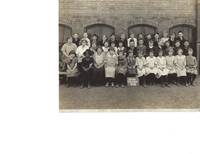
1923rif. 153851923. Harvey School fifth-grade class photograph 1923 records an African American girl seated among approximately two dozen classmates in an apparently racially integrated urban school group. Made thirty-one years before Brown v. Board of Education the image provides visual evidence of a Black child attending school alongside white classmates during a period when racial segregation remained lawful in American public education. The photograph alone does not establish Harvey School's admissions policy or the circumstances under which the class was integrated but the presence of the student within the fifth-grade group makes the image pertinent to the history of African American education and local practices of school integration before Brown. Original sepia-toned gelatin silver photograph 1923 approximately 8 x 6 inches. Approximately two dozen students are arranged in rows for a formal class portrait. An African American girl wearing a large hair bow sits in the front row among her classmates. A placard placed on the floor at the center of the group reads: "Harvey School 5th Grade in 1923." The school's location is not identified in the supplied information. The photograph predates the Supreme Court's 1954 decision in Brown v. Board of Education by three decades. Brown held that state-sanctioned racial segregation in public schools violated the Fourteenth Amendment and rejected the "separate but equal" doctrine in public education. Because educational segregation varied by state municipality and school district before 1954 the specific local circumstances represented by this 1923 class cannot be determined without identifying Harvey School and its location. Very good condition. A precisely dated classroom portrait preserving direct visual evidence of an African American child within a predominantly white fifth-grade class in 1923. unknown books
1813rif. 150361813. Women's education materials 1813-1926 document the lived experience of female schooling across the nineteenth and early twentieth centuries including seminary training scientific study and political awareness prior to national suffrage. The grouping places early republic religious education alongside mid-nineteenth-century academic instruction and late nineteenth-century political consciousness concluding with a twentieth-century pedagogical lecture directed toward women teachers. Together the materials capture women's direct engagement with intellectual scientific and civic life through personal correspondence and formal educational discourse. Four items 1813-1926 consisting of three Autograph Letters Signed and one printed pamphlet. 1 Hillner Louis. Autograph Letter Signed in response to guardian of Eliza Climer. Bethlehem April 22 1813. Two letters on one sheet including a request from Climer's guardian for her removal from the Bethlehem Female Seminary and Hillner's reply noting that she "lamented and wept" at the prospect of leaving and petitioned to remain which he supports as "for her best" if permitted to continue her studies. 2 Hemstreet Eloise. Autograph Letter Signed to her mother 1854. Letter describing her school as "the best of schools and one of the edens of the earth" with specific reference to scientific instruction and anticipation of viewing "the eclipse through the telescope" indicating active participation in astronomy. 3 Unidentified student. Autograph Letter Signed. Western Female Seminary Oxford Ohio October 19 1879. Letter discussing recent gubernatorial elections and public political discourse stating "The principal topic here for the last week has been the election.It will be so nice to be at home next Presidential Election" documenting student engagement with electoral politics prior to the ratification of the Nineteenth Amendment. 4 Gould Frederick J. Why Educate Chesterfield: National Union of Women Teachers 1926. Printed pamphlet of a lecture delivered before women educators advocating intellectual breadth beyond rote instruction declaring "Education must no longer bend over the desk and cramp its soul into spelling writing and sums.It must live in and live by and live for great ideas." Female seminaries in the early nineteenth century including Bethlehem Female Seminary operated within religious institutional frameworks that emphasized moral discipline alongside academic study while mid-century curricula increasingly incorporated scientific subjects such as astronomy. By the late nineteenth century women students were actively observing and discussing electoral politics despite lacking formal voting rights indicating participation in public discourse prior to the ratification of the Nineteenth Amendment to the United States Constitution. Gould's 1926 lecture reflects interwar educational reform movements that advocated broader intellectual development for both teachers and students. Minor fold lines and light handling wear to manuscript letters; pamphlet with slight edge wear and light toning; text throughout clear and legible; overall very good condition. A chronologically layered grouping demonstrating continuity and change in women's educational experience from early seminary culture to modern pedagogical theory. unknown books
1916rif. 156401916. Collection of 43 original vintage photographs documenting the Public School Gardening Movement in Queens New York City 1916-1920 provides concentrated visual evidence of Progressive Era educational reform linking urban environmental transformation to child development and civic formation. Produced at the height of the national school gardening movement which flourished between 1900 and 1920 these photographs capture the integration of nature study playground reform tenement house activism and City Beautiful urbanism into the daily life of immigrant and working class children. The images support research in Progressive Era reform environmental education immigration history urban studies and the construction of civic identity through public schooling demonstrating how agricultural labor was reframed as moral physical and democratic training within dense metropolitan neighborhoods. Forty three original photographs primarily silver gelatin prints Queens New York City 1916-1920. Most measure approximately 2 by 4 inches with several bearing manuscript dates between 1916 and 1920 and occasional notations identifying individuals or activities. The photographs depict schoolchildren planting seeds watering beds harvesting produce carrying baskets of vegetables and working collaboratively under teacher supervision in organized garden plots. Visual evidence indicates structured rows tool distribution and adult oversight underscoring the pedagogical framework rather than informal recreation. The movement in New York was shaped by the work of reformer Frances Griscom Parsons who established the Children's School Farm in Hell's Kitchen in 1902 to provide immigrant youth living amid warehouses factories and docks with access to cultivated land. Parsons articulated gardening as instruction in "brotherhood cooperation self respect and the dignity of labor" envisioning children as "little farmers" rehearsing democratic citizenship within an idealized urban microcosm structured into "boroughs" with its own elected governance. The Queens photographs reflect the diffusion of this model into outer borough public schools during the final years of the First World War and immediate postwar period. The timing of the archive coincides with national concern over urban crowding industrialization and the assimilation of immigrant communities as well as wartime food production campaigns that reinforced agricultural instruction in schools. School gardens functioned simultaneously as environmental intervention civic laboratory and instrument of Americanization embedding Progressive reform ideals directly into children's bodily practice and daily routine. The photographs materially document how educational institutions operationalized nature study principles and urban reform agendas on the ground offering granular evidence of children's participation in structured agricultural labor within New York City's public school system. Minor edge wear and light surface handling marks to several prints; occasional light fading consistent with age; manuscript annotations legible. Overall very good condition. A cohesive visual archive illuminating the intersection of urban reform environmental education and immigrant childhood in Progressive Era New York. unknown books
1931rif. 166401931. Women Education Photo album of girls primary school 1931-1938. 8 3/4 x 12 in. Original blue cloth board covers. 58 vernacular Gelatin silver print black and white photos of various sizes from 2.5 x 3.5 in. to 5.5 x 4 in. Follows a class of girl students over the course of 7 years right before the start of WWII and the bombing of London. . Album kept by schoolteacher of the students at All Saints Girls' School in London. Inscription on inside front cover: "From 1931- Recording many happy hours with All Saints . Candidates Central Islington." Begins with "The Original Class" and identifying class leaders including one small child identified as "Baby". In 1935 identified as the "Jubilee Year" celebrating 25 years of King George V students had photos taken in Kensington Garden while performing a "Jockey Dance" and national dances for England Ireland Scotland and Wales. Children are dressed up in the garden as a "gypsy" jockey and "butterflies and elves." There are also pictures of girls in short dresses posing as part of the Skipping Team. In other images students wear plaid skirts ties and hats while performing a "Scotch Dance"; they also wore special costumes for different dances such as the "Mountain March" the "Shoe maker" and "Cochin-China". Includes note on what the girls were wearing for each yearly photo: "Blue and white check dresses with white collars & cuffs" and 1937 Coronation Year King George VI / Red white & blue dresses". Very good condition. unknown books
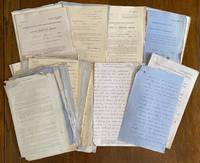
1871rif. 160921871. Kemble Parochial School. Record Book 1871-1904 constitutes a sustained documentary record of rural English education during the formative decades following the Elementary Education Act of 1870 commonly known as the Forster Act. Established in direct response to this legislation which mandated compulsory elementary education for children aged five to thirteen in England and Wales and instituted state oversight and inspection Kemble Parochial School offers a continuous administrative record of how national educational reform was implemented at the parish level. The archive captures the practical realities of compulsory schooling: certification requirements for teachers standardized curricula state inspection protocols and fluctuating rural enrollment. Through retained annual reports official circulars and examination schedules listing enrolled pupils by name the collection documents the institutionalization of public elementary education and the negotiation between church authority and centralized state control in late nineteenth-century Gloucestershire. Kemble Parochial School. Record Book. Kemble Cirencester Gloucestershire 1871-1904. Collection of over 100 documents on approximately 180 large legal-size leaves many written on both sides. Unbound housed in original protective black cloth boards. Comprises printed Circulars issued by the Education Department and handwritten retained copies of reports submitted by the school to government inspectors. The earliest document is a Circular of Instructions and Rules for school construction. Annual reports by Principal A. G. W. Wilts begin in 1872 describing an initial enrollment of eighteen pupils taught by headmistress Ms. Hopkinson in inadequate premises pending completion of a new schoolroom and teacher's residence. Reports track enrollment growth to forty-nine by 1875 and approximately eighty by the late 1890s alongside repeated references to inspection standards deficiencies in arithmetic and mandated needlework instruction and the ongoing struggle of successive teachers to secure formal certification. A handwritten 1880 letter from Rev. R. H. Taylor questions whether the school qualifies as a public elementary school under Section VII of the 1870 Act reflecting denominational tensions surrounding state inspection. Education Department circulars further illuminate social concerns of the period including notices warning teachers to deter pupils from damaging telegraph wire insulators with penalties described as imprisonment and flogging. Spanning more than three decades the archive documents the transformation from informal parish instruction to standardized state-supervised education embedded within a national bureaucratic framework. The records illuminate rural responses to compulsory attendance clerical apprehension over non-denominational governance and the administrative burden placed on small village schools adapting to inspection regimes and credentialing requirements. Enrollment decline to three pupils by 1904 underscores demographic and institutional shifts at the turn of the century. Large sheets of blue and white paper generally clear and legible; occasional dog-earing; a few corner losses from minor chewing; most leaves complete and intact. Overall very good condition. A remarkably complete parish-level archive preserving the lived implementation of the Elementary Education Act and the restructuring of English public education in the late nineteenth century. unknown books