72 657 résultats
réf. 82591Paperback. Near Fine. cover title. photos 32p. Original yellow wrapper. 30cm. Richardson had served as President of this Michigan organization since it was organized in 1933 when it was called the Baptist Young People's Union Convention. We don't know whether Richardson was retiring from office in 1971. paperback books
1945réf. 49844Atlanta: The Citizens Committee on Public Education 239 Auburn Avenue NE address given for obtaining copies 1945. Paperback. Very Good. illustration 4p. Narrow softcover leaflet with a summary on an inserted broadside leaf. Narrow 21 cm. Recommended reading was "Report of Public School Facilities for Negroes in Atlanta" prepared by or for the Urban League in Atlanta. This little leaflet didn't call for the end of segregated schools in Atlanta but it did call for massive expansion of resources for Atlanta's African American students including six additional schools and at least 353 additional teachers. The Citizens Committee on Public Education, 239 Auburn Avenue, NE (address given for obtaining copies) paperback books
réf. 54767Okinawa n.d. post World-War II. Paperback. Good. illustrations 12 sheets mimeo on one side only two holes punched at top two rusty staples at left side. 27cm. All sheets partially stained yellow and slightly waxy but clear and readable. paperback books
1960réf. 74434Delhi: Ministry of Education 1960. Paperback. Good. photos index v 491p. Wrapper partially pasted down jacket over plain wrapper. 25cm. Jacket worn. Former owner's name. Ministry of Education paperback books
1949réf. 64575Johannesburg: The Education League Opvoedingsbond 1949. 2nd enlarged ed. Paperback. Very Good. 38p. Wrapper. 22cm. The Education League (Opvoedingsbond) paperback books
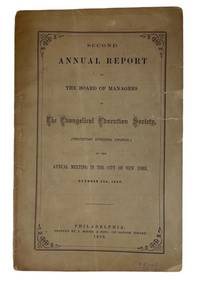
1868réf. 75779Philadelphia 1868. Paperback. Good. 26 2p. Original wrapper. 23cm. Chipping and tears along right edge of front cover. Browned and somewhat fragile. This society sought to offer financial support to individual students preparing "for the sacred ministry presumably as Evangelic Episcopalians. paperback books
1939réf. 46263Washington: GPO 1939. Hardcover. Good. maps xv 243p. Original blue buckram. 23cm. Browning on backstrip endpapers and some page-margins. Rubbed at ends of backstrip. No Jacket. A.C.E. Staff Study No. 16. Includes chapters on Alaska pp. 18-52 Hawaii pp. 53-88 Puerto Rico pp. 89-132 the Virgin Islands pp. 133-164 Guam pp. 165-197 and American Samoa pp. 198-228. GPO hardcover books
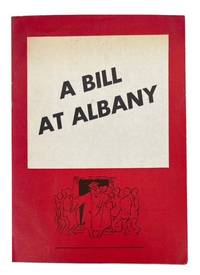
1947réf. 49829New York 1947. Paperback. Good. 15p. Softcover in original wrapper. 15 cm. Small tear in back-cover corner repaired with glued paper. Crease in front cover. Printed broadside "Special Notice" laid in noing that the bill had been referred to the Senate Finace Committee aand provided a list of the nmes and addresses of the members of that Senate committee. Urged support of the Austin-Mahoney Bill to outlaw discrimination in public and private education in New York.We don't know what happened but suspect it died in committee. paperback books
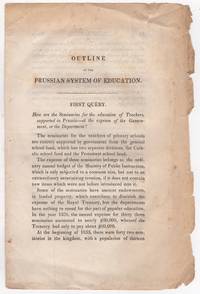
1835réf. 46198Boston: Printed by Dutton and Wentworth 1835. First edition. Removed. Very good untrimmed edges browned and torn light soiling stitch holes. 11-14 pp. Sm. 4to. Extracted from: "Report of the Committee on Education on So Much of the Governor's Message as Relates to the School Fund." House Series Massachusetts. General Court. House of Representatives ; 1835 no. 54. This section"Outline of the Prussian system of education" is by an anonymous Prussian commissioner travelling in the U.S. Only three copies located in OCLC: Nat. Lib of Education LCPand Wisc. Hist. Soc. American Imprints 32902. [Printed by Dutton and Wentworth] unknown books
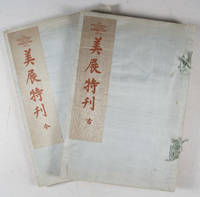
1929réf. 41261上海市 Shanghai: æ£è—社 Zheng yi she 1929. Second edition. Softcover. poor to vg-. Folios. Approx. 15x10". Unpaginated. "Modern" volume with 3 preliminary pages of index and 8 pages of prologue. "Ancient" volume with 2 pages of prologue and 1 page of index at the front. Grey patterned cloth portfolio with black lettering over a white label on the front cover. Light blue-grey silk wrappers with light blue string-tied bindings. Red lettering in English and Chinese over a tan silk label on the front covers. This is the "November 1929" printing. The work is an exhibition catalog from The National Fine Arts Exhibition held in Shanghai in April of 1929 which was organized by the Ministry of Education of the Republic of China headed at the time by Cai Yuanpei. It is considered the first Chinese fine arts exhibition in modern history. The exhibition was a monumental retrospective with more than 2000 pieces of art from throughout Chinese history starting from the Five Dynasties period the 10th century up through the contemporary period. The event brought together the work of countless Chinese artists photographers and architects and also included the work of six Japanese artists. The catalog includes some 400 pieces of the artwork featured in the exhibition divided into a "modern" volume and an "ancient" volume. The artwork is printed in b/w offset photographic reproductions and collotypes. Also included in the "ancient" volume are seven works in color with both Chinese and English language titles on protective tissue guards a few of which are beautifully printed color lithographs. The "modern" volume contains a printed calligraphic prologue written in by Cai Yuanpei. The "ancient" volume includes works from some artists as The Four Wangs Wu and Yun from Qing Dynasty Four Monks of the Early Qing Dynasty Bada Shanren Shitao Hong Ren and Kun Can Lan Ying and Gong Xian. The "modern" volume contains works from Zhang Daqian Qi Baishi Wu Hufan Liu Haisu and Lin Fengmian among many others. Both volumes contains extensive indexes of the artwork. Text in Chinese. Portfolio with boards broken but present. Wrappers with some light smudges and scratches and a few minor creases. Some sunning along the top and bottom edges of the covers. Interiors with sunning to the edges and a few sporadic minor smudges. Images mostly unaffected. Portfolio in poor wrappers in good interiors in very good- condition overall. æ£è—社 (Zheng yi she) unknown books
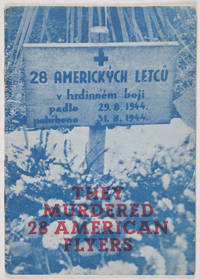
1945réf. 34282Prague: Education Department of the Ministry of National Defence 1945. First edition. Softcover. g. Octavo. 22 2pp. Original photo-illustrated wrappers with red lettering on front cover. Frontispiece. Scarce booklet on the gruesome event that took place in the Czech town of Slavicin. There an air battle took place on August 29th 1944. Two days after the bodies of twenty eight Americans who were killed during the battle were dumped into a mass grave by German soldiers. A wooden marker at the grave read: "28 American Flyers Died August 29 1944 buried August 31 1944." German orders strictly forbade anyone from bringing flowers to the grave. After the war a group of people from the Slavicin area tried to uncover the details of the battle and to learn the names of the men who had been buried in their town. However the political climate changed quickly after the war and as a result the search for information was essentially halted. Nevertheless the Czech people did not forget about their American Liberators. Every year since the battle on the last Sunday in August a special mass has been held at the church in Slavicin in memory of their fallen heroes. Slowly and patiently the Czechs continued to collect information and pieced together details related to the battle and the men who fought it. This work is illustrated with 9 b/w photographic reproductions. Moderate rubbing and slight creasing along edges of wrappers. Upper corner bumped thus slightly affecting pages throughout. Wrappers and interior in overall good to good condition. Education Department of the Ministry of National Defence unknown books
1963réf. M14567Washington:: US Government Printing Office 1963. 1963. Series: Public health service publication No. 1076. 8vo. xviii 238 pp. Figs. Original printed wrappers. Small ownership rubber-stamp to cover. Very good. CONTENTS: Background methodology references – Summary conclusions and recommendations – Review of past studies – The environmental study – Part A. Field investigation– Part B. History of dust sampling and comparison of methods – Medical study – A retrospective study of a silicosis control program – The use of the new international radiological classification of the pneumoconioses Geneva 1958 in the study of silicosis – Effects of silicosis and other factors on pulmonary function. US Government Printing Office, 1963. unknown books
1951réf. 57185Tokyo. September 1951. Illustrated Summary of Japan's Postwar Schools at the End of the American Occupation A promotional booklet produced for Western audiences by the Japanese Ministry of Education Monbushou just a few years after the end of World War II. In fact the preface is dated September 1951 the same month as the signing of the San Francisco Peace Treaty which created the framework for the restoration of Japanese self-sovereignty. Accompanied by numerous statistical infographics and drawn or photographic illustrations this booklet presents some basic facts about Japan's climate and population briefly outlines the history of education in Japan including post-war educational reform and describes the challenges facing schools due to increased population lack of resources and materials and destruction caused by the war. Despite the authors' humble postscript which asserts that "it must be admitted regret to say that this document leaves much to be desired" it nonetheless provides a wealth of information on the state of Japanese schools in the early 1950s particularly through its illustrations of classrooms school buildings and floorplans and classrooms from various regions of the country. Rare: OCLC records only three copies - at the British Architectural Library at the Royal Institute the IZUM in Slovenia and the University of Akron. Oblong octavo. Original pictorial wrappers stapled. Lightly worn and soiled. Slight creases throughout fourth and thirteenth leaves loose but present closed horizontal tear and tape residue to leaf thirteen. In good condition overall. OCLC 598963. unknown books
1487réf. 046404Milan: Antonius Zarotus 1487. Second Edition. Hardcover Full Leather. Very Good Condition. 19th century red morocco gilt hinges and spine rubbed and a little weak but still generally sound and attractive. Added marbled endpapers and a description of the edition and a note on the binding penned on added blank endpapers. The second edition of Tacitus much improved by Puteolanus from the first and the first printed with The Life of Agricola first published by Zarotus in a collection of panegyrics ca. 1482. It was once thought to have been printed in the 1470s but now usually pegged as 1487. Likely washed though gently except for the first and final leaves Agricola leaves 176-187 with a dampstain in the margin final two leaves darkened. Four small wormtrails in last section leavs 121-end two trails in the textblock but generally very unobtrusive. Top edge gilt and trimmed slightly when rebound leaf numbers penciled lightly and neatly in the inner gutter. Five 6 line and one 2 line initial colored in early or contemporary color 37 lines set in a fine Roman typeface often compared to Jenson and assumed to be set by him at one point 187 leaves with the blanks at 160 and 176 but lacking the final blank. Graesse T7 Dibdin Bibl. Spenc. v2 461 Brunet V 633 Goff T7 ISTC it00007000 Provenance: With the label of A.C.C. Brodribb but likely from his father C.W. Brodribb who wrote and published in The American Library Annual a poem describing this volume laid in with a penciled date for the binding of 1855; an inscription on an added endpaper bears the same date. Also laid in is a 1949 letter to A.C.C. Brodribb Esq. from L.A. Sheppard at The British Museum describing the volume which he likely inherited following his father's death in 1945 Size: Folio. Quantity Available: 1. Shipped Weight: 2-3 kilos. Category: History; Incunabula. Inventory No: 046404. Antonius Zarotus hardcover books
1961réf. M5781Washington D.C.:: GPO 1961. 1961. 242 x 134 mm. ii 4 pp. Three-panel folding pamphlet; a little browned and frayed at the top margin. Very good. (GPO, 1961). unknown books
1980réf. 2794Zagorski: Khudozhestvenno-pedagogicheskii muzei igrushki Akademiia pedagogicheskikh nauk SSSR 1980. Wraps. Very Good. 48 pages. Cataogue of the Art Education Museum of Toys at Zagorsk Russia. Text repeated in Russian English French German and Spanish. 41 color illustrations. Khudozhestvenno-pedagogicheskii muzei igrushki, Akademiia pedagogicheskikh nauk SSSR paperback books
1919réf. 13163Salem Or. 1919. 90pp. Oblong octavo. Original illustrated tan wrappers printed in darker tan. Wrappers chipped rubbed and soiled small tape repair to bottom of front wrapper. Minor to moderate foxing and staining to text minor damage to two pages part of one page appears to be a fold-out panorama which is mostly lacking. Good only. . A very rare promotional pamphlet illustrating the opportunities awaiting Native American youth at the Salem Indian Training School in Chemawa Oregon. The wrapper title is Salem U.S. Vocational School Chemawa Oregon. The Salem Indian Training School opened in early 1880 as one of the first Native American boarding schools in the country of course intended to be an instrument of assimilation for local indigenous peoples. Opened as an elementary school Salem was a fully-accredited high school by 1927. The school is still open and has been for some time known as the Chemawa Indian School named for the Chemawa band of the Kalapuya people of the Willamette Valley; its own website describes the school as "the oldest continuously operated boarding school for Native American students in the United States." The present work includes a title leaf and four pages of explanatory text about the school with the remainder of the contents comprised of full-page photographs illustrating a wide variety of subjects at the institution. The work opens with photographic portraits of four white government officials including the superintendent of the Salem school Harwood Hall. This is followed by the explanatory text describing the general area around Chemawa as well as various aspects of the school such as its academics boys and girls "industries" farm social life newspaper The Chemawa American and more. The most striking photograph is a folding "Panoramic View of Chemawa Indian School" which is present here in its entirety measuring 5.5 x 21.5 inches. Other photographs picture various landmarks around Oregon but mostly center on the school's campus and activities. These include photos of campus buildings and spaces dormitories hospital auditorium academic building girls' industrial building greenhouse prune orchard the "piggery" classrooms and other interiors sewing blacksmith shop gymnasium dormitory rooms and parlors dressmaking carpentry shop bakery "fruit room" boiler room tailor shop science lab clubs and sports teams boys' and girls' basketball boys' football track baseball Sigma Phi Delta Society and three other literary societies Mandolin and Guitar Club Boys Battalion Excelsior Literary Society group photographs of the 1918 and 1919 graduating class the latter showing twenty students holding a pennant reading "Excellence Means Labor" and more. A small card is affixed to the title leaf stating that "This booklet was printed entirely within our own shop" so very likely by Native American students whose print shop is also illustrated within. The work is very similar to another publication for the Sherman Institute in California produced around the same time. OCLC records just two copies both in Oregon at the State Library and the University of Oregon. unknown books
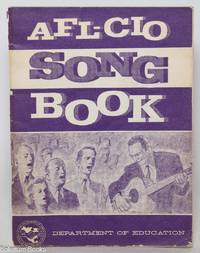
1955réf. 87599Washington: AFL-CIO 1955. Pamphlet. 39p. stapled wraps 4.5x6 inches wraps lightly worn and soiled front wrap unevenly toned staples rusted else good condition. Labor songs start on p. 16. Publication no. 56. AFL-CIO unknown books
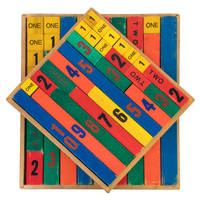
1980réf. 1003407Barnard Vermont: Vermont Toy Works 1980. Two sets of brightly painted counting blocks proportionally sized each labeled with its corresponding numeral and that number spelled out. When housed in their trays each column of blocks must add up to ten. Out of their trays the blocks can be used to solve simple addition and subtraction problems or for free play. Vermont Toy Works was a short-lived woodcraft toy company active in the 1980s: it is possible that one of the sets here was a prototype for the manufacture of the other. A very appealing survival from both an educational and a design standpoint. Note: these blocks are heavy! Shipping at cost. Two sets of painted wooden blocks each containing twenty-eight proportionally sized blocks numbered 1-10 housed in two wooden trays: the larger tray measuring 14.75 x 13.25 inches the smaller 11 x 9.75 inches. "Vermont Toy Works" stamp on bottom of both trays. Light general wear. Vermont Toy Works unknown books
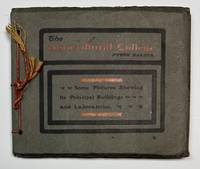
1894réf. 3962Fargo 1894. About very good. 16 leaves with descriptive tissue guards. Oblong 12mo. Original grey printed wrappers string-tied. Light wear and soiling to covers. First tissue guard lacking. Internally clean. A pictorial souvenir of the Agricultural College of North Dakota which later became North Dakota State University. The school opened in January 1892 with 123 students enrolled. This booklet then showcases the progress made in the short years after the founding of the school. Images show the primary building the biology lab the chemistry lab home economics classroom the agricultural classroom with its collections of grains and seeds and more. We locate two copies in OCLC at the University of Illinois and North Dakota State University. unknown books
1969réf. 290321Washington: AFL-CIO 1969. Pamphlet. 39p. staplebound booklet 4.5x6 inches light handling wear third printing . Publication no. 56. AFL-CIO unknown books
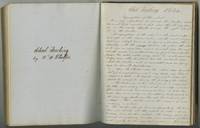
1849réf. List3731Albany New York 1849. Notebook measuring 7 ¾ x 10 ½ inches. 124pp filled out totaling appx. 49000 words. With two loose essays 7pp. Front cover detached with wear especially to edges and spine; good. Contents excellent. Overall very good. A notebook containing transcriptions of lectures by Profs. William F. Phelps Silas Bown and William W. Clark of the New York State Normal School now SUNY Albany. The three professors were graduates of the school's first class in 1846 and became professors there upon graduating. The notebook is highlighted by ten pages of notes documenting Phelps' extensive and detailed lecture on schoolteaching. The lecture dates to early in Phelps' career shortly after his own graduation; the educational pioneer would go on to preside over a number of normal schools and the American Normal School Association found the National Education Association serve as vice-president of the first International Conference of Educators and author textbooks and manuals for teaching. The lecture is titled "Organization of the school" and is divided into sixteen sections covering different aspects of teaching. He opens: "The organization of the school is the most important step in the teacher's duties and the most important and critical time in his life as a teacher; this is especially with the young teacher. He enters the school as it were an apprentice and is to work upon the most delicate material without having first learned his trade . the material upon which the teacher acts is immortal and an injury done to it will last forever." Teaching for Phelps had to involve more than just "taking up a reading book and calling out a class and hearing them read around then commanding them to take their seats" and repeating the same process with every subject-especially for a new teacher on his first day. He lays out his preferred first-day procedure-an introduction by the trustees then a short speech followed by a "little song" or "amusing or instructive anecdote"-but emphasizes that "The spirit of kindness should be breathed forth in every sentence; nor should he forget to speak kindly to those he meets in the streets." He then turns to the classification of students with short exams on the various subjects along with careful attention to the students so "that you may learn their habits" again emphasizing the teacher's attitude towards his pupils: "He should learn the names of the scholars as soon as possible; for it is very disagreeable not to be able to call the name of a scholar when you wish to speak to him. Never call a boy Mr. or a girl Miss; for you miss it every time you Miss your school-girls it will make them grow too fast." Next Phelps makes suggestions for getting one's preferred textbooks adopted. One can appeal to the trustees and then to the parents and then if this fails the teacher can follow Phelps' scheme of purchasing the preferred books himself lending them out for free and "exciting a deep interest in their lessons": "The parents will soon begin to wonder at the change that has taken place in their children once they could not persuade them to look at their books but now they do nothing but study. You will thus wake up the parents to a sense of the utility of the books". Parents according to Phelps also need to be convinced that a longer lesson is not necessarily a better one: "If the teacher gives them long lessons and thus runs them through . they call him a smart man." However a short lesson is easier to learn and well-learned lessons "will soon cause the objections of parents to give way". His other advice concerns seating arrangements-"according to size if you are a lover of symmetry"-how to dismiss students for recess and tracking and managing absences and tardies which he states should mainly be managed by making the lessons interesting and the classroom pleasant. He closes by describing how the teacher ought to enact "a missionary spirit": "Let the first two or three weeks of your school be spent in visiting the parents in the district and becoming acquainted with them and giving them an opportunity of becoming acquainted with you. . Do not forget to talk to them about their children. Show them that you are laboring for the good of those children - that you love them and wish to do them all the good in your power. If you have the teacher's spirit they will soon find it out . If you possess the art of being agreeable in private conversation and in addition to this exercise true politeness in all occations sic you will never have any trouble in finding a pleasant boarding place. And when you do go there you will find as good a living as you want and the pies and sweet cake will be on hand. You will also be able to teach the parents many things . and then you may consider your school as 'Thoroughly Organized'." One imagines that Phelps' meticulous lecture with its emphases on kindness and making schooling enjoyable for students and parents was quite inspiring to the soon-to-be teacher; the practices he outlines set the foundation for his future career. Bowen's lectures cover rhetoric and composition-especially focusing on good taste defined as "the power of receiving pleasure from the beautiful of nature or art"-and Clark's cover chemistry natural philosophy and electricity. Throughout there are interesting comments that expose the professors' underlying philosophies and thus approaches to teaching: for instance Bowen comments that "Persons by nature are differently constituted some naturally possessing a more refined taste than others" and Clark states that "All knowledge is acquired through the senses" and that "Natural History is not a science" but mere classification. The notebook also includes a short lecture on music a transcription of a chapter of Charles Babbage's Ninth Bridgewater Treatise and two short apparently original essays one on technological progress and the other on wisdom. Of interest to historians of education and of the early days of SUNY Albany. books
1911réf. 007397Boston: Silver Burdett 1911 Tan cloth pictorially stamped in brown bump to bottom edge else near fine. Retelling of fables in reader format with wonderful part color illustrations by Harry Wood. Scarce. Near Fine/No Jacket. Illus. by Harry E Wood. 12mo. Silver Burdett hardcover books
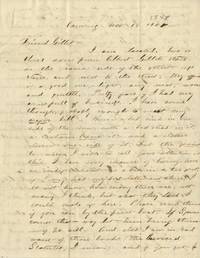
1848réf. List3729Corning New York 1848. Two autograph letters signed from C. H. Berry. Each 3 pp measuring 8 x 10 inches. Very good plus. A pair of letters from C. H. Berry of Corning New York who was apparently both a schoolteacher and active in Free Soil circles in the area. The earlier letter written in 1847 provides an unexpected look at corporal punishment in the classroom. Berry writes: "I am in my school yet. I have four weeks or nearly that to keep yet. I storm round like an old sailor have my hands full but enjoy the pleasure of seeing the little 'varmints' learn. I had a speck of variety today. Several boys stayed out this forenoon after recess. This afternoon I called them up & after talking a spell told them I should punish them for staying out. One fellow squared himself & said he should not be punished! He was a huge fellow with a boxer's ring on his fingers weighing one or two ounces. He swore flat in my face when I began to talk with him. I told him in consideration of his being saucy he must take off his coat. I took the young man by the collar with one hand and applied a strap of harness leather to his legs with the other. He flourished his tongue his arms & legs in a furious way till finding my own was too long for him to reach me he dove for the poker. I just laid him out a couple of times & then plied my straps till his coat came off with a rush & numerous apologies followed it. He said he swore because he was mad he always did so & thought it very unfortunate that he had such a habit. I then punished him for staying out and told him to take his seat which he did very quietly." The second letter written during the immediate aftermath of the election of 1848 shifts dramatically toward national politics. Berry offers a frank assessment of the political future of anti-slavery organization: "In 'Free Soil' matters we have done up all we expected to here and are perfectly satisfied. Our party is firmly organized. Our cause has the sympathy of honest men of all parties and as Taylor is elected let me tell you just what I think of it: Cass has showed his hand and that party can not claim to be free soil men in 1852 or at any time hereafter. Taylor is in a position where he will be obliged to declare himself also. Now if Taylor disappoints the South and comes out a freedom man it will be in consequence of this Northern movement and we have attained all we wanted. But if which is more likely he goes for the South his supporters in the free states will be without the least color of excuse in 1852 and they must join our party & there will not be a grease spot of their organization left. The case then is this: Nothing but 'liberty' will satisfy the people of the north. The Hunkers can not stand on this platform for they have repudiated it; the honest ones will be with us. The Whigs must come on to our ground and join us as a party by the acts of their Executive or declare against liberty which will destroy their party here and bring them to us in a disorganized mass. Then with 'repeal' as our motto we will teach them the error of their ways. We can not fail to succeed in my view of the case. Free soil forever." Written before the formation of the Republican Party and more than a decade before secession the letter captures anti-slavery political sentiment at a transitional moment when Free Soil activists believed sectional political realignment increasingly inevitable. An unusually readable pair balancing ordinary rural life with emerging sectional politics in antebellum New York. books
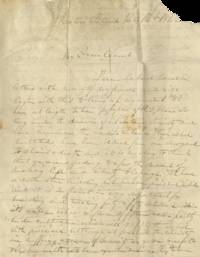
1842réf. List3738Ship Saluda Bound for Monrovia 1842. Two autograph letters signed approximately seven manuscript pages total. 1839 letter measuring 8 x 12 ¾ inches foxed with small tears at folds very good; 1842 letter measuring 8 x 10 inches tears at folds with larger tear to top right some text missing very good minus. Overall very good. A pair of letters documenting the work of Dr. Wesley Johnson 1813-1844 physician educator and colonial official associated with Bassa Cove during Liberia's formative decades. Written three years apart the letters preserve Johnson's involvement in medicine colonial administration anti-slave trade efforts agricultural reform and the establishment of one of Liberia's earliest advanced educational institutions. Born in Hillsdale New York Johnson studied medicine at Jefferson Medical College in Philadelphia under Dr. Jacob Green receiving his degree in 1837 before departing almost immediately for West Africa.1 He entered service at Bassa Cove a settlement approximately seventy miles south of Monrovia supported jointly by the New York and Pennsylvania Colonization Societies. Established as part of the larger Liberian colonization project Bassa Cove existed under difficult conditions: high mortality limited resources dependence upon outside support and periodic violence associated both with local conflict and the wider Atlantic slave trade. Johnson's responsibilities expanded rapidly after his arrival. He worked closely with Governor Thomas Buchanan and within a year had served in command of local militia forces and assumed administrative authority at Bassa Cove. Following conflict involving Theodore Canot a trader in enslaved people and violence affecting nearby settlements Johnson was reportedly injured; he shifted increasingly toward educational work becoming central to the establishment of the Ladies Liberia High School at Factory Island an ambitious project intended to educate future leadership within the colony. The earlier letter written aboard the ship Saluda on October 2 1839 finds Johnson struggling with declining health; a "bilious attack" that "was succeeded by an enlargement of the spleen" and he travelled along the coast towards Sierra Leone and Cape Mount "for my health." Even while discussing illness however Johnson remained focused on institutional work and future responsibilities: "When I return to Bassa I shall take charge of a high school about to be established there and carried on by the Ladies of Philad'a." That brief reference points toward one of the more ambitious educational efforts connected to early Liberia. Organized in Philadelphia in 1832 the Ladies' Liberia School Association sought to support educational development in Liberia through funding schools teachers and educational infrastructure.2 By the late 1830s the organization had developed a broad network of support and had undertaken plans for a secondary school at Factory Island near Bassa Cove. Johnson would become central to its implementation. He writes: "As long as I have serviceable health it is doubtless my duty to remain here for why should new persons come here continually at the risk of their lives & unacquainted with the colony or country. It seems hardly credible that I have been here more than two years already. "10th. I have been today drawing a plan of the buildings for the high school on Factory Island but this evening the vessel rolls and I cannot make straight marks & will go on with my letter. My health is better & better. I drink wine occasionally & we have five courses at dinner. I stopped at Monrovia several days as we came along and found high life at the Govt. house. When we get back to Bassa a school will give my employment & as my agency for the Col. Soc. will be exchanged for that of the Ladies Soc. of Phil. for African Education. Of this change I am glad. It will relieve me of care trouble and vexation and business which I have no means of accomplishing to my mind. "The Colony was never more prospered. Gov. Buchanan drives hard at the Slavers and they cannot stand it. You will see by the . something of what has been going on here. O that I was worth a million. I would make a great jam in Liberia. As it is I take it extempore make the best moves that I can for the time." Three years later writing from Factory Island on July 14 1842 Johnson reports that the educational institution envisioned in the earlier letter had become reality. He writes: "We have at length taken possession of this place so long under the dominion of his Satanic Majesty and have commenced the Ladies Liberia High School. Multitudes have been doomed from our door-yard to chains & death and it is consoling to think that we are affording to a few the means of making life and liberty blessings. We have a noble stone building not however finished inside and it is sufficient in every department for boarding and teaching forty or fifty scholars within its walls. Also a farm of fifteen acres partly under cultivation which will supply the school with provisions. Although at present the colonists are suffering a season of scarcity we go on comfortably. My health has been excellent since my return paper loss indeed it received an important improvement immediately after my arrival. My objects are to get the School thoroughly established an improved system of agriculture in operation and some other person properly introduced to my place & then to return to America. I should not add the last item so readily at present not knowing what circumstances may indicate of my duty but I made a general promise to my friends to return in two years. We are introducing the improved and labor saving plans and means of farming which are from five to ten times as efficient as those in common use here and as novel to the colonists as theirs would be in the good state of New York. We are in want of funds for these purposes all having been exhausted which were appropriated to them by the Ladies and I am obliged to furnish means from my own funds. We have a kind of manual labour system - the pupils work from 6 to 8 & from 4 to 6 & study from 9 to 12 2 to 4 & 7 to 8. My mode of teaching is much improved on what it was in Cin. by invention reflection & teaching others to teach and no other employment is so agreeable to me. I am father mother preceptor & religious teacher to my scholars & universal agent & factotum to the School and would to Heaven that I were better prepared for the work and could show an influential example of the power of living holiness." The physical cost of such work proved severe. Tropical illness permanently damaged Johnson's health. By the time of the present letters he was already recording prolonged illness and enlargement of the spleen. He ultimately returned to Hillsdale in 1844 and died shortly afterward at only thirty-one years old. Contemporary memorials praised both his educational work and personal sacrifice describing Liberia as having lost "a devoted friend and martyr." Taken together the letters preserve the work of an unusually capable participant operating at multiple levels of early Liberian development-physician educator administrator agricultural reformer and institution builder-while documenting educational work colonial administration medicine anti-slave trade activity and daily life through firsthand observation during Liberia's formative decades. An important Liberia grouping. 1 Otteson Ron. Ron Otteson "Dr. Wesley Johnson of Hillsdale: A Gentleman of Talent and Liberal Education" Roeliff Jansen Historical Society accessed May 22 2026 https://www.roeliffjansenhs.org/about-6. 2 Karen Fisher Younger "Philadelphia's Ladies' Liberia School Association and the Rise and Decline of Northern Female Colonization Support" Pennsylvania Magazine of History and Biography 134 no. 3 2010: 235-260. books