77 284 résultats
1978réf. 2090502113710047Not Available 1978. Soft Cover. Fine. The book is in fine condition. Not Available paperback
1920réf. 179821920. Archive of eight silver gelatin photographs and one albumen portrait documenting the social life theatrical productions and group identity of a women's sorority at MacMurray College in Jacksonville Illinois circa 1920. Photographs range from 7" x 5" to 3.5" x 3.5" and bear the imprint of local photographers Vail & Vail along with negative numbers in the lower margins. The collection offers an unusually intimate view of collegiate women's culture during the early twentieth century. The centerpiece is a large formal group portrait showing dozens of sorority members assembled on the front steps of their residence behind a banner marked "1920." The women wear matching white dresses white stockings and shoes black neck bows and close-fitting caps presenting a carefully organized display of unity and institutional pride. In contrast several other photographs reveal a far more playful side of campus life. A series of images document what appears to be a student theatrical production or costume party with approximately twenty-seven participants dressed in an eclectic assortment of historical literary and gender-bending costumes. Some women appear in male attire while others wear period dress character outfits and theatrical makeup. One participant holds a sign reading "The Cat That Walked Alone" likely referencing Rudyard Kipling's well-known story. Additional photographs show staged scenes rehearsals and informal gatherings capturing moments of humor friendship and performance. Three photographs bear handwritten identifications on the verso. One small portrait depicting a young woman standing alone outdoors is captioned "Pieface" beneath the image suggesting a nickname used within the sorority circle. One photograph has a clipped corner; otherwise the archive remains in very good condition. Throughout the archive the subjects display a striking range of expressions and poses. While some photographs maintain the expected formality of the era others capture candid interactions as women laugh whisper mug for the camera and engage with one another in ways seldom preserved in official college photography. Together the images document both the public and private dimensions of sorority life during a period when women's colleges and campus organizations played a central role in social and intellectual development. MacMurray College founded in 1846 and operating until 2020 was one of the Midwest's longstanding women's educational institutions. These photographs provide a vivid record of the camaraderie ritual and theatrical creativity that characterized student life there in the years immediately following World War I. unknown books
1920réf. 179821920. Archive of eight silver gelatin photographs and one albumen portrait documenting the social life theatrical productions and group identity of a women's sorority at MacMurray College in Jacksonville Illinois circa 1920. Photographs range from 7" x 5" to 3.5" x 3.5" and bear the imprint of local photographers Vail & Vail along with negative numbers in the lower margins. The collection offers an unusually intimate view of collegiate women's culture during the early twentieth century. The centerpiece is a large formal group portrait showing dozens of sorority members assembled on the front steps of their residence behind a banner marked "1920." The women wear matching white dresses white stockings and shoes black neck bows and close-fitting caps presenting a carefully organized display of unity and institutional pride. In contrast several other photographs reveal a far more playful side of campus life. A series of images document what appears to be a student theatrical production or costume party with approximately twenty-seven participants dressed in an eclectic assortment of historical literary and gender-bending costumes. Some women appear in male attire while others wear period dress character outfits and theatrical makeup. One participant holds a sign reading "The Cat That Walked Alone" likely referencing Rudyard Kipling's well-known story. Additional photographs show staged scenes rehearsals and informal gatherings capturing moments of humor friendship and performance. Three photographs bear handwritten identifications on the verso. One small portrait depicting a young woman standing alone outdoors is captioned "Pieface" beneath the image suggesting a nickname used within the sorority circle. One photograph has a clipped corner; otherwise the archive remains in very good condition. Throughout the archive the subjects display a striking range of expressions and poses. While some photographs maintain the expected formality of the era others capture candid interactions as women laugh whisper mug for the camera and engage with one another in ways seldom preserved in official college photography. Together the images document both the public and private dimensions of sorority life during a period when women's colleges and campus organizations played a central role in social and intellectual development. MacMurray College founded in 1846 and operating until 2020 was one of the Midwest's longstanding women's educational institutions. These photographs provide a vivid record of the camaraderie ritual and theatrical creativity that characterized student life there in the years immediately following World War I. unknown
1938réf. 2082402113504210Sanseido 1938. Soft Cover. Fine. Number of books: books Sanseido paperback
1818réf. 162011818. Education Society of Connecticut and Female Education Society of New Haven. The Second Annual Report of the Education Society of Connecticut; and of the Female Education Society of New-Haven 1818 documents women's organized participation in financing and supplying the education of young men preparing for the Protestant ministry in early nineteenth-century Connecticut. Despite its name the Female Education Society did not exist to educate women: women founded the New Haven organization in 1815 to support indigent male students pursuing ministerial education complementing the financial assistance supplied by the Education Society of Connecticut. Historical accounts record that the women's society provided clothing for students receiving educational aid and drew support from female auxiliary organizations elsewhere in Connecticut. Its annual report therefore records an early organized avenue through which women raised money administered charitable resources and participated in the institutional support of higher and theological education. Education Society of Connecticut and Female Education Society of New Haven. The Second Annual Report of the Education Society of Connecticut; and of the Female Education Society of New-Haven. New Haven: Printed by Nathan Whiting 1818. 15 pages 9 x 6 inches in original paper wrappers gently bound at the center left edge. The contents include the "Constitution of the Charitable Society of Connecticut for the Education of Indigent Pious Men for the Ministry of the Gospel" treasury and committee reports the constitution and report of the Female Education Society its treasurer's report and an appeal "To the friends of the cause which the education societies are aiming to promote." The stated purpose was to furnish financial assistance to "young men of piety and promising talents" preparing for religious study at Yale College. The Female Education Society supplied a parallel structure through which women contributed material and financial support; by September 1816 it reportedly counted 182 women as members and had received both money and clothing for assisted students. The report dates from a period when voluntary religious associations were expanding the means by which students without sufficient personal resources could prepare for the ministry. The Female Education Society is particularly notable for the organizational role assumed by women: although the educational beneficiaries were men women collected funds and clothing and established auxiliary networks in support of their schooling. The report is recorded as Shaw & Shoemaker 43583 and survives in the Early American Imprints series; current bibliographic records confirm institutional copies but the supplied claim of only two American institutional holdings could not be independently verified and is therefore omitted. Pages browned with small edge chips and creases scattered foxing and minor liquid staining not affecting the text; good condition. An early printed record of women's voluntary association work directed toward educational and religious philanthropy in Connecticut. unknown books
2006réf. 7866925University North Carolina Pr 2006. This is an ex-library book and may have the usual library/used-book markings inside.This book has hardback covers. In good all round condition. Dust jacket in poor condition. Please note the Image in this listing is a stock photo and may not match the covers of the actual item500grams ISBN:9780807830185 University North Carolina Pr hardcover
1818réf. 162011818. Education Society of Connecticut and Female Education Society of New Haven. The Second Annual Report of the Education Society of Connecticut; and of the Female Education Society of New-Haven 1818 documents women's organized participation in financing and supplying the education of young men preparing for the Protestant ministry in early nineteenth-century Connecticut. Despite its name the Female Education Society did not exist to educate women: women founded the New Haven organization in 1815 to support indigent male students pursuing ministerial education complementing the financial assistance supplied by the Education Society of Connecticut. Historical accounts record that the women's society provided clothing for students receiving educational aid and drew support from female auxiliary organizations elsewhere in Connecticut. Its annual report therefore records an early organized avenue through which women raised money administered charitable resources and participated in the institutional support of higher and theological education. Education Society of Connecticut and Female Education Society of New Haven. The Second Annual Report of the Education Society of Connecticut; and of the Female Education Society of New-Haven. New Haven: Printed by Nathan Whiting 1818. 15 pages 9 x 6 inches in original paper wrappers gently bound at the center left edge. The contents include the "Constitution of the Charitable Society of Connecticut for the Education of Indigent Pious Men for the Ministry of the Gospel" treasury and committee reports the constitution and report of the Female Education Society its treasurer's report and an appeal "To the friends of the cause which the education societies are aiming to promote." The stated purpose was to furnish financial assistance to "young men of piety and promising talents" preparing for religious study at Yale College. The Female Education Society supplied a parallel structure through which women contributed material and financial support; by September 1816 it reportedly counted 182 women as members and had received both money and clothing for assisted students. The report dates from a period when voluntary religious associations were expanding the means by which students without sufficient personal resources could prepare for the ministry. The Female Education Society is particularly notable for the organizational role assumed by women: although the educational beneficiaries were men women collected funds and clothing and established auxiliary networks in support of their schooling. The report is recorded as Shaw & Shoemaker 43583 and survives in the Early American Imprints series; current bibliographic records confirm institutional copies but the supplied claim of only two American institutional holdings could not be independently verified and is therefore omitted. Pages browned with small edge chips and creases scattered foxing and minor liquid staining not affecting the text; good condition. An early printed record of women's voluntary association work directed toward educational and religious philanthropy in Connecticut. unknown
1930réf. 2082402113502946Tokyo Kaisei-kan 1930. Soft Cover. Fine. Number of books: 2 Tokyo Kaisei-kan paperback
1993réf. 8692165Routledge 1993. This is an ex-library book and may have the usual library/used-book markings inside.This book has hardback covers. Book contains pen & pencil markings. In poor condition suitable as a reading copy. No dust jacket. Please note the Image in this listing is a stock photo and may not match the covers of the actual item500grams ISBN:041590627X Routledge hardcover
1968réf. 2082402113503251Kokudosha 1968. Soft Cover. Fine. Number of books: books Kokudosha paperback
1982réf. 9881585Gerald Duckworth & Co Ltd 1982. This is an ex-library book and may have the usual library/used-book markings inside.This book has soft covers. In good all round condition. Please note the Image in this listing is a stock photo and may not match the covers of the actual item600grams ISBN:0715614347 Gerald Duckworth & Co Ltd paperback
1867réf. 156051867. Dall Caroline Wells Healey. The College the Market and the Court; or Woman's Relation to Education Labor and Law 1867 brings together Dall's arguments for expanding women's access to higher education paid employment and legal rights three areas that structured women's economic and civic position in nineteenth-century America. Published after her earlier Woman's Right to Labor 1860 and Woman's Rights Under the Law 1861 the volume belongs to a sustained series of writings in which Dall examined the institutional restrictions imposed upon women rather than treating their position solely as a matter of domestic custom. Dall was one of three founders of the American Social Science Association in 1865 and her correspondence from 1867 records discussion of The College the Market and the Court alongside women's rights women in medicine the American Equal Rights Association and the developing field of social science. Dall Caroline Wells Healey. The College the Market and the Court; or Woman's Relation to Education Labor and Law. Boston: Lee and Shepard 1867. Early ownership signature of James Gould dated 1867 to front free endpaper. Dall organizes her examination around the "college" "market" and "court" addressing women's education their ability to enter and receive compensation for work and their standing under law. Her argument challenged the confinement of women's opportunities to the domestic sphere by identifying specific educational economic and legal restrictions on their participation in public life. The book appeared during a particularly active period in Dall's reform work: surviving correspondence from 1867 connects its publication with discussions involving Susan B. Anthony Anna Dickinson Lucretia Mott Olympia Brown Maria Mitchell and other participants in contemporary campaigns concerning women's rights education medicine and employment. Dall's combination of education labor and law places women's economic independence alongside intellectual and legal equality rather than treating these questions separately. Her work developed from Boston's antebellum and postwar reform culture: she had known Margaret Fuller and Elizabeth Peabody participated in antislavery and women's-rights activity and helped establish the American Social Science Association as an organization devoted to systematic investigation of social questions. The contemporary James Gould ownership signature dated the year of publication provides evidence of the book's early circulation. A substantive Reconstruction-era statement of Dall's program for changing women's position in education employment and American law. unknown books
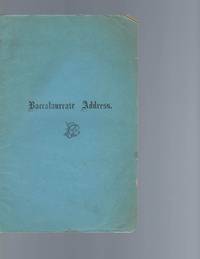
1868réf. 162021868. Pierce Henry M. Address to the Second Graduating Class of the Rutgers Female College 1868 was delivered to the second graduating class after the institution received a new charter authorizing it to confer collegiate degrees upon women. Founded in 1839 as Rutgers Female Institute the New York school became Rutgers Female College under an April 11 1867 charter granting it the rights and powers of a college or university except the authority to grant professional degrees. Pierce had used his address to the first graduating class in 1867 to discuss women's intellectual equality and the education appropriate to a college for women declaring that the institution's transition from Institute to College marked the change that had occurred in women's education during the preceding quarter century. This second address delivered the following year belongs to the college's earliest period of degree-granting instruction and is inscribed by its president. Pierce Henry M. Address to the Second Graduating Class of the Rutgers Female College; Delivered in the West Presbyterian Church Rev. Dr. Hastings' on Sabbath Evening May 31st 1868. New York: Agathynian Press 1868. Inscribed on the inside end page "Compliments of H. M. Pierce President." 16 pages. Original blue wrappers 9¼ x 6 inches. Rutgers Female College occupied 487-491 Fifth Avenue by this period and its 1867-1868 catalogue records a collegiate curriculum that included algebra geometry chemistry botany natural philosophy languages and other academic subjects. The presentation inscription directly associates this copy with Pierce during his presidency and the college's second graduating year. Rutgers Female College's 1867 charter placed the institution among the nineteenth-century schools attempting to provide women with collegiate rather than solely seminary instruction; contemporary and later records identify it as the first institution in New York City where women could earn the Bachelor of Arts degree. Pierce's 1868 address therefore dates to the immediate implementation of the college charter rather than a later commemoration of that transition. No condition defects are specified in the supplied description. President Pierce's presentation copy preserves an address delivered directly to the second class of women graduating under Rutgers Female College's newly established collegiate status. unknown books
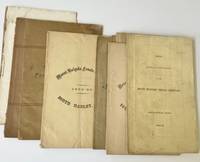
1844réf. 180201844. Mount Holyoke College annual catalogues 1844 to 1889 documenting the institutional structure and development of one of the earliest and most influential women's colleges in the United States. The material documents women's higher education systems through administrative and academic records revealing how faculty organization student enrollment and curricular frameworks operated within a pioneering female educational institution and providing primary-source evidence for the study of nineteenth-century women's education institutional growth and academic standardization. Archive of 12 printed catalogues issued over a forty-five-year period each listing faculty members enrolled students and institutional information for the respective academic year. Earlier catalogues present primarily textual listings while later issues incorporate illustrated views of campus buildings offering visual representations of the college environment. The catalogues reflect continuity and expansion in faculty composition and student attendance indicating the sustained operation and growth of the institution. Entries provide names of students and instructors enabling identification of individuals within the academic community while the progression toward illustrated content suggests increasing institutional self-presentation and public visibility. Twelve pamphlets measuring approximately 9 x 6 inches ranging from 16 to 40 pages each. Founded in 1837 by Mary Lyon Mount Holyoke College became a model for women's higher education and a foundational member of the Seven Sisters colleges which collectively advanced academic opportunities for women in the northeastern United States. These catalogues document the operational continuity of the institution across the mid to late nineteenth century a period marked by expanding access to formal education for women and the professionalization of teaching and scholarship. Two catalogues lacking original soft covers and with partial loss to text block remaining issues complete with light handling wear; overall good to very good condition. A substantial institutional record illustrating the early formation and sustained administration of women's collegiate education. unknown books
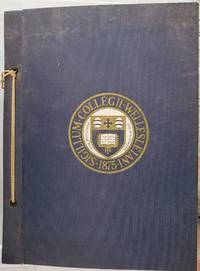
1939réf. 169671939. Wellesley College student scrapbook 1939-1943 documenting women's higher education campus traditions and social life during the early years of the Second World War. Compiled by a student at one of the leading women's colleges in the United States the album records academic study institutional culture and peer networks at a moment when global conflict began to shape collegiate experience and future expectations. The contents provide direct evidence of women's participation in higher education alongside emerging wartime realities including military service among family members and shifting social priorities. Scrapbook and photo album containing 160 original silver gelatin photographs and approximately 205 pieces of ephemera including invitations dance cards Western Union telegrams newspaper clippings travel souvenirs and correspondence. The album documents academic life through materials such as a report card listing courses in English composition mathematics music theory hygiene biblical history philosophy physics economics and sociology annotated by the student with the remark "saved by the gong." Campus traditions are extensively represented including Float Night and Tree Day as well as participation in student organizations such as Tau Zeta Epsilon Zeta Alpha and Phi Sigma. Newspaper clippings describe events such as the disruption of Float Night by Harvard students noting that "the Wellesley girls just booed right back and cheered for Yale." The album also includes materials relating to Wellesley alumna Soong Mei ling with a clipping reporting: "Madame Chiang Makes History at Alma Mater.The eyes and ears of the nation were on Wellesley" accompanied by a ticket to her campus appearance. Photographs depict friends on campus commencement exercises in June 1943 including the tradition of hoop rolling and numerous social events such as dances beach outings and travel. Created during the opening years of World War II the scrapbook situates collegiate life within broader national and international developments. Wedding announcements referencing military ranks a photograph of the compiler's brother captioned "in the marines" and travel materials such as an American Airlines ticket for a Boston to Newark flight reflect the intersection of education mobility and wartime service. The album also documents leisure and social networks across regions including visits to Chicago Cleveland Minneapolis Cape Cod and Maine as well as correspondence with students at other institutions. Final pages extend into post graduation life with employment identification for Irving Trust and family photographs marking transition from student to professional life. First page detached with some heavier ephemera items loosened; otherwise sound with light wear; overall very good. A comprehensive record of women's collegiate experience and social networks during the early World War II period. unknown books
1935réf. 169941935. Skidmore College student photo album New York 1935-1943 documenting women's higher education campus traditions and the transition from collegiate life to professional and wartime roles in the United States. Compiled by a student in Saratoga Springs New York the album records academic social and political activity at a women's college during the late interwar period and extends into the early years of World War II. The photographs provide direct evidence of student participation in institutional traditions leisure culture and civic engagement including political rallies and later wartime developments that shaped opportunities for women. Photo album containing 215 original silver gelatin photographs of various sizes along with six postcards of Skidmore College and two Christmas greeting cards. Images document campus locations including the Chapel Hathorn House and Studio Peabody Hall Scribner Library and Salisbury Dormitory many with handwritten captions. Interior views of dormitory rooms at Skidmore Hall Peabody Hall and North Hall show personal arrangements with furnishings flowers and decorations including one captioned "Ready for Spring!" The album records student life through events such as Class Day Senior Assembly May Day Pageant Drill Team Horse Show the 1936 Junior Prom and the 1937 Tennis Finals. A November 7 1936 political rally is documented with students holding signs supporting Franklin D. Roosevelt or Alf Landon. Additional photographs depict recreational activities including skiing skating and candid campus scenes. Travel images extend the geographic scope to Lake George Niagara Falls and the western United States including views labeled "Flooded Orange Grove" "Long Beach Foot Bridge" and "Santa Ana trees overflow" from California flooding as well as construction views of Hoover Dam identified as "Boulder Dam." Spanning the late 1930s through 1943 the album situates women's collegiate experience within broader national developments including the New Deal political climate and the onset of World War II. Later photographs document the compiler's transition into teaching with images from schools in Connecticut and conclude with a 1943 portrait of a woman in military uniform indicating expanding roles for women during wartime. The combination of campus life travel and professional transition provides a longitudinal record of education and early career pathways for women in this period. Minor chipping to edges of first pages with light overall wear; contents well preserved; overall very good. A comprehensive visual record of women's college life and its connection to wider social and historical change. unknown books
1911réf. 169921911. Jessie Gutshall Colorado Women's College photo album circa 1911-1912 documenting women's higher education and sorority life at a newly established institution in Denver. Created within the first years of the college's operation the album records student participation in academic social and organizational life with particular emphasis on the Greek society Eta Upsilon Gamma. The material supports research on women's education in the American West the formation of collegiate identity and the role of sororities in structuring social and intellectual communities among women students in the early twentieth century. Photo album containing 56 original silver gelatin photographs and 41 pieces of ephemera including invitations newspaper clippings table and dance cards menus drawings and organizational materials associated with Eta Upsilon Gamma. The album includes a certificate of induction a 1911 songbook the sorority constitution and an annual report with updates from local chapters including the Lambda chapter at Colorado Women's College noting student involvement with the YWCA and campus activities. Ephemera includes invitations to events at Denver's Brown Palace Hotel illustrated table cards and a "Summons to Initiation" designed with burnt edges and decorative imagery. Photographs depict sorority members in a range of settings including group portraits at a train station outdoor excursions on farms students climbing a windmill and scenes of leisure such as tennis played in full length dresses. Additional handwritten notes and inscriptions reflect social bonds and student culture including verses such as "Here's to those who'd love us if we only cared. Here's to those we'd love if we only dared." Created shortly after the founding of Colorado Women's College in 1909 this album documents the early development of institutional traditions and student organizations within a women's college environment. Sororities such as Eta Upsilon Gamma played a central role in organizing social life leadership opportunities and connections beyond campus through regional chapters and affiliated institutions. The inclusion of printed materials creative drawings and formal invitations illustrates the integration of artistic expression and structured social ritual in collegiate culture. Minor wear to suede covers with toning and fading at edges and small tears at spine and front cover; contents well preserved; overall very good. A detailed record of early women's collegiate life and sorority organization in the American West. unknown books
1923réf. 178791923. Photograph archive 1923-1947 documenting student life institutional traditions and ceremonial practices at Vassar College New York a leading women's college established in 1861 and associated with the Seven Sisters network of elite institutions for women's higher education. The images focus on recurring campus rituals such as Class Day and Commencement including extensive coverage of the daisy chain procession in which selected sophomore students carry a long chain of daisies and laurel as part of graduation ceremonies. The photographs provide visual evidence of how such traditions reinforced community identity leadership roles and gendered expectations within early twentieth-century academic environments for women. Additional images depict Commencement gatherings campus architecture and student labor in garden settings as well as participation in nursing training activities situating the archive within broader developments in women's education professional preparation and civic engagement across the interwar and immediate postwar periods. Archive of 36 black and white silver gelatin photographs dated between 1923 and 1947 with individual images marked by years including 1923 1924 1925 1930 and 1947 and measuring approximately 4.5 x 2.75 inches to 8 x 10 inches. Twelve photographs document the daisy chain tradition showing students in white dresses carrying the ceremonial chain; one image includes a contemporary clipping noting the participants as "the 22 prettiest sophomores." Nineteen photographs depict Commencement ceremonies including views of graduating classes faculty processions and assembled spectators. Additional images include views of Taylor Hall campus landscapes and students engaged in gardening and nursing-related activities. The archive captures changes in dress ceremony and campus use across multiple decades. Thirty-six photographs with light wear consistent with handling and age; overall very good condition. A cohesive visual record of institutional traditions and student experience at a major American women's college during the first half of the twentieth century. unknown books
1900réf. 179971900. Archive of five annual reports issued by Homerton College Cambridge covering the academic years 1900-1905. Octavo pamphlets measuring approximately 7" x 5" ranging from 11 to 24 pages each. Illustrated with seven black-and-white photographs depicting campus buildings classrooms and college administrators along with an engraved view of the college. The 1902 and 1903 reports feature photographic views of Homerton College on their front wrappers. Original printed paper covers titled "Report of the Congregational Board of Education for the Year Ending Year." Founded in 1695 Homerton College occupies a significant place in the history of British education and was among the institutions that expanded educational opportunities for women during the nineteenth century. By the mid-1800s women were being admitted to study at Homerton making the college an important center for female teacher training and higher education at a time when academic opportunities for women remained limited. These reports document the institution during a period of growth and modernization at the turn of the twentieth century. The pamphlets provide a detailed record of academic instruction enrollment finances faculty activities campus improvements and student life. The 1901 report opens with a confident assessment of the college's progress noting that "All the students passed the usual tests very satisfactorily" and concluding that "Everything in this College shows marks of progress and bears testimony to the vigour of its administration." Beyond academic matters the reports offer valuable glimpses into everyday student culture. Accounts of clubs and extracurricular activities reveal an active collegiate community including the popular Cycling Club which reported in 1905 that members "visited many of the villages near Cambridge and held its annual picnic at Clayhithe" while noting that a newly constructed bicycle shed had become "a great convenience by all who have brought their machines up with them." Taken together the reports provide an unusually rich portrait of institutional development and student experience at one of Britain's pioneering centers for women's education. They illuminate not only the administrative concerns of the college but also the social networks recreational activities and evolving culture of female higher education during the Edwardian era. Several covers bear institutional Board of Education Library stamps with three retaining library labels on the rear wrappers. Minor contemporary manuscript notations appear on some covers. Light wear and handling consistent with use; overall very good condition. unknown books
1868réf. 162021868. Pierce Henry M. Address to the Second Graduating Class of the Rutgers Female College 1868 was delivered to the second graduating class after the institution received a new charter authorizing it to confer collegiate degrees upon women. Founded in 1839 as Rutgers Female Institute the New York school became Rutgers Female College under an April 11 1867 charter granting it the rights and powers of a college or university except the authority to grant professional degrees. Pierce had used his address to the first graduating class in 1867 to discuss women's intellectual equality and the education appropriate to a college for women declaring that the institution's transition from Institute to College marked the change that had occurred in women's education during the preceding quarter century. This second address delivered the following year belongs to the college's earliest period of degree-granting instruction and is inscribed by its president. Pierce Henry M. Address to the Second Graduating Class of the Rutgers Female College; Delivered in the West Presbyterian Church Rev. Dr. Hastings' on Sabbath Evening May 31st 1868. New York: Agathynian Press 1868. Inscribed on the inside end page "Compliments of H. M. Pierce President." 16 pages. Original blue wrappers 9¼ x 6 inches. Rutgers Female College occupied 487-491 Fifth Avenue by this period and its 1867-1868 catalogue records a collegiate curriculum that included algebra geometry chemistry botany natural philosophy languages and other academic subjects. The presentation inscription directly associates this copy with Pierce during his presidency and the college's second graduating year. Rutgers Female College's 1867 charter placed the institution among the nineteenth-century schools attempting to provide women with collegiate rather than solely seminary instruction; contemporary and later records identify it as the first institution in New York City where women could earn the Bachelor of Arts degree. Pierce's 1868 address therefore dates to the immediate implementation of the college charter rather than a later commemoration of that transition. No condition defects are specified in the supplied description. President Pierce's presentation copy preserves an address delivered directly to the second class of women graduating under Rutgers Female College's newly established collegiate status. unknown
1867réf. 156051867. Dall Caroline Wells Healey. The College the Market and the Court; or Woman's Relation to Education Labor and Law 1867 brings together Dall's arguments for expanding women's access to higher education paid employment and legal rights three areas that structured women's economic and civic position in nineteenth-century America. Published after her earlier Woman's Right to Labor 1860 and Woman's Rights Under the Law 1861 the volume belongs to a sustained series of writings in which Dall examined the institutional restrictions imposed upon women rather than treating their position solely as a matter of domestic custom. Dall was one of three founders of the American Social Science Association in 1865 and her correspondence from 1867 records discussion of The College the Market and the Court alongside women's rights women in medicine the American Equal Rights Association and the developing field of social science. Dall Caroline Wells Healey. The College the Market and the Court; or Woman's Relation to Education Labor and Law. Boston: Lee and Shepard 1867. Early ownership signature of James Gould dated 1867 to front free endpaper. Dall organizes her examination around the "college" "market" and "court" addressing women's education their ability to enter and receive compensation for work and their standing under law. Her argument challenged the confinement of women's opportunities to the domestic sphere by identifying specific educational economic and legal restrictions on their participation in public life. The book appeared during a particularly active period in Dall's reform work: surviving correspondence from 1867 connects its publication with discussions involving Susan B. Anthony Anna Dickinson Lucretia Mott Olympia Brown Maria Mitchell and other participants in contemporary campaigns concerning women's rights education medicine and employment. Dall's combination of education labor and law places women's economic independence alongside intellectual and legal equality rather than treating these questions separately. Her work developed from Boston's antebellum and postwar reform culture: she had known Margaret Fuller and Elizabeth Peabody participated in antislavery and women's-rights activity and helped establish the American Social Science Association as an organization devoted to systematic investigation of social questions. The contemporary James Gould ownership signature dated the year of publication provides evidence of the book's early circulation. A substantive Reconstruction-era statement of Dall's program for changing women's position in education employment and American law. unknown
1911réf. 169921911. Jessie Gutshall Colorado Women's College photo album circa 1911-1912 documenting women's higher education and sorority life at a newly established institution in Denver. Created within the first years of the college's operation the album records student participation in academic social and organizational life with particular emphasis on the Greek society Eta Upsilon Gamma. The material supports research on women's education in the American West the formation of collegiate identity and the role of sororities in structuring social and intellectual communities among women students in the early twentieth century. Photo album containing 56 original silver gelatin photographs and 41 pieces of ephemera including invitations newspaper clippings table and dance cards menus drawings and organizational materials associated with Eta Upsilon Gamma. The album includes a certificate of induction a 1911 songbook the sorority constitution and an annual report with updates from local chapters including the Lambda chapter at Colorado Women's College noting student involvement with the YWCA and campus activities. Ephemera includes invitations to events at Denver's Brown Palace Hotel illustrated table cards and a "Summons to Initiation" designed with burnt edges and decorative imagery. Photographs depict sorority members in a range of settings including group portraits at a train station outdoor excursions on farms students climbing a windmill and scenes of leisure such as tennis played in full length dresses. Additional handwritten notes and inscriptions reflect social bonds and student culture including verses such as "Here's to those who'd love us if we only cared. Here's to those we'd love if we only dared." Created shortly after the founding of Colorado Women's College in 1909 this album documents the early development of institutional traditions and student organizations within a women's college environment. Sororities such as Eta Upsilon Gamma played a central role in organizing social life leadership opportunities and connections beyond campus through regional chapters and affiliated institutions. The inclusion of printed materials creative drawings and formal invitations illustrates the integration of artistic expression and structured social ritual in collegiate culture. Minor wear to suede covers with toning and fading at edges and small tears at spine and front cover; contents well preserved; overall very good. A detailed record of early women's collegiate life and sorority organization in the American West. unknown
1844réf. 180201844. Mount Holyoke College annual catalogues 1844 to 1889 documenting the institutional structure and development of one of the earliest and most influential women's colleges in the United States. The material documents women's higher education systems through administrative and academic records revealing how faculty organization student enrollment and curricular frameworks operated within a pioneering female educational institution and providing primary-source evidence for the study of nineteenth-century women's education institutional growth and academic standardization. Archive of 12 printed catalogues issued over a forty-five-year period each listing faculty members enrolled students and institutional information for the respective academic year. Earlier catalogues present primarily textual listings while later issues incorporate illustrated views of campus buildings offering visual representations of the college environment. The catalogues reflect continuity and expansion in faculty composition and student attendance indicating the sustained operation and growth of the institution. Entries provide names of students and instructors enabling identification of individuals within the academic community while the progression toward illustrated content suggests increasing institutional self-presentation and public visibility. Twelve pamphlets measuring approximately 9 x 6 inches ranging from 16 to 40 pages each. Founded in 1837 by Mary Lyon Mount Holyoke College became a model for women's higher education and a foundational member of the Seven Sisters colleges which collectively advanced academic opportunities for women in the northeastern United States. These catalogues document the operational continuity of the institution across the mid to late nineteenth century a period marked by expanding access to formal education for women and the professionalization of teaching and scholarship. Two catalogues lacking original soft covers and with partial loss to text block remaining issues complete with light handling wear; overall good to very good condition. A substantial institutional record illustrating the early formation and sustained administration of women's collegiate education. unknown
réf. 2090502113707708Not Available N.A. Soft Cover. Fine. The book is in fine condition. Not Available paperback
1998réf. 5755012UCL Press 1998. This is an ex-library book and may have the usual library/used-book markings inside.This book has hardback covers. Book contains pen markings. In poor condition suitable as a reading copy. No dust jacket. Please note the Image in this listing is a stock photo and may not match the covers of the actual item600grams ISBN:1857287983 UCL Press hardcover