Massachusetts Women's EducationBiblio.com

75 349 résultats
1835réf. 170401835. Marshall Caroline memory album 1835 to 1897 documents women's education friendship inscription and literary memory culture in nineteenth-century Massachusetts. Kept by Caroline Marshall and filled with signatures sentiments verse and decorative additions from friends and classmates the album records how young women used autograph books to preserve school relationships moral sentiment poetry and parting messages before modern yearbooks became standard. Marshall Caroline. Memory album. Massachusetts and other locations 1835 to 1897. Manuscript autograph album with 45 written pages additional handwritten verse and a laid-in article cutout concerning an event involving Henry Ward Beecher. Original green leather boards gilt edges gilt spine and cover decoration front cover personally stamped "Caroline Marshall" in gilt with harp illustration 8 x 6.25 inches. Includes frontispiece engraving of girls gathering flowers one page with three miniature watercolors surrounding an entry and one page with hand-colored floral illustration. Entries are chiefly from Deerfield Exeter Brentwood and Lowell with contributions including a Harvard University student and a student at Phillips Exeter Academy. The opening gift inscription addresses "Miss Marshall" and describes the album as "a beautiful emblem of your own character." Another entry composed for her begins "Go forth thou little book! Go forth-and gather thy store" imagining the album as a lasting repository of friendship. The album provides evidence of the sentimental and literary forms through which young women marked educational transitions departures and enduring friendship across much of the nineteenth century. Original gilt-decorated leather boards bright manuscript entries legible inserted decorative material present very good. A substantial and visually appealing record of women's education student sociability and friendship networks in nineteenth-century Massachusetts. unknown
1908réf. 174501908. Mills Susan. Typed letter signed 1908 documents the academic administration of Mills College under one of the central figures in women's higher education in the American West. Addressed to Dr. Clifton Price a Latin professor at the University of California Berkeley the letter shows Mills coordinating intellectual life at the school and seeking outside scholarly support for classical study. The material documents women's college administration through presidential correspondence revealing how Mills cultivated curriculum faculty networks and academic seriousness for women students in California. Mills Susan. Typed letter signed to Dr. Clifton Price. Oakland California October 28 1908. One page. 11 x 8.5 inches. Mills writes "It is a comfort that you are with us. Some time in the near future I would like to have you speak to the entire school for a half hour about the importance of studying Latin." The letter records a specific curricular concern: persuading students of the value of Latin within a women's college setting. Mills College began in 1852 moved to Oakland in 1871 became Mills College in 1885 and is widely identified as the first women's college west of the Rocky Mountains. Mills served as president from 1890 until her retirement in 1909 and her final presidential year gives this letter added significance as a late document of her educational leadership. The correspondence offers a concise record of how women's institutions built academic legitimacy through classical education public lectures and connections with major universities. Very good. A direct letter from Susan Mills preserving the daily administrative work behind women's higher education in early twentieth-century California. unknown
1873réf. 167491873. Women's Education Movement. Moravian Seminary Catalog 1873-1874. The Moravian Seminary traces its roots to the earliest institution of female education in the United States the Bethlehem Female Seminary founded in 1742 by Countess Benigna Zinzendorf. Originally providing only primary school the Bethlehem responded to demand for higher education for women in 1785 when it reorganized as a secondary educational institution that became known as the Moravian Female Seminary. In 1913 the Seminary officially became a College and in 1954 merged with a male institution to become the coeducational Moravian College. At the time that this description is being written only one copy is recorded in American institutions. OCLC search results are at best an estimate and can vary over time. Women's Academy and Seminary Archive recording the first important movement of women into higher education in the United States seminary was synonymous with "academy" and did not have the religious connotation of today. In the 1800's the Female Academy and Seminary Movement transformed American educational norms allowing women the opportunity to receive secular non-religious college-level education. Women's colleges proliferated in the mid- to late- 19th century to fill the void created by their exclusion from most institutions of higher education. The prevailing notion that women were too delicate for a rigorous academic education was openly challenged when Elizabeth Cady Stanton spoke at the Seneca Falls Convention of 1848 "Man's intellectual superiority cannot be a question until woman has had a fair trial.When we shall have had our colleges our professions our trades for a century a comparison then may be justly instituted." Young women were quick to step up to the challenge; as quickly as female colleges opened they filled up. unknown
1881réf. 167551881. Women's Education Movement. New Hampshire Conference Seminary and Female College Catalog 1881. Tilton NH. The catalog has 36 pages of courses personnel and other information including tuition and fees. The most expensive were Piano and Voice Culture which were each $12 per semester. The seminary exists today at Tilton School. At the time that this description is being written no copies are recorded in American institutions. OCLC search results are at best an estimate and can vary over time. Women's Academy and Seminary Archive recording the first important movement of women into higher education in the United States seminary was synonymous with "academy" and did not have the religious connotation of today. In the 1800's the Female Academy and Seminary Movement transformed American educational norms allowing women the opportunity to receive secular non-religious college-level education. Women's colleges proliferated in the mid- to late- 19th century to fill the void created by their exclusion from most institutions of higher education. The prevailing notion that women were too delicate for a rigorous academic education was openly challenged when Elizabeth Cady Stanton spoke at the Seneca Falls Convention of 1848 "Man's intellectual superiority cannot be a question until woman has had a fair trial.When we shall have had our colleges our professions our trades for a century a comparison then may be justly instituted." Young women were quick to step up to the challenge; as quickly as female colleges opened they filled up. unknown
1942réf. 171381942. Walker Marjorie O. scrapbook 1939 to 1942 documents women's teacher training coeducational campus life and institutional transition at Oswego State Normal School as it became Oswego State Teachers College. Kept by Marjorie O. Walker of Woodridge New York the scrapbook records the system of teacher preparation through admissions materials course records student regulations directories newspapers and campus communications revealing how Oswego organized academic instruction boarding life extracurricular culture and crisis response during the years immediately before and after its 1942 elevation to a four-year bachelor's degree-granting teachers college. Walker Marjorie O. Scrapbook album. Oswego New York 1939 to 1942. Scrapbook with 142 pieces of ephemera including report cards correspondence newspaper clippings student publications event programs postcards athletic songs sorority material and notices concerning campus operations. Original paper wraps with large color fall foliage image on front cover 76 pages 15 x 11 inches. Contents include a 1940 admission letter noting a waiting list for applicants course schedule report card 1939 student handbook 1940-1941 student directory boarding regulations for landladies and roommates programs for plays and musical performances full issues of The Oswegonian postcards of Oswego and nearby sites Alpha Delta Sorority material and printed fight songs. Academic records document coursework in Child Development History of Civilization Written Composition General Math Essentials of Music Essentials of Art and Recreational Activities. Newspaper material includes coverage of a Korean national student at Syracuse University speaking at Oswego about the Japanese occupation of Korea. The final pages are especially significant for documenting the January 1941 campus fire that caused an estimated $100000 in damage including student newspaper coverage describing students "carrying coupling and manning hoses" alongside firemen and later notices emphasizing "Business As Usual" through revised examination schedules and relocated classes. This crisis documentation combined with admissions housing academic and social material makes the scrapbook a strong record of how a teachers college functioned in practice during wartime-era institutional change. Ephemera and scrapbook pages intact as described with general handling consistent with use very good. A substantial documentary record of women's education teacher preparation student life campus administration and emergency response at Oswego during its transition from normal school to state teachers college. unknown
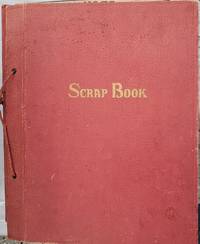
1936réf. 169681936. Kistler Alyson scrapbook album 1936-1937 documents women's higher education teacher training student sociability and regional travel during the Depression era through the experiences of a first-year student at East Stroudsburg State Teachers College in Pennsylvania. Created by Alyson Kistler during the 1936-1937 academic year the album preserves an unusually detailed record of academic life extracurricular activities employment friendships courtship entertainment and travel illustrating the central role teaching colleges played in expanding professional opportunities for women in the early twentieth century. Kistler Alyson. Scrapbook album. East Stroudsburg Pennsylvania 1936-1937. Manuscript and printed scrapbook containing 107 pieces of ephemera with extensive handwritten captions and commentary. Original red textured boards lettered "Scrap Book" in gilt 12.5 x 10 inches. 60 pages. Hand-lettered on the first page: "E.S.S.T.C. 1936-7." Contents include a certificate of admission report cards dance programs athletic schedules theater programs restaurant menus advertisements newspaper clippings pressed flower corsages novelty party favors local newspapers and travel-related souvenirs from Pennsylvania New Jersey New York and the Pocono region. Academic subjects documented include Introduction to Teaching English I Science II Hygiene History of Civilization Physical Education and Social Guidance. The album records Kistler's participation in the Art Club where contemporary newspaper coverage identifies her as "Head of Art Club" and preserves evidence of her weekend employment at local clubs and restaurants. Handwritten annotations throughout transform routine ephemera into a personal narrative including candid assessments such as "A big disappointment. The play was rotten" alongside detailed accounts of train travel social outings holiday celebrations movie-going and visits with friends and admirers. Particularly revealing are mementos associated with courtship including a necktie received from a young man who "gave me his tie because I liked it" and a Japanese postage stamp accompanied by a multi-part explanation tracing its movement among friends and collectors. The scrapbook provides a rich record of female student life at a teachers college during a period when teaching remained one of the most important professional careers available to American women. Beyond documenting formal education it captures the broader social world surrounding collegiate life through theater programs from Stroudsburg's Sherman Theatre menus from regional hotels including Buck Hill Falls and the Indian Queen Hotel newspaper coverage of athletics Washington's Birthday celebrations New Year's festivities and weekend excursions throughout the region. The result is a highly personal account of how a young woman balanced academic responsibilities wage work friendships recreation and aspirations for the future during the late Depression era. First seven pages detached; pages brittle with occasional small edge chips good to very good. A substantial documentary record of women's higher education teacher training student culture and everyday life in the northeastern United States during the 1930s. unknown
1841réf. 167561841. Women's Educational Movement. Rural Repository News Journal 1841 Poughkeepsie Female Academy Founding Story and Engraving. Large Item. Poughkeepsie Female Academy- Hudson NY. This news journal the "Rural Repository" leads with a full page story on the opening of the Poughkeepsie Female Academy and engravings. More than 30 years later Vassar College would open near the same site. Women's colleges proliferated in the mid- to late- 19th century to fill the void created by their exclusion from most institutions of higher education. The prevailing notion that women were too delicate for a rigorous academic education was openly challenged when Elizabeth Cady Stanton spoke at the Seneca Falls Convention of 1848 "Man's intellectual superiority cannot be a question until woman has had a fair trial.When we shall have had our colleges our professions our trades for a century a comparison then may be justly instituted." This document predates Seneca Falls by 7 years. unknown
1911réf. 156061911. Burstall Sara A. The Story of the Manchester High School for Girls 1911 records the founding and development of Manchester High School for Girls established in 1874 by nine Manchester men and women seeking expanded educational opportunities for girls. First opened in Chorlton on Medlock under headmistress Elizabeth Day the school developed during a period of substantial change in British secondary and higher education for women. Its founders included Professor A. S. Wilkins Harriet Darbishire Robert Dukinfield Darbishire and Edward Donner later Sir Edward Donner among prominent Manchester citizens associated with the undertaking. Burstall wrote from direct institutional experience: she succeeded Day as headmistress in 1898 and also served as Special Lecturer in Education at the University of Manchester. Burstall Sara A. The Story of the Manchester High School for Girls. Manchester: Manchester University Press 1911. First edition. The history follows the school from its establishment in 1874 through its subsequent development including the move to a purpose-built school in Dover Street in 1881. Burstall records the people responsible for establishing and administering the institution and the development of a girls' school within Manchester's expanding educational environment. Her position as headmistress gives the volume a direct institutional perspective on the governance and educational development of a school founded specifically for girls. The school's history belongs to the nineteenth-century expansion of organized secondary education for British girls and to Manchester's development as a center of educational reform. Its progression from the original Chorlton on Medlock premises to the Dover Street building records the physical expansion of an institution established when girls' secondary schooling was undergoing substantial change in Britain. The Dover Street building later became part of the University of Manchester estate occupied by its School of Social Sciences. Red cloth boards with minor staining. Overall good condition. Burstall's account preserves the school's early history through the perspective of the headmistress who led it from 1898. unknown
1854réf. 165031854. Hale Sarah Josepha Woman's Record 1855 is a major nineteenth-century biographical dictionary of women by the editor of Godey's Lady's Book supporting research into women's education female authorship historical memory and the construction of women's achievement in antebellum American print culture. Hale described her purpose as preparing "a comprehensive and accurate record of what women have accomplished" and the volume gathers women's lives into a reference work meant to argue for women's intellectual and moral influence. Hale Sarah Josepha. Woman's Record; or Sketches of All Distinguished Women from Creation to A.D. 1854. New York: Harper & Brothers Publishers 1855. Second edition revised with additions. 1 volume. 900 pages. Illustrated with 239 wood-engraved portraits by Lossing and Barritt including frontispiece portrait of Hale. Original hardcover with gilt title and spine decoration. 4to 10 x 7 inches. The book includes entries on more than a thousand women across history literature religion politics reform and public life. The volume belongs to Hale's broader editorial program as one of the most influential women editors in the United States; she edited Godey's Lady's Book for decades promoted women's education supported women writers and campaigned for a national Thanksgiving holiday which Abraham Lincoln proclaimed in 1863. Extremities lightly worn with light foxing on first pages; very good. Substantial illustrated reference work documenting how women's historical authority was collected organized and defended in mid-nineteenth-century America. unknown
1921réf. 171091921. Hinshaw Mary Jane scrapbook 1921 to 1943 documents women's education teacher training library studies sorority life and student identity through the life of a Missouri and Kansas student from childhood through college. The album follows Hinshaw from baptism and early school photographs to Stephens College and Kansas State Teachers College of Emporia preserving evidence of how a young woman's education moved from family and local schooling into collegiate social life professional preparation and library-centered coursework during the 1930s and early 1940s. Hinshaw Mary Jane. Scrapbook album. Missouri Kansas and western United States 1921 to 1943. Scrapbook with 78 original silver gelatin photographs and 43 pieces of ephemera. Original cream boards with embossed front cover 39 pages 10.5 x 13.5 inches. Photographs range from 2.5 x 2 inches to 8 x 10 inches and include family images childhood portraits elementary and high school class photographs school groups and western United States travel views with expansive landscapes and rock formations. Ephemera includes baptism and birth announcements Stephens College commencement invitation from 1941 report cards certificates two cloth varsity letters a felt bulldog debate letter Delta Sigma Epsilon membership card party invitations and dance cards from Sigma Tau Gamma Delta Sigma Epsilon and Alpha Delta. Academic records document coursework at Stephens College in English literature French English history psychology sociology music appreciation physical education and educational psychology followed by Kansas State Teachers College coursework in teaching history of education American history library administration cataloguing and classification reference book selection library work with children and literature of high school subjects. A handwritten postcard from a Stephens classmate at the University of Wisconsin states "I am having a glorious time-It certainly isn't like Stephens much much better." The scrapbook's research value lies in its unusually broad view of female education from childhood through professional training including Hinshaw's connection to Marysville High School where her father served on the Board of Education and her later preparation for teaching and library work. Tear with loss above right portrait adhered to first page; one page detached; front hinge loose good to very good. A substantial documentary record of women's higher education teacher preparation sorority culture school achievement and library training in the Midwest from the interwar period into World War II. unknown
1941réf. 171641941. Walker Marjorie O. scrapbook 1941 to 1942 documents women's teacher training coeducational student life campus music culture and wartime institutional change at Oswego State Normal School as it became Oswego State Teachers College. Kept by Marjorie O. Walker of Woodridge New York the scrapbook records the teacher-training system through report cards student directories handbooks campus newspapers correspondence and event programs revealing how Oswego organized student life while responding to wartime mobilization selective service air-raid fears and the 1942 shift to four-year degree-granting status. Walker Marjorie O. Scrapbook album. Oswego New York 1941 to 1942. Scrapbook with 155 pieces of ephemera including newspaper clippings full issues of the campus paper ticket stubs programs invitations typed notices correspondence and student publications. Original paper wraps with large color fall foliage image on front cover 80 pages 15 x 11 inches. Contents include material from both Oswego State Normal School and Oswego State Teachers College a 1939-1940 report card listing Child Development History of Civilization Composition and Speech Intro to Science Art 102 Essentials of Music and Recreational Activities; a 1941 Summer Session pamphlet; Student Handbook; Personnel Directory; Student Directory for 1941-1942; Halloween Party invitation; and newspaper coverage of Epsilon Pi Tau Sigma Pi Rho campus music groups and the Bel Canto singing group in which Walker participated. Walker annotates several clippings with notes identifying classmates and friends including "this is one of my classmates" and "they're all swell singers." The strongest historical material concerns Oswego's wartime campus life before and after American entry into World War II including February 1941 clippings urging cooperation against Nazi victory and calling male students to register for selective service later reports anticipating air raids and city bombings an Armistice Day program presented with the American Legion and U.S. Coast Artillery and coverage of wartime delays to rebuilding after the January 1941 campus fire. Newspaper headlines also record the institutional milestone "Oswego Normal becomes State Teachers College" marking the school's elevation in 1942 to a four-year degree-granting teachers college. Pages thin with a few very small closed edge tears very good. A substantial documentary record of women's education teacher preparation student music culture home-front anxiety and institutional adaptation at Oswego during the first year of American involvement in World War II. unknown
1925réf. 162981925. Truro Cornwall Teacher Training College Photo Album 1925-1927 records the daily lives and friendships of women training for professional teaching careers at Truro Diocesan Training College in Cornwall. Founded in the nineteenth century specifically to train women teachers the college remained in operation until 1938. Across 164 snapshots students appear on outings and picnics pose individually and in groups and visit sites around Cornwall with handwritten captions identifying people activities and private jokes. "Help yourself to the cream" accompanies one excursion while "the long and short of it" captions a portrait of a tall young woman. Created during a period when women teachers received lower salaries than men and some local education authorities required women to resign upon marriage the album records the social world of young women preparing to enter a profession in which employment offered economic independence but remained subject to explicitly gendered restrictions. Truro Cornwall UK 1925-1927. 164 glossy-finish snapshot photographs both black-and-white and sepia in several formats including 3½ x 5½ 2½ x 4½ and 3½ x 2½ inches. Most photographs are captioned in white ink. The images concentrate on the women themselves rather than formal classroom instruction: students pose together take excursions and picnics and appear individually in informal portraits interspersed with views of Cornwall and its architecture. These captions preserve the students' own language for their experiences and companions giving the album a personal record distinct from official college registers or administrative documentation. Oblong octavo album in bradbound brown boards patterned to resemble leather with "Album" stamped in gilt on front board. The album dates from a consequential period in the professional organization of British women teachers. The National Union of Women Teachers campaigned against women's lower salaries and the marriage bars maintained by numerous local education authorities; women's salaries under the Burnham scale were set below those of men while marriage could require a teacher to leave her post. The marriage bar was not universal in application-contemporary records document differences among local authorities-and it was abolished nationally by the Education Act of 1944. Against that background these informal photographs preserve the period immediately preceding professional life: women living and training with other prospective teachers traveling through Cornwall and recording one another outside the institutional documentation that ordinarily survives from teacher-training colleges. Modest rubbing at front hinge and slight bumping to corners; some photographs slightly warped from mounting with occasional fingerprint residue. Overall very good condition. A substantial visual record of women's teacher training and student life in interwar Cornwall preserving 164 privately captioned images from a college established specifically for the training of women teachers. unknown
1923réf. 168781923. Chamberlain Ola. The Girl Graduates Record Book 1923 to 1925 documents rural Texas girls' education adolescent friendship school ritual athletics domestic expectations and female self-expression at Goree High School. Kept by Ola Chamberlain of Goree Texas the album captures a young woman's final high school years through photographs teacher and classmate inscriptions certificates invitations press clippings and an original "Class Prophecy" providing direct evidence of how one Texas student recorded academic achievement peer culture humor courtship-inflected friendship extracurricular life and the movement "Out of school life into life's school." Kubinyi Victor de designer. The Girl Graduates Record Book. New York: Barse & Hopkins copyright 1920. Manuscript memory book and scrapbook kept by Ola Chamberlain Goree Texas 1923 to 1925. 190 pages. Original cloth boards with embossed floral motif 10.25 x 7 inches. Contains 85 silver gelatin photographs most approximately 4.5 x 2.75 inches more than 25 handwritten inscriptions from friends and teachers an original handwritten class prophecy and approximately 85 pieces of ephemera including ribbons party invitations commencement materials press clippings seven perfect-attendance certificates a Texas public school report card and a pressed sweet pea dated May 15 1925. Photographs and captions identify Goree High School called by Chamberlain "The Prison" classmates with nicknames including "Pie Face" "Preacher" "Shot Gun" "Lilliums" and "Hankie" class officers the Spanish Class Pep Club "Senior Girls" basketball players and eight images of students in colonial costume for "The Virginia Reel." The inscriptions preserve affectionate student memory and gendered academic praise including one classmate's statement that in mathematics Ola was "a wizard-ess" while teacher entries address her transition from school into adult life: "Life's School is open to you." The album's strongest research value lies in its unusually full record of a girl's educational world in small-town Texas during the 1920s including formal coursework in Geometry English Physics Civics Economics and Arithmetic alongside a parent-signed "Home Report" grading Cooking Care of Stock General Farm Work Providing Fuel Washing Dishes and Obedience. Chamberlain's manuscript "And How It All Came Out" imagines the futures of her graduating class through a supernatural vision prompted by the class flower placing classmates in roles from department-store worker to sheriff mayor and secretary and giving the album a rare sustained example of student-authored narrative. First two pages detached front hinge detached edges toned some pages brittle with small edge chips good. A substantial documentary record of women's education rural Texas youth culture school sociability athletics and the gendered expectations surrounding a young woman's graduation in the mid-1920s. unknown
1912réf. 167751912. Unidentified compiler. Photograph album of women's education and collegiate life 1912-1920 documents student experience leisure activities and social networks across Maine including institutions such as Colby College and the University of Maine. The album captures young women's participation in academic environments alongside outdoor recreation travel and community life situating female education within broader patterns of early twentieth-century mobility and social interaction. The material provides visual evidence of women's presence in expanding educational institutions and their integration into both structured and informal aspects of student life. Photograph album. Maine and various U.S. locations 1912-1920. Quarto format album with 187 silver gelatin photographs mounted across 42 pages with image sizes ranging from approximately 1.5 x 3.5 inches to 3.5 x 5.5 inches. The photographs depict locations throughout southern Maine including Portland Waterville Lamoine Boothbay North Pond and Ogunquit along with additional images from Texas Florida and New Hampshire. Academic settings are represented through images identified as Colby College including a figure labeled "Prof. Johnson Colby '18" and references to the Alpha Tau Omega fraternity "Hurrah for A.T.O.". Additional institutional references include "Nasson Institute 1912" a women's school in Springvale and the Phi Eta Kappa fraternity house at the University of Maine. Human subjects include students and faculty such as "Dean Hunt" as well as classmates in graduation attire. Recreational and social scenes include young women snowshoeing playing tennis and participating in outings labeled "Picnic to the quarry" "Clam Bake" and "Hot Dog Roast." Automotive travel appears in images of early motorcars while other photographs depict children in Sunday school groups bicycle riding and staged performances of "Pied Piper" and "Red Riding Hood." Additional images include a man in World War I-era military uniform "Adrian Old Top" and an individual identified as "Texas Bill" posing with a biplane. Informal scenes include three girls reading on a rooftop space labeled "The Sun Porch" with a related image documenting their ascent assisted by a male companion. The album spans a period of expanding access to higher education for women in the United States particularly in regional institutions across New England. The inclusion of both coeducational and women-focused institutions reflects the varied educational pathways available during this period. Recreational imagery including athletics and social outings demonstrates the integration of leisure into student identity while references to World War I-era figures situate the album within a broader national context. Original cloth boards with minor wear and three small holes to lower right quadrant of front cover; photographs well-preserved with strong clarity; overall very good condition. A substantial visual record of women's collegiate and social life in early twentieth-century Maine. unknown
1848réf. 164591848. Howard Virtue. Report on Female Teaching 1848 an early address concerning women's qualifications employment opportunities and professional standing as teachers in nineteenth-century America. Delivered before the Oxford Teachers' Association in Maine on May 17 1848 the report examines the qualifications and usefulness of female teachers the privileges associated with their employment and the intellectual and financial benefits of teaching for women. Published during the expansion of female employment in American public education Howard's address records contemporary arguments supporting women's participation in a profession increasingly open to them. Howard Virtue. Report on Female Teaching. Paris Maine: G. Washington Millett 1848. 15 pages. Delivered before the Oxford Teachers' Association May 17 1848. The report discusses the qualifications and usefulness of women as educators alongside the professional opportunities and personal benefits associated with teaching. Howard addresses teaching as an occupation offering women opportunities for intellectual development and financial independence while considering the advantages of employing female instructors. The address was presented before a regional teachers' association placing these questions within organized discussions of educational practice and professional qualifications in antebellum Maine. During the first half of the nineteenth century the expansion of common schools and the development of teacher-training institutions increased women's participation in American education. Although women had long worked as instructors teaching became an increasingly accessible form of paid employment particularly in New England where educational reformers promoted female teachers while school districts frequently paid them less than their male counterparts. Howard's 1848 address belongs to this period of professional change when women's suitability for classroom instruction and their opportunities for independent employment were subjects of public discussion. Published the same year as the Seneca Falls Convention the report provides a contemporary account of arguments concerning women's intellectual abilities professional qualifications and economic opportunities in education. In very good condition. unknown
1919réf. 165861919. Photograph album women's college student life 1919 to 1922 documents the lived experience of a young woman pursuing higher education in the years immediately following World War I when increasing numbers of women entered academic institutions and participated in structured campus life. The album centers on dormitory living peer networks and extracurricular activities providing direct evidence of how female students documented identity independence and social belonging within early twentieth-century educational environments. The material supports research into women's education student culture and the social history of American colleges in the interwar period. Album consists of 85 vernacular black and white silver gelatin photographs mounted across 23 pages with three additional loose prints primarily taken in Washington State between 1919 and 1922. Photographs range in size from approximately 2.5" x 1.5" to 5.5" x 3.5" housed in a volume measuring approximately 7" x 10.5" in original black cloth boards. Inscribed on the front pastedown: "From Papa Merrie Christmas 1921." Images depict dormitory interiors classmates and organized activities including social dances and boating excursions. Captions identify specific rooms and relationships including "Taken in my room '77' 1922" "Lookout Mt taken from my window '77'" "My old roommate of 1919 Room 44" and "Miss Fiddler Roommate 'Room 28' Summer School 1920." Additional annotations record impressions of peers including "A Good Kid" and humorous commentary such as "W.L. asleep after the dance Ha! Ha!" and "Do you think I look natural" A Harvard pennant displayed within one dormitory scene suggests aspirational or collegiate affiliation. The album also includes a photograph of a Home Economics class family scenes and several images referencing recent wartime experience including soldiers in uniform dated 1919. Created during a transitional period in American higher education the album illustrates how women students navigated expanding academic opportunities alongside established social expectations including domestic training and structured leisure. The inclusion of humor nicknames and detailed room identifications reflects the importance of spatial and social memory within collegiate life while references to wartime imagery situate the album within a generation shaped by recent global conflict. Such albums provide granular insight into daily routines interpersonal dynamics and the formation of female student identity in the early twentieth century. Minor wear to boards; photographs well-preserved with clear detail; overall in very good condition. unknown
1918réf. 166281918. Unidentified compiler. Photograph album of young woman student 1911-1918 documents school life recreation and community activity in Washington State and the Pacific Northwest during the 1910s. The album centers on a female student's progression from school-age years through graduation capturing educational environments organized physical activities and civic participation. The material records the presence of young women in structured school settings alongside informal leisure and public events providing visual evidence of student life and gendered social experience in the years surrounding the First World War. Photograph album. Washington State and British Columbia 1911-1918. Oblong format 7 x 10.5 inches containing 209 gelatin silver print photographs mounted across 40 pages supplemented by 12 postcards depicting locations in Washington State and Victoria British Columbia. The images include a graduation portrait of a young woman in cap and gown holding a pennant reading "Haddon H.S. 1911" along with later images referencing "1918" suggesting continued documentation across her school years. Photographs depict female students engaged in organized activities including tennis bicycling and calisthenics with groups of girls in uniform marching in formation across open fields. Additional sequences show camping excursions with tents and forest settings indicating school-sponsored outdoor programs. The album also includes scenes of younger children in school environments at play and participating in staged productions some in historical or theatrical costume including colonial-era dress and one child in a Japanese kimono. Community scenes include parades with extensive displays of American flags and images of shipbuilders at work situating the album within a broader civic and labor context. Scattered captions in manuscript such as "cutie" and "happy" provide limited but personal commentary. The album spans a period of expanding public education and increasing visibility of organized physical training and extracurricular programming for girls reflecting broader educational reforms of the early twentieth century. The inclusion of civic events and industrial labor scenes connects student life to wider community structures during the wartime era. The Pacific Northwest setting including references to regional institutions such as the University of Washington situates the material within a developing regional identity shaped by education industry and cross-border movement. Black cloth boards with light handling wear; photographs generally well-preserved with occasional minor wear; album complete and fully populated; overall very good condition. A substantial visual record of female student experience and community life in the early twentieth-century Pacific Northwest. unknown
1868réf. 167531868. Women's Education Movement. Western Female Seminary Catalog 1868-1869. Oxford OH. Western Female Seminary was founded in 1853 as a daughter school of Mount Holyoke College in South Hadley Massachusetts. Its first principal Helen Peabody and most of the early faculty had been students and teachers at Mount Holyoke. Mary Lyon Residence Hall on the Western campus is named for Mount Holyok's founder Mary Lyon. It later received a charter and became Western College an all-female institution. Women's colleges proliferated in the mid- to late- 19th century to fill the void created by their exclusion from most institutions of higher education. The prevailing notion that women were too delicate for a rigorous academic education was openly challenged when Elizabeth Cady Stanton spoke at the Seneca Falls Convention of 1848 "Man's intellectual superiority cannot be a question until woman has had a fair trial.When we shall have had our colleges our professions our trades for a century a comparison then may be justly instituted." Young women were quick to step up to the challenge; as quickly as female colleges opened they filled up. At the time that this description is being written no copies are recorded in American institutions. OCLC search results are at best an estimate and can vary over time. Women's Academy and Seminary Archive recording the first important movement of women into higher education in the United States seminary was synonymous with "academy" and did not have the religious connotation of today. In the 1800's the Female Academy and Seminary Movement transformed American educational norms allowing women the opportunity to receive secular non-religious college-level education. Women's colleges proliferated in the mid- to late- 19th century to fill the void created by their exclusion from most institutions of higher education. The prevailing notion that women were too delicate for a rigorous academic education was openly challenged when Elizabeth Cady Stanton spoke at the Seneca Falls Convention of 1848 "Man's intellectual superiority cannot be a question until woman has had a fair trial.When we shall have had our colleges our professions our trades for a century a comparison then may be justly instituted." Young women were quick to step up to the challenge; as quickly as female colleges opened they filled up. unknown
1999réf. 9957306Garland Publishing 1999. This is an ex-library book and may have the usual library/used-book markings inside.This book has hardback covers. In good all round condition. Please note the Image in this listing is a stock photo and may not match the covers of the actual item500grams ISBN:9780815324676 Garland Publishing hardcover
1913réf. 169621913. Willamette University Oregon student photo album 1913-1915 documenting coeducational student life and women's education in early twentieth century Oregon through a sustained visual record of academic social and recreational activity. Many of the photos include brief captions identifying the location or event. Compiled by a woman student the album captures daily life within one of the earliest coeducational institutions in the United States where women and men studied in shared academic environments while navigating institutional rules governing gender interaction. The photographs provide direct evidence of women's participation in higher education campus organizations and social life during a period when access to collegiate training for women was expanding but still structured by formal and informal constraints. Photo album containing 53 original silver gelatin photographs of various sizes most with handwritten captions identifying locations events and individuals. The images include campus scenes student performances and outdoor excursions around the university and nearby areas such as Silver Creek. Several photographs document academic life including mixed groups of students studying outdoors one captioned "They said they were studying Zoology" and another showing students writing together with "Corvallis" visible in the background. Women students appear prominently in both academic and social contexts including images labeled "Ornithologists" depicting women with books observing birds and portraits such as "Gertrude Alice / Inseparable friends." Social events are extensively documented including the "Soph Frosh Formal Reception 1913" with large groups of men and women in formal dress and gatherings such as the "Junior Feed in Gym" and its aftermath. Additional images depict theatrical performances with labeled scenes including "Queen Mary Enthroned" and "In Battle Array" as well as student organizations and leisure activities. Outdoor life is represented through camping and picnic scenes including "A full table under the Lausanne Maples" and activities at Silver Creek where students are shown cooking washing dishes and reading. Created during a period when coeducation was established but still regulated the album documents how students formed academic and social relationships within institutional boundaries that restricted interaction outside formal settings. Willamette University founded in 1842 with women among its earliest graduates provides a significant context for studying the normalization of coeducation in the American West. The presence of women in academic study performance athletics and social gatherings demonstrates the breadth of their participation in campus life. The captions often informal or humorous offer insight into student culture and interpersonal dynamics while the photographs collectively document the integration of education leisure and community in collegiate environments. Light wear to album with well preserved photographs and legible captions; overall very good. A detailed visual record of women's collegiate experience and coeducational life in early twentieth century America. unknown
réf. 2090502113712692Not Available N.A. Soft Cover. Fine. The book is in fine condition. Not Available paperback
1903réf. 180101903. Association of Head Mistresses. List of Public Secondary Schools for Girls 1903 and 1905 records the geographic extent of secondary schooling available to girls in Britain during the early twentieth-century expansion of women's education. Founded in 1874 by Frances Mary Buss and other headmistresses of endowed and proprietary schools the Association developed from efforts to improve the standards and institutional position of girls' secondary education. These two successive lists arrange schools by county providing contemporary evidence of where public secondary education for girls was available and allowing comparison across localities and between the two publication years. Their dates follow three decades in which girls gained broader access to academically oriented schools and universities although educational equality remained contested; in 1897 Cambridge rejected a proposal granting women the titles of degrees followed by riotous celebrations by male undergraduates. Women were not admitted to full membership of Cambridge until 1948. Two pamphlets issued by the Association of Head Mistresses dated 1903 and 1905 each measuring 8.5 x 5.5 inches. Soft blue covers are printed "One Shilling Published by the Educational Supply Association 42 Holborn Viaduct E.C." Entries within each pamphlet are organized by county and identify public secondary schools open to girls at the time of publication. The format turns the changing institutional landscape of girls' education into a contemporary directory recording individual schools by place rather than describing educational reform retrospectively. Both front covers bear stamps reading "Board of Education Library" and "Supplied Public Service" each incorporating the royal crown; the back covers retain red "Board of Education Reference Library" stickers. These official library markings document their presence within a government educational reference collection. 1 Association of Head Mistresses. List of Public Secondary Schools for Girls. London: Educational Supply Association 1903. Arranged geographically by county the pamphlet enumerates secondary schools then available to girls and provides a contemporary reference point for the distribution of female secondary education at the beginning of the Edwardian period. Its Board of Education Library markings also preserve evidence of institutional reference use. 2 Association of Head Mistresses. List of Public Secondary Schools for Girls. London: Educational Supply Association 1905. Issued two years after the first pamphlet this updated county-by-county listing permits direct comparison of the provision of girls' secondary schools between 1903 and 1905. The directory appeared during the continuing expansion of educational opportunities that connected secondary schooling with women's increasing access to higher education; the University of London had begun awarding degrees to women on equal terms with men in 1878 while access elsewhere remained uneven. Textblocks tight bright and clean. Both pamphlets overall very good condition. The consecutive editions preserve a measurable record of girls' secondary education by county at a time when women educators and school leaders were establishing institutions capable of preparing girls for examinations professional training and higher education. unknown
1873réf. 170201873. Sargeson L. manuscript composition book 1873 to 1874 documents a young woman's literary scientific historical and moral education through the nineteenth-century classroom practice of copying and composing texts by hand. Signed "Miss L. Sargeson" the notebook records how female students were trained in handwriting spelling grammar literary memory elocution and general knowledge through selected passages from canonical writers as well as original or assigned compositions on natural science and history. Sargeson L. Composition book. 1873 to 1874. Manuscript student notebook with 119 handwritten pages including a two-page index at the conclusion. Original boards with floral decorative pattern in white blue and gold on both covers gilt page edges 9 x 7.5 inches. Contents include copied poems and prose associated with Edgar Allan Poe James Montgomery William Wordsworth Charles Dickens Elizabeth Barrett Browning Shakespeare Washington Irving and Oliver Goldsmith as well as "The Monk" from Laurence Sterne's A Sentimental Journey Through France and Italy a text often used in nineteenth-century elocution instruction. Scientific and historical entries include a composition on "The Eye" discussing human and animal vision starfish and eyeless creatures material on Thermopylae and a letter from Martin Luther to his son. The volume provides a substantial example of young women's schoolwork in the 1870s showing an education that combined literary refinement moral instruction scientific observation history religious biography and performance-oriented reading. Thirteen pages have stray marks or scribbles from a later hand in purple blue and orange ink mostly in margins and not affecting legibility; first page has a vertical tear at the upper left edge along the binding; spine has losses and damage good to very good. A strong manuscript record of female education and classroom literary practice in the post-Civil War period. unknown
1815réf. 164271815. Ruffle Mary. Cross stitch sampler dated October 25 1815 documents the integration of literacy and needlework in early nineteenth-century girls' education in the United States. Created by a nine-year-old student the sampler records the instructional practice through which young girls demonstrated proficiency in both reading and fine needlework within domestic and academy settings. Alphabet samplers functioned as exercises in memorization and discipline reinforcing gendered expectations of education that emphasized refinement order and domestic skill alongside basic literacy. The object supports research into women's education childhood instruction and the material culture of early American schooling. Ruffle Mary. Needlework sampler. United States October 25 1815. Textile work measuring approximately 11.5" x 15" executed in cross stitch. The composition includes uppercase and lowercase alphabets the ampersand and numbers one through eight framed by a decorative border. The lower register is inscribed: "Mary Ruffle October 25 1815 Aged 9." Decorative motifs include trees vines flowers and a crown rendered in colored threads including navy orange pink dark green brown and white. The arrangement reflects common pedagogical formats used in female academies and home instruction during the period. Produced at a time when formal educational opportunities for girls were expanding but remained closely tied to domestic training samplers such as this served both as instructional tools and as records of accomplishment. Families often displayed these works as evidence of a daughter's education and refinement linking needlework to social identity and household status. Surviving examples provide insight into curriculum aesthetic conventions and the lived experience of young girls in early nineteenth-century America and have since become important artifacts in museum and archival collections documenting women's history. Moderate toning; minor thread fraying; overall in very good condition. unknown
1889réf. 167661889. Lea Jean Sprunger. Manuscript art history lecture notebook 1889 records the curriculum taught by a woman lecturer at Cincinnati's Mount Auburn Young Ladies' Institute through an extended essay "Art North of the Alps" and biographical entries on fifty European artists. Lea identifies herself on the front cover as "Jean Sprunger Lea. Art Lecturer. Mt. Auburn Institute '89. Cin Ohio" while the first page records her appointment as "Senior Art Lecturer from January to June '89. Cincinnati Ohio." Founded in 1856 the Mount Auburn Young Ladies' Institute educated girls from age ten and offered advanced study in art music literature and languages; contemporary accounts also record its library reading room scientific apparatus and examinations. Lea's notebook documents art history instruction within this program through the working notes of the lecturer herself including pencil additions and corrections that preserve evidence of preparation and revision. Lea Jean Sprunger. Art North of the Alps and Artist Biographies. Cincinnati Ohio 1889. Original handwritten notebook 66 pages of which the final 20 are blank; 8 x 6½ inches in original paper boards. Accompanied by two later typed mimeographed copies of "Art North of the Alps." Lea organizes the opening essay geographically around "Teutonic German Dutch Flemish Spanish French and English art" discussing Gothic architecture and such examples as the cathedrals of Freiburg Strasbourg and Chartres before turning to individual artists. Fifty biographical entries include Jan van Eyck Albrecht Dürer Hans Holbein Peter Paul Rubens Anthony van Dyck and Diego Velázquez among others. Her entry on Dürer describes his Nuremberg upbringing as the son of a goldsmith his travels to Venice and his writings on geometry and astronomy concluding that offers from Venice and Antwerp could not induce him to leave his "beloved Nuremburg." Pencil additions and corrections appear in the manuscript providing evidence of Lea's continued work with the lecture material. Mount Auburn Young Ladies' Institute belonged to Cincinnati's nineteenth-century network of private schools providing advanced education to women. Historical accounts confirm that the school opened in 1856 and after reopening in 1878 continued to offer post-secondary instruction to graduates seeking further study in art music literature and languages. Lea's 1889 manuscript identifies the artists monuments chronology and biographical information presented to senior female students and preserves a named woman educator's preparation for six months of art instruction. A later owner's inscription appears on the first page. Rust staining from a paperclip affects the inside front cover and first page; otherwise very good condition. The manuscript provides direct evidence of art-historical pedagogy for women in late nineteenth-century Cincinnati through a surviving lecturer's working notebook rather than a published school curriculum. unknown