Early Women's Education in New YorkBiblio.com

75 349 résultats
1827réf. 167051827. Manuscript friendship album compiled for a young woman identified as Eliza containing poetry essays and inscriptions dated principally 1827 in New York documenting the literary culture and social practices associated with women's education in the Early Republic period. The album provides evidence of the handwritten exchange culture that flourished among young women attending academies and seminaries during the early nineteenth century when manuscript albums functioned as both literary exercises and social keepsakes marking transitions from formal schooling into adulthood. The contents emphasize moral instruction refinement religion sentiment and intellectual self-cultivation through contributions focused on friendship nature happiness morality and the perceived civilizing influence of women. Particularly notable is the opening manuscript essay "On Woman" which argues for women's moral authority within society: "By her genial influence the heart of man naturally prone to yield to the dictates of error is almost imperceptibly led into the paths of refinement." The manuscript offers primary-source evidence for the study of female education sentimental authorship and gender ideology in antebellum America. Album containing approximately 90 handwritten pages with twelve poems essays and inscriptions contributed by multiple hands several specifically dated New York 1827. Entries include "On Happiness and Contentment" "On the Beauties of Nature" "On the Mind" and "On Man" alongside verses celebrating friendship and social intimacy among young women. One humorous contribution addressed directly to Eliza reads in part: "Eliza thou hast vex'd me quite; for oh! that pen and ink! How couldst thou ask me for to write" before concluding "For one sweet Kiss I'll write without one blot." The combination of moral essays sentimental poetry playful verse and reflective compositions illustrates the literary training encouraged within female academies where copying composition and exchange albums formed part of broader educational and social practices. The manuscript preserves numerous distinct hands and compositional styles underscoring its collaborative nature as a communal record of friendship and intellectual accomplishment. 90 pages. Original boards. Measures 8 x 5 inches. Light toning and foxing throughout. Front hinge loose but holding. Very good condition overall. Substantial surviving example of early nineteenth-century American women's manuscript culture preserving firsthand evidence of literary education gendered social exchange and friendship networks among young women in 1820s New York. unknown
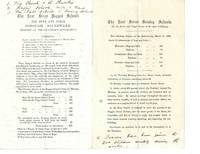
1868réf. 160851868. Newton H. Autograph letter signed on a handbill for the Lant Street Ragged Schools for Boys and Girls April 13 1868 documents free education for poor children and adults in Southwark and records substantially higher attendance among girls than boys. Newton identified as Vicar of St. Michael's Mission Schools Lant Street writes to a donor concerning the schools' work while the printed handbill describes an institution located "in the midst of the poorest population in Southwark" and reports approximately 850 attendances daily. The surviving enrollment figures give particular evidence for girls' participation: 243 girls attended the upper school room compared with 167 boys in the lower school room while afternoon attendance numbered 233 girls and 162 boys. Newton H. April 13 1868. Autograph letter signed on verso of a printed handbill for The Lant Street Ragged Schools for Boys and Girls Borough Southwark. The handbill describes the schools as "the largest with about 850 attendances daily and the most important in South London" and supplies separate attendance figures for boys and girls. It also records an evening school of approximately 65 "grown persons of both sexes" who were taught to read and write showing that the institution combined children's schooling with adult literacy instruction. Newton annotated the printed portion in his own hand including the notation "Ragged Schools male & female." His manuscript communication to a donor links the printed statistics and public appeal directly to the school's fundraising activity and administration. Ragged schools developed in nineteenth-century Britain to provide free instruction to children excluded by poverty from other forms of schooling commonly combining elementary education with religious and charitable work. The Lant Street handbill records that work before the Elementary Education Act of 1870 established a national framework for elected school boards in England and Wales. Its sex-specific figures are especially informative for the history of women's education: girls exceeded boys in both reported daytime sessions while the evening school extended literacy instruction to adult women as well as men. The handbill and Newton's signed letter preserve two aspects of the institution on the same sheet-the statistics used to describe its educational work and a clergyman's direct appeal to a supporter. No condition defects are specified in the supplied description. A contemporary record of schooling adult literacy charitable fundraising and female attendance among the poor of Victorian Southwark. unknown
1813réf. 150361813. Women's education materials 1813-1926 document the lived experience of female schooling across the nineteenth and early twentieth centuries including seminary training scientific study and political awareness prior to national suffrage. The grouping places early republic religious education alongside mid-nineteenth-century academic instruction and late nineteenth-century political consciousness concluding with a twentieth-century pedagogical lecture directed toward women teachers. Together the materials capture women's direct engagement with intellectual scientific and civic life through personal correspondence and formal educational discourse. Four items 1813-1926 consisting of three Autograph Letters Signed and one printed pamphlet. 1 Hillner Louis. Autograph Letter Signed in response to guardian of Eliza Climer. Bethlehem April 22 1813. Two letters on one sheet including a request from Climer's guardian for her removal from the Bethlehem Female Seminary and Hillner's reply noting that she "lamented and wept" at the prospect of leaving and petitioned to remain which he supports as "for her best" if permitted to continue her studies. 2 Hemstreet Eloise. Autograph Letter Signed to her mother 1854. Letter describing her school as "the best of schools and one of the edens of the earth" with specific reference to scientific instruction and anticipation of viewing "the eclipse through the telescope" indicating active participation in astronomy. 3 Unidentified student. Autograph Letter Signed. Western Female Seminary Oxford Ohio October 19 1879. Letter discussing recent gubernatorial elections and public political discourse stating "The principal topic here for the last week has been the election.It will be so nice to be at home next Presidential Election" documenting student engagement with electoral politics prior to the ratification of the Nineteenth Amendment. 4 Gould Frederick J. Why Educate Chesterfield: National Union of Women Teachers 1926. Printed pamphlet of a lecture delivered before women educators advocating intellectual breadth beyond rote instruction declaring "Education must no longer bend over the desk and cramp its soul into spelling writing and sums.It must live in and live by and live for great ideas." Female seminaries in the early nineteenth century including Bethlehem Female Seminary operated within religious institutional frameworks that emphasized moral discipline alongside academic study while mid-century curricula increasingly incorporated scientific subjects such as astronomy. By the late nineteenth century women students were actively observing and discussing electoral politics despite lacking formal voting rights indicating participation in public discourse prior to the ratification of the Nineteenth Amendment to the United States Constitution. Gould's 1926 lecture reflects interwar educational reform movements that advocated broader intellectual development for both teachers and students. Minor fold lines and light handling wear to manuscript letters; pamphlet with slight edge wear and light toning; text throughout clear and legible; overall very good condition. A chronologically layered grouping demonstrating continuity and change in women's educational experience from early seminary culture to modern pedagogical theory. unknown
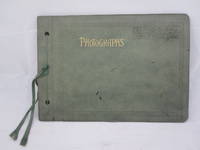
1920réf. 167711920. Photograph album containing 49 small portraits of at least 35 children predominantly young girls circa 1920 documenting school-age friendships organized athletics theatrical play and changing fashions in early twentieth-century American youth culture. Particularly notable are the numerous girls posing with tennis rackets basketballs and volleyballs activities associated with the expansion of physical education and competitive recreation for girls during this period. Their short bobbed hairstyles fashionable in the early 1920s accompany an assortment of athletic equipment costumes and domestic props. Handwritten captions identifying most sitters by first and last name preserve individual identities and provide evidence of the children's social circle although the school and geographic location remain unidentified. Original photograph album containing 49 small silver gelatin prints each approximately 1 1/4 x 1 inch mounted on seven pages. Original green paper boards measuring 7 x 10 inches with ribbon-tie binding and "Photographs" stamped in gilt on the front cover. The original owner's name is written in pencil at the upper right corner of the front cover. Handwritten captions identify the first and last names of most sitters with at least 35 different children represented. Many girls pose individually with tennis rackets basketballs and volleyballs while others hold parasols stuffed animals or baby dolls. Several children imitate telephone conversations using a candlestick telephone. One girl wears a top hat and poses with what appears to be an empty liquor bottle a possible reference to the introduction of national Prohibition in January 1920. Male classmates appear dressed as cowboys with neckerchiefs and wide-brimmed hats while others pose with a golf club and sporting cap or a top hat and cane. A hand-drawn pencil portrait on the final page depicts a woman wearing a winged Dutch cap. The album's emphasis on girls' athletic equipment corresponds with the growing place of organized physical education and recreational sports in American girls' schooling during the early twentieth century. Its theatrical costumes imitation telephone conversations and playful portraits also record activities and popular fashions among school-age children during the period. The handwritten identification of individual sitters distinguishes the album from anonymous school portrait collections and preserves names that may permit further identification of the children and their educational setting. The location and school remain unidentified. Condition not specified. A personally annotated photographic record of girls' athletics childhood recreation and social life in early 1920s America. unknown
1877réf. 160891877. Forster William Edward. Autograph letter signed to Miss Vernon October 22 1877 concerns girls' participation in an educational competition and specifically asks whether daughters of working men would be represented. The letter was written seven years after Forster introduced the Elementary Education Bill of 1870 the first legislation devoted specifically to educational provision across England and Wales; the resulting Act established elected school boards empowered to provide schools where existing provision was inadequate. Forster's questions to Miss Vernon extend beyond the mechanics of the competition to its social composition culminating in the pointed inquiry "Are there any daughters of working men" Forster William Edward. October 22 1877. Autograph letter signed to Miss Vernon. Two pages 8vo. Wharfeside Burley-in-Wharfedale Leeds. Forster thanks Miss Vernon for her note and requests material concerning an examination: "Any printed documents you may have bearing on the Examination would be really useful to me." He then writes "I am delighted to find I shall give a prize to my friend Mr Smith's daughter" before asking about the range of entrants: "I suppose all classes will be represented at the competition. Are there any daughters of working men" The questions document Forster's interest in both female participation and the class composition of an educational competition while his request for printed documents indicates that he intended to examine its organization or results more closely. Forster's inquiry belongs to the decade in which access to elementary schooling was being substantially reorganized in England and Wales. The 1870 Act authorized locally elected boards to establish and manage schools where additional provision was required although universal compulsory attendance was not established by that Act; further legislation in 1876 strengthened parental obligations concerning children's education and nationwide compulsory attendance followed in 1880. Written during this transition Forster's question about "daughters of working men" records his attention to whether an educational competition crossed both gender and class boundaries rather than merely attracting girls from socially advantaged families. No condition defects are specified in the supplied description. A signed letter connecting the principal architect of the 1870 Education Act with the practical question of girls' and working-class participation in education seven years after its passage. unknown
1887réf. 164551887. Hughes Elizabeth Phillips. The Education of Welsh Women 1887 an early statement advocating improved educational opportunities for Welsh girls and women delivered at Cardiff in January 1887 during the first public meeting of the Association for Promoting the Education of Girls in Wales. Hughes then principal of the Cambridge Training College for Women was a leading advocate for women's secondary and higher education in Britain. Her address belongs to the organized campaign to improve girls' schooling in Wales during the years preceding the Welsh Intermediate Education Act of 1889 which established a framework for publicly supported secondary education. The pamphlet records Hughes's participation in a movement seeking greater educational provision for Welsh women and their inclusion in the country's developing educational institutions. Hughes Elizabeth P. The Education of Welsh Women. London: W. Speaight & Sons 1887. 8 pages. Original printed wrappers. The pamphlet contains the substance of Hughes's address at the Association's inaugural public meeting in Cardiff presenting the case for improved education for Welsh girls and women. Accompanied by a separate document titled The Education of Girls in Wales listing six pamphlets published by the Association for Promoting the Education of Girls in Wales. This accompanying publication identifies further printed material issued in support of the Association's educational campaign documenting its efforts to disseminate arguments for reform. Born in Carmarthen Hughes became the first principal of the Cambridge Training College for Women in 1884 an institution established to prepare women graduates for teaching careers and subsequently renamed Hughes Hall in her honor. She maintained a lifelong commitment to Welsh education later serving as secretary of the Association for Promoting the Education of Girls in Wales and helping establish a teachers' training college in Barry in 1914. She was also the only woman appointed to the committee responsible for drafting the original charter of the University of Wales. This 1887 address documents her early involvement in organized educational reform in Wales accompanied by a contemporary listing of the Association's other publications. Minor chipping to wrapper edges; otherwise in very good condition. unknown
1891réf. 160751891. Wordsworth Elizabeth. William Wordsworth 1891 is an inscribed presentation copy from the educationalist who served as the first Principal of Lady Margaret Hall and founded St Hugh's Hall two institutions central to the establishment of women's higher education at Oxford. Great-niece of William Wordsworth she combined her literary work with direct responsibility for expanding women's access to Oxford study. She was selected as Lady Margaret Hall's first Principal in 1878; its first nine students arrived in 1879 when University lectures and examinations were still largely closed to women. In 1886 she founded St Hugh's Hall specifically for women unable to afford the fees charged by the existing women's halls initially accommodating four students in a house on Norham Road. Wordsworth Elizabeth. William Wordsworth. London: Percival 1891. Inscribed presentation copy "from the author." First edition. Wordsworth's study concerns her great-uncle the poet William Wordsworth and joins her work as a biographer and author to her place within the Wordsworth family. The presentation inscription gives this copy a direct association with its author. Its publication also coincided with a formative period in her educational career: by 1891 she was overseeing Lady Margaret Hall while St Hugh's founded five years earlier as her private educational venture was developing as a lower-cost route to Oxford study for women. When this volume appeared Oxford women could pursue increasingly advanced courses and examinations but could not become full members of the University or receive Oxford degrees; women gained those rights only in 1920. Wordsworth's educational work addressed both access and cost: Lady Margaret Hall was the first higher educational institution for women at Oxford while St Hugh's charged lower fees for students for whom the existing halls were financially inaccessible. Original dark blue cloth with gilt lettering slightly faded light soiling and small tears to spine panel. Overall very good. An author-inscribed first edition connecting Wordsworth's literary authorship and family history with her contemporary work establishing opportunities for women to study at Oxford. unknown
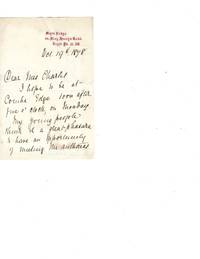
1874réf. 160221874. Buss Frances Mary autograph letter signed to Elizabeth Rundle Charles records a personal exchange between a leading campaigner for British girls' secondary education and the author of The Chronicles of the Schönberg Cotta Family. Founder of the North London Collegiate School in 1850 Buss developed an academically demanding curriculum and supported external examinations that could demonstrate girls' capacity for advanced study; North London Collegiate pupils later prepared for University of London and Cambridge examinations. Her letter to Charles provides a more personal record of that educational work through Buss's pupils whom she describes as eager to meet an author whose writing they knew. Buss Frances Mary. October 19 no year. Autograph letter signed to Elizabeth Rundle Charles. Two sides 8vo. Myre Lodge 89 King Henry's Road Regent's Park. Buss hopes to be "at Combe Edge soon after five o'clock" and tells Charles "My young people think it a great pleasure to have an opportunity of meeting the authoress of the Schonberg Cotta family." She also writes that she is deeply touched "to hear your kind expressions about the two persons dearest in life to me!" The recipient Elizabeth Rundle Charles was the author of The Chronicles of the Schönberg Cotta Family a historical novel centered on Martin Luther and the Reformation. Buss's reference to "my young people" connects the correspondence directly with her work as a headmistress and records her pupils' engagement with a contemporary woman writer. Buss's educational career belonged to the nineteenth-century campaign to establish academically rigorous secondary schooling for girls and to secure their access to the examinations and higher education increasingly available to men. The University of London admitted women to degrees on equal terms with men in 1878 while North London Collegiate students were among the girls prepared for university examinations during Buss's headship. The letter documents the literary culture surrounding Buss's pupils through their anticipated meeting with Charles rather than addressing educational reform directly. Small tear repaired; otherwise condition not further specified. A personal letter linking Frances Mary Buss's school circle with a prominent nineteenth-century woman author and the reading interests of her pupils. unknown
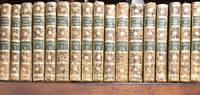
1785réf. 154841785. Bibliothèque Universelle des Dames Histoire 1785-1788 multivolume educational work produced in late Enlightenment France as part of a publishing program intended to provide women readers with structured access to historical and general knowledge. The series formed part of a broader eighteenth century movement encouraging the intellectual education of women among elite and literate circles presenting scholarly subjects in formats designed for domestic study. Issued in the years immediately preceding the French Revolution the work reflects the expanding Enlightenment belief that education should extend beyond traditional male scholarly institutions and that women should participate in intellectual life through reading and study. Bibliothèque Universelle des Dames Histoire. Paris: rue d'Anjou published with royal approval 1785-1788. First edition. Thirty volumes. The series was issued to subscribers over a three year period and intended to provide accessible instruction in historical subjects for an audience of educated women. The set forms part of the larger Bibliothèque Universelle des Dames publishing project which presented a range of scholarly subjects adapted for female readership during the late eighteenth century. Text printed in French and organized across the thirty volumes as a comprehensive historical survey. The Bibliothèque Universelle des Dames series emerged during a period when Enlightenment intellectual culture increasingly debated the scope of women's education and participation in literary life. Publishers and educators produced works designed to make subjects such as history literature and science accessible to female readers who were often excluded from formal academic institutions. Appearing only a few years before the French Revolution the series reflects the educational aspirations and social structures of late eighteenth century France where elite women frequently participated in salon culture and intellectual exchange through reading and discussion. Thirty volume set bound in full tawny brown leather with gilt decorated spines black morocco spine labels with gilt titles gilt ruled boards marbled endpapers and gilt edges. Minor wear and occasional small flaws to some bindings boards secure and interiors generally clean and unmarked. Overall very good condition. A complete eighteenth century educational series illustrating the development of women's intellectual readership in Enlightenment France. unknown
1910réf. 150271910. Association pour l'Enseignement Secondaire des Jeunes Filles. Geography prize medal 1910 documenting formal recognition of young women's academic achievement in France during the expansion of secondary education for girls in the early twentieth century. Awarded in connection with the Association pour l'Enseignement Secondaire des Jeunes Filles at the Sorbonne the medal identifies geography as the field of achievement and belongs to the institutional culture through which women students received increasingly formal academic instruction and distinction. Bronze medal measuring 1.75 inches in diameter. The obverse depicts a seated classical female figure beside a pedestal decorated with laurel wreaths extending a wreath in her right hand as a symbol of academic reward. The reverse is engraved in part: "Association Pour L'Ensegnement Secondaire des Jeunes Filles a la Sorbonne.Geographie.1910." The inscription directly associates the award with secondary education for young women the Sorbonne and achievement in geography. The medal dates from a period when French girls' secondary education was expanding but remained institutionally distinct from that provided to boys. Its academic imagery and engraved subject record the formal recognition of a young woman's achievement in geography in 1910. The earlier identification of the figure as Terpsichore cannot be confirmed from the supplied evidence; Terpsichore is traditionally the Muse of dance rather than education. No condition defects have been supplied. unknown
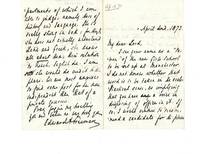
1873réf. 160861873. Freeman Edward Augustus. Autograph letter signed April 2 1873 recommends Scottish educator and historian Margaret A. R. Macarthur for appointment as headmistress of a new girls' school in Manchester explicitly arguing that her abilities warranted a position "more independent than that of a private governess." Freeman a historian who would later become Regius Professor of Modern History at Oxford had employed Macarthur as governess to his daughters for nearly five years and writes from direct experience of her teaching. His recommendation documents the professional transition available to an educated woman from domestic governess work to leadership in the expanding field of girls' secondary education and identifies history and languages as Macarthur's particular strengths. Freeman Edward Augustus. April 2 1873. Autograph letter signed to "My Dear Lord." Somerleaze Wells Somerset England. Four pages on a single folded sheet. Having seen his correspondent named as a "Patron of the new Girls School to be set up at Manchester" Freeman asks whether he has influence over appointments and recommends Macarthur for headmistress. "She is a woman of powers far above the common" he writes "and I can witness that she has practiced them well in the only two departments of which I am able to judge namely those of History and language." Freeman adds that although Macarthur did not know Latin and Greek directly "she knows all about them their relation to French English etc." As evidence of his confidence in her historical abilities he explains "I have set her to write one of my series of small histories a History of Scotland which I hope will soon be out." He concludes "I am sure she would do credit to the place. We are most anxious to find some post for her more independent than that of a private governess." Margaret A. R. Macarthur born in Scotland in 1842 subsequently published History of Scotland in Freeman's Historical Course for Schools confirming the literary project Freeman describes while it was still in preparation. The letter thus precedes publication and records Freeman using Macarthur's authorship as evidence of her qualifications for educational leadership. Although the supplied information states that Macarthur was not appointed to the Manchester position the reason given-that better-qualified candidates prevailed-cannot be established from the letter itself and is therefore omitted. Fine condition. Freeman's detailed recommendation preserves contemporary evidence of a woman educator seeking advancement beyond private governess work and of published historical scholarship being cited as a qualification for the headship of a girls' school. unknown
1940réf. 160881940. Edith Reverend Mother. Autograph letter signed to William Nourse December 22 1940 records wartime conditions at Ascot Priory while its Anglican religious community operated St. Augustine's School for girls during the Blitz. Written three months into the German bombing campaign the letter describes bombs falling near the Priory quieter nights as Christmas approached and the financial strain affecting the institution's supporters. Ascot Priory was the mother house of the Society of the Most Holy Trinity an Anglican women's religious community whose work included nursing care of orphans and education; St. Augustine's School was among the schools operated by the sisters. Edith Reverend Mother. December 22 1940. Autograph letter signed to William Nourse on Ascot Priory letterhead Ascot Berkshire England. Writing three days before Christmas Edith acknowledges the continuing support of friends despite wartime hardship: "I appreciate the kindness of our friends more than ever this year for I know how much financially hit everyone is." Her Christmas wishes immediately turn to the war: "I do hope you will have as happy a Christmas is possible Xmas 1941 bring us peace!" She then gives a direct account of the danger experienced at Ascot: "We have had some bombs unpleasantly near but lately I am glad to say the nights have been much quieter." The letter was written during the Blitz when German aerial attacks on Britain had begun in September 1940 and would continue into May 1941. Ascot Priory had housed the Society of the Most Holy Trinity since the nineteenth century; its sisters maintained religious medical charitable and educational work including the care of girls at St. Christopher's Orphanage and instruction at St. Augustine's School. Edith's December 1940 letter records how that women-led institution continued during wartime through a concise firsthand account of nearby bombing strained finances and hopes for peace. Her remarks are especially immediate because they were written during the first winter of the Blitz rather than retrospectively after the war. No condition defects are specified in the supplied description. A contemporary account of the British home front from the woman responsible for an Anglican community and girls' school during the aerial campaign of 1940. unknown
1877réf. 167481877. Women's Education Movement. Goddard Seminary Catalog 1877. Pamphlet Catalog for the 1877 class of Goddard Seminary a coeducational school in Barre VT. Including the names of students. Goddard College began in 1863 in Barre Vermont as the Green Mountain Central Institute and in 1870 was renamed Goddard Seminary. Founded by Universalists Goddard Seminary was a four-year preparatory high school primarily for Tufts College. For many years the Seminary prospered. But the opening of many good public high schools made many of the New England academics obsolete. The trustees added a Junior College to the Seminary in 1935 and in 1938 Goddard College was chartered. It remains progressive Universalist institution. At the time that this description is being written no copies are recorded in American institutions. OCLC search results are at best an estimate and can vary over time. Women's Academy and Seminary Archive recording the first important movement of women into higher education in the United States seminary was synonymous with "academy" and did not have the religious connotation of today. In the 1800's the Female Academy and Seminary Movement transformed American educational norms allowing women the opportunity to receive secular non-religious college-level education. Women's colleges proliferated in the mid- to late- 19th century to fill the void created by their exclusion from most institutions of higher education. The prevailing notion that women were too delicate for a rigorous academic education was openly challenged when Elizabeth Cady Stanton spoke at the Seneca Falls Convention of 1848 "Man's intellectual superiority cannot be a question until woman has had a fair trial.When we shall have had our colleges our professions our trades for a century a comparison then may be justly instituted." Young women were quick to step up to the challenge; as quickly as female colleges opened they filled up. unknown
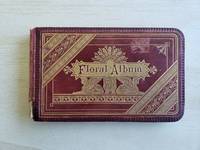
1879réf. 170111879. Farbush May. Handwritten memory album 1879-1885 documenting women's higher education and student networks at Iowa College during the late nineteenth century a formative period in the expansion of collegiate opportunities for women in the United States. The album preserves written exchanges among classmates and acquaintances recording intellectual training language study and social relationships within an academic environment that encouraged women's participation in formal education. The entries provide direct evidence of women's engagement with subjects such as French and Latin as well as the social structures that supported early cohorts of women students. Farbush May. Floral Album. 1879-1885. Manuscript album containing approximately 30 filled pages with 28 handwritten entries signed by friends and classmates from Iowa and New Jersey. The volume includes printed floral illustrations and gilt page edges with entries primarily in English alongside verses in Latin and French demonstrating multilingual education. The content reflects common nineteenth century memory album practices with poetic inscriptions and personalized sentiments including a notable entry by Mary Bye Everett: "Ever remember the happy hours we have spent together at the Iowa College. How well the Conversational Hour was improved in studying French. Happy time never to be again but always to be remembered." Additional entries reference Grinnell Iowa further situating the album within regional academic networks. Created during a period when institutions such as Iowa College played a significant role in advancing coeducational and women's higher education in the American Midwest the album contributes to the study of student life intellectual training and the cultural practices of remembrance among women students. Memory albums functioned as precursors to modern yearbooks preserving both standardized and personal expressions of friendship and identity. The presence of multilingual entries underscores the academic rigor and cultural aspirations associated with women's education during this era. Loss to lower spine with one illustration detached light foxing and toning; overall very good. A cohesive manuscript record of women's collegiate experience and social networks in the late nineteenth century. unknown
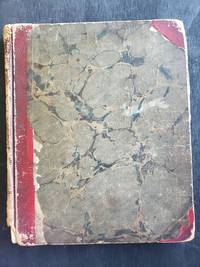
1842réf. 170431842. Key C. F. schoolgirl memory album 1842 to 1877 documents women's education friendship inscription domestic expectation and sentimental literary culture across the mid-nineteenth century. Signed "C.F. Key / January 19th 1842" the album records how young women and their schoolmates used memory books to preserve verse moral reflection courtship humor wax seals printed images and hand-drawn embellishment as part of the social and literary world surrounding female education. Key C. F. Memory album. 1842 to 1877. Manuscript and ephemera album with 20 handwritten entries and 39 pieces of ephemera including 24 printed paper items and 15 color wax seals from friends and schoolmates most of them women. Green marbleized boards with red leather binding 64 pages 9 x 7.5 inches. Printed material includes engravings and newspaper images such as "Her majesty leaving Buckingham Palace June 28 1838" and "Marriage of Henry the 6th." The wax seals include music ledgers initials trees dogs and lions. The album also contains a large pencil drawing of a small thatched-roof building in a forest. Manuscript entries address subjects including happiness marriage domestic life and courtship with poems such as "A Lady's Choice of Husband" and "Making Love" the latter using comic dialogue between Jane and Charles to explore youthful uncertainty about love. The album provides evidence of the literary visual and social forms through which schoolgirls and young women recorded friendship gender expectations and domestic ideals before standardized yearbooks. Binding loose with loss to foot of spine; first two pages and last three pages detached good. A rich manuscript and ephemera record of women's education schoolgirl friendship and nineteenth-century courtship culture. unknown
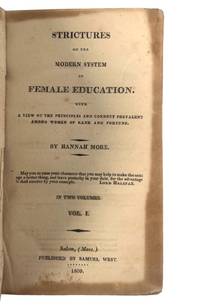
1809réf. 175631809. More Hannah. Strictures on the Modern System of Female Education 1809 argues that elite women required serious moral religious and intellectual education in order to shape family life philanthropy and national conduct. First published in 1799 More's influential educational work criticized ornamental female instruction and urged women of rank and fortune to become rational companions moral mothers and agents of social reform. The book belongs to a conservative reform tradition that expanded women's public usefulness through education charity and religious duty rather than through political equality. More Hannah. Strictures on the Modern System of Female Education. With a View of the Principles and Conduct Prevalent Among Women of Rank and Fortune. Salem Mass.: Samuel West 1809. Later edition. Two volumes. Vol. 1: xi 146 pages. Vol. 2: 130 pages. The text argues that superficial education left women poorly prepared for conversation domestic responsibility moral example and charitable work while recommending Biblical reading serious literature rational discussion compassion and generosity as central elements of female formation. More's educational program influenced nineteenth-century debates over women's activity beyond the household particularly philanthropy religious reform and instruction of the poor. Light browning throughout loose front free endpaper with 1828 ownership inscription; very good. A two-volume American edition of More's major work on women's education preserving a formative conservative model of female intellectual and social agency. unknown
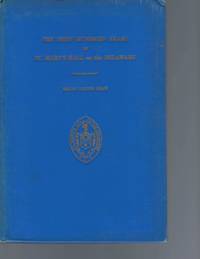
1936réf. 155971936. Shaw Helen Louise. The First 100 Years of St. Mary's Hall on the Delaware 1936 documents the development of St. Mary's Hall in Burlington New Jersey from its 1837 establishment by Episcopal Bishop George Washington Doane through nearly a century of education for girls and young women. Doane acquired an existing girls' school and established St. Mary's Hall under Episcopal direction; the institution became closely associated with the expansion of advanced female education in nineteenth-century New Jersey. Shaw traces the school's founding principles administrative leadership students curriculum religious instruction and physical growth along the Delaware River recording how an Episcopal institution organized academic and religious education for women across successive generations. The history consequently preserves evidence of the administration and educational practices of a long-lived denominational girls' school during a period in which opportunities for women's advanced education expanded substantially in the United States. Shaw Helen Louise. The First 100 Years of St. Mary's Hall on the Delaware. 1936. Written in connection with the school's centennial period the volume follows St. Mary's Hall from its founding in 1837 and describes the institutional mechanisms through which its educational program developed: governance curriculum faculty and administrative leadership student life religious instruction and campus expansion. Shaw's account records the Episcopal conception of female education as both intellectual and religious training and supplies an institutional history against which changes in American girls' schooling during the nineteenth and early twentieth centuries can be examined. As a retrospective history produced nearly a century after the school's founding it is particularly relevant as documentation of how St. Mary's Hall understood and recorded its own educational history by the 1930s. St. Mary's Hall belongs to the nineteenth-century expansion of organized secondary and advanced schooling for American women and its establishment under Bishop Doane in 1837 places its history within both women's education and the Episcopal Church's educational activity in the United States. Shaw's century-long chronology preserves names administrative developments curricular practices and changes to the Burlington campus that permit the institution's development to be followed beyond its founding claims. Light toning to endpapers and faint wear to extremities; otherwise clean and sound. Overall very good. A substantial institutional history documenting nearly a century of Episcopal education for girls and young women in Burlington New Jersey. unknown
1827réf. 165591827. Chapone Hester; Gregory John; Pennington Sarah. Chapone Letters on the Improvement of the Mind; Dr. Gregory's Legacy to his Daughters; Lady Pennington's Advice to her Absent Daughters; with an additional Letter on the Management and Education of Infant Children circa 1827 brings together major eighteenth-century texts on women's education moral formation reading domestic responsibility and female conscience. The volume belongs to the conduct-book tradition but is especially significant for pairing prescriptive instruction with arguments for women's rational cultivation including Chapone's emphasis on history literature and disciplined judgment and Pennington's insistence on moral conscience in the face of marriage family separation and social expectation. Chapone Hester; Gregory John; Pennington Sarah. Chapone Letters on the Improvement of the Mind; Dr. Gregory's Legacy to his Daughters; Lady Pennington's Advice to her Absent Daughters; with an additional Letter on the Management and Education of Infant Children. London: Scott Webster & Geary c. 1827. Early edition. 262 pages. Illustrated with two engravings including a frontispiece with tissue guard and an illustrated title page. Bound in marbled leather boards 32mo approximately 3.25 x 5.5 inches. The texts address religion economy government politeness the heart and affections reading habits maternal duty and the education of children with Chapone's letters originally written for her fifteen-year-old niece and warning against sentimental novels while encouraging serious intellectual formation. Issued in a compact illustrated format this omnibus shows the continued nineteenth-century circulation of women's educational writing that had already passed through numerous editions in Britain and America. Light wear to boards and extremities contents clean with illustrations present very good. A useful collecting item for the study of women's education conduct literature female authorship and the contested boundaries between obedience intellectual independence and moral agency in early nineteenth-century Britain. unknown
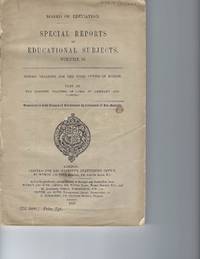
1907réf. 164981907. Great Britain Board of Education. School Training for the Home Duties of Women. Part III. The Domestic Training of Girls in Germany and Austria 1907. British government report examining women's domestic education in Germany and Austria during the early twentieth-century expansion of vocational and secondary schooling for girls. Written by M. Cecile Matheson the study documents the curricula and organization of housewifery schools while addressing growing demands to extend women's education beyond household management into social legal and economic subjects. Particularly concerned with the education of middle- and upper-class women the report records contemporary efforts to broaden domestic training into a more comprehensive course of intellectual and practical instruction. Great Britain Board of Education. Special Reports on Educational Subjects. School Training for the Home Duties of Women. Part III. The Domestic Training of Girls in Germany and Austria. London: Printed for His Majesty's Stationery Office 1907. Volume 19 of the Board's Special Reports on Educational Subjects series issued in original printed paper wrappers. The report examines domestic training in German and Austrian schools with an appendix containing statistical tables detailing the institutions studied. Its discussion of educational reform identifies a demand for instruction extending beyond practical housewifery: ".there has been a demand for linking the training in the practical arts of the home to a study of the the many social legal and economic problem which affect home life and indeed any kind of institutional life in their relation to the general life of the people." Published as British educational authorities investigated foreign approaches to domestic science and vocational instruction the report records debates over the responsibilities and educational opportunities of women in pre-First World War Europe. Its examination of German and Austrian institutions provides comparative evidence of the relationship between women's schooling social class household economics and emerging expectations for female education. Some wear to spine. Ex-library copy. Very good condition. unknown
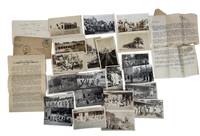
1941réf. 209861941. Gregson Anita. A.P. Mission City School archive 1941-1942 documenting girls' education missionary activity and community life in Ambala Punjab during World War II. This material records daily instruction social interaction and local conditions within a mission-run school for girls alongside written correspondence and institutional reporting that situate the school within wartime pressures and colonial India's educational landscape. The archive provides direct evidence of classroom practices gendered education and the integration of local families into school environments as well as the impact of global conflict on regional communities. Archive comprises 21 original black and white and sepia photographs one typed letter and one annual report. Photographs measuring approximately 2" x 3" to 3" x 5" frequently bear handwritten or typed captions on the verso likely by Anita Gregson identifying subjects and activities. Images show groups of schoolgirls engaged in classroom exercises and outdoor instruction including one scene of students constructing a ground map of India to illustrate agricultural production. Another photograph depicts a semicircle of young children seated outdoors during a lesson with their teacher identified as Miss Atmaran and a veiled mother observing her burkha partially drawn back. Additional images document craft instruction including girls weaving coconut palm leaves into fans and producing woven ties on frames. Musical activity is also present with students playing instruments. Beyond the school photographs depict village life in Punjab including oxen operating a water-drawing mechanism children gathered around a missionary playing a ukulele and a merchant carrying goods suspended from a yoke. The accompanying letter dated June 14 1942 from Gregson to a correspondent in New York references World War II noting international observances and local enlistment: "The young men in our Indian community are continuing to sign up for the army navy and air force." The annual report for the 1941-1942 school year details wartime financial strain fundraising efforts and instructional programs including an adult literacy course for women teaching reading writing and arithmetic. Created while India functioned as part of the British Empire during World War II these materials document the intersection of missionary education wartime mobilization and local social life. The inclusion of adult literacy instruction for women reflects ongoing efforts to expand female education under colonial conditions while the letter and report connect the school directly to global conflict and its local consequences. Light wear and minor fading to photographs; handling wear present. Letter on thin paper with tears and fragility consistent with wartime materials poor to fair condition; remaining materials overall very good condition. This archive provides a concentrated visual and textual record of girls' education and community experience in wartime Punjab. unknown
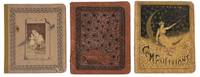
1880réf. 196981880. Fraister Belle. Iowa Schoolgirl Handwritten Notebook Archive documents the classroom work of a late nineteenth-century Iowa girl preserving evidence of women's education through manuscript exercises in history English penmanship grammar and arithmetic. The notebooks show how a schoolgirl practiced factual recall moral phrasing written style and practical calculation during a period when secondary education for girls increasingly prepared students for teaching clerical work and public intellectual participation as well as domestic life. The material provides direct evidence of everyday pedagogy handwriting discipline and curriculum formation in Iowa between 1880 and 1890. Iowa 1880-1890. Archive of 3 handwritten school notebooks belonging to Belle Fraister totaling 146 pages many blank in decorated pictorial wrappers; notebooks measure approximately 8" x 7" and 8" x 7½". The notebooks contain written work in history English penmanship and arithmetic with one history section summarizing states through structured categories such as time cause place and people. For Georgia Fraister writes "Time - 1733" "Cause - Refuge for the poor and persecuted" "Place - Savannah" "People - English" and notes "1752 - Geogia became the first Royal Province." Other pages show repeated penmanship practice including the phrases "Promise little but do much" and "Union is strength" calligraphic stroke exercises and grammar notes on pronunciation inflection pitch synonyms and related language study. One notebook includes a small newspaper clipping on the death of John G. Saxe with a brief handwritten biographical note beneath it. All notebooks bear stamps from the original stationery store. 1 Fraister Belle. History Notebook. Iowa 1880-1890. Contains structured state-history summaries including entries for Georgia organized by date motive for settlement location and people showing classroom methods for memorizing colonial and state history. 2 Fraister Belle. Penmanship Notebook. Iowa 1880-1890. Includes repeated letters words phrases and calligraphic strokes documenting handwriting instruction as both practical skill and moral exercise through maxims such as "Promise little but do much" and "Union is strength." 3 Fraister Belle. English and Arithmetic Notebook. Iowa 1880-1890. Contains notes on grammar pronunciation inflection pitch synonyms arithmetic and a clipped notice with a manuscript biography of John G. Saxe showing the combination of language study numeracy and literary awareness in Fraister's schoolwork. Decorated wrappers with light handling wear; interior pages generally legible; many pages blank as noted. Overall very good. A compact manuscript archive documenting the subjects methods and written discipline of girls' education in late nineteenth-century Iowa. unknown
1903réf. 155931903. Webster Jean. When Patty Went to College 1903 uses the daily life of a women's college to portray female higher education friendship academic expectations independence and the transition from college to adult life at the beginning of the twentieth century. Webster drew upon a setting she knew directly: she entered Vassar College in 1897 graduated in 1901 wrote for the Vassar Miscellany and the Poughkeepsie Sunday Courier while a student and published When Patty Went to College as her first novel two years after graduation. The daughter of Mark Twain's publisher Charles L. Webster and Twain's niece Annie Moffett Webster she was Twain's great-niece. Webster Jean. When Patty Went to College. New York: The Century Co. 1903. First edition. The novel follows senior Patty Wyatt through college examinations friendships pranks chapel faculty encounters and questions about responsibility after graduation. Patty resists unquestioning conformity and approaches academic requirements on her own terms while episodes such as her intervention on behalf of the homesick freshman Olivia Copeland place friendship and mutual assistance alongside the comic treatment of college regulations. In the concluding encounter with a bishop after Patty skips chapel her discussion turns toward the habits she will carry beyond college. The Century Co. copyright dates the work to 1903 and records publication in March of that year. Early ownership signature to inside front cover. Published during a period of expanding opportunities for women in American higher education Webster's first novel places women students at the center of campus life rather than treating college merely as preparation for marriage. Her own Vassar education included English and economics settlement-house work and study of social reform; these concerns developed further in her later writing and public support for suffrage and institutional reform. The supplied description does not provide pagination binding illustrations size dust-jacket status or sufficient condition information beyond the ownership signature; these details should be added from examination of the copy rather than inferred. unknown
1916réf. 171571916. Unidentified compiler photograph album 1916 to 1917 documenting women's education and teacher training at Kent State Normal College during a period of expanding access to professional instruction for women in the United States. The album provides primary visual and material evidence of student life within a Normal School environment including pedagogical training peer networks and extracurricular culture. It supports research into the feminization of the teaching profession collegiate social structures and the institutional development of teacher education in the early twentieth century particularly as the United States entered World War I. Photograph album containing 44 original silver gelatin prints and approximately 48 pieces of mounted ephemera with extensive handwritten captions identifying fellow students instructors such as "Miss Corbett" and "Miss Dunbar" and campus locations including Merrill Hall the Library Loury Hall and Moulton Hall. Images show groups of women students posed on campus grounds within academic buildings and in outdoor recreational settings alongside classroom scenes of elementary school instruction reflecting teacher training practices. Social activities are documented through photographs of outings to Brady Lake and a labeled Independence Day picnic in 1917. The ephemera includes ribbons commencement programs school-related printed materials theater tickets postcards sheet music and an astrological horoscope as well as items connected to organizations such as the YWCA and Portage County's War Fund indicating student participation in civic and wartime support activities. 44 photographs mounted across 50 pages accompanied by approximately 48 pieces of ephemera; images range from approximately 2 x 3 inches to 3 x 5 inches; album measuring 12 x 9.5 inches; original boards. Kent State Normal School established in 1910 and renamed Kent State Normal College in 1915 following the introduction of four-year degree programs formed part of a broader national system designed to professionalize teaching and expand women's access to higher education. By the early twentieth century women constituted a substantial majority of the American teaching workforce a demographic reality reflected in the album's predominance of female students and instructors. The inclusion of wartime-related materials situates the album within the transitional moment of U.S. mobilization in 1917 linking campus life to national developments. Minor handling wear to boards contents well-preserved with secure mounts and legible captions; overall very good condition. A cohesive and richly annotated record of women's collegiate and professional training culture in the early twentieth century. unknown
1860réf. 165381860. Hanson Mary A. friendship album 1860 documents mid-nineteenth-century girls' education in western Pennsylvania through a school reward presented for academic achievement in spelling. Given to Hanson at Laurel Hill Schoolhouse in McDonald Pennsylvania the album records how teachers used gift books moral instruction and sentimental inscription to encourage literacy discipline friendship and feminine virtue within the antebellum classroom. Hanson Mary A. Friendship Album. McDonald Pennsylvania: Laurel Hill Schoolhouse 1860. Manuscript presentation album with original black leather boards embossed front and back covers gilt-edged pages gilt spine decoration and gilt and red printed title page. The volume contains 64 pages six full-page engravings showing subjects including a woman writer figures reading in a garden a lady falconer and children playing and a hand-colored "Reward of Merit" card presented to Mary A. Hanson by a friend. The first page bears a lengthy teacher's dedication instructing Mary to use the album as "the repository of friendly names and of the purest thoughts and feelings" with "Sincerity purity and truth" guiding its entries; the teacher closes with a verse wishing that "love and friendship here unite" as the school year ends. The remaining pages are blank leaving the album as both a completed school presentation and an unused vessel for adolescent memory-making. Presented on March 31 1860 for "outstanding spelling work" during the preceding school year the album offers evidence of reward culture gendered moral pedagogy and literary sentiment in a rural Pennsylvania school setting before the Civil War. Very light foxing to engraving pages and wear to lower front hinge; original boards remain intact with gilt edges and decorative details present very good. A strong documentary artifact of girls' education classroom reward practices and the emotional language of friendship and moral formation in antebellum Pennsylvania. unknown
1877réf. 163421877. Carpenter Mary autograph letter signed dated January 10 1877 documents Carpenter's support for women's participation in school governance during the final months of her life providing direct evidence of her work across women's education juvenile reform prison reform and public advocacy. Carpenter founded ragged schools and reformatories for poor children and young offenders in Bristol advocated for women's education engaged anti-slavery work and traveled to India where she examined schools prisons and female education. Carpenter Mary. Autograph Letter Signed to Alderman Mansfield. Bristol: Mary Carpenter 1877. January 10 1877. 1 page. Original mailing envelope and two obituaries of Carpenter are pasted into the volume. The letter congratulates Mansfield on the election of his wife to the School Board stating "Thanks for sending us the paper containing the very gratifying announcement of the election of Mrs. Mansfield.It is a grand triumph!" A note at the bottom signed M. P. Mansfield explains "This letter was written on the receipt of a paper containing the account of the election of my wife to the School Board." Written months before Carpenter's death in June 1877 the letter links her educational reform career to the expanding civic role of women in nineteenth-century Britain. A biography materially strengthened by Carpenter's own signed letter joining printed memorialization with direct manuscript presence from a major woman reformer. Condition not stated in the supplied description. Strong association copy documenting Carpenter's support for women's public educational authority. unknown