75 349 résultats
1916réf. 171571916. Unidentified compiler photograph album 1916 to 1917 documenting women's education and teacher training at Kent State Normal College during a period of expanding access to professional instruction for women in the United States. The album provides primary visual and material evidence of student life within a Normal School environment including pedagogical training peer networks and extracurricular culture. It supports research into the feminization of the teaching profession collegiate social structures and the institutional development of teacher education in the early twentieth century particularly as the United States entered World War I. Photograph album containing 44 original silver gelatin prints and approximately 48 pieces of mounted ephemera with extensive handwritten captions identifying fellow students instructors such as "Miss Corbett" and "Miss Dunbar" and campus locations including Merrill Hall the Library Loury Hall and Moulton Hall. Images show groups of women students posed on campus grounds within academic buildings and in outdoor recreational settings alongside classroom scenes of elementary school instruction reflecting teacher training practices. Social activities are documented through photographs of outings to Brady Lake and a labeled Independence Day picnic in 1917. The ephemera includes ribbons commencement programs school-related printed materials theater tickets postcards sheet music and an astrological horoscope as well as items connected to organizations such as the YWCA and Portage County's War Fund indicating student participation in civic and wartime support activities. 44 photographs mounted across 50 pages accompanied by approximately 48 pieces of ephemera; images range from approximately 2 x 3 inches to 3 x 5 inches; album measuring 12 x 9.5 inches; original boards. Kent State Normal School established in 1910 and renamed Kent State Normal College in 1915 following the introduction of four-year degree programs formed part of a broader national system designed to professionalize teaching and expand women's access to higher education. By the early twentieth century women constituted a substantial majority of the American teaching workforce a demographic reality reflected in the album's predominance of female students and instructors. The inclusion of wartime-related materials situates the album within the transitional moment of U.S. mobilization in 1917 linking campus life to national developments. Minor handling wear to boards contents well-preserved with secure mounts and legible captions; overall very good condition. A cohesive and richly annotated record of women's collegiate and professional training culture in the early twentieth century. unknown books
1922réf. 164681922. Collection of three original autograph booklets completed at a joint Young Men's Christian Association Y.M.C.A. and Young Women's Christian Association Y.W.C.A. social mixer held at Iowa State College on September 29 1922. The booklets document organized social interaction between male and female college students during the early twentieth century when campus religious associations sponsored introductions recreational activities and opportunities for students to form acquaintances. Each booklet contains printed spaces for recording participants' names and home addresses all completed in manuscript preserving dozens of contemporary entries from individuals attending the gathering. The combination of standardized printed forms and handwritten personal information records how students established and maintained social contacts within the college's coeducational environment providing names and addresses that may permit further identification of participants. Iowa State College September 29 1922. Three original printed Y.M.C.A.-Y.W.C.A. mixer autograph booklets each comprising four pages twelve pages total. All three are completed in pen and pencil with manuscript names and home addresses entered beneath printed headings. Issued for the same September 29 gathering the booklets provide separate records of introductions made during the event. 1 Y.M.C.A.-Y.W.C.A. Mixer Autograph Booklet. Iowa State College September 29 1922. Four pages. Original printed booklet completed in manuscript recording names and home addresses of individuals encountered during the college social gathering. 2 Y.M.C.A.-Y.W.C.A. Mixer Autograph Booklet. Iowa State College September 29 1922. Four pages. A second completed example from the same event retaining handwritten entries in pen and pencil within the printed autograph format. 3 Y.M.C.A.-Y.W.C.A. Mixer Autograph Booklet. Iowa State College September 29 1922. Four pages. A third completed example preserving additional manuscript entries from the September 29 mixer. The Y.M.C.A. and Y.W.C.A. maintained active collegiate associations throughout the United States during the late nineteenth and early twentieth centuries combining Protestant religious instruction with student social activities and campus programming. At coeducational institutions such as Iowa State College joint events provided organized opportunities for men and women to meet outside formal academic instruction. These booklets preserve the names and home addresses exchanged during one such gathering documenting a specific student social event rather than merely its advertised program. Their printed prompts also illustrate an early method of maintaining personal networks through written contact information decades before electronic communication. Light handling wear consistent with contemporary use; manuscript entries strong and legible throughout. Overall very good condition. Three completed examples of collegiate social ephemera preserving individual names residential information and student interaction at Iowa State College in September 1922. unknown books
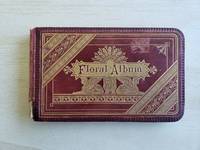
1879réf. 170111879. Farbush May. Handwritten memory album 1879-1885 documenting women's higher education and student networks at Iowa College during the late nineteenth century a formative period in the expansion of collegiate opportunities for women in the United States. The album preserves written exchanges among classmates and acquaintances recording intellectual training language study and social relationships within an academic environment that encouraged women's participation in formal education. The entries provide direct evidence of women's engagement with subjects such as French and Latin as well as the social structures that supported early cohorts of women students. Farbush May. Floral Album. 1879-1885. Manuscript album containing approximately 30 filled pages with 28 handwritten entries signed by friends and classmates from Iowa and New Jersey. The volume includes printed floral illustrations and gilt page edges with entries primarily in English alongside verses in Latin and French demonstrating multilingual education. The content reflects common nineteenth century memory album practices with poetic inscriptions and personalized sentiments including a notable entry by Mary Bye Everett: "Ever remember the happy hours we have spent together at the Iowa College. How well the Conversational Hour was improved in studying French. Happy time never to be again but always to be remembered." Additional entries reference Grinnell Iowa further situating the album within regional academic networks. Created during a period when institutions such as Iowa College played a significant role in advancing coeducational and women's higher education in the American Midwest the album contributes to the study of student life intellectual training and the cultural practices of remembrance among women students. Memory albums functioned as precursors to modern yearbooks preserving both standardized and personal expressions of friendship and identity. The presence of multilingual entries underscores the academic rigor and cultural aspirations associated with women's education during this era. Loss to lower spine with one illustration detached light foxing and toning; overall very good. A cohesive manuscript record of women's collegiate experience and social networks in the late nineteenth century. unknown books
1919réf. 165861919. Photograph album women's college student life 1919 to 1922 documents the lived experience of a young woman pursuing higher education in the years immediately following World War I when increasing numbers of women entered academic institutions and participated in structured campus life. The album centers on dormitory living peer networks and extracurricular activities providing direct evidence of how female students documented identity independence and social belonging within early twentieth-century educational environments. The material supports research into women's education student culture and the social history of American colleges in the interwar period. Album consists of 85 vernacular black and white silver gelatin photographs mounted across 23 pages with three additional loose prints primarily taken in Washington State between 1919 and 1922. Photographs range in size from approximately 2.5" x 1.5" to 5.5" x 3.5" housed in a volume measuring approximately 7" x 10.5" in original black cloth boards. Inscribed on the front pastedown: "From Papa Merrie Christmas 1921." Images depict dormitory interiors classmates and organized activities including social dances and boating excursions. Captions identify specific rooms and relationships including "Taken in my room '77' 1922" "Lookout Mt taken from my window '77'" "My old roommate of 1919 Room 44" and "Miss Fiddler Roommate 'Room 28' Summer School 1920." Additional annotations record impressions of peers including "A Good Kid" and humorous commentary such as "W.L. asleep after the dance Ha! Ha!" and "Do you think I look natural" A Harvard pennant displayed within one dormitory scene suggests aspirational or collegiate affiliation. The album also includes a photograph of a Home Economics class family scenes and several images referencing recent wartime experience including soldiers in uniform dated 1919. Created during a transitional period in American higher education the album illustrates how women students navigated expanding academic opportunities alongside established social expectations including domestic training and structured leisure. The inclusion of humor nicknames and detailed room identifications reflects the importance of spatial and social memory within collegiate life while references to wartime imagery situate the album within a generation shaped by recent global conflict. Such albums provide granular insight into daily routines interpersonal dynamics and the formation of female student identity in the early twentieth century. Minor wear to boards; photographs well-preserved with clear detail; overall in very good condition. unknown books
1916réf. 166221916. Carpenter Rachel A. M. Photograph album of St. Mary's School Wantage 1916 to 1918 documents the daily life of girls at an English school during the final years of the First World War. Twenty-three photographs record organized sports theatrical performance swimming leisure school uniforms faculty friends and the grounds of St. Mary's with handwritten captions and dates identifying every image. The album preserves a student's record of girls' education beyond the classroom including field hockey cricket tennis swimming and dramatic performance activities that formed an increasingly visible part of female secondary education in early twentieth-century Britain. Twenty-three gelatin silver photographs dated 1916 to 1918 mounted on 14 card-stock pages in original green cloth boards titled "Photo Sketches." Album measures 6.25 × 7.5 inches; photographs range from 2 × 2.75 inches to 3.5 × 5.5 inches. Carpenter identifies friends by full names initials and nicknames including "Tufty." Several views show students in uniform at leisure while others depict the field hockey cricket and tennis teams swimming in "the Baths" faculty members and campus grounds. Three photographs record the cast of a school production of Blue Beard performed during the summer term of 1918; the album retains a program for the production. Founded in 1873 as a girls' school St. Mary's belonged to the expansion of formal secondary education for girls in late nineteenth- and early twentieth-century England. Carpenter's photographs show how that education included organized athletics theatrical performance recreation and student social life during the wartime years of 1916 to 1918. The named and captioned photographs provide unusually specific evidence of individual pupils school activities and the rhythms of campus life. Condition not stated in the supplied description. unknown books
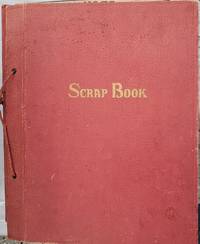
1936réf. 169681936. Kistler Alyson scrapbook album 1936-1937 documents women's higher education teacher training student sociability and regional travel during the Depression era through the experiences of a first-year student at East Stroudsburg State Teachers College in Pennsylvania. Created by Alyson Kistler during the 1936-1937 academic year the album preserves an unusually detailed record of academic life extracurricular activities employment friendships courtship entertainment and travel illustrating the central role teaching colleges played in expanding professional opportunities for women in the early twentieth century. Kistler Alyson. Scrapbook album. East Stroudsburg Pennsylvania 1936-1937. Manuscript and printed scrapbook containing 107 pieces of ephemera with extensive handwritten captions and commentary. Original red textured boards lettered "Scrap Book" in gilt 12.5 x 10 inches. 60 pages. Hand-lettered on the first page: "E.S.S.T.C. 1936-7." Contents include a certificate of admission report cards dance programs athletic schedules theater programs restaurant menus advertisements newspaper clippings pressed flower corsages novelty party favors local newspapers and travel-related souvenirs from Pennsylvania New Jersey New York and the Pocono region. Academic subjects documented include Introduction to Teaching English I Science II Hygiene History of Civilization Physical Education and Social Guidance. The album records Kistler's participation in the Art Club where contemporary newspaper coverage identifies her as "Head of Art Club" and preserves evidence of her weekend employment at local clubs and restaurants. Handwritten annotations throughout transform routine ephemera into a personal narrative including candid assessments such as "A big disappointment. The play was rotten" alongside detailed accounts of train travel social outings holiday celebrations movie-going and visits with friends and admirers. Particularly revealing are mementos associated with courtship including a necktie received from a young man who "gave me his tie because I liked it" and a Japanese postage stamp accompanied by a multi-part explanation tracing its movement among friends and collectors. The scrapbook provides a rich record of female student life at a teachers college during a period when teaching remained one of the most important professional careers available to American women. Beyond documenting formal education it captures the broader social world surrounding collegiate life through theater programs from Stroudsburg's Sherman Theatre menus from regional hotels including Buck Hill Falls and the Indian Queen Hotel newspaper coverage of athletics Washington's Birthday celebrations New Year's festivities and weekend excursions throughout the region. The result is a highly personal account of how a young woman balanced academic responsibilities wage work friendships recreation and aspirations for the future during the late Depression era. First seven pages detached; pages brittle with occasional small edge chips good to very good. A substantial documentary record of women's higher education teacher training student culture and everyday life in the northeastern United States during the 1930s. unknown books
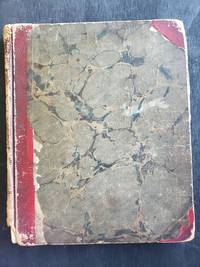
1842réf. 170431842. Key C. F. schoolgirl memory album 1842 to 1877 documents women's education friendship inscription domestic expectation and sentimental literary culture across the mid-nineteenth century. Signed "C.F. Key / January 19th 1842" the album records how young women and their schoolmates used memory books to preserve verse moral reflection courtship humor wax seals printed images and hand-drawn embellishment as part of the social and literary world surrounding female education. Key C. F. Memory album. 1842 to 1877. Manuscript and ephemera album with 20 handwritten entries and 39 pieces of ephemera including 24 printed paper items and 15 color wax seals from friends and schoolmates most of them women. Green marbleized boards with red leather binding 64 pages 9 x 7.5 inches. Printed material includes engravings and newspaper images such as "Her majesty leaving Buckingham Palace June 28 1838" and "Marriage of Henry the 6th." The wax seals include music ledgers initials trees dogs and lions. The album also contains a large pencil drawing of a small thatched-roof building in a forest. Manuscript entries address subjects including happiness marriage domestic life and courtship with poems such as "A Lady's Choice of Husband" and "Making Love" the latter using comic dialogue between Jane and Charles to explore youthful uncertainty about love. The album provides evidence of the literary visual and social forms through which schoolgirls and young women recorded friendship gender expectations and domestic ideals before standardized yearbooks. Binding loose with loss to foot of spine; first two pages and last three pages detached good. A rich manuscript and ephemera record of women's education schoolgirl friendship and nineteenth-century courtship culture. unknown books
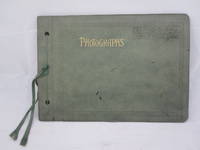
1920réf. 167711920. Photograph album containing 49 small portraits of at least 35 children predominantly young girls circa 1920 documenting school-age friendships organized athletics theatrical play and changing fashions in early twentieth-century American youth culture. Particularly notable are the numerous girls posing with tennis rackets basketballs and volleyballs activities associated with the expansion of physical education and competitive recreation for girls during this period. Their short bobbed hairstyles fashionable in the early 1920s accompany an assortment of athletic equipment costumes and domestic props. Handwritten captions identifying most sitters by first and last name preserve individual identities and provide evidence of the children's social circle although the school and geographic location remain unidentified. Original photograph album containing 49 small silver gelatin prints each approximately 1 1/4 x 1 inch mounted on seven pages. Original green paper boards measuring 7 x 10 inches with ribbon-tie binding and "Photographs" stamped in gilt on the front cover. The original owner's name is written in pencil at the upper right corner of the front cover. Handwritten captions identify the first and last names of most sitters with at least 35 different children represented. Many girls pose individually with tennis rackets basketballs and volleyballs while others hold parasols stuffed animals or baby dolls. Several children imitate telephone conversations using a candlestick telephone. One girl wears a top hat and poses with what appears to be an empty liquor bottle a possible reference to the introduction of national Prohibition in January 1920. Male classmates appear dressed as cowboys with neckerchiefs and wide-brimmed hats while others pose with a golf club and sporting cap or a top hat and cane. A hand-drawn pencil portrait on the final page depicts a woman wearing a winged Dutch cap. The album's emphasis on girls' athletic equipment corresponds with the growing place of organized physical education and recreational sports in American girls' schooling during the early twentieth century. Its theatrical costumes imitation telephone conversations and playful portraits also record activities and popular fashions among school-age children during the period. The handwritten identification of individual sitters distinguishes the album from anonymous school portrait collections and preserves names that may permit further identification of the children and their educational setting. The location and school remain unidentified. Condition not specified. A personally annotated photographic record of girls' athletics childhood recreation and social life in early 1920s America. unknown books
1815réf. 164271815. Ruffle Mary. Cross stitch sampler dated October 25 1815 documents the integration of literacy and needlework in early nineteenth-century girls' education in the United States. Created by a nine-year-old student the sampler records the instructional practice through which young girls demonstrated proficiency in both reading and fine needlework within domestic and academy settings. Alphabet samplers functioned as exercises in memorization and discipline reinforcing gendered expectations of education that emphasized refinement order and domestic skill alongside basic literacy. The object supports research into women's education childhood instruction and the material culture of early American schooling. Ruffle Mary. Needlework sampler. United States October 25 1815. Textile work measuring approximately 11.5" x 15" executed in cross stitch. The composition includes uppercase and lowercase alphabets the ampersand and numbers one through eight framed by a decorative border. The lower register is inscribed: "Mary Ruffle October 25 1815 Aged 9." Decorative motifs include trees vines flowers and a crown rendered in colored threads including navy orange pink dark green brown and white. The arrangement reflects common pedagogical formats used in female academies and home instruction during the period. Produced at a time when formal educational opportunities for girls were expanding but remained closely tied to domestic training samplers such as this served both as instructional tools and as records of accomplishment. Families often displayed these works as evidence of a daughter's education and refinement linking needlework to social identity and household status. Surviving examples provide insight into curriculum aesthetic conventions and the lived experience of young girls in early nineteenth-century America and have since become important artifacts in museum and archival collections documenting women's history. Moderate toning; minor thread fraying; overall in very good condition. unknown books
1827réf. 167051827. Manuscript friendship album compiled for a young woman identified as Eliza containing poetry essays and inscriptions dated principally 1827 in New York documenting the literary culture and social practices associated with women's education in the Early Republic period. The album provides evidence of the handwritten exchange culture that flourished among young women attending academies and seminaries during the early nineteenth century when manuscript albums functioned as both literary exercises and social keepsakes marking transitions from formal schooling into adulthood. The contents emphasize moral instruction refinement religion sentiment and intellectual self-cultivation through contributions focused on friendship nature happiness morality and the perceived civilizing influence of women. Particularly notable is the opening manuscript essay "On Woman" which argues for women's moral authority within society: "By her genial influence the heart of man naturally prone to yield to the dictates of error is almost imperceptibly led into the paths of refinement." The manuscript offers primary-source evidence for the study of female education sentimental authorship and gender ideology in antebellum America. Album containing approximately 90 handwritten pages with twelve poems essays and inscriptions contributed by multiple hands several specifically dated New York 1827. Entries include "On Happiness and Contentment" "On the Beauties of Nature" "On the Mind" and "On Man" alongside verses celebrating friendship and social intimacy among young women. One humorous contribution addressed directly to Eliza reads in part: "Eliza thou hast vex'd me quite; for oh! that pen and ink! How couldst thou ask me for to write" before concluding "For one sweet Kiss I'll write without one blot." The combination of moral essays sentimental poetry playful verse and reflective compositions illustrates the literary training encouraged within female academies where copying composition and exchange albums formed part of broader educational and social practices. The manuscript preserves numerous distinct hands and compositional styles underscoring its collaborative nature as a communal record of friendship and intellectual accomplishment. 90 pages. Original boards. Measures 8 x 5 inches. Light toning and foxing throughout. Front hinge loose but holding. Very good condition overall. Substantial surviving example of early nineteenth-century American women's manuscript culture preserving firsthand evidence of literary education gendered social exchange and friendship networks among young women in 1820s New York. unknown books
1835réf. 170401835. Marshall Caroline memory album 1835 to 1897 documents women's education friendship inscription and literary memory culture in nineteenth-century Massachusetts. Kept by Caroline Marshall and filled with signatures sentiments verse and decorative additions from friends and classmates the album records how young women used autograph books to preserve school relationships moral sentiment poetry and parting messages before modern yearbooks became standard. Marshall Caroline. Memory album. Massachusetts and other locations 1835 to 1897. Manuscript autograph album with 45 written pages additional handwritten verse and a laid-in article cutout concerning an event involving Henry Ward Beecher. Original green leather boards gilt edges gilt spine and cover decoration front cover personally stamped "Caroline Marshall" in gilt with harp illustration 8 x 6.25 inches. Includes frontispiece engraving of girls gathering flowers one page with three miniature watercolors surrounding an entry and one page with hand-colored floral illustration. Entries are chiefly from Deerfield Exeter Brentwood and Lowell with contributions including a Harvard University student and a student at Phillips Exeter Academy. The opening gift inscription addresses "Miss Marshall" and describes the album as "a beautiful emblem of your own character." Another entry composed for her begins "Go forth thou little book! Go forth-and gather thy store" imagining the album as a lasting repository of friendship. The album provides evidence of the sentimental and literary forms through which young women marked educational transitions departures and enduring friendship across much of the nineteenth century. Original gilt-decorated leather boards bright manuscript entries legible inserted decorative material present very good. A substantial and visually appealing record of women's education student sociability and friendship networks in nineteenth-century Massachusetts. unknown books
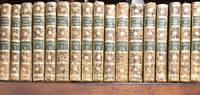
1785réf. 154841785. Bibliothèque Universelle des Dames Histoire 1785-1788 multivolume educational work produced in late Enlightenment France as part of a publishing program intended to provide women readers with structured access to historical and general knowledge. The series formed part of a broader eighteenth century movement encouraging the intellectual education of women among elite and literate circles presenting scholarly subjects in formats designed for domestic study. Issued in the years immediately preceding the French Revolution the work reflects the expanding Enlightenment belief that education should extend beyond traditional male scholarly institutions and that women should participate in intellectual life through reading and study. Bibliothèque Universelle des Dames Histoire. Paris: rue d'Anjou published with royal approval 1785-1788. First edition. Thirty volumes. The series was issued to subscribers over a three year period and intended to provide accessible instruction in historical subjects for an audience of educated women. The set forms part of the larger Bibliothèque Universelle des Dames publishing project which presented a range of scholarly subjects adapted for female readership during the late eighteenth century. Text printed in French and organized across the thirty volumes as a comprehensive historical survey. The Bibliothèque Universelle des Dames series emerged during a period when Enlightenment intellectual culture increasingly debated the scope of women's education and participation in literary life. Publishers and educators produced works designed to make subjects such as history literature and science accessible to female readers who were often excluded from formal academic institutions. Appearing only a few years before the French Revolution the series reflects the educational aspirations and social structures of late eighteenth century France where elite women frequently participated in salon culture and intellectual exchange through reading and discussion. Thirty volume set bound in full tawny brown leather with gilt decorated spines black morocco spine labels with gilt titles gilt ruled boards marbled endpapers and gilt edges. Minor wear and occasional small flaws to some bindings boards secure and interiors generally clean and unmarked. Overall very good condition. A complete eighteenth century educational series illustrating the development of women's intellectual readership in Enlightenment France. unknown books
1848réf. 164591848. Howard Virtue. Report on Female Teaching 1848 an early address concerning women's qualifications employment opportunities and professional standing as teachers in nineteenth-century America. Delivered before the Oxford Teachers' Association in Maine on May 17 1848 the report examines the qualifications and usefulness of female teachers the privileges associated with their employment and the intellectual and financial benefits of teaching for women. Published during the expansion of female employment in American public education Howard's address records contemporary arguments supporting women's participation in a profession increasingly open to them. Howard Virtue. Report on Female Teaching. Paris Maine: G. Washington Millett 1848. 15 pages. Delivered before the Oxford Teachers' Association May 17 1848. The report discusses the qualifications and usefulness of women as educators alongside the professional opportunities and personal benefits associated with teaching. Howard addresses teaching as an occupation offering women opportunities for intellectual development and financial independence while considering the advantages of employing female instructors. The address was presented before a regional teachers' association placing these questions within organized discussions of educational practice and professional qualifications in antebellum Maine. During the first half of the nineteenth century the expansion of common schools and the development of teacher-training institutions increased women's participation in American education. Although women had long worked as instructors teaching became an increasingly accessible form of paid employment particularly in New England where educational reformers promoted female teachers while school districts frequently paid them less than their male counterparts. Howard's 1848 address belongs to this period of professional change when women's suitability for classroom instruction and their opportunities for independent employment were subjects of public discussion. Published the same year as the Seneca Falls Convention the report provides a contemporary account of arguments concerning women's intellectual abilities professional qualifications and economic opportunities in education. In very good condition. unknown books
1912réf. 167751912. Unidentified compiler. Photograph album of women's education and collegiate life 1912-1920 documents student experience leisure activities and social networks across Maine including institutions such as Colby College and the University of Maine. The album captures young women's participation in academic environments alongside outdoor recreation travel and community life situating female education within broader patterns of early twentieth-century mobility and social interaction. The material provides visual evidence of women's presence in expanding educational institutions and their integration into both structured and informal aspects of student life. Photograph album. Maine and various U.S. locations 1912-1920. Quarto format album with 187 silver gelatin photographs mounted across 42 pages with image sizes ranging from approximately 1.5 x 3.5 inches to 3.5 x 5.5 inches. The photographs depict locations throughout southern Maine including Portland Waterville Lamoine Boothbay North Pond and Ogunquit along with additional images from Texas Florida and New Hampshire. Academic settings are represented through images identified as Colby College including a figure labeled "Prof. Johnson Colby '18" and references to the Alpha Tau Omega fraternity "Hurrah for A.T.O.". Additional institutional references include "Nasson Institute 1912" a women's school in Springvale and the Phi Eta Kappa fraternity house at the University of Maine. Human subjects include students and faculty such as "Dean Hunt" as well as classmates in graduation attire. Recreational and social scenes include young women snowshoeing playing tennis and participating in outings labeled "Picnic to the quarry" "Clam Bake" and "Hot Dog Roast." Automotive travel appears in images of early motorcars while other photographs depict children in Sunday school groups bicycle riding and staged performances of "Pied Piper" and "Red Riding Hood." Additional images include a man in World War I-era military uniform "Adrian Old Top" and an individual identified as "Texas Bill" posing with a biplane. Informal scenes include three girls reading on a rooftop space labeled "The Sun Porch" with a related image documenting their ascent assisted by a male companion. The album spans a period of expanding access to higher education for women in the United States particularly in regional institutions across New England. The inclusion of both coeducational and women-focused institutions reflects the varied educational pathways available during this period. Recreational imagery including athletics and social outings demonstrates the integration of leisure into student identity while references to World War I-era figures situate the album within a broader national context. Original cloth boards with minor wear and three small holes to lower right quadrant of front cover; photographs well-preserved with strong clarity; overall very good condition. A substantial visual record of women's collegiate and social life in early twentieth-century Maine. unknown books
1913réf. 169621913. Willamette University Oregon student photo album 1913-1915 documenting coeducational student life and women's education in early twentieth century Oregon through a sustained visual record of academic social and recreational activity. Many of the photos include brief captions identifying the location or event. Compiled by a woman student the album captures daily life within one of the earliest coeducational institutions in the United States where women and men studied in shared academic environments while navigating institutional rules governing gender interaction. The photographs provide direct evidence of women's participation in higher education campus organizations and social life during a period when access to collegiate training for women was expanding but still structured by formal and informal constraints. Photo album containing 53 original silver gelatin photographs of various sizes most with handwritten captions identifying locations events and individuals. The images include campus scenes student performances and outdoor excursions around the university and nearby areas such as Silver Creek. Several photographs document academic life including mixed groups of students studying outdoors one captioned "They said they were studying Zoology" and another showing students writing together with "Corvallis" visible in the background. Women students appear prominently in both academic and social contexts including images labeled "Ornithologists" depicting women with books observing birds and portraits such as "Gertrude Alice / Inseparable friends." Social events are extensively documented including the "Soph Frosh Formal Reception 1913" with large groups of men and women in formal dress and gatherings such as the "Junior Feed in Gym" and its aftermath. Additional images depict theatrical performances with labeled scenes including "Queen Mary Enthroned" and "In Battle Array" as well as student organizations and leisure activities. Outdoor life is represented through camping and picnic scenes including "A full table under the Lausanne Maples" and activities at Silver Creek where students are shown cooking washing dishes and reading. Created during a period when coeducation was established but still regulated the album documents how students formed academic and social relationships within institutional boundaries that restricted interaction outside formal settings. Willamette University founded in 1842 with women among its earliest graduates provides a significant context for studying the normalization of coeducation in the American West. The presence of women in academic study performance athletics and social gatherings demonstrates the breadth of their participation in campus life. The captions often informal or humorous offer insight into student culture and interpersonal dynamics while the photographs collectively document the integration of education leisure and community in collegiate environments. Light wear to album with well preserved photographs and legible captions; overall very good. A detailed visual record of women's collegiate experience and coeducational life in early twentieth century America. unknown books
1823réf. 160841823. Preston John Howard. Autograph letter to his daughter Sarah November 29 1823 records a father's detailed expectations for his daughter's education including independent composition disciplined study reading comprehension and instruction under a female tutor. Addressing Sarah as "My dear child" Preston praises a letter she had sent to her brother after learning that "you had not only written it but composed it." His distinction between copying or assisted writing and original composition shows his attention to Sarah's intellectual development while his references to her "Cousin and Tutoress" identify a woman responsible for her instruction. Preston John Howard. November 29 1823. Autograph letter signed three pages folded from a large sheet with the fourth page retaining the original stampless address panel. Preston urges Sarah to "profit every Day by the kind and good instruction of your Cousin and Tutoress" adding "you must never esteem anything too difficult which you are set to do." He places disciplined education above social rank: "If you were the King's Daughter you would have to learn in patient submission; and how much more ready should you be to do so in your situation in Life!" Preston then addresses reading noting that he and Sarah's mother had "always been glad to see your fondness for reading" but instructing her to "understand and remember what you read-as it is not the quantity of reading but duly improving it which is the thing to be desired-and that makes it of real worth." He closes by assuring his absent daughter "we do not forget you but love you much tho' you are at a distance from us." Written while Sarah was living away from her parents and receiving instruction from a female relative identified specifically as her tutor the letter supplies direct evidence of one family's expectations for a girl's education in 1823. Preston's comments identify composition perseverance comprehension memory and purposeful reading as measures of Sarah's progress and show both parents taking an active interest in her studies. The surviving address panel preserves the letter's original postal format. Usual losses where the original wax seal was opened; otherwise well preserved. An unusually detailed family letter documenting the substance of a young woman's education through a father's contemporary instructions to his daughter. unknown
1843réf. JC12826Buffalo New York 1843. Ephemera. Near Fine. Three items. 1 Single printed leaf regarding mostly the institute's finance or lack thereof. Flattened creases from folding; a few small notations on the verso in a contemporary hand. It includes the timely remark: "There have been complaints that the rates of tuition are too dear for the times." Date 1 March 1843. 2 Single printed leaf 250x200mm in 2 different types with flattened creases from folding addressed by hand to Dr. Burwell of Pearl Street. Invitation to a meeting of the friends of education to be held at the Mansion House for the purpose of adopting a plan for the permanent establishment of the Buffalo Female Institute. 3 Partially printed form with manuscript entries single leaf 208x135mm. Report Card for Miss Delia S. Austin signed by her teacher Julia B. Ackley and her parent; recording Ms. Austin's attendance and grading her Composition and Penmanship. unknown
réf. 023119Saudi Arabnia nd: Dar Al-Hilal Offset Printing Press. Quarto. 1032pp. text in Arabic illustrated with color photographic images of King Saud late King Yaz bib Abdul King Faisal bin Abdulaziz and several other royals. The General Presidency for Girls Education also known as the Directorate General for Girls Education was an independent government entity in Saudi Arabia that regulated nearly all forms of women's education in the country from 1959 to 2002 independent from supervision of the Ministry of Knowledge. Established in 1959 through a royal decree issued by King Saud. It supervised both state-run and private schools for girls except foreign ones and exercised powers parallel to the Ministry of Knowledge which then only had authority over schools with male students. It was dissolved and subsequently merged with the Ministry of Knowledge in the aftermath of the Mecca girls' school fire incident in 2002. A lovely copy bound in green velvet lettered and decorated in gilt Housed within a green velvet clamshell. 16 pages with wrinkling along bottom edge with one page having a small closed edge tear. Gutter of last page appears to have been reglued at some point. In all a very nice copy. Dar Al-Hilal Offset Printing Press unknown
1916réf. 166221916. Carpenter Rachel A. M. Photograph album of St. Mary's School Wantage 1916 to 1918 documents the daily life of girls at an English school during the final years of the First World War. Twenty-three photographs record organized sports theatrical performance swimming leisure school uniforms faculty friends and the grounds of St. Mary's with handwritten captions and dates identifying every image. The album preserves a student's record of girls' education beyond the classroom including field hockey cricket tennis swimming and dramatic performance activities that formed an increasingly visible part of female secondary education in early twentieth-century Britain. Twenty-three gelatin silver photographs dated 1916 to 1918 mounted on 14 card-stock pages in original green cloth boards titled "Photo Sketches." Album measures 6.25 × 7.5 inches; photographs range from 2 × 2.75 inches to 3.5 × 5.5 inches. Carpenter identifies friends by full names initials and nicknames including "Tufty." Several views show students in uniform at leisure while others depict the field hockey cricket and tennis teams swimming in "the Baths" faculty members and campus grounds. Three photographs record the cast of a school production of Blue Beard performed during the summer term of 1918; the album retains a program for the production. Founded in 1873 as a girls' school St. Mary's belonged to the expansion of formal secondary education for girls in late nineteenth- and early twentieth-century England. Carpenter's photographs show how that education included organized athletics theatrical performance recreation and student social life during the wartime years of 1916 to 1918. The named and captioned photographs provide unusually specific evidence of individual pupils school activities and the rhythms of campus life. Condition not stated in the supplied description. unknown
1893réf. 155941893. Brackett Anna C. Woman and the Higher Education 1893 brings together nineteenth-century arguments for expanding women's education at a time when women's access to colleges and professional life remained a subject of sustained public debate. Edited by educator and philosopher Anna Callender Brackett 1836-1911 the volume traces changes in American arguments for women's intellectual training from Emma Willard's 1819 appeal for female education through essays by women teaching and administering colleges by the 1880s and 1890s. Brackett presents this progression explicitly in her preface contrasting Willard's appeal to male legislators in 1819 with Maria Mitchell's later demand for the "enlightenment of our present rulers." The collection documents the development of arguments for women's intellectual independence collegiate education and participation beyond the domestic sphere. Brackett Anna C. ed. Woman and the Higher Education. New York: Harper & Brothers 1893. First edition. The volume collects seven essays spanning 1819 to 1892: Emma Willard's "A Plan for Improving Female Education"; Emma C. Embury's "Female Education"; Maria Mitchell's "The Collegiate Education of Girls"; Lucia Gilbert Runkle's "A New Knock at an Old Door"; Alice Freeman Palmer's "A Review of the Higher Education of Women"; Lucy Maynard Salmon's "The Teaching of History in Academies and Colleges"; and Brackett's "The Private School for Girls." Willard argues for women as an "essential part of the body politic" while the later contributions document a changed educational landscape in which women served as college professors and presidents. Brackett herself had previously addressed the intellectual consequences of restricting women to domestic life and defended education as necessary to women's moral and intellectual development independence and participation in public life. Published near the end of a century in which American women moved from campaigns for female seminaries toward established collegiate education Woman and the Higher Education preserves arguments made across more than seventy years by women directly involved in that transformation. Brackett was also a translator of Karl Rosenkranz's educational philosophy and a contributor to The Education of American Girls and her editorial work here places her own writing beside that of Mitchell Palmer Salmon Willard Embury and Runkle. The sequence permits direct comparison between early appeals for women's schooling and later discussions of collegiate instruction academic disciplines and the education of girls. Good condition. unknown
1927réf. 166041927. Leslie Reva C. My Memories of School Days album and photograph scrapbook 1923-1927 documents female student life social networks and extracurricular culture at Lincoln High School in Los Angeles during the 1920s. The material captures daily experiences of a young woman engaged in school activities including dances athletics and clubs while also preserving peer relationships through inscriptions photographs and ephemera. The album provides direct evidence of how young women recorded and interpreted their social and educational environments in an urban West Coast setting during the interwar period. Leslie Reva C. My Memories of School Days Album. New York: C. R. Gibson & Company 1924. Photograph and scrapbook album containing 73 gelatin silver print photographs in sizes ranging from approximately 1 x 1 inch to 5 x 7 inches accompanied by 14 handwritten inscriptions from friends 3 extended manuscript entries by Leslie 2 newspaper clippings referencing her as a student 11 ticket stubs from Los Angeles-area school events and performances dated 1923-1924 and decorative elements including hand-colored Kewpie cutouts. The photographs depict Leslie and classmates in a variety of settings including large class portraits with individuals identified Leslie marked as "me" beach outings theatrical productions athletic activities such as girls playing hockey in uniform and informal groupings labeled with captions such as "Three of a kind" and "one of the three musketeers." Manuscript entries describe participation in dances parties and school organizations including reference to her role as Secretary and designation as "Captain" of the Girls Reserves. Inscriptions from peers emphasize close friendships and shared social life with messages recalling "parties dances and everywhere we went" while one later inscription reflects a post-graduation relationship revised to read "To the Dearest Wife." The album documents a period in which American high schools expanded social and extracurricular programming particularly for young women integrating athletics clubs and organized events into student life. The inclusion of ticket stubs photographs and written reflections illustrates how these activities structured social identity and peer relationships. The setting in Los Angeles further situates the material within a rapidly growing urban environment in the 1920s where public schooling played a central role in shaping youth culture. Green cloth boards with moderate handling wear; contents complete with minor edge wear to pages and photographs; overall very good condition. A detailed and cohesive record of female high school experience and social life in early twentieth-century California. unknown
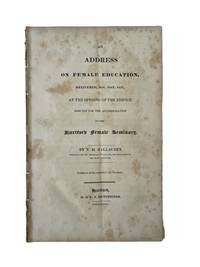
1827réf. 182321827. Gallaudet Thomas Hopkins. An Address on Female Education at the Opening of the Edifice Erected for the Accommodation of the Hartford Female Seminary 1827 presents an early nineteenth-century argument for expanding women's education delivered in connection with the institution founded by educator Catharine E. Beecher in 1823. Gallaudet best known as a founder and principal of the American Asylum for the Education and Instruction of the Deaf and Dumb in Hartford addressed women's intellectual development while acknowledging the political and professional restrictions imposed upon them. He writes: "Woman cannot plead at the bar or preach in the pulpit or thunder in the senate house. yet hers is no trifling eloquence. Its power though unostentatious in display is mighty in result." Gallaudet Thomas Hopkins. An Address on Female Education at the Opening of the Edifice Erected for the Accommodation of the Hartford Female Seminary. Hartford: H. and F. J. Huntington 1827. 34 pages. 5 x 8.25 inches. The address was prepared for the opening of a new building for the Hartford Female Seminary connecting Gallaudet's discussion of women's education to a specific institutional expansion. Beecher had founded the seminary four years earlier to provide young women with advanced educational opportunities at a time when access to comparable schooling remained sharply restricted by sex. The address belongs to the antebellum expansion of female seminaries and academies that enlarged women's access to formal education before women were broadly admitted to American colleges and universities. Its language also records the limitations within which advocates framed female education: Gallaudet argues for women's intellectual and rhetorical influence while explicitly identifying the law ministry and legislature as male domains. Foxing throughout; wrappers missing; text block clean and intact. Overall good condition. The address documents both the expansion of educational opportunities for American women and the gendered boundaries that continued to define arguments for female education in the 1820s. unknown
1866réf. 167271866. Cleveland Female Seminary Catalog: 1866-1867. Cleveland OH founded by Rev. Eli N. Sawtell the seminary opened on 3 May 1854 an earlier enterprise by the same name had been established in Apr.1837. Located in a new $50000 building the school commanded a hefty $300 annual tuition. The seminary had 2 major departments Preparatory which admitted girls under 12 years of age and Academic for those over 12 . Emphasis was placed on teaching both languages and science so that students could acquire a wholesome mental discipline. In a Telegraph Dept was established to provide instruction in the principles of telegraphy for students in natural philosophy and chemistry. It was reincorporated in 1871 as the Cleveland Seminary for Girls at which time it acquired the rights and privileges of a college. including the authority to grant degrees but closed in 1883. At the time that this description is being written no copies are recorded in American institutions. OCLC search results are at best an estimate and can vary over time. Women's Academy and Seminary Archive recording the first important movement of women into higher education in the United States seminary was synonymous with "academy" and did not have the religious connotation of today. In the 1800's the Female Academy and Seminary Movement transformed American educational norms allowing women the opportunity to receive secular non-religious college-level education. Women's colleges proliferated in the mid- to late- 19th century to fill the void created by their exclusion from most institutions of higher education. The prevailing notion that women were too delicate for a rigorous academic education was openly challenged when Elizabeth Cady Stanton spoke at the Seneca Falls Convention of 1848 "Man's intellectual superiority cannot be a question until woman has had a fair trial.When we shall have had our colleges our professions our trades for a century a comparison then may be justly instituted." Young women were quick to step up to the challenge; as quickly as female colleges opened they filled up. unknown
1930réf. 168501930. Germaine Smith high school scrapbook 1929-1930 documenting female student life Catholic education and youth social networks in interwar Detroit. Created by a graduating student of St. Anthony High School the album preserves written exchanges photographs and ephemera that record peer relationships institutional culture and expectations for young women at the end of secondary education. The volume supports research on women's education adolescent identity formation and the role of religious schooling in shaping social and moral frameworks during the late 1920s. Scrapbook album titled "The Girl Graduate: Her Own Book" compiled by Germaine Smith of St. Anthony High School in Detroit containing 107 pieces of ephemera including tickets invitations table cards programs letters newspaper clippings and pressed flowers along with 13 photographs depicting female students posing at school and walking with nuns. The album includes 36 handwritten inscriptions from classmates and teachers featuring poems and personal messages such as "In your chain of friendship Consider me a link" and "When you are old and sipping tea Remember your classmate of 1930" alongside reflections on future marriage and adulthood. Additional contents include references to girls' athletics such as speed skating and gymnastics programs honor roll listings theater tickets from Detroit venues and a Japanese language newspaper clipping. A pair of "Shadowgraph Glasses" with colored lenses is also present illustrating contemporary novelty entertainment. Produced at the close of the 1920s this scrapbook captures the intersection of education religion and social life for young women during a period of shifting expectations around gender roles and modern leisure. The presence of Catholic instructional figures athletic participation and popular entertainment materials situates the compiler within both institutional and urban cultural environments. The handwritten entries emphasize friendship morality and anticipated life transitions providing insight into how young women articulated identity and community at graduation. Light toning at page edges with general handling wear; overall very good. A cohesive and content rich example of female student life and social documentation in early twentieth century America. unknown
1891réf. 160801891. Spanish royal teaching license Madrid 1891 authorizes a twenty-one-year-old woman to teach at the primary-school level during the regency of Queen María Cristina of Austria for her minor son King Alfonso XIII. Issued within the educational framework established by Spain's nineteenth-century public-instruction laws the document records the formal credentialing of a woman for professional employment as a teacher. The Ley Moyano of 1857 established a national framework for public instruction and made elementary schooling compulsory for children from six to nine years of age; the professionalization of women teachers developed within this expanding system. Madrid 1891. Royal license authorizing a twenty-one-year-old woman to teach primary school. Vellum document with ornate printed border royal heraldic device and 10-peseta revenue-stamp imprint. The license is issued by order of His Majesty the King and the "Governing Queen of the Kingdom" language corresponding to the regency of María Cristina of Austria who governed during Alfonso XIII's minority from 1885 to 1902. The document records the administrative process by which a woman's qualifications were formally recognized for primary-school teaching and preserves the fiscal and governmental apparatus surrounding that authorization through its revenue stamp official language and royal insignia. The license dates from the Restoration monarchy when the educational structure created under the 1857 Ley Moyano continued to govern Spanish schooling. That law remained a central framework for Spanish education for decades while the female teaching profession had begun to acquire formal training and professional definition during the middle decades of the nineteenth century. The recipient's age sex professional qualification and authorization to teach make the document direct evidence of women's entry into credentialed educational employment in late nineteenth-century Spain. Condition not stated. A government-issued record of a twenty-one-year-old woman's qualification for the teaching profession under the Spanish monarchy in 1891. unknown