29.593 risultati
1740Acquaforte, 1740 circa, monogrammato in lastra in basso al centro A.C. Esemplare nel secondo stato finale, dopo le aggiunte e con la sigla in basso al centro. Della serie Vedute altre prese da i Luoghi altri ideate. In basso a sinistra in primo piano, la continuazione della barca e del ponte parzialmente visti nell'acquaforte Il carro che passa sopra un ponte. Sulla riva lontana del fiume il monumento, incorniciato da un albero e dal fogliame. In lontananza, oltre una zona collinare, vista di una città con torri, campanile, cupole e una piramide. Originariamente questa stampa e Il carro che passa sopra un ponte formavano una lastra unica che venne tagliata forse per un difetto di morsura verificatosi nella zona dell’albero sovrastante il piccolo monumento. Per tale ragione la parte destra della lastra subì una riduzione di circa 25 mm in altezza. Non si conoscono impressioni prima del taglio del rame che venne operato dallo stesso artista, come dimostra l’apposizione – nel secondo stato – della sigla A.C. sul margine inferiore della lastrina con Il Piccolo Monumento. L’elemento decorativo posto alla sommità dell’edificio, forse un leone, è assai prossimo alla scultura, pure enigmatica, che compare sulla colonna ionica del dipinto Capriccio con tempio e colonna. L’opera appartiene alle Vedute altre prese da i luoghi altre ideate… serie delle acqueforti dedicate al console ed amico Joseph Smith, la cui esecuzione va dal 1740 al 1744 circa. Si inserisce nello sviluppo artistico del Canaletto non come parentesi marginale, ma come un momento essenziale di alcuni problemi stilistici, che troveranno la loro piena realizzazione nei primi capolavori eseguiti nel soggiorno inglese. La serie raggruppa fogli che evocano un itinerario che partendo dalla laguna, cioè da Marghera, passando per Mestre, risale il corso del Brenta fino a Padova, non solo inscenata nel cosmorama del Prà della Valle ma in una veduta che segna il passaggio tra la realtà dei luoghi e la fantasia del capriccio. Se il Portico con la lanterna, indubbiamente una delle prove più alte dell’arte incisoria del Canaletto, è una veduta di piena fantasia, l’acquaforte con la cosiddetta Casa del 1741, ricongiunta con la Casa del colonnato, è l’evocazione di una città, che se pur manca di precisi riferimenti topografici, è intrisa di atmosfera veneziana. Giovanni Antonio Canal detto Canaletto (Venezia 17 ottobre 1697 – Venezia 19 aprile 1768)) fu il più illustre protagonista del vedutismo veneziano del Settecento. Grazie a contatti con amatori e collezionisti inglesi in viaggio a Venezia o residenti nella città lagunare, Canaletto beneficia di grande notorietà in Inghilterra presso la più alta aristocrazia e perfino la famiglia reale. Attorno al 1730 suo agente esclusivo è un inglese, il console Joseph Smith: divenuto mercante di quadri, questi si adopera con abilità e tenacia per introdurre il suo protetto nel mercato britannico delle opere d’arte, il più florido al tempo. Titolare di una grande bottega e affiancato da innumerevoli assistenti, Canaletto è artista e abile imprenditore. Nelle opere del Canaletto la città lagunare era raffigurata con grande oggettività: le sue composizioni erano sempre rigorosamente studiate attraverso numerosi disegni preparatori, tratti direttamente dal vero. La “veduta” fu uno dei generi più caratteristici della pittura del Settecento. Si differenzia dal paesaggio (altro genere molto diffuso nel XVIII secolo) per la rappresentazione oggettiva di luoghi e architetture, realizzata attraverso una prospettiva ben studiata. Venezia fu il centro di maggior produzione di “vedute”, con alcune personalità di grande spicco. Al verso, timbro di collezione di James Henry Lockhart (Pittsburgh 1912-Rotonda West 2002) - Lugt 4387. Magnifica prova, impressa su carta vergata coeva, con margini, in ottimo stato di conservazione. Bibliografia Bromberg, n. 33 p. 169; Succi, I, p... Etching, 1740 circa, signed with monogram bottom centre: A. C. Second final state, with the signature added and other additions. From the series: Vedute alter prese da i Luoghi altri ideate - In the lower left foreground, the continuation of the boat and bridge partially seen on the etching The Waggon Passing over a Bridge. On the far bank of the river the monument, framed by a tree and foliage. In the distance beyond a hilly area, view of a town with towers, campanile, domes and a pyramid. Originally this print and The Waggon Passing over a Bridge formed a single plate that was cut perhaps because of a morsure defect occurred in the area of the tree above the small monument. For this reason, the right side of the plate was reduced in height by about 25 mm. There are no known impressions before the cutting of the copper, which was done by the artist himself, as shown by the affixing - in the second state - of the initials A.C. on the lower margin of the plate with The Little Monument. The work belongs to the Vedute altre prese da i luoghi altre ideate... series of etchings dedicated to the consul and friend Joseph Smith, whose execution goes from about 1740 to 1744. It is part of the artistic development of Canaletto not as a marginal parenthesis, but as an essential moment of some stylistic problems, which will find their full realization in the first masterpieces executed in his English stay. The series groups together sheets that evoke an itinerary that starting from the lagoon, that is from Marghera, passing through Mestre, goes up the course of the Brenta to Padua, not only staged in the cosmorama of Prà della Valle but in a view that marks the passage between the reality of places and the fantasy of caprice. If the Portico with the lantern, undoubtedly one of the highest proofs of Canaletto's engraving art, is a view of full fantasy, the etching with the so-called House of 1741, rejoined with the House of the colonnade, is the evocation of a city, which even though it lacks precise topographical references, is imbued with Venetian atmosphere. Giovanni Antonio Canal called Canaletto (Venice 17 October 1697 - Venice 19 April 1768)) was the most illustrious protagonist of the Venetian vedutismo of the eighteenth century. Thanks to his contacts with English amateurs and collectors travelling to Venice or living in the lagoon city, Canaletto enjoyed great notoriety in England among the highest aristocracy and even the royal family. Around 1730 his exclusive agent was an Englishman, the consul Joseph Smith: having become a picture dealer, he worked with skill and tenacity to introduce his protégé into the British market of works of art, the most flourishing at the time. Owner of a large workshop and flanked by countless assistants, Canaletto is an artist and a skilled entrepreneur. In Canaletto's works the lagoon city was depicted with great objectivity: his compositions were always rigorously studied through numerous preparatory drawings, taken directly from life. The "veduta" was one of the most characteristic genres of eighteenth-century painting. It differs from landscape (another genre widespread in the eighteenth century) for the objective representation of places and architecture, achieved through a well-studied perspective. Venice was the center of greater production of "views", with some very important personalities. On verso, collection mark of James Henry Lockhart (Pittsburgh 1912-Rotonda West 2002)- Lugt 4387. A fine impression, printed on contemporary laid paper, good condition. Bibliografia Bromberg, n. 33 p. 169; Succi, I, p. 278, n. 7.
1625Acquaforte, 1625, firmata in basso al centro N. Deson Rem. In. Sculp. Et ex. Magnifica prova, nel secondo stato di tre con l’imprint dell’artista; esiste un terzo stato con l'excudit di Edmé Moreau, che apparentemente acquistò la lastra dopo la morte dell'artista. Impressa su carta vergata coeva e rifilata al rame, piega di stampa nella parte inferiore sinistra, minime abrasioni al verso, per il resto in ottimo stato di conservazione. Rara acquaforte della facciata della cattedrale di Reims dell'artista locale Nicolas de Son (attivo dal 1625 al 37), che fece parte di una breve stagione della stampa autoctona nella provincia di Champagne dagli anni 1620 agli anni 1640 insieme ad artisti come Edmé Moreau, Jean Colin e Nicolas Regnesson. La grande stampa rappresenta la facciata ovest della cattedrale in grande dettaglio, mostrando non solo le composizioni più ampie dei principali programmi scultorei chiaramente delineati, ma anche diversi passaggi architettonici e scultorei secondari, come i doccioni dell'edificio e i trafori delle sue rinomate finestre in vetro dipinto. La tavola sembra aver seguito il successo dell'acquaforte di Moreau del 1623 dello stesso soggetto, ma l'ha superato per qualità tecnica e sfumature storiche ("Quella eseguita da Nicolas de Son è migliore"; "In questa stampa, Nicolas de Son dimostra la sua sorprendente comprensione dell'arte gotica, rara all'epoca" [Age of the Musketeers, p. 124]). De Son, le cui prime opere mostrano l'influenza di Jacques Callot (c. 1592-1635), dimostra molta della maestria tecnica del famoso incisore lorenese: egli contrappone gli attori di pietra della storia sacra raffigurata nell'architettura con i variegati abitanti della città del XVII secolo, minuziosamente resi, che interagiscono con la cattedrale medievale, una gamma di personaggi dai mendicanti al portale principale, ai negozianti nelle loro bancarelle, ai cittadini di classe superiore con i loro cavalli e carrozze. De Son rende magistralmente il paesaggio urbano mentre si allontana, mostrando i recinti del palazzo arcivescovile (il Palais du Tau) sulla destra e i tetti di paglia (uno riparato dagli operai) delle abitazioni sulla sinistra. Le prime incisioni in pendant di De Son, Cristo e la donna di Samaria e La cena di Emmaus, mostrano ancora una notevole aderenza a Callot, ma le sue scene di genere un po' più tardive (per esempio La fiera del villaggio) e il suo capolavoro, Suite di dodici paesaggi, dimostrano scelte di disegno più originali. La presente acquaforte e un'opera simile che raffigura la chiesa abbaziale di Saint Nicaise, ora distrutta, sono le uniche due opere datate dell'artista, entrambe del 1625. Poco è noto della vita di Nicolas de Son, che lavorò come disegnatore e incisore a Reims, a parte alcune incisioni firmate e un riferimento alla sua morte nel 1637. De Son produsse un piccolo corpus di incisioni di Callot, Vignon e Jan Lys, così come due vedute della Cattedrale di Reims di sua invenzione, entrambe datate 1625. Bibliografia S. Reed, French Prints from the Age of the Musketeers, p. 124-5, no. 55; LeBlanc 15; M. Sutaine, Nicolas de Son Graveur, Travaux de l’Académie Impériale de Reims, vol. 35, no. 4 (1862), pp. 122-9. Etching, 1625, signed at the bottom center N. Deson Rem. In. Sculp. Et ex. Magnificent proof, rich in tones, of the second state of three with the artist's imprint, printed on contemporary laid paper, trimmed to the copperplate, printing crease in the lower left corner, minimal abrasions on the verso, otherwise in excellent condition. Rare etching of the façade of Reims Cathedral by the local artist Nicolas de Son (active 1625-37), who was part of a brief flourishing of native printmaking in the province of Champagne from the 1620s through the 1640s along with such artists as Edmé Moreau, Jean Colin, and Nicolas Regnesson. The large print represents the cathedral’s west front in great detail, with not only the broader compositions of the major sculptural programs clearly delineated, but also several ancillary architectural and sculptural passages, such as the building’s gargoyle waterspouts and the tracery of its renowned painted glass windows. Le somptueux frontispiece seems to have followed upon the success of Moreau’s 1623 etching of the same subject, but surpassed it in technical quality and historical nuance (“The one executed by Nicolas de Son is better”; “In this print, Nicolas de Son demonstrates his astonishing understanding of gothic art, rare at the time” [Age of the Musketeers, p. 124]). De Son, whose early works show the influence of Jacques Callot (c. 1592-1635), demonstrates much of the technical mastery of the famous Lorraine etcher: He contrasts the stony actors of sacred history depicted in the architecture with the varied, minutely rendered inhabitants of the seventeenth-century town interacting with the medieval cathedral, a range of characters from beggars at the main portal, to shopkeepers in their stalls, to upper-class citizens with their horses and carriages. De Son masterfully renders the townscape as it recedes in the distance, showing the precincts of the archbishop’s palace (the Palais du Tau) at the right and the thatched roofs (one being repaired by workmen) of dwellings at the left. De Son’s early pendant etchings, Christ and the Woman of Samaria and The Supper of Emmaus, still show considerable adherence to Callot, but his somewhat later genre scenes (e.g. The Village Fair) and his masterpiece, Suite of Twelve Landscapes, demonstrate more original design choices. The present etching and a similar piece depicting the now destroyed abbey church of Saint Nicaise are the artist’s only two dated works, both 1625. This impression of Le somptueux frontispiece carries De Son’s signature and his excudit, indicating that it is from the print’s second state; a third state exists with the excudit of Edmé Moreau, who apparently acquired the plate after the artist’s death. Virtually nothing is known about the life of Nicolas de Son, who worked as a draughtsman and etcher in Reims, apart from a few signed etchings and a source reference to his death in 1637. De Son produced a small corpus of etchings after Callot, Vignon and Jan Lys as well as two views of the Cathedral of Reims after his own invention, both of which are dated 1625. Bibliografia S. Reed, French Prints from the Age of the Musketeers, p. 124-5, no. 55; LeBlanc 15; M. Sutaine, Nicolas de Son Graveur, Travaux de l’Académie Impériale de Reims, vol. 35, no. 4 (1862), pp. 122-9.
1963x, 361 pages. Index. Footnotes. "An analysis of the causes of the great American depression which began in 1929." - dust jacket. Murray Rothbard [1926-1995] was a prominent American economist, libertarian and adherent of the Austrian School. Gift greetings upon front free endpaper, otherwise book clean and bright with light wear to publisher's red cloth. Binding tight. Average wear to dust jacket now preserved in archival-grade Brodart. A quality first edition copy of this profound and most timely treatise which contends that "crises and depressions are caused, not by the free market economy of capitalism, but by government intervention in that economy - by credit expansion, cheap interest rates, the propping up of wage rates." - dust jacket. Book
1978Warmly signed and inscribed atop half-title page by Margit von Mises, author of the Foreword, to her friend, Ruth Matthews. Ms. Matthews was the wife of Dr. J.B. Matthews, "foremost Communist fellow traveler of the early 1930s, who by the end of that decade was the chief investigator for the Dies Committee... Matthews had been converted from socialism partly by reading Mises's 'Socialism'" - Murray Rothbard. Publisher's promotional slip and Ms. von Mises' unsigned 'Compliments of' card laid in, plus a 1978 Wall St. Journal clipping bearing a review of this book. 181 pages. Index. Minimal light pencil markings to contents. Light overall wear. Dust jacket now preserved in archival-grade Brodart. A solid addition to the collection of any adherent of the Austrian School. Book
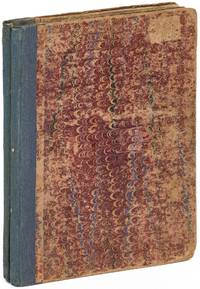
1890rif. 460264Fredonia New York 1890. Hardcover. Good. Two notebooks with printed title: Normal Rhetorical Exercise Correction Book. Fredonia N.Y.: F.C. Chatsey Publisher Copyright 1886. Small quartos. Bound in quarter cloth and marbled paper over boards. Covers are rubbed and worn one front cover has some staining good overall. Both notebooks contain several book reports and essays on special topics written by Walter Pettit when he was a teenage student at the Fredonia Normal School. Both notebooks date from the late 1890s. In addition to reports on The House of the Seven Gables Gulliver’s Travels The Merchant of Venice Oliver Twist and other books; the notebooks include both fictional essays such as “My Flying Machine” and “A Trip to the North Pole” and personal essays on special topics. Here for example is an excerpt from an essay titled: “Should Lynching be Suppressed”: “One of the greatest evils in existence is lynching. That it should be abolished is evident. Many innocent people have met their death by this means and it still is in existence in the Southern States. Perhaps some person … suspected of a crime is imprisoned. A crowd collects and is excited by somebody over the crime … the jailor gives up the suspected criminal to the mob who immediately carry the poor man to the nearest tree … This incident is kept from the newspapers and the suspected criminal dies unmourned unknown. With hanging by authorities … the criminal has a chance for his life; he may plead his case before unprejudiced men. His death is not embittered by the taunts of an unfeeling multitude of men women and children many of whom are as bad as the criminal. The wretches who are the leaders in such a mob are far worse than the victim …” Also included is a travelogue from Sitka Alaska to Dawson City then at the height of the gold rush written in the form of a letter: “Feb. 18 1898: Dawson City Canada / Dear Friend … We started from San Francisco … arrived at Sitka … the town consists of a number of Indian huts a few Russian and American residences … we accompanied an excursion party to the Yukon. This river is one of the largest in the world … upon its banks are a few Indian villages … and here and there ‘Totem poles’. These totem poles … are made of wood grotesquely carved with figures of men beasts and birds. Upon them are kept the records of the Indian’s ancestors. These Indians are a half civilized sneaking dirty race short in stature with small eyes. They act as guides around the settlements … While at Sitka we bought a large stock of groceries … We carried these with us when we went to Dawson. Our party consisted of ten Indians my partner and I. Our journey took three weeks … we reached this city in October and immediately rented the only vacant building in town … I wish you where here to wait on some of our customers. They bring in a bag of gold dust and we weigh out enough to pay for the groceries they buy. This city is in the midst of the gold fields. It is composed principally of saloons dancing halls theaters and gambling houses. The miners sleep in tents … we have rows nearly every night and thieves are as thick as mosquitos …” A graduate of the Class of 1901 Pettit had quickly shed such early external prejudices against indigenous peoples and gold miners. He taught high school in the Philippines 1901-09 attended Teacher’s College at Columbia and served as a U.S. Government Special Relief Assistant in Russia during World War I. As Director of the New York School of Social Work Pettit won international acclaim for his work on the “interdependence of peoples and the strengthening of international relations”. A compelling pair of notebooks that sheds light on Pettit’s early education in upstate New York. American Sociological Review December 1961 pp. 959-60. hardcover books
2002rif. ANAIS-0153364785Houghton Mifflin School 2002-04-01. Student. paperback. Good. 21.6x1.3x28.6. Buy with confidence. Excellent Customer Service & Return policy. Houghton Mifflin School paperback
1816rif. 271New York: J. Seymour American Board of Commissioners for Foreign Missions Agents Appointed to Establish a School for Heathen Youth 1816. first edition. modern 1/4 niger morocco. Good. Inspiration for the First Mission to Hawaii. Rare in commerce most copies have been acquired by American institutions. Few copies have come to documented auction in the past 100 years. Of those made available about half are decommissioned library copies including a copy that sold for over $15000 at a 2006 Sotheby's auction. Condition: Very Good IMPORTANCE & BACKGROUND A biographical account of the lives of five Hawaiian youths who would come to form a core of initial students enrolled at the new Foreign Mission School established at Cornwall Connecticut in 1816. The vivid accounts of Captain Cook's and others explorers' voyages to the Sandwich Islands Hawaii and other Pacific islands generated interest in the U.S. to properly educative Hawaiians in both academic and Christian teachings. The school formed under the direction of the American Board of Commissioners for Foreign Missions ABCFM would serve to educate foreign students in preparation for missionary work in their native lands and elsewhere. A Narrative of Five Youth from the Sandwich Islands was the first of many publications intended to raise funds and stir up popular support for the new school as well as for the first Christian mission sent to the Hawaiian Islands three years later. The publications were a great success leading to the significant funding and public support critical to early efforts to fold Hawaii within the cultural and commercial influence of the United States. BOOK INFO Published in 1816 in New York by J. Seymour under the direction of ".agents appointed to establish a school for heathen youth" e.g. American Board of Commissioners for Foreign Missions. First edition first printing. Bound in modern 1/4 green niger morocco with gilt spine lettering over finely woven green cloth backed boards. Refreshed endpapers. Thin Octavo 8 1/2" x 5 1/8". Collated and complete: 3 4-44 p. ABOUT THE WORK & HISTORICAL CONTEXT By the early 1800s Hawaii had become a key aspect of America's growing trade with China. It was a critical resupply port for American ships on the trade route to China and a lucrative source for sandalwood. American merchants saw commercial possibilities that could be expanded. Protestant missionaries saw heathens in need of salvation via Christian conversion. This is a biographical account of and strong bit of fundraising propaganda on how five Hawaiian youths were saved from their heathen ways and savage pasts through a civilized education and Christian conversion. While the backgrounds of the youth vary - one was the son of a chief and another the survivor of brutal inter-tribal warfare for example-- the stories of these five youths share a number of common elements. All had spent time as sailors on American trade ships. Three had served at sea in the War of 1812. Most had experienced periods of extreme hardship after reaching New England. All found sponsors teachers and spiritual guides who helped them on their path to converting to Protestantism. CONDITION INFO The book is Good to Very Good by early 19th century American imprint standards. Binding is tight. Leather is supple. Areas of dust and light soiling to cloth. Lightly toned pages overall with light foxing. Some abrasion to paper along gutter margins of first few pages. Browning to first and last page with some brittleness and chipping. The paper used by the printer was quite thin so the text block background is darkened a bit by opposing page text on the same leaf as in all copies. No writing ex libris marks or library markings. Slight loosening at the head of the first few leaves where binding cords are exposed. A few smudges marginal paper nicks and other signs of light handling. . J. Seymour, American Board of Commissioners for Foreign Missions (Agents Appointed to Establish a School for Heathen Youth)
1830rif. 6526London 1830. Aquatints coloured by hand. A fine complete series of four anonymous prints of hunting scenes possibly after the Alkens. The style and naming of these prints suggests an Alken origin for the series. Siltzer records a number of series by the Alken family in which the first plate is titled "Unkennelling." This title appears to be unique to them and supports the supposition that the present series are after the Alkens. Henry Thomas Alken was born into what became an artistic dynasty. He studied under the miniature painter J. T. Barber and exhibited his first picture a miniature portrait at the Royal Academy when he was sixteen. From about 1816 onwards he "produced an unending stream of paintings drawings and engravings of every type of field and other sporting activity. He is best remembered for his hunting prints many of which he engraved himself until the late 1830s.To many sporting art is "Alken" and to describe his work or ability is quite unnecessary." Charles Lane British Racing Prints pp. 75-76 Cf. Siltzer pp.57-76. unknown
1830rif. 6526London 1830. Aquatints coloured by hand. A fine complete series of four anonymous prints of hunting scenes possibly after the Alkens. The style and naming of these prints suggests an Alken origin for the series. Siltzer records a number of series by the Alken family in which the first plate is titled "Unkennelling." This title appears to be unique to them and supports the supposition that the present series are after the Alkens. Henry Thomas Alken was born into what became an artistic dynasty. He studied under the miniature painter J. T. Barber and exhibited his first picture a miniature portrait at the Royal Academy when he was sixteen. From about 1816 onwards he "produced an unending stream of paintings drawings and engravings of every type of field and other sporting activity. He is best remembered for his hunting prints many of which he engraved himself until the late 1830s.To many sporting art is "Alken" and to describe his work or ability is quite unnecessary." Charles Lane British Racing Prints pp. 75-76 Cf. Siltzer pp.57-76. unknown books
rif. 15531DBo.J. (Friedrich Eduard Meyerheim, geboren am 7. Januar 1808 in Danzig, gestorben am 18. Januar 1879 in Berlin. Deutscher Maler. Erste Studien beim Architekturmaler Johann Adam Breysig. Studium an der Dresdner Kunstschule, ab 1830 an der Berliner Akademie, die von Johann Gottfried Schadow geführte wurde, Lehrer waren Eduard Daege und Johann Gottfried Niedlich). [3 Warenabbildungen]
1530Bulino, 1530, firmato in lastra, in basso nell’immagine, con il monogramma “L” seguito dall’iscrizione “SPES”. Esemplare nel primo stato, di tre.Superba prova, ricca di toni e ben contrastata, impressa su carta vergata coeva, rifilata alla linea del rame, in eccellente stato conservativo.Della serie “Le Virtù”, composta da sette tavole. La data, 1530, è riportata sulla prima e sulla quarta tavola, raffiguranti le virtù della Fede e della Prudenza.“Le Virtù cristiane, dette teologali, erano Fede, Speranza e Carità, e a queste ultime i padri della chiesa aggiunsero le quattro virtù cardinali descritte nella repubblica di Platone: Giustizia, Prudenza e Temperanza. Cosicchè questi soggetti trattati dagli artisti come serie, alle volte in contrasto con i Vizi Capitali (che Luca non eseguì) erano graditi al Clero. Luca, sempre attento a eseguire immagini che potessero essere facilmente apprezzate, si impegnò a fondo eseguendo questi sette nudi nel suo stile italianeggiante in cui gli effetti di monumentalità e di tutto tondo sono particolarmente riusciti.” (Salamon, 114) Engraving, 1530, signed with the monogram "L" and lettered "SPES". First state, of three.Magnificent work, printed on contemporary laid paper, trimmed close to platemark, in excellent condition.A nude allegorical figure of hope sits on a stone ledge in profile to right, her hands are raised before her and she looks out of a doorway at back right toward a ray of light in the sky at upper right; an angel at upper left holds a halo over her head.The plate is the second in a series of seven plates of the Virtues. Two of the seven plates bear the date 1530.The Christian Virtues, called theological, were Faith, Hope and Charity, and to the latter the fathers of the church added the four cardinal virtues described in Plato's republic: Justice, Prudence and Temperance. So these subjects treated by the artists as serious, sometimes in contrast to the Capital Vices (which Luke did not perform) were appreciated by the Clergy. Luca, always careful to execute images that could be easily appreciated, worked hard to execute these seven nudes in his Italian style in which the effects of monumentality and all-round are particularly successful. Bartsch VII.420.128; Hollstein 128; Filedt-Kok, 128; The New Hollstein, 128; TIB, 115; Salamon, n. 114.
rif. 88321aafAmsterdam, by de Erwen de Wed J. Ratelband en J. Bouwer, 1803, 31x41 cm ( Bild) / 36.5x47 cm (Rahmen), handbemalter Holzschnitt auf Papier (urspr. gefaltet), mit Darstellungen frommer Szenen in den Ecken und gr. ovaler Rokokokartusche in der Mitte mit kalligraph. handgeschriebenem Text in schwarzer Tinte, kl. Kopf- und Fusskartuschen mit Psalmen (Text u. Musiknoten), gest. Druckerei-Angaben unterhalb, unter Glas in Holzrahmen, leichter Wasserfleck am unteren Bildrand. gerahmt im Orig.-Holzrahmen
rif. ANAIS-1576239977Alfred Music. paperback. Good. 9.3x0.6x12.3. Buy with confidence. Excellent Customer Service & Return policy. Alfred Music paperback
1510Xilografia, 1510 circa, firmata con il monogramma in basso al centro, nell’immagine. Della serie “La Piccola Passione”. Esemplare dalla prima edizione latina, edita nel 1511. Magnifica prova, ricca di toni e ben contrastata, rifilata alla linea del margine, testo latino al verso, in ottimo stato di conservazione. Nota Strauss che l'apostolo in primo piano ricorda "l’Altare Heller", mentre la Vergine ha una stretta somiglianza con quella di Schäufelein nel foglio corrispondente Conformemente alla Scrittura, i seguaci di Cristo sono sormontati da "lingue di fuoco" (Atti 2:1-3) che simboleggiano "l'effusione dello Spirito Santo". Contrariamente a Schäufelein, l'evento si svolge all'aria aperta, e ci sono molti partecipanti in quanto non c'è evidenza che alla scena assistitano solo i discepoli. Uno studio dettagliato, condotto dalla Hass, rivela l’interpretazione personale dell'artista. L'aspetto più sorprendente della versione di Dürer della Penecoste è che l'effusione dello Spirito Santo non è limitata a Maria e ai discepoli: quindici fiamme escono dalle corone di Maria e dei vecchi e nuovi seguaci di Cristo, mentre sullo sfondo tre dei devoti ebrei menzionati negli Atti sono ancora seduti e, guardando, discuno gli eventi davanti a loro. Mentre l'ampliamento del numero – da dodici a quindici - esseri illuminati dallo Spirito può essere giustificata in termini di descrizione fornita negli Atti, rimane una licenza in termini pittorici. I precursori locali, tra cui il maestro di Dürer, Wolgemut, mostrano principalmente dodici figure benedette tra cui la Vergine. Inoltre, nel suo testo di accompagnamento per questa immagine Chelidonius commenta la discesa dello Spirito Santo solo in relazione ai discepoli; anche questo è in contrasto con l'evidenza visiva nell'immagine di Dürer. Intorno al 1509, mentre stava ancora completando la Grande Passione, Dürer iniziò la sua serie più estesa delle passioni di Cristo, La Piccola Passione, che comprende trentasette xilografie. La serie fu pubblicata come libro; ogni tavola è accompagnata da un testo narrativo-descrittivo composto dall'amico di Dürer, il chierico umanista Benedictus Chelidonius, che aveva precedentemente collaborato con l'artista per i testi delle serie di xilografie della Vita della Vergine e della Grande Passione. Fu Friedrich Winkler che nel 1941 suggerì che a fornire il modello per la Piccola Passione fosse stato Hans Schäufelein, uno degli allievi di Dürer, ma questa proposta non è accettata all'unanimità dagli studiosi. Angela Hass nota che, dato ciò che sappiamo del carattere di Dürer e delle relative doti dei due artisti, il rapporto maestro/allievo da solo è in contraddizione. Così come il fatto che c'è un’alterazione sia nella scelta che nell'interpretazione dei soggetti. Dürer include nove temi che non appaiono nella serie di Schäufelein, il frontespizio e le quattro scene introduttive che precedono l'Entrata di Cristo a Gerusalemme, altre quattro scene leggendarie sono state aggiunte, includono i Santi Veronica, Pietro e Paolo; due scene che figurano nell'arco della serie di Schaufelein sono omesse da Dürer, la Spogliazione di Cristo e, più importante, l'Incoronazione della Vergine. Un'altra ragione per mettere in dubbio l'opinione di Winkler deriva dal fatto che una parte sostanziale dell'iconografia che Dürer impiega nella serie della Piccola Passione può essere ricondotta a opere d'arte contemporanee e precedenti che erano facilmente accessibili per entrambi gli artisti. Bibliografia Hollstein, 160; Bartsch, 51; Panofsky, 271; Strauss, 135; TIB 1001.251; A. Hass, Two Devotional Manuals by Albrecht Dürer: The "Small Passion" and the "Engraved Passion." Iconography, Context and Spirituality, in Zeitschrift für Kunstgeschichte 63. Bd., H. 2 (2000), pp. 169-230 (62 pages) Woodcut, 1510 circa, signed lower centre in the image with monogram. From the series The Small Passion. Example from the first latin book edition of 1511. Magnificent proof, printed with tone on contemporary laid paper, irreguralely trimmed to the borderline, very good condition. The apostle in the foreground is reminiscent of the “Heller Altarpiece”, whereas the Virgin bears a close resemblance to Schäufelein’s in the correspondong sheet. Conforming to Scripture, Christ’s followers are surmounted by “cloven tongues as of fire” (Acts 2:1-3) that symbolize the “outpourung of the Holy Spirit”. Contrary to Schäufelein, the event takes place in the open air, and there are many participans as there is no record that the scene was witnessed only by the disciples. However, a detailed study reveals the artist’s personal understanding. The most striking aspect of Dürer’s version of the Penecost is similarly that th inspiration of the Holy Ghost is not confined to Mary and disciples: fifteen flames issue forth from the crowns of Mary and Christ’s old and new followers, while in background three of the devout Jews mentioned in Acts are still seated, looking on and discussing the events before them. While Dürer's expansion of the common number of twelve to fifteen enlightened beings can be justified in terms of the description provided in Acts, it remains a license in pictorial terms. Local forerunners, including Dürer's teacher Wolgemut, principally show twelve blessed figures including the Virgin. Further, in his accompanying text for this image Chelidonius comments on the descent of the Holy Ghost in relation to the disciples only; this too is at odds with the visual evidence in Dürer’s image. The original wood block is in the British Museum. Around 1509, while still completing the Large Passion, Dürer commenced his most extensive series of the Passion of Christ, The Small Passion, which comprises thirty-seven woodcuts. The series was published as a book; each platesi s accompanied by a descritive narrative text composed by Dürer’s friend, the humanist cleric Benedictus Chelidonius, who had previously collaborated with the artist on the texts for the woodcut series of the Life of Virgin and the Large Passion. It was Friedrich Winkler who in 1941 suggested that Hans Schäufelein, one of Dürer’s students, provide the model for the Small Passion, but this proposal is not unanimously accepted by scholars. Angela Hass notes that given what we know of Dürer character and of the relative gifts of the two artists, the Master/pupil relationship alone speaks against it. So, too, does the fact that there is an altered emphasis in both the choice and interpretation of subject matter. Dürer includes nine themes that don't appear in Schäufelein's series , the title page and the four introductory scenes that precede Christ's Entry to Jerusalem, further four legendary scenes were added , they include Sts Veronica, Peter and Paul ; two scenes that feature in Schaufelein's series arc omitted by Dürer , the Disrobing of Christ and , more importantly , the Coronation of the Virgin . Another reason for questioning Winkler’s view arises from the fact that a substantial parte of the iconography which Dürer employs in the Small Passion series can be traced back to contemporary and prior works of art which were readily available to both artists. Bibliografia Hollstein, 160; Bartsch, 51; Panofsky, 271; Strauss, 135; TIB 1001.251; A. Hass, Two Devotional Manuals by Albrecht Dürer: The "Small Passion" and the "Engraved Passion." Iconography, Context and Spirituality, in Zeitschrift für Kunstgeschichte 63. Bd., H. 2 (2000), pp. 169-230 (62 pages)
1932rif. 58217Leighton PA: Leighton High School. 1932. Hardcover. Very Good with no dust jacket; Two Yearbooks From Leighton High School Leighton Pennsylvania 1931 and 1932. Franz Kilne was a student there and was Artist for the Yearbook in his Junior Year. Most of the cartoons and decorations were done by him. His Signature appears in both books. Franz Kline was part of abstract expressionist movement in New York City in the 1940's and 50's. Both Books are in good condition. The 1931 Yearbook has a weak and loose spine. The 1932 Yearbook has a weak spine. Both have some edgewear. ; B&W Illustrations . Leighton High School hardcover
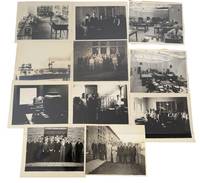
1930rif. 232561930. Stanford University Military Engineering Archive Documenting the First Army Ordnance Reserve Gauging Program ca. 1930. Stanford University photo archive documenting the emergence of interwar military-industrial technical education ordnance gauging instruction and precision engineering research on campus during the early development of Stanford's engineering and applied science programs. Rather than depicting science classrooms in a general sense these photographs specifically document the technical culture surrounding Army ordnance training instrumentation systems machine calibration and laboratory-based engineering instruction that linked universities to the expanding infrastructure of American military preparedness between World War I and World War II. Taken together the archive captures Stanford at the moment when higher education increasingly merged scientific research industrial precision manufacturing and military technical training into a unified research model that later shaped the wartime and Cold War defense university system. Photo archive of 11 large silver gelatin photographs each approximately 8" x 10" Stanford University California dating from 1930 into the 1950s; two later views mounted to decorative yellow board. Several photographs depict laboratory interiors filled with precision instrumentation gauging apparatus optical and mechanical measuring devices machine-tool equipment calibration benches microscopes drafting stations and technical worktables arranged for instruction and inspection work. One especially important close-up photograph shows a large precision gauging or rotational calibration apparatus associated with ordnance measurement and machine tolerance testing. Surrounding the device are machined cylindrical components threaded fittings gauge rings and polished metal parts likely used in dimensional inspection bore alignment concentricity testing or interchangeable manufacturing instruction. Another darkened workshop view depicts what appears to be a heavy precision lathe or gauging bench fitted with a mounted cylindrical test component equipment consistent with ordnance inspection and military engineering instruction during the interwar period. Additional photographs show groups of students and instructors posed around technical apparatus inside instrumentation laboratories while later mounted photographs document more formalized postwar engineering office and drafting environments associated with large-scale technical administration and research organization. Most important is a detailed handwritten verso inscription reading: "Equipment used Feb 1930 Ordnance School at Stanford University. This was first time a course in gauging was given in any Army Ordnance Reserve Unit permanent facilities excepted. Instructor; Lieut Merrill S. Hingo. Photo; Lieut Howard Story Taylor." The inscription firmly identifies the archive as documentation of early Army ordnance reserve technical instruction conducted at Stanford and specifically ties the machinery to military gauging education. In the 1920s-30s "gauging" referred not merely to ordinary measurement but to the specialized science of precision dimensional inspection used in artillery manufacture weapons-part standardization shell tolerances bore measurement interchangeable machining systems and industrial calibration. Such instruction formed a critical component of modern military-industrial production where even minor deviations in machining tolerances could affect artillery accuracy chamber pressure shell seating or mechanical reliability. Several outdoor group portraits further reinforce the military context. One large group stands beneath a doorway marked "Military Science and Tactics" while another includes Colonel Donald C. Cubbison a career U.S. Army officer and West Point graduate who served as professor of military science and tactics at Stanford from 1930 to 1935 before later attaining the rank of major general during World War II. His appearance situates the archive directly within Stanford's interwar military training system and links the photographs to broader national efforts to train technically educated reserve officers in engineering ordnance artillery science and industrial preparedness. The archive also reflects Stanford's broader transformation into a modern research university centered on applied science and engineering. During the interwar years Stanford's scientific departments expanded laboratory instruction instrumentation programs and research-based technical education under faculty including Robert E. Swain John P. Mitchell William H. Sloan and George S. Parks. Parks in particular became associated with analytical chemistry and geochemical laboratory science disciplines heavily dependent upon precision instrumentation and calibrated measurement systems. The engineering and laboratory culture documented here overlaps with contemporary developments in industrial metrology applied physics materials testing optical measurement and machine-tool inspection that increasingly tied university research to industrial production and military logistics. What makes the archive especially significant is the way it documents the transitional infrastructure between traditional university instruction and the emerging defense-oriented research university model. These photographs preserve not simply classrooms but the physical systems of technical education itself: calibration benches inspection machinery gauging apparatus optical instruments drafting rooms and laboratory spaces where students and reserve officers were trained in the precision engineering practices underlying twentieth-century industrial warfare and mass manufacturing. In doing so the archive visually traces the early foundations of the university-based defense engineering culture that would later expand dramatically during World War II and the Cold War throughout California research institutions and the broader military-industrial complex. Photographs are sharp and highly detailed with clear views of equipment and interiors; handwritten identifications remain legible. The two mounted 1950s photographs have several large tears without image loss with lighter handling wear elsewhere. Overall good condition. unknown
1930rif. 232561930. Stanford University Military Engineering Archive Documenting the First Army Ordnance Reserve Gauging Program ca. 1930. Stanford University photo archive documenting the emergence of interwar military-industrial technical education ordnance gauging instruction and precision engineering research on campus during the early development of Stanford's engineering and applied science programs. Rather than depicting science classrooms in a general sense these photographs specifically document the technical culture surrounding Army ordnance training instrumentation systems machine calibration and laboratory-based engineering instruction that linked universities to the expanding infrastructure of American military preparedness between World War I and World War II. Taken together the archive captures Stanford at the moment when higher education increasingly merged scientific research industrial precision manufacturing and military technical training into a unified research model that later shaped the wartime and Cold War defense university system. Photo archive of 11 large silver gelatin photographs each approximately 8" x 10" Stanford University California dating from 1930 into the 1950s; two later views mounted to decorative yellow board. Several photographs depict laboratory interiors filled with precision instrumentation gauging apparatus optical and mechanical measuring devices machine-tool equipment calibration benches microscopes drafting stations and technical worktables arranged for instruction and inspection work. One especially important close-up photograph shows a large precision gauging or rotational calibration apparatus associated with ordnance measurement and machine tolerance testing. Surrounding the device are machined cylindrical components threaded fittings gauge rings and polished metal parts likely used in dimensional inspection bore alignment concentricity testing or interchangeable manufacturing instruction. Another darkened workshop view depicts what appears to be a heavy precision lathe or gauging bench fitted with a mounted cylindrical test component equipment consistent with ordnance inspection and military engineering instruction during the interwar period. Additional photographs show groups of students and instructors posed around technical apparatus inside instrumentation laboratories while later mounted photographs document more formalized postwar engineering office and drafting environments associated with large-scale technical administration and research organization. Most important is a detailed handwritten verso inscription reading: "Equipment used Feb 1930 Ordnance School at Stanford University. This was first time a course in gauging was given in any Army Ordnance Reserve Unit permanent facilities excepted. Instructor; Lieut Merrill S. Hingo. Photo; Lieut Howard Story Taylor." The inscription firmly identifies the archive as documentation of early Army ordnance reserve technical instruction conducted at Stanford and specifically ties the machinery to military gauging education. In the 1920s-30s "gauging" referred not merely to ordinary measurement but to the specialized science of precision dimensional inspection used in artillery manufacture weapons-part standardization shell tolerances bore measurement interchangeable machining systems and industrial calibration. Such instruction formed a critical component of modern military-industrial production where even minor deviations in machining tolerances could affect artillery accuracy chamber pressure shell seating or mechanical reliability. Several outdoor group portraits further reinforce the military context. One large group stands beneath a doorway marked "Military Science and Tactics" while another includes Colonel Donald C. Cubbison a career U.S. Army officer and West Point graduate who served as professor of military science and tactics at Stanford from 1930 to 1935 before later attaining the rank of major general during World War II. His appearance situates the archive directly within Stanford's interwar military training system and links the photographs to broader national efforts to train technically educated reserve officers in engineering ordnance artillery science and industrial preparedness. The archive also reflects Stanford's broader transformation into a modern research university centered on applied science and engineering. During the interwar years Stanford's scientific departments expanded laboratory instruction instrumentation programs and research-based technical education under faculty including Robert E. Swain John P. Mitchell William H. Sloan and George S. Parks. Parks in particular became associated with analytical chemistry and geochemical laboratory science disciplines heavily dependent upon precision instrumentation and calibrated measurement systems. The engineering and laboratory culture documented here overlaps with contemporary developments in industrial metrology applied physics materials testing optical measurement and machine-tool inspection that increasingly tied university research to industrial production and military logistics. What makes the archive especially significant is the way it documents the transitional infrastructure between traditional university instruction and the emerging defense-oriented research university model. These photographs preserve not simply classrooms but the physical systems of technical education itself: calibration benches inspection machinery gauging apparatus optical instruments drafting rooms and laboratory spaces where students and reserve officers were trained in the precision engineering practices underlying twentieth-century industrial warfare and mass manufacturing. In doing so the archive visually traces the early foundations of the university-based defense engineering culture that would later expand dramatically during World War II and the Cold War throughout California research institutions and the broader military-industrial complex. Photographs are sharp and highly detailed with clear views of equipment and interiors; handwritten identifications remain legible. The two mounted 1950s photographs have several large tears without image loss with lighter handling wear elsewhere. Overall good condition. unknown books
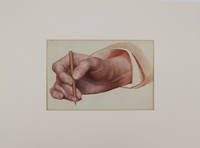
rif. 27351Original artwork. c.1880s. A series of six highly accomplished watercolour studies of hands and feet by a pupil of the South Kensington Art Schools renamed the Royal College of Art in 1896. The largest measuring 21.5 x 15 cm. Each bearing the embossed stamp E.S.K. Examined South Kensington. The set is in very good condition with just the occasional dot of foxing and a small area of browning to the foot of one image. The colours remain fresh and vivid. Housed in a bespoke quarter leather solander case. A remarkably realistic series of late nineteenth-century watercolours which skilfully capture the delicacy and nuance of their subjects executed by a pupil at what would soon become the prestigious Royal College of Art. Hung together they form a most attractive and unusual group. Further details and images for any of the items listed are available on request. All items are catalogued by humans. Lucius Books welcomes direct contact with our customers. Original artwork. c.1880s hardcover
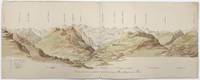
1840rif. 23481840. Fine. Watercolor graphite and grayish ink on two sheets of cream laid paper with an 1836 M and smiling sun watermark 10 1/4 x 25 7/8 inches 260 x 658 mm the full sheet. Titled in ink in French on the recto. In very good condition with minor edge wear including creasing and nicks. A splendid panorama with each of the major peaks and point of interest labeled and identified in French. The iconic symbol of the Swiss resort the "Sun of St. Moritz" was adopted from early European heraldic marks and rebranded around 1930 by graphic designer Walter Herdeg. The image was patented in 1937 by spa director Walter Amstutz becoming the world's first visual trademark for a tourist destination. unknown
rif. 798302020. Thirty-Two 32 linear feet shelf space. Thirty-Two 32 linear feet shelf space. Northwestern Law Review. Volumes 1 to 113 1906-2019 in 133 bound books with volume 75 no. 6 1981 softbound supplement. Volume 114 2019-2020 no. 1-7 in 7 softbound books. Together 140 books. Title varies: Illinois Law Review. Volumes 1-46 1906-1952; Northwestern Law Review. Volumes 47-114 1952-2020. Ex-library with shelf location labels property stamps to page edges small bar code labels to lower front coversand lacking spine labels on volumes 11 13 16 19 and 22 else very good. Thirty-two 32 linear feet of shelf space. $2295. The Northwestern University Law Review is a student-operated journal that publishes six issues of high-quality general legal scholarship each year. Student editors make the editorial and organizational decisions and select articles submitted by professors judges and practitioners as well as student pieces. In 2022 it was ranked No. 14 among general-topic law reviews by the Washington and Lee law journal rankings. First published in 1906 the Law Review has been distinguished by the scholarly qualifications and variety of its participants. Prior Editors-in-Chief include: Roscoe Pound long-time dean of Harvard Law School; Judge Robert A. Sprecher of the United States Court of Appeals for the Seventh Circuit; Justice John Paul Stevens; Dean James A. Rahl; Governor Daniel Walker; and Newton N. Minow former chairman of the Federal Communications Commission. Other editorial officers have included Justice Arthur Goldberg and Adlai E. Stevenson. The equally distinguished list of contributors to the Law Review includes Dean Leon Green Sir William Holdsworth Justice Oliver Wendell Holmes Albert M. Kales Nathan William MacChesney Charles T. McCormick Sir Frederick Pollock Dean Roscoe Pound Dean John Henry Wigmore Justice Felix Frankfurter Justice Tom Clark Justice William O. Douglas Justice Abe Fortas Chief Judge Harry T. Edwards Erwin Griswold Archibald Cox Paul Freund W. Willard Wirtz Albert Ehrenzweig H.L.A. Hart Gerald Gunther Edward H. Levi Hubert H. Humphrey Brunson MacChesney Nathaniel Nathanson Dean James A. Rahl Dean now professor David Ruder Martin Redish Kenneth Culp Davis Raoul Berger Bernard Schwartz Ian Macneil John Coffee Gary Lawson Mary Becker Stephen Schulhofer Nadine Strossen Judge Jose A. Cabranes Judge Richard Posner Cass S. unknown
rif. 798302020. Thirty-Two 32 linear feet shelf space. Thirty-Two 32 linear feet shelf space. Northwestern Law Review. Volumes 1 to 113 1906-2019 in 133 bound books with volume 75 no. 6 1981 softbound supplement. Volume 114 2019-2020 no. 1-7 in 7 softbound books. Together 140 books. Title varies: Illinois Law Review. Volumes 1-46 1906-1952; Northwestern Law Review. Volumes 47-114 1952-2020. Ex-library with shelf location labels property stamps to page edges small bar code labels to lower front coversand lacking spine labels on volumes 11 13 16 19 and 22 else very good. Thirty-two 32 linear feet of shelf space. $2295. The Northwestern University Law Review is a student-operated journal that publishes six issues of high-quality general legal scholarship each year. Student editors make the editorial and organizational decisions and select articles submitted by professors judges and practitioners as well as student pieces. In 2022 it was ranked No. 14 among general-topic law reviews by the Washington and Lee law journal rankings. First published in 1906 the Law Review has been distinguished by the scholarly qualifications and variety of its participants. Prior Editors-in-Chief include: Roscoe Pound long-time dean of Harvard Law School; Judge Robert A. Sprecher of the United States Court of Appeals for the Seventh Circuit; Justice John Paul Stevens; Dean James A. Rahl; Governor Daniel Walker; and Newton N. Minow former chairman of the Federal Communications Commission. Other editorial officers have included Justice Arthur Goldberg and Adlai E. Stevenson. The equally distinguished list of contributors to the Law Review includes Dean Leon Green Sir William Holdsworth Justice Oliver Wendell Holmes Albert M. Kales Nathan William MacChesney Charles T. McCormick Sir Frederick Pollock Dean Roscoe Pound Dean John Henry Wigmore Justice Felix Frankfurter Justice Tom Clark Justice William O. Douglas Justice Abe Fortas Chief Judge Harry T. Edwards Erwin Griswold Archibald Cox Paul Freund W. Willard Wirtz Albert Ehrenzweig H.L.A. Hart Gerald Gunther Edward H. Levi Hubert H. Humphrey Brunson MacChesney Nathaniel Nathanson Dean James A. Rahl Dean now professor David Ruder Martin Redish Kenneth Culp Davis Raoul Berger Bernard Schwartz Ian Macneil John Coffee Gary Lawson Mary Becker Stephen Schulhofer Nadine Strossen Judge Jose A. Cabranes Judge Richard Posner Cass S. unknown books
2017rif. 2081502111906635Chinese book office 2017. Soft Cover. Fine. The book is in fine condition. Chinese book office paperback
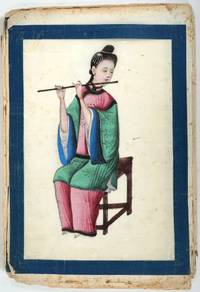
rif. 98101501Canton 1860-80's Cheungqua. A group of 7 pith or Tongcao color paintings usual minimal issues mostly clean & solid sold "as is" as a collection with the typical chips & a few fox spots else very good clean examples. A RARE GROUP ! . . . . A SUITE OF 7 FINE CHINESE COLOR PITH PAINTINGS . . . SHOWING BEAUTIFULLY DRESSED CHINESE WOMEN . . . PLAYING MUSICAL INSTRUMENTS . . . EXECUTED IN STUNNING & BRILLIANT COLORS . . . AKA: CHINESE EXPORT WATERCOLOURS . A group of typical "trade paintings" executed by Chinese native artists for foreign traders visiting Canton or Macao during the early to mid-19th century. . A SUPERB SUITE OF FABULOUS COLOR PITH PAINTINGS: A stunningly beautiful group of hand-painted color pith paintings depicting a woman playing a musical instrument. . "GOLDEN LOTUS" or "LOTUS FEET" BOUND FEET Chanzu: This like most illustrations of the period show the women with bound feet. Chanzu bound feet was an erotic obsession and fetish in ancient China. The erotic ramifications are outlined in the references below. . The paintings illustrate Chinese women in a domestic scene with furniture playing musical instruments. Subjects are: . a. Yue1in Ruan Moon Guitar Moon Zither 4 stringed . b. Yanqin Chinese Dulcimer . c. Sanxian three-stringed Chinese lute . d. Drumming on the back of a Chinese ceramic bowl . e. Dizi Chinese bamboo flute . f. Huqin Chinese violin . g. Tong Luo Chinese Brass Gong . DESCRIPTION OF THE PAINTING ART WORK AND CONDITION: . Each painting is in brilliant vivid and stunning colors. Each is skillfully painted with a fine hand delicate fine-point brush with great detail incredible reality texture and appeal. . As usual the set paintings were tipped to a contemporary backing period Each painting is backed with a contemporary stiff paper or a more current back card. . Items "a" & "b" are matted see cover.jpg & title.jpg photos posted to our website. . Each painting is approximately 21 x 34 cm. most have a blue silk ribbon border partial border or border lacking chipped and the like on has restorations on the verso in the margin only. . Each painting has some chips parts missing on the edges or with small holes here and there 'e' by and large the images are complete but some may have usual and often typical age-related cracks or splits a touch of fox spots on "c." . Suitable for framing & display. Please review photographs posted to our website for details. . "RICE PAPER" PAINTINGS: Several authors refer to this name rather than the proper name "Pith" paper paintings also can be called "Tung Tsao." . THE CANTON ARTIST OR 'SCHOOL' OF CHEUNG QUA: Cheung Qua was an export watercolor painter in Canton. He and followers of his school produced various single and albums of these paintings which were sold from his studio. . Often his in-house artists began painting on their own thus replicating the techniques subjects and essence of their masters. Because these paintings were rarely signed the one and only identification ever found was occasionally on the album cover or spine with the studio name. . Often these paintings were sold in various shops in Macao the main resting and gathering place of foreigners during part of the year. . REFERENCE: . CLUNAS Craig.: CHINESE EXPORT WATERCOLOURS. This entire book is devoted to Pith or Rice paper paintings. For musical instruments see color plates on pp.50-53 especially plates on pp.66-67 plates 39 & 40 are particularly similar to our examples that is to say by the same or an artist who was in the same house of Cheungqua or that school. CHU Arthur. et al.: ORIENTAL ANTIQUES AND COLLECTIBLES: A GUIDE pp.62-66. THE CHINESE PITH PAINTING COLLECTION AT THE NATIONAL LIBRARY OF AUSTRALIA: An Annotated Guide. Crossman Carl L. The decorative arts of the China trade : paintings furnishings and exotic curiosities. LEVY Howard S.: CHINESE FOOT BINDING: The History of a Curious Erotic Custom. . --. THE LOTUS LOVERS: The Complete History of the Curious Erotic Custom of Foot binding in China. JACKSON Beverly.: SPLENDID SLIPPERS: A THOUSAND YEARS OF AN EROTIC TRADITION. . . unknown
1870rif. 279111870. Finely executed portraits of women and their musical instruments larger and more detailed than many other albums. From the school of Youqua. The portraits have no background painting. 8 images mounted with dark turquoise border silk some with cracks; 3 images are mounted on card at a later date. All images loose in papered boards which open Western style and are disbound and very rubbed. Most images are in lovely and larger than most. Besides some small cracks they are in very good condition. 4to 11 1/2 x 8 unknown
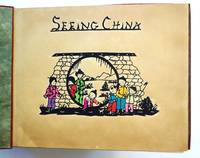
rif. 006911Chefoo China: Women's Bible School American Presbyterian Mission Book. Near Fine. Soft cover. First Edition. Oblong Folio. No Date circa 1930. Near Fine pages with light toning. Oblong folio 10" x 13 3/4". Bound in beautiful red pictorial embossed silk over limp boards string-tied 28 pp of cut-out illustrations in black and white many with colorful silk inlays with tissue guards publisher's 1 page explanatory leaf laid in also an original 6 1/2" x 10 1/2" cut-out with colorful silk inlays and string hanger readt-to-hang laid in. Cut-out chapter headings are Travel and Transportation Customs and Habits Chinese Birth-Year Cycle latest date 1935 Occupations The Eight Immortals Myths and Legends Chinese Recipes Chinese Children Chinese Junks and The Magician. Well over 100 cut-outs in all including the bonus laid in cut-out and SCARCE THUS. Women's Bible School, American Presbyterian Mission Paperback