35 730 résultats
1920Very Good Turkish, Ottoman (1500-1928) Collection includes six postcards by him sent to Mehmed RAsih Bey, Âli Türkgeldi (Sofia, Bulgaria), Satvet Lütfi Tozan, one newspaper clipping about Gerede, eight autograph letters signed 'Hüsrev' sent to Satvet Lütfi Tozan, (1889-1975), Âli Türkgeldi, 1867-1935) and beside ones which came from them to him. Some letters are more than one page. Full text. In Ottoman script. Items dated from 1920 to 1929/30 on letters and postcards. All in one envelope with Ottoman script autograph notes and name of Hüsrev Gerede on it. Letters and other material include mostly important diplomatic contents and early Republican Turkish historical info. These material is not published. Gerede was a Turkish career officer, who served in the Ottoman Army and the Turkish Army. He was also a politician and diplomat of the Republic of Turkey. He has Medal of Independence with Red-Green Ribbon.
réf. 2081502111907580Chinese social sciences N.A. Soft Cover. Fine. The book is in fine condition. Chinese social sciences paperback
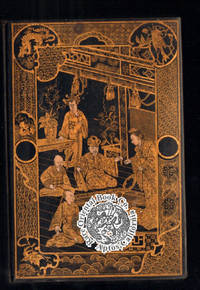
réf. 35006201Canton ca.1800-1820 Lam-Qua.Black lacquer gold painted 12 fine gouache hand-drawn & colored paintings 12.5 x 16.5 cm. very fine condition each mounted in an album with old gold paper corners on pith paperexcellent example. RARE ! . . . A SUPERB SUITE OF TWELVE STUNNING COLOR PITH PAINTINGS . . . ILLUSTRATING VARIOUS CHINESE IN ELABORATE COSTUME . This is a charming suite of 12 lovely portraits of Chinese men women and military men. . THE PAINTED SUBJECTS: . 1. An old sage holds a scroll of holy texts while he is seated behind him stands a guard with a pole sword. . 2. A young warrior holds a long axe ready for action. . 3. A young lady a white porcelain teacup. . 4. A warrior holds his halberd ready for action. . 5. A fierce older warrior holds a sword and his shield. . 6. A guard holds his long sword at the ready. . 7. An elderly man strokes his long beard. . 8. A young man takes a stroll holding a fan behind his back. . 9. An elderly an holds two Burmese-green jade bracelets. . 10. A man holds a feather fan. . 11. A very old man holds his long sword. . 12. A bearded man points with his hand toward the right. . The twelve paintings are gently mounted to stiff black album pages with the old style "NuAce" photo mounting corners. There is no damage to the paintings with this technique. . THE STUNNING GOLD OVER BLACK ILLUSTRATED LACQUER COVERS: This is a very unusual binding hand-painted in gold lacquer over black lacquer background on wooden boards. . The cover illustration shows five Chinese: The Lord & Master; his concubine; his son Prince; his retainer; and the maid. . The Lord & master is seen seated before a tea service with three golden cups and a golden ceramic tea pot. The Lord & Master reaches for the hand of his fair and very young concubine who holds a fan. The tea service is clearly for three people: The Lord & Master his son the Prince and the concubine. . The retainer is seated just behind the Lord & Master's right side showing proper respect by looking at the floor. The young Prince the son is seated before his father and looks at the concubine. At the rear is the maid waiting for order. She puts her right hand on the adjacent table holding a tray. . The work has an elaborate and stunning border. In the upper corners are two stunning illustrations: the upper left sows the Golden Dragon in the upper right is the Phoenix. At the left center margin is a golden Peacock. The margin-borders are elaborately done with differing traditional Chinese patterns and designs. A most stunning view inside of the . The back is plain black lacquer. . The spine is black leather with period Chinese swastika design white over black end papers. Some of the old glue is showing through the very thin tissue endpapers else very solid with heavy black pages. . CONDITION OF THE GOLD AND BLACK LACQUER COVERS: The covers are in exceptionally good condition. There are two minor spots: one ca. 1.5 cm spot at the son's midsection and another black spot .05 cm just below his robe. . There is the very small amount of occasional and barely visible usual and very minor mild scuffing with a minor discoloration of the face of the maid. There is a bit of 'crackle' to the black lacquer which is normal for a piece 200 years old. Else this is in very nice condition. . CONDITION OF THE PAINTINGS: These are exceptionally bright and clean drawings lightly mounted on a now browned backing paper with blue-glossy patterned paper borders. . Numbers: . 1 has a tiny 1.5 & .5 cm. small split at bottom left this does not affect the painting. . 2 has the lower portion folded in the process of paper-making which is normal variation and does not detract. . 5 has a tiny 1 cm. split at top in the margin this does not affect the painting. . 9 has a 7 cm. split from the elbow to the bottom of the work apparently restored from the verso minimal impact. . 11 has a small 1 cm. scuff in the right margin this does not affect the image. . 12 has a similar but less obvious 1 cm. scuff in the right margin at the same place as #11 this does not affect the image. . The balance i.e. numbers: 3467810 are without issues. . OVERLY CRITICAL: We are commonly obsessive and overly critical about pointing out any and all defects. Please view the scans posted to our website. All in all these look much better than the above description. Perfectly clean no blemishes. . NOTE: Typically "pith" paintings are prone to be very brittle and delicate. We are happy to state this suite is exceptionally very solid and intact. The colors are brilliant bright and stunningly fresh without any fading or issues. They appear to have been properly cared for protected. These are in excellent "Collector's Condition." . PAINTING QUALITY AND FRESH BRILLIANTLY COLORED: The paintings are meticulously executed with fine detail painted a steady skilled hand. . LAM-QUA TING-QUA SCHOOLS: The works are done in the Canton style of Lam-Qua and his brother Ting-qua. See link below. . Ting-qua born ca. 1809; flourished 1840-70. He was the brother of Lam-Qua 1801-1860 and probably a close relation of Spoilum. Ting-qua's studio at 16 China Street Guangzhou was perhaps the most prolific source of Chinese export paintings of its time. Working in a manner influenced by Western artistic traditions Ting-qua and the painters of his studio restricted themselves to gouache and water-colors perhaps to avoid rivalry with Lam-qua's oil paintings. Their pictures which were often sold in sets." . PITH PAPER: The paintings were done on pith paper. "Pith paper or rice paper" a misnomer as it is sometimes known is made from the inner pith of the plant Tetrapanex papyrifera which is a member of the Araliaceae family. The plant is a shrub native to Southern China and Taiwan. As well as a painting material pith paper was used to make artificial flowers and surgical dressings." . RARITY: Gouache pith paintings are now rare most were damaged cracked and brittle rendering them useless. The few that survived are considered RARE and uncommon. The paintings were drawn with much skill and patience and were for the most part drawn for and sold to foreigners in the treaty ports of China in the early 19th century. Drawn with a fine brush in vivid colors the paintings depicted things that would fascinate foreigners and encourage them to bring home as souvenirs. The current examples shows portraits of Chinese officials guards military men as well as upper class citizens. . Albums of pith paintings were typically issued in a suite of twelve. . BIBLIOGRAPHY: . -org/wiki/Lam_Qua C.L. Crossman.: THE DECORATIVE ARTS OF THE CHINA TRADE p.173-203 and the associated color and b.w. photo examples. . C.L. Crossman.: THE CHINA TRADE p.93-120 and the photos. Arthur Chu.: ORIENTAL ANTIQUES AND COLLECTIBLES pp.62-67 photo #60. . . unknown
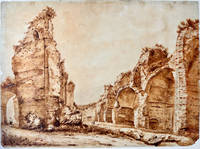
1852réf. 12381852. Fair. Ink wash in brown ink on cream wove paper 9 7/8 x 13 inches 250 x 330 mm titled and dated in brown ink lower right. In fair condition with minor scattered soiling uniform age tone and edge 'nics;' all consistent with age. Laid down to archival mat board. unknown
1997réf. __0415152151Routledge 1997. Hardcover. New. 1st edition. 300 pages. 9.45x6.46x1.50 inches. Routledge hardcover
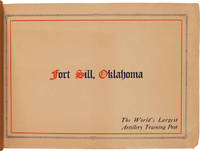
1918réf. 57357Fort Sill OK. ca. 1918. Original Photos from the Early Days of the Artillery Training School at Fort Sill A rare commercially produced photo album rendered unique by the addition of thirty original photographs of the U.S. Army Artillery Training School in Fort Sill Oklahoma at the end of World War I. The first section begins with a printed one-page "Short History of the Fort Sill Military Reservation" and consists of mounted photographs in printed frames with printed captions. This printed portion of album is divided into three parts with individual titles: "Fort Sill Oklahoma: The World's Largest Artillery Training Post"; "Medicine Park: Southwest Oklahoma's Pleasure Resort"; and "Some Views of the Comanche and Apache Indians." The second section of the album consists of blank pages for personal photographs here filled with thirty photographs with occasional manuscript captions supplied by an unnamed Army corporal. In addition to photographs of camp buildings artillery emplacements and scenery in and around Fort Sill the album features a number of photographs of the 1918 Victory Day Parade as well as a "pageant" held at the fort where members of the Comanche and Kiowa tribes participated in reenactments of the early frontier days at the fort. Fort Sill was also the birthplace of U.S. combat aviation in 1915 and a few photographs show some of the earliest military planes. The personal photos at the rear of the album include a number of individual soldiers a handful of alternate views of parades and events and the owner's actual cloth uniform stripes pasted to the final page. A rare and interesting look at the early days of a major American military base at the conclusion of World War I. OCLC records two copies of a similar souvenir album which also covers Camp Doniphan but does not locate the present version anywhere. Forty-one mounted photographs with printed captions and an additional thirty original mounted photographs some with manuscript captions most about 2½ x 4½ inches plus pasted-in corporal's stripes on final album leaf. Oblong quarto. Original printed thick wrappers with wrapper title "Souvenir from Fort Sill Oklahoma" tied with string. Spine ends chipped edge wear to wrappers. Photographs lightly faded occasional adhesive residue or paper defects particularly in latter half. Overall very good. hardcover
1918réf. 57357Fort Sill OK. ca. 1918. Original Photos from the Early Days of the Artillery Training School at Fort Sill A rare commercially produced photo album rendered unique by the addition of thirty original photographs of the U.S. Army Artillery Training School in Fort Sill Oklahoma at the end of World War I. The first section begins with a printed one-page "Short History of the Fort Sill Military Reservation" and consists of mounted photographs in printed frames with printed captions. This printed portion of album is divided into three parts with individual titles: "Fort Sill Oklahoma: The World's Largest Artillery Training Post"; "Medicine Park: Southwest Oklahoma's Pleasure Resort"; and "Some Views of the Comanche and Apache Indians." The second section of the album consists of blank pages for personal photographs here filled with thirty photographs with occasional manuscript captions supplied by an unnamed Army corporal. In addition to photographs of camp buildings artillery emplacements and scenery in and around Fort Sill the album features a number of photographs of the 1918 Victory Day Parade as well as a "pageant" held at the fort where members of the Comanche and Kiowa tribes participated in reenactments of the early frontier days at the fort. Fort Sill was also the birthplace of U.S. combat aviation in 1915 and a few photographs show some of the earliest military planes. The personal photos at the rear of the album include a number of individual soldiers a handful of alternate views of parades and events and the owner's actual cloth uniform stripes pasted to the final page. A rare and interesting look at the early days of a major American military base at the conclusion of World War I. OCLC records two copies of a similar souvenir album which also covers Camp Doniphan but does not locate the present version anywhere. Forty-one mounted photographs with printed captions and an additional thirty original mounted photographs some with manuscript captions most about 2½ x 4½ inches plus pasted-in corporal's stripes on final album leaf. Oblong quarto. Original printed thick wrappers with wrapper title "Souvenir from Fort Sill Oklahoma" tied with string. Spine ends chipped edge wear to wrappers. Photographs lightly faded occasional adhesive residue or paper defects particularly in latter half. Overall very good. hardcover books
1850réf. 20700Paris 1850. Pencil pen and wash drawing with numerous sub-titles in ink signed "J. Litoux" A fascinating and beautiful architectural drawing - or 'rendu' of basic elements of house construction in cluding walls floors doorways roofs and ceilings. A fine drawing from an architectural student at the Ecole des Beaux-Arts in Paris the most influential architectural school in existence during much of the 18th century the whole of the 19th century and the first part of the 20th century. 'Students were eligible for the Ecole if they were at least fifteen years old or under thirty. They began with the seconde classe in which they competed in the concours d'émulation. These alternated between an esquisse - a rough sketch for which up to twelve hours was allowed - and a rendu - the large-scale finished drawing for which one to three months were allowed. Two to four years were usually required for a student to accumulate enough credits to enter the première classe. The same system was followed again usually for two to three years after which the student should have accumulated enough credits to compete for the Grand Prix de Rome. The winner of the Grand Prix was entitled to five years study under the auspices of the French Academy in Rome. For each of his first three years he was required to submit an analytical study of an ancient monument. For his fourth year he had to submit a complete reconstruction of a major classical work. For his fifth year he was required to submit an original work designed to a program of his own invention. In the seconde classe the student was required to attend a variety of lectures in theory history and construction and learned to prepare construction drawings. Work was done at ateliers located outside the precincts of the Ecole des Beaux-Arts. These were rented and organized by the students themselves and the students had the right to invite a teacher of their own choice to serve as their maître. The teacher himself did not have to be a member of the faculty of the Ecole nor - at least in principle - did he have to be a practicing architect.' Arthur Drexler. The Architecture of the Ecole des Beaux-Arts. New York MoMA 1977 p.8-9 Arthur Drexler The Architecture of the Ecole des Beaux-Arts. New York MoMA 1977. unknown
1850réf. 20700Paris 1850. Pencil pen and wash drawing with numerous sub-titles in ink signed "J. Litoux" A fascinating and beautiful architectural drawing - or 'rendu' of basic elements of house construction in cluding walls floors doorways roofs and ceilings. A fine drawing from an architectural student at the Ecole des Beaux-Arts in Paris the most influential architectural school in existence during much of the 18th century the whole of the 19th century and the first part of the 20th century. 'Students were eligible for the Ecole if they were at least fifteen years old or under thirty. They began with the seconde classe in which they competed in the concours d'émulation. These alternated between an esquisse - a rough sketch for which up to twelve hours was allowed - and a rendu - the large-scale finished drawing for which one to three months were allowed. Two to four years were usually required for a student to accumulate enough credits to enter the première classe. The same system was followed again usually for two to three years after which the student should have accumulated enough credits to compete for the Grand Prix de Rome. The winner of the Grand Prix was entitled to five years study under the auspices of the French Academy in Rome. For each of his first three years he was required to submit an analytical study of an ancient monument. For his fourth year he had to submit a complete reconstruction of a major classical work. For his fifth year he was required to submit an original work designed to a program of his own invention. In the seconde classe the student was required to attend a variety of lectures in theory history and construction and learned to prepare construction drawings. Work was done at ateliers located outside the precincts of the Ecole des Beaux-Arts. These were rented and organized by the students themselves and the students had the right to invite a teacher of their own choice to serve as their maître. The teacher himself did not have to be a member of the faculty of the Ecole nor - at least in principle - did he have to be a practicing architect.' Arthur Drexler. The Architecture of the Ecole des Beaux-Arts. New York MoMA 1977 p.8-9 Arthur Drexler The Architecture of the Ecole des Beaux-Arts. New York MoMA 1977. unknown books
réf. 2081502111906678Chinese book office N.A. Soft Cover. Fine. The book is in fine condition. Chinese book office paperback
réf. 2092902137704475Chugai shobo N.A. Soft Cover. Fine. The book is in fine condition. Chugai shobo? paperback
1869réf. 2111902160200041Mr. Hayashi's woodblock copy 1869. Soft Cover. Fine. Number of pages: 186 pages Size: 13.5cmx18.3cm Number of books: 1 Mr. Hayashi's woodblock copy paperback
1877réf. 14504Paris, Impression Phototypique de Gleymet d'après les clichés de M. Franck ; in-folio, demi-chagrin vert, faux-nerfs à froid et dorés, fleurons dorés, titre doré sur le plat, en arc, plats de percaline (reliure de l'époque) ; (51) ff. montés sur onglets dont le titre, composition emblématique : juchée sur le pare-chocs d'une locomotive, l'Ecole Centrale, représentée par une femme nue tenant haut une torche dont les rayons Arts, Métallurgie, Construction, Mécanique et Chimie symbolisent le Progrès qui bouscule et écrase le clergé, les Indiens, les Allemands à casque à pointe, les "ânes", les Musulmans, une sorte de Juif errant, les incrédules et les oies ; les phares de la locomotive sont triangulaires ! Viennent ensuite 50 photographies ou sympathiques caricatures des dirigeants et professeurs de l'Ecole ; identité imprimée sur des papillons collés au dos de chaque planche.
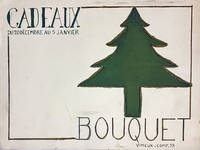
1935réf. 102552With 22 printed documents several of which are present as the original project. And 20 sketches in pencil. All loose sheets. Paris between 1935 and 1940. Most of the sheets are 32 x 24 cm with several exceptions. A. Vimeux must have been a student at the 'Ecole Estienne' in Paris between 1935 and 1940. The present file contains 80 original projects on various kinds of strong paper and paper of different colours. The projects are more or less finished. There are projects for posters letterheads trade cards exhibitions advertisements covers for various publications drawing of lettrs and other typographic work etc. All of these are done in the style of the 1930's and show the development of this student's work and the style taught at the 'École Estienne".
1924Acquaforte e punta secca, 1924. Misure della lastra 85x130 mm. Prova d’autore, firmata a matita in basso “L. Bartolini”. Esemplare rifilato al rame ed applicato su cartoncino coevo. Perfetto stato di conservazione. All’incisione, databile al 1924-25 come altre opere analoghe dell’artista, Bartolini assegnerà poi il titolo definitivo di Tre donne alla fontana. Un’esemplare dell’opera definitiva è passato in asta a Berna nel novembre del 2007: https://www.mutualart.com/Artwork/Tre-donne-alla-fontana/591860B3A0845475 Luigi Bartolini è considerato uno dei maggiori incisori italiani del Novecento, insieme a Giorgio Morandi e Giuseppe Viviani. Oltre ad essere un prolifico incisore (al suo attivo oltre mille acqueforti), fu anche pittore e scrittore. Partecipò sia come pittore che come incisore a diverse edizioni della Biennale di Venezia dal 1928 al 1962. Presente a varie manifestazioni artistiche, sviluppò diverse maniere definite: ‘maniera bionda’, ‘lineare’ e ‘nera’. Ricordiamo soprattutto le acqueforti della serie Marche e della serie Sicilia. Iniziò la sua produzione grafica nel 1914 e il suo stile si rifà alla tradizione naturalistica dell’Ottocento. Molte sue incisioni si possono ricollegare ad alcune opere del Goya, di Telemaco Signorini e di Giovanni Fattori. Eccellente nella rappresentazione della natura morta e del paesaggio, spesso il Bartolini rappresentò dolcemente le cose e gli oggetti più umili, i soggetti di natura più dimessi. In essi ritroviamo il sentimento che diviene immagine e la forma che si sviluppa in espressione. Con Bartolini l’incisione torna ad essere un mezzo di espressione poetica libera dal simbolismo e dal vedutismo allora in voga presso le accademie. Nelle sue acqueforti prevale ora un tratteggio leggero (genere biondo), ora una ricerca del chiaroscuro alla Rembrandt (genere nero). Rara. Etching and drypoint, 1924. Plate size 85x130 mm. Artist's proof, signed in pencil at the bottom "L. Bartolini". Example trimmed to copper and applied on contempoary paperboard. Excellent state of preservation. Rare. Born in Cupramontana near Ancona, Luigi Bartolini was the twentieth century Italian etcher, who came closest to the stature of his great rival, Morandi. As a teenager, he saw the collection of etchings, including work by Callot, owned by the Corradi family in Iesi. From 1907 to 1910 Bartolini studied at the Istituto di Belle Arti in Siena, and started to etch c. 1909. He moved to Rome in 1910, where until 1912 he frequented the Accademia di Belle Arti, while also attending lectures on literature and the history of art, and courses on anatomy at the University in Rome. Bartolini studied the etchings of Goya and took lessons on drawing at the Accademia di Spagna. From there, he went to Florence in 1913, where he attended the Scuola del nudo. Bartolini continued his anatomical research, as well as studying architecture, making himself the most assiduous student of all Italian twentieth century printmakers. He also visited the Uffizi and Florentine print dealers to look at the etchings of Rembrandt and Fattori. Bartolini painted his first oils just before the outbreak of the First World War. Although he painted pictures throughout the rest of his career, and was awarded the Premio Marzotto for them in 1956, they have been far eclipsed in fame by his etchings and writings. During the First World War, Bartolini published his first collection of poetry. A very prolific and accomplished writer, in this field he is best known today as the author of the novel, 'Ladri di biciclette' (Bicycle thieves), of 1946, which was quickly turned into a celebrated film by Vittorio de Sica and Cesar Zavattini. After the First World War, Bartolini held a series of minor teaching posts in Macerata, Sassari, Avezzano, Pola, and Caltagirone, while he continued to etch, and started a long career as a polemical journalist and critic of art and architecture. From 1923 to 1929, he wrote for the Naples periodical, 'Cimento', but he also contributed to 'Il Selvaggio', 'Quadrivio', 'Italia letteraria', and 'L'Ambrosiana'. Bartolini's 1924 exhibition of etchings at the Casa d'Arte Bragaglia in Rome was a great success, and later that year he showed 70 etched landscapes of the Marches at the Casa Palazzo di Roma. The following year he visited Paris, where he paid particular attention to the paintings of Van Gogh. Bartolini's political convictions led him to being assaulted by Fascists and hospitalised in 1928. Two years later, he won a prize at the Venice Biennale, where he had exhibited a portfolio of etchings. In 1930, the Turin publisher, Buratti, began to issue a series of portfolios of etchings by contemporary Italian artists under the editorship of Cipriano Oppi, selecting Bartolini for the first album. The following year, Buratti published 'Le carte parlanti', a portfolio of 10 of Bartolini's etchings, which was published in an edition of 20. In 1932, Bartolini shared the first prize at the Prima mostra dell'incisione moderna at the Uffizi with Morandi and Boccioni. His close friend, the leading anti-Fascist art historian, Lionello Venturi, acted as his agent selling his etchings in Paris. Bartolini's correspondence with his compatriots in exile led to his imprisonment, from which he was released on Mussolini's personal intervention. He was then placed under political surveillance. From 1933 to 1938, Bartolini taught in Merano, where he painted and etched in the open air, finding subjects on the banks of the fast flowing Adige. Despite being under political suspicion, he was given a one - man show of 50 etchings at the second Rome Quadriennale in 1935, when he was awarded the first prize for printmaking. Bartolini still encountered political difficulties, and his 'Modi', published by Edizioni del Cavallino in 1938, was censured by Al...
1890Prior owner's name, "Edw. D. Jones" written atop title page - possibly the founder of Edward Jones Investments, founded in St. Louis in 1922. Prior owner's small initials (E.D.J.) and date inked atop first blank leaf. pp. [v], vi-xlv, [2], 2-431. Index. Translated from the German. "While it would be bold to affirm that Professor Böhm-Bawerk [1851-1914] has said the last word on the theory of Interest, his book must be regarded as one with which all subsequent writers will have to reckon." - Translator's Preface. Of the first edition, at p.22 Batson wrote "The first large treatise produced by the Austrian School, and although it is not so comprehensive as that since published by Wieser, it leaves very few parts of economic theory unillumined." Schumpeter "regarded Böhm-Bawerk as one of the 'great masters' in economics." - Swedberg p.14. Moderate wear to publisher's pebbled brown cloth. Bright gilt lettering upon backstrip. Binding intact. 22.6 x 15cm. Batson p.167, Cohen 171, Masui p.151, Fundaburk 9663. Book
1912réf. 60874Le Programme est tiré sur papier d'Arches, 1 brochure grand in-8, Typographie "Le Papier", 1912, 5 ff. et une grande planche dépliante ("La Salle vue de la Scène") : Soirée du 13 mars 1912. La Revue. Distribution Mlle Falchieri du Théâtre Apollo. Primerose - Mlle des Lurées - Cera Laparcerie. Au Piano, le maëstro Enody, Ingénieur des Constructions civiles [ Contient les textes de chansons : ] Chanson de Primerose - le Piscing - Le Cubisme - Le Futurisme - La Vie chère - Un incompris - Quelques cours - Fiat Lux
1614Bulino, circa 1614, in basso a sinistra: David Vinckboons Inventor in basso a destra: Joan londerseel Schulptor /ICVisscher excudebat. Nel margine inferiore, tra le due firme, versi in latino dal Secondo libro di Samuele (11, 1), dove è narrata la vicenda di Betsabea e il re Davide. Da un soggetto di David Vinckboons, edito da Claes Visscher. In un giardino, Betsabea riceve la lettera di Davide presso una fontana. In lontananza un castello, in primo piano uno stagno e vari animali ai margini del bosco. Magnifica prova, finemente acquerellata da mano contemporanea, impressa su carta vergata coeva, in eccellente stato di conservazione. L’eccelsa qualità della coloritura a mano distingue e impreziosisce questo esemplare dalle prove in bianco e nero. Engraving, circa 1614, signed lower left: David Vinckboons Inventor Lower right: Joan londerseel Schulptor /IC (entwined) Visscher excudebat. In the lower margin, Latin verses related to the second book of Samuel, where the story of Bathsheba and King David is narrated. After a subject by David Vinckboons. Claes Visscher as publisher. In a richly landscaped castle garden, Bathsheba receives David's letter by a fountain. In the distance a castle, in the foreground a pond and various animals near the forest edge. Magnificent proof, splendid contemporary hand-colouring, printed on contemporary laid paper, with margins, usual trace of central vertical fold, in very good condition. The excellent quality of the colouring significantly distinguishes and enhances these examples from those in black and white. Hollstein Dutch 6_; Hollstein Dutch 7-3(3).
1597Bulino, datato in lastra 1597. Sulla cornice ovale: ‘BARTHOLOMAEUS SPRANGER, S. CAES. M. PICTOR CELEBERRIMUS’. Nel cartiglio in basso: ‘NATURAE OMNIPARENTI / PRAESTANTISSIMI EIUS AEMULI IMAGINEM,/INVIDIA GEMENTE/D D/IOANNES AB ACH.S.ITEM/CAES. M. PICTOR / An o 1597’ Nel margine inferior, al centro ‘In perpetuam amici memoriam Joan Mullerus grato lubentique animo aeri incidebat / F.de Wit excudit’. Ritratto di Bartholomeus Spranger (1546-1611) in cornice ovale, affiancato da due putti con trombe, uno scudo, una lancia e un elmo. Il ritratto ovale è basato su un modello (probabilmente un dipinto) di Hans von Aachen. Entrambi gli artisti dedicano esplicitamente la stampa in amicizia a Spranger. Durante questo periodo Jan Muller diventò il principale incisore dei disegni di Spranger, il famoso pittore di corte di Praga, ed è intorno a questo period che ha produsse dieci incisioni, la maggior parte di un formato abbastanza grande, basati sui disegni del celebre pittore. Spranger inviava i suoi disegni ad Amsterdam e un certo numero di di prove di stampa esistenti rivelano che questi furono inviati a Praga per la correzione. Muller probabilmente non incontrò Spranger fino alla visita di quest'ultimo nei Paesi Bassi nel 1602. Si può supporre che Hans von Aachen (1552 - 1615), un altro pittore alla corte di Praga, abbia inviato il ritratto di Spranger (sia esso dipinto o disegnato) affinché Muller lo utilizzasse come modello per la sua incisione; la cornice, tuttavia, fu disegnata da Muller stesso. Il disegno tracciato da Muller per la cornice, con un disegno inziale per il ritratto attaccato all'interno, è conservato ad Amsterdam ( Rijkprentenkabinet), ed è possibile seguire con precisione la realizzazione della stampa attraverso ogni fase successiva: prima venne inciso il volto nella lastra, poi il resto della figura, dopo di che la cornice e infine la decorazione. Bellissima prova, ricca di toni, impressa su carta vergata coeva, rifilata al rame, in ottimo stato di conservazione. Engraving, dated on plate 1597.On the frame: ‘BARTHOLOMAEUS SPRANGER, S. CAES. M. PICTOR CELEBERRIMUS’ Inscribed on the bottom, on cartouche: ‘NATURAE OMNIPARENTI / PRAESTANTISSIMI EIUS AEMULI IMAGINEM,/INVIDIA GEMENTE/D D/IOANNES AB ACH.S.ITEM/CAES. M. PICTOR / An o 1597’ inscribed on the bottom: ‘In perpetuam amici memoriam Joan Mullerus grato lubentique animo aeri incidebat / F.de Wit excudit’. Bust portrait of Bartholomeus Spranger (1546-1611) in oval frame, flanked by two putti with trumpets, a shield, spear and a helmet. “The oval portrait is based on a model (probably a painting) by Hans von Aachen. Both artists explicitly dedicate the print in friendship to Spranger. During this period Jan Muller had become the chief engraver of the designs by Spranger, the famous court painter of Prague, and it was around now he produced ten engravings, most of a fairly large format, after his designs. Spranger sent his drawn designs to Amsterdam and a number of extant proof impressions reveal that these were sent to Prague for correction. Muller probably did not meet Spranger until the latter’s visit to the Netherlands in 1602. It can be assumed that Hans von Aachen (1552 – 1615), another painter at the Prague court, sent Spranger’s portrait (whether painted or drawn) for Muller to use as a model for his print; the frame, however, was designed by Muller himself. Muller’s traced design for the frame, with the initial design for the portrait engraving attached inside, has been preserved (Amsterdam, Rijkprentenkabinet), and it is possible to follow the making of the print precisely through each successive stage: first the face was engraved in the plate, then the rest of the figure, after which the frame and finally the circumscription were engraved.” F. Kok, Artists Portrayed by Their Friends: Goltzius and His Circle, in Netherlands Quarterly for the History of Art,Vol. 24, pp. 167-168. A fine example printed on contemporary laid paper, trimmed to the platemark, in good condition. Le Blanc, 69; F. Kok, Artists Portrayed by Their Friends: Goltzius and His Circle, in Netherlands Quarterly for the History of Art,Vol. 24, pp. 167-168.
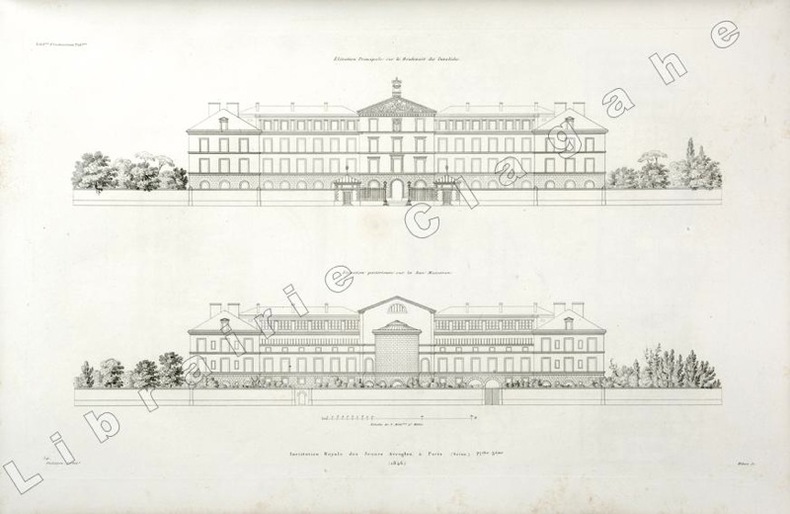
1846réf. 19809(Paris, 1846) ; in folio, toile vert foncé, double encadrement de filets dorés maigre et gras, tranches dorées, titre doré en long ; papier de garde multicolore peigné (reliure de l’époque); [4], 6 planches gravées de plans des bâtiments et des jardins situés au N°56 du boulevard des Invalides à Paris.
195280 pages. Features: Magnificent cover illustration by William Winter depicts a quintessentially Canadian backyard skating rink; Household Finance (HFC) ad on page one features photo of Mr. J.B. Vaillancourt, manager of the Shawinigan Falls, Quebec office; Our Sham Defense Battle - Editorial; Krupp, Schacht and Rommel - Beverley Baxter reflects on what happened at the Castle Harben on October 1, 1946 in the wake of the Nuremberg Trials verdicts; William Stephenson - The Biggest Private Eye of All - he directed the most secret of all cloak-and-dagger operations of the Second World War - here, for the first time, is the story of the man who pulled the strings which spiked Hitler's guns in the western hemisphere - article with photo; Dr. Gordon M. Bell's School for Sobriety - The Shadow Brook Health Foundation for men and the Willowdale Hospital for Women, both located on the outskirts of Toronto; Karsh's Charlottetown (PEI) - The City That's One Big Farm - article with great Karsh photos, especially a large shot of Premier Walter Jones meeting voters to resolve their issue, and another of Dr. Roderick Macdonald at age 94; Maude Burbank and her Musical Moppets - she takes care of two musical bands of Moncton youngsters; Manitoulin Island - The Eden Isle of Evil Spirits - article with nice colour photos; What the Boyd Gang Fiasco Can Teach Us - the Mayor or Toronto, Allan Lamport assails conditions which helped the Boyd Gang terrorize his city; The Slide That Shook The West - A Maclean's Flashback article to the April 29, 1903 Frank Slide, in which part of Turtle Mountain crashed into Crowsnest Pass, destroying the town of Frank; The World's Most Ardent Birdwatcher - Peter Scott, the gifted son of Scott of the Antarctic will fly anywhere to gaze lovingly at rare wildfowl - article with photos; You Can't Stop a Woman Crying; Nice one-page colour ad for Stanfield's "Look-Alike" Balbriggan Pajamas with happy family scene; Gaines Meal dog food ad features illustration of Saint Bernard; Vintage Frigidaire ad includes lengthy Christmas message and suburban evening scene of appliances being delivered to happy homes; Cream of Wheat ad features Li'l Abner; Vintage colour ad for Christie's Premium Crackers; Colour centrefold ad for Ekco and their many kitchen products; Champion Spark Plug ad includes photos of 12 new members of the 100-mile-an-hour club at Indianapolis; Two-page colour ad for Revere Cookware - 'the world's finest'; Lightning Zipper ad shows irate wife fixing husband's trousers while he stands, semi-dressed, taking her abuse; and more. Unmarked with moderate wear. Two-inch opening to fore-edge of front cover and first two pages mended with archival tape. A sound copy of this very special issue. Book
réf. 240085Paris, imprimerie Nationale, 1791 in-4, 216 pp., 9 tableaux repliés, veau fauve, dos lisse orné aux petits fers, roulette d'encadrement sur les plats, tranches dorées, coupes guillochées, roulette intérieure (reliure de l'époque).
1934445 pages. Index. Translator's Note. First English language edition, translated from the second (1924) German edition. "A detailed sophisticated explanation of the quantity theory of money based on the subjective, marginal utility theory. Explains money's origin, the development and nature of banking, the cause and consequences of inflation and credit expansion, the differences in the value of different moneys, as well as the reason for 'cyclical' economic fluctuations." (B2 Greaves & McGee). Black top stain. Bottom edge uncut. Above-average wear to black cloth exterior. Narrow opening between backstrip and back board. Quarter-inch missing from top of backstrip which bears bright gilt lettering. No external markings. Usual internal library markings. Minor quantity of light pencil marginalia and underlining to contents. A worthy reading copy of this classic work by the famed libertarian and prominent member of the Austrian School. COHEN 72, GREAVES & McGEE p.11 Book
1980A treasure from the formative years of jazz diva Diana Krall. In 1980 Diana graduated from Woodlands Junior Secondary School in Nanaimo, British Columbia on Vancouver Island, Canada. Her photo first appears on page 19 where she is recognized on the 1978-79 Arts Honour Roll. On page 121 in the Band section appears a gorgeous head-shot of a young Diana playing the saxophone, beneath which appears the caption 'Diana!'. Michelle Krall, Diana's younger sister, appears on page 106. Finally, Diana's graduation photo and write-up appear on page 58. Beside her photo we read "Diana Piano resembles her Dad. In her spare time she eats and sleeps. Her life ambition is to replace Oscar Peterson. 'Way to go, Diana!'". Diana's current global superstardom is clearly no accident! The book itself is clean, tight and unmarked with very light wear. An excellent copy of this truly wonderful and inspiring item. Book
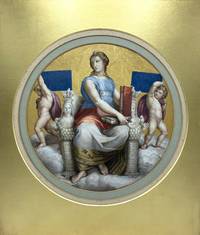
1850réf. 1791Original artwork. c.1850. Tondo watercolour and gilt painting on paper after Raphael's ceiling fresco representing 'Philosophy' depicting an allegorical female figure sat upon an elaborate marble throne with carved ancient symbols her clothes decorated with different designs emblematic of the four elements air fire water and earth in her hands are two books signifying the two main fields of her discipline: 'Naturalis' and 'Moralis'; she is flanked on either side by putti holding tablets inscribed "Causarum" and "Cognitio" standing upon a ground of clouds with a gilt background. 30 cm in diameter. Laid down to period card and contained within a nineteenth-century gilt card mount 47.5 x 40.5 cm. There is a very minor white dot to the foot of the clouds and some light foxing otherwise the painting is in very good condition. A highly-accomplished mid-nineteenth-century copy of Raphael's medallion representing the Allegory of 'Philosophy' on the ceiling of the Stanza della Segnatura in the Vatican Palace originally executed in 1509-11. Initially commissioned by Pope Julius II the medallion was one of four created by Raphael for what is thought to have been the Pope's library with the quartet representing the four areas of knowledge theology poetry philosophy and jurisprudence. [Original artwork]. hardcover