Japanese SchoolBiblio.com
37.386 Ergebnisse
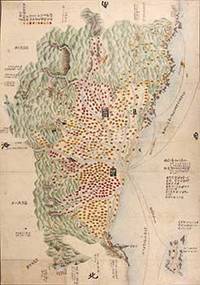
Best.-Nr. 51-2947Japan: 19th Century. Manuscript map of Sakata and Tsuruoka on the coast of northern Japan indicating the sea routes to Akita to the north and Niigata to the south Mount Gassan shown to the south-east and Mount Chokai to the north a color key to the the various affiliations of the neighbourhoods pen and black ink with watercolor on four sheets joined 785 x 535mm. a few minor repairs old folds 19th century Japan: 19th Century unknown
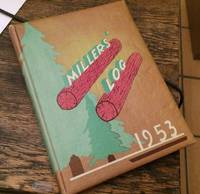
1953Best.-Nr. 056295Springfield OR: Springfield High School 1953. 1st . Hardcover. Very Good/No Jacket. 4to - over 9¾" - 12" tall. 152pp.incl.index; HB lt.brwn.w/greenwhite&red-pic.cover; some rub w/wear on edges&corners; usual signaturesetc.otherwises cleantight pgs. Springfield Oregon yearbook - writer Ken Kesey's senior year covered. Photos of Kesey on pgs. 2430316372769097105116117129&130. Springfield High School hardcover
Best.-Nr. SONG0913461156Used: Good unknown
Best.-Nr. DADAX0671868624New unknown
Best.-Nr. 2111902160200707Shahon N.A. Soft Cover. Fine. Volume: 1 Shahon paperback
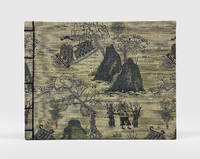
1930Best.-Nr. 176834Chefoo: Self-help Department Women's Bible School Presbyterian Mission c. 1930. A dainty album of handmade papercuts by Chinese students at the Ai Dao Women's Bible School attached to the American Presbyterian Mission in Chefoo. Throughout the 1930s the school produced various themed papercut collections to raise funds and comparison with other copies of the same title reveals that each was bound in brocade of a unique design. The collection tells the story of seven moral exemplars who all displayed obedience and respectfulness towards their elders even when faced with hardships. The story of Jiang Si is typical: "The mother of this boy demanded fish to eat every day and insisted that all their food be cooked in spring water. This kept the family hard pressed as the son had to waste half of each working day while fishing. His little wife had to make a long trip to get the spring water also. But they did this uncomplainingly till in appreciation of such devotion the fairies gave them a wonderful spring right by their door and in it each day they found two fish!" The education of women became a priority for social reformers in the wake of the May Fourth Movement and schools like Ai Dao were at the forefront of this revolution in education. Landscape octavo 181 x 234 mm ff. 8. Papercut showing a master and his student mounted on title page 7 similar papercuts with captioned glassine guards. Original decorative silk brocade black thread xianzhuang stitching edges untrimmed. Explanatory sheet loosely inserted as issued. Light rubbing explanatory sheet creased and nicked in one corner: a fine copy. unknown
Best.-Nr. DADAX0025980602New unknown
Best.-Nr. 2090502128700756Kodansha N.A. Soft Cover. Fine. Size: Number of books in axle box: 1 book Kodansha paperback
1873Best.-Nr. 2111902156202536Not Available 1873. Soft Cover. Fine. Number of books: 3 Not Available paperback
Best.-Nr. 94034aafZürich, Fr. Schmelhaus Limmatquai 62, 1940, quer in-4vo, 14 feste Fotoalbumseiten mit 52 eingefügten Originalfotos in S/W (bis 23x17 cm), letzte Seite bedruckt, sehr guter Zustand, Fotoalbumpappeinband d. Z. mit goldgepr. Titel auf Vorderdeckel, schönes Exemplar.
Best.-Nr. 82911aafn.d. (1816), 10x16.5 cm, Original watercolour. / Aquarelle originale et lavis d’encre sur papier épais, 1 feuille avec passepartout.
2004Best.-Nr. 201081021095HARCOURT SCHOOL PUBLISHERS 2004-05-01. Spiral-bound. Good. good condition pages are clean and free of written markings except for name on title page or inside cover light wear to corners and edges has dust jacket where applicable ships same or next business day HARCOURT SCHOOL PUBLISHERS unknown
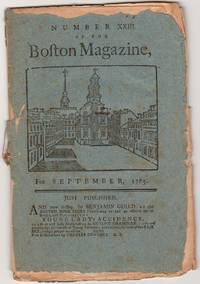
1785Best.-Nr. 3784Founding of Harvard Medical School The Boston Magazine was published from October 1783 to December 1786 and was the first magazine to be published in Boston in the aftermath of the American Revolution. A major attraction of this issue is the presence of the front and rear printed wrappers although they are frayed and detached. The front wrapper features a large woodcut of the State House and surrounding buildings in Boston.The first 3 1/2 pages of the Magazine are Harvard's announcement from September 1783 of the creation of "the Medical Institution" now known as Harvard Medical School. This is followed by about two pages of an address "to the students in physic" i.e. the medical students reflecting upon the first two years of the medical school and outlining the requirements for a medical degree. About two pages are devoted to the sailing directions into and out of Plymouth Harbour. A brief news item in the "Monthly Chronology" reports a meeting to be held in October in Falmouth in the District of Maine on creating a "separate government" for the eastern counties -- a very early report on a separation that would not happen for another 35 years. Issues of The Boston Magazine in the original wrappers are extremely uncommon.References: Mott A History of American Magazines 1741-1850: Vol. I p. 28. Richardson A History of Early American Magazines 1741-1789: pp. 212-227. Lomazow American Periodicals: 15. Condition: Signatures loose. Front and back wrappers present but frayed and detached; top 1/2" or so of front wrapper lacking. Occasional spotting. Interior pages very good. ICN 2933. Printed and published by Edmund Freeman
1850Best.-Nr. 8857Paris 1850. Pencil pen and wash drawing with numerous detailed measurements. A fascinating and beautiful drawing--or "rendu"--of an ancient Roman sarcophagus. A fine drawing from an architectural student at the Ecole des Beaux-Arts in Paris the most influential architectural school in existence during much of the 18th century the whole of the 19th century and the first part of the 20th century. 'Students were eligible for the Ecole if they were at least fifteen years old or under thirty. They began with the seconde classe in which they competed in the concours d'émulation. These alternated between an esquisse --a rough sketch for which up to twelve hours was allowed--and a rendu --the large-scale finished drawing for which one to three months were allowed.Two to four years were usually required for a student to accumulate enough credits to enter the première classe. The same system was followed again usually for two to three years after which the student should have accumulated enough credits to compete for the Grand Prix de Rome. The winner of the Grand Prix was entitled to five years study under the auspices of the French Academy in Rome. For each of his first three years he was required to submit an analytical study of an ancient monument. For his fourth year he had to submit a complete reconstruction of a major classical work. For his fifth year he was required to submit an original work designed to a program of his own invention. "This study of the sarcophagus of Lucius Cornelius Scipio Barbatus was part of an Ecole de Beaux Arts student's portfolio. The sarcophagus was one of many in the Scipio family tomb on the Via Appia just outside of Roma and it dates from c. 290 B.C. The obituary text reads English "Lucius Cornelius Scipio Barbatus son of Gnaeus a valiant gentleman and wise whose fine form matched his bravery very well was aedile consul and censor among you he conquered Taurasia and Cisauna in fact Samnium he overcame all the Lucanian lands and brought back hostages." Arthur Drexler The Architecture of the Ecole des Beaux-Arts. New York MoMA 1977. unknown
1850Best.-Nr. 8857Paris 1850. Pencil pen and wash drawing with numerous detailed measurements. A fascinating and beautiful drawing--or "rendu"--of an ancient Roman sarcophagus. A fine drawing from an architectural student at the Ecole des Beaux-Arts in Paris the most influential architectural school in existence during much of the 18th century the whole of the 19th century and the first part of the 20th century. 'Students were eligible for the Ecole if they were at least fifteen years old or under thirty. They began with the seconde classe in which they competed in the concours d'émulation. These alternated between an esquisse --a rough sketch for which up to twelve hours was allowed--and a rendu --the large-scale finished drawing for which one to three months were allowed.Two to four years were usually required for a student to accumulate enough credits to enter the première classe. The same system was followed again usually for two to three years after which the student should have accumulated enough credits to compete for the Grand Prix de Rome. The winner of the Grand Prix was entitled to five years study under the auspices of the French Academy in Rome. For each of his first three years he was required to submit an analytical study of an ancient monument. For his fourth year he had to submit a complete reconstruction of a major classical work. For his fifth year he was required to submit an original work designed to a program of his own invention. "This study of the sarcophagus of Lucius Cornelius Scipio Barbatus was part of an Ecole de Beaux Arts student's portfolio. The sarcophagus was one of many in the Scipio family tomb on the Via Appia just outside of Roma and it dates from c. 290 B.C. The obituary text reads English "Lucius Cornelius Scipio Barbatus son of Gnaeus a valiant gentleman and wise whose fine form matched his bravery very well was aedile consul and censor among you he conquered Taurasia and Cisauna in fact Samnium he overcame all the Lucanian lands and brought back hostages." Arthur Drexler The Architecture of the Ecole des Beaux-Arts. New York MoMA 1977. unknown books
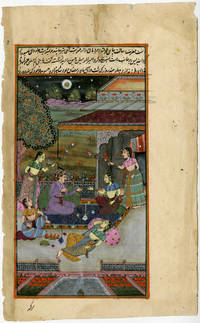
Best.-Nr. 9171750. Good. Gouache and ink with heightening in gold on lightweight brown laid paper 10 x 6 1/4 inches 254 x 159 mm the full sheet. Some scattered light areas of discoloration and age related toning small edge losses and scattered handling tear along the left sheet edge well outside of the image area. Extensive hand inscriptions in black and red ink on the verso. Colors are exceptionally bright and fresh with good saturation. Mirza Nur-ud-Din Muhammad Salim 30 August 1569 - 28 October 1627 known by his imperial name Jahangir "Conqueror of the World' was the fourth Mughal Emperor who ruled from 1605 until his death in 1627. He was the third and only surviving son of Akbar and his chief empress Mariam-uz-Zamani born to them in the year 1569. He was named after the Indian Sufi saint Salim Chishti. -Singh Pashaura; Fenech Louis E. eds. 2014. The Oxford handbook of Sikh studies. Oxford University Press. p. 647. ISBN 978-0-19-969930-8. unknown
Best.-Nr. 1589Signé et daté "L.Delecey 1826",
1960Best.-Nr. 28178nantes 1960 Un dessin original au fusain, Format : 50 centimètres de haut par 63,5 centimètres de large, sur papier contrecollé sur carton marron clair, signé en bas à droite : P. DAUCE, sans date (1960), DESSIN ORIGINAL AU FUSAIN : "VENEZ AVEC NOUS CHEZ LA DAME ET DANS SON JOLI JARDIN" - NOTRE DAME DE L'ESCALADE (GARDERIE EN FAVEUR DES ENFANTS DU MARCHIX - COURS DE DÉCORATION E.B.A.[ECOLE DES BEAUX ARTS DE NANTES] NANTES) par PAUL DAUCE,
1751Best.-Nr. 15903Paris, Hochereau, 1751 ; in-12 ; plein veau marbré, dos lisse décoré "à la grotesque", pièce de titre grenat, roulette décorative d'intérieur (reliure de l'époque) ; XXXII, 326, (2) pp. de Privilège, portrait de Rembrandt gravé par J.B.G. en frontispice.
1828Best.-Nr. PHO-1950Paris, Firmin Didot, 1828, 2 tome en 1 volume in-4, VII-461pp.-435pp., sans couverture, manque les pages de titres (copie), quelques rousseurs.
Best.-Nr. 101568Salamanticae (Salamanque), Apud Ioannem & Andream Renaut Fratres, 1595, 1 volume 290x210 mm environ, 6 feuillets (titre avec large vignette, Licencia, as lectorem, Censurae), 718 pages, 12 feuillets (index, , reliure plein parchemin crème, impression sur 2 colonnes. Quelques déchirures et auréoles sur la couverture, des rousseurs rares, tampons sur la page de titre et p.9, ex-libris sur le premier contreplat, des mouillures marginales et pages brunies, des erreurs de pagination sans manque, petits défauts de marge par endroits, sinon bon état.
Best.-Nr. 2312111829 à vue : 8.5 x 12.5 cm - cadre : 29.5 x 35 cm , cadre moderne en bois et stuc peint Petits manques au cadre
1925Acquaforte su lastra di zinco, misure: mm 103 x 190; foglio mm 375x 505. In basso a destra timbro a secco «Centenario Gio. Fattori 1925». Lastra conservata presso il Gabinetto Disegni e Stampe degli Uffizi. Esemplare appartenente alla tiratura Benaglia, eseguita in occasione del centenario dalla nascita di Giovanni Fattori nel 1925, quando Giovanni Malesci (nominato dal Maestro suo erede universale) decise di dare alle stampe 164 lastre (per un totale di 166 fogli, perchè due incise anche sul verso) tra le 178 ritrovate nello studio di Fattori stesso. Così furono eseguite 2 tirature da 50 esemplari presso l’editore Benaglia di Firenze, a seguito delle quali le matrici furono donate al Gabinetto dei Disegni e delle Stampe degli Uffizi. Bellissima impressione stampata su carta con filigrana "Corona merlata sulla scritta UMBRIA / ITALIA" e filigrana "Ovale con lettere CPO". Ampi margini intonsi, ottima conservazione. Pittore e incisore. Viene soprattutto ricordato come uno dei principali esponenti del movimento dei Macchiaioli e come artista di spicco nel panorama ottocentesco, nonché come prolifico incisore dal segno vivace e del tutto personale. Fattori era solito stampare da sé i suoi lavori utilizzando un piccolo torchio, esegue tirature irregolari spesso contraddistinte da una ricerca per gli effetti di chiaroscuro e da un uso sapiente delle velature. Gli esemplari di una stessa lastra sono perciò spesso differenti, più carichi e attenti agli effetti di luce nelle tirature curate dall’autore, meno caldi e più nitidi quelli fatti stampare presso la Calcografia. Il ritratto, i soggetti militari, testimonianza dell’interesse verso i fatti risorgimentali, gli animali della campagna e gli scorci di vita comune sono i soggetti che più lo impegnano. Bibliografia L. Servolini, 177 Acqueforti di Giovanni Fattori, Milano 1982, n. 87; 1983. Etching on zinc plate, size mm 103 x 190; sheet mm 375x 505. Bottom right stamp "Centenario Gio. Fattori 1925". The plate is kept at the Cabinet Drawings and Prints of the Uffizi. Example belonging to the Benaglia issue, made on the occasion of the centenary of the birth of Giovanni Fattori in 1925, when Giovanni Malesci (appointed by the Master as his universal heir) decided to print 164 plates (for a total of 166 sheets, because two of them were also engraved on the reverse) from among the 178 found in Fattori's studio. Thus, two issues of 50 copies were printed by the publisher Benaglia of Florence, and afterwards the plates were donated to the Gabinetto dei Disegni e delle Stampe of the Uffizi. Beautiful impression printed on paper with watermark "Crown embattled on the writing UMBRIA / ITALY" and watermark "Oval with letters CPO", wide margins uncut, mint. Literature L. Servolini, 177 Acqueforti di Giovanni Fattori, Milano 1982, n. 87; 1983.