38.302 risultati
191897-192, 126 [ads] pages. Profusely illustrated with detailed drawings and black and white photos. Printed upon glossy stock. Includes dozens of magnificently illustrated ads. Features: The Residence of Charles D. Blaney, Esq., Saratoga, California - Willis Polk & Co, Architects; The Art of the Middle Ages - Part I; The Destruction of Historic Buildings as Revealed by the Official French War Photographs - Part III - Parish Churches; The Memorial Quadrangle of Yale College - James Gamble Rogers, Architect; English Architectural Decoration - Part IV - text and measured drawings; The Small Country School House; Community Courts for Factory Workers; The Architect's Library - War Books of the Cathedrals - Part II - Verdun; Notes and Comments. Above-average wear. Lacking covers. Two small binding holes near spine. Last page of advertising loose but present. Not pretty but a worthy vintage copy. Book
1929Splendid cover illustration of planes in spotlights by W. Gord. Wallace. 40 pages. Features: Nice Fairchild ad with photos of their Wasp, 21 and 41 models; Great photo ad for Canadian Vickers Limited showing their Vedette; Canadian Pacific Express photo ad shows packages beinng loaded into plane from a truck - super vintage ad for Canada's first air express service; Photo ad for Armstrong-Siddeley's Jaguar 455 H.P. air-cooled static radial engine; Great article with five photos discusses Industrial Photography in aviation - with aerial photos of American Falls at Niagara, Industrial Hamilton, General Motors of Canada's Oshawa Plant, and Ontario Hospital at Hamilton; The National Aeronautic Association of the United States - article by Senator Hiram Bingham; Saskatoon Aero Club - article with two photos including R. Randall, C. Yule, R. Schwinghammer, Dr. L. McConnell, T. Sigsworth, J.F. Bythell, S. McClelland and R. Mayson; News from the flying clubs; Expansion announced by Canadian Vickers, Limited; Photo of the inauguration of Canadian Pacific Express bi-weekly air service; Formation of the Canadian Pratt & Whitney Aircraft Company; New metal Gipsy Moth passes strict government tests - article with photos; Helioplane developed by John E. Hess of New Westminster, B.C. - article; Great full-page photo ad for the Gipsy Moth by De Havilland; Short-wave wireless transmitter devised by R.N. Johnston and Charles Ward, two young engineers of the Ontario Forestry Branch; Ad for Montreal's Continental School of Flying with photo of Capt. J.H. St. Martein; Principles of Aeroplane Construction - article; Super vintage full-page photo ad for the rotary "Snow King" plow by J.S. Innes Limited; Full-page ad for the Wright Whirlwind engine; Nice full-page ad for the Woods Manufacturing Company of Ottawa shows their flying suits; Ad for the Monocoupe inside back cover; Rambler ad on back cover promotes their all-metal lighte aeroplanes. Average wear. Binding intact. One-inch opening to top of coverfold. A sound vintage copy of this excellent early issue. Book
1923Abundant black and white illustrations and reproductions of photos. Features: 'Twixt Sunset and Sunrise - Mining Engineer William Bartle relates a story from Mexico where, outside the large cities "no foreigner's life is worth a farthing"; The Cannibal Islands - Part II - photo-illustrated article by Clifford Collinson who has lived in the Solomon Islands for several years and, in this instalment, visits the little-known atolls of Ong-Tong-Java, with nice photos; The Disappearance of Annie Mooney - A thirty-year-old mystery is solved in a strange and unlooked-for manner - was she kidnapped by the Chinese all those years ago?; The Most Wonderful School in the World - A remarkable "sun-cure" establishment at Aigle in the Swiss mountains where children - recently hopeless cripples - learn their lessons and romp in deep snow clad only in loin-cloths and boots! - with photos; Obyada, Bad Indian - story related by a member of the Royal North-West Mounted police about a troublesome individual near Red Deer, Alberta; The Rum-Runner - the story of a sea captain's first smuggling voyage, as told in St. Pierre, headquarters of a fleet of ships engaged in the liquor-running business; Soliman the Seer - the mysterious fortune-teller of the Pyraid of Cheops; The Children of the Wilderness (Conclusion) - Juliet Bredon's photo-illustrated travels in little known Mongolia; A Wildfowling Adventure - a nasty little adventure on the Solway Firth; Fishing for Crocodiles - using a special hook and line; On Patrol - a quaint little experience related by a flying officer of the Royal Air Force; The MIssing Links - An Indian magician discovers a thief when the police had failed; Round the World With a Lasso - former Texas Ranger Captain George Ash tours the world giving exhibitions and training troops in the use of the lasso - article with photos; The Strangest Mutiny on Record - The Schooner Pedro Varela; Six Hundred Thousand Francs - One of the most audacious jewel robberies ever perpetrated (in Paris); and more. 88 pages plus 16 pages of nostalgic ads. Clean and unmarked with light wear. A quality copy of this excellent vintage issue. Book
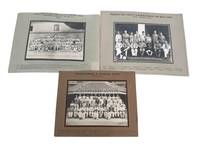
1930rif. 236621930. British Indian railway and military administrative staff photo archive circa 1930s to 1943 documenting the trained Indian clerical instructional stores and supervisory personnel who operated institutions central to colonial transportation and wartime logistics. The principal photograph depicts the instructional and clerical staff of the Railway Training School at Bina the first Area School established by the Great Indian Peninsula Railway which operated there from 1926 until its transfer to Bhusawal in 1962. The two dated portraits extend this administrative record to the Rawalpindi Arsenal in 1942-43 and the Cantonment Board at Ambala in 1941 placing railway education beside military supply and cantonment government during the Second World War. Photo archive of 3 Large silver gelatin photographs mounted on cardstock Each Photographer boards measure 12 x 16 inches and Photograph 8½ x 11 inches Bina Rawalpindi and Ambala India circa early 1940s. The Bina portrait identifies approximately sixty members of the "Instructional & clerical staff R.T.S. Bina" posed in six rows before a tiled railway building bearing the sign "The Railway Training School." A second photograph captioned "Clerical staff including Stores Branch of Rawalpindi Arsenal" records employees photographed at the departure of S. Avtar Singh in 1942-43; a printed roster identifies staff by row and includes many locals. The third photograph records a farewell to Lieutenant Colonel G. Leslie-Mold president of the Cantonment Board at Ambala on April 25 1941 with British military officers and Indian civilian officials identified beneath the image. Leslie-Mold later served as Assistant Adjutant General and Director of Personnel Services at Army Headquarters in India. Railway schools developed as the expanding colonial network required standardized instruction in traffic control station procedure accounting freight handling signaling and the clerical routines through which trains goods and personnel were coordinated across long distances. Railways allowed the British administration to move troops rapidly supply cantonments and arsenals connect agricultural and mineral districts with ports and impose common schedules and bureaucratic procedures across the colony; they also created a large Indian technical and clerical workforce whose knowledge kept the system operating. The portraits record this institutional hierarchy with European officers occupying senior positions while Indian instructors accountants clerks store employees and subordinate officials form the numerical body of each organization. Surface wear toning rubbed edges corner losses and occasional marks to the mounts; photographs remain generally clear and well defined. Overall in good condition. A concentrated visual record of the Indian personnel who sustained railway instruction military provisioning and cantonment administration within the transport and defense infrastructure of late British rule. unknown
1930rif. 236621930. British Indian railway and military administrative staff photo archive circa 1930s to 1943 documenting the trained Indian clerical instructional stores and supervisory personnel who operated institutions central to colonial transportation and wartime logistics. The principal photograph depicts the instructional and clerical staff of the Railway Training School at Bina the first Area School established by the Great Indian Peninsula Railway which operated there from 1926 until its transfer to Bhusawal in 1962. The two dated portraits extend this administrative record to the Rawalpindi Arsenal in 1942-43 and the Cantonment Board at Ambala in 1941 placing railway education beside military supply and cantonment government during the Second World War. Photo archive of 3 Large silver gelatin photographs mounted on cardstock Each Photographer boards measure 12 x 16 inches and Photograph 8½ x 11 inches Bina Rawalpindi and Ambala India circa early 1940s. The Bina portrait identifies approximately sixty members of the "Instructional & clerical staff R.T.S. Bina" posed in six rows before a tiled railway building bearing the sign "The Railway Training School." A second photograph captioned "Clerical staff including Stores Branch of Rawalpindi Arsenal" records employees photographed at the departure of S. Avtar Singh in 1942-43; a printed roster identifies staff by row and includes many locals. The third photograph records a farewell to Lieutenant Colonel G. Leslie-Mold president of the Cantonment Board at Ambala on April 25 1941 with British military officers and Indian civilian officials identified beneath the image. Leslie-Mold later served as Assistant Adjutant General and Director of Personnel Services at Army Headquarters in India. Railway schools developed as the expanding colonial network required standardized instruction in traffic control station procedure accounting freight handling signaling and the clerical routines through which trains goods and personnel were coordinated across long distances. Railways allowed the British administration to move troops rapidly supply cantonments and arsenals connect agricultural and mineral districts with ports and impose common schedules and bureaucratic procedures across the colony; they also created a large Indian technical and clerical workforce whose knowledge kept the system operating. The portraits record this institutional hierarchy with European officers occupying senior positions while Indian instructors accountants clerks store employees and subordinate officials form the numerical body of each organization. Surface wear toning rubbed edges corner losses and occasional marks to the mounts; photographs remain generally clear and well defined. Overall in good condition. A concentrated visual record of the Indian personnel who sustained railway instruction military provisioning and cantonment administration within the transport and defense infrastructure of late British rule. unknown books
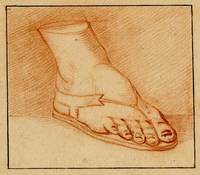
1700rif. 13751700. Very good. Red chalk on cream laid paper 6 3/8 x 7 inches 160 x 176 mm the full sheet. In very good condition with minor toning and some modern notations in pencil on the verso as well as a rudimentary sketch of the top of a foot with toes also in red chalk. unknown
1923rif. 180751923. Unique. Commercial album meas. 180 x 285 mm. Very good. Oblong 4to string-tied commercial album containing 104 black and white photographs majority with hand written captions. A keepsake album assembled by an anonymous female student of her classmates and friends at the nursing school. It shows the hospital grounds and groups of doctors and nurses all identified with patients in the operating room etc. and also on outings. unknown books
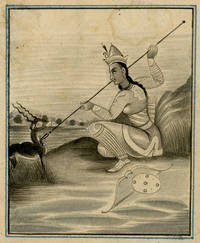
rif. 13321890. Good. Pencil and black ink on cream laid paper with a border drawn in light blue ink 6 x 5 1/8 inches 153 x 130 mm. Scattered light surface soiling and multiple soft horizontal folds. Nur Jahan was fond of hunting and often went on hunting tours with her husband and was known for her boldness in hunting ferocious tigers. She is reported to have slain four tigers with six bullets during one hunt. According to Sir Syed Ahmad Khan this feat inspired a poet to declaim a spontaneous couplet in her honor: "Though Nur Jahan be in form a woman In the ranks of men she's a tiger-slayer" - Unknown Poet Banks Findly Ellison 11 February 1993. Nur Jahan: Empress of Mughal India. Oxford UK: Nur Jahan : Empress of Mughal India. ISBN 9780195074888. unknown
1920rif. 15311920. Good. Pen and brownish brown ink with gouache on cream wove paper 9 5/8 x 7 1/2 inches 245 x 190 mm the full sheet. In good condition with light attenuation and minor toning. Minor handling wear and a vertical edge tear at the top right sheet edge extending appx. 1/4 inch into the image area. unknown
1944rif. 647681 vol. in-4 br., Imprimerie Desfossés-Néogravure, Paris, 1944, 35 pp.
1943rif. 2092902143902060Dalian Music School 1943. Soft Cover. Fine. Number of books: 1 book Dalian Music School paperback
1943rif. 2092902143802096Dalian Music School 1943. Soft Cover. Fine. Number of books: 1 book Dalian Music School paperback
1910rif. 2092902143900793Hakubunkan 1910. Soft Cover. Fine. Number of books: 1 book Hakubunkan paperback
1910rif. 2092902143800793Hakubunkan 1910. Soft Cover. Fine. Number of books: 1 book Hakubunkan paperback
1969rif. 2082402113506267Taiyo-sha 1969. Soft Cover. Fine. Number of books: 5 Taiyo-sha paperback
rif. 1516711459-11-1Mometrix Media LLC. Very Good. It's a well-cared-for item that has seen limited use. The item may show minor signs of wear. All the text is legible with all pages included. It may have slight markings and/or highlighting. Mometrix Media LLC unknown
rif. 72909aafBern, L. N. Walthardsche Buchhandlung, 1819, in-8vo, 162 S. (Titelbl. mit gest. Titelvignette) + 2 Bl. (hinteres Vorsatzbl. ausgerissen), sonst sehr frisch, Halb-Pergamenteinb.d. Zeit, mit Ecken, Deckel beschabt, Rücken oben und unten etwas eingerissen, ansonsten guter Zustand,
rif. 56500aafFribourg, imprimerie Saint-Paul, 1914, gr. in-4to, frontispice (J.-B. Jaccoud) XII + 219 p. ill. + 25 planches + 1 planche dépliante + 2 dessins originales en couleurs, nom ms. sur garde, cartonnage original ill., dos en toile.
2014rif. 2081502111901945Chinese book office 2014. Soft Cover. Fine. The book is in fine condition. Chinese book office paperback
18048vo., [First? Edition], text in French, only the most minimal age-staining; handsomely bound in contemporary full roan, boards with elaborate decorative triple frame border in gilt, back with flat bands, second compartment with red leather label ruled and lettered in gilt, all other compartments richly tooled in gilt lattice, marbled edges, marbled endpapers, a remarkably well-preserved, crisp, clean copy in wholly unrestored contemporary binding. A rare arithmetic primer constructed on the mother-son principle, with 'Adolphe' pursuing his learning through structured conversations with 'La Mere'. EXTREMELY SCARCE, THE MORE SO IN THIS CONDITION. Fourcroy 1801.
rif. DADAX1138776165New unknown
rif. SONG0988937514Used: Good unknown
rif. DADAX0415988470New unknown
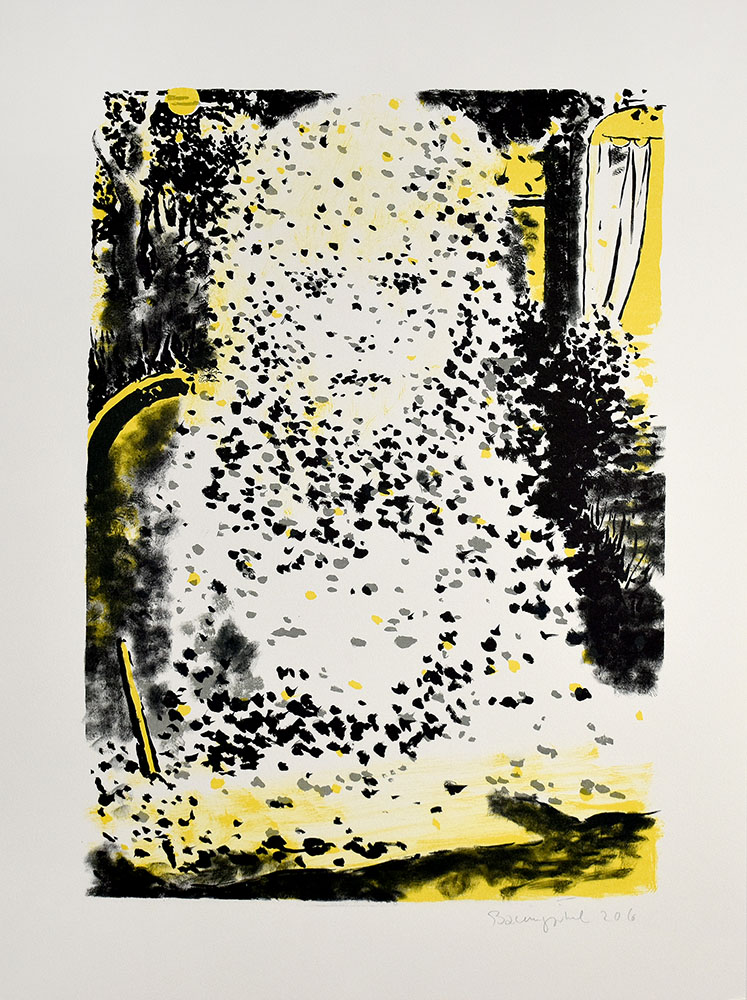
rif. 14886DBo.J. Tilo Baumgärtel, geboren 1972 in Leipzig. Zeitgenössischer Maler. Studium 1991 bis 1994 an der Hochschule für Grafik und Buchkunst in Leipzig, 1994 bis 1998 Fachklasse Malerei bei Arno Rink, dessen Meisterschüler er 1998 bis 2000 war. Vertreter der sogenannten Neuen Leipziger Schule. [3 Warenabbildungen]
1923Xilografia a due legni, 1923, siglata sul legno in basso a sinistra. Firmata a matita in basso a destra. Numerata a matita in basso a sinistra: 132/154. misure: mm 170 x 245. Timbro a secco in basso al centro. Impressione eccellente su carta avorio liscia. Ottimo stato di conservazione. Ampi margini oltre la linea marginale. Pittore, incisore e illustratore italiano. Si forma inizialmente a Bologna all’Accademia di Belle Arti e una volta ottenuto il diploma, nel 1892 si trasferisce a Roma. Qui conosce il poeta Nino Costa fondatore del cenacolo In arte libertas che proponeva un rinnovamento dell’arte attraverso la riscoperta dei grandi del Quattrocento sull’esempio dei Preraffaelliti. De Carolis inizia così a frequentare questo gruppo e ne diventa membro iniziando a realizzare dipinti di impronta preraffaellita. Nel 1900 conosce il poeta Giovanni Pascoli per il quale disegna ed esegue un pomo in argento e la targhetta per il bastone dono degli amici della rivista fiorentina Marzocco, inizia quindi ad occuparsi della decorazione grafica di alcune pubblicazioni del poeta. Tale collaborazione si rivela importante nella produzione artistica tra il 1892 e il 1928, perché le opere di questo periodo trattano paesaggi agresti e marini che risentono dell’intonazione pascoliana. Nel 1901 De Carolis lascia Roma per Firenze, dove insegna ornato all’Accademia di Belle Arti dedicandosi alla xilografia. Questa tecnica sarà a lui molto cara e primo in Italia riprenderà l’antica tecnica della xilografia policroma a più legni. Numerose saranno i fogli singoli o le illustrazioni per varie riviste e per le opere dell’amico D’Annunzio. Bibliografia Bardazzi/Carli/Djokic, 50. Amadio/Papetti, 78-79. Conti, 29. Woodcut from two block, 1923, signed at lower left. igned in pencil at lower right. Numbered in pencil lower left: 132/154. Sice: 170 x 245 mm. Dry stamp at bottom center. Excellent impression on smooth ivory paper, wide margins. Size: mm 170 x 245. Adolfo de Carolis (1874 - 1926), was born in Montefiore dell’Aso on the 6th of January 1874. He moved to Rome and was accepted as a member of the exclusive society ‘In Arte Libertas’ (Freedom in Art’) which had been founded by his close friend Giovanni (‘Nino’) Costa. This society opposed official styles promoted by the academies and influential art critics of the day and espoused the politics, philosophy and aesthetics of the British Pre-Raphaelite movement. The main figures in the British movement were William Morris, Dante Gabriel Rossetti, Edward Burne-Jones and Walter Crane. These groups were also almost certainly involved with the Freemasons, and much of the symbolism in their work have been identified as Masonic. De Carolis exhibited work at the In Arte Libertas annual exhibition right up to 1901. De Carolis was an artistic polymath, working as a painter (in particular of murals), interior designer, decorator, xylographer (wood engraver), illustrator and photographer, and is probably the best known exponent of Art Nouveau in Italy. He was commissioned to produce murals for the Villa Brancadoro in San Benedetto del Tronto, and the ballroom of the Palazzo della Provincia (both in Ascoli Piceno). He also decorated the great hall of the Palazzo del Podestà in Bologna with murals. He designed the Baptismal Font at the Cathedral of Ajaccio, and contributed decoration and murals in many other illustrious edifices around Italy, as well as supervising restoration work in the Borgia apartments in the Vatican. He is also known for his stained glass and mosaics at the Villa Puccini in Torre del Lago. His talent and originality was quickly recognised by two of the greatest Italian writers and poets of the day, Gabriele D'Annunzio and Giovanni Pascoli, and he became their preferred illustrator. Among his most popular works were many illustrations for Gabriele d'Annunzio's novels (Il Notturno, La figlia di Jorio) and Giovanni Pascoli‘s books of poems. In 1908 his work was described by a panel of judges in Bologna as ‘magnificent, full of evocative fervour, rich in imagination, and secure in the unity of the whole work’. In the backgrounds of many of his paintings it is possible to recognise the typical landscape of le Marche, which he loved so much. As well as his major works, in his later years he also designed bank notes, theatrical sets, posters, calendars, postcards, advertisements and even product labels. He also wrote essays on art and, from 1922, worked as a teacher at the Academy of Fine Arts in Rome. After world war 1 he was employed by the Ministry of War to design medals and certificates for war heroes. He died in Rome on the 7th of February 1928, but, in 1950, his mortal remains were returned to Montefiore by the then mayor, Francesco Egidi, and re-interred in a marble tomb in the church of San Francesco. And ten years later Egidi donated a series De Carolis’ oil sketches for the ‘Salone del Podestà’ in Bologna (the most prestigious public building in the city) which he worked on for over twenty years, between 1908 and 1928. The De Carolis family also donated the complete collection of engravings on wood (xylography) in 1976.