English School, early 20th centuryBiblio.com

36 849 résultats
1910réf. 21521910. Very good. Graphite on light wove paper 9 1/4 x 6 inches 235 x 152 mm the full sheet. In very good condition. The object appearing at the top of the page is one of the most famous musical instruments from the French Renaissance. This Trompe de Chasse hunting horn was made by Italian master goldsmith Domenico Rota for King Francis I of France in 1537. The object below is an ornate silver and gold clasp with relief the artist's notes indicate that it is from the Davillier collection. Both the clasp and the horn originate from of a significant bequest to the Louvre that was made by Baron Jean-Charles Davillier whose collection is the cornerstone of the museum's French Decorative Art collection. These works are likely housed in the Richelieu wing. unknown
1863réf. 9861863. Good. Watercolor and graphite on lightweight card stock 10 x 13 3/4 inches 252 x 347 mm the full sheet. Titled inscribed and dated "63" in pencil in the lower right. Overall attenuation some chips at the sheet edges most notably at the center-bottom. Condition consistent with age. unknown
réf. 1373Good. Graphite on grayish brown laid paper 4 1/2 x 8 5/8 inches 107 x 217 mm the full sheet. In good condition with light toning and a small loss at the lower left corner. There are additioinal studies on the verso which further explain the subject matter. unknown
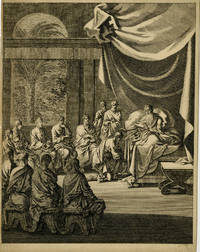
réf. 1435Good. Engraving on light wove paper with a large Amsterdam Coat of Arms watermark 9 5/16 x 7 1/2 inches 236 x 190 mm narrow margins. Scattered light areas of discoloration handling creases and pencil notations on the verso. unknown
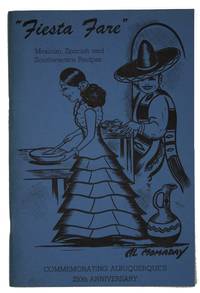
1956réf. 15031Albuquerque New Mexico: San Felipe De Neri Home & School Association 1956. Octavo 8.75 x 5.75" blue stapled illustrated wrappers 116 pp illustrations from drawings by Al Momaday. A cookbook published in commemoration of Albuquerque's 250th anniversary by the women of the historic San Felipe De Neri parish. Some of the recipes are attributed with many Hispanic names present. Recipes include Texas enchiladas and Cowboy Biscuits; also present are recipes for Emiliana's Pudding and Marquesote attributed to an ancestor named Emiliana Torres Baca "a determined self-sufficient woman who feared neither man nor beast". The illustrations on cover and text are by prominent Native American artist Al Momaday of the Kiowa Pueblo. Seventeen in OCLC. Bit of staining to rear cover owner inscription to front wrapper verso else an excellent copy. San Felipe De Neri Home & School Association unknown
réf. 285Good. Etching on handmade laid paper with a large indiscernible heraldic watermark 3 3/4 x 8 3/4 inches 94 x 222 mm trimmed inside platemark. Several light spots of foxing along right edge verso one area of light thinning at bottom sheet edge left quadrant viewing from verso. A humorous composition with a smiling Satyr and a Sphinx. unknown
réf. 51-545919th Century. Large format engraving on a support sheet.Remarque of a running hare in lower margin.36 x 60 cm. plage size. With margins. 19th Century unknown
1928réf. 182801928. Randall Studio. University of Michigan Medical School student and faculty portrait 1928 documents racial and gender inclusion within a major American medical school during a period when African American and women physicians remained sharply underrepresented in medical education. The portrait supports research into professional training race gender and institutional access in interwar medicine especially because the group includes one African American man and four women among 82 students. The University of Michigan had admitted women beginning in 1870 and Sophia B. Jones became its first African American woman to earn a medical degree in 1885 giving this later class portrait added relevance within the school's longer history of medical education and inclusion. Silver gelatin photograph by Randall Studio. 1928. 22 x 18 inches. Mounted to photographer's board. The large-format image shows 82 students and faculty arranged in individual portrait format including four female students and one African American student. The scale and formal presentation identify the photograph as an institutional record of a medical cohort rather than a casual class image. The photograph captures a visibly limited but historically meaningful presence of women and an African American student in elite medical training before mid-century civil rights reforms. Small 1.5-inch tear to one corner barely affecting one of the 82 images; very small chips to side and top edges not affecting text or images; very good. Strong visual evidence of race gender and professional formation at the University of Michigan Medical School in 1928. unknown
1928réf. 182801928. Randall Studio. University of Michigan Medical School student and faculty portrait 1928 documents racial and gender inclusion within a major American medical school during a period when African American and women physicians remained sharply underrepresented in medical education. The portrait supports research into professional training race gender and institutional access in interwar medicine especially because the group includes one African American man and four women among 82 students. The University of Michigan had admitted women beginning in 1870 and Sophia B. Jones became its first African American woman to earn a medical degree in 1885 giving this later class portrait added relevance within the school's longer history of medical education and inclusion. Silver gelatin photograph by Randall Studio. 1928. 22 x 18 inches. Mounted to photographer's board. The large-format image shows 82 students and faculty arranged in individual portrait format including four female students and one African American student. The scale and formal presentation identify the photograph as an institutional record of a medical cohort rather than a casual class image. The photograph captures a visibly limited but historically meaningful presence of women and an African American student in elite medical training before mid-century civil rights reforms. Small 1.5-inch tear to one corner barely affecting one of the 82 images; very small chips to side and top edges not affecting text or images; very good. Strong visual evidence of race gender and professional formation at the University of Michigan Medical School in 1928. unknown books
1939réf. 37919London: HMSO 1939. First Thus Printing. fair. 446 & 275 2-vol. set illus. some color diagrams maps index errata slip boards weak worn soiled and some edge tears. Ink notations and pencil erasures on front endpapers some page discoloration. This is an important snapshot of naval navigation practice at the eve of the Second World War. HMSO hardcover
1969réf. 26325Watford England: Watford School of Art / Edition Hansjorg Mayer 1969. Light foxing to the text block and some scratching and wear to the mounted tin covers else very good in cloth wrappers. Limited edition. Quarto. Number 100 of an edition of 100 copies. Includes copies of works by Richard Buckley Ian Burton Elliott Frank Challenger Veronica Loveless Hansjörg Mayer Graham Pow Kathryn Wallbridge Cilla Weeks and John Wells printed with a Rotaprint R 70. Covers are original works of art on tin attributed to Watford School of Art on the colophon page. Watford, England: Watford School of Art / Edition Hansjorg Mayer unknown
réf. DADAX041517287XNew unknown
1920réf. 972H46London: Blacks Simple Cookery and Household Management; Herbs Salads and Seasonings; Lovely Food: A Cookery Notebook; Restaurant Roundabout; Now Cook Me the Fish; Rare Vegetables for Garden and Table; The Queen Cookery Book 1920-1960. First edition. Cloth. Very Good. 8.5 by 5.5. Various; Thomas Lowinsky. A seven-volume collection of British culinary and domestic works featuring first editions by celebrated authors like Ambrose Heath X. Marcel Boulestin and Ruth Lowinsky. In the publisher's original cloth bindings.This seven-volume set offers an insightful exploration of British cookery and household management from 1920 to 1960 featuring first editions and notable works by authors such as Ambrose Heath X. Marcel Boulestin and Ruth Lowinsky consisting of: Black"s Simple Cookery and Household Management edited by The Edinburgh School of Cookery and Domestic Economy 1920. This is a first edition of this practical post-war manual of domestic economy offering simple recipes and household management advice. Herbs Salads and Seasonings by X. Marcel Boulestin and Jason Hill 1930. This volume is a first edition. This is a refined guide to the culinary uses of herbs and greens with Boulestin's practical and elegant recipes accompanied by sixteen lovely plate illustrations by Cedric Morris. Collated complete.Lovely Food: A Cookery Notebook by Ruth Lowinsky illustrated by Thomas Lowinsky 1931. This volume is a first edition. This volume is an artful and personal collection of favourite recipes paired with charming illustrations. Restaurant Roundabout by T. A. Layton 1944. This copy is the second impression printed in October 1944. This copy is lively and anecdotal memoir of London"s restaurant scene offering insider glimpses into the dining culture of the time. Now Cook Me the Fish by Margaret Butterworth 1950. This volume a first edition of this concise guide to preparing fish and seafood ideal for home cooks. Rare Vegetables for Garden and Table by Alan Organ 1960. This is not a first edition but a 1960 reprint issued by the Garden Book Club following the original 1952 publication by Faber & Faber. A practical and informative book offering ideas for cooking unusual and underappreciated vegetables in a variety of dishes. The Queen Cookery Book by Ambrose Heath 1960. This volume is a first edition. This is a comprehensive cookbook covering classic British dishes with Heath"s trademark clarity. In the publisher's original cloth bindings. Externally smart. Spine of "Cook me the Fish" and "Simple Cookery" faded. Front free endpaper of "Queen"s Cookery" and "Lovely Food: A Cookery Notebook" removed with front hinge cracked but holding firm. Offsetting to endpapers. Bookplate from "Martin & Pamela Finch: Exlibris Gastronomique" to front free endpapers and half-title of "Black"s Simple Cookery". Previous seller"s small label to rear paste downs on the odd copy. Front hinges of "Rare Vegetables" cracked with binding materials partially exposed but holding reinforced with tape. Scattered spotting to endpapers of "Cook me the Fish" and "Rare Vegetables". Slight green-tinged damp stains to perimeters of rear endpapers of "Lovely Cookery" with slight cockling not affecting further pages. Internally generally firmly bound. Pages generally bright and clean with the odd spot and slight age toning heavier to older copies. Very Good Blacks Simple Cookery and Household Management; Herbs, Salads, and Seasonings; Lovely Food: A Cookery Notebook; Restaurant Rou hardcover
réf. 021535[Art Nouveau, Ecole de Nancy, Revue La Plume, Collectif dont] Charles Ténib, Emile Gallé, Henry Marie, Robert de Montesquiou, etc., La Plume - n°157 du 1er novembre 1895 - numéro spécial consacré à l'Ecole Lorraine d'Art décoratif. Paris, 1895. In-8, paginé 481 à 502. Fameuse revue Fin-de-Siècle publiant essentiellement de l'inédit, ici avec la couverture d'Eugène Grasset. Hors-texte reproduisant une oeuvre de Victor Prouvé (compris dans la pagination). Broché. Couverture en partie ouverte au pli. Probablement le premier journal entièrement consacré à l'Art Nouveau et à l'Ecole de Nancy. Document d'une grande importance pour l'histoire de l'Ecole de Nancy. [VI]
réf. 021536[Art Nouveau, Ecole de Nancy, Revue La Plume, Collectif dont] Charles Ténib, Emile Gallé, Henry Marie, Robert de Montesquiou, etc., La Plume - n°157 du 1er novembre 1895 - numéro spécial consacré à l'Ecole Lorraine d'Art décoratif. Paris, 1895. In-8, paginé 481 à 502. Fameuse revue Fin-de-Siècle publiant essentiellement de l'inédit, ici avec la couverture d'Eugène Grasset. Hors-texte reproduisant une oeuvre de Victor Prouvé (compris dans la pagination). Broché. Probablement le premier journal entièrement consacré à l'Art Nouveau et à l'Ecole de Nancy. Document d'une grande importance pour l'histoire de l'Ecole de Nancy. [VII]
1950réf. 28641nantes ECOLE EVARISTE LUMINAIS 1950 in-8 demi- percale un volume, reliure bradel demi-percale saumon grand in-octavo (half hard-back percale in-8) (31,3 x 21,7 cm cm), dos long (spine without raised band ), pièce de titre sur fond noir , titre frappé or, date or avec ilet "or" de part at d'autre, double filet or en tête et en pied, papier peigné bleu, crème et saumon aux plats (cover with painting paper), toutes tranches lisses, orné d'un frontispice depliant ORIGINAL dessiné au crayons de couleurs par un élve : ALAIN VILAINE, titré : "L'ECOLE EN AVION - L'ETOILE NANTAISE - JE PORTE CHANCE" et noté en bas à l'encre violette : ECOLE EVARISTE LUMINAIS - C.S INSTITUTEUR A. GERNOUX (avec noté au dos à l'encre violette, le nom des eleves et de leur instituteur, le nom du personnage qu'ils interpretent et le pays qu'ils représentent) + 2 cartes hors_texte dessinées DEUX CARTES HORS6TEXTE DESSIN2ES AUX CRAYONS DE COULEURS PAR UN DES ELEVES + 50 histoires ronéotypées (imprimées d'un seul côté en noir) par les eleves et leur instituteur "A. GERNOUX" (l'Interprète), tirage confidentiel réalisé à l'école Evariste Luminais en 1950, ( Collection A. Gernoux - Ecole Evariste Luminais)
1768réf. 127511768 deux livres reliés ensemble en un volume, reliure demi-velin havane moucheté petit in-octavo (binding half calfskin in-octavo), dos long (spine without raised band), décoré or (gilt decoration)roulettes et filets or (gilt line) - titre frappé or (gilt title) - pièce de titre sur fond havane clair (label of title) avec filet or (label of title with gilt line), coiffe supérieure légèrement manquante (head and tail of the spine lightly faded), léger manque sur 2 millimètres carrés, papier peigné aux plats (cover with painting paper), toutes tranches lisses (all smooth edges) bleues (all blue edges), sans illustration (no illustration) excepté une vignette sur la page de titre et des bandeaux et des culs-de-lampe in-texte (illuminated of headpieces and headpieces) gravés sur bois (engraving wood) en noir pour le premier volume et une marque d'imprimeur gravée sur bois (engraving wood) en noir en bas de la page de titre du deuxième livre , XXX pages de discours +72 pages + (3) feuillets de table pour L'ART DE CONSERVER SA SANTE et 134 pages + 1 feuillet d'errata pour TRAITE DES CAUSES PHYSIQUES ET MORALES DU RIRE, sans date (1749) Douai Derbay Editeur, sans date (1749) + 1768 AMSTERDAM Marc-Michel REY Editeur,
1799Opera tratta dai "Los Caprichos", per la prima volta pubblicati nel 1799. Prova della quarta edizione di dodici, stampata dalla calcografia di Madrid, circa 1870. Aquaforte, acquatinta brunita e puntasecca, in perfetto stato di conservazione. La serie chiamata Los Caprichos, è composta da ottanta incisioni, la cui prima edizione [l’unica a non essere pubblicata postuma] venne alla luce ne 1799. Curata in fase d’edizione dallo stesso artista, la serie fu commercializzata e dopo poco tempo ritirata dal mercato. Infatti, a causa dei numerosi soggetti che ironizzavano sulla società spagnola di fine secolo, il Goya subì una censura. L’interpretazione dei soggetti rappresentati su queste lastre, sempre enigmatiche, è spesso controversa. Etching with burnished aquatint and engraving, 1799. From the fourth edition of twelve of the so-called "Los Caprichos" series, edited by the Madrid Calcografia [circa 1870].A very good impression, with good contrast, printed on contemporary paper, customary margins, in very good conditions. The series called Los Caprichos, consists of eighty etchings. This first edition of 1799, the only one not to be published posthumously, is imprinted on soft laid pape. Cured in phase edition by the same artist, the series was marketed and before long withdrawn from the market. In fact, because of the many subjects that mocked the Spanish society of the century, Goya suffered censorship. The interpretation of the subjects represented on these plates, always enigmatic, is often controversial. Harris 68, Delteil 70
1799Opera tratta dai Los Caprichos, per la prima volta pubblicati nel 1799.Prova della quarta edizione di dodici, stampata dalla calcografia di Madrid, circa 1870.Acquaforte, acquatinta brunita e puntasecca, in perfetto stato di conservazione.La serie chiamata Los Caprichos, è composta da ottanta incisioni, la cui prima edizione [l’unica a non essere pubblicata postuma] venne alla luce ne 1799. Curata in fase d’edizione dallo stesso artista, la serie fu commercializzata e dopo poco tempo ritirata dal mercato.Infatti, a causa dei numerosi soggetti che ironizzavano sulla società spagnola di fine secolo, il Goya subì una censura. L’interpretazione dei soggetti rappresentati su queste lastre, sempre enigmatiche, è spesso controversa. Etching with burnished aquatint and engraving, 1799.From the fourth edition of twelve of the so-called Los Caprichos series, edited by the Madrid Calcografia [circa 1870].A very good impression, with good contrast, printed on contemporary paper, usual wide margins, in very good conditions.The series called Los Caprichos, consists of eighty etchings. This first edition of 1799, the only one not to be published posthumously, is imprinted on soft laid pape.Cured in phase edition by the same artist, the series was marketed and before long withdrawn from the market. In fact, because of the many subjects that mocked the Spanish society of the century, Goya suffered censorship.The interpretation of the subjects represented on these plates, always enigmatic, is often controversial. Harris 68, Delteil 70.
1799Opera tratta dai "Los Caprichos", per la prima volta pubblicati nel 1799. Prova della quarta edizione di dodici, stampata dalla calcografia di Madrid, circa 1870. Aquaforte, acquatinta brunita e puntasecca, in perfetto stato di conservazione. La serie chiamata Los Caprichos, è composta da ottanta incisioni, la cui prima edizione [l’unica a non essere pubblicata postuma] venne alla luce ne 1799. Curata in fase d’edizione dallo stesso artista, la serie fu commercializzata e dopo poco tempo ritirata dal mercato. Infatti, a causa dei numerosi soggetti che ironizzavano sulla società spagnola di fine secolo, il Goya subì una censura. L’interpretazione dei soggetti rappresentati su queste lastre, sempre enigmatiche, è spesso controversa. Etching with burnished aquatint and engraving, 1799. From the fourth edition of twelve of the so-called "Los Caprichos" series, edited by the Madrid Calcografia [circa 1870].A very good impression, with good contrast, printed on contemporary paper, customary margins, in very good conditions. The series called Los Caprichos, consists of eighty etchings. This first edition of 1799, the only one not to be published posthumously, is imprinted on soft laid pape. Cured in phase edition by the same artist, the series was marketed and before long withdrawn from the market. In fact, because of the many subjects that mocked the Spanish society of the century, Goya suffered censorship. The interpretation of the subjects represented on these plates, always enigmatic, is often controversial. Harris 102, Delteil 104.
1799Opera tratta dai "Los Caprichos", per la prima volta pubblicati nel 1799. Prova della quarta edizione di dodici, stampata dalla calcografia di Madrid, circa 1870. Aquaforte, acquatinta brunita e puntasecca, in perfetto stato di conservazione. La serie chiamata Los Caprichos, è composta da ottanta incisioni, la cui prima edizione [l’unica a non essere pubblicata postuma] venne alla luce ne 1799. Curata in fase d’edizione dallo stesso artista, la serie fu commercializzata e dopo poco tempo ritirata dal mercato. Infatti, a causa dei numerosi soggetti che ironizzavano sulla società spagnola di fine secolo, il Goya subì una censura. L’interpretazione dei soggetti rappresentati su queste lastre, sempre enigmatiche, è spesso controversa. Etching with burnished aquatint and engraving, 1799. From the fourth edition of twelve of the so-called "Los Caprichos" series, edited by the Madrid Calcografia [circa 1870].A very good impression, with good contrast, printed on contemporary paper, customary margins, in very good conditions. The series called Los Caprichos, consists of eighty etchings. This first edition of 1799, the only one not to be published posthumously, is imprinted on soft laid pape. Cured in phase edition by the same artist, the series was marketed and before long withdrawn from the market. In fact, because of the many subjects that mocked the Spanish society of the century, Goya suffered censorship. The interpretation of the subjects represented on these plates, always enigmatic, is often controversial. Harris 111
1799Opera tratta dai "Los Caprichos", per la prima volta pubblicati nel 1799. Prova della quarta edizione di dodici, stampata dalla calcografia di Madrid, circa 1870. Aquaforte, acquatinta brunita e puntasecca, in perfetto stato di conservazione. La serie chiamata Los Caprichos, è composta da ottanta incisioni, la cui prima edizione [l’unica a non essere pubblicata postuma] venne alla luce ne 1799. Curata in fase d’edizione dallo stesso artista, la serie fu commercializzata e dopo poco tempo ritirata dal mercato. Infatti, a causa dei numerosi soggetti che ironizzavano sulla società spagnola di fine secolo, il Goya subì una censura. L’interpretazione dei soggetti rappresentati su queste lastre, sempre enigmatiche, è spesso controversa Etching with burnished aquatint and engraving, 1799. From the fourth edition of twelve of the so-called "Los Caprichos" series, edited by the Madrid Calcografia [circa 1870].A very good impression, with good contrast, printed on contemporary paper, customary margins, in very good conditions. The series called Los Caprichos, consists of eighty etchings. This first edition of 1799, the only one not to be published posthumously, is imprinted on soft laid pape. Cured in phase edition by the same artist, the series was marketed and before long withdrawn from the market. In fact, because of the many subjects that mocked the Spanish society of the century, Goya suffered censorship. The interpretation of the subjects represented on these plates, always enigmatic, is often controversial. Harris 109, Delteil 111.
1799Opera tratta dai "Los Caprichos", per la prima volta pubblicati nel 1799. Prova della quarta edizione di dodici, stampata dalla calcografia di Madrid, circa 1870. Aquaforte, acquatinta brunita e puntasecca, in perfetto stato di conservazione. La serie chiamata Los Caprichos, è composta da ottanta incisioni, la cui prima edizione [l’unica a non essere pubblicata postuma] venne alla luce ne 1799. Curata in fase d’edizione dallo stesso artista, la serie fu commercializzata e dopo poco tempo ritirata dal mercato. Infatti, a causa dei numerosi soggetti che ironizzavano sulla società spagnola di fine secolo, il Goya subì una censura. L’interpretazione dei soggetti rappresentati su queste lastre, sempre enigmatiche, è spesso controversa. Etching with burnished aquatint and engraving, 1799. From the fourth edition of twelve of the so-called "Los Caprichos" series, edited by the Madrid Calcografia [circa 1870].A very good impression, with good contrast, printed on contemporary paper, customary margins, in very good conditions. The series called Los Caprichos, consists of eighty etchings. This first edition of 1799, the only one not to be published posthumously, is imprinted on soft laid pape. Cured in phase edition by the same artist, the series was marketed and before long withdrawn from the market. In fact, because of the many subjects that mocked the Spanish society of the century, Goya suffered censorship. The interpretation of the subjects represented on these plates, always enigmatic, is often controversial. Harris 65
1799Opera tratta dai "Los Caprichos", per la prima volta pubblicati nel 1799. Prova della quarta edizione di dodici, stampata dalla calcografia di Madrid, circa 1870. Aquaforte, acquatinta brunita e puntasecca, in perfetto stato di conservazione. La serie chiamata Los Caprichos, è composta da ottanta incisioni, la cui prima edizione [l’unica a non essere pubblicata postuma] venne alla luce ne 1799. Curata in fase d’edizione dallo stesso artista, la serie fu commercializzata e dopo poco tempo ritirata dal mercato. Infatti, a causa dei numerosi soggetti che ironizzavano sulla società spagnola di fine secolo, il Goya subì una censura. L’interpretazione dei soggetti rappresentati su queste lastre, sempre enigmatiche, è spesso controversa. Etching with burnished aquatint and engraving, 1799. From the fourth edition of twelve of the so-called "Los Caprichos" series, edited by the Madrid Calcografia [circa 1870].A very good impression, with good contrast, printed on contemporary paper, customary margins, in very good conditions. The series called Los Caprichos, consists of eighty etchings. This first edition of 1799, the only one not to be published posthumously, is imprinted on soft laid pape. Cured in phase edition by the same artist, the series was marketed and before long withdrawn from the market. In fact, because of the many subjects that mocked the Spanish society of the century, Goya suffered censorship. The interpretation of the subjects represented on these plates, always enigmatic, is often controversial. Harris 53, Delteil 55.
1869Veduta della riva di un fiume a Chelsea; in primo piano a sinistra, persone con cani, due che portano lunghi bastoni; chiatte ormeggiate vicino alla riva; la casa di Whistler vista a sinistra. Iscrizione in lastra, in alto a sinistra: "Whistler's House at Old Chelsea Seymour Haden ft. an[no] 1863". Acquaforte e puntasecca; secondo stato di due (Harrington); settimo stato di sette (Schneiderman). "All the foreground boats have vertical reflections. There is now a line at the base of the house most to the left, which extends almost to the margin of the plate. This plate 'wore out very soon and had to be destroyed before it had given its full quota of impressions. Published in Études à l'eau-forte (No. VIII.), under the title of 'Old Chelsea,' some copies having the First, others the Second State. Exhibited at the Royal Academy, 1865." [cf. Harrington, p. 28] "There are several preliminary drawings for this print […] similar in composition though the view point is from farther into the river. State VII. Published in Études à l'eau-forte (N. VIII). Line added at base of house on left and a few lines to indicate modeling at right on the wall. The smoke, rising from the chimney of the house, second from the right of Whistler's house, is no longer visible." [cf. Schneiderman, p. 143] Seymour Haden era l'improbabile combinazione di un chirurgo e un incisore. Sebbene abbia perseguito una carriera medica di grande successo, è ricordato soprattutto per i suoi lavori all'acquaforte e per i suoi scritti sull'acquaforte. Fece parte di un gruppo di artisti, tra cui James McNeill Whistler (1834-1903) e Alphonse Legros (1837-1911), il cui appassionato interesse per questo mezzo portò al cosiddetto revival dell'acquaforte, un periodo che durò fino al XX secolo. L'esaltazione dell'acquaforte per le sue intrinseche qualità spontanee raggiunse il suo apice durante questo periodo. Mentre la linea dell'ago da acquaforte, scrisse Haden, era "libera, espressiva, piena di vivacità", quella del bulino era "fredda, costretta, poco interessante" e "senza identità". Stampata su carta vergata coeva, con margini, condizioni perfette. Bibliografia Henry Nazeby Harrington The Engraved Work of Sir Francis Seymour Haden, P.R.E.: an illustrated and descriptive catalogue. Liverpool, 1910, cat. no. 54 ii, p. 28, ill; Richard S. Schneiderman A Catalogue Raisonné of the Prints of Sir Francis Seymour Haden. London, 1983, cat. no. 50 vii, p. 143, ill. View of a river bank in Chelsea; in the foreground at left, people with dogs, two carrying long sticks; barges moored near the bank; the house of Whistler seen to the left. Lettered in plate, lower left: "Whistler's House at Old Chelsea Seymour Haden ft. an[no] 1863". Etching and drypoint; second state of two (Harrington); seventh state of seven (Schneiderman). "All the foreground boats have vertical reflections. There is now a line at the base of the house most to the left, which extends almost to the margin of the plate. This plate 'wore out very soon and had to be destroyed before it had given its full quota of impressions. Published in Études à l'eau-forte (No. VIII.), under the title of 'Old Chelsea,' some copies having the First, others the Second State. Exhibited at the Royal Academy, 1865." [cf. Harrington, p. 28] "There are several preliminary drawings for this print […] similar in composition though the view point is from farther into the river. State VII. Published in Études à l'eau-forte (N. VIII). Line added at base of house on left and a few lines to indicate modeling at right on the wall. The smoke, rising from the chimney of the house, second from the right of Whistler's house, is no longer visible." [cf. Schneiderman, p. 143] Seymour Haden was the unlikely combination of a surgeon and an etcher. Although he pursued a very successful medical career, he is mostly remembered for his etched work as well as for his writings on etching. He was one of a group of artists, including James McNeill Whistler (1834–1903) and Alphonse Legros (1837–1911), whose passionate interest in the medium led to the so-called etching revival, a period that lasted well into the twentieth century. The extolling of etching for its inherent spontaneous qualities reached its pinnacle during this time. While the line of the etching needle, Haden wrote, was "free, expressive, full of vivacity," that of the burin was "cold, constrained, uninteresting," and "without identity." Printed on contemporary laid paper, with margins, perfect condition. Bibliografia Henry Nazeby Harrington The Engraved Work of Sir Francis Seymour Haden, P.R.E.: an illustrated and descriptive catalogue. Liverpool, 1910, cat. no. 54 ii, p. 28, ill; Richard S. Schneiderman A Catalogue Raisonné of the Prints of Sir Francis Seymour Haden. London, 1983, cat. no. 50 vii, p. 143, ill.