38 832 résultats
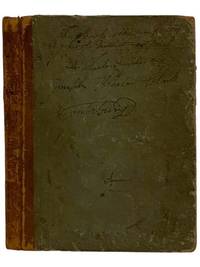
1830réf. 2324134Canterbury New Hampshire: S.N 1830. Hard Cover. Good/No Jacket. Boards rubbed and soiled ink note from district clerk on front board ink owner name on front endpaper evidence that leaves were once pressed between some blank pages. 1830 Hard Cover. Unpaginated ruled pages as one would expect to see in a ledger. Leather spine olive paper over boards. A manuscript book detailing board elections budget votes and other administrative matters related to the operation of Canterbury New Hampshire's School District No. 4 written in the hands of several different clerks. S.N hardcover books
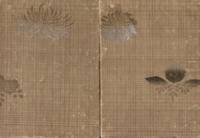
réf. 86003001Edo c.1700-50 n.p. Brown & silver covered boards very clean 7 double-page b.w. erotic woodblock illustrations mounted on mica flecked paper 18 x 25 cm. accordion folded illustration size: 31 x 12 cm. FIRST & ONLY UNRECORDED COPY! . . . . A VERY RARE UNRECORDED EARLY BOOK . . . A BIZARRE & UNIQUE EROTIC BOOK . . . UNSIGNED BUT CLEARLY THE WORK OF A MASTER ARTIST . BY SUKENOBU OR HIS :SCHOOL: . A unique and hitherto unfound odd and most unusual erotic book of the early-mid-18th century. One of the most bizarre erotic books ever done in Japan. . The graphically explicit work portrays men and women with genitals on their foreheads engaged in heterosexual and homosexual intercourse. There is no other book with such unusual and strange illustrations. . . THE TITLE: THE LEGEND OF AMANJAKU or AMAN NO JAKU: Chinese Title: TIAN XIE GUI YUN . THE MEANING OF AMANJAKU: Japanese Buddhist literature is abundant with variations on the theme of "Aman-No-Jaku" aka. "Amanjaku" "Manojaku" commonly understood to be a "Heavenly Evil Spirit." . This spirit or demon-like creature in Japanese folklore is usually depicted as being a male during the day and female at night. The demon is usually depicted as a kind of small Oni devil and is thought to be able to provoke a person's darkest desires and instigate him into perpetrating wicked deeds. . Amanjaku is also depicted in Chinese and Japanese mythology the AMANOJAKU is a changeling a water spirit that infiltrates the human world to play cruel tricks on people by reading their minds and twisting their requests or desires to be used against them. . The "AMANOJAKU" is also known the "Lord of the River" and in Japan serves Bishamonten one of the four Deva kings of Buddhism as a minor demon. See Wikipedia below. . In Japanese the term "Amanojaku" also refers to a person who is deliberately contradictory someone who argues for the sake of arguing or can be used in common Japanese conversation to refer to someone who is a "Perverted Demon." . THE ILLUSTRATIONS: THE BUDDHIST THEME:. This work is unusual in that the genitals of common people are located on their foreheads. A symbolist meaning can be in Buddhist concept that sex and sexual hedonism is openly on the minds of 'lay' people. The Buddha and his disciples on the other hand do not have sex organs on their foreheads meaning their organs are covered and in a different usual location. This can symbolize 'self control' over such biological energies. Devout Buddhist disregard sex as a pleasurable pastime and devote themselves to monastic focus. By contrast "lay" people are distracted with hedonistic pleasure a path away from rather than towards the Dharma or teachings of Buddhism. . In a sense this work illustrates the overwhelming force of evil or the "Amanojaku" and how it distracts people from the "Righteous Path" towards the Dharma and the ultimate goal of attaining Nirvana. It can be posited that this work is designed to give understanding to "lay" people by way of visual example of what forces direct their energies away from the Buddhist teachings in an effort to redirect them towards the "Righteous Path" and life style. . EXCEPTIONALLY RARE UNIQUE WORK: . The work is exceptionally RARE unusual and erotic there are no other example showing genitals on the foreheads of any other Japanese book cited anywhere in the bibliographic literature or record. . This work is certainly RARE in subject content and quantity. Though it was woodblock printed and unsigned which was usual for Japanese erotic works which were banned by the Shogun we have not found anything similar or recorded anywhere in the bibliography. Being woodblock printed one assumes there are other copies in existence. The average printing from woodblocks were somewhere between 100-200 copies. However in this instance no others exist. We have the strong feeling the book could have been the production of a famous Japanese illustrator and perhaps financed by a Buddhist temple again there are no known facts about this rarity. . THE EROTIC ILLUSTRATIONS: . Number 1: This work begins showing the Buddha flanked by two of his disciple monks. The title is written in four Japanese Kanji in Kambun & Chinese characters. The Buddha and his two disciples listen to two elderly Buddhist believers: one is a male he has and erect penis on his forehead. The other is a woman she has a vagina on her forehead. Neither the Buddha nor his two disciples monks show genitals on their foreheads. The couple have come to consult with the Buddha about their grievances. . Number 2: Shows a man and a woman in a Tatami matted room both wear lovely 18th century decorated Kimono. They embrace each other and are engaged in making love from their foreheads which show an erect penis and testicles inserted into the woman's forehead where her vagina is located. Adjacent to the young couple is an older woman who has become aroused by the adjacent couple's making love. The old woman uses a dildo tied to a post which she hugs while inserting the dildo into the vagina on her forehead. . Number 3: Shows a couple laying on a blanket their Kimono pulled down and opened and used as a top cover. They engage in love-making and kiss. The man has an erect penis on his forehead the woman a vagina on hers. There is some used Chirishi toilet paper just above her head on the floor used to wipe the love fluids. There is a folded package of yet unused Chirishi in readiness. Chishiri shown in Japanese Shunga erotic prints prints & paintings is an 'erotic symbol' indicative of sexual excitement with lots of love fluids flowing. Ergo the need for paper to clean up the results of erotic love-making. . Number 4 shows an adult man with an erect penis on his forehead penetrating the anus of a younger man who's smaller but erect penis is seen on his forehead as he faces his lover. The younger man has no pubic hair yet indicating his youth. . Adjacent to these two men is a woman in the next room. The door is open she is a secret voyeur of the two men. Her vagina is also on her forehead. A Shogi board and two bowls for stones is located in the front left of the illustration. Gay activities in Japanese society were accepted as a norm and were not especially unusual. However to find graphic examples in Japanese erotic books are exceptionally rare and seldom found. . Number 5: Depicts a fully clothed man on his knees he bends over a sleeping woman. He has a very large erect penis and begins to penetrate a woman with her vagina on her forehead. She is fully clothed and sleeping on a wooden "pillow" which supports her elaborate hair coiffeur. . Number 6: Depicts a lively scene of two men and a woman. One man with a very large and erect penis pulls the woman's arm toward him while she fends him off with a straight arm to his head. A second excited man also with a large and erect penis on his forehead masturbates and ejaculates in ecstasy. The woman has a vagina on her forehead. The scene is likely an intended rape of a young girl. She looks away in an effort not to allow him to pull her close enough to insert his penis into her exposed vagina. . Number 7: Illustrating a lonely old man in bed. He has an erect penis on his forehead and holds a kind of pot with a large opening. He faces down and inserts his penis into the pot for gratification. . THE TEXT: The text in Shunga erotic Japanese books & prints is often an erotic dialogue describing the erotic action. Often these words are onomatopoetic mimicking the sounds of people in orgasm or making comments about making love or the pleasure and good feelings. The size and hardness of the penis or the flavor and the juices of the vagina and its supple feelings of euphoria when engaged in love-making. All wear 18thcentury period Kimono. . MODE AND FASHION OF THE MID-18TH CENTURY: The room furnishing and Kimono of the participants in this work all wear 18th century period Kimono with period decorations. The style of Kimono and room screens reflect this period. . BINDING AND MOUNTING: Binding: The book has probably been rebound sometime after the 1750's with a more recent thin brown decorated paper with a silver chrysanthemum and a Mon family crest with gold and black on both front and rear covers. Each cover has a distinctly different kind of illustration but of the same theme. The corners and edges are a bit worn some loss to the paper as usual for a work from this period. . Mounting: At an earlier time each page was expertly mounted on a stiff Washi hand-made Japanese paper into an accordion folded book. Each illustration is bordered with a rare and stunning crushed oyster-shell powder mixed with rice-glue and overlaid on the border paper. The stunning effect is a rare shimmering pearl-like color and hue with a remarkable effect. This rare and largely unknown effect has been used for print backgrounds by some of the later masters. . This was no ordinary mounting and appropriate for an exceptionally and most unusual RARE book ! . Contents: By and large the contents are clean solid with a two old worm holes for the first 6 of 7 pages. These are small and towards the edge and does not detract from the overall quality of the illustration. On page 7 there are a few center margin old minor worm holes. All of these have been restored when the prints were laid down on the thick Washi paper creating book format. The work is otherwise solid and firm. There are a few 'rubs' on the old Washi paper which was made from very soft Kozo fibers common to any item of this period on this on handmade papers of the period. . CONDITION OF THE WOODBLOCK PRINTS: . These are very early black and white woodcut prints. Each print has an excellent and vivid impression key blocks are black and superbly printed with strong images. The paper is old and has the patina of paper from that age the usual minor mild surface rubbing or thumbing in the lower corners which is common. . We tend to be overly critical of any flaws found on our books and believe it is better to overly describe rather than avoid such discussion any imperfections. Suffice to say by and large this is an excellent item in very nice condition something that any collector or museum would be proud to own. Please review photos posted to our website. . R A R I T Y OF SUBJECT: The placement of the genitals on the forehead gives one a lot of room to theorize on the meaning of such artistic expression. In our 50 years of experience in dealing Japanese woodblock printed books and painted original art this is the first and only example with such imaginative and symbolist expression. With the beginning of the work showing the Buddha and his two disciples lacking any genitals on their foreheads one can simply assume that in a Buddhist way they have given up carnal desire as represented by common people who's foreheads display genitals perhaps meaning that sex is on their minds or they simply view others as sexual objects eager to make love and engage in carnal thoughts and activities. Obviously seeing an erect penis on some man whiles others see what he thinks and feels is an insight to his innermost thoughts and desires. In all cases in this book the men all show an erect penis. The women are a bit more difficult to fathom. Their vaginas are simply visible on their foreheads and no fluids are visible or other evidence of their carnal desire or sexually excited stated. All of the men have public hair adjacent to their sex organs while all women are lacking any pubic hair completely. This is an erotic symbolism giving full view to women's genitals. . "BANNED" or "PROHIBITED" BOOKS: Shun Pon Haru Bon: In the case of this item it is very likely that it was printed in a much smaller discreet quantity than the 200 copies possible off the blocks. Due to the "banned" nature of such books there is no date publisher nor place cited. One is simply left to determine the date and artist by stylistic analysis. It is well-known that during the Tokugawa period 1603-1868 erotic prints and books were "BANNED" or "PROHIBITED" by decree of the Shogun. One of the influencing factors was that during this period some Shoguns were changing their views and being influenced by Christians who entered Japan during this period. The Shogun did not want foreigners and Jesuit missionaries to think that Japan was a crass and base nation. Naturally foreigners soon learned that prostitution was rampant and so this strange logic from the Shogun never had much affect on the Christians and surely not on the Japanese. . The Shogun enforced severe punishments for persons involved in drawing printing carving blocks and publishing erotic books and prints. With out the "Kiwame" or censor's approval seal all such items were "Banned" outright by the Shogun decree. . While these "Prohibited" books and prints were widely circulated in an "underground" society there are ample examples of famous artists taking on commissions to produce erotic books and prints fun or profit. The record and bibliography is loaded with these examples. "Banning" such erotic works simply meant that the number printed were limited to smaller numbers and distribution was done under the table discretely circulating such books privately among collectors. During these times it was not necessary for artists to sign their such artistic creations by-and-large the population had a very good idea who the artist was by being familiar with their style and other works it was simply a "public secret" who the artist was. Often the artist poked fun at the Shogun with political jokes and assumed names to confound any chance of being discovered by the authorities. . Over the centuries this knowledge decreased and is now the domain of the art historian or scholar to identify and determine the actual artist. Stylistic analysis remains the standard method for unsigned works. . THE ARTIST/SCHOOLS: While there are no signatures or seals indicating the artist's name or even his alternate Go studio name we believe this work is part of the "Primitives and First Century of Ukiyo-e School 1660-1765" period. See Lane below. The women's coiffeur is very similar to those found in this period as well as the drawing style technique and genre. It is this cataloger's opinion that this work was likely the creation of one of the Moronobu School masters. Perhaps done by Sukenobu Yoshikiyo Morishige Sugimura Moronobu Kiyonobu Masanobu or others from this period. We believe this work was likely done from around 1710-1750. It was also likely that it was done by one of the artists listed below. . LIKELY ARTIST ATTRIBUTION: . MORONOBU SUKENOBU SCHOOL: Nishikawa Sukenobu 1671 -August 20 1750 often called simply "Sukenobu" was a Japanese printmaker from Kyoto. He was unusual for a Ukiyo-e in being based in the imperial capital of Kyoto. He did prints of actors but gained note for his works concerning women. His Hyakunin Joro Shinasadame: Appreciating 100 Women in two volumes published in 1723 depicted women of all classes from the empress to prostitutes and received favorable results His Hyakunin Joro Shinasadame: Appreciating 100 women in two volumes published in 1723 depicted women of all classes from the empress to prostitutes and received favorable results Leading members of this school were: Nishikawa Sukenobu the founder; Nishikawa Suketada; Kawashima Nobukiyo; Nishikawa Terunobu; and Takagi Sadatake. . NISHIKAWA MORONOBU SCHOOL: Nishikawa Moronobu 1618-July 25 1694 was a Japanese painter and printmaker known for his advancement of the Ukiyo-e woodcut style starting in the 1670s. Leading members of the MORONOBU school were: Nishikawa Moronobu the founder; Hishikawa Morofusa; Hishikawa Moroyoshi; Hishikawa Moronaga; Hishikawa Moroshige; Hishikawa Morohira; and Tamazaki Ryujo. . BIBLIOGRAPHY: . This title is NOT listed in any of the below resources: SHIBUI Kiyoshi. UKIYO-E NAISHI. BIBLIOGRAPHY OF JAPANESE EROTIC ILLUSTRATED WOODBLOCK PRINTED BOOKS. H. KERLEN. CATALOGUE OF PRE-MEIJI JAPANESE BOOKS & MAPS IN PUBLIC COLLECTIONS IN THE NETHERLANDS. Richard Lane: IMAGES FROM THE FLOATING WORLD THE JAPANESE PRINT; pages 28 40-60 show examples of the Ukiyo-e primitives 1660-1765 especially the Moronobu school pp.60-88 et al. . NOT LISTED IN: . KSM SHIBUI Kiyoshi: UKIYO-E NAISI. BIBLIOGRAPHY OF JAPANESE EROTIC ILLUSTRATED WOODBLOCK PRINTED BOOKS. Modern Reading: UKIYO-E NAISHI KERLEN H.: CATALOGUE OF PRE-MEIJI JAPANESE BOOKS & MAPS IN PUBLIC COLLECTIONS IN THE NETHERLANDS. Not in any other usual bibliographies on Japanese E-hon woodblock printed books. . See: WIKIPEDIA:. unknown books
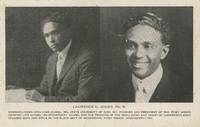
1920réf. List3814Nashville Tennessee: Ambrose 1920. Printed photographic postcard measuring approximately 3 ½ x 5 ½ inches. Recto with two portraits of Laurence C. Jones captioned "Laurence C. Jones Ph. B." and describing him as founder and president of the Piney Woods Country Life School "an opportunity school for the training of the head hand and heart of underprivileged colored boys and girls in the Black Belt of Mississippi." Divided postcard back with printed appeal headed "How to Help Piney Woods School" soliciting money clothing shoes and scholarships. Light wear and soiling; very good. A fundraising postcard for Laurence C. Jones and the Piney Woods Country Life School in Piney Woods Mississippi. Jones founded the school in 1909 to provide academic industrial and agricultural education for African American children in rural Mississippi. The front of the card summarizes the school's purpose in the language of the period describing it as an "opportunity school" for the training of "head hand and heart" in the Black Belt. The verso gives a direct appeal for support requesting "money in any amount-even one dollar is helpful" and asking for clothing and shoes for young men and women "who are working their way." It also gives the price of scholarships: $100 for an academic scholarship $50 for an industrial scholarship or $5 a month to give a boy or girl the opportunity to enter the school. Ambrose unknown books
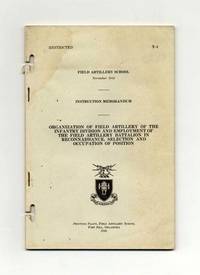
1942réf. 15864Fort Sill OK: Field Artillery School. Very Good. 1942. First Edition; First Printing. Pamphlet. A Very Good pamphlet of the Field Artillery School November 1942. Limited water staining; The restricted manual covers Organization of the Field Artillery Organization and Duties of the Battalion Reconnaissance and Selection Organization of Combined Artillery and Infantry March Columns Artillery March Disposition and Reconnaissance Employment of the Artillery Details Displacements The Bettery Detail - Heavy Artillery ; 8vo; 79 1 pages . Field Artillery School unknown books
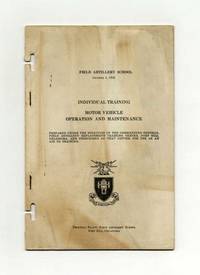
1942réf. 15863Fort Sill OK: Field Artillery School. Very Good. 1942. First Edition; First Printing. Pamphlet. A Very Good pamphlet of the Field Artillery School January 1 1942; Covers questions and answers on a variety of topics including The Driver Clutch Transmission and Brakes Aids to Control Night Driving etc. Covers memory joggers of Inspection such as LEWOG FETHEAL TOAM NIP and HALT BOLL ; 8vo; 45 pages . Field Artillery School unknown books
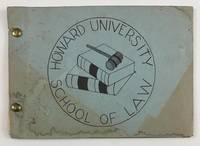
1959réf. 3137Washington D.C. 1959. Good plus. 19pp. mimeographed on rectos only. Original printed blue wrappers brad bound. Covers stained and worn. Mild uneven toning to a few leaves. A seemingly unrecorded directory for the Howard University School of Law published by the Student Bar Association in 1959. This humble handmade directory includes a short acknowledgement followed by listings of the faculty administrative staff Student Bar Association the Howard Law Journal the National Moot Court Team the Legal Assistance Program the "Law Wives" the class officers and finally the "Student Directory 1959-1960" arranged alphabetically. The directory lists the name expected year of graduation address phone number if any and undergraduate institution for each of the seventy-nine law students attending Howard at the time. Among the more notable names in the directory is Vernon Jordan Jr. who was then in his final year at Howard Law School. No listings for this ephemeral and homespun African American law school directory. unknown books
1956réf. M14568Ann Arbor:: University of Michigan Institute of Industrial Health 1956. 1956. 4to. xvii3 1243 1 pp. Numerous figures. Blue gilt-stamped cloth; inner joints repaired. Former ownership signature. Very good. Dohrman H. Byers Chemist Industrial Hygienist Public Health Professional Editor and Educator. – See: Hecker Lawrence H. American Industrial Hygiene Association Journal; Akron Vol. 55 Issue 9 Sept. 1994. CONTENTS: Concepts of Instrumentation in Industrial Hygiene by William G. Fredrick Sc.D. Section I-Instruments for Sampling and Analyzing Air for Contaminants in Industrial Environments; Section II-Laboratory Type Instruments of Specific Application to Industrial Hygiene; Section III-Instruments Specifically Designed for Atmospheric Pollution Evaluation and Meteorological Measurements; Section IV-Instruments for Measuring Air Velocity and Metering Air; Section V-Instruments for Measuring Sound and Vibration; Section VI-Instruments for Measuring Ionizing Radiations; Section VII-Instruments for Measuring Ultraviolet Visible and Infrared Energy. EXTRA POSTAGE WILL APPLY. University of Michigan, Institute of Industrial Health, 1956. hardcover books
1959réf. M14437Evanston and Chicago:: Northwestern University 1959. 1959. 8vo. xiv 495 1 pp. Figs. index. Two-tone cloth gilt-stamped spine title. Very good. Arey received his Ph.D. from Harvard University in 1915 and immediately began teaching at Northwestern. In 1925 he became head of the anatomy department and was appointed the Robert Laughlin Rea professor of anatomy. He held both positions until 1956 when he formally retired. Chicago Tribune. Northwestern University, 1959. hardcover books
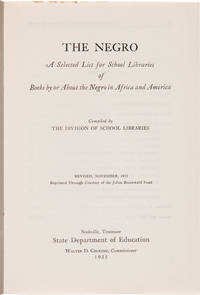
1935réf. 57636Nashville: State Department of Education 1935. Encouraging Library Acquisitions of African-American Works An interesting bibliography and guide for school librarians in Tennessee during the Great Depression and the tail end of the Harlem Renaissance. This edition was revised in November 1935 and we are unaware of the date of any earlier editions no earlier publications are recorded in OCLC. It was reprinted "through courtesy of the Julius Rosenwald fund" an endowed foundation which contributed large sums to education programs for African Americans in the first half of the 20th century. The bibliography was produced specifically to recommend books to all Black elementary and high school libraries with the mission that "If Negro children are to acquire a knowledge of and respect for the achievement of members of their own race it is essential that books dealing with this subject be made readily available to them." Titles are listed alphabetically by author within sections divided by grade level and subject; those marked with a star "are considered to be of especial value for school libraries." In addition to basic publication information each entry includes the author's race the book's current retail price and a brief annotation describing its content and usefulness to a school library. The compilers present an interesting collection of titles including works by Langston Hughes and Zora Neale Hurston in addition to numerous other children's books histories and other titles that are lesser known today such as NAACP president Mary White Ovington's ZEKE. This list was published by the Tennessee Department of Education during Walter D. Cocking's tenure as commissioner. Shortly afterwards Cocking became dean of the University of Georgia's College of Education until he was fired by Governor Eugene Talmadge in 1941 over alleged support for integration and his connection with the progressive Rosenwald Fund. University of Georgia president Harmon Caldwell threatened to resign unless Cocking was rehired and Cocking was returned briefly to his position. This incensed Talmadge to the degree that he went on public tirade in news outlets and instituted a purge of the Board of Regents replacing them almost entirely with his own supporters using the newly stacked board to fire Cocking again anyway. The so-called "Cocking Affair" was only the first step in what would become an epidemic of ousted educators and administrators purged libraries and interference with education that resulted in all state-supported schools in Georgia losing their accreditation. A valuable look at the state of African-American education in the South in the early 1900s and a useful and interesting bibliography in its own right. Original printed grey wrappers. Small dark stain along top edge throughout otherwise internally and externally clean. Near fine. James Cook "Cocking Affair" in NEW GEORGIA ENCYCLOPEDIA online. unknown books
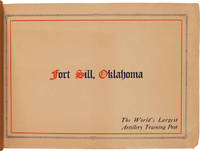
1918réf. 57357Fort Sill OK. ca. 1918. Original Photos from the Early Days of the Artillery Training School at Fort Sill A rare commercially produced photo album rendered unique by the addition of thirty original photographs of the U.S. Army Artillery Training School in Fort Sill Oklahoma at the end of World War I. The first section begins with a printed one-page "Short History of the Fort Sill Military Reservation" and consists of mounted photographs in printed frames with printed captions. This printed portion of album is divided into three parts with individual titles: "Fort Sill Oklahoma: The World's Largest Artillery Training Post"; "Medicine Park: Southwest Oklahoma's Pleasure Resort"; and "Some Views of the Comanche and Apache Indians." The second section of the album consists of blank pages for personal photographs here filled with thirty photographs with occasional manuscript captions supplied by an unnamed Army corporal. In addition to photographs of camp buildings artillery emplacements and scenery in and around Fort Sill the album features a number of photographs of the 1918 Victory Day Parade as well as a "pageant" held at the fort where members of the Comanche and Kiowa tribes participated in reenactments of the early frontier days at the fort. Fort Sill was also the birthplace of U.S. combat aviation in 1915 and a few photographs show some of the earliest military planes. The personal photos at the rear of the album include a number of individual soldiers a handful of alternate views of parades and events and the owner's actual cloth uniform stripes pasted to the final page. A rare and interesting look at the early days of a major American military base at the conclusion of World War I. OCLC records two copies of a similar souvenir album which also covers Camp Doniphan but does not locate the present version anywhere. Forty-one mounted photographs with printed captions and an additional thirty original mounted photographs some with manuscript captions most about 2½ x 4½ inches plus pasted-in corporal's stripes on final album leaf. Oblong quarto. Original printed thick wrappers with wrapper title "Souvenir from Fort Sill Oklahoma" tied with string. Spine ends chipped edge wear to wrappers. Photographs lightly faded occasional adhesive residue or paper defects particularly in latter half. Overall very good. hardcover books
1965réf. M8934Pennsylvania:: Pennsylvania University Press 1965. 1965. First edition. 195 x 130 mm. Small 8vo. 52 pp. Figs. Printed wrappers. Very good. Pennsylvania University Press, 1965. unknown books
1979réf. M9401St. Louis:: Washington University School of Medicine Library 1979. 1979. Small 4to. 103 pp. List of 268 items figs. index microfiche in rear pocket. Pictorial wrappers. FINE. First edition. Washington University School of Medicine Library, 1979. unknown books
1932réf. 80932Shelby Ohio: Shelby High School. Very Good. 1932. Softcover. This book is soft-bound in brown covers with silver stamping on the upper cover. The covers show light soiling and wear to the edges and spine with tearing to the spine. The staple binding is solid. The contents are bright and clean with illustrations. . (Shelby High School) paperback books
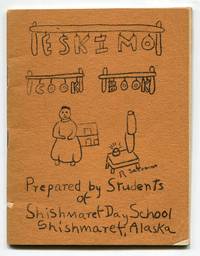
1952réf. 619604Anchorage Alaska: Alaska Crippled Children's Association 1952. Softcover. Very Good. First edition. Measuring 5¼" x 4¼". 36pp. Primitive illustrations. Illustrated orange wrappers also seem in other colors. Small chip on frrnt wrap slight toning very good or better. With a short glossary of Alaskan plants with their Native names a brief account of how the book came to be A collection of simple recipes for traditional Eskimo fare. Many of the dishes are exotic including ptarmigan conch salmon berries various northern greens squirrels seal liver bear's feet and more. Alaska Crippled Children's Association unknown books
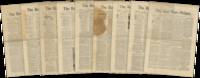
1904réf. List3876Carlisle Pennsylvania: Carlisle Indian Industrial School 1904. Nine issues. 12 x 18 inches folio folded as issued. Generally folded vertically twice with some wear and tearing at folds; toned with wear and damage especially to margins. Very good. The Red Man and Helper a newspaper published by Carlisle Indian Industrial School had several iterations first published under the title Eadle Keatah Toh 1880-82-Lakota meaning roughly "morning star" the title was an interesting choice for the newspaper of a school where only the English language was allowed. It was published as The Morning Star then The Red Man: His Past Present and Future until "His Past" was removed in 1888; then The Red Man until 1900 when it merged with The Indian Helper running as The Red Man and Helper from 1900 to 1904.1 The contents with contributions from students educators and other publications generally concern the value of an off-reservation Euro-American education and the capabilities of Indigenous students to assimilate into the Euro-American way of life. Offered here are nine issues of The Red Man and Helper: Vol. I no. 30 Feb. 8 and 15 1901 Vol. II no. 48 July 11 1902 Vol. III no. 1 Aug. 15 1902 Vol. III no. 40 May 29 1903 Vol. III no. 42 June 12 1903 Vol. V no. 38 May 20 1904 Vol. V no. 39 May 27 1904 Vol. V no. 40 June 3 1904 and Vol. V no. 41 June 10 1904. Note that these are enumerations for The Red Man and Helper; each edition also provides a separate enumeration indexed to the first edition of The Red Man. Carlisle Indian School Digital Resource Center hosts digitized copies of the school's publications and OCLC finds physical holdings of two editions Vol. XVII no. 39 and Vol. XIX nos. 47-48 at Gettysburg College. Of interest to historians of Carlisle and the assimilationist project. 1 Jennifer Bess "Casting a Spell: Acts of Cultural Continuity in Carlisle Indian Industrial School's the Red Man and Helper" Wicazo Sa Review 26 no. 2 Fall 2011: 13-38. . Carlisle Indian Industrial School unknown books
réf. 12222NANGA SCHOOL. In Japanese. Tokyo: 1969. Folio. Cloth dust jacket slipcase. 238 pages. First edition. Illustrated with 141 plates and 123 figures in with the Japanese text. This volume is No. 18 on a series of books on Japanese painting. Very good. unknown books
réf. 30243PRINCETON UNIVERSITY. SCHOOL OF ARCHITECTURE. ARCHITECTURE AND THE UNIVERSITY. Princeton: School of Architecture 1954. 8vo. Cloth spine boards. vi 72 pages. First and only edition. Scarce item. "Proceedings of a conference held at Princeton University December eleventh and twelfth nineteen hundred fifty-three." A series of reports presented on the state of architecture as a profession and study by leading architects and professors in the field. Front cover partially sunned else very good. unknown books
1987réf. 112125Leawood Kansas; Pennington New Jersey: Circulation Service 1987. Softcover. Near Fine. Comb-bound wrappers. Near fine with slight edgewear. A book of recipes compiled by the Parents' Association of students at the prestigious Pennington School in New Jersey as a fundraising event. Circulation Service unknown books
1893réf. List1712Nagasaki: Ikuta 1893. Albumen photograph measuring 5 x 3 ½ inches on a larger mount with the imprint of Ikuta Uwajima on mount recto. Slight fading near fine condition. With identifying marks to verso. Near Fine. A photograph of the wedding party of the American missionary and author William Jackson Callahan and Martha Taylor Callahan taken at the Kwassui Girls' School later Kwassui Women's University in Nagasaki. At the time Taylor was representing the Women's Board of the Methodist Episcopal Church and serving perhaps as principal of the school which had been started in 1879. Callahan began his work as a teacher in Japan shortly after graduating from Emory in 1890. The two would spend over forty-five years in Japan as missionaries. Ikuta unknown books
1957réf. List01121Richmond: N.A.A.C.P. 1957. 8vo wraps 30 pp. Some light wear staple holes to edge original owner's address and postage mark on back cover overall very good plus. An uncommon NAACP publication published right after the Brown vs. Board of Education decision with a range of articles on racism and segregation in Virginia and the efforts to desegregate schools there. The pamphlet is made up of several essays entitled "Behind the Segregation Curtain" "The N.A.A.C.P. - Defender of Constitutional Freedom" "The Truch about what led to School Cases" "Lookng at Work of the NAACP in the Fight for Integrated Schools in Virginia" "Integration - An Avenue to Liberty for Both Groups" "The Way to Genuine Good Race Relations in Virginia" and "Our Way of Life in Virginia." The essays are all written anonymously. The pamphlet argues for the use of reason in reversing racial prejudice and suggests appealing to the intelligence of people as a means for combating the problem. Uncommon with four copies held institutionally. N.A.A.C.P. unknown books
1925réf. 80640Cincinnati Ohio: Withrow High School. Very Good. 1925. Softcover. This item is soft-bound in white wrappers with black printing on the upper cover. The covers show light soiling toning and light edge-wear. The staple binding is solid. The contents are bright and clean with a list of student names. . Withrow High School paperback books
1868réf. 80622Philadelphia PA.: American Sunday School Union. Very Good. 1868. Softcover. This item is soft-bound in tan wrappers with black printing on the covers. The covers show toning and soiling edge-wear and rubbing to the spine. The string binding is solid. The contents are bright and clean with light toning to the page edges. . American Sunday School Union paperback books
1951réf. 108943Cambridge:: Harvard School of Public Health. Very Good. 1951. Hardcover. Gift inscription to author John Marquand on front free endpaper. Black and white photographs. First edition. Foxing on edges else very good in green cloth with gilt lettering and design. No dust jacket. . Harvard School of Public Health, hardcover books
1895réf. 80589Ohio: Groveport High School. Very Good. 1895. Softcover. GROVEPORT OHIO HIGH SCHOOL PROGRAM 1895 FRANKLIN COUNTY -- SCARCE EPHEMERA -- BANQUET TOASTS NAMES!6 3/4 by 5 inches -- sweet little string-tied banquet program with toasts and lots of local names etc. Very good condition. . Groveport High School paperback books
1911réf. 007397Boston: Silver Burdett 1911 Tan cloth pictorially stamped in brown bump to bottom edge else near fine. Retelling of fables in reader format with wonderful part color illustrations by Harry Wood. Scarce. Near Fine/No Jacket. Illus. by Harry E Wood. 12mo. Silver Burdett hardcover books