Cambridge School Classics ProjectBiblio.com

35.111 Ergebnisse
2003Best.-Nr. ANAIS-0521797926Cambridge University Press 2003-07-31. 4. paperback. Good. 25.8x20.8x1. Buy with confidence. Excellent Customer Service & Return policy. Cambridge University Press paperback
2026Best.-Nr. x-1108484778Cambridge University Press 2026. Hardcover. New. 250 pages. 6.00x0.88x9.00 inches. Cambridge University Press hardcover
2026Best.-Nr. x-1009572237Cambridge University Press 2026. Hardcover. New. 88 pages. 6.00x0.25x9.00 inches. Cambridge University Press hardcover
2026Best.-Nr. x-1009628631Cambridge University Press 2026. Paperback. New. 334 pages. 6.00x0.70x9.00 inches. Cambridge University Press paperback
2026Best.-Nr. x-1009628666Cambridge University Press 2026. Hardcover. New. 334 pages. 6.00x0.75x9.00 inches. Cambridge University Press hardcover
Best.-Nr. ANAIS-0820602957Chemical Publishing Company. hardcover. Good. 6.2x2x9.3. Buy with confidence. Excellent Customer Service & Return policy. Chemical Publishing Company hardcover
Best.-Nr. 0813639506-7-1-13Modern Curriculum Press. Acceptable. The item might be beaten up but readable. May contain markings or highlighting as well as stains bent corners or any other major defect but the text is not obscured in any way. Modern Curriculum Press unknown
Best.-Nr. 358180Hokuryu-kan 1964. Quarto pale brown cloth boards gilt lettering to spine publishers mark blind stamped to rear board ix 99pp 36plates illus/plates VG slight soiling to boards moderate damp stain to boards & penetrating through pages with some loss to pages previous owner's name in ink to fep moderate soiling to eps light to moderate soiling to page edges in slipcase VG light fading & creasing to slipcase moderate soiling previous owner's name in ink Hokuryu-kan 1964 hardcover
Best.-Nr. SKU0655020gggUniversity of Texas 2018-08-15. Sixteenth. spiral_bound. Good. 9x6x0. No highlights Ships with Tracking University of Texas unknown
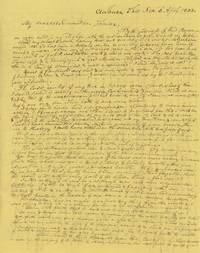
1832Best.-Nr. List3436Auburn New York 1832. Single four-page letter measuring 7 ¾ x 9 ¾ inches. Folded with very small tears at folds. Excellent to Near Fine. A letter written from the Auburn Theological Seminary in 1832 from the soon-to-be Reverend Thomas Reed Rawson 1803-1877 to his soon-to-be wife Louisa W. Dawes 1810–1849. Dawes who lived in Cummington Massachusetts was the older sister of Senator Henry Laurens Dawes best known for the 1887 Dawes Act. Rawson opens by commenting on the death of one of his students and his time spent in Oswego “visiting in the most fashionable families”; he felt this taught him a great deal about “human nature” which in Oswego is “peculiar”. He seems to have been particularly perplexed by the spiritual character he encountered in upstate New York a locus of the Christian revival movement now called the Second Great Awakening: “You know I expected that the spirit of the west was a more active . spirit than what was seen in the N.E. states & hoped by breathing this pure atmosphere to enjoy great spiritual health. How erroneous was the impression! How greatly have I been deceived! . I acted as though it was so – as though man was man only in certain latitudes. I acted as though face answered to face only when seen in the waters of N.E. & consequently that the heart of a N.E. man had no analogy to what beats in the bosom of one born in a more western longitude.” Not only is Rawson nonplussed by New Yorkers’ religious qualities he is vehemently opposed to some of the new practices that arose from the religious revival there: “The state of things here I mean in all this country at the west is very peculiar. You have heard of ‘Old & New Measures’ I suppose. For myself I cannot approve of the latter. I find not a spirit in me to Fellowship them. Have been exceedingly tried by them as I have been in the midst of ‘new measures’ all winter. You can form but a faint idea of the excitement which is in this country in the religious community. In Oswego Co. the lay-men are going through the Co. holding meetings once a month in praying exhorting dispensing the duties of Clergymen &c. &c.; & it seems that the present state of things must result in a wide division in the churches. ‘A house divided against itself cannot stand.’ . As near as I can find out very sinister is the spirit that knows the new measures to that wild-pine which ran so extensively in the time of Edwards. The effects of it are seen in your town to this day.” The “New Measures” were novel practices for American Christianity that came about during the Second Great Awakening mainly due to Presbyterian minister Charles Finney. These include very lengthy meetings public naming of sinners and public confessions of sin and were controversial with those who preferred a more orthodox and restrained service. Rawson accurately predicts that the new practices would lead to a schism; starting in 1837 the Old School-New School Controversy split the Presbyterian church along these lines. He later worries that such a division in the church would allow “Catholicism to take the advantage” and that “Satan is bringing this about as rapidly as possible”. The appeal of a strong hierarchical Catholic church as opposed to a weak and divided Protestant one was a common worry among Protestants at the time. Rawson traces the “sinister spirit” of the new measures back to “the time of Edwards”: Jonathan Edwards a key figure in the First Great Awakening of the 1730s and 40s. Given his reference to “your town”—Cummington Massachusetts—Rawson is probably referring to the so-called “New England theology” that arose from the First Great Awakening. Among other things New England theology proposed new views on man’s free will and responsibility; similar views would create controversy in Rawson’s time as he explains: “I see my own heart to be depraved & wicked beyond all observation but the fruits of the spirit I think I do love & hope they are sweeter & more sweet to my taste. I say taste the New measure-men are not taste-men but believe in the ‘motive scheme’ — By taste is meant the implantation of a new principle – love to God & is affected by the Holy Spirit. The ‘motive scheme’ implies that the sinner turns himself about in by motive merely.” He is objecting to the idea that a sinner could redeem himself through an act of his own will—by his own ‘motives.’ Old School Presbyterianism holds a more orthodox Calvinist view wherein the redemption of the sinner is not up to the sinner’s will at all. Rawson makes an interesting comparison between New School views on the matter and states’ rights in the context of the then-ongoing nullification crisis: “The signs of the times declare most plainly to him who has wiped up his eyes that ‘the end has come upon the four corners of this earth’ i.e. the end of peaceful days for the present. Never was our Republic brought to a crisis like this. Nullification in the Political world is the same with Denunciation in the Religious world. This is my opinion; don’t know as have heard others say so.” The nullification crisis arose when South Carolina declared that several import tariffs were unconstitutional and thus nullified them under the states’ rights doctrine of state nullification. Rawson seems to be drawing a parallel between the revivalists’ idea of the role of one’s motives in salvation and states’ rights advocates’ idea of the relationship between the states’ wills and the federal government’s. Of course the states’ rights issue would soon reach an apotheosis. Rawson closes with some affectionate lines for Dawes and advice about her own teaching job; the crossed text updates her on the Christian conversions within his family. Overall the letter provides detailed insights into the views of a more conservative theology student on the Presbyterian controversy that was soon to come to a head. unknown
Best.-Nr. ANAIS-0769659136Spectrum. paperback. Good. 8.3x0.6x10.6. Buy with confidence. Excellent Customer Service & Return policy. Spectrum paperback
Best.-Nr. ANAIS-0769659160Spectrum. paperback. Good. 8.6x0.6x10.6. Buy with confidence. Excellent Customer Service & Return policy. Spectrum paperback
2006Best.-Nr. 0153665203-4-36182749HARCOURT SCHOOL PUBLISHERS 2006-12-01. hardcover. Acceptable. 8x1x11. HARCOURT SCHOOL PUBLISHERS hardcover
Best.-Nr. 9788433039538New. unknown
Best.-Nr. ANAIS-0153452358HARCOURT SCHOOL PUBLISHERS. hardcover. Good. 1.8x09x2.1. Buy with confidence. Excellent Customer Service & Return policy. HARCOURT SCHOOL PUBLISHERS hardcover
2026Best.-Nr. x-1837532338Emerald Publishing Limited 2026. Hardcover. New. 176 pages. 9.02x5.99x9.02 inches. Emerald Publishing Limited hardcover
2013Best.-Nr. 730664London: Phaidon Press 2013-10-14. First Edition. hardcover. Very Good/Very Good. 9x1x11. Light shelf wear to extremities. Previous owners long gift inscription to ffep. Phaidon Press hardcover
2026Best.-Nr. x-1032234903Taylor & Francis Ltd 2026. Paperback. New. 228 pages. 9.18x6.12x9.21 inches. Taylor & Francis Ltd paperback
2026Best.-Nr. x-0197829791Oxford University Press Inc 2026. Hardcover. New. 328 pages. 6.10x1.10x8.70 inches. Oxford University Press Inc hardcover
2026Best.-Nr. x-1009581562Cambridge University Press 2026. Hardcover. New. 322 pages. 6.00x0.75x9.00 inches. Cambridge University Press hardcover
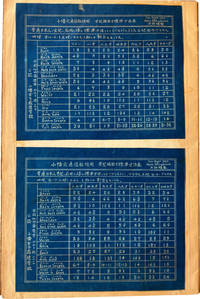
Best.-Nr. MD39Two large slim folio volumes 43pp.; paper wrappers. Books protected in hand-made craft paper dust jackets; both volumes filled to completion with color pencil designs annotated throughout in pencil in Japanese and English. A dust jacket of one volume soiled and starting to chip along the spine edge. Very good to near fine condition. Two volumes compiled by a student at the Obata Sewing School in San Francisco providing approximately 50 designs 27 of which are accompanied by pasted-in pencil sketches of the finished product. Date of publication based on the three Obata Sewing School blueprint designs copyright 1923 pasted into one of the volumes. Designs include patterns for everyday garments like a baby's dress bib and cape; boy's and girl's sailor suits; a bicycle costume with a divided skirt; man's vest smoking jacket and sack coat; and lady's breaches and knickerbockers. There are also several designs for hats mostly berets and caps. Obata Sewing School was a private sewing school operating in San Francisco in the early decades of the 20th century serving primarily women of the Japanese immigrant Issei community and later the second generation Nisei. Institutions of this kind played a crucial role in the social and economic life of Japanese American communities on the U.S. West Coast prior to World War II. The school offered practical training in Western-style dressmaking and tailoring enabling Japanese immigrant women to acquire marketable skills at a time when access to formal American education and professional employment was limited. Sewing schools such as Obata Sewing School provided not only vocational instruction but also a socially acceptable pathway to economic independence home-based labor and small-scale entrepreneurship. Beyond its practical function Obata Sewing School also served as a community space for women embedded within the broader network of Japanese-language schools religious institutions and mutual-aid associations that structured life in San Francisco’s Japantown Nihonmachi. The curriculum reflected a broader process of cultural adaptation combining Japanese craftsmanship with Western clothing forms required by everyday life in the United States. Like many Japanese American educational and cultural institutions Obata Sewing School ceased operations during World War II following the forced removal and incarceration of Japanese Americans under Executive Order 9066 1942. As a result surviving documentation related to the school - certificates photographs printed ephemera - is rare and often preserved only in private or family archives. Material associated with Obata Sewing School offers valuable insight into women’s labor immigrant education and the material culture of the Japanese American diaspora illuminating an often-overlooked infrastructure that supported daily life resilience and adaptation in prewar immigrant communities. hardcover
2026Best.-Nr. x-0367897490Taylor & Francis Ltd 2026. Hardcover. New. 100 pages. 8.50x5.43x8.74 inches. Taylor & Francis Ltd hardcover
2026Best.-Nr. x-9819825342World Scientific Publishing Co Pte Ltd 2026. Hardcover. New. 220 pages. 6.00x0.69x9.00 inches. World Scientific Publishing Co Pte Ltd hardcover
2009Best.-Nr. 1-0769685617Amer Education Pub 2009. Paperback. New. pap/pstr edition. 352 pages. 10.50x8.00x0.75 inches. Amer Education Pub paperback
2026Best.-Nr. x-1509990739Bloomsbury Publishing Plc 2026. Hardcover. New. 200 pages. 6.14x0.71x9.21 inches. Bloomsbury Publishing Plc hardcover