[CHINESE SCHOOL].Biblio.com
35 158 résultats
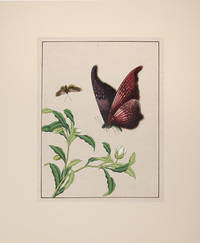
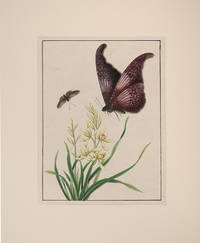
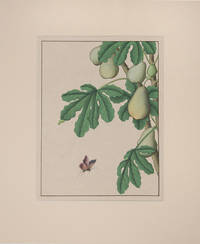
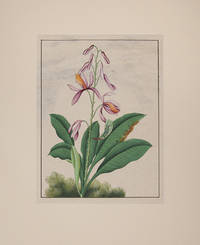
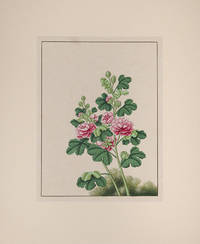
réf. 109665China mid nineteenth century. . Ink and gouache on paper mounted. Image size: 356 mm x 300 mm; mounted: 465 mm x 380 mm. Fine well executed decorative Chinese export watercolour. Light and easily transportable these watercolours mostly produced in the Canton region found a ready market in the West. Natural history studies were and continue to be amongst the most sought-after subjects. China, mid nineteenth century. unknown
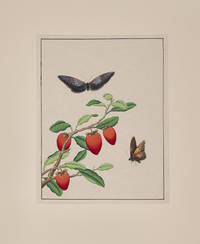
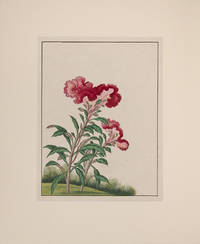
réf. 109627China mid nineteenth century. . Ink and gouache on paper mounted. Image size: 356 mm x 300 mm; mounted: 465 mm x 380 mm. Fine well executed decorative Chinese export watercolour. Light and easily transportable these watercolours mostly produced in the Canton region found a ready market in the West. Natural history studies were and continue to be amongst the most sought-after subjects. China, mid nineteenth century. unknown
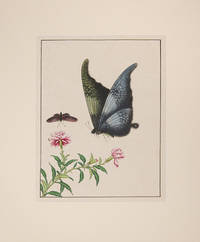
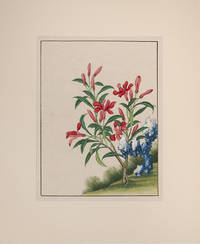
réf. 109623China mid nineteenth century. . Ink and gouache on paper mounted. Image size: 356 mm x 300 mm; mounted: 465 mm x 380 mm. Fine well executed decorative Chinese export watercolour. Light and easily transportable these watercolours mostly produced in the Canton region found a ready market in the West. Natural history studies were and continue to be amongst the most sought-after subjects. China, mid nineteenth century. unknown
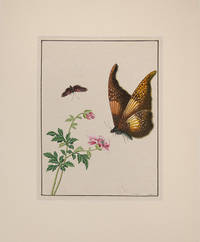
réf. 109624China mid nineteenth century. . Ink and gouache on paper mounted. Image size: 356 mm x 300 mm; mounted: 465 mm x 380 mm. Fine well executed decorative Chinese export watercolour. Light and easily transportable these watercolours mostly produced in the Canton region found a ready market in the West. Natural history studies were and continue to be amongst the most sought-after subjects. China, mid nineteenth century. unknown
réf. 109626China mid nineteenth century. . Ink and gouache on paper mounted. Image size: 356 mm x 300 mm; mounted: 465 mm x 380 mm. Fine well executed decorative Chinese export watercolour. Light and easily transportable these watercolours mostly produced in the Canton region found a ready market in the West. Natural history studies were and continue to be amongst the most sought-after subjects. China, mid nineteenth century. unknown
réf. 109628China mid nineteenth century. . Ink and gouache on paper mounted. Image size: 356 mm x 300 mm; mounted: 465 mm x 380 mm. Fine well executed decorative Chinese export watercolour. Light and easily transportable these watercolours mostly produced in the Canton region found a ready market in the West. Natural history studies were and continue to be amongst the most sought-after subjects. China, mid nineteenth century. unknown
réf. 109621China mid nineteenth century. . Ink and gouache on paper mounted. Image size: 356 mm x 300 mm; mounted: 465 mm x 380 mm. Fine well executed decorative Chinese export watercolour. Light and easily transportable these watercolours mostly produced in the Canton region found a ready market in the West. Natural history studies were and continue to be amongst the most sought-after subjects. China, mid nineteenth century. unknown
réf. 109625China mid nineteenth century. . Ink and gouache on paper mounted. Image size: 356 mm x 300 mm; mounted: 465 mm x 380 mm. Fine well executed decorative Chinese export watercolour. Light and easily transportable these watercolours mostly produced in the Canton region found a ready market in the West. Natural history studies were and continue to be amongst the most sought-after subjects. China, mid nineteenth century. unknown
réf. 109631China mid nineteenth century. . Ink and gouache on paper mounted. Image size: 356 mm x 300 mm; mounted: 465 mm x 380 mm. Fine well executed decorative Chinese export watercolour. Light and easily transportable these watercolours mostly produced in the Canton region found a ready market in the West. Natural history studies were and continue to be amongst the most sought-after subjects. China, mid nineteenth century. unknown
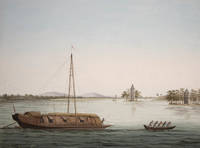
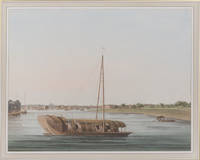
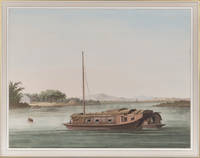
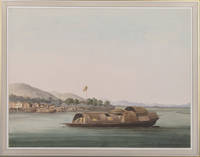
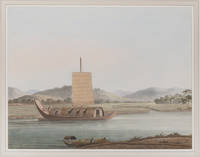
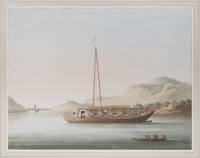
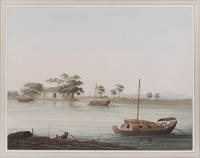
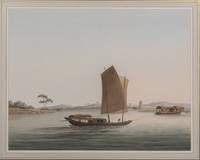
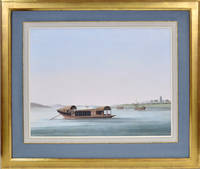
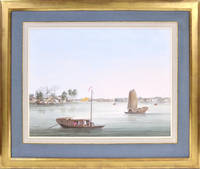
réf. 100986Canton circa 1810. . A Group of forty pencil water colour and body colour drawings of craft heightened with white on paper watermarked 'J Whatman 1804' and '1805'. Each 36.5 x 48 cm. 6 available for sale pricing is for an individual piece. Well executed and highly atmospheric watercolours capturing the importance of the river for trade in early nineteenth century China. An unusual and very attractive drawings of river life. Typically with the river in the foreground with a finely executed drawing of a native boat the backgrounds showing landscape scenes interspersed with occasional architectural details. The Pearl River is so named because of the pearl-colored shells that lie at the bottom of the river in the section that flows through the city of Guangzhou. Formerly often known as the Canton River it is an extensive river system in southern China. The name 'Pearl River' is also often used as a catch-all for the watersheds of the Xi 'West' Bei 'North' and Dong 'East' rivers of Guangdong. These rivers are all considered tributaries of the Pearl River because they share a common delta the Pearl River Delta. Measured from the farthest reaches of the Xi River the Pearl River system is China's third-longest river 2400 kilometres after the Yangtze River and the Yellow River and second largest by volume after the Yangtze. Canton, circa 1810]. unknown
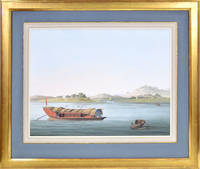
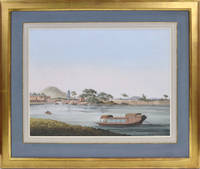
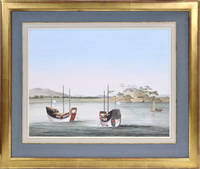
réf. 111580Canton circa 1810. . Pencil water colour and body colour drawing of craft heightened with white on paper watermarked 'J Whatman 1804' and '1805'. Framed and glazed overall size: 68.5cm x 58.5cm. Well executed and highly atmospheric watercolours capturing the importance of the river for trade in early nineteenth century China. A fine group of unusual and very attractive depictions of river life. Typically with the river in the foreground with a finely executed drawing of a native boat the backgrounds showing landscape scenes interspersed with occasional architectural details. The Pearl River is so named because of the pearl-colored shells that lie at the bottom of the river in the section that flows through the city of Guangzhou. Formerly often known as the Canton River it is an extensive river system in southern China. The name 'Pearl River' is also often used as a catch-all for the watersheds of the Xi 'West' Bei 'North' and Dong 'East' rivers of Guangdong. These rivers are all considered tributaries of the Pearl River because they share a common delta the Pearl River Delta. Measured from the farthest reaches of the Xi River the Pearl River system is China's third-longest river 2400 kilometres after the Yangtze River and the Yellow River and second largest by volume after the Yangtze. Canton, circa 1810]. unknown
réf. 111581Canton circa 1810. . Pencil water colour and body colour drawing of craft heightened with white on paper watermarked 'J Whatman 1804' and '1805'. Framed and glazed overall size: 68.5cm x 58.5cm. Well executed and highly atmospheric watercolours capturing the importance of the river for trade in early nineteenth century China. A fine group of unusual and very attractive depictions of river life. Typically with the river in the foreground with a finely executed drawing of a native boat the backgrounds showing landscape scenes interspersed with occasional architectural details. The Pearl River is so named because of the pearl-colored shells that lie at the bottom of the river in the section that flows through the city of Guangzhou. Formerly often known as the Canton River it is an extensive river system in southern China. The name 'Pearl River' is also often used as a catch-all for the watersheds of the Xi 'West' Bei 'North' and Dong 'East' rivers of Guangdong. These rivers are all considered tributaries of the Pearl River because they share a common delta the Pearl River Delta. Measured from the farthest reaches of the Xi River the Pearl River system is China's third-longest river 2400 kilometres after the Yangtze River and the Yellow River and second largest by volume after the Yangtze. Canton, circa 1810]. unknown
réf. 111583Canton circa 1810. . Pencil water colour and body colour drawing of craft heightened with white on paper watermarked 'J Whatman 1804' and '1805'. Framed and glazed overall size: 68.5cm x 58.5cm. Well executed and highly atmospheric watercolours capturing the importance of the river for trade in early nineteenth century China. An unusual and very attractive depictions of river life. Typically with the river in the foreground with a finely executed drawing of a native boat the backgrounds showing landscape scenes interspersed with occasional architectural details. The Pearl River is so named because of the pearl-colored shells that lie at the bottom of the river in the section that flows through the city of Guangzhou. Formerly often known as the Canton River it is an extensive river system in southern China. The name 'Pearl River' is also often used as a catch-all for the watersheds of the Xi 'West' Bei 'North' and Dong 'East' rivers of Guangdong. These rivers are all considered tributaries of the Pearl River because they share a common delta the Pearl River Delta. Measured from the farthest reaches of the Xi River the Pearl River system is China's third-longest river 2400 kilometres after the Yangtze River and the Yellow River and second largest by volume after the Yangtze. Canton, circa 1810]. unknown
réf. 111577Canton circa 1810. . Pencil water colour and body colour drawing of craft heightened with white on paper watermarked 'J Whatman 1804' and '1805'. Framed and glazed overall size: 68.5cm x 58.5cm. Well executed and highly atmospheric watercolours capturing the importance of the river for trade in early nineteenth century China. A fine group of unusual and very attractive depictions of river life. Typically with the river in the foreground with a finely executed drawing of a native boat the backgrounds showing landscape scenes interspersed with occasional architectural details. The Pearl River is so named because of the pearl-colored shells that lie at the bottom of the river in the section that flows through the city of Guangzhou. Formerly often known as the Canton River it is an extensive river system in southern China. The name 'Pearl River' is also often used as a catch-all for the watersheds of the Xi 'West' Bei 'North' and Dong 'East' rivers of Guangdong. These rivers are all considered tributaries of the Pearl River because they share a common delta the Pearl River Delta. Measured from the farthest reaches of the Xi River the Pearl River system is China's third-longest river 2400 kilometres after the Yangtze River and the Yellow River and second largest by volume after the Yangtze. Canton, circa 1810]. unknown
réf. 111579Canton circa 1810. . Pencil water colour and body colour drawing of craft heightened with white on paper watermarked 'J Whatman 1804' and '1805'. Framed and glazed overall size: 68.5cm x 58.5cm. Well executed and highly atmospheric watercolours capturing the importance of the river for trade in early nineteenth century China. A fine group of unusual and very attractive depictions of river life. Typically with the river in the foreground with a finely executed drawing of a native boat the backgrounds showing landscape scenes interspersed with occasional architectural details. The Pearl River is so named because of the pearl-colored shells that lie at the bottom of the river in the section that flows through the city of Guangzhou. Formerly often known as the Canton River it is an extensive river system in southern China. The name 'Pearl River' is also often used as a catch-all for the watersheds of the Xi 'West' Bei 'North' and Dong 'East' rivers of Guangdong. These rivers are all considered tributaries of the Pearl River because they share a common delta the Pearl River Delta. Measured from the farthest reaches of the Xi River the Pearl River system is China's third-longest river 2400 kilometres after the Yangtze River and the Yellow River and second largest by volume after the Yangtze. Canton, circa 1810]. unknown
réf. 111578Canton circa 1810. . Pencil water colour and body colour drawing of craft heightened with white on paper watermarked 'J Whatman 1804' and '1805'. Framed and glazed overall size: 68.5cm x 58.5cm. Well executed and highly atmospheric watercolours capturing the importance of the river for trade in early nineteenth century China. A fine group of unusual and very attractive depictions of river life. Typically with the river in the foreground with a finely executed drawing of a native boat the backgrounds showing landscape scenes interspersed with occasional architectural details. The Pearl River is so named because of the pearl-colored shells that lie at the bottom of the river in the section that flows through the city of Guangzhou. Formerly often known as the Canton River it is an extensive river system in southern China. The name 'Pearl River' is also often used as a catch-all for the watersheds of the Xi 'West' Bei 'North' and Dong 'East' rivers of Guangdong. These rivers are all considered tributaries of the Pearl River because they share a common delta the Pearl River Delta. Measured from the farthest reaches of the Xi River the Pearl River system is China's third-longest river 2400 kilometres after the Yangtze River and the Yellow River and second largest by volume after the Yangtze. Canton, circa 1810]. unknown
réf. 111582Canton circa 1810. . Pencil water colour and body colour drawing of craft heightened with white on paper watermarked 'J Whatman 1804' and '1805'. Framed and glazed overall size: 68.5cm x 58.5cm. Well executed and highly atmospheric watercolours capturing the importance of the river for trade in early nineteenth century China. A fine group of unusual and very attractive depictions of river life. Typically with the river in the foreground with a finely executed drawing of a native boat the backgrounds showing landscape scenes interspersed with occasional architectural details. The Pearl River is so named because of the pearl-colored shells that lie at the bottom of the river in the section that flows through the city of Guangzhou. Formerly often known as the Canton River it is an extensive river system in southern China. The name 'Pearl River' is also often used as a catch-all for the watersheds of the Xi 'West' Bei 'North' and Dong 'East' rivers of Guangdong. These rivers are all considered tributaries of the Pearl River because they share a common delta the Pearl River Delta. Measured from the farthest reaches of the Xi River the Pearl River system is China's third-longest river 2400 kilometres after the Yangtze River and the Yellow River and second largest by volume after the Yangtze. Canton, circa 1810]. unknown
réf. 101456Canton circa 1810. . Pencil water colour and body colour drawing of craft heightened with white on paper watermarked 'J Whatman 1804' and '1805'. Framed and glazed overall size: 67.8cm x 57.3cm. Well executed and highly atmospheric watercolours capturing the importance of the river for trade in early nineteenth century China. Typically with the river in the foreground with a finely executed drawing of a native boat the backgrounds showing landscape scenes interspersed with occasional architectural details. The Pearl River is so named because of the pearl-colored shells that lie at the bottom of the river in the section that flows through the city of Guangzhou. Formerly often known as the Canton River it is an extensive river system in southern China. The name 'Pearl River' is also often used as a catch-all for the watersheds of the Xi 'West' Bei 'North' and Dong 'East' rivers of Guangdong. These rivers are all considered tributaries of the Pearl River because they share a common delta the Pearl River Delta. Measured from the farthest reaches of the Xi River the Pearl River system is China's third-longest river 2400 kilometres after the Yangtze River and the Yellow River and second largest by volume after the Yangtze. Canton, circa 1810. unknown
réf. 101464Canton circa 1810. . Pencil water colour and body colour drawing of craft heightened with white on paper watermarked 'J Whatman 1804' and '1805'. Framed and glazed overall size: 67.8cm x 57.3cm. 91 Well executed and highly atmospheric watercolours capturing the importance of the river for trade in early nineteenth century China Typically with the river in the foreground with a finely executed drawing of a native boat the backgrounds showing landscape scenes interspersed with occasional architectural details. The Pearl River is so named because of the pearl-colored shells that lie at the bottom of the river in the section that flows through the city of Guangzhou. Formerly often known as the Canton River it is an extensive river system in southern China. The name 'Pearl River' is also often used as a catch-all for the watersheds of the Xi 'West' Bei 'North' and Dong 'East' rivers of Guangdong. These rivers are all considered tributaries of the Pearl River because they share a common delta the Pearl River Delta. Measured from the farthest reaches of the Xi River the Pearl River system is China's third-longest river 2400 kilometres after the Yangtze River and the Yellow River and second largest by volume after the Yangtze. Canton, circa 1810]. unknown
réf. 101452Canton circa 1810. . Pencil water colour and body colour drawing of craft heightened with white on paper watermarked 'J Whatman 1804' and '1805'. Framed and glazed overall size: 67.8cm x 57.3cm x 2cm. 87 Well executed and highly atmospheric watercolours capturing the importance of the river for trade in early nineteenth-century ChinA An unusual and very attractive depiction of river life. Typically with the river in the foreground with a finely executed drawing of a native boat the backgrounds showing landscape scenes interspersed with occasional architectural details. The Pearl River is so named because of the pearl-colored shells that lie at the bottom of the river in the section that flows through the city of Guangzhou. Formerly often known as the Canton River it is an extensive river system in southern China. The name 'Pearl River' is also often used as a catch-all for the watersheds of the Xi 'West' Bei 'North' and Dong 'East' rivers of Guangdong. These rivers are all considered tributaries of the Pearl River because they share a common delta the Pearl River Delta. Measured from the farthest reaches of the Xi River the Pearl River system is China's third-longest river 2400 kilometres after the Yangtze River and the Yellow River and second largest by volume after the Yangtze.A Canton, circa 1810]. unknown
réf. 101453Canton circa 1810. . Pencil water colour and body colour drawing of craft heightened with white on paper watermarked 'J Whatman 1804' and '1805'. Framed and glazed overall size: 67.8cm x 57.3cm. 88 Well executed and highly atmospheric watercolours capturing the importance of the river for trade in early nineteenth century China. The Pearl River is so named because of the pearl-colored shells that lie at the bottom of the river in the section that flows through the city of Guangzhou. Formerly often known as the Canton River it is an extensive river system in southern China. The name 'Pearl River' is also often used as a catch-all for the watersheds of the Xi 'West' Bei 'North' and Dong 'East' rivers of Guangdong. These rivers are all considered tributaries of the Pearl River because they share a common delta the Pearl River Delta. Measured from the farthest reaches of the Xi River the Pearl River system is China's third-longest river 2400 kilometres after the Yangtze River and the Yellow River and second largest by volume after the Yangtze. Canton, circa 1810]. unknown
réf. 101462Canton circa 1810. . Pencil water colour and body colour drawing of craft heightened with white on paper watermarked 'J Whatman 1804' and '1805'. Framed and glazed overall size: 67.8cm x 57.3cm x 2cm. 89 Well executed and highly atmospheric watercolours capturing the importance of the river for trade in early nineteenth century China. Typically with the river in the foreground with a finely executed drawing of a native boat the backgrounds showing landscape scenes interspersed with occasional architectural details. The Pearl River is so named because of the pearl-colored shells that lie at the bottom of the river in the section that flows through the city of Guangzhou. Formerly often known as the Canton River it is an extensive river system in southern China. The name 'Pearl River' is also often used as a catch-all for the watersheds of the Xi 'West' Bei 'North' and Dong 'East' rivers of Guangdong. These rivers are all considered tributaries of the Pearl River because they share a common delta the Pearl River Delta. Measured from the farthest reaches of the Xi River the Pearl River system is China's third-longest river 2400 kilometres after the Yangtze River and the Yellow River and second largest by volume after the Yangtze. Canton, circa 1810]. unknown
réf. 109660China mid nineteenth century. . Ink and gouache on paper mounted. Image size: 356 mm x 300 mm; mounted: 465 mm x 380 mm. Fine well executed decorative Chinese export watercolour. Light and easily transportable these watercolours mostly produced in the Canton region found a ready market in the West. Natural history studies were and continue to be amongst the most sought-after subjects. China, mid nineteenth century. unknown
réf. 109658China mid 19th century. . Ink and gouache on paper mounted. Image size: 356 mm x 300 mm; mounted: 465 mm x 380 mm. Fine well executed decorative Chinese export watercolour. Light and easily transportable these watercolours mostly produced in the Canton region found a ready market in the West. Natural history studies were and continue to be amongst the most sought-after subjects. China, mid 19th century. unknown
réf. 109659China mid nineteenth century. . Ink and gouache on paper mounted. Image size: 356 mm x 300 mm; mounted: 465 mm x 380 mm. Fine well executed decorative Chinese export watercolour. Light and easily transportable these watercolours mostly produced in the Canton region found a ready market in the West. Natural history studies were and continue to be amongst the most sought-after subjects. China, mid nineteenth century. unknown