PIEYRE DE MANDIARGUES (André)Livre Rare Book
Chagall
réf. 18951Paris, Maeght éditeur, 1974. In-folio, 211 pp., cartonnage éditeur de toile jaune, jaquette originale illustrée.

L'Ancienne Librairie · Paris, France150,00 €
35 686 résultats
1965réf. 21077Syracuse: Syracuse University Press 1965. First edition signed limited. Fine. Portfolio 13 x 19 inches 14 lithograph prints laid in. Portfolio cover printed with title on front panel recto limitation on verso; Introduction on recto of rear panel list of contents on verso. M. Peter Piening 1908-1977 was a German-born Danish commercial artist and graphic designer educated at the Bauhaus and University of Berlin. After two years in Paris working for "Vogue" he emigrated to the United States in 1934 to work for Conde-Nast's New York office. In the late 30s he was art director for "Life" magazine and in the 40s was art director of "Fortune" magazine. He designed many memorable covers for "Fortune." This portfolio presents ". . . a series of 14 lithographs representing the various academic divisions in the 1965 annual report of research at Syracuse University. 1965 was Piening's seventh year as Professor in the School of Art in Syracuse University. He was also director of the Syracuse University Design Center. Signed and numbered on verso of front cover; each print also signed and numbered by the artist. #7 of 75 copies. Syracuse University Press unknown
réf. 89334Bruxelles, Editions de l'Expansion Belge, 1912. 21 x 29, 17 pp., quelques illustrations en N/B, broché, bon état.
réf. 18951Paris, Maeght éditeur, 1974. In-folio, 211 pp., cartonnage éditeur de toile jaune, jaquette originale illustrée.
réf. 25467Nice, A.D.I.A., 1945. 25 x 33, 89 pp., 8 planches couleurs en trichromie phototypie sur B.K.F. de Rives, reproductions en N/B et texte sur vélin de Renage à la forme, broché sous étui, non coupé, couverture rempliée, très bon état.
réf. 7184, Bruxelles, Vromant & co, 1912., Broche, couverture originale, 19x25,5cm, 21pp, illustre n/b.
réf. 82380Mons, Académie Royale des Beaux-Arts, 1983. 16 x 24, 223 pp., broché, bon état (pliures aux premières pages).
réf. 86367Namur, Presses Universitaires de Namur, 2014. 15 x 23, 339 pp., broché, état neuf.
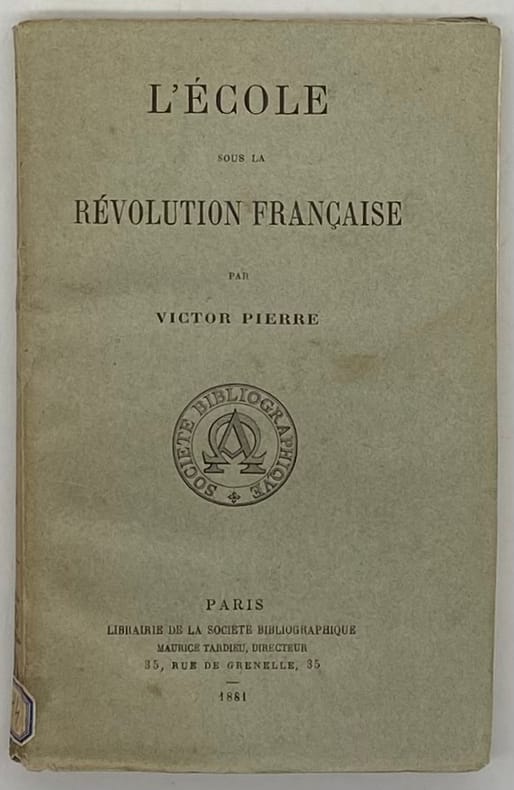
réf. 233503Paris, Librairie de la Société Bibliographique, 1881 in-12, XV-232 pp., broché. Etiquette au dos. Quelques rousseurs.
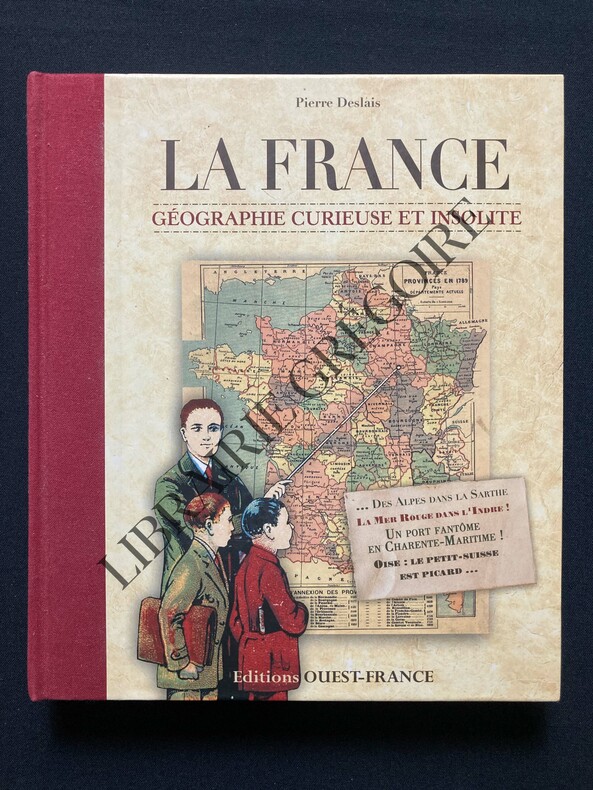
2011réf. 9782737354557220 PAGES-21,6 CM X 25,4 CM-NOMBREUX DOCUMENTS DONT 2 AFFICHES 36 X 45, UN PUZZLE DES REGIONS FRANCAISES-DOS TOILE-SIGNET-()
1977réf. LFA-126712543Un ouvrage de 264 pages, format 115 x 180 mm, broché, publié en 1977, les Editeurs Français Réunis, bon état
1848réf. 264811848 École nationale des ponts et chaussées 1848-1849 - IN FOLIO 1 vol. (374 p.)de texte et un volume de planches,1 vol. (autogr.)1 vol. pl.In-4 broché,non rogné,Texte autographié +82 planches gravées dont certaines dépliantes,dos cassés,couverture de titre conservée,correct,à relier,rognable
réf. 6233Paris éditions Poètes s.d. - Plié 16 5 cm x 23 5 cm 8 pages non paginées - Textes de Pierre Guéguen présentation de Yanette Deletang-Tardif portrait de l'auteur par Roland Oudot présentation de Mélange de Paul Valéry par Maurice Betz sur la 4e de couv. - Papier jauni usures aux pliures sinon bon état
1990réf. 6111France Loisirs 1990 346 pages in8. 1990. Reliure Editeur avec jaquette. 346 pages. Publié en 1919 'Prime jeunesse' est un récit autobiographique où Pierre Loti évoque avec sensibilité et nostalgie ses souvenirs d'enfance son adolescence et sa formation à l'École Navale jusqu'à ses premières expériences en tant qu'officier de marine. L'auteur y partage ses impressions découvertes et émotions de cette période formatrice dans un effort pour fixer et conserver les aspects éphémères de sa jeunesse
1956réf. 22186Vitry sur Seine, Les Amis de Rochefort, 1956. Broché, 14,5 cm x 19 cm, 79 pages, illustrations hors-texte. Textes et poèmes de Pierre Garnier, René-Guy Cadou, Jean Rousselot, Jean Bouhier et Paul Chaulot; peintures de Roger Toulouse Non coupé, état neuf. De la bibliothèque de Jean Rousselot
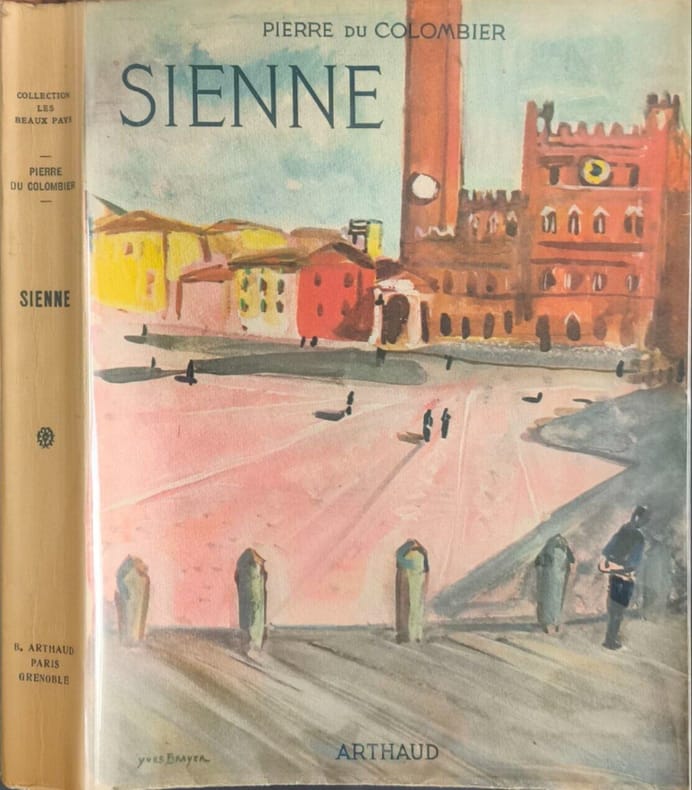
1955réf. 13395B. Arthaud 1955 84 pages in8. 1955. broché. 84 pages. Ouvrage de Pierre Du Colombier publié en 1955 dans la collection 'Les beaux pays' des éditions Arthaud consacré à la ville de Sienne et à son école de peinture orné de 124 héliogravures
1866réf. 6182Le Puy, Typographie et Lithographie Marchessou, 1866 ; Paris, Nouvelle Librairie Scientifique et Littéraire, 1883 ; in-12, reliure en demi-basanne vert sapin, dos lisse à pointillés dorés, auteur et titre dorés ; 207 pp. , (2) pp. ; (la pagination reprend à 0) (2) pp. , 166 pp.
2008réf. 224919München, Zürich: Piper, 2008. 479 S., 21 cm. OPp., gebundene Ausgabe, SU, Lesebändchen.
1878Acquaforte, 1878, firmata e datata in lastra in basso a destra. "A. Piccinni / Roma 1878" seguita dal titolo sotto "L'Avaro". Magnifica prova, impressa su carta cina applicata, con margini, in perfetto stato di conservazione. Un vecchio avaro che indossa un lungo cappotto appoggiato su uno scrittoio aperto, con la mano appoggiata su un mucchio di monete. Pittore e incisore italiano soprannominato “il re dei disegnatori”. La più grande vocazione dell’artista è, infatti, la grafica. Dal 1860 studia a Napoli all’Istituto di Belle Arti sotto la guida di maestri come Domenico Morelli (Napoli 1826 – 1901), Filippo Palizzi (Vasto 1818 – Napoli 1889), Tommaso Aloysio Juvara (Messina 1809 – Roma 1875) e Francesco Pisante (Napoli 1830 – 1889). Qui egli studia la tecnica dell’acquaforte d’invenzione e aderisce al verismo di matrice palizziana. Agli inizi del 1873 si trasferisce a Roma e frequenta i corsi di incisione alla Calcografia Nazionale. Tra il 1878 e il 1880 è a Parigi presso l’editore Cadart e proprio questa parentesi parigina colloca il Piccinni tra gli artisti europei fautori della rinascita dell’acquaforte originale. Sperimentatore delle nuove possibilità legate al mezzo fotografico è tra i primi in Italia a impiegare la fotoincisione tra il 1874 ed il 1886. I temi affrontati da Piccinni dimostrano l’attenzione costante verso i gesti più semplici della quotidianità della vita, gli individui vengono rappresentati come modelli di categorie sociali. Etching, 1878, signed and dated in plate at lower right "A. Piccinni / Rome 1878" followed by title below "The Miser". Magnificent proof, impressed on applied China paper, with margins, in perfect condition. An old miser wearing a long coat leaning on an open desk, his hand resting on a pile of coins. Piccinni was one of the European artists who were responsible for the rebirth of the original etching. Experimenter of the new possibilities related to the photographic medium, he is among the first in Italy to use the photoengraving between 1874 and 1886. The themes addressed by Piccinni show the constant attention to the simplest gestures of everyday life, individuals are represented as models of social categories. A. Petrucci, “A. Piccinni incisore”, 1931, p, 220, f. 126
1878Acquaforte, firmata e datata in lastra in alto a sinistra all’interno del soggetto. Oltre l’immagine in alto a destra numero 470, in basso “A. Piccinni pinx. et sc,” titolo e “V.ve A. Cadart Edit. Imp. 56 B.ard Haussmann. Paris”. Questa lastra fu pubblicata su L’Illustration Nouvelle, album edito dalla Maison Cadart nel marzo del 1879. Impressione eccellente con leggero effetto di tono, carta vergata. Ottimo stato di conservazione. Ampi margini oltre la battuta del rame. Il soggetto è riconducibile ad un gruppo di lavori appartenenti alle prime acqueforti di invenzione realizzate dall’artista, tutte hanno per soggetti personaggi e situazioni colti durante il soggiorno romano. In questa stampa vediamo rappresentati dodici spettatori a teatro che si sporgono dalla balconata per osservare meglio la rappresentazione. Grazie a potenti giochi chiaroscurali emergono dallo sfondo scuro e i loro volti indagati minuziosamente sono illuminati dalle luci teatrali della ribalta. Le luci imbiancano anche i due pilastri con capitelli che spezzano l’andamento lineare e prospettico volto a sinistra della superficie della balconata. Proprio l’effetto di luce e il punto di osservazione da sotto in su trasforma i volti in una serie di maschere il che suggerisce un’analisi psicologica dei “tipi da teatro”. Il Piccinni tra gli artisti europei fautori della rinascita dell’acquaforte originale. Sperimentatore delle nuove possibilità legate al mezzo fotografico è tra i primi in Italia a impiegare la fotoincisione tra il 1874 ed il 1886. I temi affrontati da Piccinni dimostrano l’attenzione costante verso i gesti più semplici della quotidianità della vita, gli individui vengono rappresentati come modelli di categorie sociali. Etching, signed and dated in plate at upper left in the image. Beyond image in upper right corner number 470, below lettered "A. Piccinni pinx. et sc," the title and "V.ve A. Cadart Edit. Imp. 56 B.ard Haussmann. Paris." This plate was published in L'Illustration Nouvelle, an album edited by Maison Cadart in March 1879. Excellent impression with slight toning effect, printed on laid paper. Very good condition. Wide margins beyond the platemark. The subject can be traced back to a group of works belonging to the first etchings of invention made by the artist, all have for subjects characters and situations captured during his stay in Rome. In this print we see twelve spectators at the theater who lean out from the balcony to better observe the representation. Thanks to powerful chiaroscuro effects they emerge from the dark background and their meticulously studied faces are illuminated by the theatrical lights of the limelight. The lights also whitewash the two pillars with capitals that break the linear and perspective trend facing left of the surface of the balcony. Just the effect of light and the point of observation from below up turns the faces into a series of masks suggesting a psychological analysis of the "theater types". Piccinni was one of the European artists who were responsible for the rebirth of the original etching. Experimenter of the new possibilities related to the photographic medium, he is among the first in Italy to use the photoengraving between 1874 and 1886. The themes addressed by Piccinni show the constant attention to the simplest gestures of everyday life, individuals are represented as models of social categories. A. Petrucci, “A. Piccinni incisore”, 1931; G. Bassi “Antonio Piccinni”, Fasano di Puglia 1978; F. Fiorani G. Scaloni, “Antonio Piccinni incisore”, Roma 2005, 1.13.a, pag.75
1860réf. 7332Paris, Librairie Agricole de la Maison Rustique, 1860 ; in-8, broché ; 72 pp., couverture vert clair imprimée, 2 tableaux dépliants.
réf. 65892Paris, Editions Vilo, 1969. 25 x 32, 95 pp., 32 planches, reliure d'édition pleine toile + jaquette + rhodoïd, très bon état.
réf. 5543Livre de lecture courante pour les débutants.Collection "pour l'étude du milieu".
réf. 7156relié avec jacquette - 16x20 - 255 pp - 1964 - éditions de la pensée moderne, Paris.Illustrations de G. DE SAINTE-CROIX.
réf. wc980Saumur, S. Milon fils, libraire-éditeur Relié 2 forts volumes in-8, (19.5x28 cm), relié demi-chagrin bleu d'époque,dos à 4 nerfs titrés, XIII-593 [1]pp et 774-[1] pp, couverture illustrée conservée pour chaque volume, 52 gravures hors-texte, épidermures au tome 2, reliures frottées. Livraison a domicile (La Poste) ou en Mondial Relay sur simple demande.