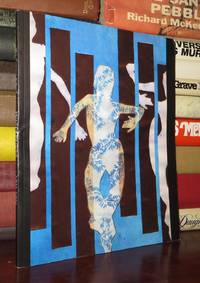
1950 — Acquaforte. Lastra mm 118x152, foglio 160x222 mm. Firma a matita a sinistra Luigi Bart. Titolo a matita in basso a sinistra non ben leggibile. Possiamo ipotizzare Invadenza. L’incisione non è catalogata in nessuno dei numerosi repertori sull’artista da noi consultati; è notorio che la catalogazione delle opere di Bartolini non è ancora completa. Bellissima prova, impressa su carta coeva, piccolo strappo perfettamente restaurato nella parte superiore, leggera abrasione al verso, per il resto in ottimo stato di conservazione. Luigi Bartolini è considerato uno dei maggiori incisori italiani del Novecento, insieme a Giorgio Morandi e Giuseppe Viviani. Oltre ad essere un prolifico incisore (al suo attivo oltre mille acqueforti), fu anche pittore e scrittore. Partecipò sia come pittore che come incisore a diverse edizioni della Biennale di Venezia dal 1928 al 1962. Presente a varie manifestazioni artistiche, sviluppò diverse maniere definite: ‘maniera bionda’, ‘lineare’ e ‘nera’. Ricordiamo soprattutto le acqueforti della serie Marche e della serie Sicilia. Iniziò la sua produzione grafica nel 1914 e il suo stile si rifà alla tradizione naturalistica dell’Ottocento. Molte sue incisioni si possono ricollegare ad alcune opere del Goya, di Telemaco Signorini e di Giovanni Fattori. Eccellente nella rappresentazione della natura morta e del paesaggio, spesso il Bartolini rappresentò dolcemente le cose e gli oggetti più umili, i soggetti di natura più dimessi. In essi ritroviamo il sentimento che diviene immagine e la forma che si sviluppa in espressione. Con Bartolini l’incisione torna ad essere un mezzo di espressione poetica libera dal simbolismo e dal vedutismo allora in voga presso le accademie. Nelle sue acqueforti prevale ora un tratteggio leggero (genere biondo), ora una ricerca del chiaroscuro alla Rembrandt (genere nero). Etching. Plate mm 118x152, sheet 160x222 mm. Signature in pencil on the left Luigi Bart. Title in pencil at lower left not well readable. We can assume Invadenza. This work is not catalogued in any of the several repertories we consulted about the artist; it is well known that the cataloguing of Bartolini's works is not yet complete. Beautiful proof, printed on contemporary paper, small tear perfectly restored in the upper part, light abrasion on the back, otherwise in excellent condition. Born in Cupramontana near Ancona, Luigi Bartolini was the twentieth century Italian etcher, who came closest to the stature of his great rival, Morandi. As a teenager, he saw the collection of etchings, including work by Callot, owned by the Corradi family in Iesi. From 1907 to 1910 Bartolini studied at the Istituto di Belle Arti in Siena, and started to etch c. 1909. He moved to Rome in 1910, where until 1912 he frequented the Accademia di Belle Arti, while also attending lectures on literature and the history of art, and courses on anatomy at the University in Rome. Bartolini studied the etchings of Goya and took lessons on drawing at the Accademia di Spagna. From there, he went to Florence in 1913, where he attended the Scuola del nudo. Bartolini continued his anatomical research, as well as studying architecture, making himself the most assiduous student of all Italian twentieth century printmakers. He also visited the Uffizi and Florentine print dealers to look at the etchings of Rembrandt and Fattori. Bartolini painted his first oils just before the outbreak of the First World War. Although he painted pictures throughout the rest of his career, and was awarded the Premio Marzotto for them in 1956, they have been far eclipsed in fame by his etchings and writings. During the First World War, Bartolini published his first collection of poetry. A very prolific and accomplished writer, in this field he is best known today as the author of the novel, 'Ladri di biciclette' (Bicycle thieves), of 1946, which was quickly turned into a celebrated film by Vittorio de Sica and Cesar Zavattini. After the First World War, Bartolini held a series of minor teaching posts in Macerata, Sassari, Avezzano, Pola, and Caltagirone, while he continued to etch, and started a long career as a polemical journalist and critic of art and architecture. From 1923 to 1929, he wrote for the Naples periodical, 'Cimento', but he also contributed to 'Il Selvaggio', 'Quadrivio', 'Italia letteraria', and 'L'Ambrosiana'. Bartolini's 1924 exhibition of etchings at the Casa d'Arte Bragaglia in Rome was a great success, and later that year he showed 70 etched landscapes of the Marches at the Casa Palazzo di Roma. The following year he visited Paris, where he paid particular attention to the paintings of Van Gogh. Bartolini's political convictions led him to being assaulted by Fascists and hospitalised in 1928. Two years later, he won a prize at the Venice Biennale, where he had exhibited a portfolio of etchings. In 1930, the Turin publisher, Buratti, began to issue a series of portfolios of etchings by contemporary Italian artists under the editorship of Cipriano Oppi, selecting Bartolini for the first album. The following year, Buratti published 'Le carte parlanti', a portfolio of 10 of Bartolini's etchings, which was published in an edition of 20. In 1932, Bartolini shared the first prize at the Prima mostra dell'incisione moderna at the Uffizi with Morandi and Boccioni. His close friend, the leading anti-Fascist art historian, Lionello Venturi, acted as his agent selling his etchings in Paris. Bartolini's correspondence with his compatriots in exile led to his imprisonment, from which he was released on Mussolini's personal intervention. He was then placed under political surveillance. From 1933 to 1938, Bartolini taught in Merano, where he painted and etched in the open air, finding subjects on the banks of the fast flowing Adige. Despite being under political su...