Donald SchoolBiblio.com

38.302 Ergebnisse
Best.-Nr. Juanpebooks096200WE ship worldwide. Brand new 100%guarentee unknown
2018Best.-Nr. 500057948Frimousse 2018 48 pages 21 7x29 6x1cm. 2018. Relié. 48 pages.
2018Best.-Nr. 500084262Frimousse 2018 48 pages 21 7x29 6x1cm. 2018. Relié. 48 pages.
1982Best.-Nr. 2111902156202041Not Available 1982. Soft Cover. Fine. The book is in fine condition. Not Available paperback
1982Best.-Nr. 2080502106505484Shinchosha 1982. Soft Cover. Fine. Volume: 1 Shinchosha paperback
1931Best.-Nr. 2092902141000173Watanabe Print Shop 1931. Soft Cover. Fine. The book is in fine condition. Watanabe Print Shop paperback
1941Best.-Nr. 2090202118101389Iwanami Shoten Iwanami Bunko 1941. Soft Cover. Fine. The book is in fine condition. Iwanami Shoten Iwanami Bunko paperback
1971Exhibition catalog in excellent condition for the show of the title's name Nov. 6 -- Dec. 26th 1971. Binding is solid and square, covers have sharp corners with just a little shelf wear, exterior shows no other blemishes, text/interior is clean and free of marking of any kind. 6 color plates, 184 b/w illustrations. 131 pp. glossary, bibliography, map of Northwest Edo. appendix on pigments. Contents include: Hishikawa Moronubu, Sugimura Jihei, Torii School, Kaigetsudo School, Okumura School, Nishikawa Sukenobu.
1982Best.-Nr. 2081402110001903Not Available 1982. Soft Cover. Fine. Number of books: 1 Not Available paperback
1989Best.-Nr. 2092902141104284Iwanamishoten 1989. Soft Cover. Fine. Volume: 1 Iwanamishoten paperback
2000Best.-Nr. 2091502135202188elementary school 2000. Soft Cover. Fine. Size: 23cm Number of books: 1 elementary school paperback
1976Best.-Nr. 2111902156203198Not Available 1976. Soft Cover. Fine. The book is in fine condition. Not Available paperback
1966Best.-Nr. 2081402110001143Iwanamishoten 1966. Soft Cover. Fine. Number of books: 1 Iwanamishoten paperback
1977Best.-Nr. 2091502133517689Asahishinbunsha 1977. Soft Cover. Fine. Number of books: 2 Asahishinbunsha paperback
1984Best.-Nr. 2090202120412772elementary school 1984. Soft Cover. Fine. Number of books: 1 elementary school paperback
1982Best.-Nr. 2090502128702093Abashiri City Northern Folk Culture Preservation Association 1982. Soft Cover. Fine. Number of pages: 116 pages Size: B5 Number of books: 1 volume Abashiri City Northern Folk Culture Preservation Association paperback
1988Best.-Nr. 2090502128704437Hokkaido Board of Education 1988. Soft Cover. Fine. Number of pages: 135 pages Size: B5 Number of books: 1 volume Hokkaido Board of Education paperback
1911Best.-Nr. 3102047Tübingen, Mohr, 1911. III, 267 S. OBroschur.
1991Best.-Nr. 2081002108701184Shinchosha 1991. Soft Cover. Fine. Number of pages: 269 Size: B6 Number of books: 1 Shinchosha paperback
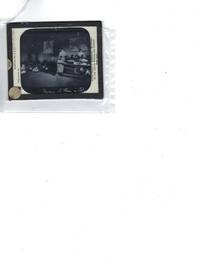
1904Best.-Nr. 154021904. Gayaza School classroom lantern slide 1904 documents girls receiving classroom instruction at the pioneering Church Missionary Society school established at Gayaza in Buganda present-day Uganda. Founded in 1904 as a school for girls Gayaza developed into what is now Gayaza High School identified by the school as Uganda's oldest all-girls boarding secondary school. The image dates from the institution's founding period and records African girls engaged in reading under two female teachers providing unusually detailed visual evidence of girls' education within an early twentieth-century missionary school in Uganda. Original glass lantern slide 3¼ x 4 inches published by the Young People's Missionary Movement of the United States and Canada. Scratched into the negative beneath the image is the identification: "Gayaza A Class in School." Girls of varying school ages occupy the classroom; approximately half sit on the floor holding open books while others sit on a bench at a table with books before them. Two female teachers stand among the pupils. Classroom equipment includes a blackboard on an easel two wall maps a clock and a globe resting on a cabinet. The girls wear garments wrapped or draped around the lower body. These details record both instructional practice and the material furnishings available in the school's early classroom. The slide also documents how images of African mission schools circulated beyond Uganda. The Young People's Missionary Movement described lantern slides as its most extensively used form of pictorial material and supplied such images to mission boards for missionary education. This example therefore preserves two related historical records: the classroom at Gayaza and the presentation of girls' education in Uganda to North American Christian audiences. Gayaza subsequently developed into a secondary boarding school for girls retaining its Church foundation. unknown books
1904Best.-Nr. 154021904. Gayaza School classroom lantern slide 1904 documents girls receiving classroom instruction at the pioneering Church Missionary Society school established at Gayaza in Buganda present-day Uganda. Founded in 1904 as a school for girls Gayaza developed into what is now Gayaza High School identified by the school as Uganda's oldest all-girls boarding secondary school. The image dates from the institution's founding period and records African girls engaged in reading under two female teachers providing unusually detailed visual evidence of girls' education within an early twentieth-century missionary school in Uganda. Original glass lantern slide 3¼ x 4 inches published by the Young People's Missionary Movement of the United States and Canada. Scratched into the negative beneath the image is the identification: "Gayaza A Class in School." Girls of varying school ages occupy the classroom; approximately half sit on the floor holding open books while others sit on a bench at a table with books before them. Two female teachers stand among the pupils. Classroom equipment includes a blackboard on an easel two wall maps a clock and a globe resting on a cabinet. The girls wear garments wrapped or draped around the lower body. These details record both instructional practice and the material furnishings available in the school's early classroom. The slide also documents how images of African mission schools circulated beyond Uganda. The Young People's Missionary Movement described lantern slides as its most extensively used form of pictorial material and supplied such images to mission boards for missionary education. This example therefore preserves two related historical records: the classroom at Gayaza and the presentation of girls' education in Uganda to North American Christian audiences. Gayaza subsequently developed into a secondary boarding school for girls retaining its Church foundation. unknown
1795Copia di un niello della collezione Durazzo, di cui una impressione originale è ora nella collezione Cabinet Rothschild al Louvre. Si tratta probabilmente di un niello della fine del Quattrocento o dell'inizio del Cinquecento bolognese, e si avvicina nello stile alle stampe a niello di Peregrino da Cesena. Il soggetto e la composizione sono derivati, o forse direttamente copiati, da una scena di adlocutio su una moneta romana. Anche alcuni rilievi monumentali romani offrono vari punti di paragone, come alcuni dei rilievi antoniniani sull'Arco di Costantino. I nielli della collezione Durazzo vennero fatti riprodurre in incisioni dal proprietario, tra fine XVIII e inizio XIX secolo, a Venezia - come specificato anche dal Malaspina nel suo catalogo del 1824 - costituendo una serie che venne diffusa e collezionata dagli amatori. Bartsch descrive queste copie nel suo volume edito nel 1811, data che quindi costituisce il terminusine ante quem per l'esecuzione. Copy of a niello print from the Durazzo Collection, (n. 3009), the original impression of which is now in the Cabinet Rothschild at the Louvre. This is probably late fifteenth- or early sixteenth-century Bolognese, and is close in style to the niello-manner prints of Peregrino da Cesena. The subject and composition are derived, or perhaps directly copied, from an adlocutio scene on a Roman coin. Certain monumental Roman reliefs also offer various points for comparison, such as several of the Antonine reliefs on the Arch of Costantine. The nielli of the Durazzo collection were reproduced in engravings by the owner himself, between the end of the 18th and the beginning of the 19th century, in Venice - as also specified by Malaspina in his catalog of 1824 - constituting a series that was circulated and collected by amateurs. Bartsch describes these copies in his volume published in 1811, a date that therefore constitutes the terminus ante quem for the execution. TIB 2401.24; Duchesne, p. 238 n. 265; Zanetti, p. 105 n. 145
Best.-Nr. 49872Firenze, A Editrice, 1987. 20 x 26, 191 pp., très nombreuses illustrations et figures en couleurs, broché sous chemise plastique, bon état (légères pliures au dos).
1966Best.-Nr. 2092902141504457Human traffic company 1966. Soft Cover. Fine. Size: 46 size Human traffic company paperback
1969Best.-Nr. 2082702114604041Regular 4500 yen Shinjin Oraisha 1969. Soft Cover. Fine. Number of books: 1 Regular 4,500 yen Shinjin Oraisha paperback