37.386 risultati
1991rif. 246414PN. New. 1991. Soft Cover. Date is original print. This is a reprint edition . PN paperback
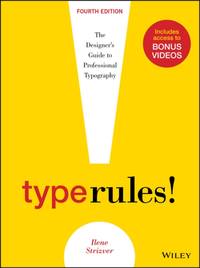
rif. ria9781118454053_inpPaperback / softback. New. New Book; Fast Shipping from UK; Not signed; Not First Edition; Type Rules! Fourth Edition is an up-to-date thorough introduction to the principles and practices of typography. From the fundamentals to cutting-edge applications this edition has everything today's serious designer needs to use typ paperback
rif. 015356105X.Ghardcover. Good. Access codes and supplements are not guaranteed with used items. May be an ex-library book. hardcover
2016rif. 2081502111901477social science literature 2016. Soft Cover. Fine. Size:Soft Cover social science literature paperback
1932rif. 58217Leighton PA: Leighton High School. 1932. Hardcover. Very Good with no dust jacket; Two Yearbooks From Leighton High School Leighton Pennsylvania 1931 and 1932. Franz Kilne was a student there and was Artist for the Yearbook in his Junior Year. Most of the cartoons and decorations were done by him. His Signature appears in both books. Franz Kline was part of abstract expressionist movement in New York City in the 1940's and 50's. Both Books are in good condition. The 1931 Yearbook has a weak and loose spine. The 1932 Yearbook has a weak spine. Both have some edgewear. ; B&W Illustrations . Leighton High School hardcover
rif. 0243018924.Gpaperback. Good. Access codes and supplements are not guaranteed with used items. May be an ex-library book. paperback
rif. 0484632116.Ghardcover. Good. Access codes and supplements are not guaranteed with used items. May be an ex-library book. hardcover
rif. 2080502106917557Not Available N.A. Soft Cover. Fine. The book is in fine condition. Not Available paperback
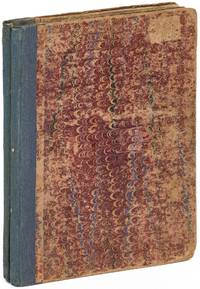
1890rif. 460264Fredonia New York 1890. Hardcover. Good. Two notebooks with printed title: Normal Rhetorical Exercise Correction Book. Fredonia N.Y.: F.C. Chatsey Publisher Copyright 1886. Small quartos. Bound in quarter cloth and marbled paper over boards. Covers are rubbed and worn one front cover has some staining good overall. Both notebooks contain several book reports and essays on special topics written by Walter Pettit when he was a teenage student at the Fredonia Normal School. Both notebooks date from the late 1890s. In addition to reports on The House of the Seven Gables Gulliver’s Travels The Merchant of Venice Oliver Twist and other books; the notebooks include both fictional essays such as “My Flying Machine” and “A Trip to the North Pole” and personal essays on special topics. Here for example is an excerpt from an essay titled: “Should Lynching be Suppressed”: “One of the greatest evils in existence is lynching. That it should be abolished is evident. Many innocent people have met their death by this means and it still is in existence in the Southern States. Perhaps some person … suspected of a crime is imprisoned. A crowd collects and is excited by somebody over the crime … the jailor gives up the suspected criminal to the mob who immediately carry the poor man to the nearest tree … This incident is kept from the newspapers and the suspected criminal dies unmourned unknown. With hanging by authorities … the criminal has a chance for his life; he may plead his case before unprejudiced men. His death is not embittered by the taunts of an unfeeling multitude of men women and children many of whom are as bad as the criminal. The wretches who are the leaders in such a mob are far worse than the victim …” Also included is a travelogue from Sitka Alaska to Dawson City then at the height of the gold rush written in the form of a letter: “Feb. 18 1898: Dawson City Canada / Dear Friend … We started from San Francisco … arrived at Sitka … the town consists of a number of Indian huts a few Russian and American residences … we accompanied an excursion party to the Yukon. This river is one of the largest in the world … upon its banks are a few Indian villages … and here and there ‘Totem poles’. These totem poles … are made of wood grotesquely carved with figures of men beasts and birds. Upon them are kept the records of the Indian’s ancestors. These Indians are a half civilized sneaking dirty race short in stature with small eyes. They act as guides around the settlements … While at Sitka we bought a large stock of groceries … We carried these with us when we went to Dawson. Our party consisted of ten Indians my partner and I. Our journey took three weeks … we reached this city in October and immediately rented the only vacant building in town … I wish you where here to wait on some of our customers. They bring in a bag of gold dust and we weigh out enough to pay for the groceries they buy. This city is in the midst of the gold fields. It is composed principally of saloons dancing halls theaters and gambling houses. The miners sleep in tents … we have rows nearly every night and thieves are as thick as mosquitos …” A graduate of the Class of 1901 Pettit had quickly shed such early external prejudices against indigenous peoples and gold miners. He taught high school in the Philippines 1901-09 attended Teacher’s College at Columbia and served as a U.S. Government Special Relief Assistant in Russia during World War I. As Director of the New York School of Social Work Pettit won international acclaim for his work on the “interdependence of peoples and the strengthening of international relations”. A compelling pair of notebooks that sheds light on Pettit’s early education in upstate New York. American Sociological Review December 1961 pp. 959-60. hardcover books
1890rif. 460264Fredonia New York 1890. Hardcover. Good. Two notebooks with printed title: Normal Rhetorical Exercise Correction Book. Fredonia N.Y.: F.C. Chatsey Publisher Copyright 1886. Small quartos. Bound in quarter cloth and marbled paper over boards. Covers are rubbed and worn one front cover has some staining good overall. Both notebooks contain several book reports and essays on special topics written by Walter Pettit when he was a teenage student at the Fredonia Normal School. Both notebooks date from the late 1890s. In addition to reports on The House of the Seven Gables Gulliver’s Travels The Merchant of Venice Oliver Twist and other books; the notebooks include both fictional essays such as “My Flying Machine” and “A Trip to the North Pole” and personal essays on special topics. Here for example is an excerpt from an essay titled: “Should Lynching be Suppressed”: “One of the greatest evils in existence is lynching. That it should be abolished is evident. Many innocent people have met their death by this means and it still is in existence in the Southern States. Perhaps some person … suspected of a crime is imprisoned. A crowd collects and is excited by somebody over the crime … the jailor gives up the suspected criminal to the mob who immediately carry the poor man to the nearest tree … This incident is kept from the newspapers and the suspected criminal dies unmourned unknown. With hanging by authorities … the criminal has a chance for his life; he may plead his case before unprejudiced men. His death is not embittered by the taunts of an unfeeling multitude of men women and children many of whom are as bad as the criminal. The wretches who are the leaders in such a mob are far worse than the victim …” Also included is a travelogue from Sitka Alaska to Dawson City then at the height of the gold rush written in the form of a letter: “Feb. 18 1898: Dawson City Canada / Dear Friend … We started from San Francisco … arrived at Sitka … the town consists of a number of Indian huts a few Russian and American residences … we accompanied an excursion party to the Yukon. This river is one of the largest in the world … upon its banks are a few Indian villages … and here and there ‘Totem poles’. These totem poles … are made of wood grotesquely carved with figures of men beasts and birds. Upon them are kept the records of the Indian’s ancestors. These Indians are a half civilized sneaking dirty race short in stature with small eyes. They act as guides around the settlements … While at Sitka we bought a large stock of groceries … We carried these with us when we went to Dawson. Our party consisted of ten Indians my partner and I. Our journey took three weeks … we reached this city in October and immediately rented the only vacant building in town … I wish you where here to wait on some of our customers. They bring in a bag of gold dust and we weigh out enough to pay for the groceries they buy. This city is in the midst of the gold fields. It is composed principally of saloons dancing halls theaters and gambling houses. The miners sleep in tents … we have rows nearly every night and thieves are as thick as mosquitos …” A graduate of the Class of 1901 Pettit had quickly shed such early external prejudices against indigenous peoples and gold miners. He taught high school in the Philippines 1901-09 attended Teacher’s College at Columbia and served as a U.S. Government Special Relief Assistant in Russia during World War I. As Director of the New York School of Social Work Pettit won international acclaim for his work on the “interdependence of peoples and the strengthening of international relations”. A compelling pair of notebooks that sheds light on Pettit’s early education in upstate New York. American Sociological Review December 1961 pp. 959-60. hardcover
1996rif. 2092902141200194Chinese book office 1996. Soft Cover. Fine. The book is in fine condition. Chinese book office paperback
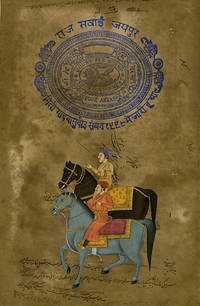
1890rif. 13431890. Good. Ink and gouache with gold heightening on fibrous brown laid paper with a Jaipur Court Fee tax stamp in blue ink on the recto as well as the Jaipur City Council blindstamp 13 1/4 x 8 1/2 inches 335 x 215 mm. Toning handling creases and minor scattered surface soiling throughout. There are scattered coeval inscriptions in ink on the recto and verso. The first revenue stamps in India were issued in the mid-nineteenth century during the Raj and they are still being issued to this day. Apart from issues for the whole of India many princely states provinces and other states also had or still have their own revenue stamp issues. Before independence Indian revenue stamps were closely modeled on similar designs from Great Britain as is the case with this carriage motif stamp from Jaipur. The stamps were issued to denote various denominations including rupees and annas. An anna or Änna was a currency unit formerly used in British India equal to 1â„16 of a rupee. It was subdivided into four old Paisa or twelve pies thus there were 192 pies in a rupee. When the rupee was decimalized and subdivided into 100 new paise one anna was therefore equivalent to 6.25 paise. This particular stamp was used as evidence of court taxes remitted for property dealings. unknown
19458vo., with frontispiece and 3 plates, contemporary inscription on front free endpaper; orange cloth, upper board and backstrip lettered in black, orange top, a very good, bright, clean copy in price-clipped dustwrapper, the latter lightly chafed at extremities.
1950rif. 16031950. Very good. Two engravings with extensive hand coloring in watercolor on cream wove paper each measures 7 x 8 5/8 inches 177 x 218 mm each with full margins. Each sheet is clean with bright extensive coloration. Each with the Made in France ink stamp on the verso. unknown
1897rif. 2111902160602815Nishimura Gohokan Collection Edition 1897. Soft Cover. Fine. The book is in fine condition. Nishimura Gohokan Collection Edition paperback
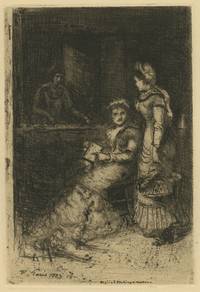
1883rif. 215London: English Printmakers 1883. Very good. Etching with aquatint and stipple on cream laid paper 7 x 4 3/4 inches 175 x 120 mm full margins. With a stamped signature including the date in the lower right image area and the English Pintmakers blind stamp lower left sheet margin. In very good condition with extremely small dog-ear shaped hard crease lower left sheet corner. A lovely 19th century Parisien interior scene. English Printmakers unknown
rif. F2-WZAD-T5H6This is the slipcased hardcover only stated undated Heritage Edition. Other than some wear to the slipcase a hint or rubbing and yellowing to the cover the book is in excellent condition. There are no rips tears markings etc.---and the pages and bindings are tight see photo. Note: All books listed as FIRST EDITIONS are stated by the publisher in words or number lines--or--only stated editions that include only the publisher and publication date. Check my feedback to see that I sell exactly as I describe. So bid now for this magnificent impossible-to-find LITERARY / THEATER COLLECTIBLE.Very Good hardcover
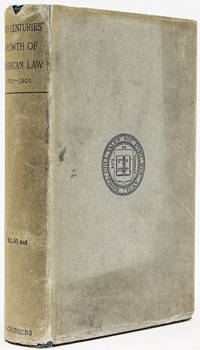
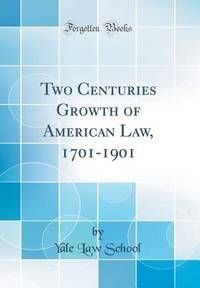
1901rif. 234877New York: Charles Scribners' Sons 1901. First edition. Yale Bicentennial Publications. xviii ii 538 pp. 1 vols. 8vo. Blue cloth. Fine in very good gray printed dust jacket. First edition. Yale Bicentennial Publications. xviii ii 538 pp. 1 vols. 8vo. Charles Scribners' Sons unknown books
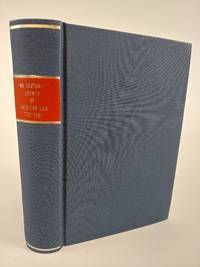
1901rif. 1363501New York: Charles Scribner's Sons 1901. Hardcover. Octavo; 538 pages; VG-; Bound in blue cloth with silver lettering on red spine label; Bumping to corners minor rubbing to corners and along edges; Textblock has light age toning along edges; RWO. NOTE: Shelved in Locked Annex Area Wegewood Section. 1363501. Special Collections. Charles Scribner's Sons hardcover books
1901rif. 234877New York: Charles Scribners' Sons 1901. First edition. Yale Bicentennial Publications. xviii ii 538 pp. 1 vols. 8vo. Blue cloth. Fine in very good gray printed dust jacket. First edition. Yale Bicentennial Publications. xviii ii 538 pp. 1 vols. 8vo. Charles Scribners' Sons unknown
1901rif. 1363501New York: Charles Scribner's Sons 1901. Hardcover. Octavo; 538 pages; VG-; Bound in blue cloth with silver lettering on red spine label; Bumping to corners minor rubbing to corners and along edges; Textblock has light age toning along edges; RWO. NOTE: Shelved in Locked Annex Area Wegewood Section. 1363501. Special Collections. Charles Scribner's Sons hardcover
rif. 45202352-nnew. unknown
rif. 133362008X.Gpaperback. Good. Access codes and supplements are not guaranteed with used items. May be an ex-library book. paperback
rif. 0666915091.Ghardcover. Good. Access codes and supplements are not guaranteed with used items. May be an ex-library book. hardcover
rif. 1528454340.Ghardcover. Good. Access codes and supplements are not guaranteed with used items. May be an ex-library book. hardcover