29.593 risultati
rif. 11059'Kirkcudbright Yuletide 1934'. Dimensions of card 14.5 x 11 cm. Bifolium. Good on lightly-aged paper. Cloudy print of landscape on recto of second leaf signed in pencil 'R Macaulay Stevenson'. Neat pen inscription on recto of first leaf: 'My dear brother-artist Sassoon and dear Madame Sassoon this is just from Stansmore and myself to wish you a Merrie Christmas and a Happy New Year signed R Macaulay Stevenson Kirkcudbright Yuletide 1934'. According to one authority Sassoon settled in Kirkcudbright about 1920 living firstly in a studio in Castle Street then at 3 and 5 High Street and using a hut at Carrick shore as a holiday house and studio. 'Kirkcudbright | Yuletide 1934'. unknown
rif. 91390Bruxelles, Editions et Ateliers d'Art Graphique Elsevier, 1960. 18 x 24, 15 pp., 24 planches en N/B, 1 illustration en couleurs, reliure d'édition pleine toile jaune, bon état.
rif. B261100-1Greenville North Carolina East Carolina University The College of Arts and Sciences 1996. 143 1pp. Prof. illus. Lrg. sq. 4to. Wraps. Greenville, North Carolina (East Carolina University, The College of Arts and Sciences), 1996. paperback books
rif. 21488Westminster 20 June 1711 entered in pencil. One page 12mo bifolium fold marks grubby some staining text clear and complete. "Dr Freinds Complements wait upon Mr Garth. If Colonel Cracherode has executed the two Deeds he begs the favor of Mr Garth to deliver them to his Servant the bearer." A Google snippet view from The Genealogist discusses a situation in which Cracherode and Dr Robert Freind are executors perhaps in a family will. Westminster, 20 June [1711 entered in pencil] unknown
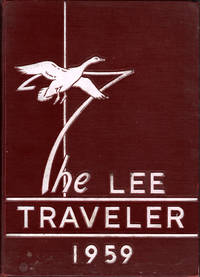
1959rif. 7P-KSZV-7J3VTaylor Publishing Company 1959. hardcover. Good. 0x0x0. HB 1959. Also include a hs diploma holder cum laude certificate and jh diploma of the person who formerly owned this yearbook Deanna Alleman. Filled with notes and signatures of former classmates. Ships next day. Book is in good shape no tears highlighting or underlining; has a little shelf wear; a little general wear; from a smoke free environment. Taylor Publishing Company hardcover
rif. 65-2203London 18th cent. Line engraving. Image size: 104 mm x 172 mm. Sheet size: 285mm X 440mmWatermarked "Waldore". London, 18th cent. unknown
rif. ria9780323640183_inpPaperback / softback. New. New Book; Fast Shipping from UK; Not signed; Not First Edition; N/A paperback
1954rif. 138142Couverture souple. Brochure de 24 pages. 15 x 23 cm. Rousseurs.
1879rif. 22101879. Good. Watercolor and graphite on watercolor paper 5 1/8 x 8 1/4 inches 130 x 210 mm the full sheet. Initialed "H.D.J." in watercolor in the lower right image area and titled and dated on the recto. Scattered light foxing and a small corner loss at the lower right corner. unknown
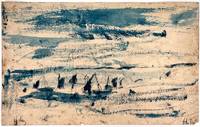
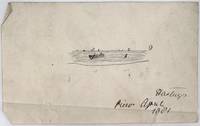
1881rif. 22171881. Good. Pencil on white wove paper 4 x 6 1/2 inches 102 x 165 mm the full sheet. Titled and dated in ink on the recto. On the verso is a sketch of a house. A lively cursory sketch of boats on a river. Scattered handling wear lights folds and creases. unknown
1950rif. 709201PN. New. 1950. Soft Cover. Date is original print. This is a reprint edition. . PN paperback
rif. 53470588like new. unknown
rif. 53470588-nnew. unknown
1891Monotipo o herkomergravure, 1891, firmato e datato sulla lastra in alto a destra Hubert Herkomer '91. Una bella impressione, stampata su carta contemporanea, con margini, condizioni perfette. “Il monotipo è il mezzo di stampa più diretto. L'artista dipinge su una superficie liscia e impermeabile, mette un pezzo di carta bianca sopra il dipinto e applica una pressione in modo che l'immagine dipinta venga trasferita sulla carta. […] Durante il diciannovesimo secolo ci fu molto ingegno nel trovare un modo per gli stampatori di creare edizioni che fossero pittoriche come il monotipo. Generalmente, gli inventori sperimentavano un composto speciale che poteva essere applicato al dipinto dell'artista ancora umido, non appena eseguito su una lastra di rame. Quando la lastra veniva asciugata e galvanizzata, poteva essere inchiostrata come una lastra incisa e stampata più e più volte, fornendo la spontaneità del monotipo, ma con la ripetibilità di altri mezzi di stampa. Vari inventori inventarono processi simili, e alla fine del 1800 erano disponibili tre processi per coloro che desideravano fare una stampa che avesse alcune delle qualità visive di un monotipo, ma che potesse anche essere prodotta in un'edizione di stampe identiche: il galvanografo, l'elettrotinta e l'herkomergravure, dal nome del suo inventore, Hubert Herkomer (1849-1914). William Merritt Chase (americano, 1849-1916) introdusse Herkomer al processo del monotipo nel 1885. Herkomer sviluppò il suo processo nel 1897, ma ne scrisse per la prima volta nel 1892. Potrebbe essere stato nel 1902 che Herkomer ricambiò il favore di Chase introducendolo all'herkomergravure, quando Chase tornò in Inghilterra. Il processo implicava la spalmatura di inchiostro su una lastra di rame e la creazione dell'immagine con le dita e/o i pennelli, come nel processo del monotipo. Poi la lastra veniva spolverata con una combinazione di polveri speciali, asciugata e placcata. L'immagine risultante era un quasi monotipo" (cfr. Andrew Stevens, American Monotypes from the Baker/Pisano Collection, pp. 3-6). Sir Hubert von Herkomer era un artista britannico di origine tedesca, e anche un regista e compositore pioniere del cinema. Sebbene fosse un ritrattista di grande successo, soprattutto di uomini, è ricordato soprattutto per le sue prime opere che avevano un approccio realistico alle condizioni di vita dei poveri Bibliografia Herkomer, Hubert. Etching and Mezzotint Engraving: Lectures Delivered at Oxford. New York: Macmillan, 1892; Andrew Stevens, American Monotypes from the Baker/Pisano Collection, Exh. Cat., by Russell Panczenko, Andrew Stevens, and D. Frederick Baker, pp. 3-6. Monotype or herkomergravure, 1891, signed and dated on plate at the upper right Hubert Herkomer ’91. A fine impression, printed on contemporary wove paper, with margins, perfect condition. “Monotype is the most direct print medium. The artist paints on a smooth, impermeable surface, places a blank piece of paper on top of the painting, and applies pressure so that the painted image is transferred onto the paper. […] Through the nineteenth century there was much ingenuity expended on finding a way for printmakers to create editions that were as painterly as monotype. Generally, inventors came up with a special compound that could be applied to the still-wet artist’s painting executed on a copper plate. When the plate was dried and electroplated, it could then be inked like an etched or engraved plate and printed again and again, providing the spontaneity of the monotype, but with the repeatability of other print media. Various inventors came up with similar processes, and by the end of the 1800s three processes were available for those wishing to make a print that had some of the visual qualities of a monotype, but could also be produced in an edition of identical prints: the galvanograph, the electrotint, and the herkomergravure, named after its inventor, Hubert Herkomer (English, 1849–1914). Herkomer was a popular painter of portraits and social genre scenes, and an inveterate experimenter in the arts. William Merritt Chase (American, 1849–1916) introduced Herkomer to the monotype process in 1885. Herkomer developed his process by 1897, but first wrote about it in 1892. It may have been in 1902 that Herkomer returned Chase’s favor by introducing him to the herkomergravure, when Chase next returned to England. The process involved smearing ink onto a copper plate and creating the image with fingers and/or brushes, as with the monotype process. Then the plate was dusted with a combination of special powders, dried, and electroplated. The resulting image was a quasi-monotype” (cfr. Andrew Stevens, American Monotypes from the Baker/Pisano Collection, pp. 3-6). Sir Hubert von Herkomer was a German-born British artist, and also a pioneering film-director and composer. Though a very successful portraitist, especially of men, he is mainly remembered for his earlier works that took a realistic approach to the conditions of life of the poor. Bibliografia Herkomer, Hubert. Etching and Mezzotint Engraving: Lectures Delivered at Oxford. New York: Macmillan, 1892; Andrew Stevens, American Monotypes from the Baker/Pisano Collection, Exh. Cat., by Russell Panczenko, Andrew Stevens, and D. Frederick Baker, pp. 3-6.
1910Acquaforte e puntasecca, 1910 circa, firmata in alto a sinistra Fisher f. Dedicata dall'artista a Malcolm Salaman; iscrizione con inchiostro marrone in basso a destra: "To Malcolm Salaman from A. Hugh Fisher". Una bella impressione, stampata su carta avorio, con margini, in buone condizioni. Malcolm Charles Salaman (Londra 6 settembre 1855 - 22 gennaio 1940) è stato un autore, giornalista e critico inglese. Fu educato alla University College School e all'Owens College di Manchester. Anche se aveva studiato ingegneria meccanica per quattro anni, divenne un giornalista e pubblicò due settimanali. I suoi scritti critici erano dedicati principalmente alle stampe e alle opere teatrali. Dal 1883 al 1894 fu critico drammatico e d'arte per il Sunday Times, e dal 1890 al 1899 fu nello staff di The Graphic. Scrisse regolarmente sulle stampe per le riviste d'arte The Studio e Apollo. Salaman scrisse anche le introduzioni ai 33 volumi della serie Modern Masters of Etching pubblicati tra il 1925 e il 1932 da The Studio, ognuno dei quali conteneva riproduzioni di 12 stampe di un grande incisore. Questa serie includeva volumi su Frank Brangwyn, Alphonse Legros, Ernest Stephen Lumsden, Malcolm Osborne e Edmund Blampied. Hugh Fisher si dedicò inizialmente all'incisione paesaggistica e architettonica, ma fu anche un abile incisore e incisore di ritratti, studi di figure e raffigurazioni di animali. Bibliografia H. Fisher, 'Catalogue of Etchings and Drypoint by A. Hugh Fisher', 1927. Etching and drypoint, circa 1910, signed at upper left Fisher f. Dedicated by the artis to Malcolm Salaman; inscribed woth brown ink at lower right: “To Malcolm Salaman from A. Hugh Fisher”. A fine impression, printed on ivory wove paper, with margins, good condition. Malcolm Charles Salaman (London 6 September 1855 – 22 January 1940) was an English author, journalist and critic. He was educated at University College School and at Owens College, Manchester. Although he had studied mechanical engineering for four years, he became a journalist, and edited two weekly papers. His critical writing was devoted chiefly to prints and to plays. From 1883 to 1894 he was dramatic and art critic for the Sunday Times, and from 1890 to 1899 was on the staff of The Graphic. He wrote regularly on prints for the art magazines The Studio and Apollo. Salaman also wrote the introductions to the 33 volume series Modern Masters of Etching published between 1925 and 1932 by The Studio, each of which contained reproductions of 12 prints by a great etcher. This series included volumes on Frank Brangwyn, Alphonse Legros, Ernest Stephen Lumsden, Malcolm Osborne and Edmund Blampied. Hugh Fisher initially dedicated himself to landscape and architectural engraving, however he was also an accomplished etcher and engraver of portraits, figure studies and animal depictions. Bibliografia H. Fisher, 'Catalogue of Etchings and Drypoint by A. Hugh Fisher', 1927.
1635Acquaforte e bulino, 1635, firmata e datata in lastra in alto, a puntasecca: Rembrandt ft 1635; sotto l’ovale l’iscrizione Quem pia miarari plebes, quem castra solebant, / damnare et mores aula coacta suos. Jactatus multum, nec tantum fructus ab anni / WTENBOGARDUS sic tuus, Haga redit. HGrotius. (La corte secolare fu costretta a condannare sia l’uomo tanto ammirato, sia le sue convinzioni. L’Aja, il tuo Uytenbogaert ritorna a te dopo lungo errare, provato solo dagli anni. Ugo Grozio). Esemplare nel V stato di VI, con i margini della lastra ripuliti. Magnifica prova, impressa su carta vergata coeva priva di filigrana, rifilata al rame, leggere ossidazioni in basso, per il resto in ottimo stato di conservazione. Il ritratto raffigurato è quello del predicatore Johannes Uytenbogaert (1577-1644), all’età di settantotto anni. Personaggio illustre ed assai influente del tempo, divenne il leader della Rimostranza, una corrente liberale della chiesa calvinista che formalizzava la dottrina di Arminio. Al Concilio di Dort (1618- 1619) la Rimostranza fu condannata e i seguaci perseguitati: Uytenbogaert fu costretto all’esilio, per porter far ritorno all’Aja solo nel 1629. La didascalia di Grozio - a sua volta appartenente alla fazione dei rimostranti e esiliato nel 1635 – non si limita a rievocare questi eventi, ma intende sottolineare il ritorno di Uytenbogaert a L'Aja. È probabile che il ritratto sia ordinato per diffonderne le stampe fra gli amici e gli estimatori dell'anziano pastore. Potrebbe essere lo stesso Uy- tenbogaert a commissionarlo, ma non è detto. Due anni prima Rembrandt lo ritrae in un dipinto, su richiesta di Abraham Antonisz. Recht, un mercante favorevole ai rimostranti. In quella occasione Uytenbogaert posa per Rembrandt, mentre per l'acquaforte non è sicuro che ciò sia avvenuto: infatti, nelle due opere il viso dell'uomo è rappresentato in modo quasi identico, perfino nelle ciocche di capelli che sfuggono dallo zucchetto. Per la testa, Rembrandt deve essere partito da un disegno oggi perduto. Esemplare in cornice dorata settecentesca. Bibliografia Hind 128; Bartsch 279; White & Boon 279, V/VI; E. Hinterding, Rembrandt, Dipinti, incisioni e riflessi sul ‘600 e ‘700 italiano, p.120, 26. Etching and engraving, 1635, signed and dated at upper edge Rembrandt ft 1635. Inscribed in Latin beneath the image: Quem pia miarari plebes, quem castra solebant, / damnare et mores aula coacta suos. Jactatus multum, nec tantum fructus ab anni / WTENBOGARDUS sic tuus, Haga redit. HGrotius. Example of the fifth state of six. Magnificent work, printed on contemporary laid paper without watermark, closely trimmed to the platemark, light oxidations at lower part, otherwise in good condition. Johannes Uytenbogaert (1557-1644), an important political and theological figure of the period , was a leader of the Dutch Remonstrants and a former chaplain to Maurice, Prince of Orange. Following the views of Jacobus Arminius, the Remonstrants presented to the States-General in 1610 a 'Remonstrance', setting forth their points of divergence from stricter Calvinism. Attacked on all sides, they were expelled from the Netherlands by the Protestant Synod of Dort (1618-19), which declared Remonstrant theology contrary to Scripture. Allowed back in the Netherlands by 1630, they were officially recognised in 1798. The inscription, in Latin, is far more extensive than in Rembrandt's other prints, and was composed by the leading Remonstrant Hugo de Groot - a Remonstrant still in exile in 1635. It alludes to Wtenbogaert's piety and court service, as well as his 'comeback' to the Hague in 1629. Rembrandt had previously depicted Uytenbogaert in a painting of 1633, in which the minister stands before a table and a large opened book (the portrait survives in the Rijksmuseum). Bibliografia Hind 128; Bartsch 279; White & Boon 279, V/VI; E. Hinterding, Rembrandt, Dipinti, incisioni e riflessi sul ‘600 e ‘700 italiano, p.120, 26.
1597Bulino, datato in lastra 1597. Sulla cornice ovale: ‘BARTHOLOMAEUS SPRANGER, S. CAES. M. PICTOR CELEBERRIMUS’. Nel cartiglio in basso: ‘NATURAE OMNIPARENTI / PRAESTANTISSIMI EIUS AEMULI IMAGINEM,/INVIDIA GEMENTE/D D/IOANNES AB ACH.S.ITEM/CAES. M. PICTOR / An o 1597’ Nel margine inferior, al centro ‘In perpetuam amici memoriam Joan Mullerus grato lubentique animo aeri incidebat / F.de Wit excudit’. Ritratto di Bartholomeus Spranger (1546-1611) in cornice ovale, affiancato da due putti con trombe, uno scudo, una lancia e un elmo. Il ritratto ovale è basato su un modello (probabilmente un dipinto) di Hans von Aachen. Entrambi gli artisti dedicano esplicitamente la stampa in amicizia a Spranger. Durante questo periodo Jan Muller diventò il principale incisore dei disegni di Spranger, il famoso pittore di corte di Praga, ed è intorno a questo period che ha produsse dieci incisioni, la maggior parte di un formato abbastanza grande, basati sui disegni del celebre pittore. Spranger inviava i suoi disegni ad Amsterdam e un certo numero di di prove di stampa esistenti rivelano che questi furono inviati a Praga per la correzione. Muller probabilmente non incontrò Spranger fino alla visita di quest'ultimo nei Paesi Bassi nel 1602. Si può supporre che Hans von Aachen (1552 - 1615), un altro pittore alla corte di Praga, abbia inviato il ritratto di Spranger (sia esso dipinto o disegnato) affinché Muller lo utilizzasse come modello per la sua incisione; la cornice, tuttavia, fu disegnata da Muller stesso. Il disegno tracciato da Muller per la cornice, con un disegno inziale per il ritratto attaccato all'interno, è conservato ad Amsterdam ( Rijkprentenkabinet), ed è possibile seguire con precisione la realizzazione della stampa attraverso ogni fase successiva: prima venne inciso il volto nella lastra, poi il resto della figura, dopo di che la cornice e infine la decorazione. Bellissima prova, ricca di toni, impressa su carta vergata coeva, rifilata al rame, in ottimo stato di conservazione. Engraving, dated on plate 1597.On the frame: ‘BARTHOLOMAEUS SPRANGER, S. CAES. M. PICTOR CELEBERRIMUS’ Inscribed on the bottom, on cartouche: ‘NATURAE OMNIPARENTI / PRAESTANTISSIMI EIUS AEMULI IMAGINEM,/INVIDIA GEMENTE/D D/IOANNES AB ACH.S.ITEM/CAES. M. PICTOR / An o 1597’ inscribed on the bottom: ‘In perpetuam amici memoriam Joan Mullerus grato lubentique animo aeri incidebat / F.de Wit excudit’. Bust portrait of Bartholomeus Spranger (1546-1611) in oval frame, flanked by two putti with trumpets, a shield, spear and a helmet. “The oval portrait is based on a model (probably a painting) by Hans von Aachen. Both artists explicitly dedicate the print in friendship to Spranger. During this period Jan Muller had become the chief engraver of the designs by Spranger, the famous court painter of Prague, and it was around now he produced ten engravings, most of a fairly large format, after his designs. Spranger sent his drawn designs to Amsterdam and a number of extant proof impressions reveal that these were sent to Prague for correction. Muller probably did not meet Spranger until the latter’s visit to the Netherlands in 1602. It can be assumed that Hans von Aachen (1552 – 1615), another painter at the Prague court, sent Spranger’s portrait (whether painted or drawn) for Muller to use as a model for his print; the frame, however, was designed by Muller himself. Muller’s traced design for the frame, with the initial design for the portrait engraving attached inside, has been preserved (Amsterdam, Rijkprentenkabinet), and it is possible to follow the making of the print precisely through each successive stage: first the face was engraved in the plate, then the rest of the figure, after which the frame and finally the circumscription were engraved.” F. Kok, Artists Portrayed by Their Friends: Goltzius and His Circle, in Netherlands Quarterly for the History of Art,Vol. 24, pp. 167-168. A fine example printed on contemporary laid paper, trimmed to the platemark, in good condition. Le Blanc, 69; F. Kok, Artists Portrayed by Their Friends: Goltzius and His Circle, in Netherlands Quarterly for the History of Art,Vol. 24, pp. 167-168.
1900Acquaforte e puntasecca, circa 1900. Titolo a matita in basso e firma autografa in basso a destra “C. Biseo”. Magnifica prova, impressa con inchiostro verde su carta coeva, tracce di antica inquadratura, per il resto in eccellente stato di conservazione. Marcelle Renée Lancelot, coniugata Croce (Parigi, 26 gennaio 1854 – ca 1946), è stata una pittrice, scultrice e medaglista francese naturalizzata italiana. In seguito al matrimonio con lo scultore Leonardo Croce, prese la nazionalità italiana, cambiando il nome in Marcella. Visse per diversi anni a Roma, a partire dal 1895. Oltre alla pittura e alla scultura, si dedicò anche fin da giovane alla professione di medaglista. Cesare Biseo pittore, acquarellista e incisore, nasce a Roma, ove il padre, Gian Battista, valente pittore accademico di Brescia, si era da poco trasferito essendo stato chiamato a decorare il castello di Bracciano. Riceve dunque dal padre i primi insegnamenti artistici e, a seguito del genitore, trascorre da giovane un lungo periodo a Parigi. Nel 1869, in occasione dell’inaugurazione del Canale di Suez, il Kedivé d’Egitto lo chiama a decorare prima il suo palazzo in Alessandria e poi il Teatro dell’Opera al Cairo. Innamoratosi dell’Africa la visita più volte e nel 1875 con Edmondo De Amicis e il pittore Stefano Ussi fa parte della prima missione italiana in Marocco. Ne trae diversi albi di schizzi, che utilizza per illustrare, insieme ad Ussi, il libro di De Amicis, Marocco, edito nel 1877 dalla casa editrice Treves di Milano. Nello stesso anno accompagna De Amicis a Costantinopoli, illustrando poi l’omonimo libro dello scrittore pubblicato nel ’78 sempre dalla Treves. Il grande successo di entrambe le edizioni consacra Biseo “orientalista”, spingendolo ad intensificare la produzione di oli ed acquarelli a soggetto arabo. Intanto nel 1875, assieme a E. Roesler Franz e N. Cipriani, fonda a Roma la Società degli Acquerellisti, di cui diviene presidente nel 1881. La vena orientalista, infatti, non gli aveva fatto dimenticare la passione per i paesaggi della Campagna Romana, ritratti con grande fedeltà ed originali tagli di luce (“l’ardito effetto di sole”), evolvendo dall’originario gusto classico verso soluzioni sempre più veriste. Lo troviamo anche tra i soci fondatori del Gruppo dei XXV della Campagna romana, ove Pascarella gli affibbia il nomignolo di “cariate” per i suoi trascorsi egiziani. Ebbe lo studio a via Margutta e fu, come le foto di Oreste Sgambati stanno a dimostrare, un frequentatore assiduo del Caffè Greco, dove fu soprannominato “professorissimo” per la sua maestria a biliardo. Oltre agli affreschi ed alle decorazioni degli esordi, dipinge ugualmente bene ad olio e all’acquarello. Si è inoltre dedicato con successo all’acquaforte, come dimostrano le sue bellissime illustrazioni di libri. Il presente ritratto di Marcella Lancelot Croce, confrontando le biografie dei due artisti, risale al periodo tra il 1895 e il 1909, tra l'arrivo della pittrice a Roma e la scomparsa di Biseo. Opera non descritta da nessuno dei repertori consultati. Molto rara. Etching and drypoint, circa 1900. Title in pencil at bottom and autograph signature at bottom right "C. Biseo". Magnificent example, impressed in green ink on coeval paper, traces of old framing, otherwise in excellent condition. Marcelle Renée Lancelot (Paris, January 26, 1854 - ca 1946) was a French painter, sculptor and medallist naturalized Italian. Following her marriage to the sculptor Leonardo Croce, she took Italian nationality, changing her name to Marcella. She lived for several years in Rome, starting in 1895. In addition to painting and sculpture, she devoted herself to the profession of medallist since she was young. The present portrait of Marcella Lancelot Croce, comparing the biographies of the two artists, dates from the period between 1895 and 1909, between the painter's arrival in Rome and Biseo's death. Work not described by any of the repertories consulted. Very rare. Cesare Biseo painter, watercolorist and engraver, was born in Rome, where his father, Gian Battista, a talented academic painter from Brescia, had recently moved to decorate the castle of Bracciano. Receives therefore from the father the first artistic teachings and, following the parent, spends as a young man a long period in Paris. In 1869, on the occasion of the inauguration of the Suez Canal, the Kedivé of Egypt called him to decorate first his palace in Alexandria and then the Opera House in Cairo. Having fallen in love with Africa, he visited it several times and in 1875 with Edmondo De Amicis and the painter Stefano Ussi was part of the first Italian mission to Morocco. It draws several albums of sketches, which used to illustrate, along with Ussi, the book of De Amicis, Morocco, published in 1877 by the publisher Treves in Milan. In the same year accompanies De Amicis in Constantinople, then illustrating the homonymous book of the writer published in '78 always by Treves. The great success of both editions consecrates Biseo "orientalist", pushing him to intensify the production of oils and watercolors to Arab subject. Meanwhile in 1875, along with E. Roesler Franz and N. Cipriani, founded in Rome the Society of Watercolorists, of which he became president in 1881. The orientalist vein, in fact, had not made him forget the passion for the landscapes of the Roman countryside, portrayed with great fidelity and original cuts of light ("the bold effect of the sun"), evolving from the original classical taste towards more and more realistic solutions. We also find him among the founding members of the Group of XXV of the Roman Countryside, where Pascarella gives him the nickname of "cariate" for his Egyptian past. He had a studio in Via Margutta and was, as the photos of Oreste Sgambati demonstrate, a frequent visitor to the Caffè Greco, where he was nicknamed "professorissimo" for his mastery at billiards. In addition to the frescoes and decorations of the early days, he painted equally well in oil and watercolor. He also devoted himself successfully to etching, as evidenced by his beautiful book illustrations.
rif. 68848Edizioni Rai Radiotelevisione Italiana, 1959. 27 x 37, 105 pp., 25 planches en couleurs (images contrecollées), reliure d'édition pleine toile + jaquette (tela editoriale con sovraccoperta/hardcover + dustjacket), très bon état (in ottimo stato/fine condition).
rif. ria9780470549469_inpHardback. New. New Book; Fast Shipping from UK; Not signed; Not First Edition; With an eye toward the future he has crafted a comprehensive and practical book that emphasizes an intuitive approach to the financial and quantitative foundations of financial and risk engineering and its many applications t hardcover
rif. 1855216663.Ghardcover. Good. Access codes and supplements are not guaranteed with used items. May be an ex-library book. hardcover
rif. SONG18552166630000-00-00. F First Edition Used. hardcover. Used: Good. 6.50x1.00x9.25. Buy with confidence. Excellent Customer Service & Return policy. hardcover
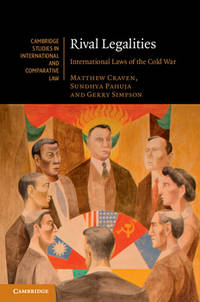
rif. ria9781509534623_inpHardback. New. New Book; Fast Shipping from UK; Not signed; Not First Edition; N/A hardcover
1980viii, [2], 654 pages. Index of family names. Many black and white reproductions of archival family photos. A wonderful genealogical guide to families of the Aldag, Bench, Golden Sheaf, String Butte, and Twin Buttes school districts in Saskatchewan. Unmarked with moderate wear. Binding tight. A quality copy. Book
rif. 0260706566.Ghardcover. Good. Access codes and supplements are not guaranteed with used items. May be an ex-library book. hardcover