DURER Albrecht (Norimberga 1471 - 1528)MareMagnum

37,203 results
1505Xilografia, 1505 circa, monogrammata nella tavoletta in basso a destra. Stato unico, nella terza variante, di cinque, descritte da Meder (n. 233 c/e) Magnifica prova, nitida e ben contrastata, nella terza variante descritta da Meder, caratterizzata da una piccola rottura del legno che comporta una mancanza di circa 5 mm nella parte superiore della linea d’inquadramento. In ottimo stato di conservazione. San Nicola, a sinistra, è identificato dal pane che tiene in mano, che gli fu portato durante una carestia sull'isola dove viveva, dalla barca sullo sfondo. Sant'Erasmo, a destra, sta portando le sue viscere, avvolte intorno a un rocchetto, e inoltre, è identificato dalla ruota con una candela accesa. Al centro c'è Sant'Ulrico, il patrono di Augusta, con in mano il suo simbolo, un pesce. Poiché è al posto d'onore, è stato ipotizzato che questo foglio sia stato commissionato o inteso per essere venduto ad Augusta. Il nome Ulrich non era comune a Norimberga. Questa stampa è spesso considerata come la controparte di un’altra xilografia, raffiguranti i SS. Lorenzo, Sisto e Stefano, sebbene le figure siano più allungate. Alcuni critici hanno anche riconosciuto un concetto spaziale che sembra corrispondere ad alcuni fogli de La Piccola Passione. Di conseguenza, datano questo foglio dopo il ritorno di Dürer dal suo secondo viaggio in Italia, cioè verso il 1508. Ma – osserva Strauss - questa xilografia corrisponde in troppi dettagli ad altre due: il soggetto, lo sfondo, gli uccelli, e inoltre il tipo di carta su cui è stampata, che non la distingue affatto dalle altre cosiddette "modest woodcuts", tutte riferibili agli anni 1503-1505. La forma della tavoletta che porta il monogramma è unica, ma rudimentale. Queste differenze possono essere più propriamente attribuite alla presenza di un'altra mano nella bottega di Dürer che ha modificato il disegno di Dürer in fase di intaglio. Bibliografia Bartsch, 118; Meder, 233 (c/e); Tietze, 398; Panofsky 338; Strauss n. 88. Woodcut, 1505 circa, signed with monogram on tablet lower right. Only state. Impression of Meder variant c/e, with a 5 mm gap in the upper border. Good impression, black, full-bordered, with a 5mm gap in the upper border according the variant c/e described by Meder. Very good condition “St. Nicholaus, on the left, is identified by the bread he is holding, which was brought to him during a famine on the island where he lived by the boat in the background. St. Erasmus, on the right, is carrying his entrails, wound around a reel, and in addition, is identified by the wheel with a burning candle. In the center is St. Ulrich, the patron saint of Augsburg, holding his symbol, a fish. Because he is in the place of honor, it has been surmised that this sheet was commissioned or intended to be sold in Augsburg. The name Ulrich was not common in Nuremberg. This print is often regarded as the counterpart to the preceding one (no. 87), although the figures are longer elongated. Some commentators have also detected a spatial concept that seemingly corresponds to some of the sheets of "The Small Passion' (nos. 106-142). Accordingly, they date this sheet after Dürer's return from his second Italian journey, i.e. c.1508.2 We find that assumption highly speculative. This woodcut corresponds in too many details with at least the two preceding ones: the subject, the background, the birds, and moreover the type of paper that it is printed on, which in no way sets it apart from the other "modest" woodcuts. The shape of the tablet bearing the monogram is unique, yet primitive. These differences can more properly be ascribed to the presence of another hand in Dürer's workshop who modified Dürer's design in preparation for the cutter.” (cf. Strauss, n. 88, p. 296). Literature Bartsch, 118; Meder, 233 (c/e); Tietze, 398; Panofsky 338; Strauss n. 88.
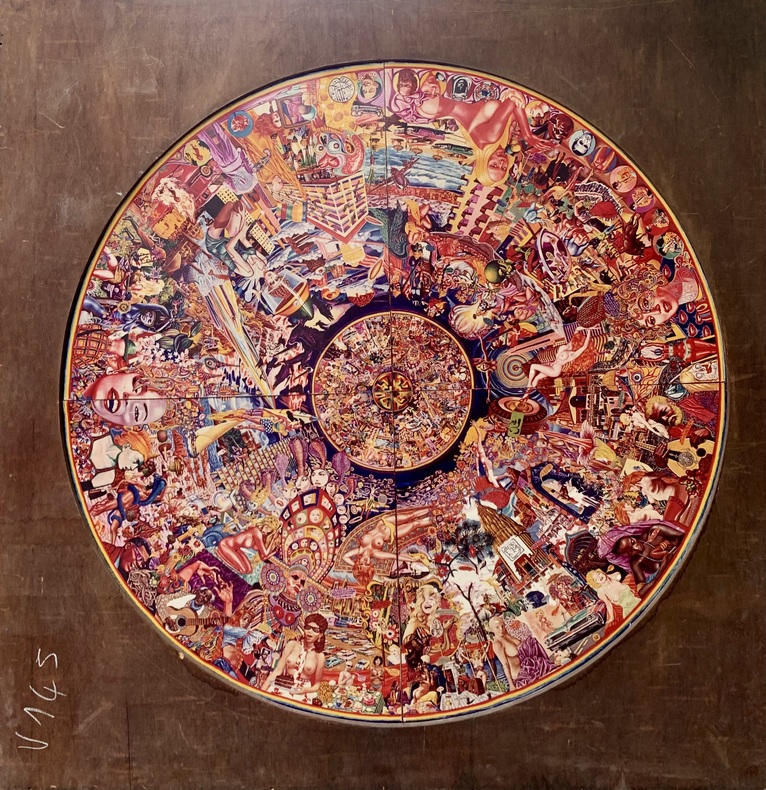
ref. awd-1157Important tirage photographique en couleurs monté dans un encadrement carré en bois, ajouré en cercle au centre. Très rare épreuve, peut-être tirée pour un essai de couleurs lors de la commercialisation d’une affiche en 1969. Mentions Mati Klarwein, Grain of Sand, Robert Crandall Assoc., 1968 sur le côté avec échelles chromatiques, petits manques de pigmentation dans la partie basse (111,5/117,2 cm dans un cadre de 122/122 cm).
1790Veduta della festa di Sant’Andrea ad Amalfi, tratta da un disegno di Luois Jean Desprez. Amalfi festeggia Sant’Andrea, patrono della città, ben due volte all'anno, una il 30 novembre, l'altra il 27 giugno nell'anniversario del miracolo che salvò la città di Amalfi dall'invasione del pirata Kair-Ad-Din detto Barbarossa nel 1544. Sant'Andrea è protettore dei pescatori di tutto il mondo, di pescivendoli e di tutti coloro che hanno a che fare con la pesca. Ai festeggiamenti del 30 novembre, partecipa tutta la popolazione, ed è in questa occasione che avviene il “miracolo di Sant’Andrea”, per tanti versi molto simile al miracolo della liquefazione del sangue di San Gennaro. Probabile che il Desprez realizzi il disegno durante il suo viaggio in Italia, durante il quale descrive molto luoghi dell'Italia meridionale, poi base iconografica per il "Voyage Pittoresque" dell'abate Richard de Saint-Non.Incisione all'acquatinta ad inchiostro bistro, lievemente rifilata all'interno della linea marginale, piccole crepe di carta, per il resto in ottimo stato di conservazione. Rarissima. View of the feast of St. Andrew in Amalfi , taken from a drawing by Louis Jean Desprez. Amalfi celebrates St. Andrew, patron saint of the city, twice a year, on Nov. 30, the other June 27 anniversary of the miracle that saved the city from the invasion of Amalfi pirate Kair -Ad- Din said Barbarossa in 1544. St. Andrew is the patron of fishermen from all over the world, fishmongers and all those that have to do with fishing . The celebrations of November 30 , participates in the entire population, and it is on this occasion that happens the "miracle of St. Andrew " , in many ways very similar to the miracle of the liquefaction of the blood of San Gennaro.Likely that the realized design Desprez during his trip to Italy, during which describes a lot of places in southern Italy , then iconographic basis for the " Voyage Pittoresque " by the Richard de Saint-Non.Aquatint printed with bistro ink, slightly trimmed within the marginal line, small cracks of paper, otherwise in excellent condition. An extremely rare work. Frölich, Johan Fredrik Martins gravyrer, Stockholm, 1939, 291 II.
1960ref. ZB255748Command and General Staff School 1960. volumes 40 42 44 45 47-49 52-55 57 59 62 63 70 71 75 76 78 1960-1998; mostly original paper wrappers library markings else textually clean; price is for the lot. - If you are reading this this item is actually physically in our stock and ready for shipment once ordered. We are not bookjackers. Buyer is responsible for any additional duties taxes or fees required by recipient's country. Photos available upon request. Command and General Staff School unknown
ref. 2081502111905940Chinese social sciences N.A. Soft Cover. Fine. The book is in fine condition. Chinese social sciences paperback
1775ref. c2412110474xbvkLouvain / Leuven, Belgium; 1775. Titlesheet (former blank front flyleaf), (9) pages 'Proemium Rhetorica / ...' and 'Deperiodo.', 5 blank sheets, pages 17-257 (of?), 1 blank sheet, blank rear flyleaf. - Vellum binding of the period over 5 raised bands with colour-marble-paper covered panel with vellum corners and red edges; small 4to.(ca. 19 x 16 x 2 cm).
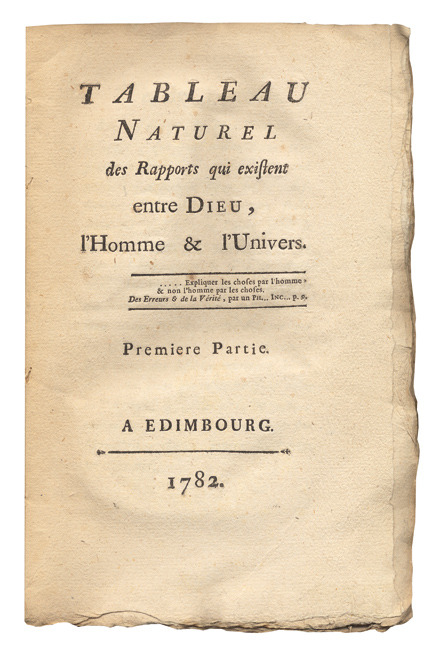
1782ref. 16243A Edimbourg (Lyon), s.n., 1782 ; 2 tomes in-8, brochés dans leur première couverture de papier dominoté en couleurs marqué "A Orléans chez Leblond N°68" ; (4) de titre, blanc, avis des Editeurs et table, 276 pp. ; (4) faux-titre et titre, 244 pp.
1600Bulino, 1600 circa, in basso a sinistra: 'Joannes ab Achen invenetor. / Joan. Mullerus sculpsit"; in basso a destra: "H Muller [HM intrecciato] excud:". Sei righe latine, su tre colonne nel margine in basso: Cum fera tela sinus rimantur pectoris altus / / Et lacerata tua membra crucis madent / / Tum dulcis tibi .... Esemplare nel secondo stato, di quattro, secondo Filedt Kok. Da un dipinto di Hans von Aachen realizzato nel 1590 per il collegio gesuita Saint-Michel di Monaco. Magnifica prova, ricca di toni, impressa su carta vergata coeva con filigrana “scudo di Strasburgo” (simile a The New Hollstein, Muller II, p. 308), rifilata al rame o con piccoli margini, pieghe di carta visibili nella parte inferiore, minimi restauri nelle scritte in basso, per il resto in buono stato di conservazione. L’opera, secondo formule stereotipate nella consuetudine della controriforma, distingue il piano terrestre da quello celeste. In basso, in primo piano, la scena del martirio: sulla destra il gruppo degli arcieri costituisce il nucleo drammatico della scena, con un contrasto intenso fra i loro volti turbati, le loro sagome parzialmente in ombra, i muscoli tesi nello sforzo da una parte e, dall’altra, la bellezza radiosa del santo, il cui corpo, definito da un deciso plasticismo e da una massiccia volumetria, si offre docilmente al martirio, persino incurvandosi in una posizione parallela agli archi ostili. Nella parte superiore un angelo giunge in soccorso del Santo avendo nelle mani la corona d’alloro – simbolo della vittoria attraverso il martirio – e la palma simbolo del martirio e della rinascita. Bibliografia The New Hollstein (Muller Dynasty) part 2.98.23 ii/iv; The New Hollstein (Aachen) 114.44 ii/iv; Bartsch, III.273.23. Engraving, 1600 circa, arched plate, lettered in plate, lower left: 'Joannes ab Achen invenetor. / Joan. Mullerus sculpsit.'; lower right: 'H Muller [HM entwined] excud:'. Six lines Latin in three columns in margin below: Cum fera tela sinus rimantur pectoris altus / / Et lacerata tua membra crucis madent: / / Tum dulcis tibi .... Example in the second state, of four, according Filedt Kok. After a painting by Hans von Aachen in the Jesuit church of St Michaels Hofkirche. Magnificent proof, rich in tone, printed on contemporary laid paper with "Strasbourg shield" watermark (similar to The New Hollstein, Muller II, p. 308), trimmed at the copper or with small margins, paper creases visible at the bottom, minimal restorations in the bottom lettering, otherwise in good condition. Sebastian is bound to a tree with one of his arms raised over his head and tied at the wrist to a broken limb; a group of archers aim their weapons at him; a winged putti holding a palm and wreath hovers overhead. Literature The New Hollstein (Muller Dynasty) part 2.98.23 ii/iv; The New Hollstein (Aachen) 114.44 ii/iv; Bartsch, III.273.23.
1600Bulino, 1600 circa, firmato nell’immagine, in basso al centro "B. Spranger invent. / Fig. Sadeler sculp.". Nel margine inferiore, quattro versi in latino su due colonne “Non datur; eximas veneret, ut inscius artes, solus eas quaerens noscere, gestit amor…” e al centro “Inscius non honorabitur” Da un dipinto di Bartholomäus Spranger, 1596 circa, conservato a Vienna Magnifica prova, ricca di toni, impressa su carta vergata coeva, rifilata alla linea marginale, restauri perfettamente eseguiti agli angoli, tracce di piega orizzontale, per il resto in buono stato di conservazione. La composizione rappresenta l’allegoria della vittoria della saggezza sull’ignoranza. La saggezza è nelle sembianze di Minerva che ha un piede sull'ignoranza - un uomo con le orecchie d'asino, con le mani legate da una corda. Un putto la onora con una corona di alloro. Intorno a loro ci sono sette personificazioni delle sette arti libere: astronomia, musica, geometria, pittura, scultura e retorica, tra le altre. Sotto la rappresentazione c'è una didascalia latina di quattro righe che sottolinea che gli ignoranti sono incapaci di adorare le arti. Bibliografia Hollstein, XXI,115; Wurzbach 82. Engraving, 1600 circa, inscribed "B. Spranger invent. Fig. Sadeler sculp." in the plate, bottom centre. In margin below, four Latin lines in two columns “Non datur; eximas veneret, ut inscius artes, solus eas quaerens noscere, gestit amor…”, at centre: “Inscius non honorabitur”. Magnificent proof, rich in tone, printed on contemporary laid paper, trimmed at the marginal line, perfectly executed restorations at the corners, traces of horizontal crease, otherwise in good condition. After the painting by Bartholomäus Spranger, around 1596, in the Kunsthistorisches Museum, Wien Wisdom is in the form of Minerva with one foot on ignorance, a man with donkey ears. A putto honors her with a laurel wreath. She has tied the hands of the man with a rope. Around them are seven personifications as a variation on the seven liberal arts: astronomy, music, geometry, painting, sculpture and rhetoric. Under the representation a four-line, Latin caption emphasizes that ignorant people are incapable of worshipping the arts. Literature Hollstein, XXI,115; Wurzbach 82.
1924ref. 2091202133203081book series 1924. Soft Cover. Fine. Number of books: 4 books in total book series paperback
1973ref. SBBI-mon0000029641Cambridge University Press 1973. paperback. Good. Our good condition books are generally good for reading but not for gifting or collecting. They could have imperfections such as creasing fanning inscriptions margin notes yellowing staining on edge or cover or pages bumps scuffs etc etc sometimes multiple of these. It's a wide category that encompasses anything that isn't almost-new down to anything that is slightly better than poor. We would NOT recommend gifting Good books - these should be considered reading copies. Our books are dispatched from a Yorkshire former cotton mill. We list via barcode/ISBN so please note that the images are stock images and may not be the exact copy you receive furthermore the details about edition and year might not be accurate as many publishers reuse the same ISBN for multiple editions and as we simply scan a barcode or enter an ISBN we do not check the validity of the edition data when listing. If you're looking for an exact edition please don't order at least not without checking with us first although we don't always have time to check. We aim to dispatch prompty the service used will depend on order value and book size. We can ship to most countries see our shipping policies. Payment is via Abe only. Cambridge University Press paperback
2006ref. SBBI-mon0000079769OUP Oxford 2006. paperback. Acceptable. Writing/highlighting/drawing/colouring present inside or on cover. Please see the condition note after this for details if this is missing please consider Acceptable to mean poor quality that could include major staining water damage writing missing dustjacket etc etc. Our books are dispatched from a Yorkshire former cotton mill. We list via barcode/ISBN so please note that the images are stock images and may not be the exact copy you receive furthermore the details about edition and year might not be accurate as many publishers reuse the same ISBN for multiple editions and as we simply scan a barcode or enter an ISBN we do not check the validity of the edition data when listing. If you're looking for an exact edition please don't order at least not without checking with us first although we don't always have time to check. We aim to dispatch prompty the service used will depend on order value and book size. We can ship to most countries see our shipping policies. Payment is via Abe only. OUP Oxford paperback
2006ref. SBBI-mon0000121400OUP Oxford 2006. paperback. Acceptable. Rip to the cover or dustjacket if hardback or significant tearing to pages. Please see the condition note after this for details if this is missing please consider Acceptable to mean poor quality that could include major staining water damage writing missing dustjacket etc etc. Our books are dispatched from a Yorkshire former cotton mill. We list via barcode/ISBN so please note that the images are stock images and may not be the exact copy you receive furthermore the details about edition and year might not be accurate as many publishers reuse the same ISBN for multiple editions and as we simply scan a barcode or enter an ISBN we do not check the validity of the edition data when listing. If you're looking for an exact edition please don't order at least not without checking with us first although we don't always have time to check. We aim to dispatch prompty the service used will depend on order value and book size. We can ship to most countries see our shipping policies. Payment is via Abe only. OUP Oxford paperback
1996ref. SBBIH-FCBRESSQWBLQBlackstone Press Ltd 1996. paperback. Acceptable. Please see the condition note after this for details if this is missing please consider Acceptable to mean poor quality that could include major staining water damage writing missing dustjacket etc etc. Our books are dispatched from a Yorkshire former cotton mill. We list via barcode/ISBN so please note that the images are stock images and may not be the exact copy you receive furthermore the details about edition and year might not be accurate as many publishers reuse the same ISBN for multiple editions and as we simply scan a barcode or enter an ISBN we do not check the validity of the edition data when listing. If you're looking for an exact edition please don't order at least not without checking with us first although we don't always have time to check. We aim to dispatch prompty the service used will depend on order value and book size. We can ship to most countries see our shipping policies. Payment is via Abe only. Blackstone Press Ltd paperback
2001ref. SBBIH-LFX2KYMNUXN5Blackstone Press Ltd 2001. paperback. Acceptable. Please see the condition note after this for details if this is missing please consider Acceptable to mean poor quality that could include major staining water damage writing missing dustjacket etc etc. Our books are dispatched from a Yorkshire former cotton mill. We list via barcode/ISBN so please note that the images are stock images and may not be the exact copy you receive furthermore the details about edition and year might not be accurate as many publishers reuse the same ISBN for multiple editions and as we simply scan a barcode or enter an ISBN we do not check the validity of the edition data when listing. If you're looking for an exact edition please don't order at least not without checking with us first although we don't always have time to check. We aim to dispatch prompty the service used will depend on order value and book size. We can ship to most countries see our shipping policies. Payment is via Abe only. Blackstone Press Ltd paperback
1969ref. SBBI-mon0000043948Cambridge University Press 1969. hardcover. Acceptable. Stains to cover page edges and/or pages inside. Please see the condition note after this for details if this is missing please consider Acceptable to mean poor quality that could include major staining water damage writing missing dustjacket etc etc. Our books are dispatched from a Yorkshire former cotton mill. We list via barcode/ISBN so please note that the images are stock images and may not be the exact copy you receive furthermore the details about edition and year might not be accurate as many publishers reuse the same ISBN for multiple editions and as we simply scan a barcode or enter an ISBN we do not check the validity of the edition data when listing. If you're looking for an exact edition please don't order at least not without checking with us first although we don't always have time to check. We aim to dispatch prompty the service used will depend on order value and book size. We can ship to most countries see our shipping policies. Payment is via Abe only. Cambridge University Press hardcover
1941ref. 38-1008Ordnance School July 1941- May 1945. 1941. Partial set of six volumes. 35 issues. No issues for 1942. Complete 1943-to VE. Issued monthly. Covers Maintenance and repair of ordnance materiel. Very Heavy. Exlib. Bound in red cloth. Original wraps bound-in. Rubbed. Some pages missing in volume 9. Very Good set. Hardcover. Very Good. Book. Ordnance School, July 1941- May 1945. Hardcover
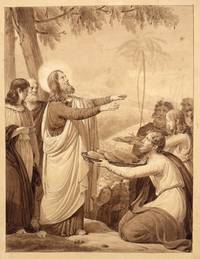
ref. 2260Very good. Ink and wash in black sepia and grayish brown ink with white heightening on wove paper 12 1/4 x 9 3/4 inches 311 x 248 mm the full sheet. In very good condition with some minor areas of light discoloration in the margins. Pencil inscription in French on the verso. unknown
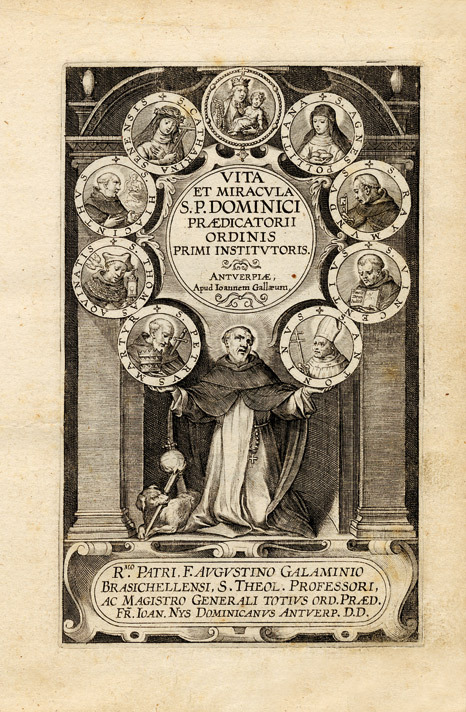
1630ref. 11321Antverpiae, Joan Galle, (circa 1630) ; F. Ioannes Nys invenit, Peter de Jode figuravit, Theodor Galle sculpsit et excudit ; titre gravé, portrait et 32 planches légendées. SUIVI de 4 planches gravées par JOAN GALLE : I- Prudentia, II- Justitia, III- Fortitudo, IV- Temperantia (les 4 vertus cardinales). SUIVI de 14 planches de sujets religieux, gravées par CORNELIUS GALLE le Vieux : Silva sacra, Fugit familia sacra, S. Barbara, S. Ianvarius Neapolis patronis, S. Lucia, S. Leontius martyr miraculis gloriossus in Muris Helvetiorum, S. Iacobus Maior, Benedicite omnes bestiae et pecora domino, S. Hieromymus, Vierge à l'Enfant, etc. Soit en tout 52 planches, reliées en 1 volume petit in-4 ; plein vélin ivoire, titre au dos, tranches rouges (reliure du XIXe).
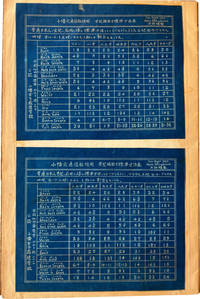
ref. MD39Two large slim folio volumes 43pp.; paper wrappers. Books protected in hand-made craft paper dust jackets; both volumes filled to completion with color pencil designs annotated throughout in pencil in Japanese and English. A dust jacket of one volume soiled and starting to chip along the spine edge. Very good to near fine condition. Two volumes compiled by a student at the Obata Sewing School in San Francisco providing approximately 50 designs 27 of which are accompanied by pasted-in pencil sketches of the finished product. Date of publication based on the three Obata Sewing School blueprint designs copyright 1923 pasted into one of the volumes. Designs include patterns for everyday garments like a baby's dress bib and cape; boy's and girl's sailor suits; a bicycle costume with a divided skirt; man's vest smoking jacket and sack coat; and lady's breaches and knickerbockers. There are also several designs for hats mostly berets and caps. Obata Sewing School was a private sewing school operating in San Francisco in the early decades of the 20th century serving primarily women of the Japanese immigrant Issei community and later the second generation Nisei. Institutions of this kind played a crucial role in the social and economic life of Japanese American communities on the U.S. West Coast prior to World War II. The school offered practical training in Western-style dressmaking and tailoring enabling Japanese immigrant women to acquire marketable skills at a time when access to formal American education and professional employment was limited. Sewing schools such as Obata Sewing School provided not only vocational instruction but also a socially acceptable pathway to economic independence home-based labor and small-scale entrepreneurship. Beyond its practical function Obata Sewing School also served as a community space for women embedded within the broader network of Japanese-language schools religious institutions and mutual-aid associations that structured life in San Francisco’s Japantown Nihonmachi. The curriculum reflected a broader process of cultural adaptation combining Japanese craftsmanship with Western clothing forms required by everyday life in the United States. Like many Japanese American educational and cultural institutions Obata Sewing School ceased operations during World War II following the forced removal and incarceration of Japanese Americans under Executive Order 9066 1942. As a result surviving documentation related to the school - certificates photographs printed ephemera - is rare and often preserved only in private or family archives. Material associated with Obata Sewing School offers valuable insight into women’s labor immigrant education and the material culture of the Japanese American diaspora illuminating an often-overlooked infrastructure that supported daily life resilience and adaptation in prewar immigrant communities. hardcover
ref. 2081502111904612Chinese social sciences N.A. Soft Cover. Fine. The book is in fine condition. Chinese social sciences paperback
1800ref. 63904Tokyo & Kyoto Japan: Kano School ca. 1800-1810. One 4to. art sample design portfolio sized 12.5 x 14 in. which folds out into giant montage of six large original late-Edo-Period Kano School screen designs on durable handmade Japanese rice paper measuring 110 x 75 in. carefully pasted as montage some titled as well as featuring ink manuscript painting instructions ordered counter-clockwise: “Bamboo scene” 47 x 38.5 in.; King Tang of Shang court scene 36.5 x 39 in.; 2nd Court scene 38.75 x 38.75 in.; Pine tree landscape 38.75 x 38.75 in.; Crane 28.75 x 39 in.; and Island pagoda landscape & pine trees 31 x 41.75 in six w/ original colour painting some colour painting & material instructions in Japanese all arranged to compactly fold and bound with colour woodblock illustrated cloth and old bookseller labels mounted on verso some repairs to corners to reattach the boards thumbing & minor tears a fold creases w/ a few occasional paper repairs at the first most frequently used fold minor creasing & edgewear dustsoiling to fold creases interior offset toning from sizing & paint colours still an extraordinary exemplar. This exceptional late-Edo-period original Kano School painting montage incorporates many of the elements developed by the famed multi-generational painters whom over four centuries revived and shaped Chinese idealist traditions into a uniquely vigorous Japanese art style. The Kano school painters emphasized landscapes Imperial court interior & exterior architectural elements colours uses of gold animal and botanical subjects often creating crowded panoramic scenes typically used in wall & door screens as well as triptych folding wall screens. The repeated instructions on these designs in Japanese by Sasayama Tsutsumu -- one of several Sasayama painters who took that name from the 18th- to 19th-Centuries in the Kano School beginning with Sasayama Yoi d. 1743 student of Kano Sunnobu 1636-1713 and subsequently four more generations afterwards nearly all adopted and chiefly serving the Chofu domain -- specify these designs are each one of three pieces. In addition there are ink manuscript memos appearing with directions on pigments for the final design work such as adding mica flecks or other paints & dyes and these sketches captured key features of a design so that students or other Kano artists could sufficiently enlarge recreated and fully understand the steps required for the finished decorative artwork pieces. The upper right first image presents bamboo looming in the weather emphasizing their connections to architectural features; The second and third designs capture the golden age Curt of the King of Shang in 1600 B.C. memorialized later as the Xia Dynasty; the fourth presents a rugged hillside and trees shrouded in clouds; the fourth a wonderful large crane apparently intended as part of a much larger piece; and finally the sixth lower right features distant pagoda temple shrouded mountains flower-bedecked pine tree in foreground and with delicate colouring and shading. Naganobu Kano fl. 1775-1828 and his son Osanobu Seisenin Kano 1786-1846 were of the Kobikicho family which carried on the Kano School traditions from 1730 until the Meiji Period and were instrumental in producing designs and screens for the Nishinomaru and Honmaru palaces which burned down in 1838 and again in 1844. Even though the paintings no longer exist similar original design such as these do survive in the Tokyo National Museum. Seisenin Kano was especially well known for his art adapted from his studies from ancient paintings at the end of the Edo-period. See: Kano School After the Middle of the Edo Period Art Nomura 2026; Matthew P. McKelway Rediscovering the Kano School Artforum Vol. 53 No. 5 Jan. 2015; Brief Biographies of Scholars Painters and Haiku Poets of Chofu Records of the Sasayama Family Painters of the Chofu Domain 2026. Kano School, hardcover
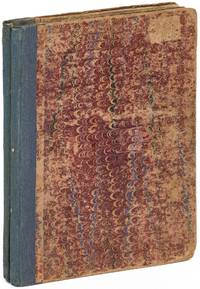
1890ref. 460264Fredonia New York 1890. Hardcover. Good. Two notebooks with printed title: Normal Rhetorical Exercise Correction Book. Fredonia N.Y.: F.C. Chatsey Publisher Copyright 1886. Small quartos. Bound in quarter cloth and marbled paper over boards. Covers are rubbed and worn one front cover has some staining good overall. Both notebooks contain several book reports and essays on special topics written by Walter Pettit when he was a teenage student at the Fredonia Normal School. Both notebooks date from the late 1890s. In addition to reports on The House of the Seven Gables Gulliver’s Travels The Merchant of Venice Oliver Twist and other books; the notebooks include both fictional essays such as “My Flying Machine” and “A Trip to the North Pole” and personal essays on special topics. Here for example is an excerpt from an essay titled: “Should Lynching be Suppressed”: “One of the greatest evils in existence is lynching. That it should be abolished is evident. Many innocent people have met their death by this means and it still is in existence in the Southern States. Perhaps some person … suspected of a crime is imprisoned. A crowd collects and is excited by somebody over the crime … the jailor gives up the suspected criminal to the mob who immediately carry the poor man to the nearest tree … This incident is kept from the newspapers and the suspected criminal dies unmourned unknown. With hanging by authorities … the criminal has a chance for his life; he may plead his case before unprejudiced men. His death is not embittered by the taunts of an unfeeling multitude of men women and children many of whom are as bad as the criminal. The wretches who are the leaders in such a mob are far worse than the victim …” Also included is a travelogue from Sitka Alaska to Dawson City then at the height of the gold rush written in the form of a letter: “Feb. 18 1898: Dawson City Canada / Dear Friend … We started from San Francisco … arrived at Sitka … the town consists of a number of Indian huts a few Russian and American residences … we accompanied an excursion party to the Yukon. This river is one of the largest in the world … upon its banks are a few Indian villages … and here and there ‘Totem poles’. These totem poles … are made of wood grotesquely carved with figures of men beasts and birds. Upon them are kept the records of the Indian’s ancestors. These Indians are a half civilized sneaking dirty race short in stature with small eyes. They act as guides around the settlements … While at Sitka we bought a large stock of groceries … We carried these with us when we went to Dawson. Our party consisted of ten Indians my partner and I. Our journey took three weeks … we reached this city in October and immediately rented the only vacant building in town … I wish you where here to wait on some of our customers. They bring in a bag of gold dust and we weigh out enough to pay for the groceries they buy. This city is in the midst of the gold fields. It is composed principally of saloons dancing halls theaters and gambling houses. The miners sleep in tents … we have rows nearly every night and thieves are as thick as mosquitos …” A graduate of the Class of 1901 Pettit had quickly shed such early external prejudices against indigenous peoples and gold miners. He taught high school in the Philippines 1901-09 attended Teacher’s College at Columbia and served as a U.S. Government Special Relief Assistant in Russia during World War I. As Director of the New York School of Social Work Pettit won international acclaim for his work on the “interdependence of peoples and the strengthening of international relations”. A compelling pair of notebooks that sheds light on Pettit’s early education in upstate New York. American Sociological Review December 1961 pp. 959-60. hardcover
1890ref. 460264Fredonia New York 1890. Hardcover. Good. Two notebooks with printed title: Normal Rhetorical Exercise Correction Book. Fredonia N.Y.: F.C. Chatsey Publisher Copyright 1886. Small quartos. Bound in quarter cloth and marbled paper over boards. Covers are rubbed and worn one front cover has some staining good overall. Both notebooks contain several book reports and essays on special topics written by Walter Pettit when he was a teenage student at the Fredonia Normal School. Both notebooks date from the late 1890s. In addition to reports on The House of the Seven Gables Gulliver’s Travels The Merchant of Venice Oliver Twist and other books; the notebooks include both fictional essays such as “My Flying Machine” and “A Trip to the North Pole” and personal essays on special topics. Here for example is an excerpt from an essay titled: “Should Lynching be Suppressed”: “One of the greatest evils in existence is lynching. That it should be abolished is evident. Many innocent people have met their death by this means and it still is in existence in the Southern States. Perhaps some person … suspected of a crime is imprisoned. A crowd collects and is excited by somebody over the crime … the jailor gives up the suspected criminal to the mob who immediately carry the poor man to the nearest tree … This incident is kept from the newspapers and the suspected criminal dies unmourned unknown. With hanging by authorities … the criminal has a chance for his life; he may plead his case before unprejudiced men. His death is not embittered by the taunts of an unfeeling multitude of men women and children many of whom are as bad as the criminal. The wretches who are the leaders in such a mob are far worse than the victim …” Also included is a travelogue from Sitka Alaska to Dawson City then at the height of the gold rush written in the form of a letter: “Feb. 18 1898: Dawson City Canada / Dear Friend … We started from San Francisco … arrived at Sitka … the town consists of a number of Indian huts a few Russian and American residences … we accompanied an excursion party to the Yukon. This river is one of the largest in the world … upon its banks are a few Indian villages … and here and there ‘Totem poles’. These totem poles … are made of wood grotesquely carved with figures of men beasts and birds. Upon them are kept the records of the Indian’s ancestors. These Indians are a half civilized sneaking dirty race short in stature with small eyes. They act as guides around the settlements … While at Sitka we bought a large stock of groceries … We carried these with us when we went to Dawson. Our party consisted of ten Indians my partner and I. Our journey took three weeks … we reached this city in October and immediately rented the only vacant building in town … I wish you where here to wait on some of our customers. They bring in a bag of gold dust and we weigh out enough to pay for the groceries they buy. This city is in the midst of the gold fields. It is composed principally of saloons dancing halls theaters and gambling houses. The miners sleep in tents … we have rows nearly every night and thieves are as thick as mosquitos …” A graduate of the Class of 1901 Pettit had quickly shed such early external prejudices against indigenous peoples and gold miners. He taught high school in the Philippines 1901-09 attended Teacher’s College at Columbia and served as a U.S. Government Special Relief Assistant in Russia during World War I. As Director of the New York School of Social Work Pettit won international acclaim for his work on the “interdependence of peoples and the strengthening of international relations”. A compelling pair of notebooks that sheds light on Pettit’s early education in upstate New York. American Sociological Review December 1961 pp. 959-60. hardcover books
ref. 224240Paris, Imprimerie de Clousier, 1781-[1783] 9 (sur 18) parties en un vol. in-8, pagination multiple, maroquin vieux-rouge, dos lisse cloisonné et fleuronné, pièce de titre verte, encadrement de triple filet doré sur les plats, armes au centre, simple filet doré sur les coupes, tranches dorées, guirlande dorée en encadrement sur les contreplats (reliure de l'époque).